

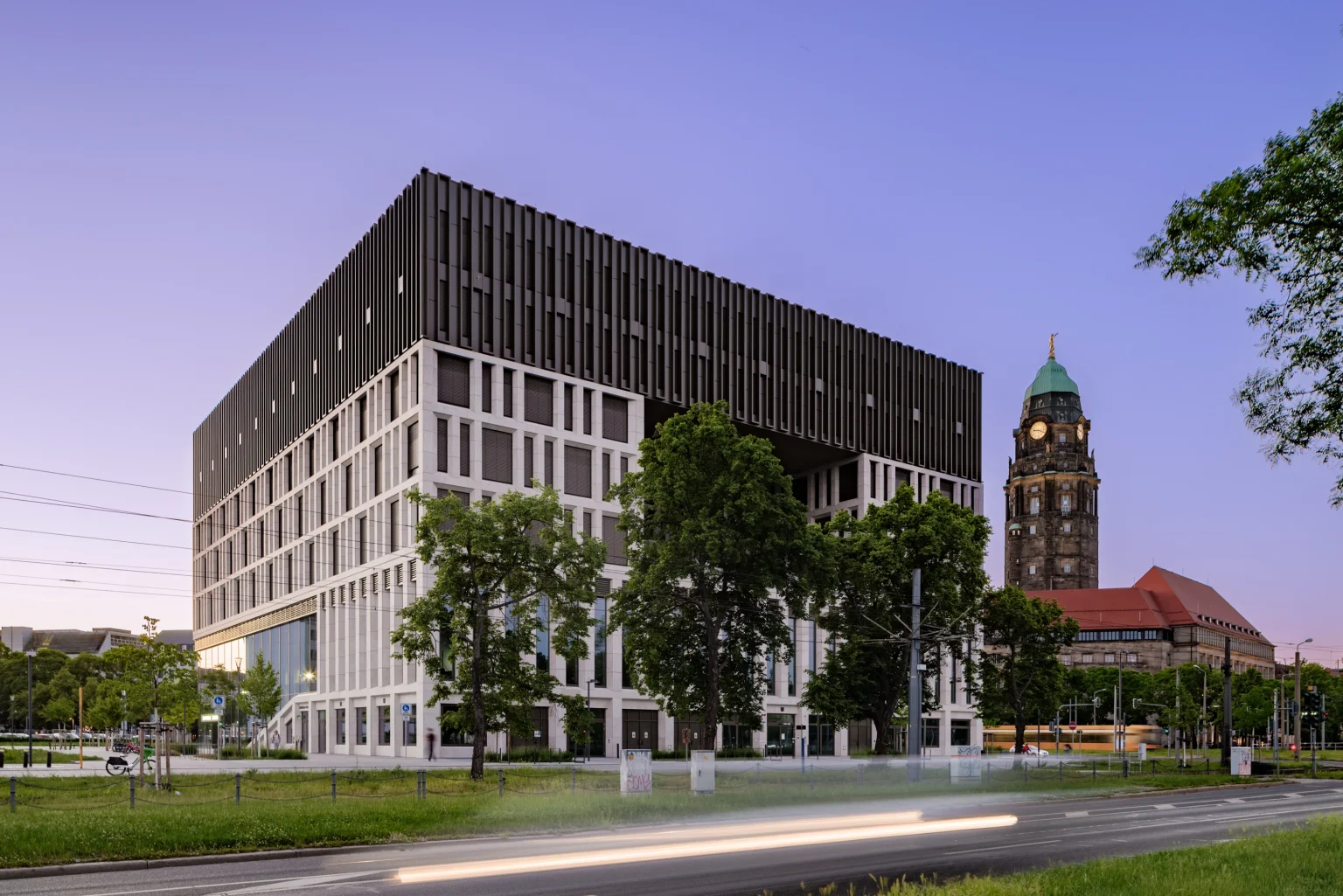


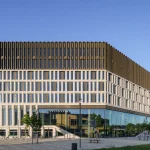
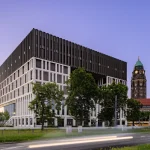
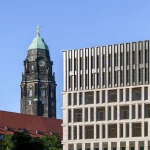
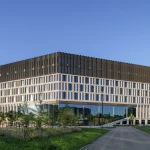
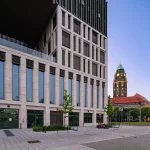
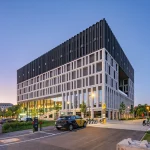
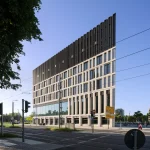
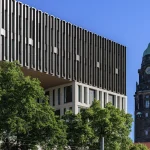
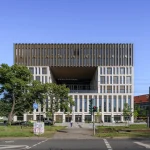
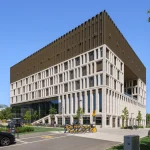
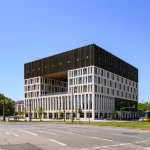


After years of planning, TCHOBAN VOSS Architekten, in collaboration with Barcode Architects, has completed Stadtforum Dresden, a new administrative headquarters that consolidates municipal services previously spread across multiple locations. Located on Ferdinandplatz opposite Dresden’s historic City Hall, the project forms a significant step in the redevelopment of one of the city’s most prominent urban sites while establishing a new gateway between the historic centre and the city’s eastern green corridors.
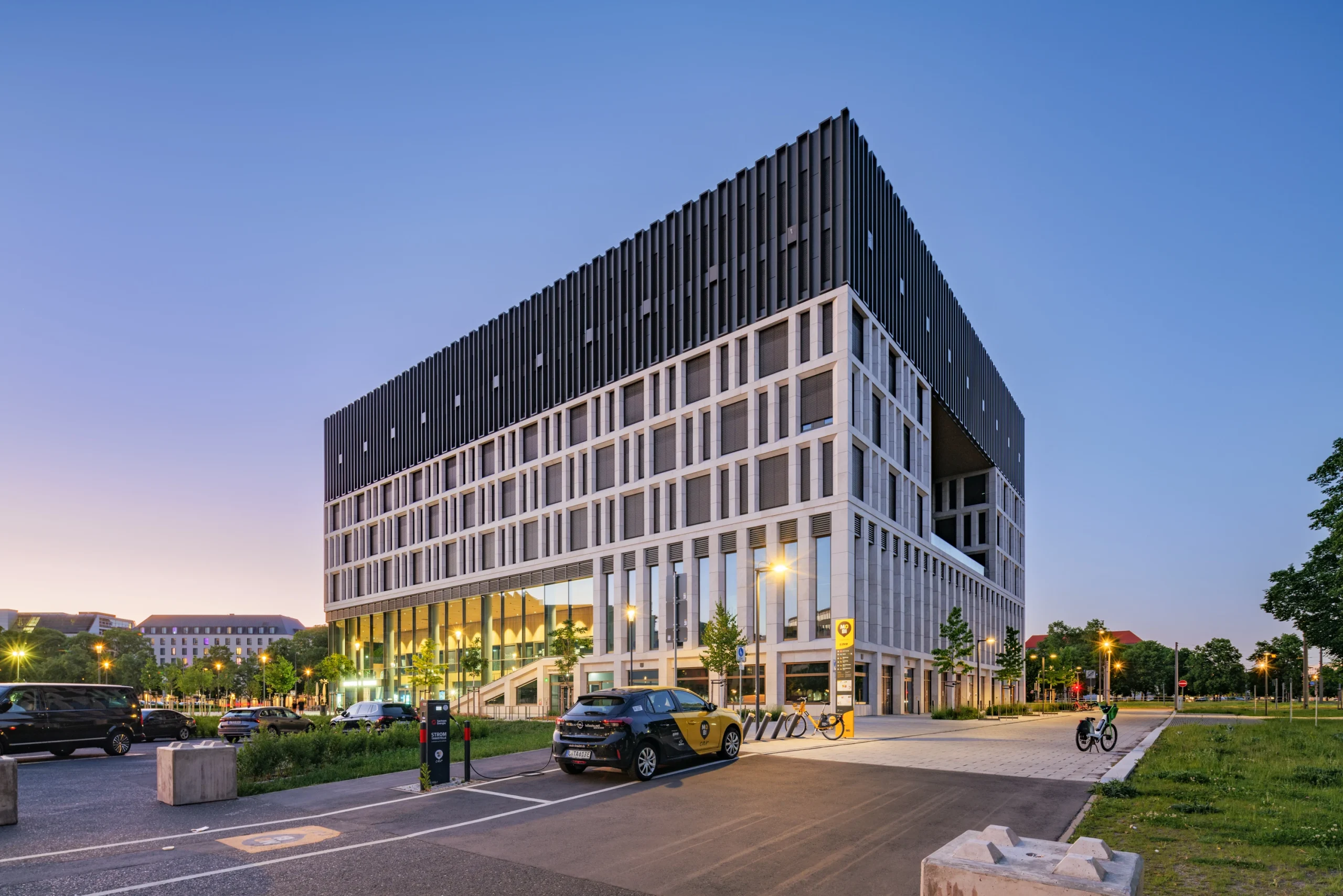
Covering nearly 35,000 square metres, the building was conceived as an office complex and also a civic destination where public administration, culture, exhibitions, and community interaction coexist under one roof. The project reached completion in March 2025 following a three-stage invited competition won by the design team.
Transforming a Historic Urban Void
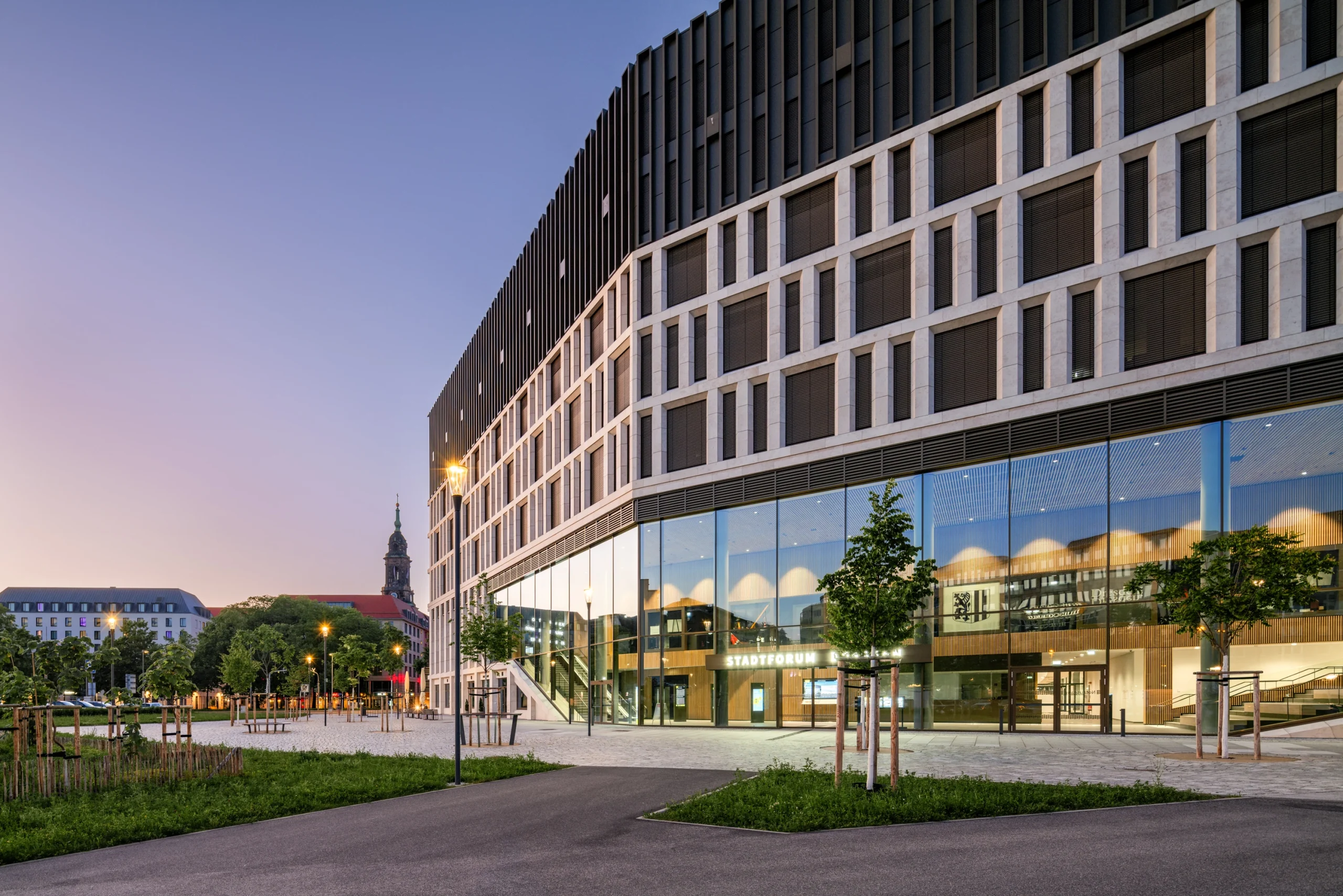
The site occupied by Stadtforum remained largely undeveloped after the area was destroyed during World War II. The architects used the project to reconnect the surrounding streets and public spaces.
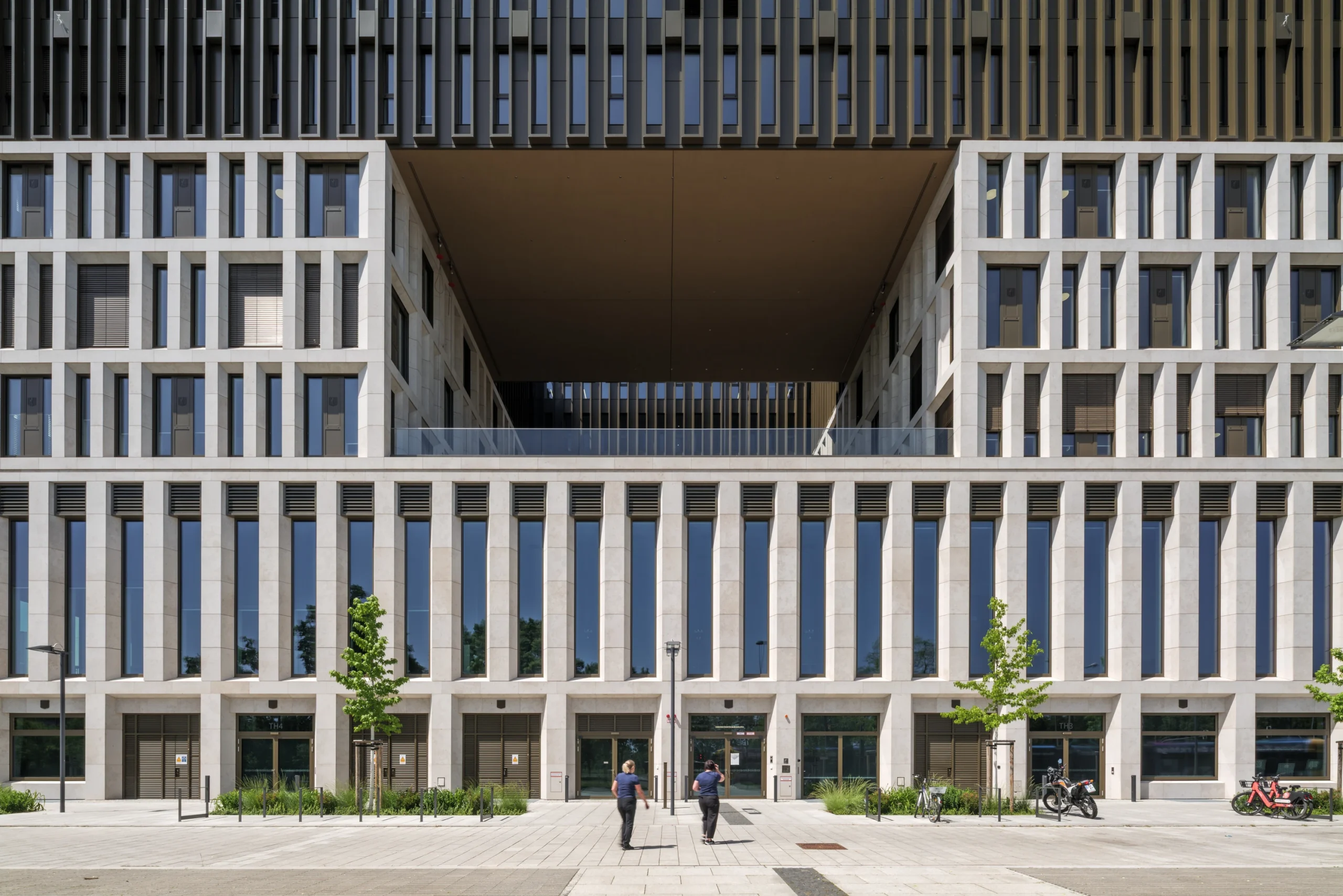
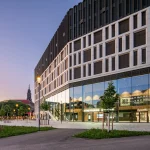
The building follows the geometry of neighbouring streets, creating a new polygonal public square on its southern edge. Positioned at the threshold of Dresden’s historic centre, it acts as a transition between the dense urban fabric and the extensive green spaces beyond. Its completion also establishes the first major phase in the wider regeneration of Ferdinandplatz, demonstrating how civic architecture can stimulate future urban development.
A Facade Inspired by Dresden’s Architectural Heritage
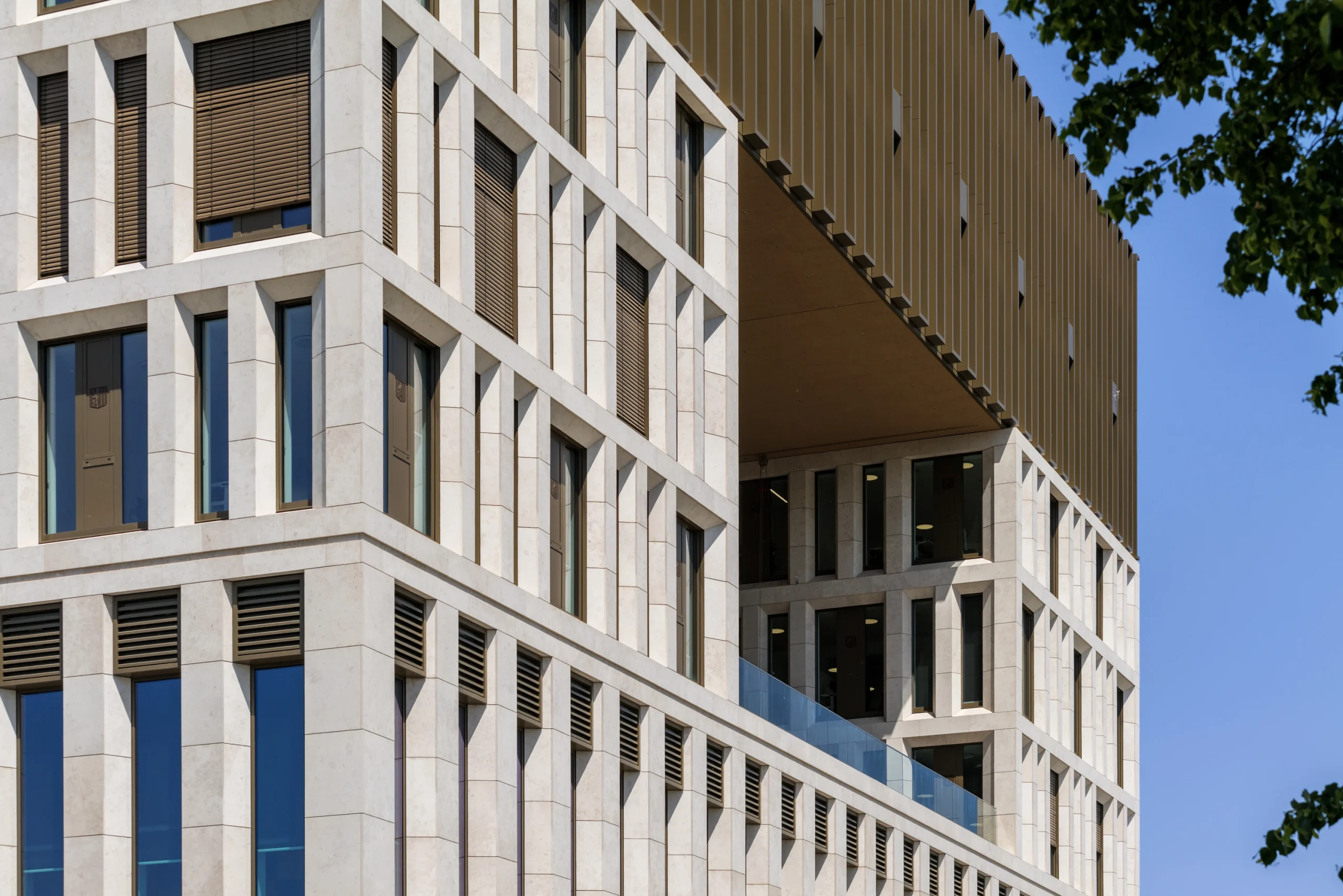
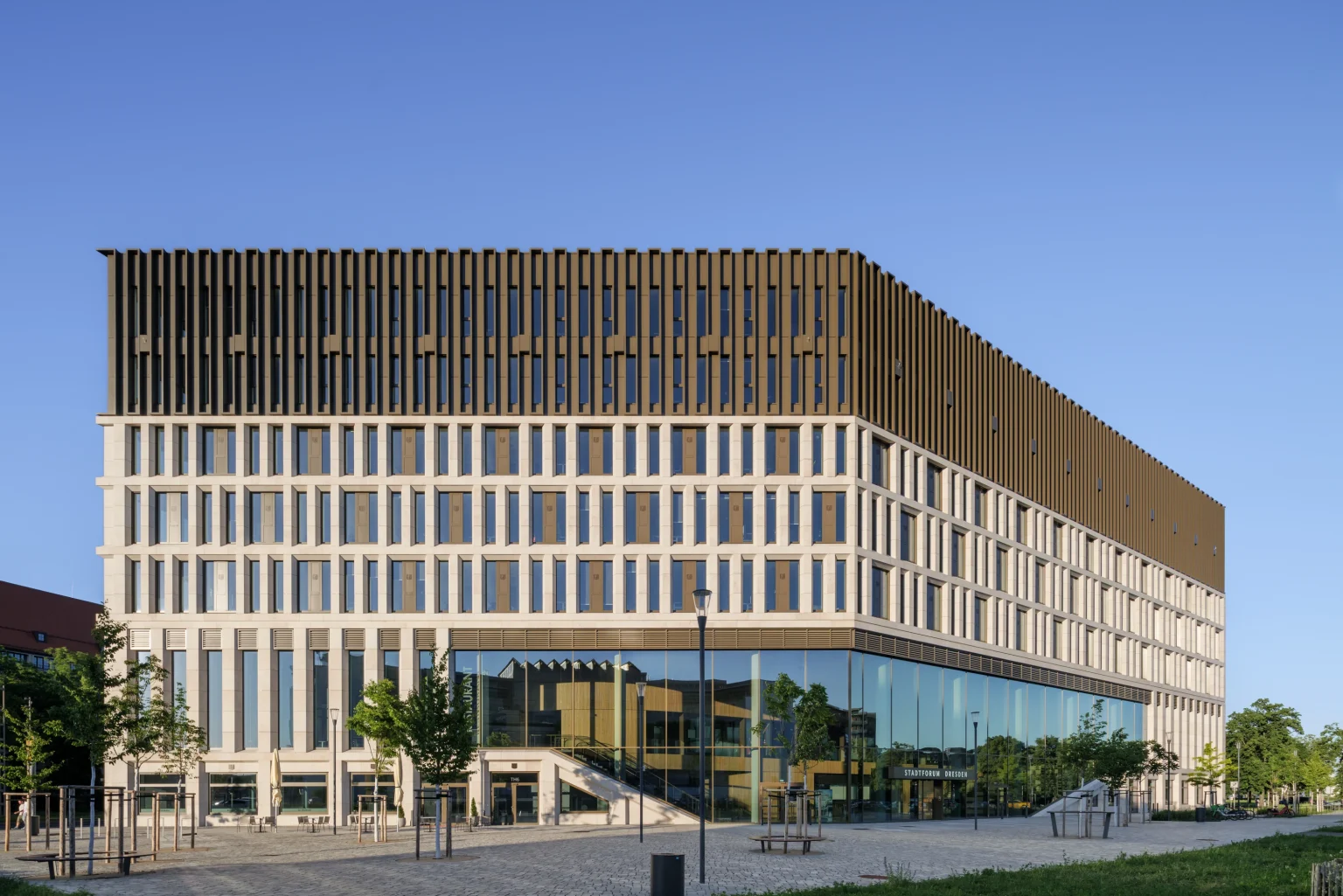
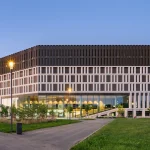
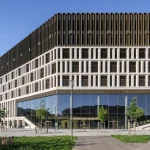
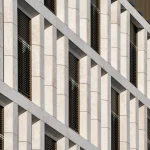
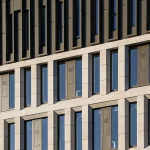
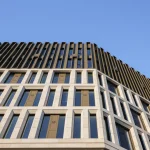
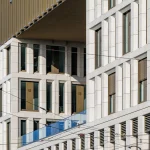
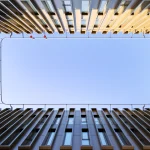
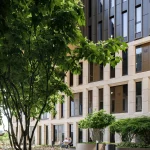
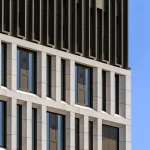
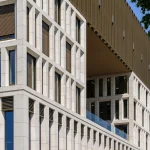
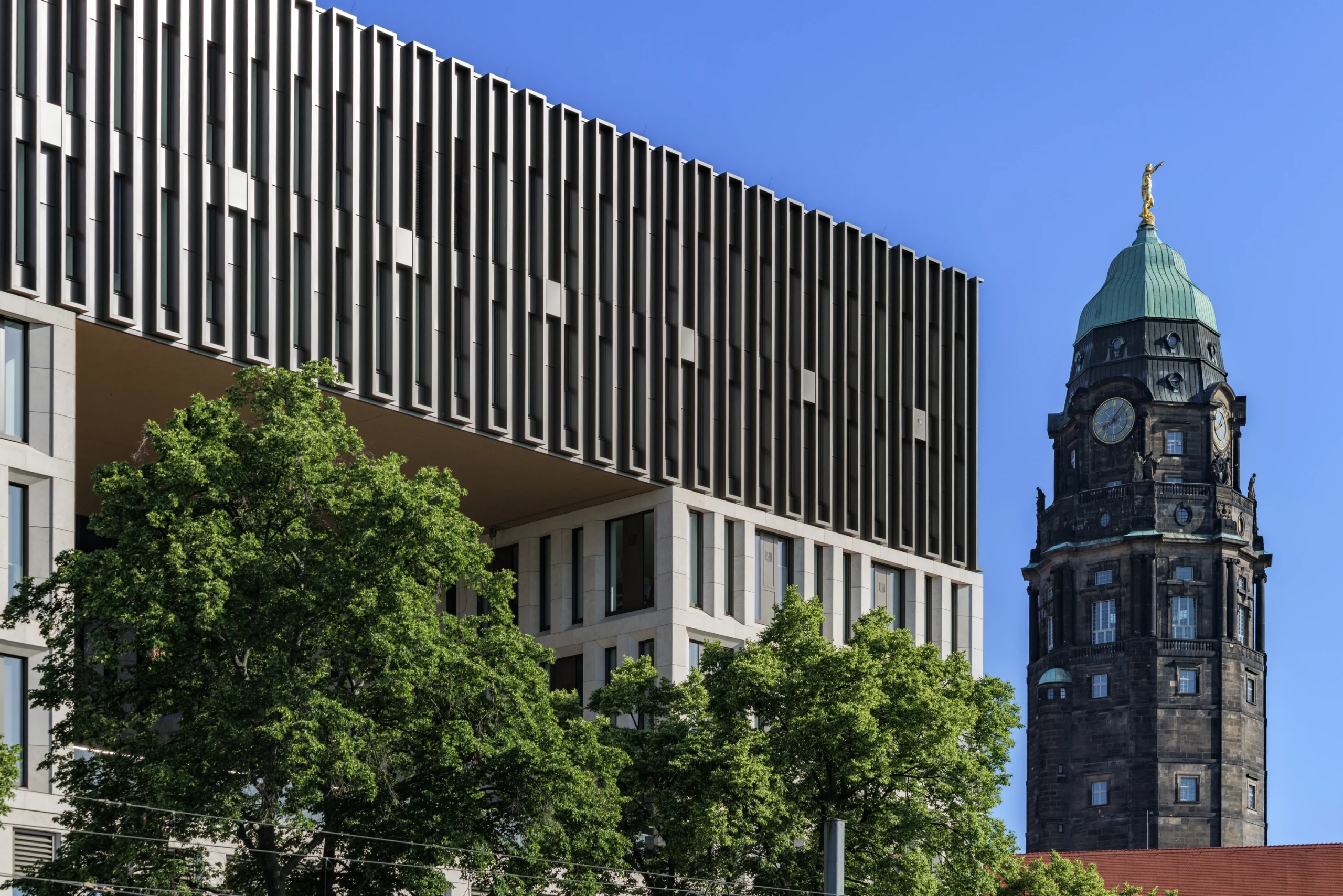
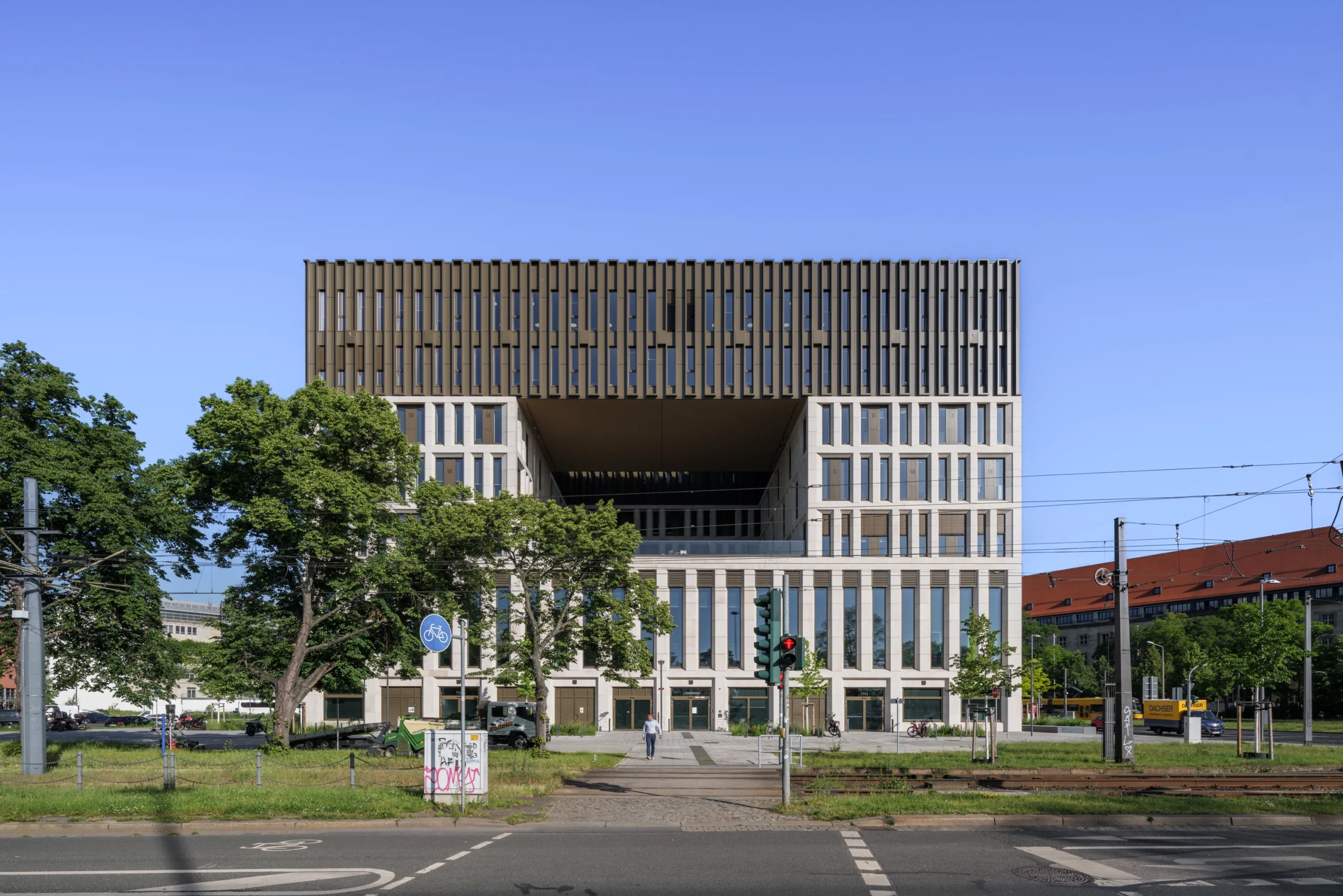
The architecture balances contemporary design with references to Dresden’s historic civic buildings. The facade is organized into three distinct horizontal layers: a stone base, a middle section, and a lighter metallic upper volume, while a continuous vertical grid creates slender window proportions characteristic of the region.
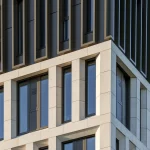
Large sculptural openings carved into the building become “windows to the city,” framing important urban views and introducing daylight deep into the interior. The principal entrance facing Ferdinandplatz is marked by a dramatic two-storey glazed opening, while another panoramic opening on the north facade overlooks the historic City Hall.
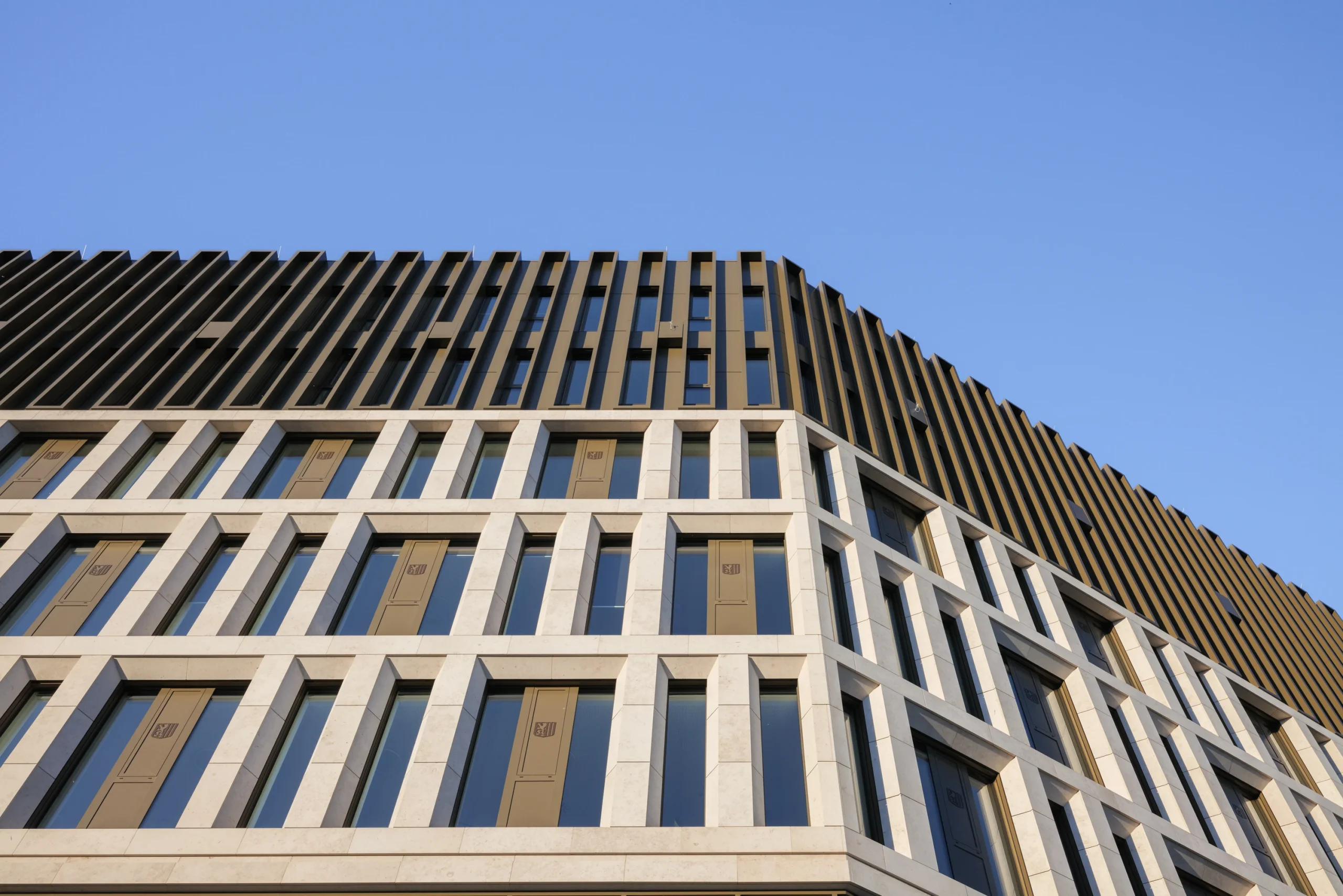
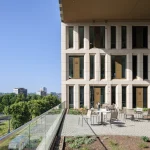
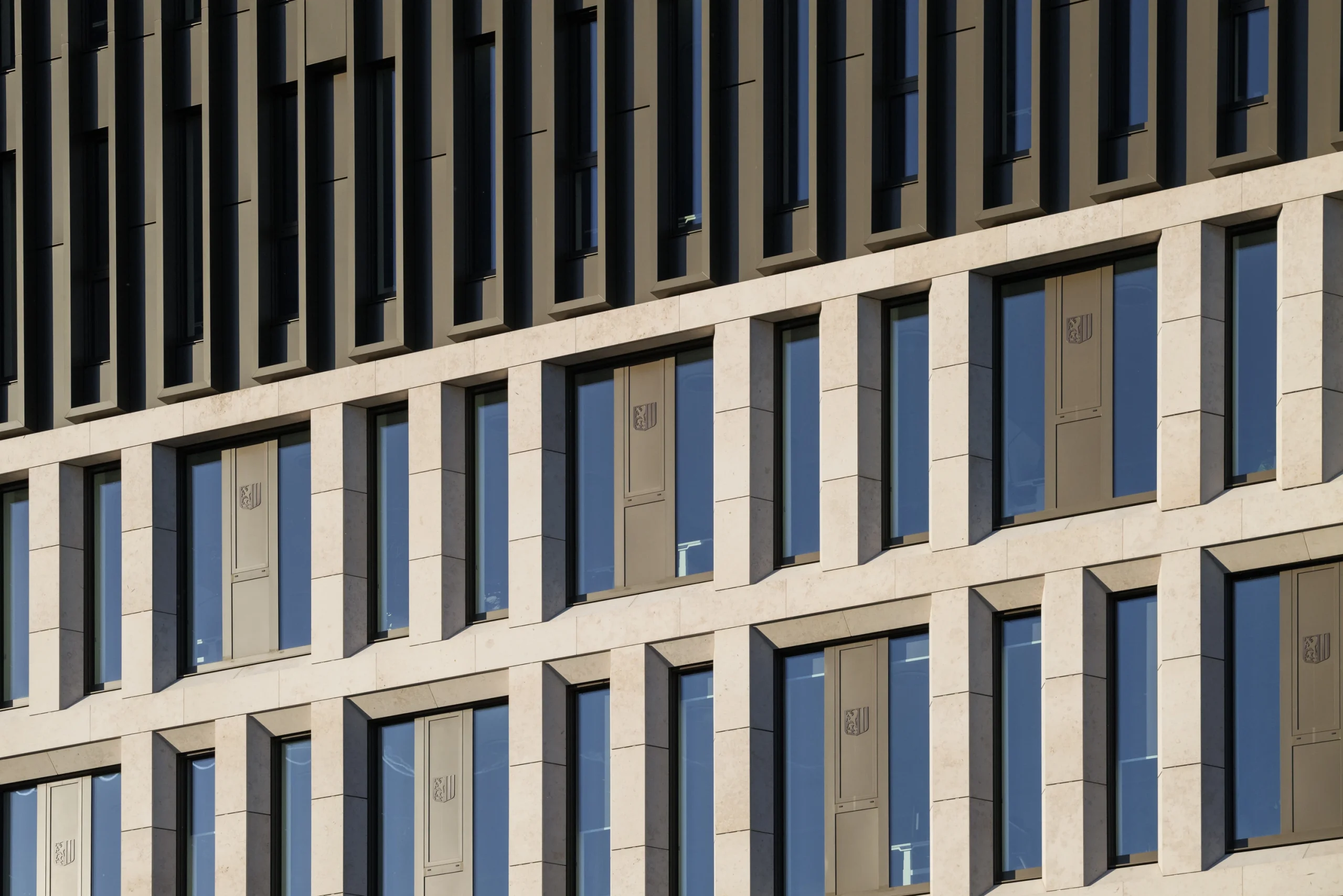
Natural Dietfurt limestone, selected for its visual similarity to Dresden’s traditional sandstone architecture, gives the building a refined appearance. Sculpted versions of the city’s coat of arms are integrated into stone lintels and shutters, reinforcing the building’s civic identity while adding texture and rhythm to the facade. Above the limestone base, bronze-coloured aluminium framing defines the metallic upper storeys, visually merging into Dresden’s historic roofscape when viewed from the surrounding streets.
Designing a Public Building Around Civic Life
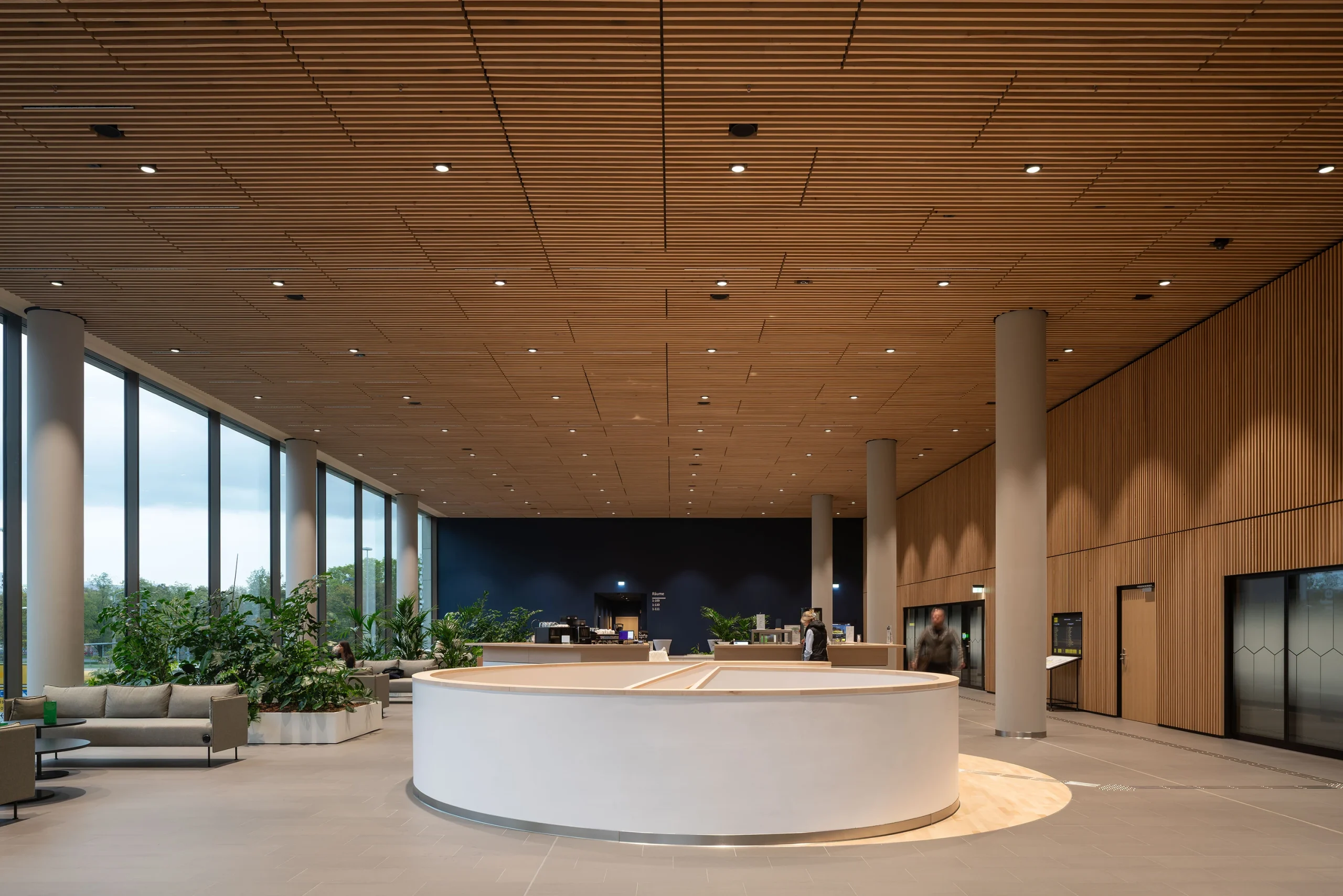
Unlike conventional administrative offices, Stadtforum prioritises public accessibility. The ground floor accommodates citizen services, including reception facilities, consultation areas, a restaurant, and the city’s lost-and-found office.
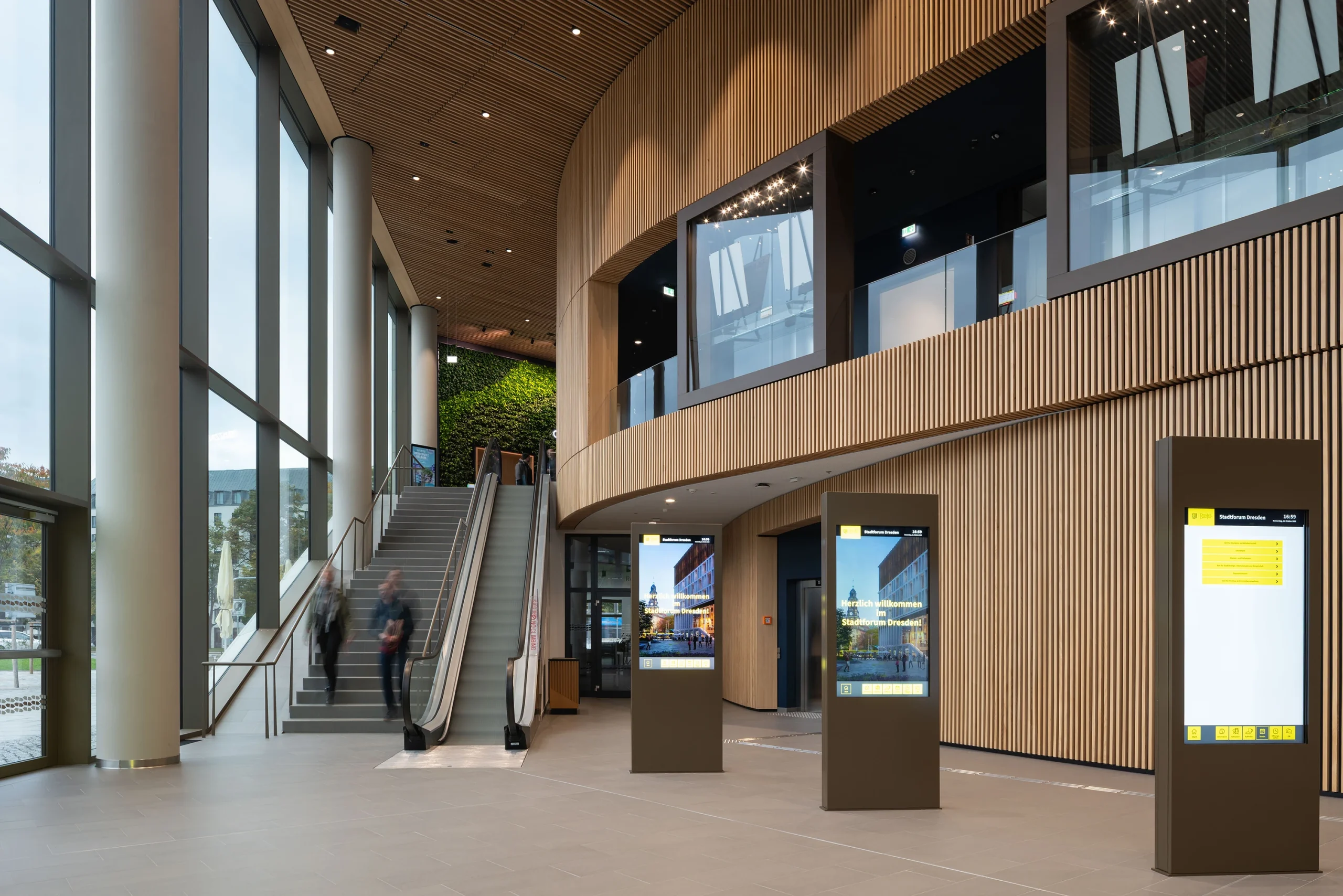
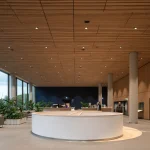
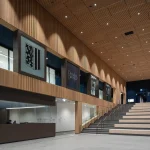
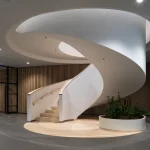
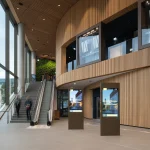
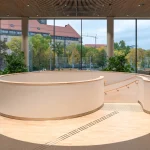
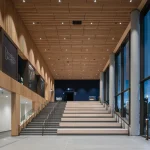
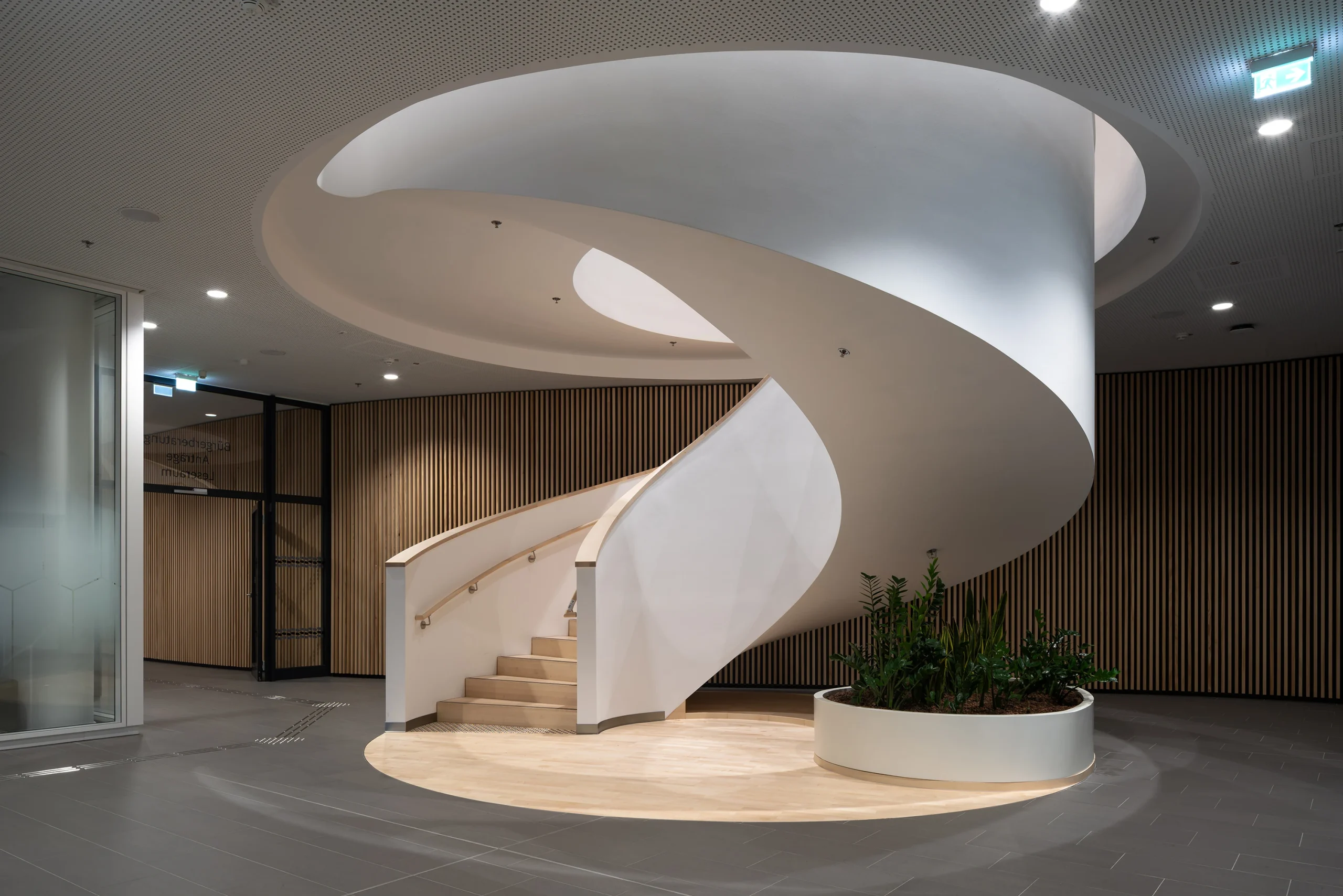
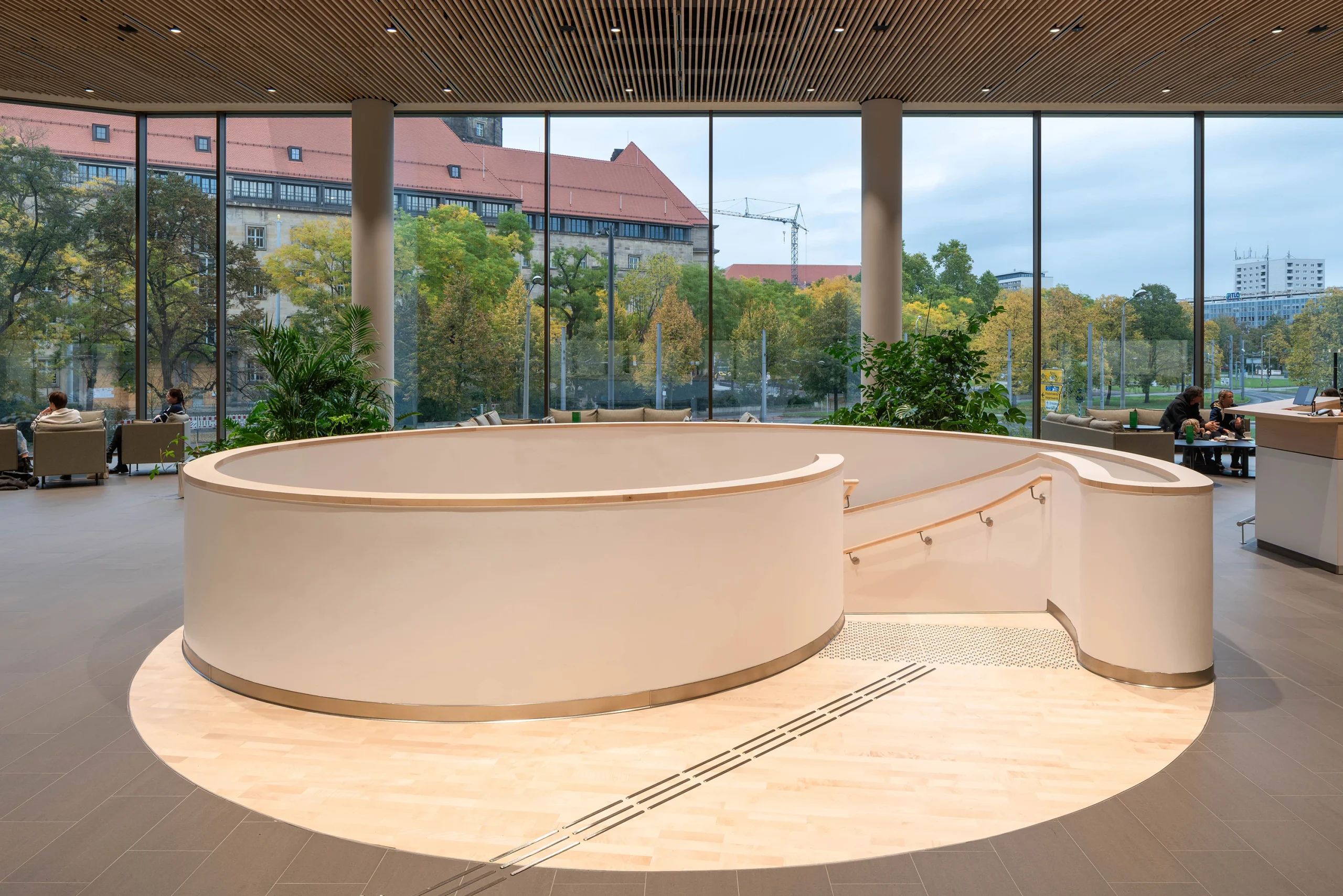
The first floor expands these public functions with exhibition galleries, archaeological displays, a large city model, and a conference centre. At the heart of these spaces lies the Agora, a multi-level public gathering area connected by open staircases and spiral circulation routes. Designed to accommodate up to 1,200 visitors, the Agora combines lounges, cafés, exhibitions, and informal meeting areas into one interconnected civic space.
Natural Materials Shape the Interior
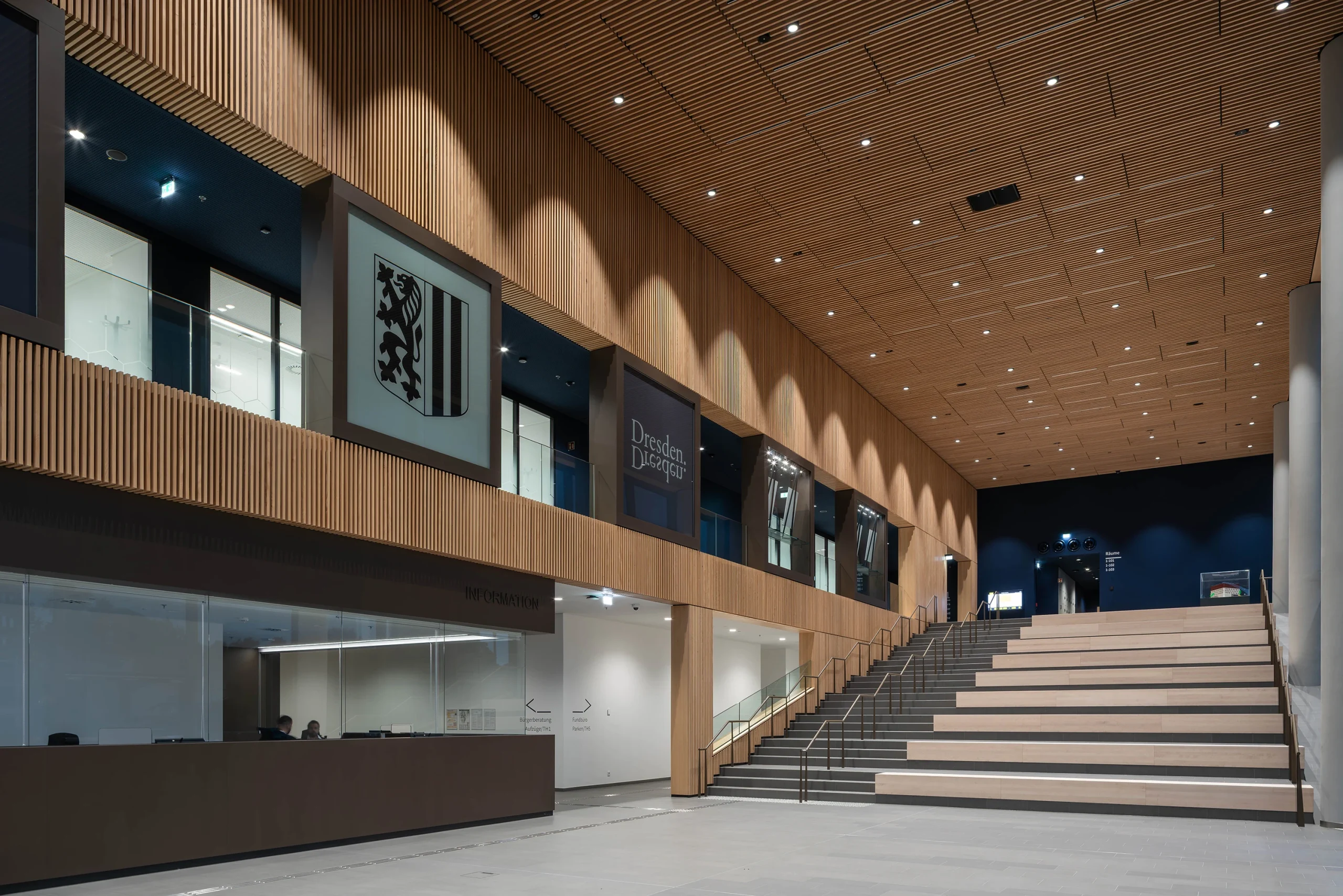
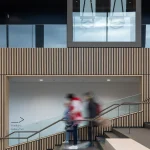
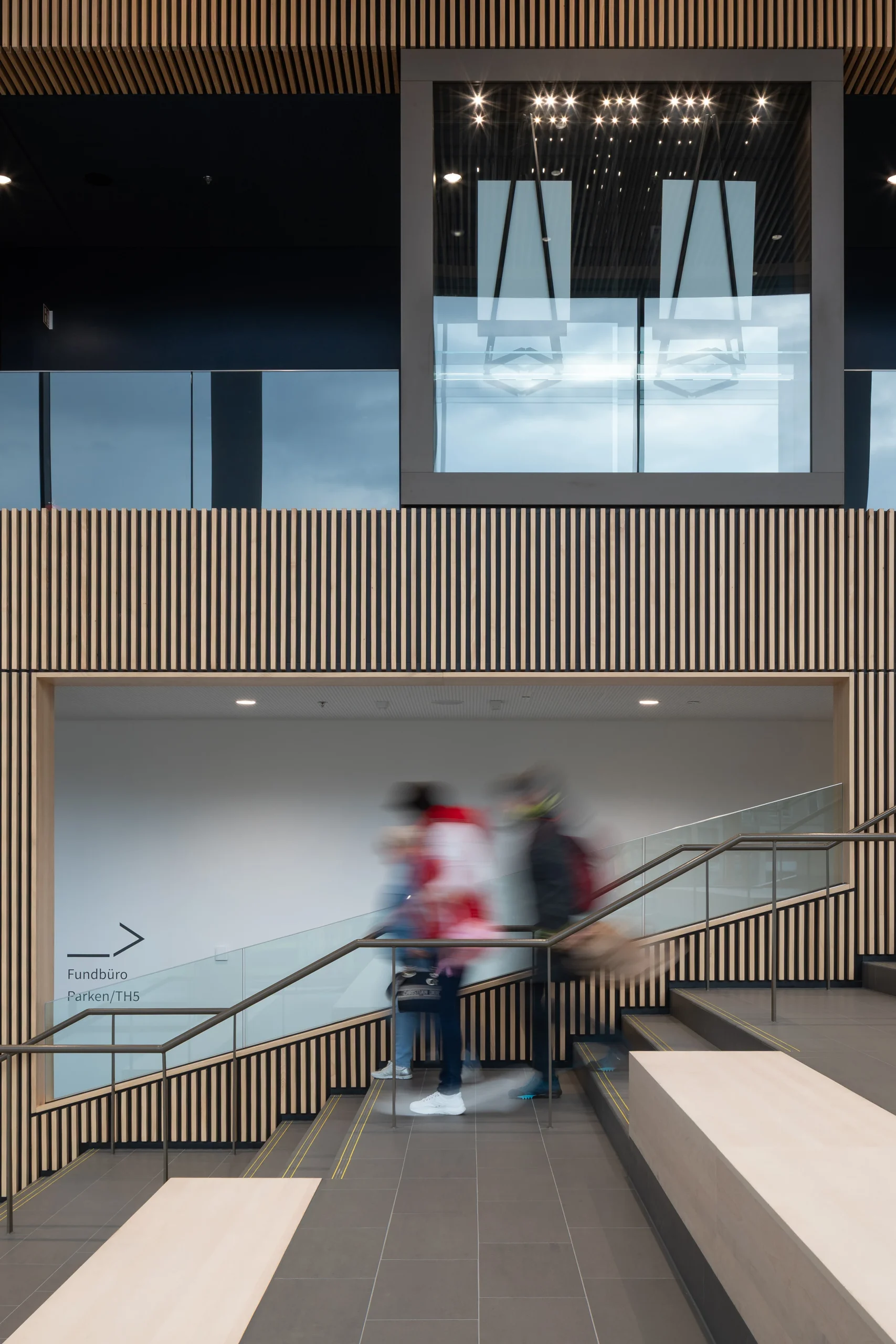
The interior continues the material language established on the exterior. Bronze-coloured finishes and grey flooring echo the facade, while walls clad with silver-toned timber slats introduce warmth and improve acoustic comfort.
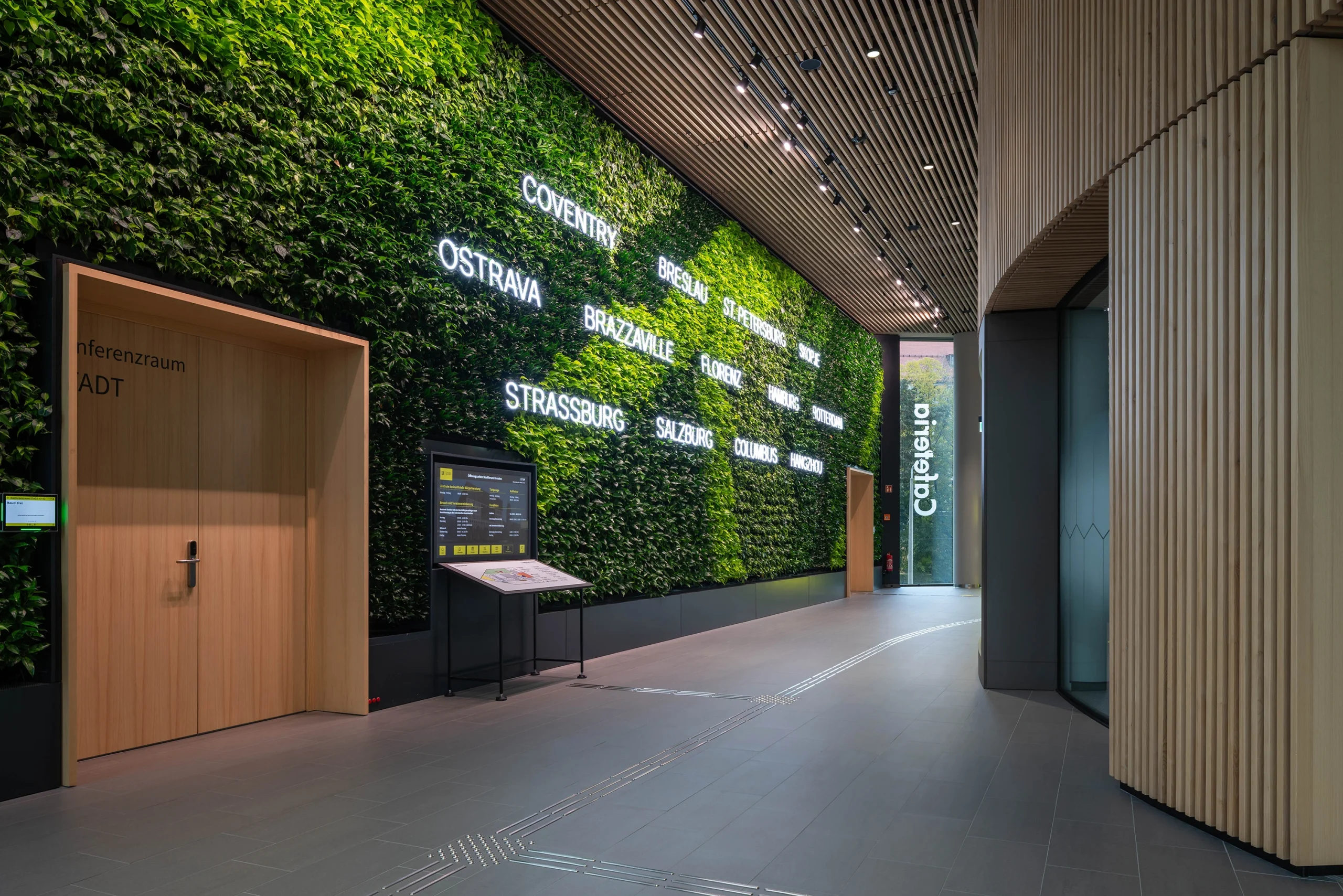
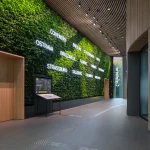
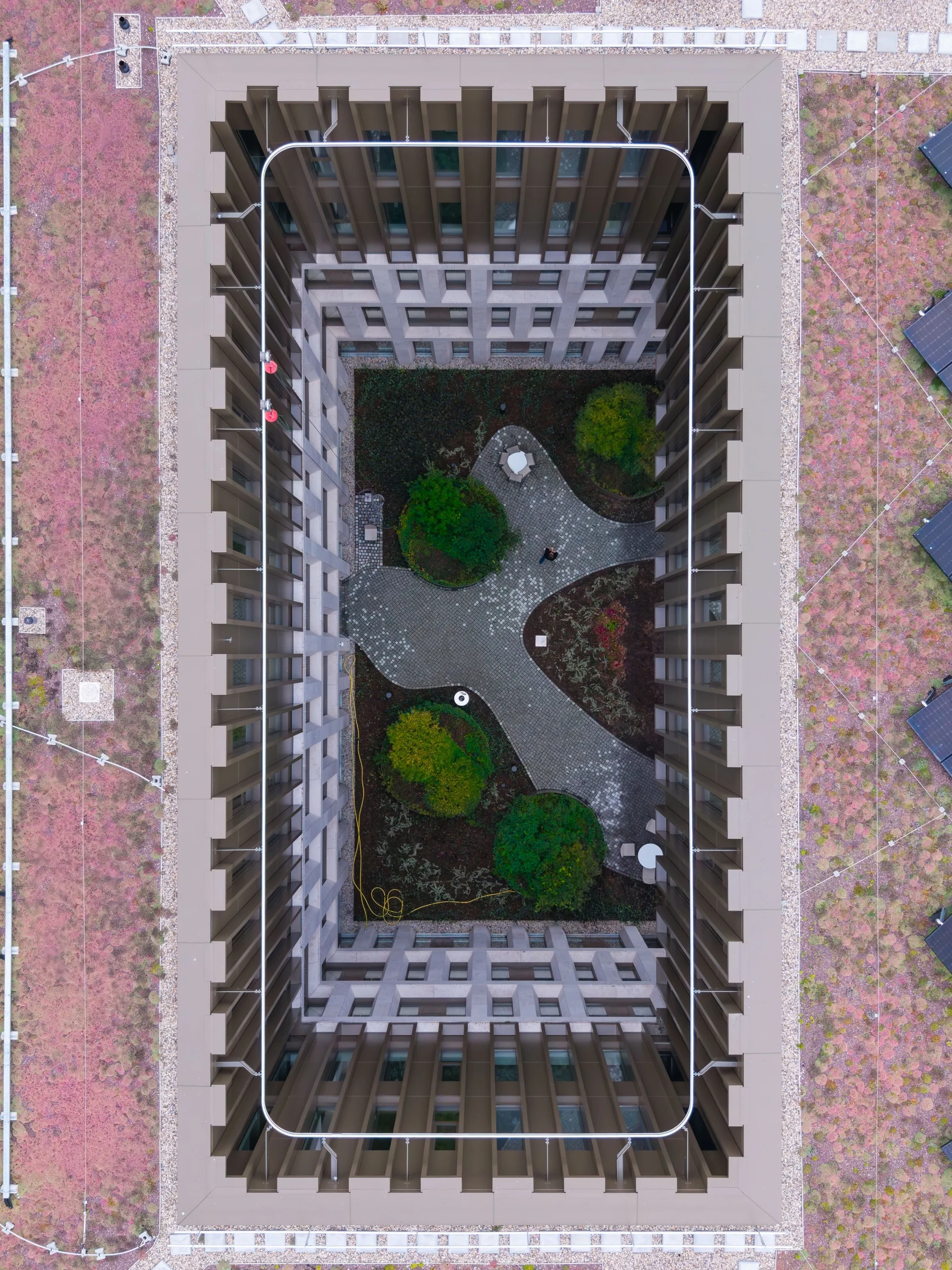
One of the building’s most distinctive interior elements is a 100-square-metre living green wall extending the full height of the circulation space leading toward the Agora. Equipped with an automatic irrigation system, the vertical garden enhances indoor environmental quality while strengthening the visual connection with the landscaped courtyards.
Flexible Workspaces for Modern Public Administration
The five upper office floors accommodate more than 1,000 municipal employees within a workplace designed around flexible working principles.
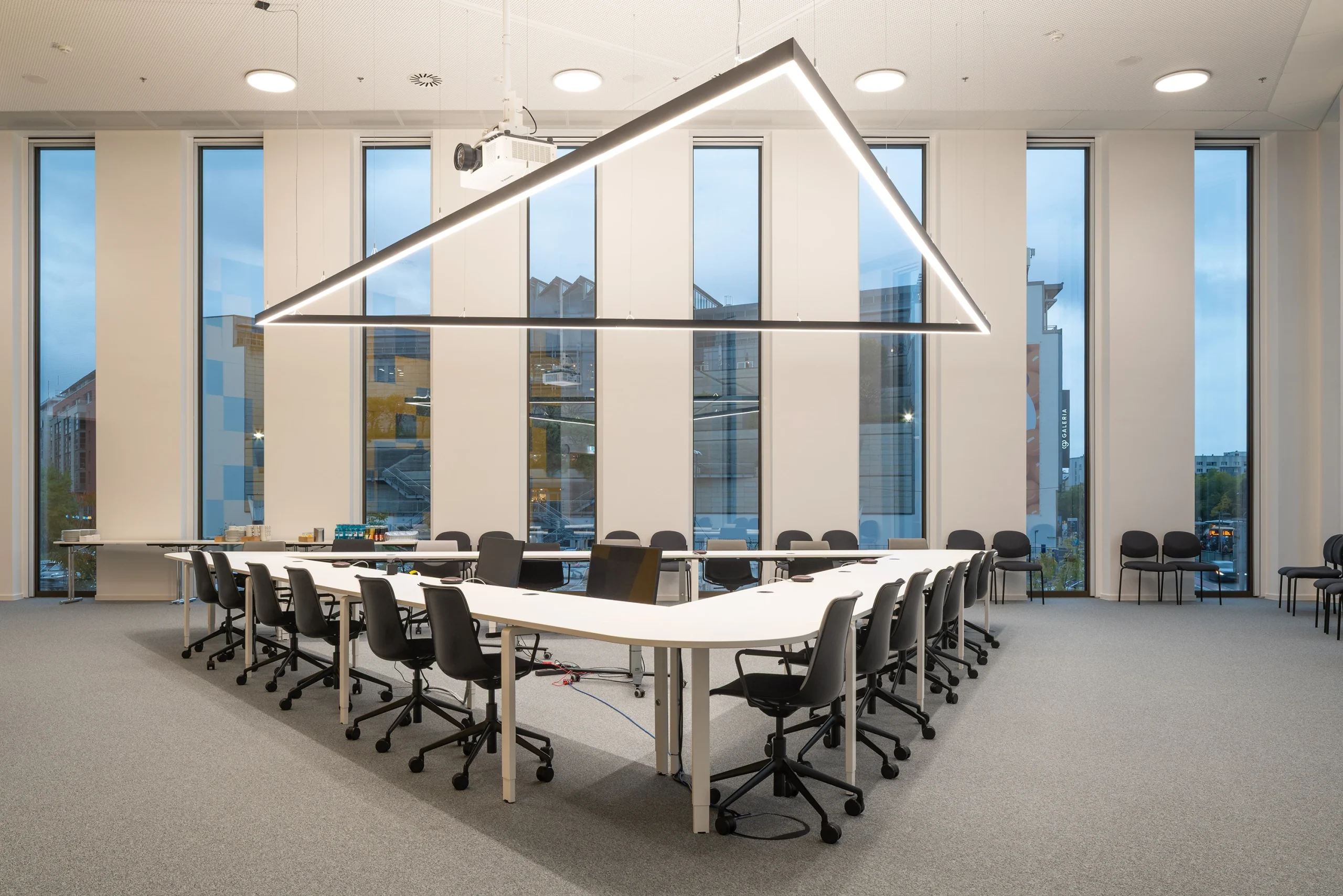
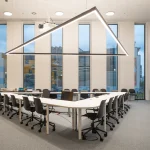
Using a digital booking system, staff can choose work environments that best suit their daily tasks. Alongside conventional offices, the building provides collaborative work islands, informal discussion areas, quiet focus rooms, phone booths for virtual meetings, and meeting rooms of varying sizes.
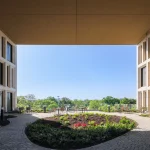
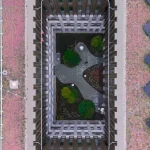
Green internal courtyards supply daylight to office floors while carefully engineered acoustic ceilings, specialised carpets, and textile sound absorbers improve workplace comfort and reduce noise throughout the building. Two underground levels house public parking, municipal vehicle facilities, extensive bicycle storage, changing rooms, and technical infrastructure.
Energy Performance and Sustainable Infrastructure
Environmental performance formed a central part of the design strategy. Stadtforum meets Germany’s KfW-55 energy standard and has received BNB Silver certification for sustainable construction.
The highly insulated building envelope works alongside an innovative heating strategy that utilises return flow from Dresden’s district heating network. Smart night-time ventilation reduces cooling demand by using naturally lower outdoor temperatures.
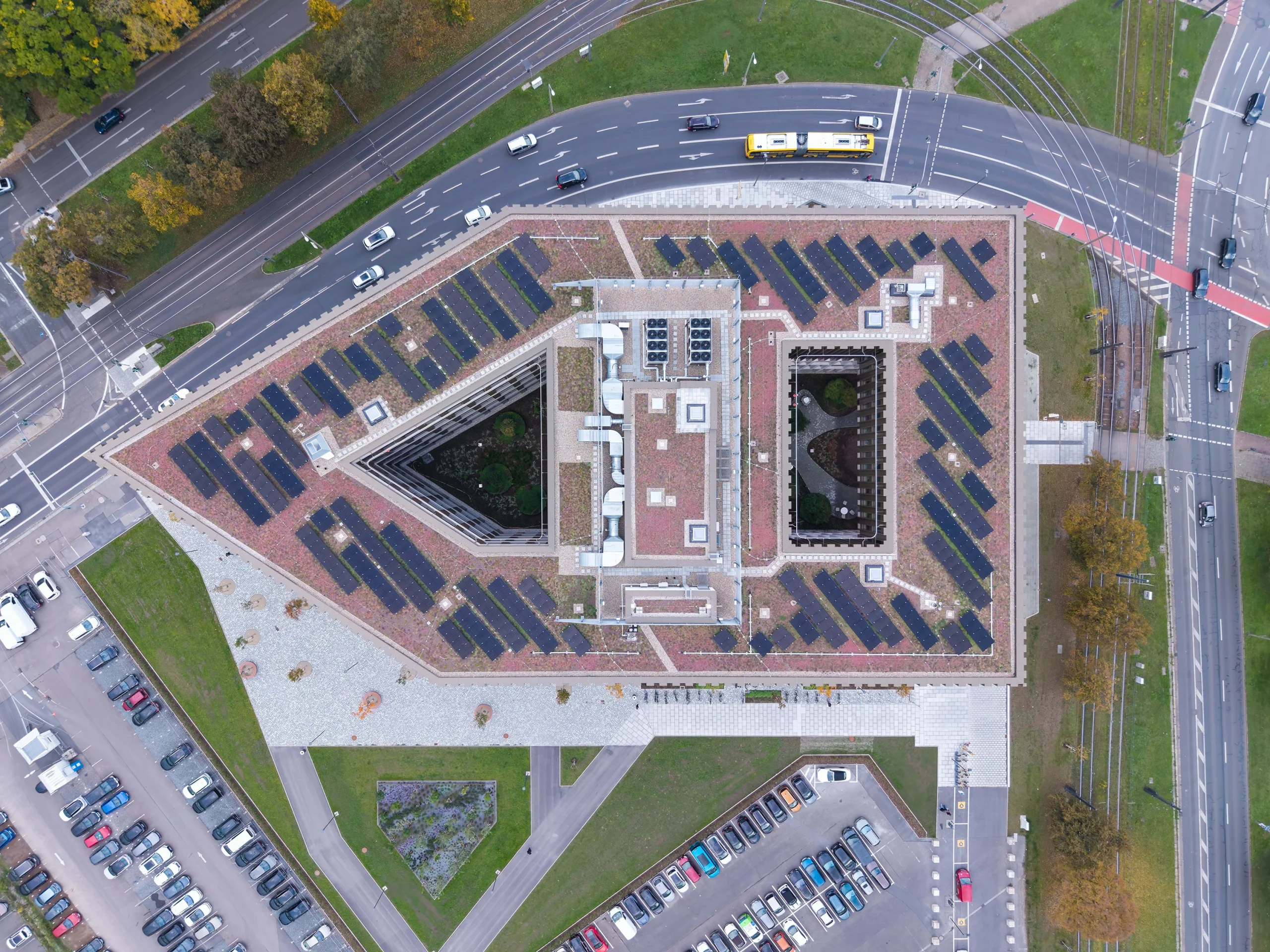
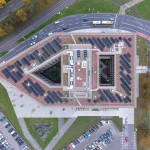
The extensive green roof incorporates 376 east-west-oriented photovoltaic modules, while also slowing rainwater runoff into underground infiltration systems to improve drainage and support the site’s microclimate. Throughout the building, barrier-free circulation, tactile guidance systems, and accessible public spaces ensure universal access for visitors and staff alike.
Security Integrated Into Everyday Operation
Given its civic function, the building incorporates multiple layers of security without compromising public accessibility. Graduated security zones, controlled access systems, surveillance infrastructure, and continuous security services meet regional requirements for public administration buildings.
Additional resilience measures include a comprehensive sprinkler system, emergency power supplied through backup generators for selected functions, and carefully planned fire protection strategies that improve flexibility within office floors.
Stadtforum Dresden Project Details
Project: Stadtforum Dresden
Location: Dresden, Germany
Project Type: Administrative Building
Completion: March 2025
Gross Floor Area: 34,917 sq m
Client: Kommunale Immobilien Dresden (KID), City of Dresden
Project Lead: Joerg Rudloff, Philipp Bayer
Lead Architect: TCHOBAN VOSS Architekten
Design Partner: Barcode Architects (Rotterdam)
Landscape Architect: Noack Landschaftsarchitekten
Structural Engineer: Ingenieurgesellschaft Beton-Fertigteil-Bau mbH
Status: Completed
Photography: Egbert de Boer, Klemens Renner