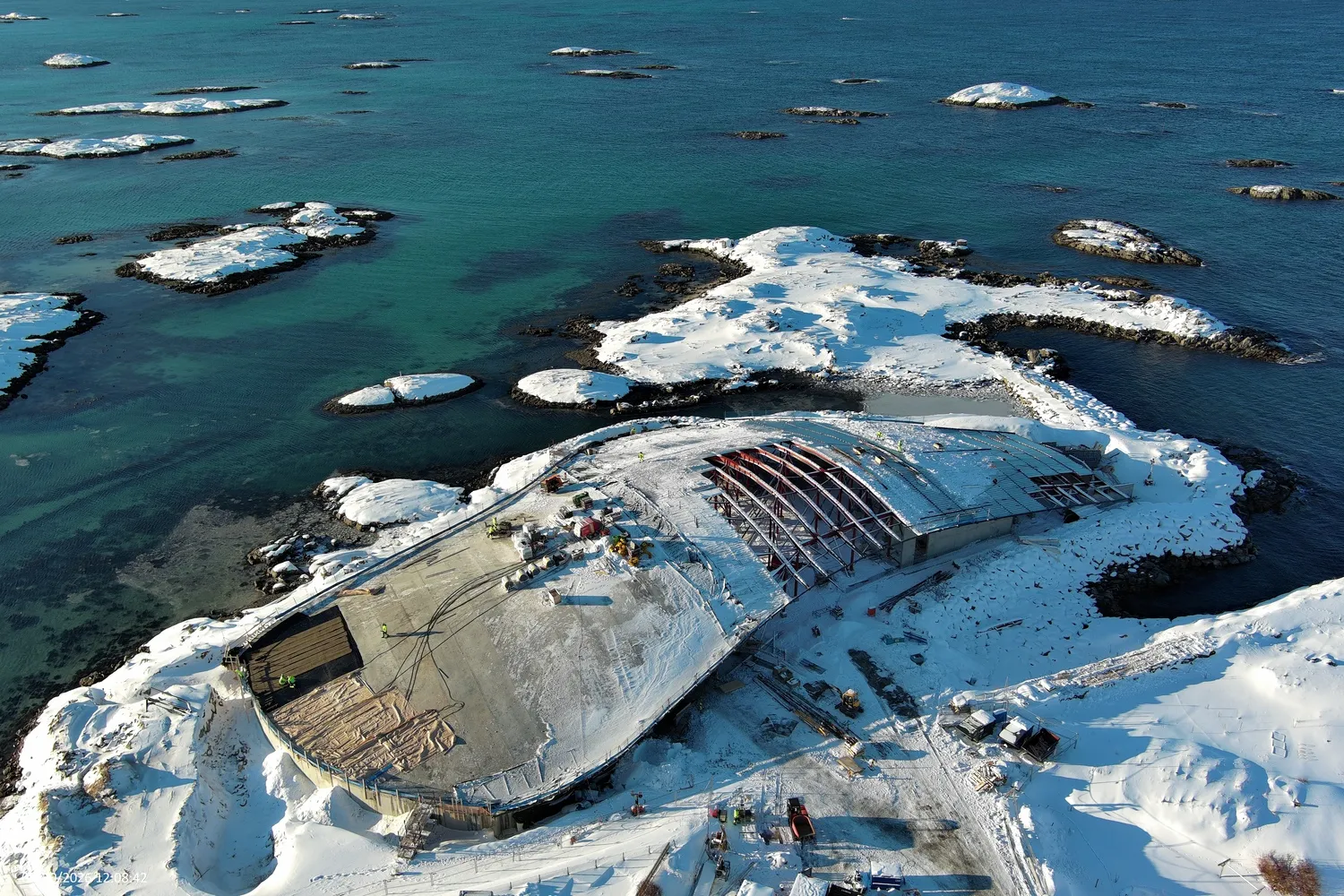

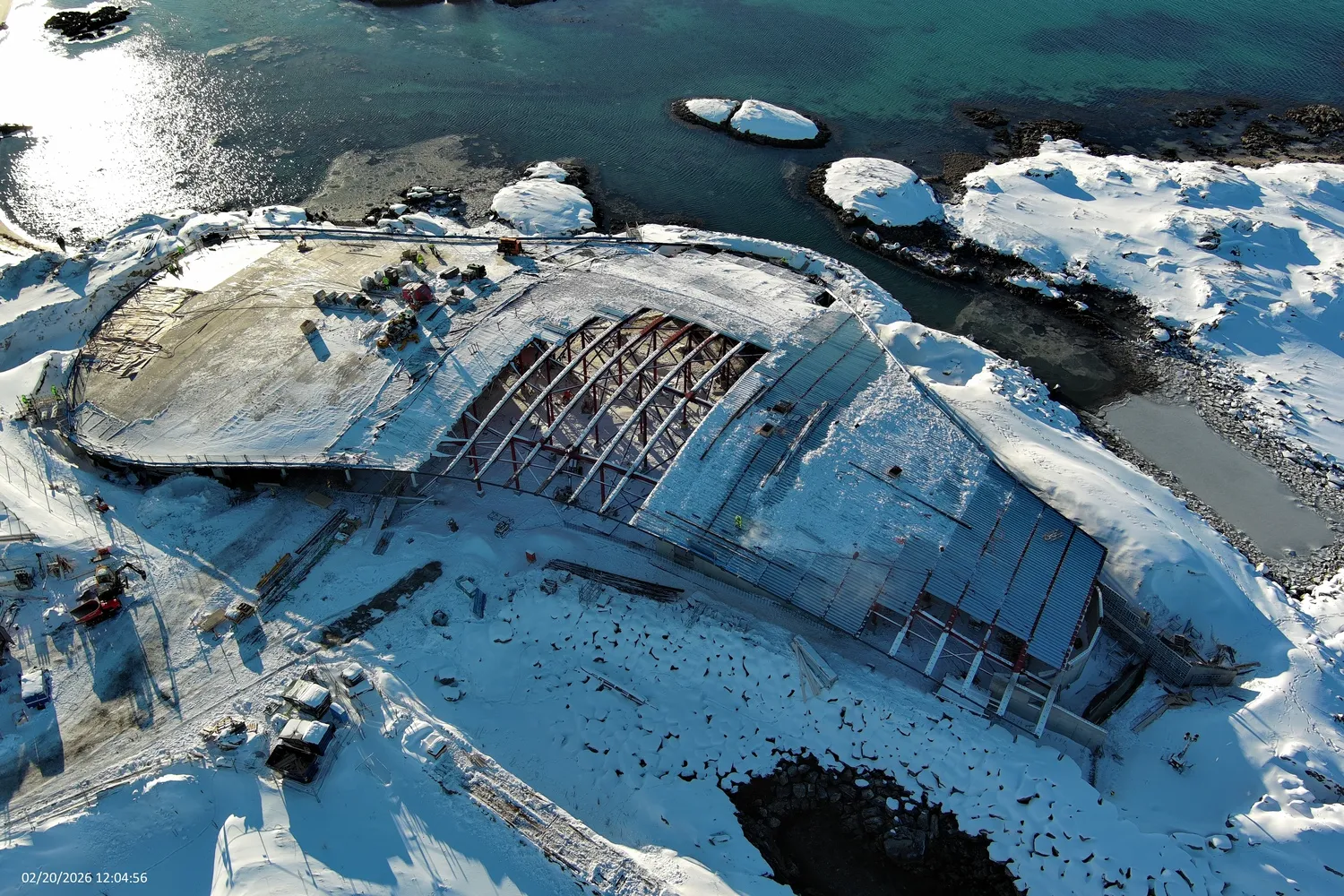
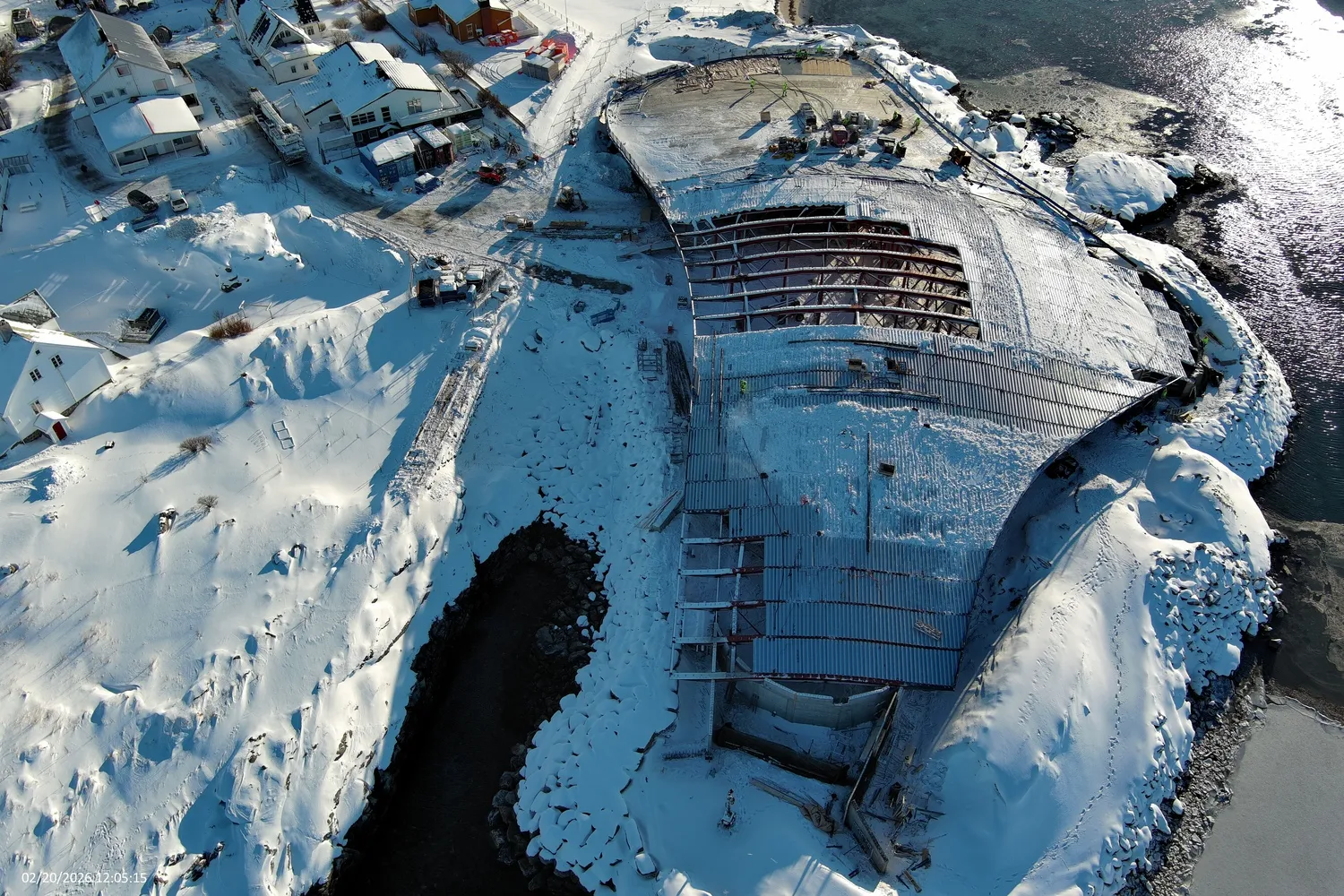
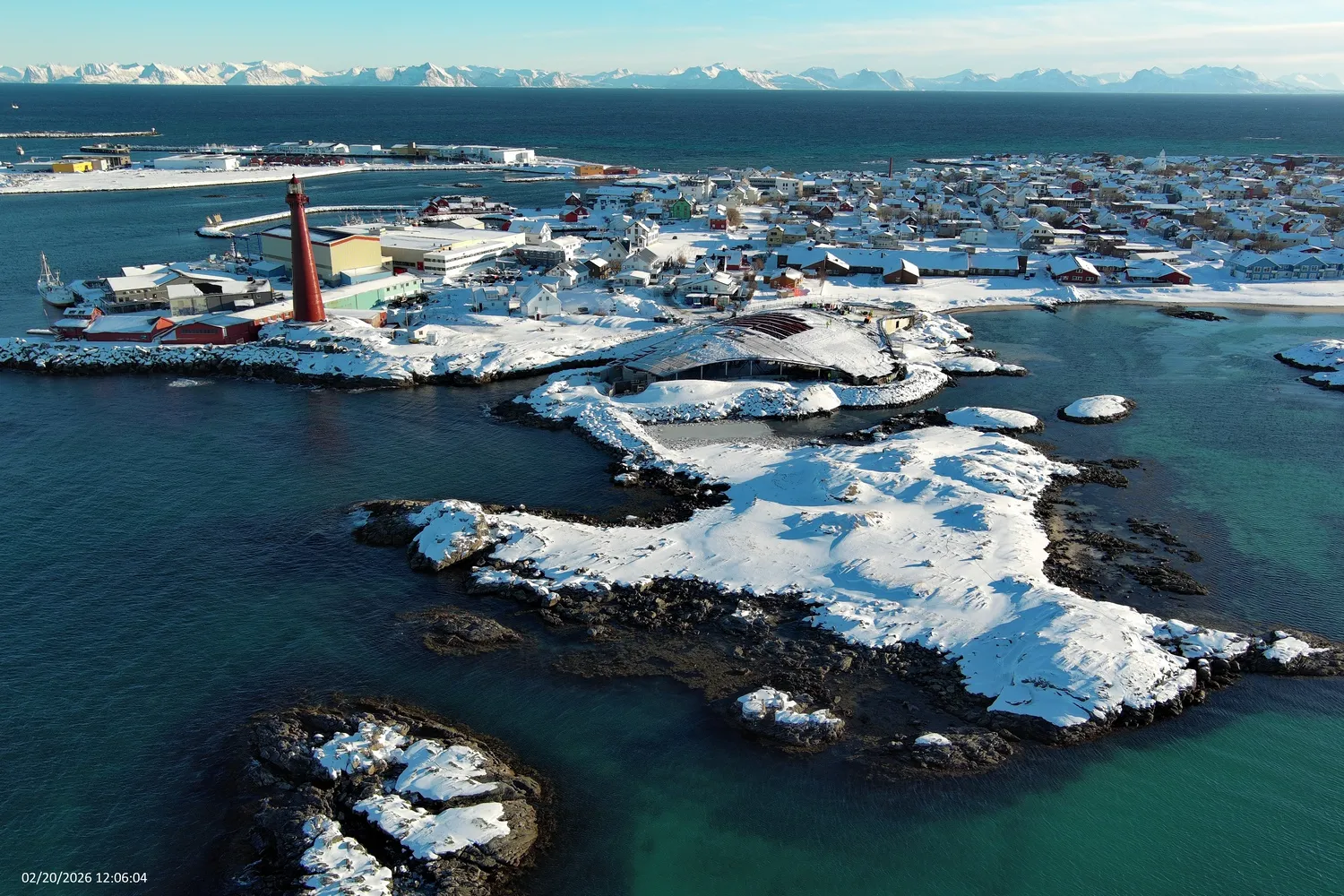
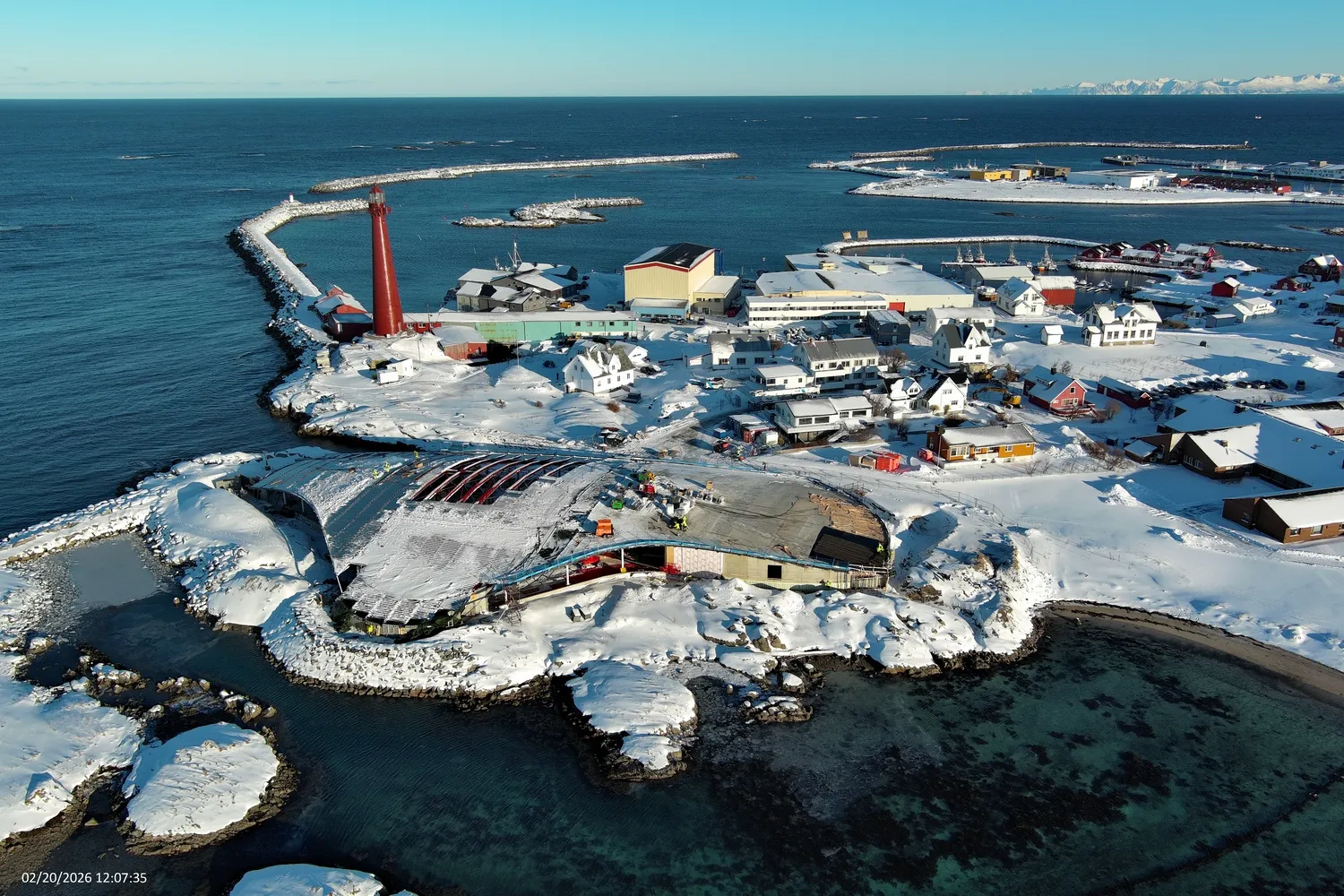
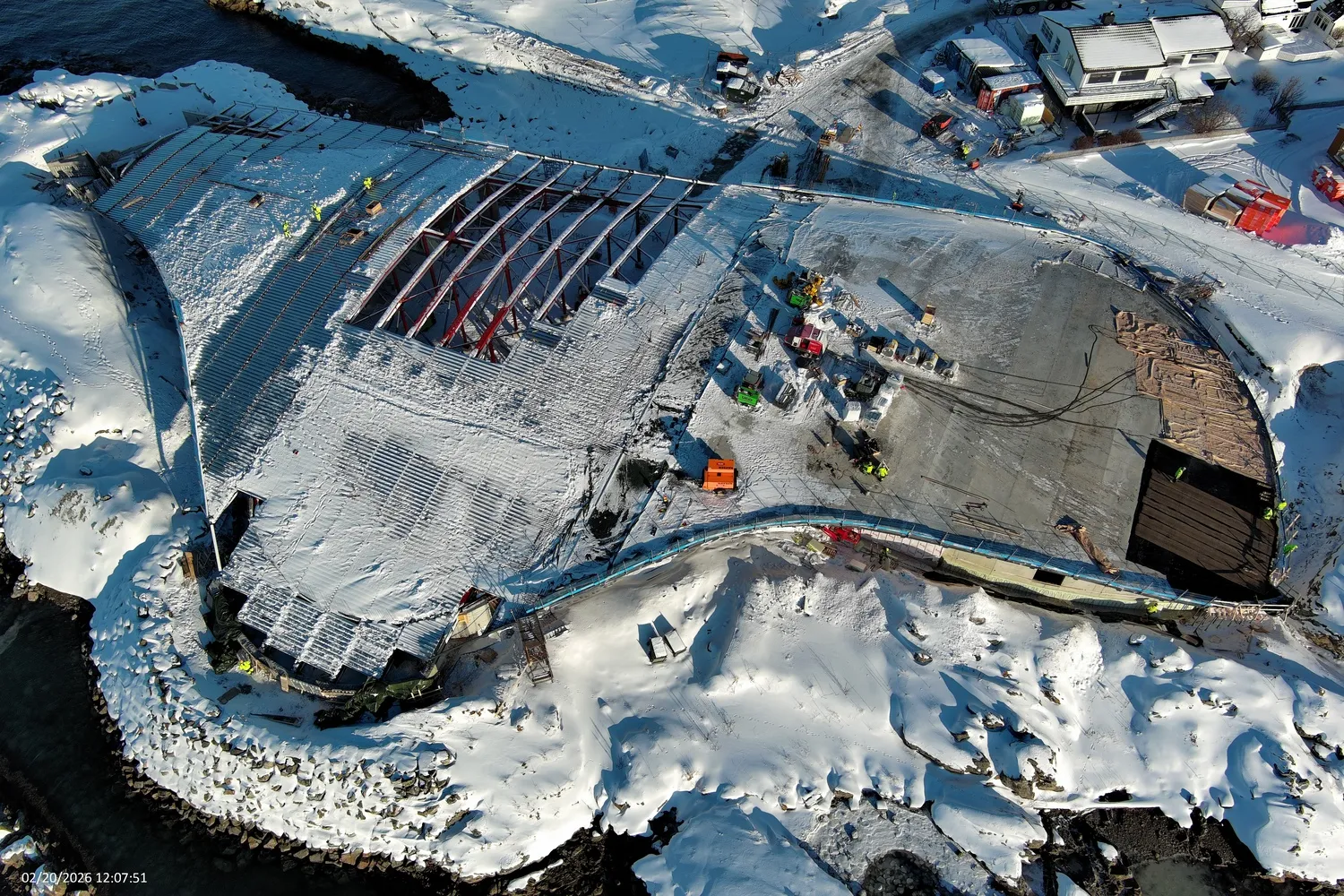
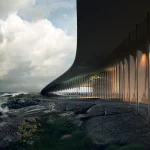
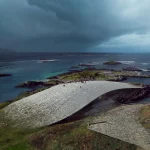
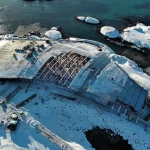
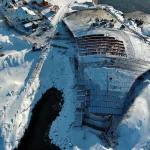
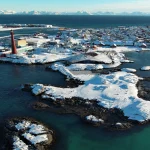
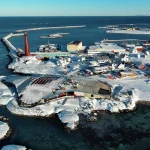
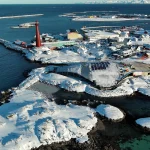
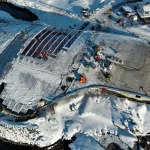
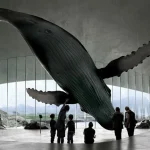
New construction images from Andenes, Norway, reveal The Whale by Dorte Mandrup taking shape along a raw Arctic coastline. The project does not impose itself on the landscape but grows out of it, following the fractured edge where land dissolves into the Norwegian Sea. The structure reads as a low, continuous ripple pressed into the rocky islets, an architectural gesture that feels closer to terrain than building.
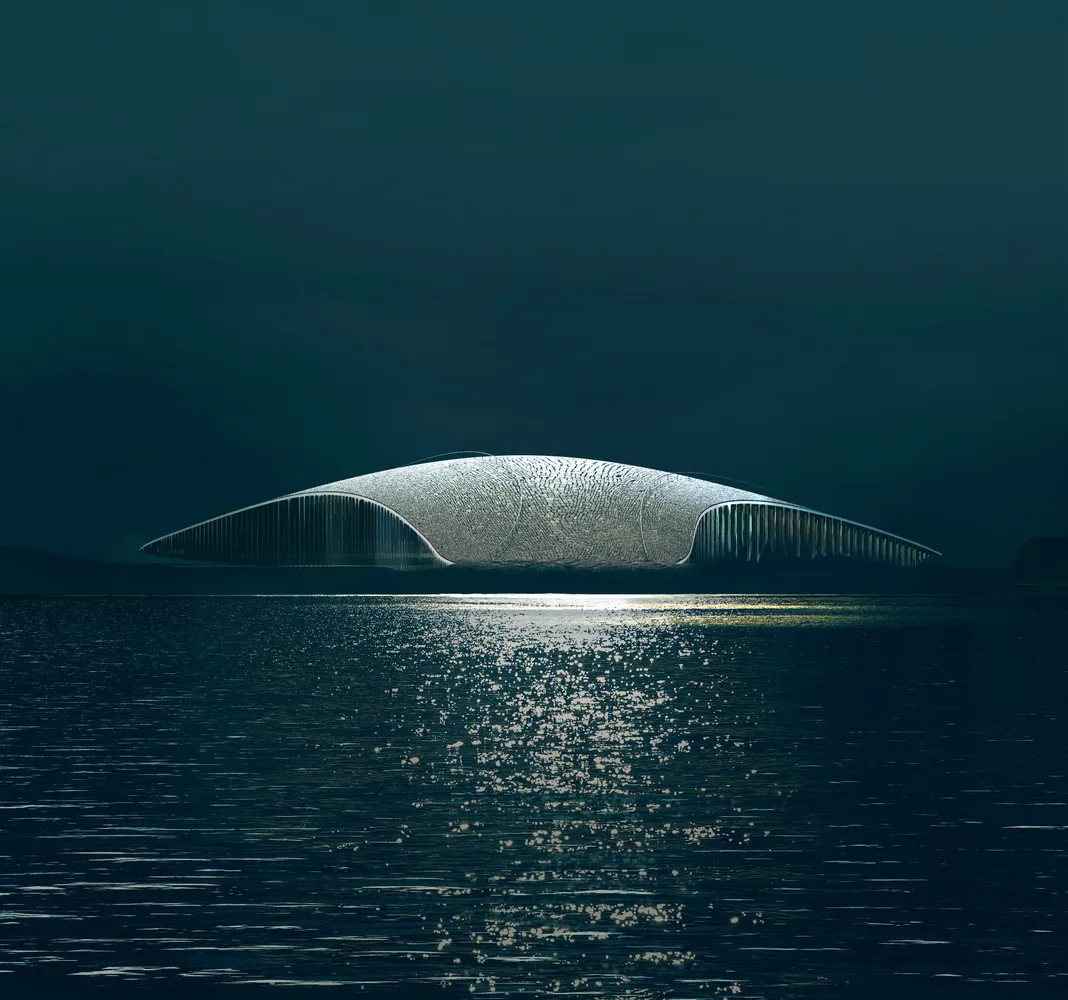
With the lighthouse and coastal settlement of Andenes still present in the background, the intervention remains grounded within a living, working shoreline shaped by wind, water, and time.
A Coastal Form Shaped by Arctic Conditions
The defining presence of the project is its sweeping roof, a broad curve that rises and falls like a frozen wave before meeting the ground at several points. Now visible in steel and concrete, the structure is articulated through a rhythm of ribs that trace its evolving geometry.
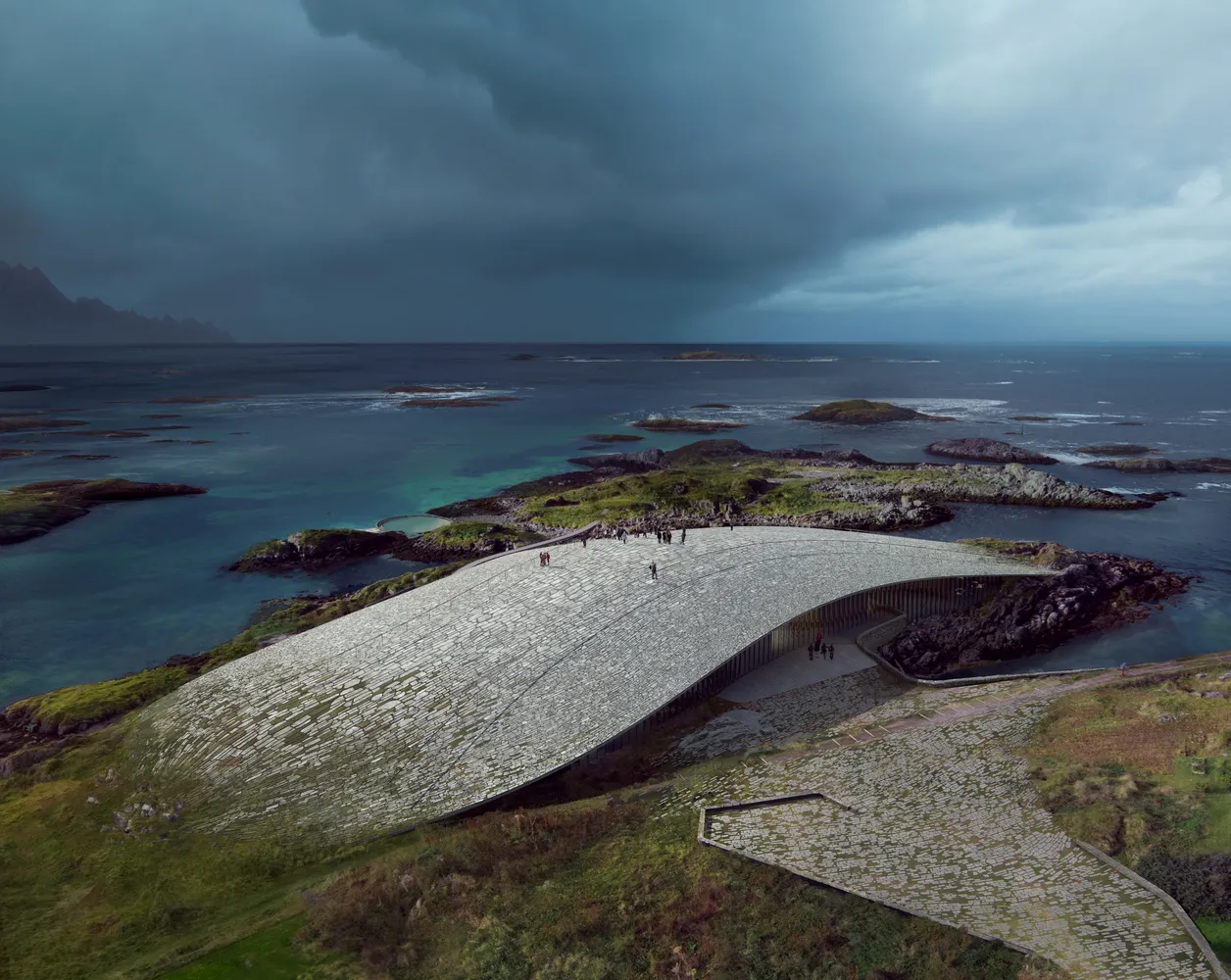
Instead of standing apart from its surroundings, the building is calibrated to the pressures of its environment, such as snow, wind, and salt-laden air, shaping both its silhouette and structure. The form does not sit on the land; it folds into it, responding to the fragile edge where ocean meets rock.
A Living Roof That Extends the Landscape
The roof of The Whale is conceived as a continuation of the Arctic terrain itself. It will eventually be finished in locally sourced stone, arranged in a varied pattern that mirrors the texture of the surrounding coastline. Even in its incomplete state, the intention is legible: the surface is meant to be traversed, not merely viewed.
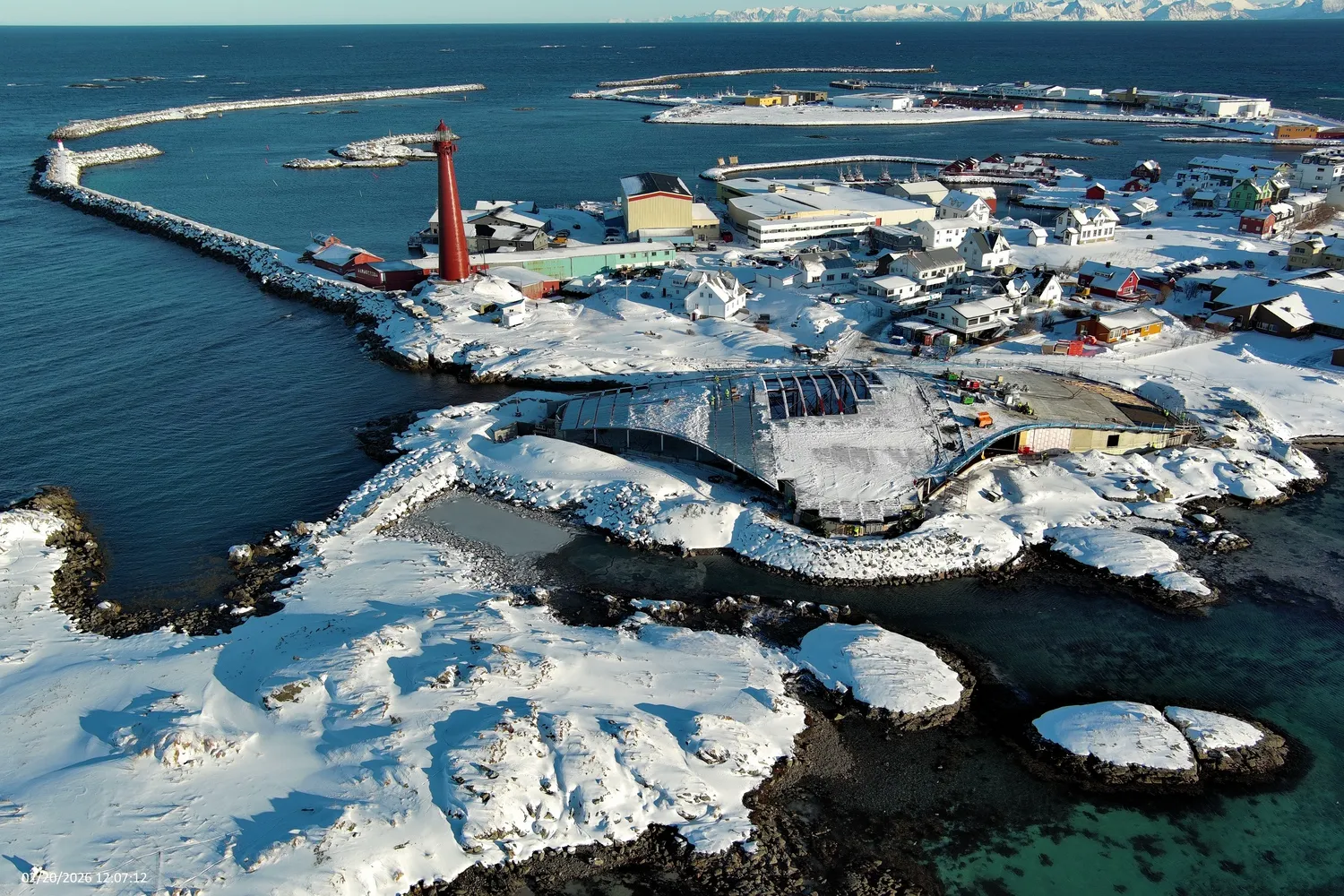
It slopes gently, allowing snow and water to move across it naturally, reinforcing its role as an environmental surface rather than a static covering. Architecture and landscape begin to merge into a single navigable ground.
Interior Spaces Framed by Ocean and Migration Routes
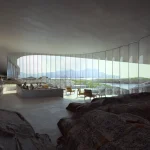
Inside, the building opens toward the Norwegian Sea, aligning its program with the vast marine horizon. Exhibition spaces are arranged along the water-facing edge, where large panes of glass dissolve the boundary between interior and seascape. The material palette remains restrained with concrete, timber, and soft natural light, allowing the surrounding Arctic environment to dominate perception.
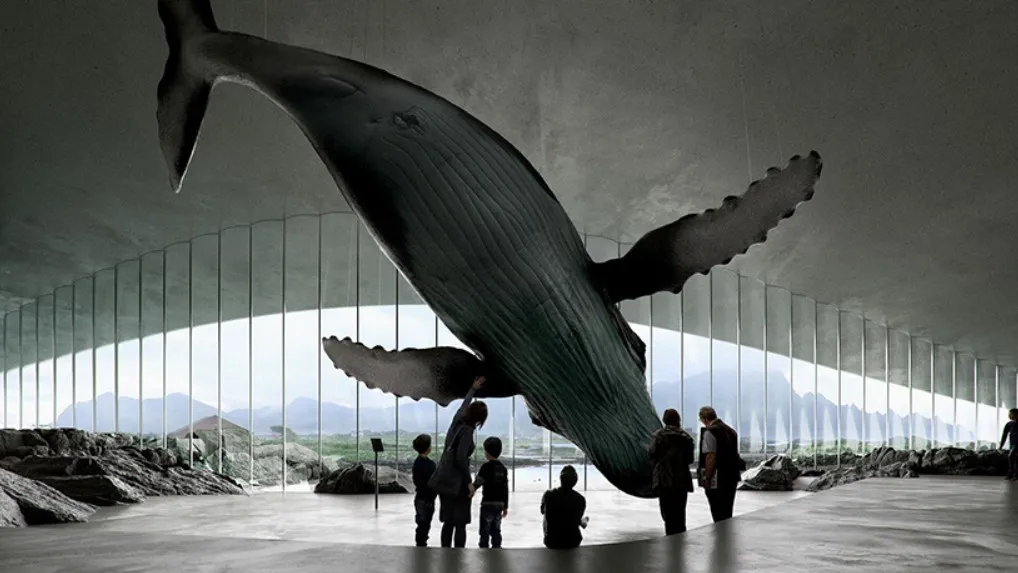
Furniture and exhibition elements remain low and unobtrusive, ensuring uninterrupted sightlines toward the ocean, where whale migration routes shape both narrative and spatial experience.
A Cultural Node Between Research, Ecology, and Coastal Memory
Located near the deep-sea canyon of Bleiksdjupa, the project is embedded within a rich marine ecosystem that informs its purpose and positioning. The Whale brings together exhibition spaces, research functions, and public amenities focused on ocean life and climate awareness.
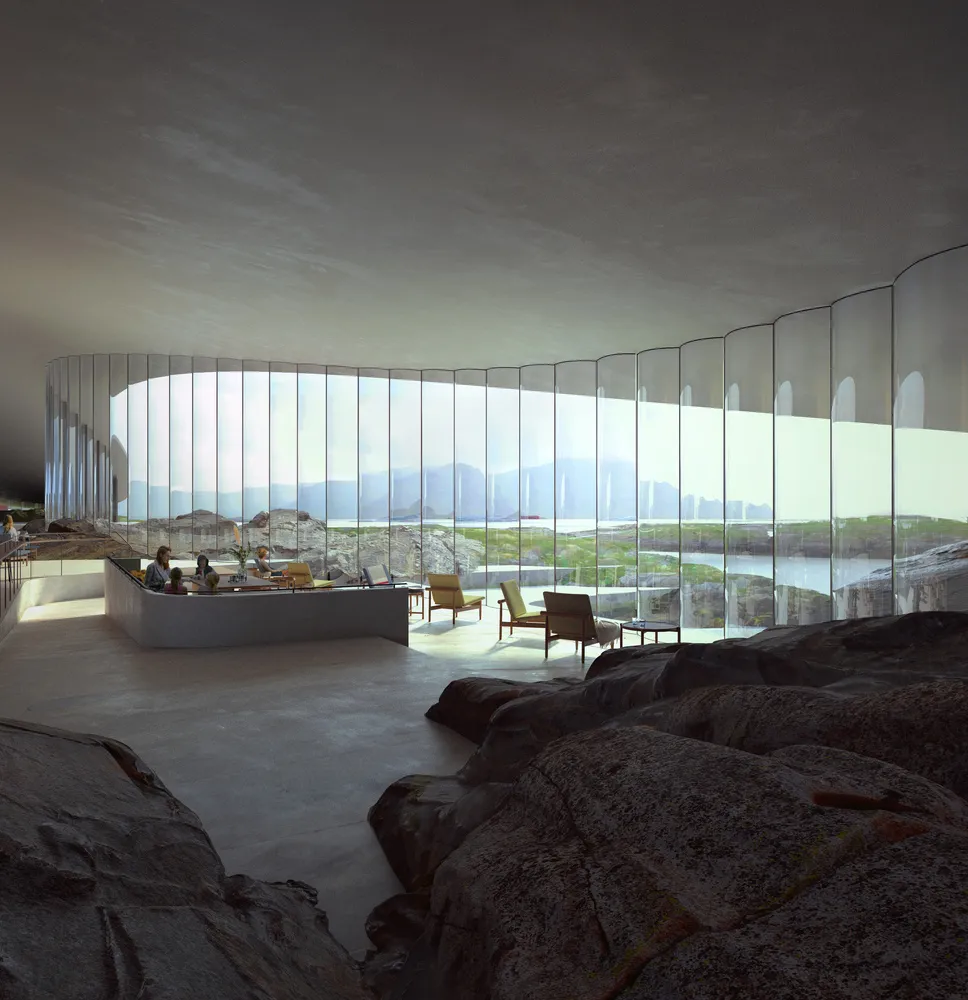
Paths and edges are carefully aligned with existing rock formations, allowing movement through the site without disrupting its natural structure. As construction advances, ‘The Whale‘ increasingly registers as part of the coastline itself alongside a cultural and ecological interface shaped by the rhythms of the sea.