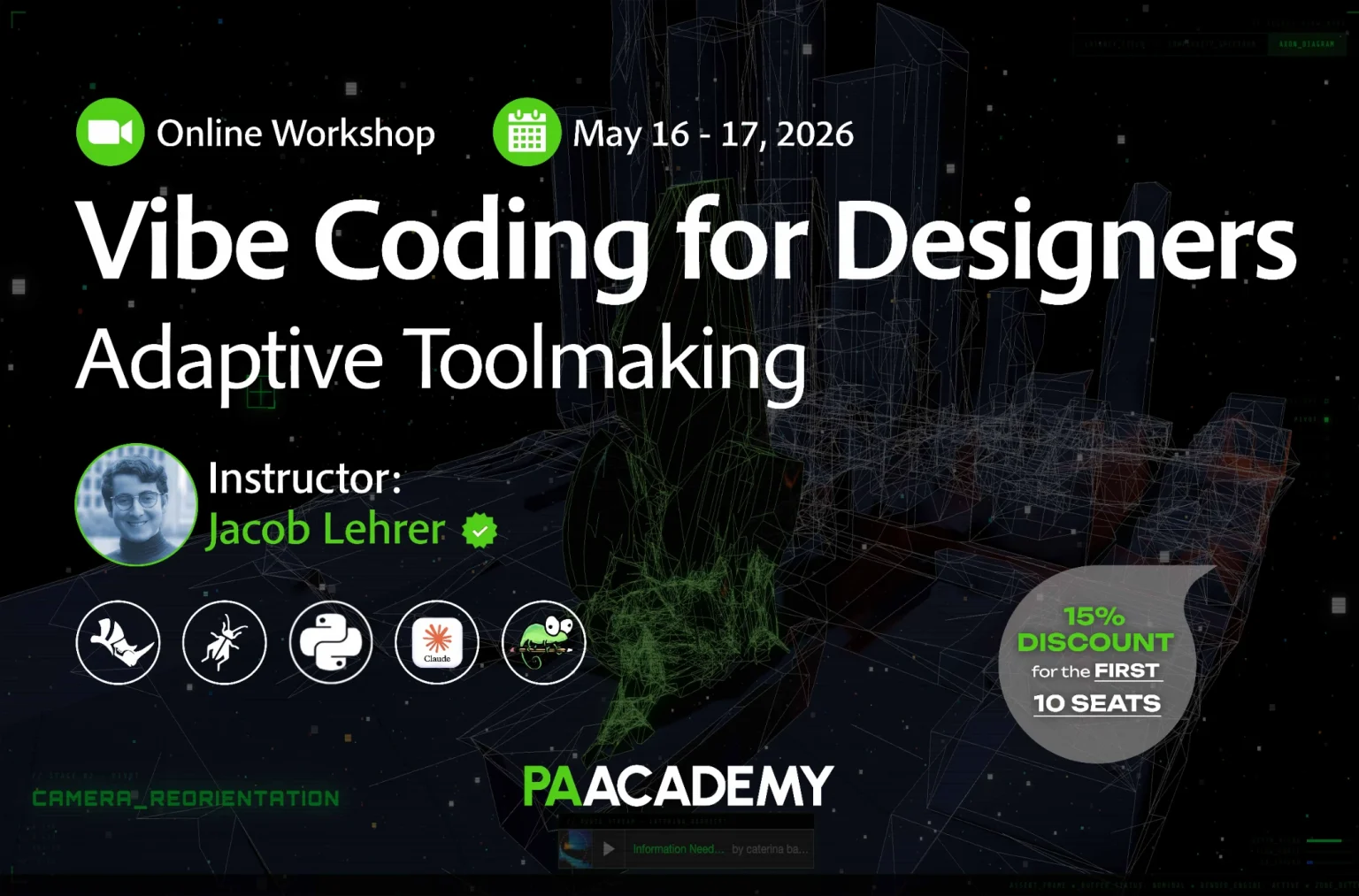
Topic: Vibe Coding for Designers: Adaptive Toolmaking
Date: May 16 – 17, 2026
Time: 13:00 – 17:00 GMT
Format: Online on Zoom
Duration: 2 Sessions (8 Hours)
Registration Deadline: May 15th, 2026
Total Seats: 50 seats
Difficulty: Beginner – Intermediate
Language: English
Certificate: Yes
General Registration: 100 EUR
Join free: with Full Access membership
Fee for Digital Members: 85 EUR (15% discount available only for Digital Members)
Organized By: PAACADEMY
Tutor: Jacob Lehrer
Recordings: Recordings will be available for all participants afterward indefinitely.
Introduction to Vibe Coding for Designers: Adaptive Toolmaking:
Every language has the same purpose: communication between two entities. With the proliferation of AI tools, it has suddenly become much easier to communicate your needs to a computer in plain language, rather than machine code. In this workshop, we will discuss how to use AI tools to create custom applications, web pages, and one-off Grasshopper tools.
We will start with how to describe a piece of software you want to use with an AI coding tool, how to start integrating real data, and how to export that data for use elsewhere. Then, we will go over how to make a piece of software ready for combining with another using hidden tricks for smooth communication.
Then we will start with Python and how to use it in Grasshopper to experiment with 3D-printed textures. Then, we will tie it all together by building a custom computer vision algorithm that produces data ready for Grasshopper to use.
Methodology:
This workshop will navigate the dynamic world of AI coding to learn the most resilient coding workflows for different types of problems. The goal is an understanding of how to figure out what problems you want to solve and the optimal tools to help you solve them.
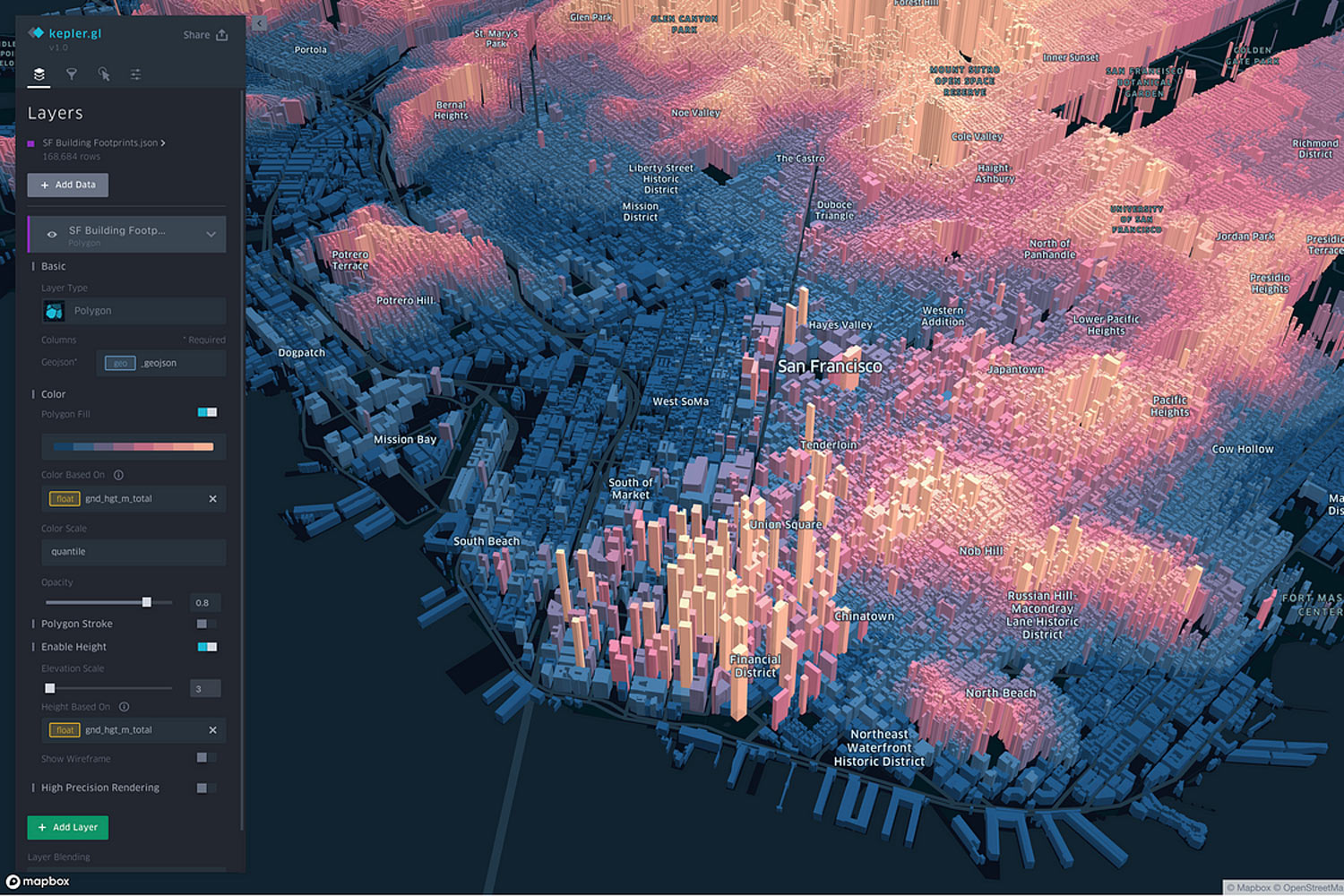
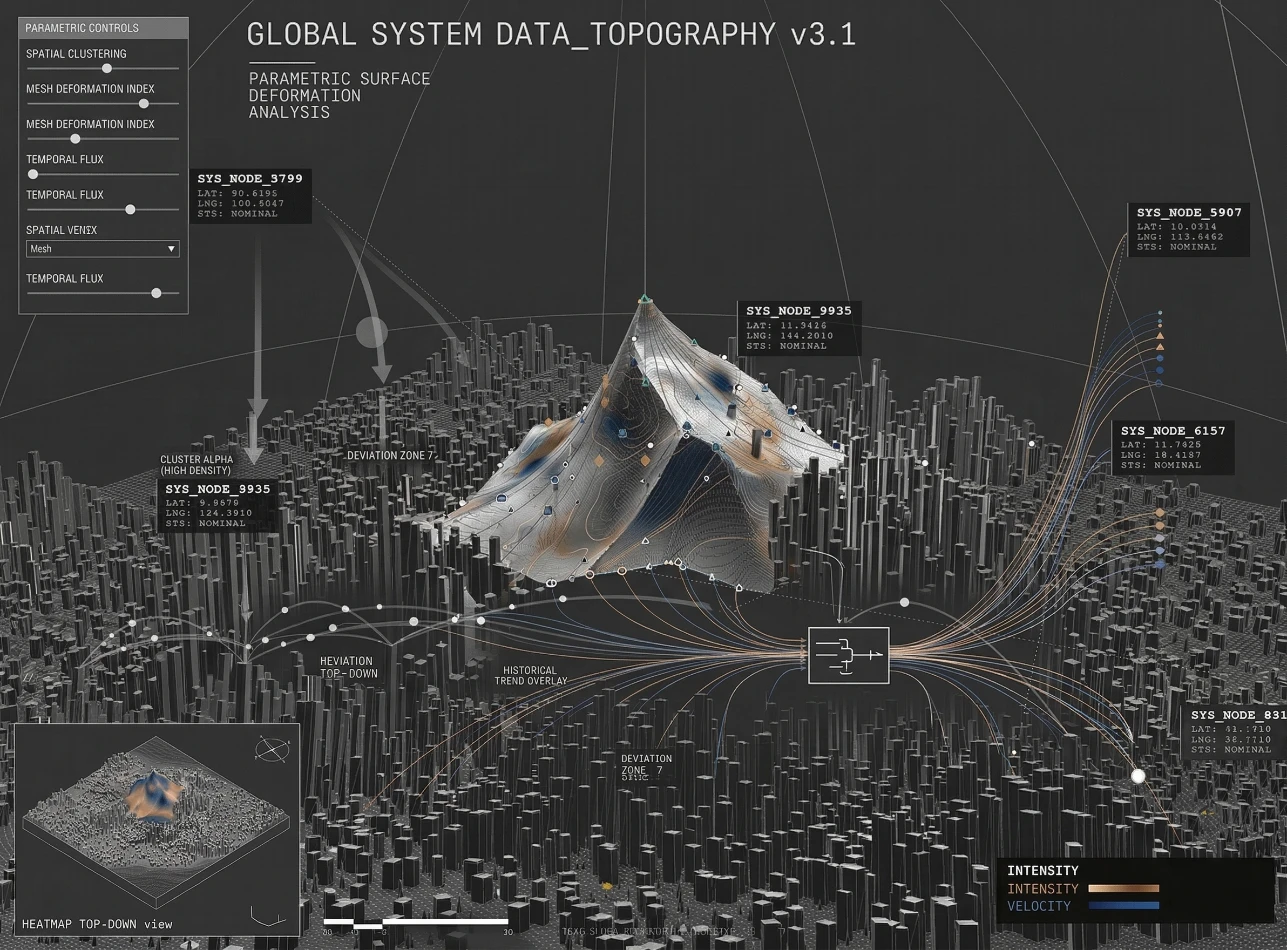
We will use real-time data where available to help inform design decisions, where, instead of pulling a static set of statistics once, you can continuously review the exact conditions of a place. This new push into real-time allows architects to focus on the ongoing condition of their building post-delivery while still designing for a day-one occupancy.
With that foundation in accessing real-time data, we will move into the ways that you can construct unique data and output combinations to fit your own needs. This will include methodologies for Computer Vision, and how to creatively interpret this data into a pattern generator for a 3D printed object in Grasshopper.
The goal is to reflect on the open-endedness of the possible combinations of data source and data interpretation. By doing this, we can create projects that are even more dynamically specific to their location and to the data that is generated and constructed within them.
Key Learning Topics:
- Understand the basics of coding
- How to install and use Python
- How to prepare data to move between software
- How to describe a software goal to AI effectively
- How to edit and review AI-Generated code
- How to structure code for integration using AI

Program:
Day 1:
- Information: Introduction to AI Coding
- Demonstration: Gemini to Claude Workflow for Website Page
- Instruction: Data Structuring for Communication
- Application: Expand Website
- Instruction: API 101
- Application: Exports – JSON, How to speak to a computer
- Application: Hidden Comments – how to make AI talk to AI
Day 2:
- Information: AI Agency, Authorship, Biases, and Rapid Innovations
- Instruction: How to Use Python + pip Install
- Application: Bring it into Grasshopper
- Application: DIY 3D Printing in Grasshopper
- Application: Expand Grasshopper Applications to use JSON
- Application: Python in VSCode
- Next Steps – Local Models, Claude Code Agents, CV use cases
Software:
- Rhino
- Grasshopper
- Python
- Notepad++
- Gemini
- Claude AI
Workshop Notes:
- Software Installation is NOT a part of the workshop! Students must have all the software installed before starting the workshop.
- Basic Familiartiy with Rhino is recommended
Instructor:
Jacob Lehrer
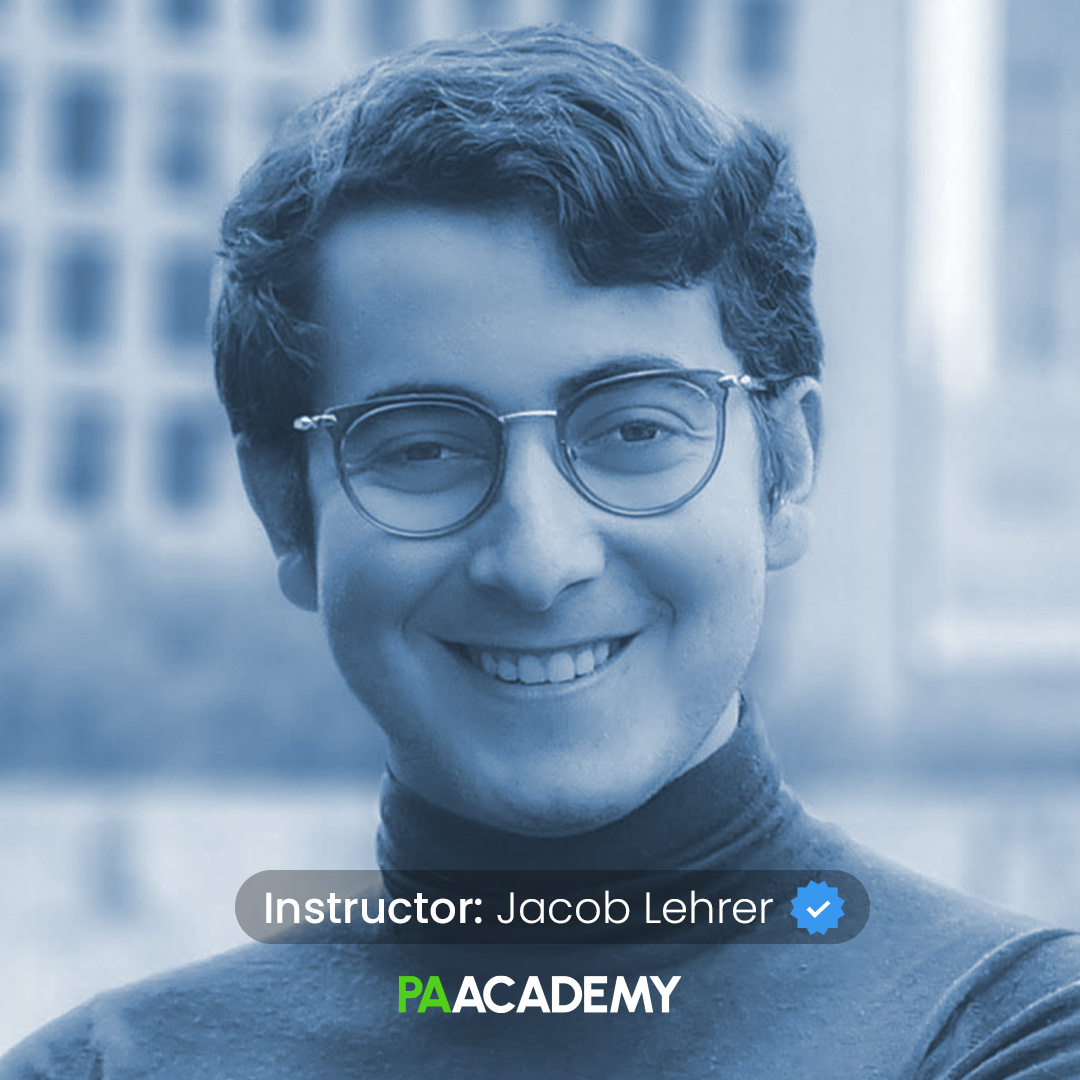
Jacob Lehrer is an architectural designer and researcher dedicated to exploring the intersection of architecture, technology, and ecology. Currently an M.Arch II candidate at the Southern California Institute of Architecture (SCI_Arc), he holds a Bachelor of Science in Architecture from Wentworth Institute of Technology and is an Advanced Study Fellow from MIT.
His professional background spans from co-founding LMDA LLC, where he led design development for animal care facilities, to managing operations and space planning as a Project Coordinator for the MIT Mathematics Department. Jacob views architecture as a problem-solving discipline, leveraging his diverse experience to bridge the gap between abstract algorithms and physical space. A triple-accredited LEED AP (BD+C, O+M, ND), Jacob combines a deep commitment to sustainability with advanced technical proficiency in tools like Python, Rhino, Grasshopper, and KUKA robotics.
His recent work includes developing the “Sentient Environment Engine,” a custom computer vision algorithm for analyzing occupant behavior, and fabricating mathematical sculptures for MIT’s permanent collection. Whether teaching PAACADEMY parametric design workshops or publishing research on the ethics of language models, Jacob focuses on using computation to create built environments that are responsive, efficient, and tailored to their specific contexts.
Important Notes:
- The “Vibe Coding for Designers: Adaptive Toolmaking” Studio workshop by PAACADEMY will start at 13:00 (GMT) on Saturday, May 16th, 2026.
- Total sessions: 2 Sessions (8 Hours).
- The teaching duration per session will be 8 hours.
- Students will have time for a break between teaching hours.
- The workshop will be recorded, and videos will be available for participants just a day after the class for an unlimited time.
- PAACADEMY will provide a certificate of attendance.
- The studio has limited seats. Tickets are non-transferable & non-refundable. Please read carefully before you register.
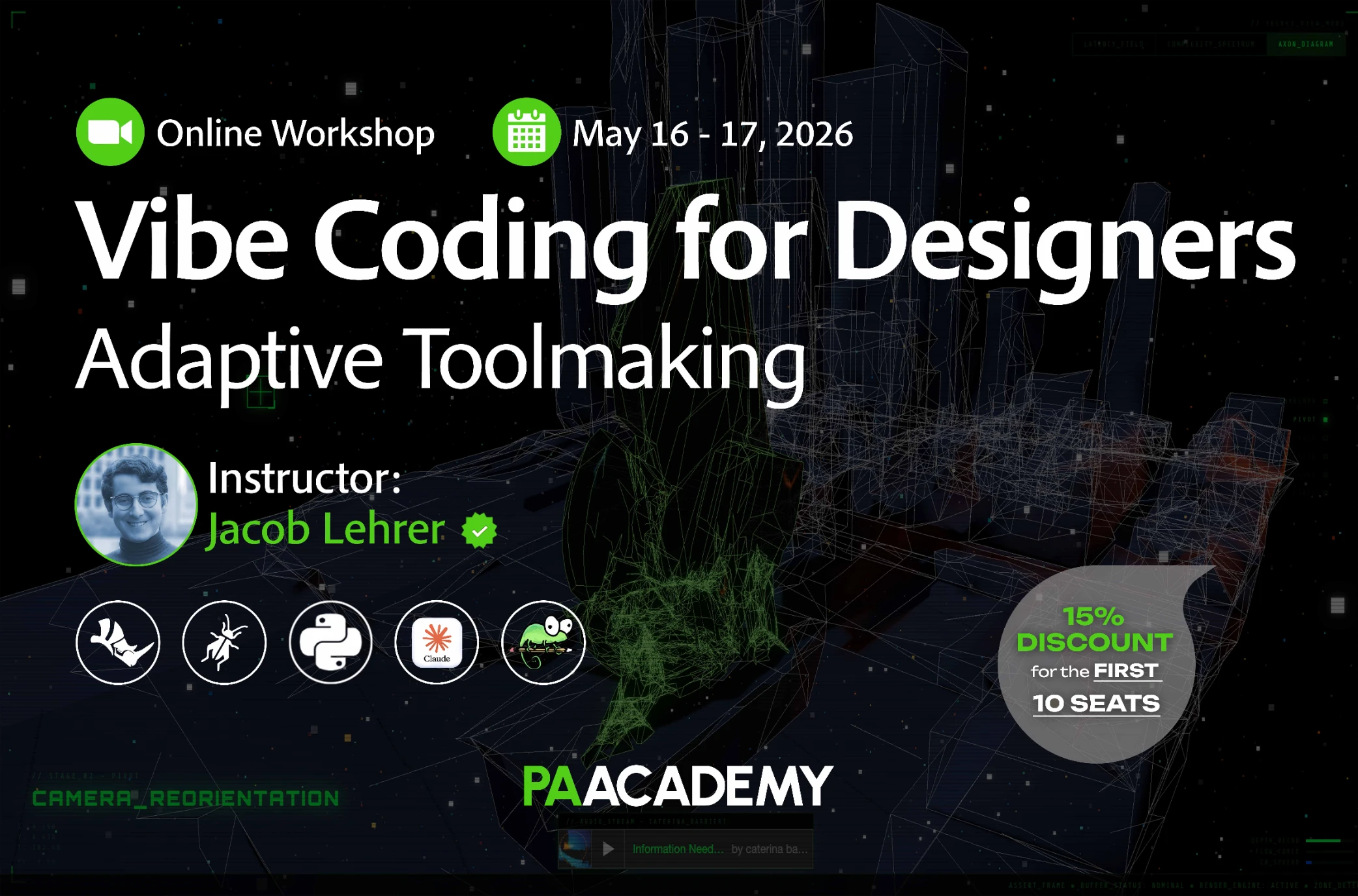
Topic: Vibe Coding for Designers: Adaptive Toolmaking
Date: May 16 – 17, 2026
Time: 13:00 – 17:00 GMT
Format: Online on Zoom
Duration: 2 Sessions (8 Hours)
Registration Deadline: May 15th, 2026
Total Seats: 50 seats
Difficulty: Beginner – Intermediate
Language: English
Certificate: Yes
General Registration: 100 EUR
Join free: with Full Access membership
Fee for Digital Members: 85 EUR (15% discount available only for Digital Members)
Organized By: PAACADEMY
Tutor: Jacob Lehrer
Recordings: Recordings will be available for all participants afterward indefinitely.