

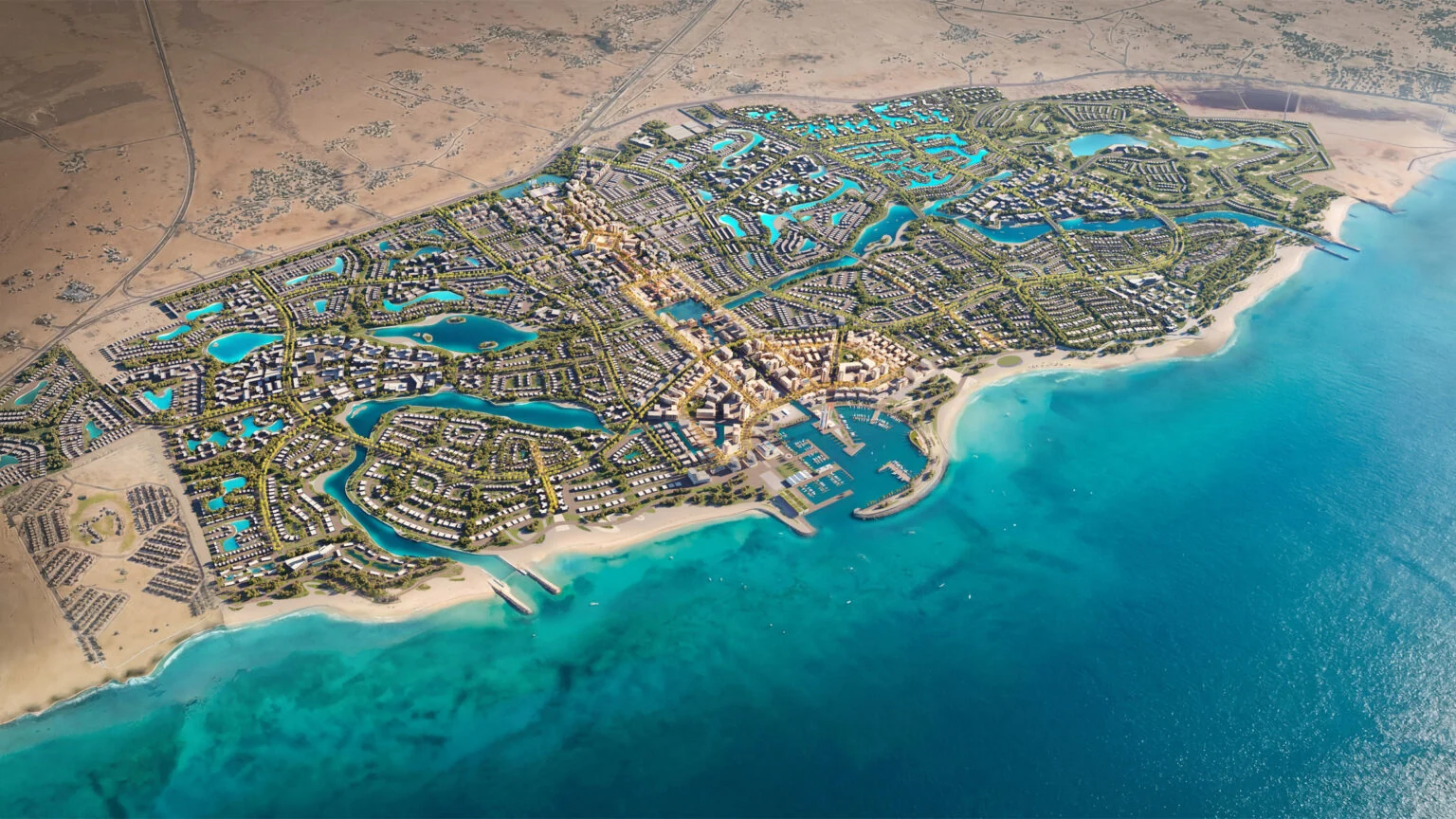

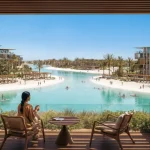
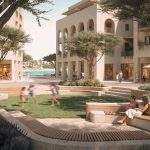
SOM has released the master plan for Alam Al Roum, a new 20.6-square-kilometer city stretching 7.2 kilometers along Egypt’s Mediterranean coast near Marsa Matrouh. The scheme weaves 22 kilometers of seawater-connected lagoons through neighborhoods designed for year-round living and tourism.
A river delta does not force water into straight channels. It allows the flow to find its own paths, creating fertile ground and natural buffers against the sea. That adaptive relationship between land and water sits at the heart of Alam Al Roum, the coastal city masterplanned by SOM for developer Qatari Diar. Rather than treating the Mediterranean shoreline as a fixed edge to be defended, the plan invites seawater inland through a network of lagoons that serve recreation, stormwater management and daily life.
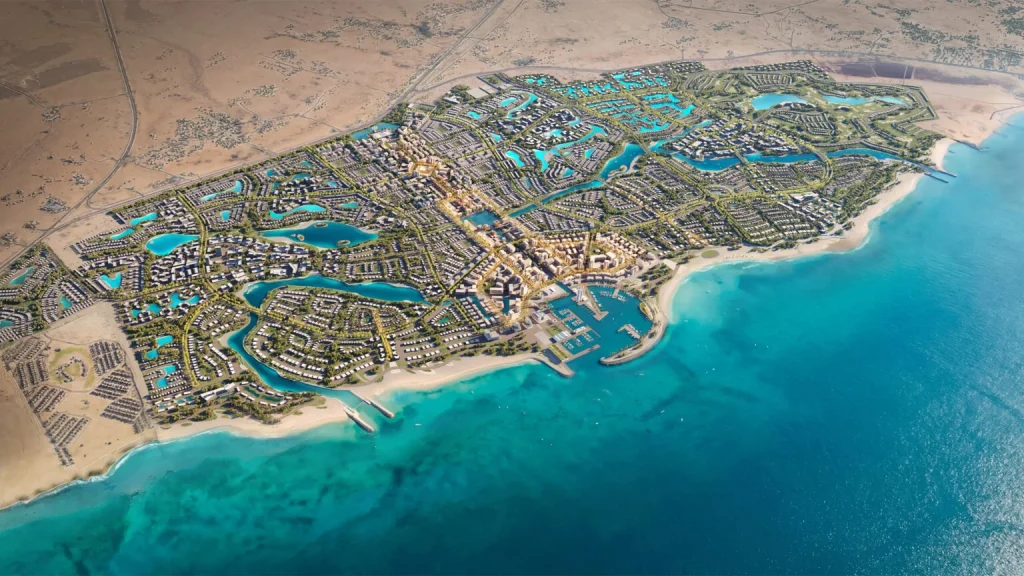
The 20.6-square-kilometer site lies east of Marsa Matrouh on Egypt’s North Coast. It offers 7.2 kilometers of private beachfront and is positioned roughly 20 minutes from the existing town and 50 minutes from Ras El Hekma. SOM oriented the entire development to the local climate, capturing coastal breezes and sunlight while elevating key areas to accommodate future sea-level changes. Natural protective systems, including riparian buffers, stormwater wetlands, stabilized dunes and living shorelines, replace hard coastal armoring.
A City Organised Around Water
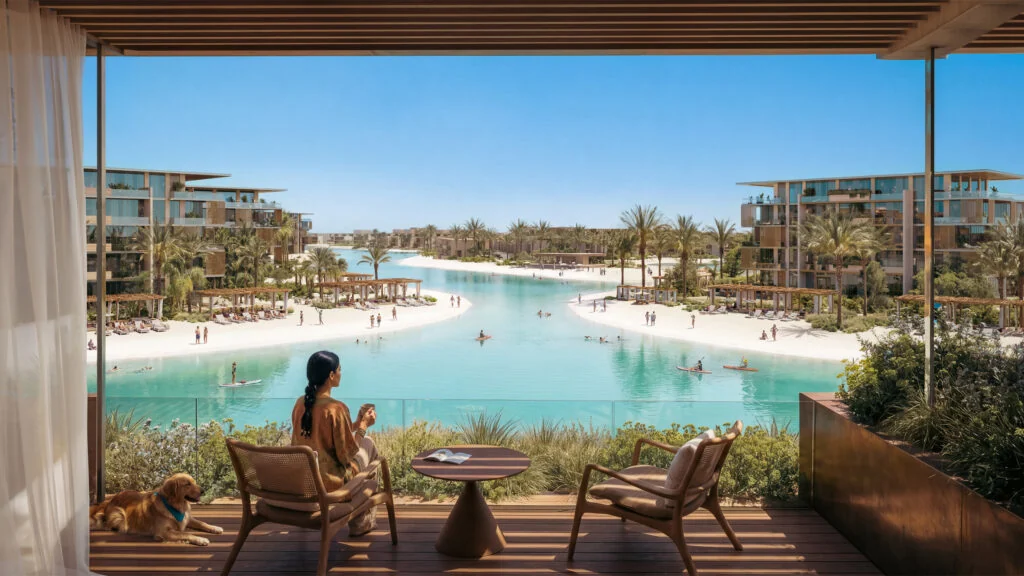
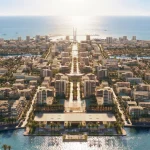
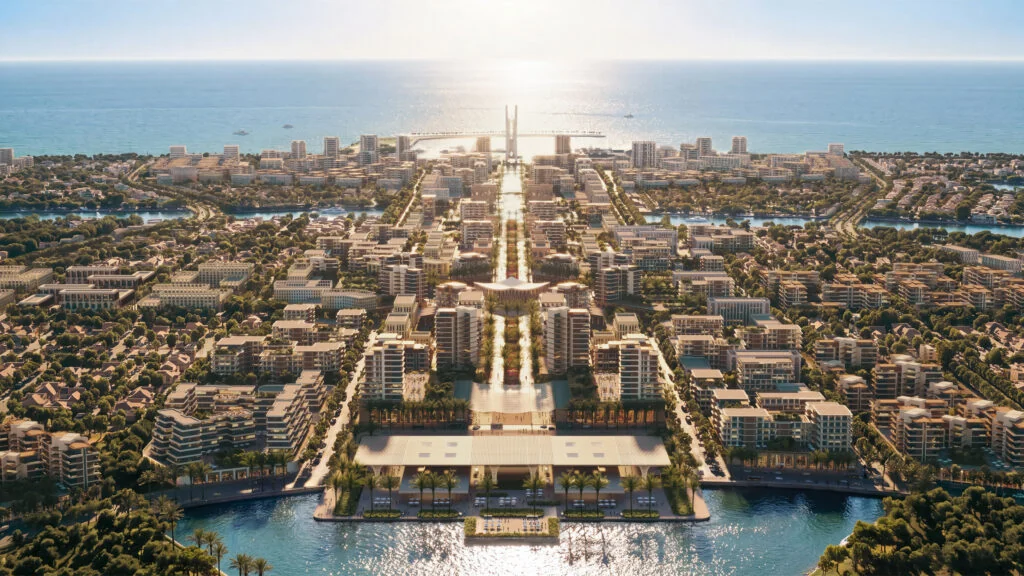
The defining element is the lagoon system. Twenty-two kilometers of interconnected waterways link to the open sea. Some stretches are designed for swimming. Others support ecology and flood control. These water bodies weave between beachfront neighborhoods, lagoon-side districts, town centers, hospitality zones, a golf community, an education district, and a business hub. A grand boulevard acts as the urban spine, connecting an international marina on the Mediterranean to a mobility hub further inland.
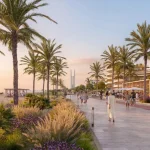
The waterfront downtown is conceived as a cultural destination. Plans include a cultural pier, lighthouse, amphitheater, yacht club, mosque, and markets. The ambition is to create a place that functions beyond the traditional seasonal resort model, supporting permanent residents alongside visitors throughout the year.
Climate Response and Phased Delivery
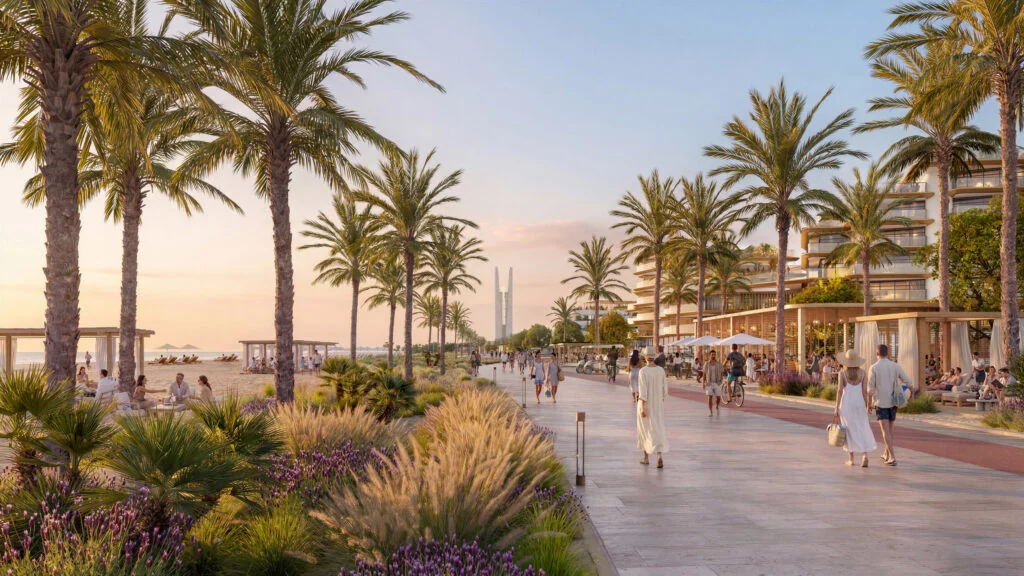
SOM principal Thomas Hussey described the project as a rare chance to design a new Mediterranean city from the ground up that responds to climate realities while delivering high quality of life. Buildings and public spaces are oriented for natural ventilation and solar control. The elevated datum and soft shoreline strategies aim to keep the city resilient as coastal conditions evolve.
The first phase, covering approximately four square kilometers, is expected to begin delivery around 2030. It will include a beachfront stretch, open-sea-connected lagoons, residential and hospitality development, a town-center marina, retail, dining, and extensive public landscapes. The overall investment is reported at 29.7 billion US dollars.
Parametric Approaches to Coastal Urbanism
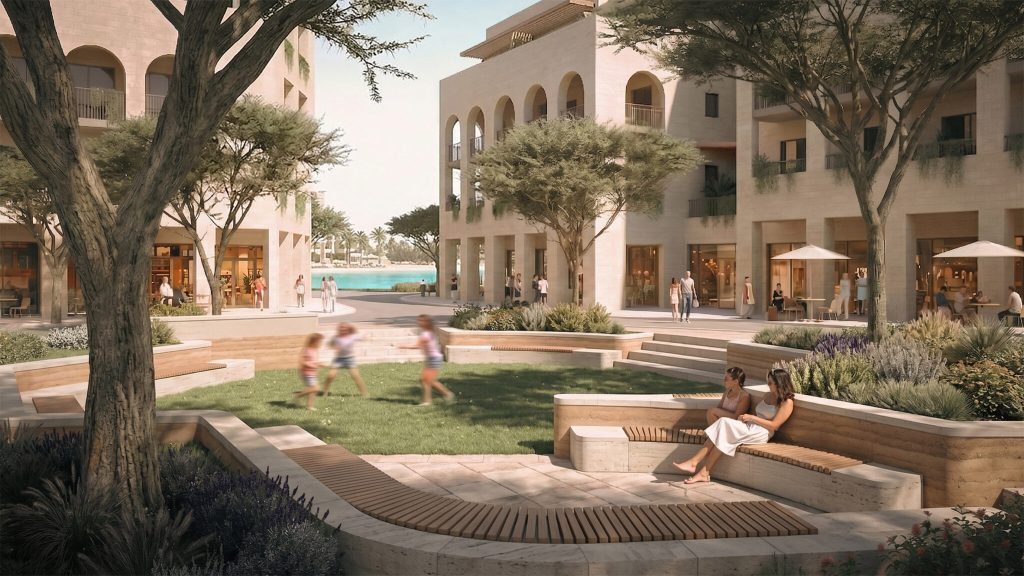
Large-scale coastal masterplanning benefits from parametric thinking. Wind patterns, solar exposure, tidal ranges, storm-surge scenarios and soil conditions become input variables that shape the placement of buildings, the geometry of lagoons and the width of protective buffers. Digital models can test alternative lagoon networks against stormwater capacity, water quality and recreational access. Building orientations can be optimised district by district for passive cooling. Elevation strategies can be adjusted in response to projected sea-level rise while maintaining pedestrian connectivity.
In Alam Al Roum the lagoon system itself functions as a parametric framework. Its length, depth, edge conditions and connections to the sea are not arbitrary. They emerge from performance criteria for flood management, ecology and amenity. The same logic extends to the sequencing of phases, the distribution of density and the placement of civic landmarks. The result is a plan that feels organic yet remains rigorously calibrated to environmental data.
A New Model for Mediterranean Development
Alam Al Roum joins a series of ambitious new cities underway in Egypt. What distinguishes it is the decision to make water the primary organizing element rather than a backdrop. By drawing the sea into the urban fabric through controlled lagoons, skidmore owings & merrill, and Qatari Diar propose a form of coastal living that is both more resilient and more experiential. The city is designed to feel continuous with the landscape rather than imposed upon it.
If realized as planned, Alam Al Roum could set a benchmark for integrated Mediterranean development: a place where climate adaptation, public life and economic activity share the same spatial logic. The lagoons will not only manage water. They will define the character of streets, the quality of neighborhoods and the daily experience of residents and visitors for decades to come.