


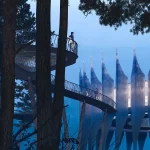
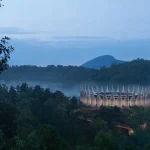
Architect Alina Sanina, founder of Sanina Arch Club, has revealed a striking architectural concept called Lynx, a “gothic futurist” drone station designed for remote mountain regions. Designed to address the limitations of mobility and emergency response in rugged terrain, such as the Carpathians, Alps, and Pyrenees, the project envisions a new type of high-altitude infrastructure that allows visitors, drones, and the landscape to coexist within a single system. Lynx is visualized as both a practical rescue hub and a memorable architectural destination.
Alina Sanina’s Vision for Gothic Futurist Drone Station
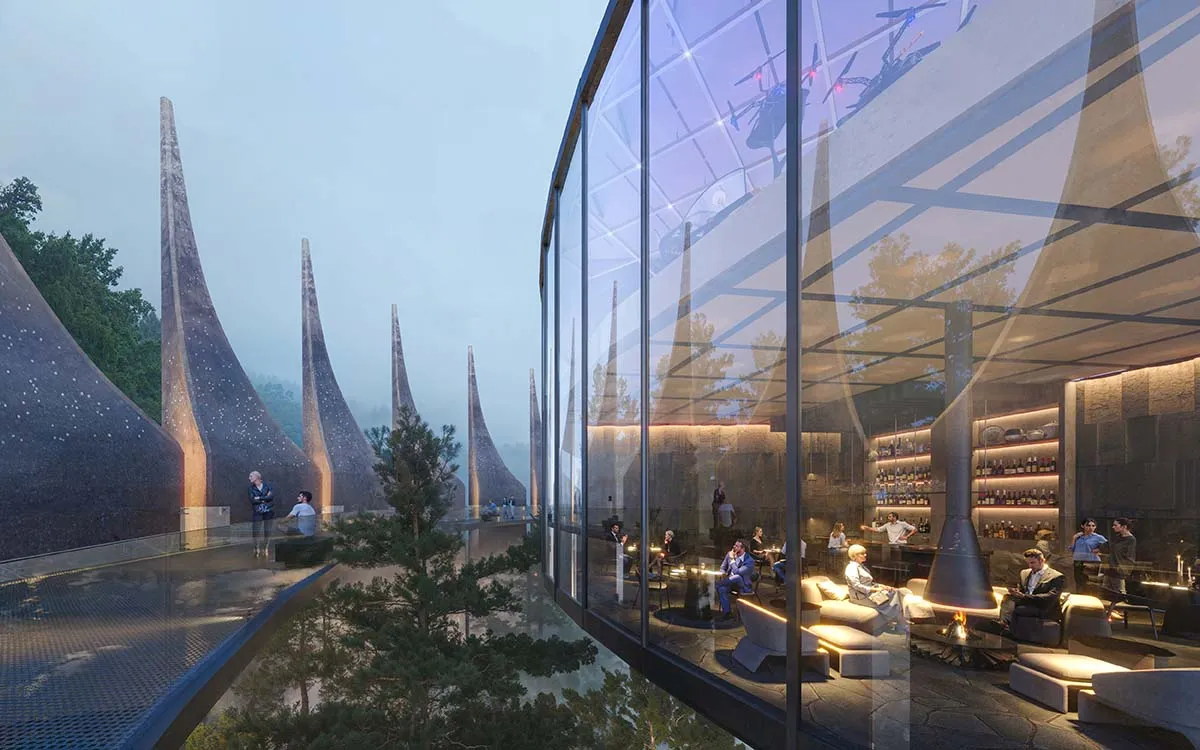
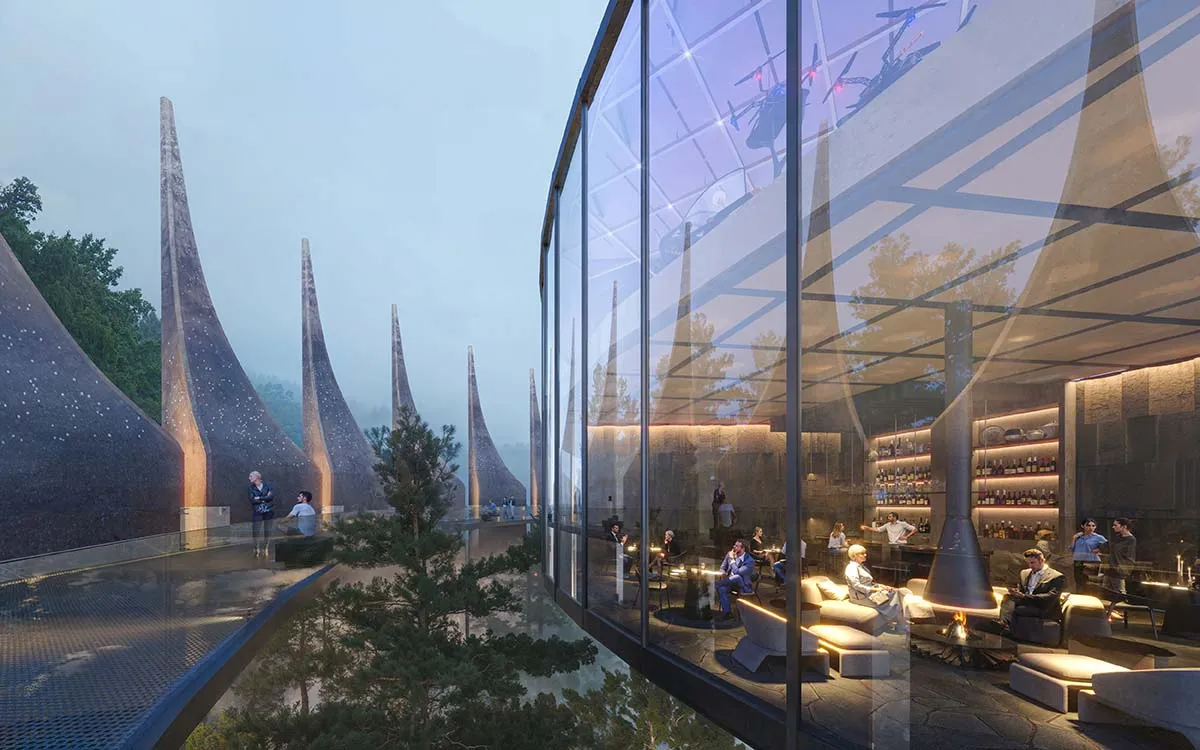
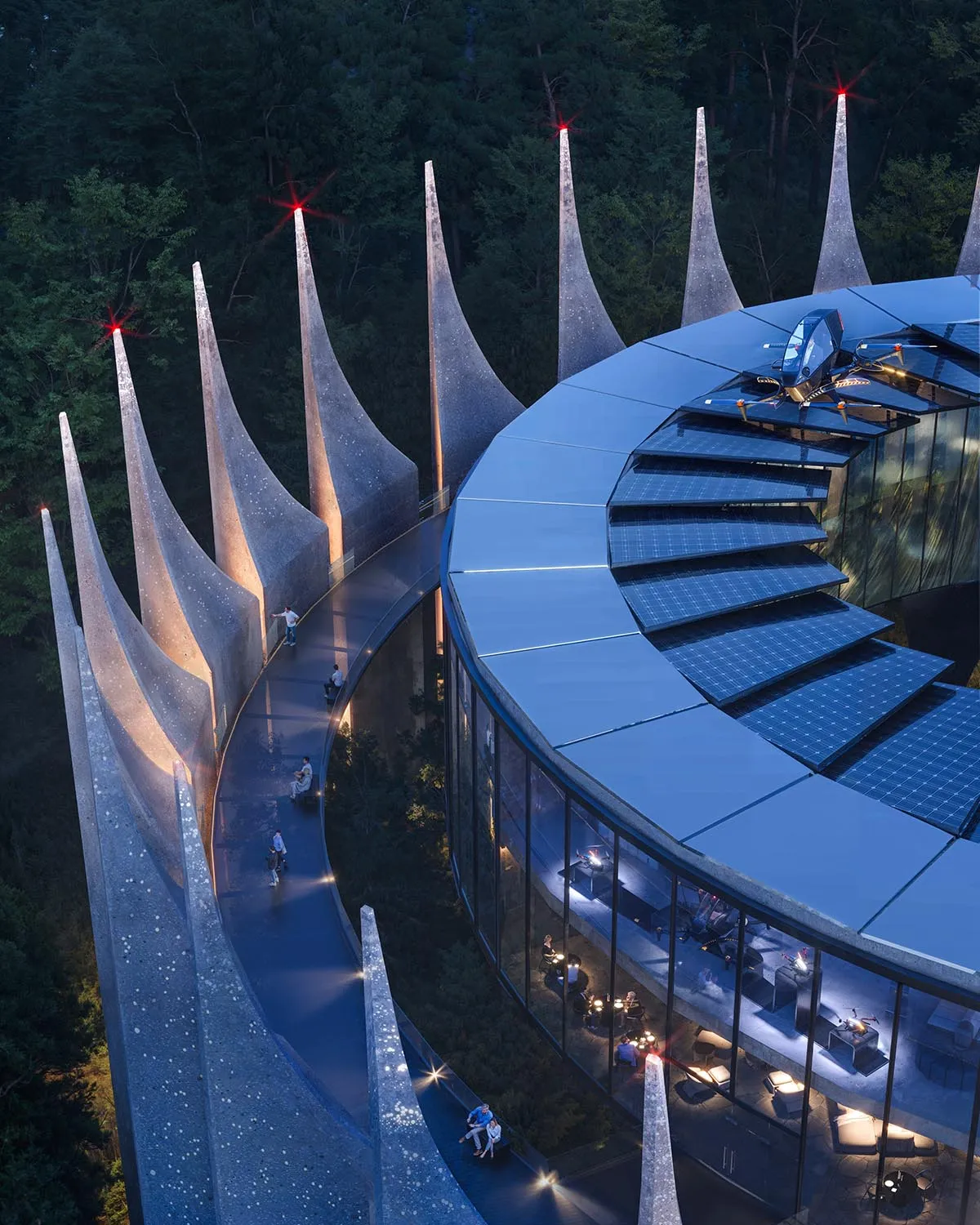
Lynx stations are circular structures that serve as autonomous hubs for drone operations, including storage, charging, maintenance, and flight coordination, while also offering public functions that vary with site context. Depending on the location and needs of a given range, the design could host a small observatory or planetarium, research spaces, viewing terraces, media libraries, and even compact accommodation. This flexible program transforms each station from a purely technical facility into a place that encourages exploration and education alongside emergency support. Visitors interact with the system via a dedicated mobile app that provides route maps, real-time weather updates, and an integrated SOS function.
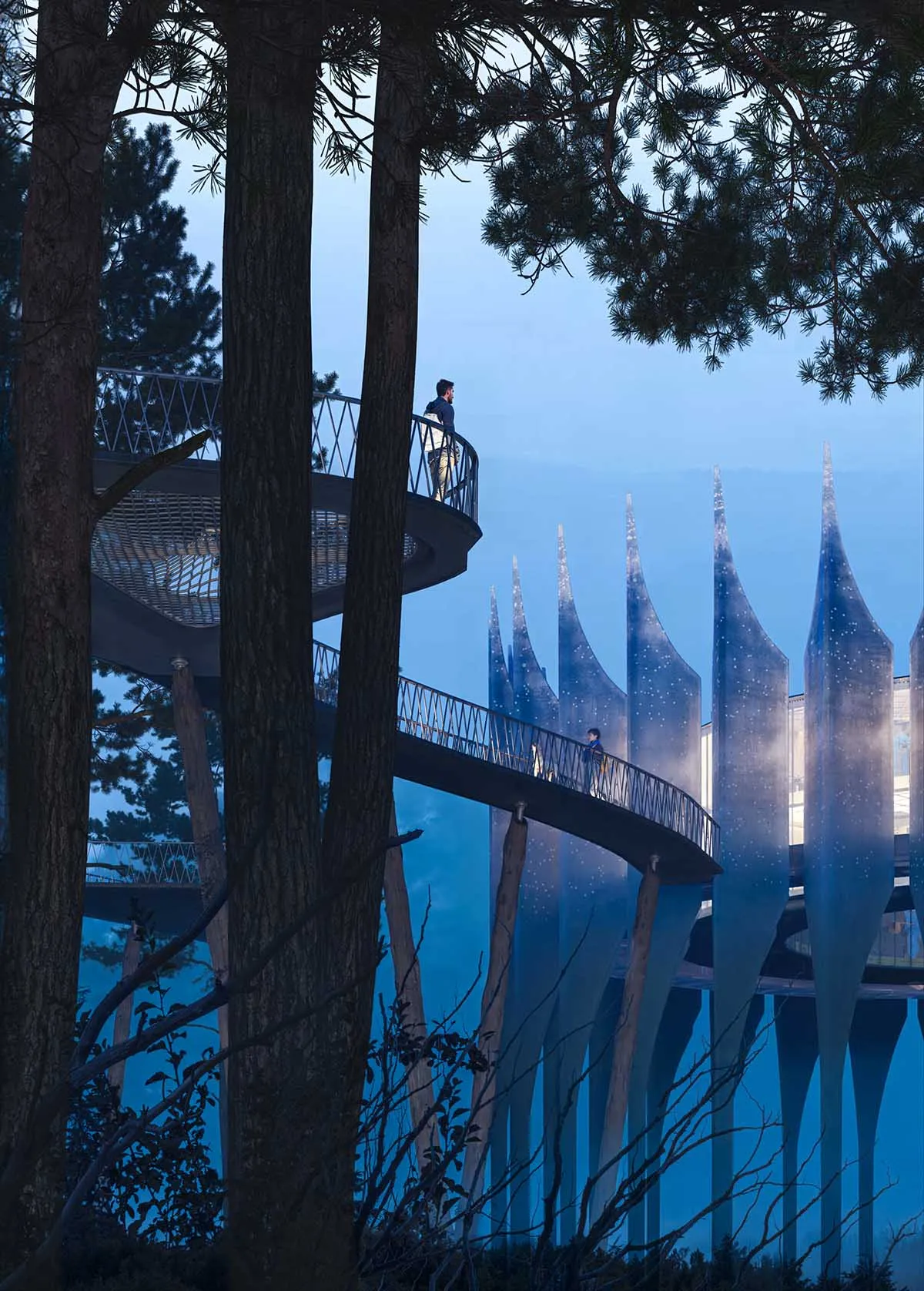
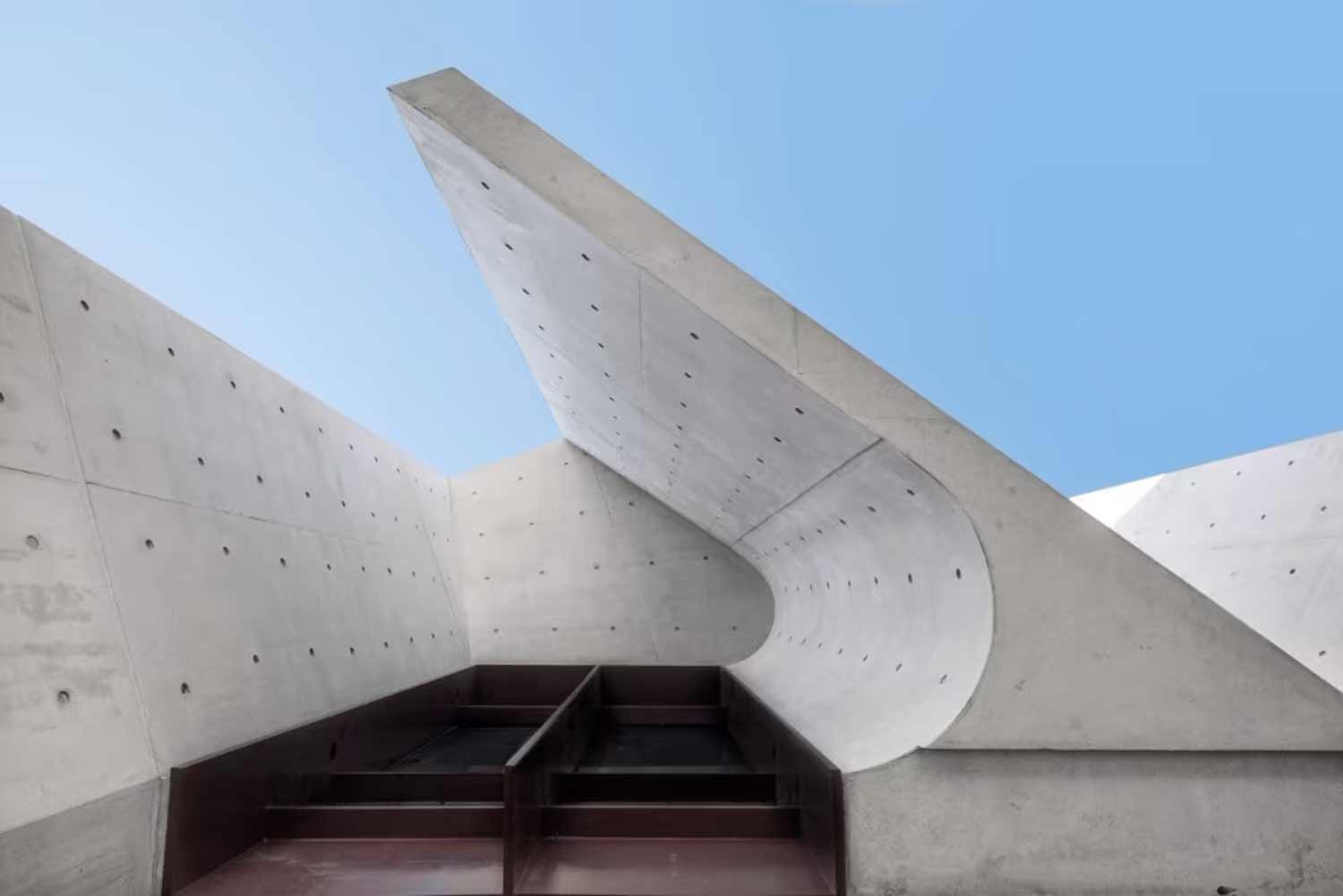
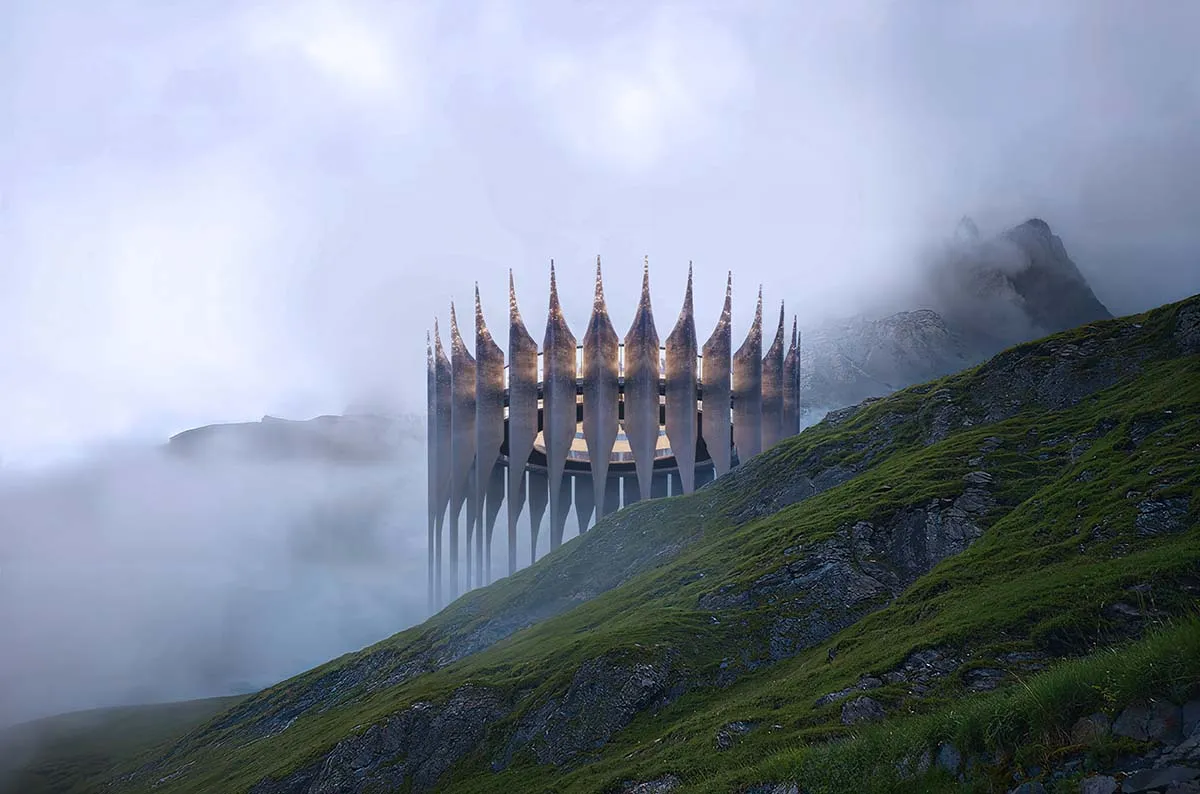
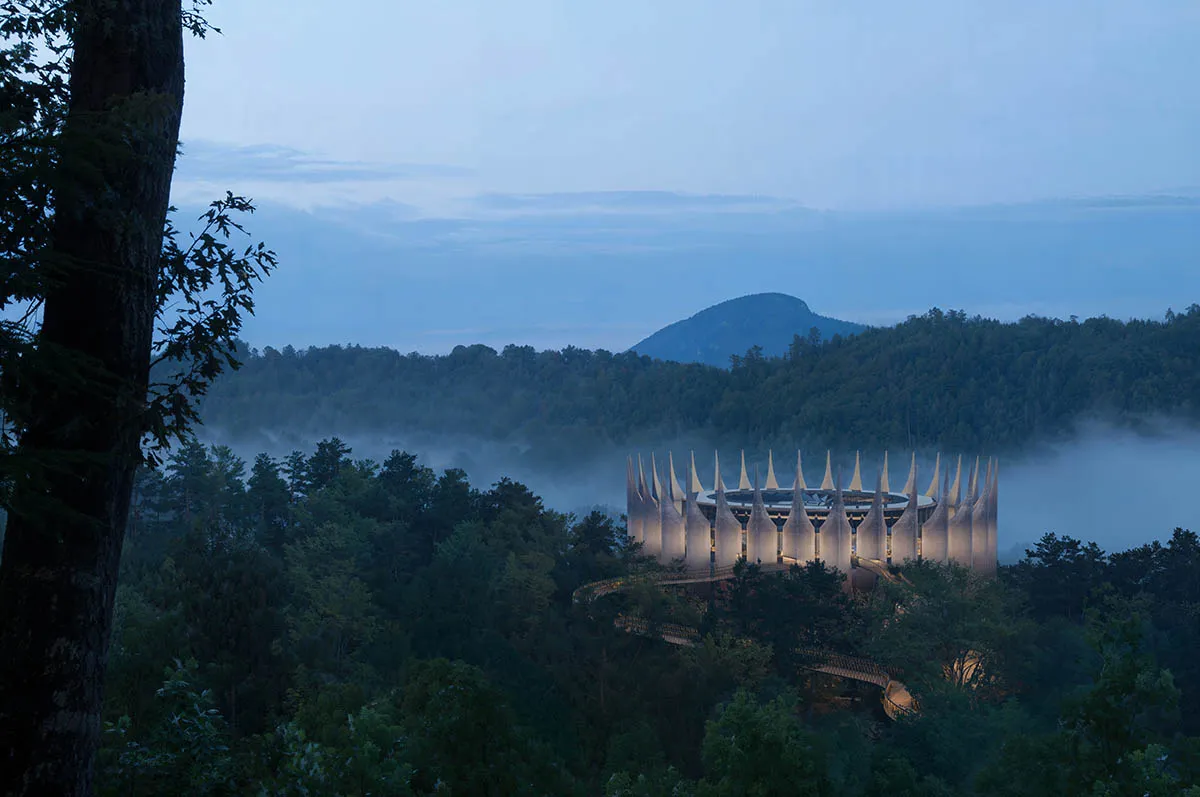
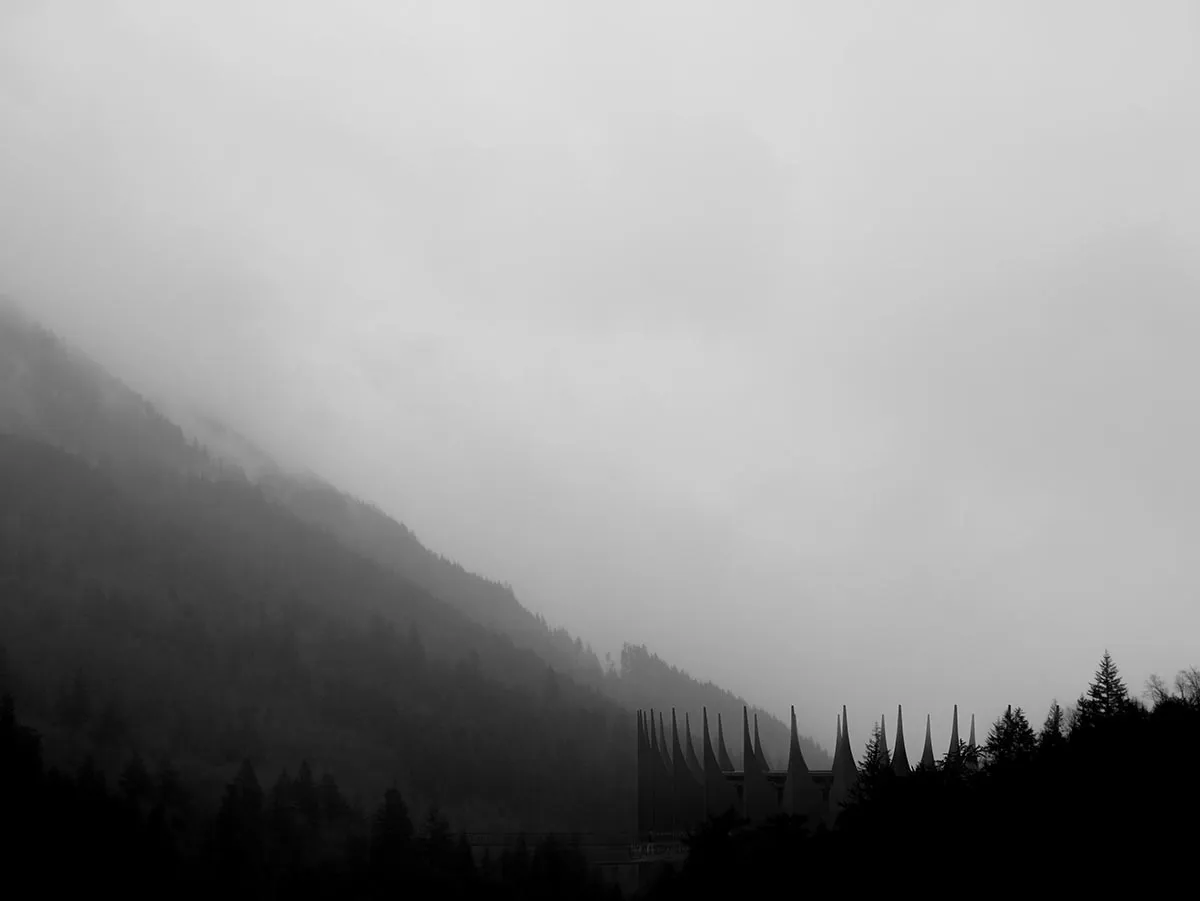
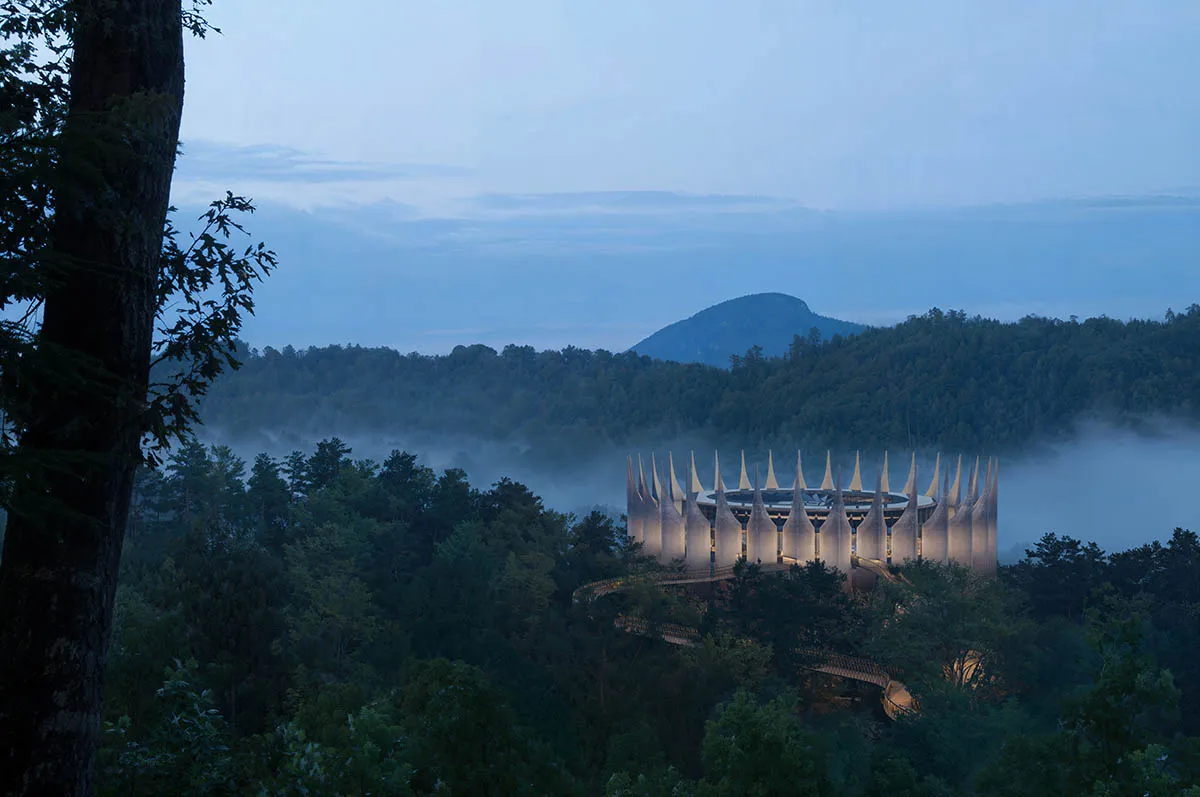
The architectural language of Lynx is defined by what Sanina describes as gothic futurist: a bold interplay of monolithic concrete and lightweight glass that references ancient fortifications while responding sensitively to mountain landscapes.
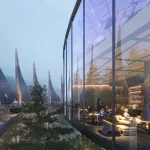
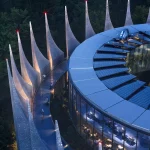
The station’s form is organized as concentric rings, with a perimeter wall of serrated peaks that echo surrounding ridgelines. The wall and the rest of the structure are built from a composite material that combines concrete with dispersed glass inclusions. The lower levels are predominantly solid for stability, while the upper sections include larger glass areas that make the building appear to dissolve into the sky. Microscopic glass particles embedded in the façade catch and refract light, giving the exterior a crystalline sheen that shifts throughout the day.
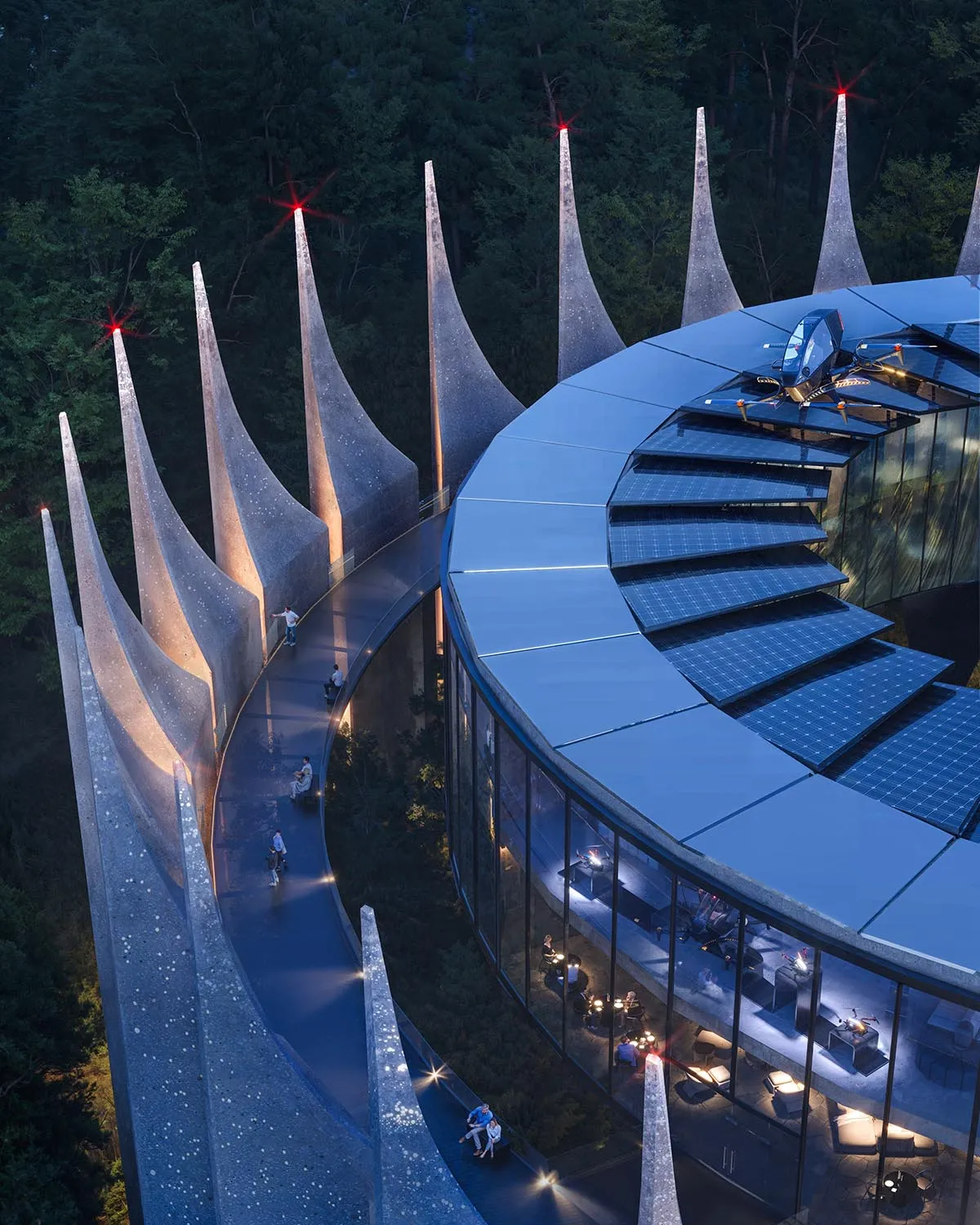
Photovoltaic cells integrated into the glass skin turn the station’s outer surface into a power generator, enabling the structure to operate off-grid in isolated mountain settings. Additional solar panels on the roof support internal systems and drone charging. Inside, panoramic views connect occupants to the surrounding terrain, blurring the boundary between shelter and landscape. The typology is intended to work as a wayfinding beacon for hikers, a compact airport for passenger drones offering aerial tours, or a public gathering space near resorts and trails.
Sanina’s concept responds to real challenges faced in mountain regions. For instance, in the Ukrainian Carpathians alone, there were hundreds of rescue missions in recent seasons, often involving extensive human and equipment resources when hikers became disoriented by sudden weather shifts or difficult routes. In contrast, drones can survey wide areas quickly, detect thermal signatures through difficult conditions, deliver water and medical supplies, and relay communication, offering a faster and safer option for initial response.
Sanina emphasizes that the time is right for such infrastructure: technology has advanced, aerial routes are established, and skilled operators are available, meaning drones can soon serve not just military or commercial roles but humanitarian and environmental ones too.
The Lynx project imagines them as part of a broader ecological and humanitarian infrastructure woven into mountain landscapes. In this vision, drone stations become as familiar as mountain lodges, shelters, or lift stations but smarter, more adaptable, and visually striking. By integrating advanced aerial systems with landscape-driven architectural design, Sanina proposes a future where technology and natural environments support one another, enhancing safety and accessibility in some of the most challenging terrains on Earth.
Image credit: © Sanina Arch Club / World Architecture Community