

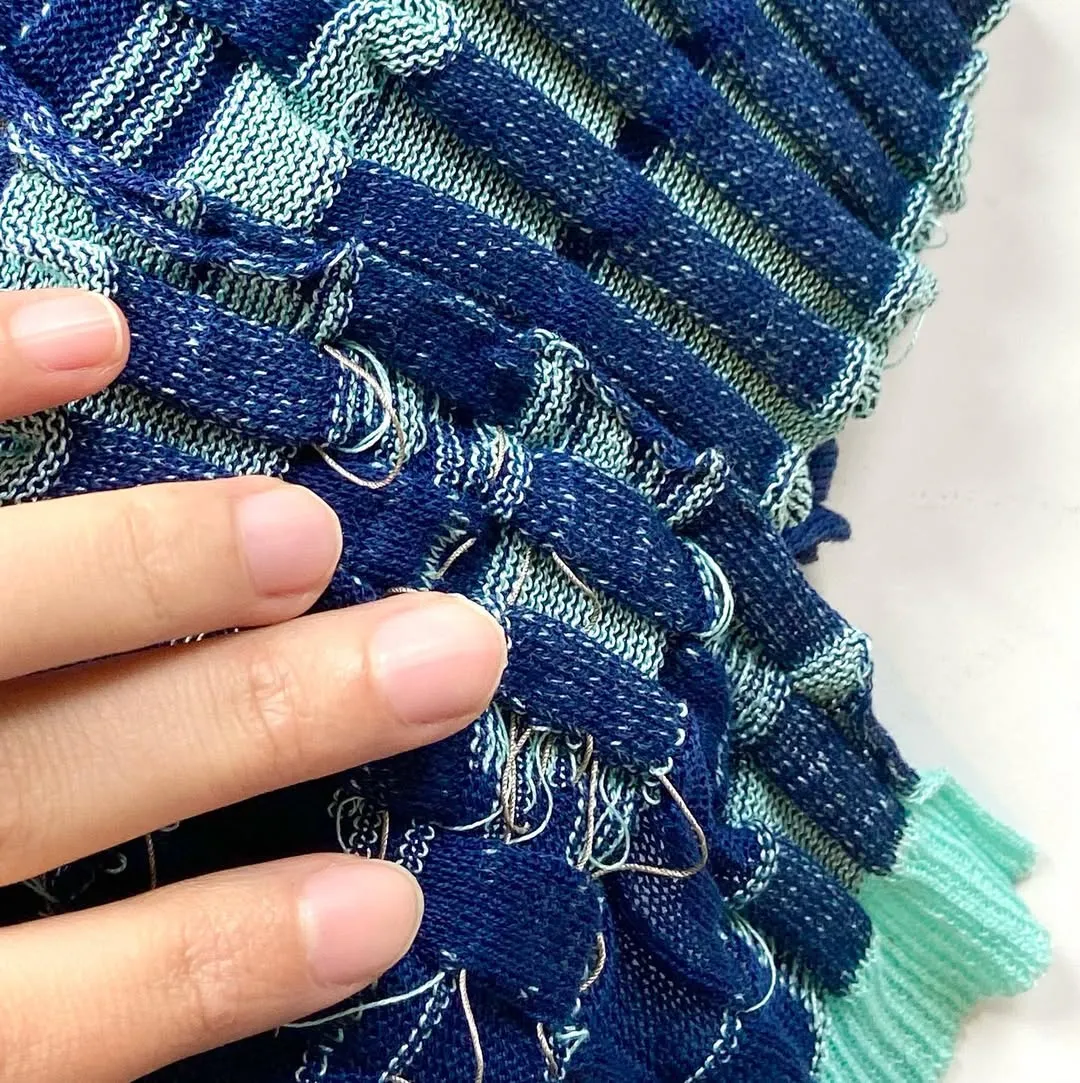
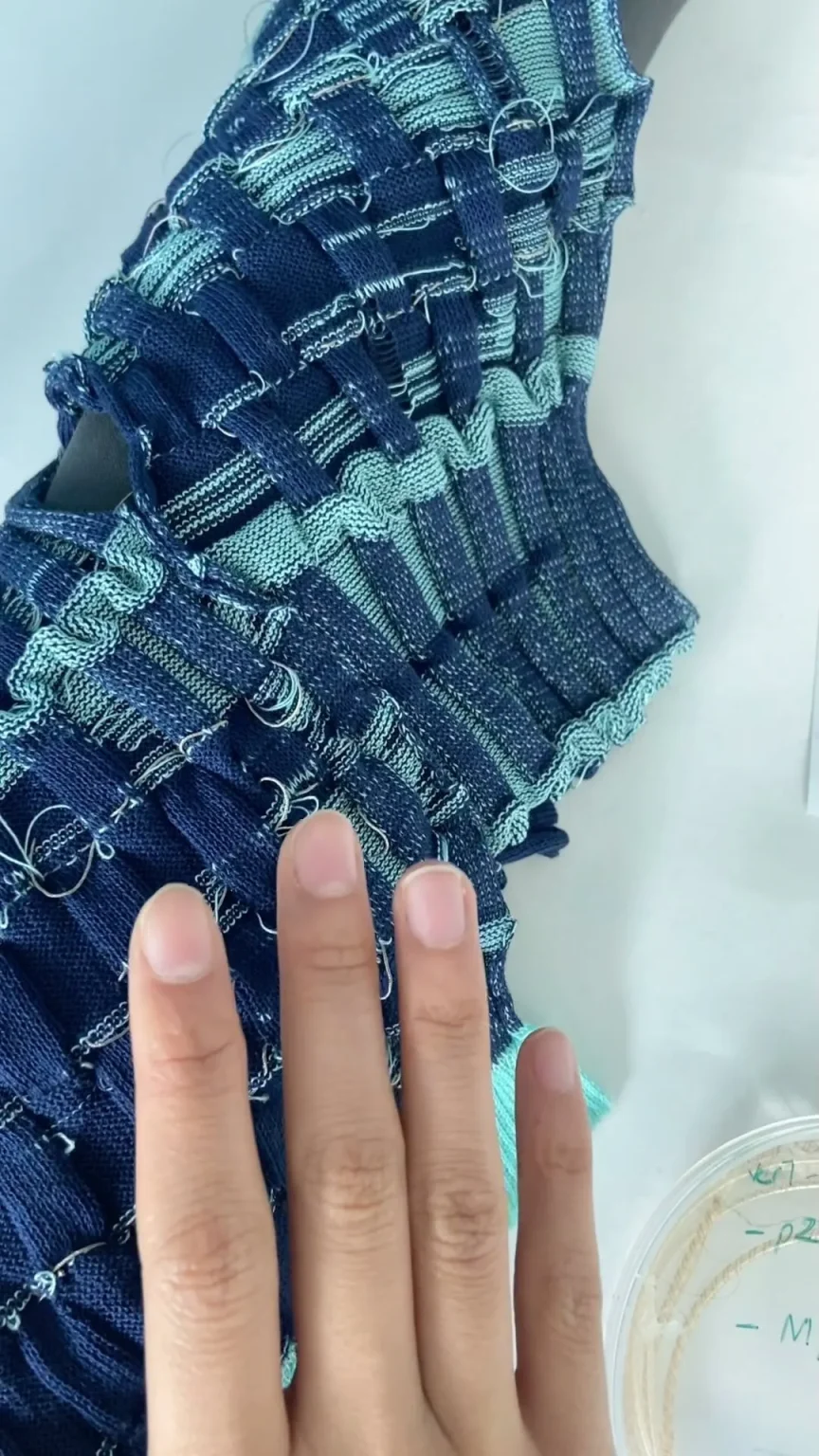
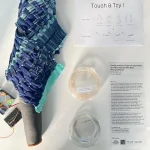
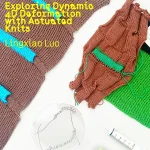
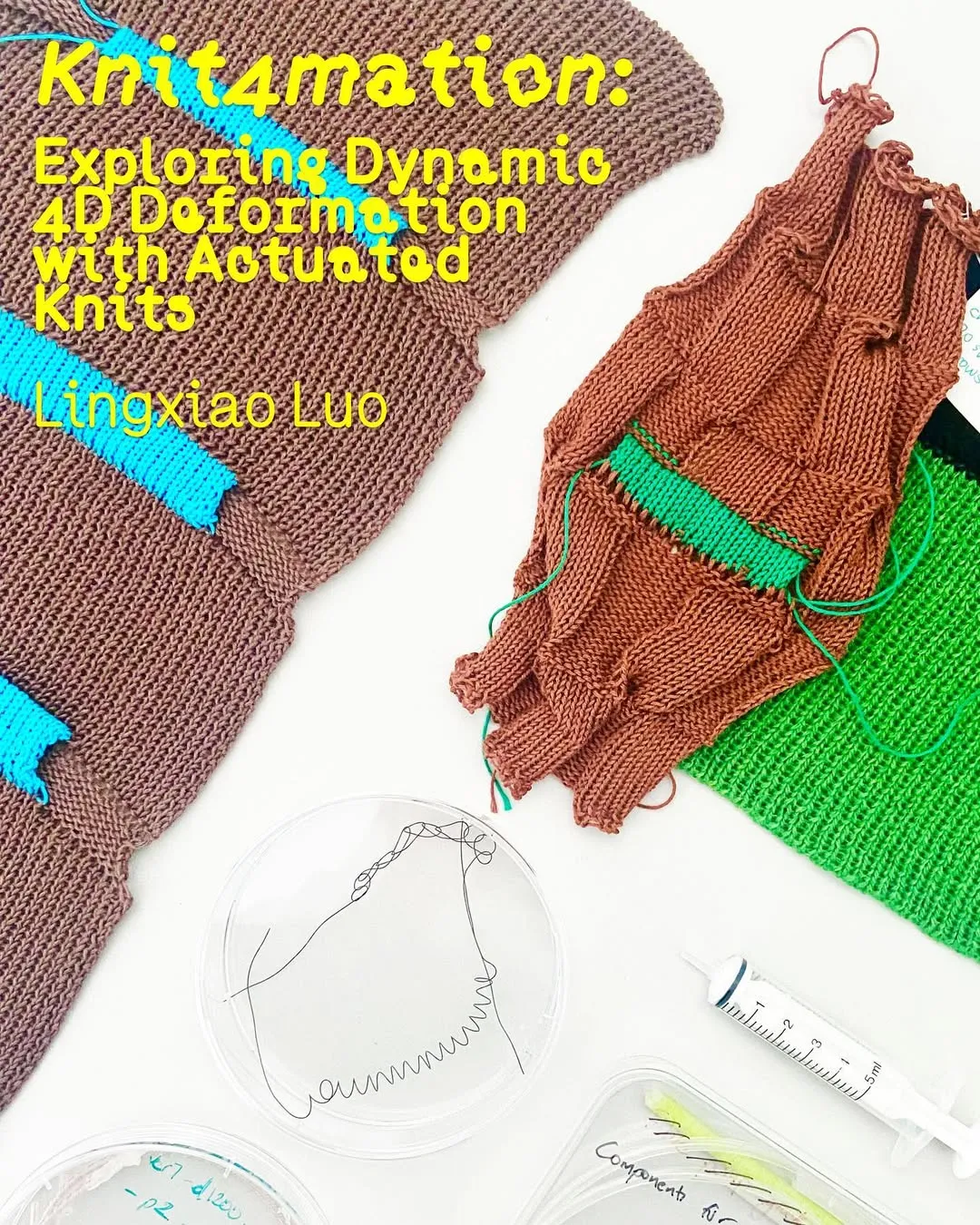
‘Knit4mation: Exploring Dynamic 4D Deformation with Soft Actuated Knits‘ is a research project by Lingxiao Luo that investigates knit technology as a material system for 4D deformation. The project explores how seamless, three-dimensional knitted textiles can be designed to change shape over time in response to external stimuli and environmental conditions. By embedding actuation and sensing directly into textile structures, Knit4mation challenges the conventional view of clothing as a static surface and positions knitwear as an active, responsive interface.
4D Knit Technology: Principles and Capabilities
4D knit technology refers to textile systems that incorporate time-based transformation as a functional dimension. Unlike traditional 3D textiles, which maintain a fixed form after fabrication, 4D knits are designed to deform, adapt, or reconfigure when exposed to specific inputs such as heat, electrical current, moisture, or mechanical force. The fourth dimension, time, describes how the material evolves after production and during use.
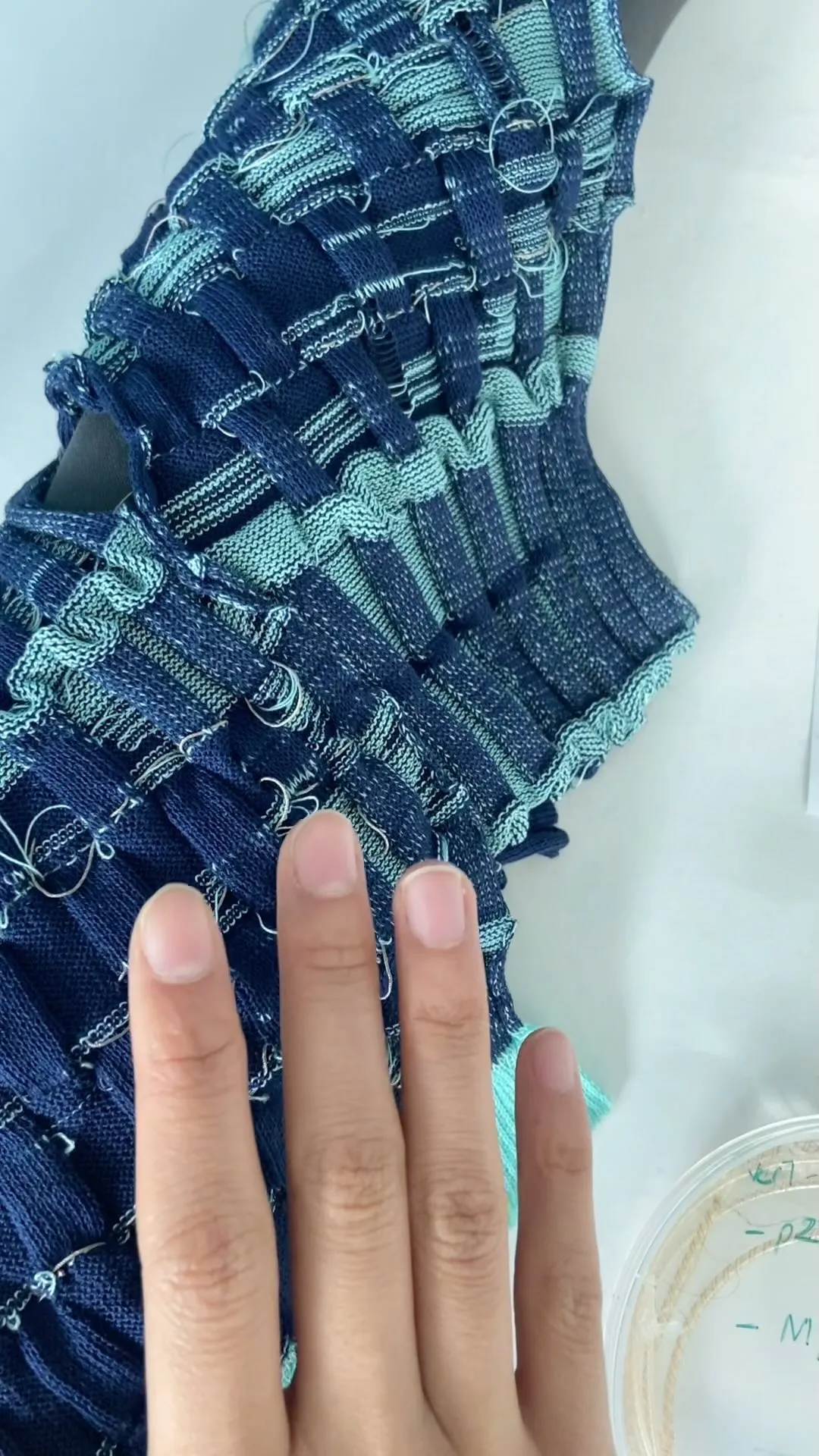
In knitted designs, this behavior is achieved through the strategic programming of yarn properties, stitches, and material placement. Variations in loop size, tension, elasticity, and yarn composition allow different regions of a fabric to respond unevenly to stimuli, producing controlled bending, curling, contraction, or expansion. This makes knitting particularly suitable for 4D applications, as deformation can be engineered at the level of individual loops.
Soft Actuation in Knitted Textiles
Knit4mation is the integration of soft actuators into knitted fabrics. Soft actuators are flexible systems capable of moving without rigid mechanical components. Fiber-based and fabric-based actuators are especially compatible with textiles due to their lightweight structure and material compliance.
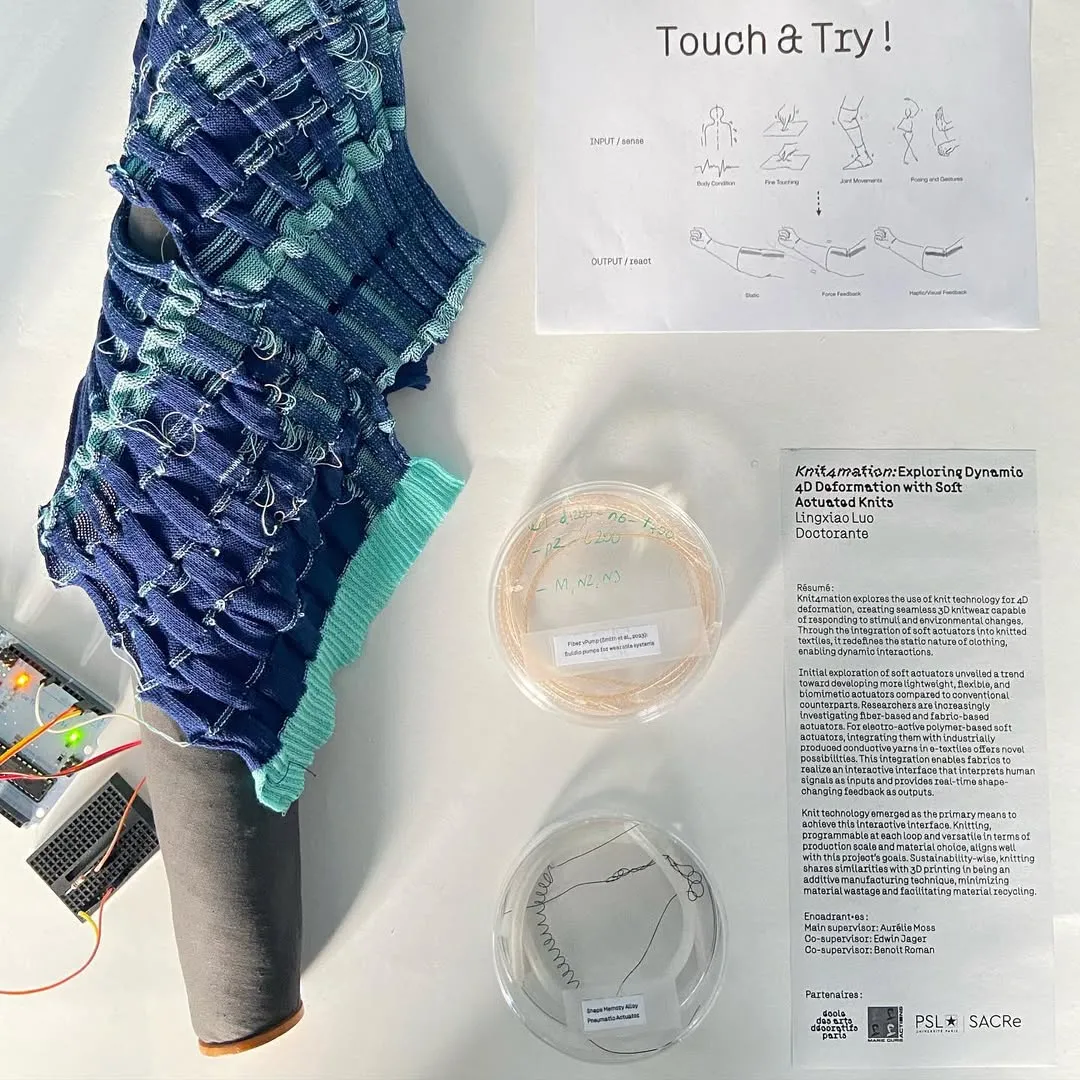
The project explores electro-active polymer-based soft actuators combined with industrial conductive yarns commonly used in e-textiles. When electrically stimulated, these materials generate motion within the knitted structure, enabling real-time shape change. Human signals or environmental data can function as inputs, while the resulting deformation acts as immediate physical feedback. This creates an interactive loop between the body, the garment, and its surroundings.
Knitting as a Design and Manufacturing System
Knitting functions not only as a fabrication method in Knit4mation but also as a computational design system. Each stitch can be programmed to perform a specific mechanical role, allowing designers to embed responsiveness directly into the textile structure. This eliminates the need for external mechanisms and enables form, function, and motion to be developed simultaneously.
From a production perspective, knitting also offers scalability and sustainability advantages. Similar to additive manufacturing, material is used efficiently, reducing waste. Digital knitting technologies further support precise material placement and customization, making 4D knit systems adaptable to different bodies, uses, and performance requirements.
Expanding the Role of Knitwear
Knit4mation contributes to research in smart textiles, wearable systems, and responsive fashion by demonstrating how knit engineering and soft actuation can be combined into cohesive material systems. The project reframes knitwear as an active medium that responds to bodies and environments rather than merely covering them.
By advancing 4D knit technology, Knit4mation opens new directions for textile design, where garments can adapt, communicate, and transform over time. This shift suggests a future in which clothing becomes a dynamic participant in human interaction.
The technical implications of 4D knitting extend beyond fashion. Applications are being explored in wearable health devices, adaptive sportswear, rehabilitation textiles, and soft robotics. In each case, the ability of a fabric to sense, respond, and transform offers functional advantages that static materials cannot provide.
Image Credits: Lingxiao Luo | @lingxiao.luo