

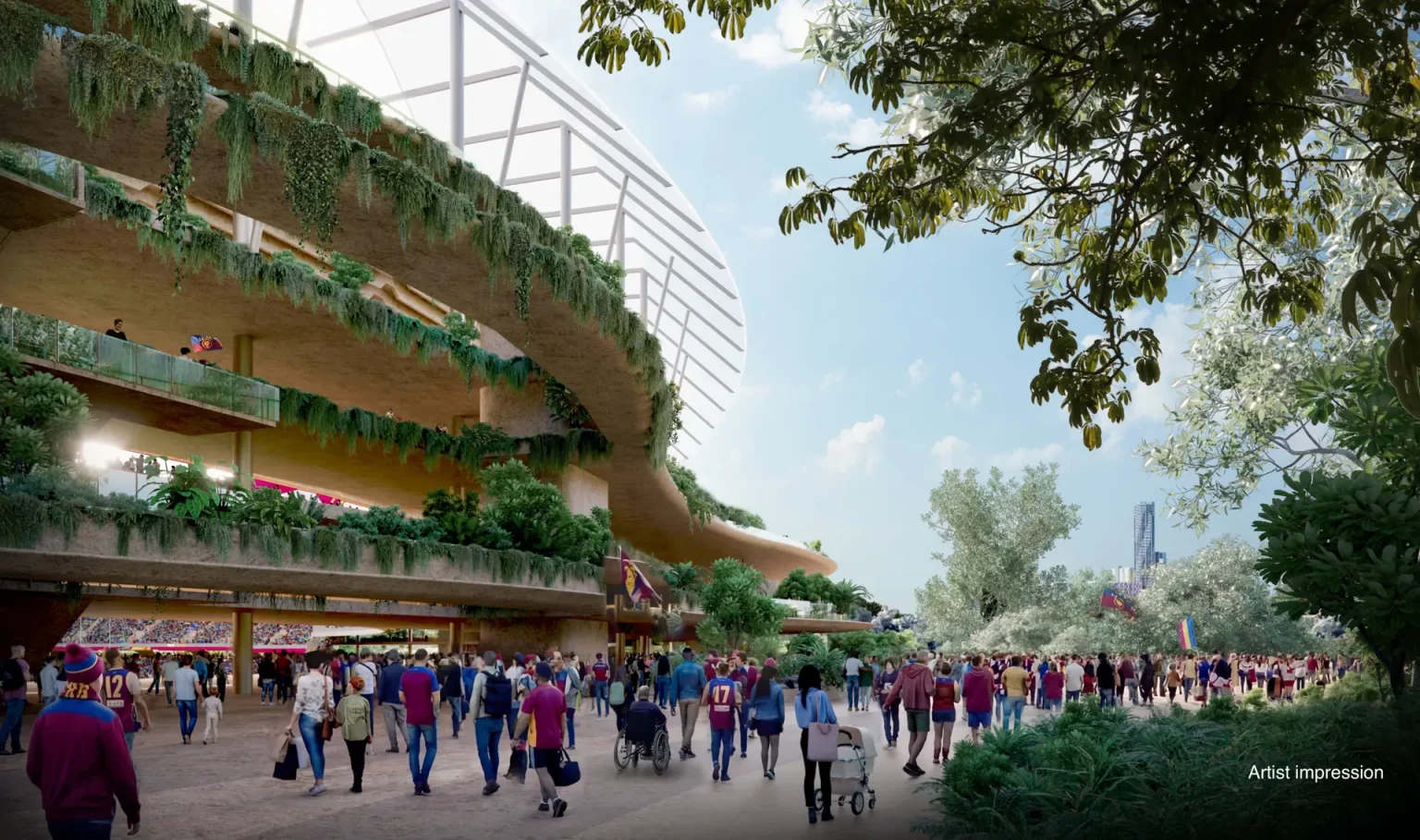
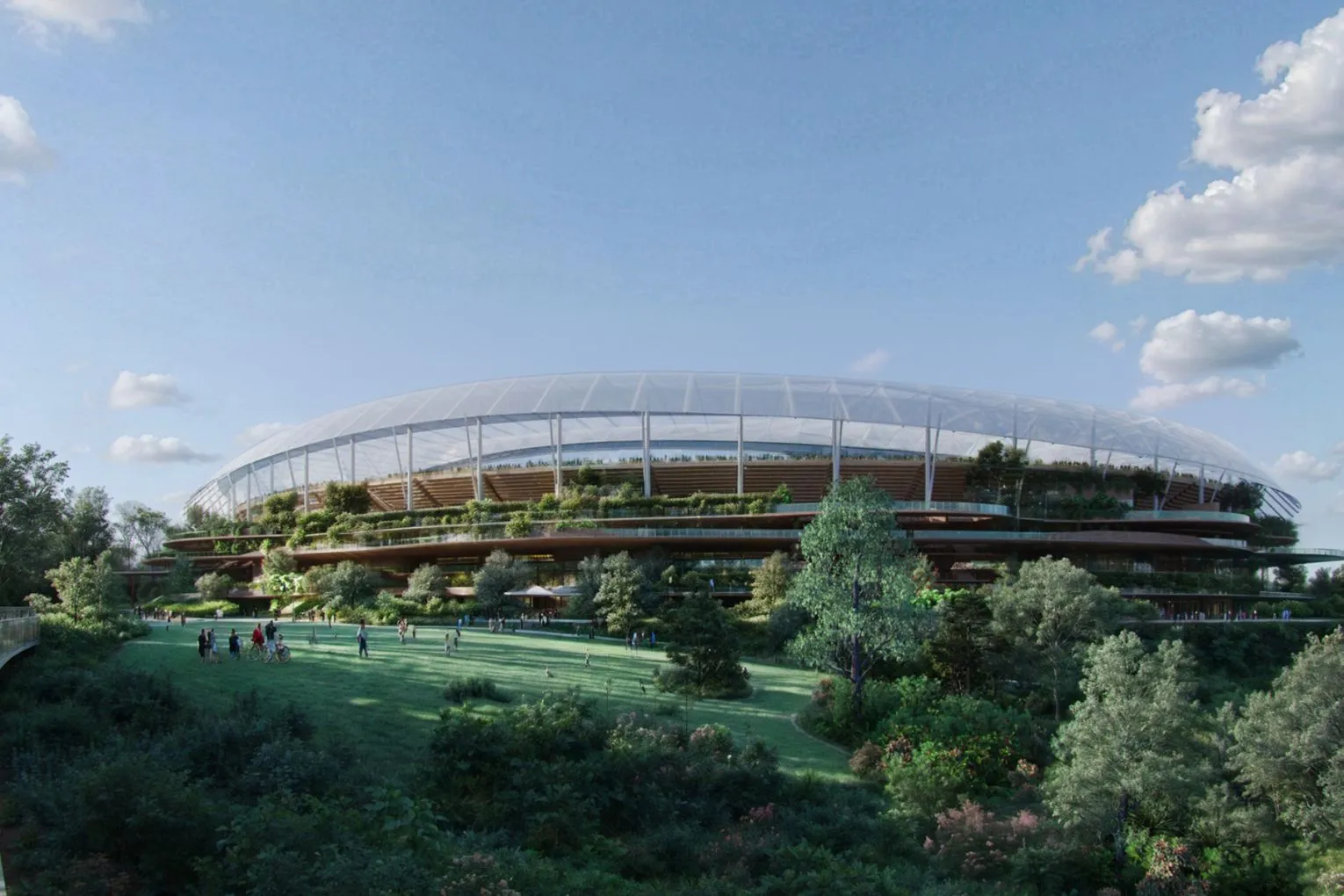


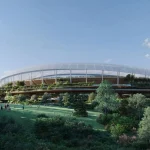
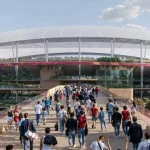
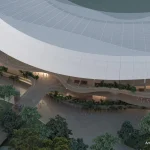
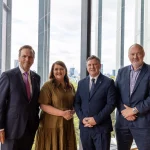
Brisbane has taken a major step forward in preparing for the 2032 Summer Olympic and Paralympic Games with the formal announcement of the principal architects selected to design Brisbane Stadium, the city’s new main venue. Officials from the Queensland and Australian governments, along with the Games Independent Infrastructure and Coordination Authority (GIICA), unveiled the multinational design team chosen to deliver what is expected to become one of Australia’s most significant sporting and cultural infrastructure projects
The announcement is a design partnership led by two of Australia’s most respected architectural firms, COX Architecture and Hassell, in collaboration with Japan’s Azusa Sekkei. Combined, these firms bring a wealth of international stadium design experience, having contributed to major venues such as Perth’s Optus Stadium, the redeveloped Adelaide Oval, and Tokyo’s Japan National Stadium for the 2020 Olympic Games. The appointment follows a rigorous three-month procurement process initiated by GIICA, which drew global interest and resulted in four teams submitting detailed proposals.
A Stadium Designed for Queensland
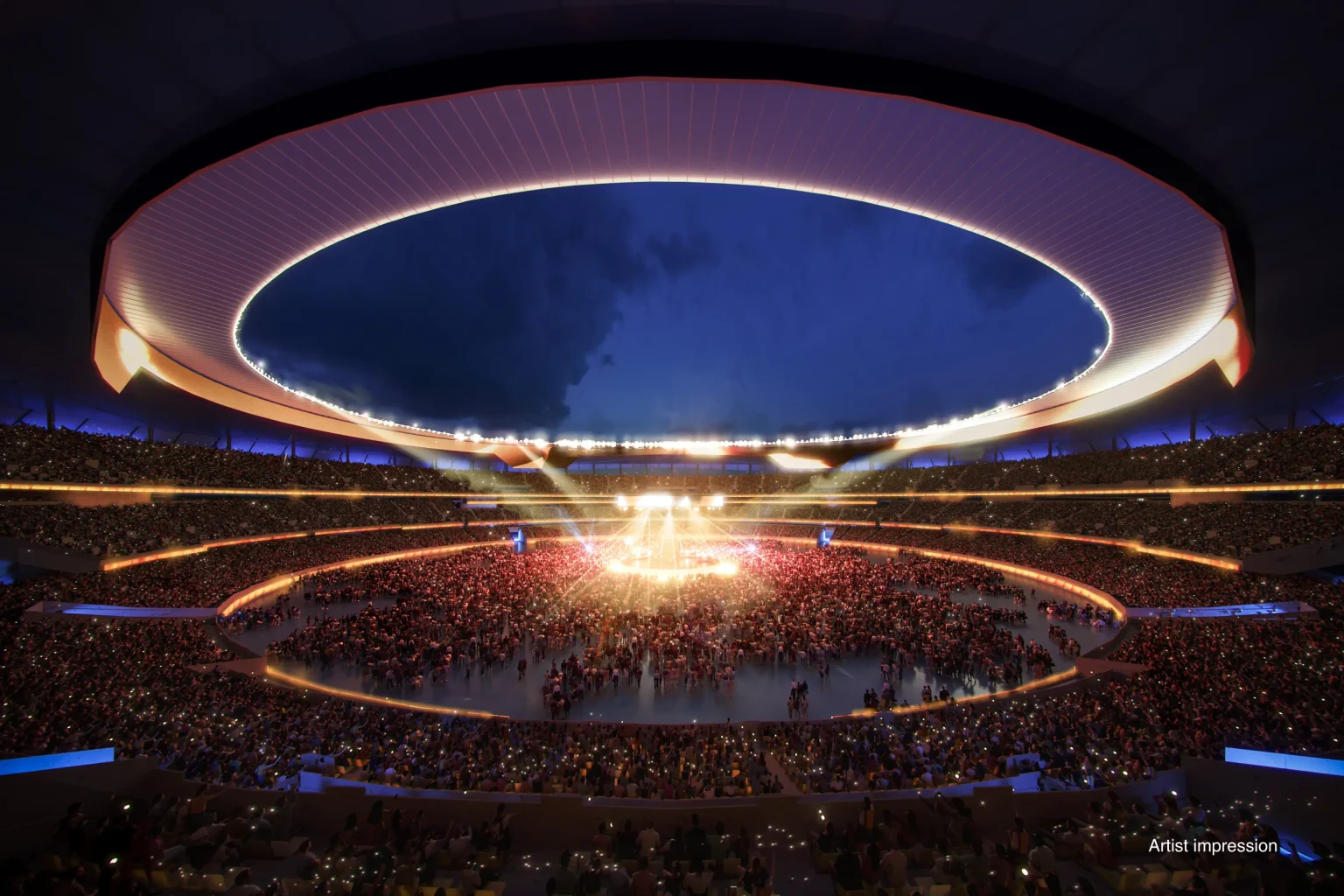
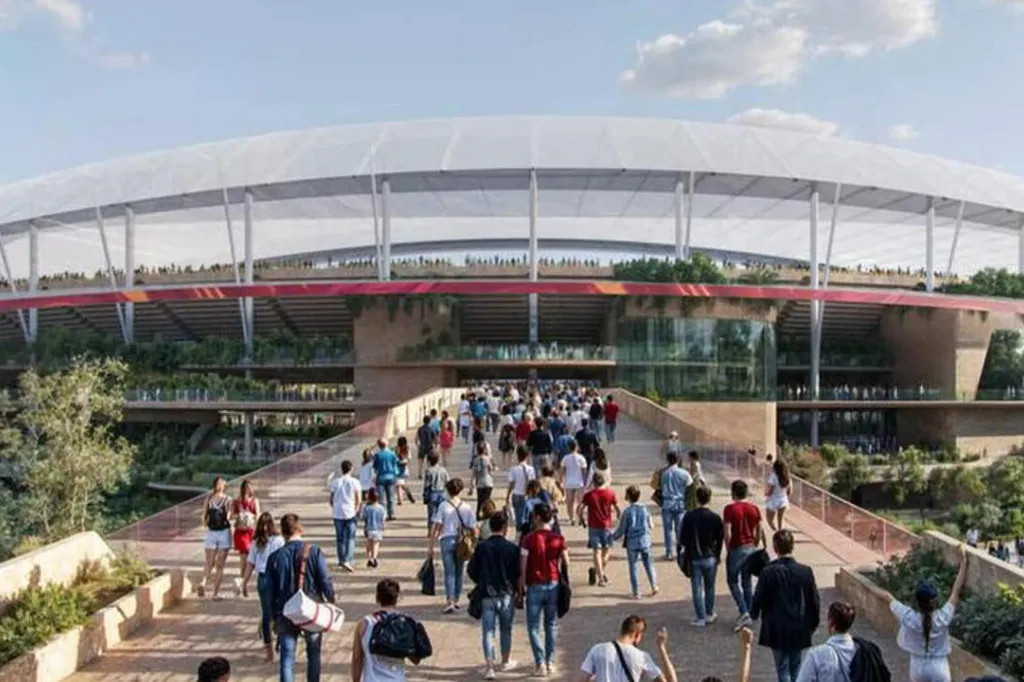
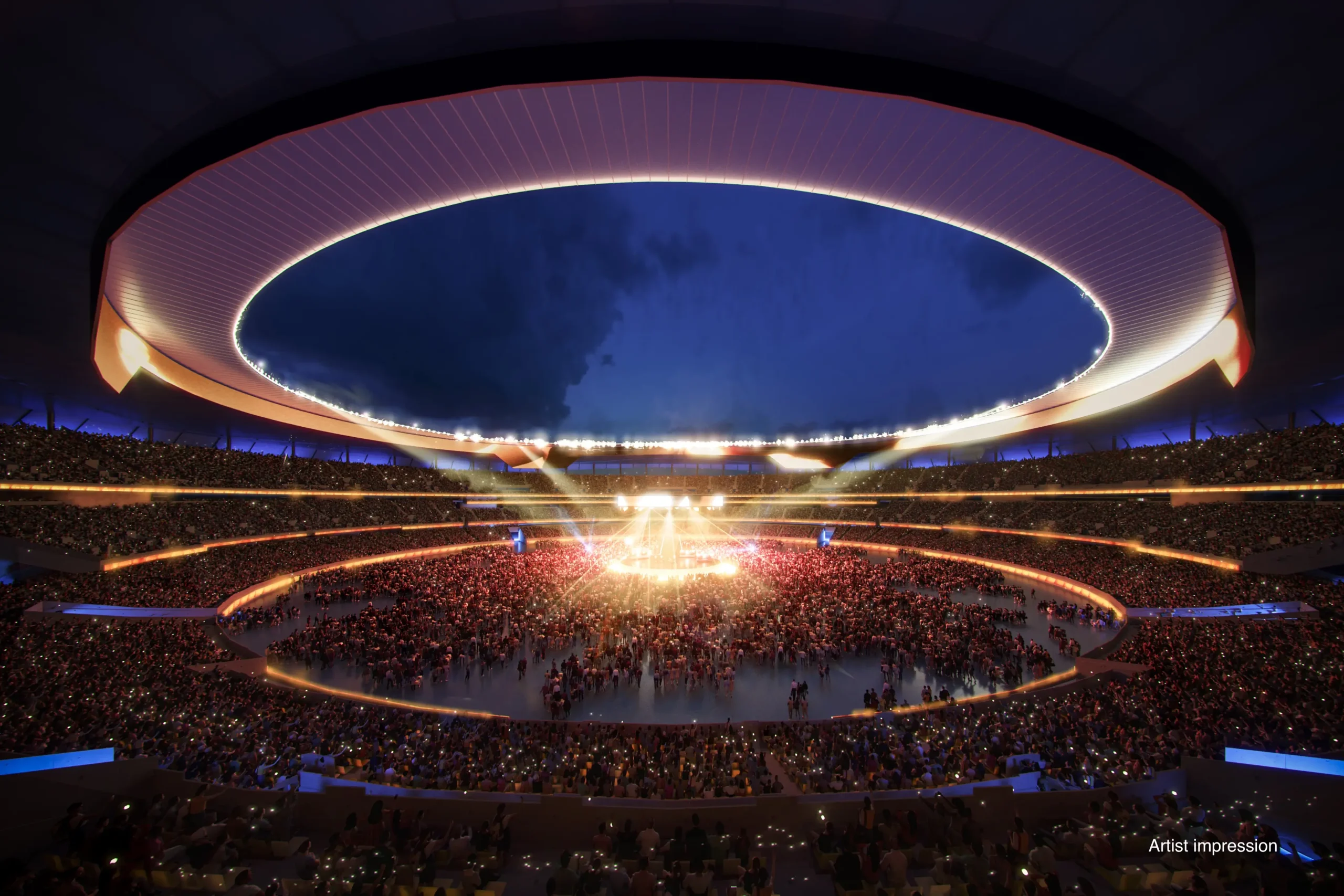
The new stadium will be built at Victoria Park, centrally located in Brisbane’s inner north, and is planned to serve as the major venue for the 2032 Olympic and Paralympic Games’ opening and closing ceremonies, as well as athletics events. After the Games, it is intended as a lasting legacy venue, a multi-purpose stadium with a seating capacity of approximately 63,000 that can expand to around 70,000 for major concerts and large-scale events.
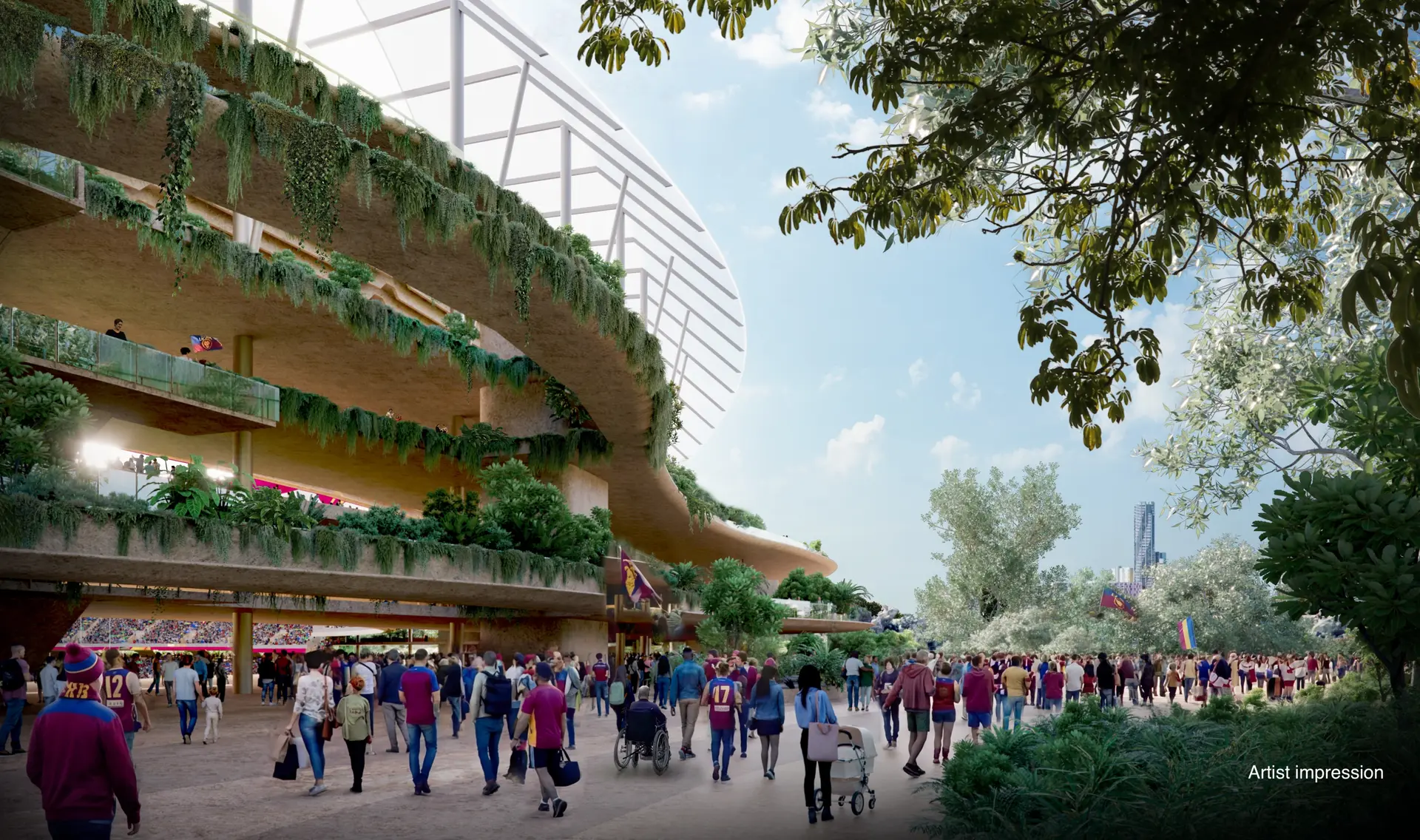
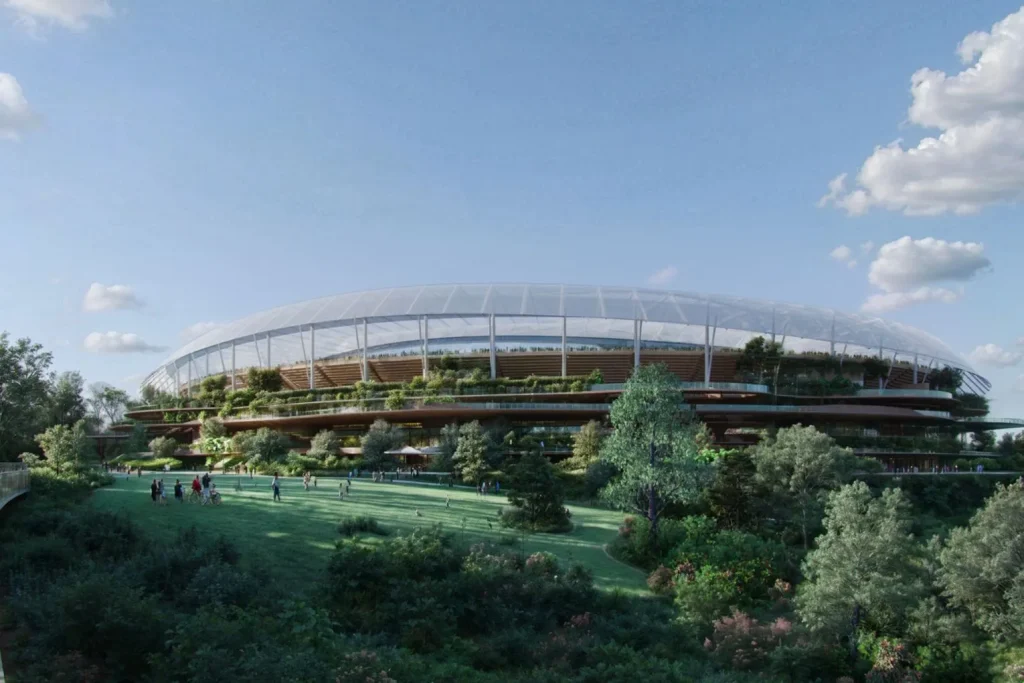
Official statements emphasize that the design concept will be a distinctive “Queensland Response” that reflects the subtropical climate, natural landscape, and relaxed lifestyle characteristic of the state. Designed to foster connections with the surrounding Victoria Park environment, the concept draws inspiration from traditional Queenslander architecture known for its verandahs, natural ventilation, and shade, and aims to capture cooling breezes and long sightlines across the parklands.
Deputy Premier and Minister for State Development, Infrastructure and Planning Jarrod Bleijie highlighted the stadium’s symbolic importance, noting that the design celebrates the local culture and landscape while setting the foundation for Brisbane’s global sporting profile beyond 2032. Federal Infrastructure Minister Catherine King reiterated that early design work will begin immediately, accompanied by project validation to ensure delivery on time and within budget.
Design and Procurement Details of Brisbane Stadium
The design team will collaborate with prominent engineering firms Arup and Schlaich Bergermann Partner (sbp), particularly focused on developing an innovative and climate-responsive roof solution. The selection process, which began with an open call for Expressions of Interest in September of the previous year, was led by GIICA Chairman Stephen Conry AM and included rigorous evaluation across architectural vision, technical capability, and placemaking expertise.
COX Architecture Director Richard Coulson emphasized that the stadium’s design is intended to harmonize with Victoria Park’s topography, nestling within the rolling hills and enhancing the experience for all park visitors. Hassell Managing Principal Lucy O’Driscoll added that the venue is envisioned as a community hub that extends well beyond the Games, adaptable for diverse sporting and cultural uses throughout the year.
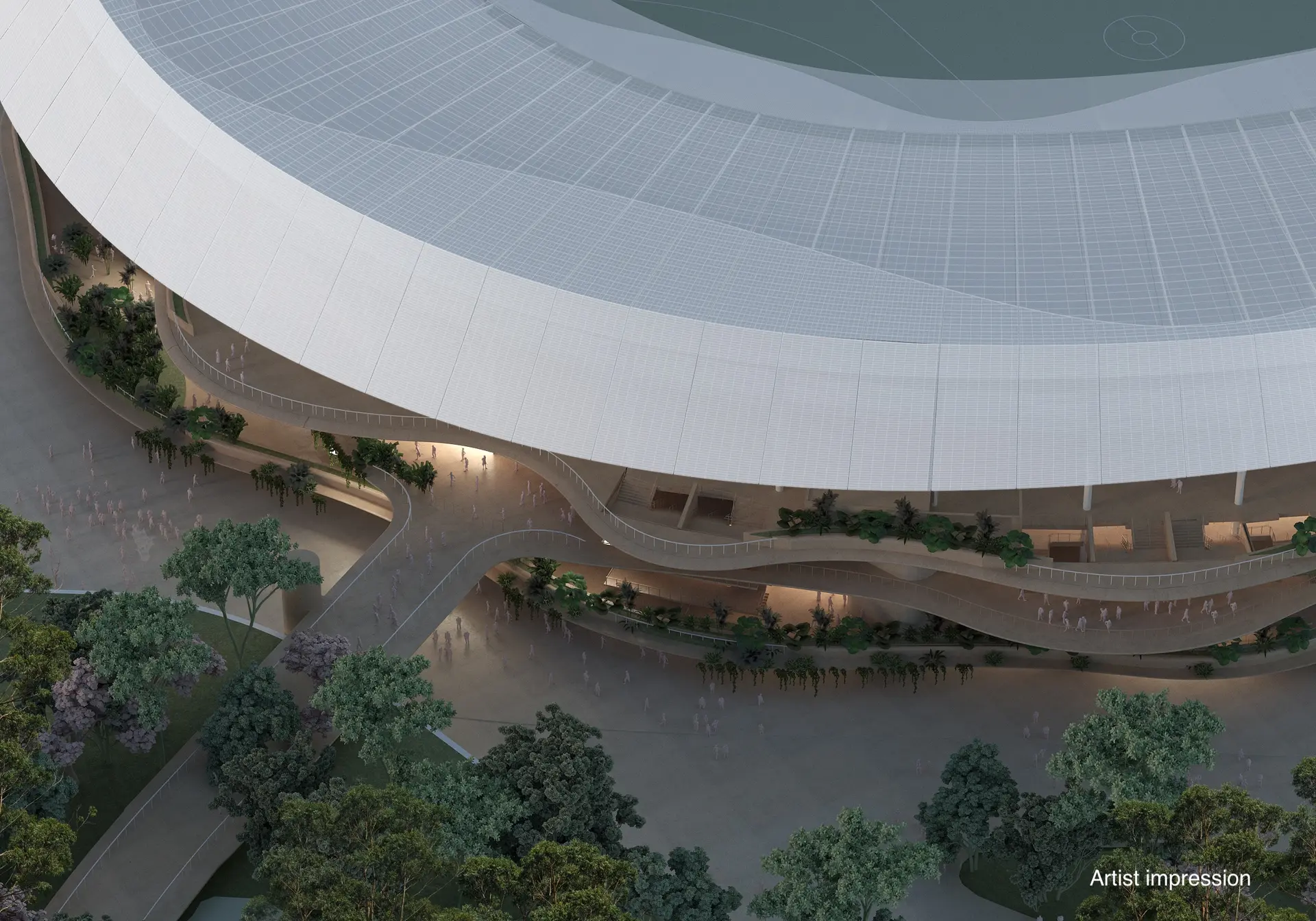
Brisbane Stadium is part of a broader $7.1 billion Games Venues Infrastructure Program jointly funded by the state and federal governments, which includes 17 new and upgraded venues across Queensland. Officials say the stadium will not only support elite sport and global events but also provide long-term benefits by attracting major sporting fixtures, entertainment acts, and community gatherings.
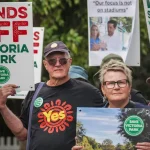
However, the project has also drawn significant public debate and community scrutiny. The Save Victoria Park group, which has opposed the development for years, argues that constructing a large stadium within the heritage-rich park could irreversibly damage native wildlife habitats, ancient trees, and areas of cultural significance, particularly for First Nations communities. In response, opponents have flagged ongoing legal challenges and broader environmental concerns.
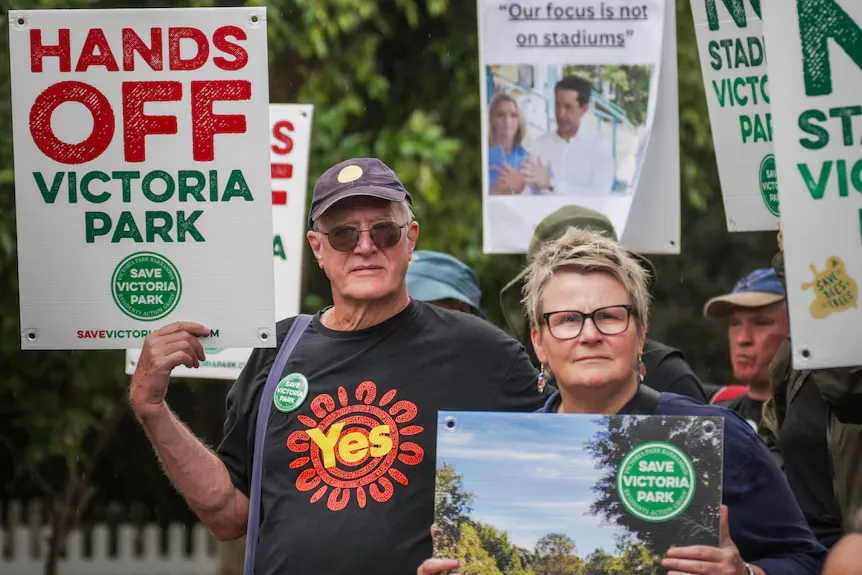
Public reaction has been mixed. While many supporters have welcomed the appointment of a world-class design team and the progress toward physical delivery, some residents and commentators have raised concerns about potential cost escalations, seating capacity limits, and broader spending priorities amid economic pressures. Opinion polls indicate that public sentiment remains divided, with roughly half expressing approval of the stadium design at this stage.
Construction Timeline and Future Steps
Preparatory work for the stadium site is already underway, with borehole drilling and seismic surveys having begun in previous months to inform detailed design and construction planning. Government agencies have indicated that earthworks are expected to commence by mid-2026 once the golf complex at Victoria Park closes, a key precursor to full construction activity.
Once completed, the stadium will not only replace the Gabba, Brisbane’s existing major cricket and Australian rules football venue, as the city’s central sporting arena, but also serve as the new home for local sports clubs such as the Brisbane Lions (AFL), Queensland Bulls (cricket), and Brisbane Heat (BBL). This transition reflects a long-term vision to boost Queensland’s capacity for hosting international sport and entertainment events for decades to come.
Wider Context of the 2032 Games
The stadium appointment complements ongoing preparations for the broader 2032 Olympic and Paralympic Games. Queensland authorities have highlighted the scale of the infrastructure program, which encompasses aquatic centers, athlete villages, transport upgrades, and multiple competitive venues across the state. With Brisbane confirmed as the host city for the 2032 Summer Games, the focus now shifts to translating conceptual plans into tangible built outcomes.
As the design phase progresses through 2026, stakeholders, from government officials and architects to community groups and sporting bodies, will continue follow-up consultations, detailed planning, and regulatory approvals. The objective is to deliver a stadium that meets Olympic needs and enriches Brisbane’s cultural and sporting life well into the future.