

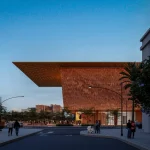
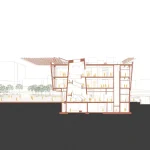
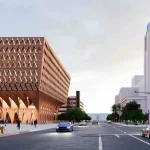
The updated designs for the Las Vegas Museum of Art (LVMA), created in collaboration with the Pritzker Architecture Prize-winning firm Kéré Architecture and the global engineering and architectural powerhouse Skidmore, Owings & Merrill (SOM), represent the city’s first freestanding, purpose-built art museum. The design synthesizes the geological vernacular of the Mojave Desert with the communal architectural principles developed by Francis Kéré in West Africa.
The Metaphorical Framework of LVMA: Baobab and Desert
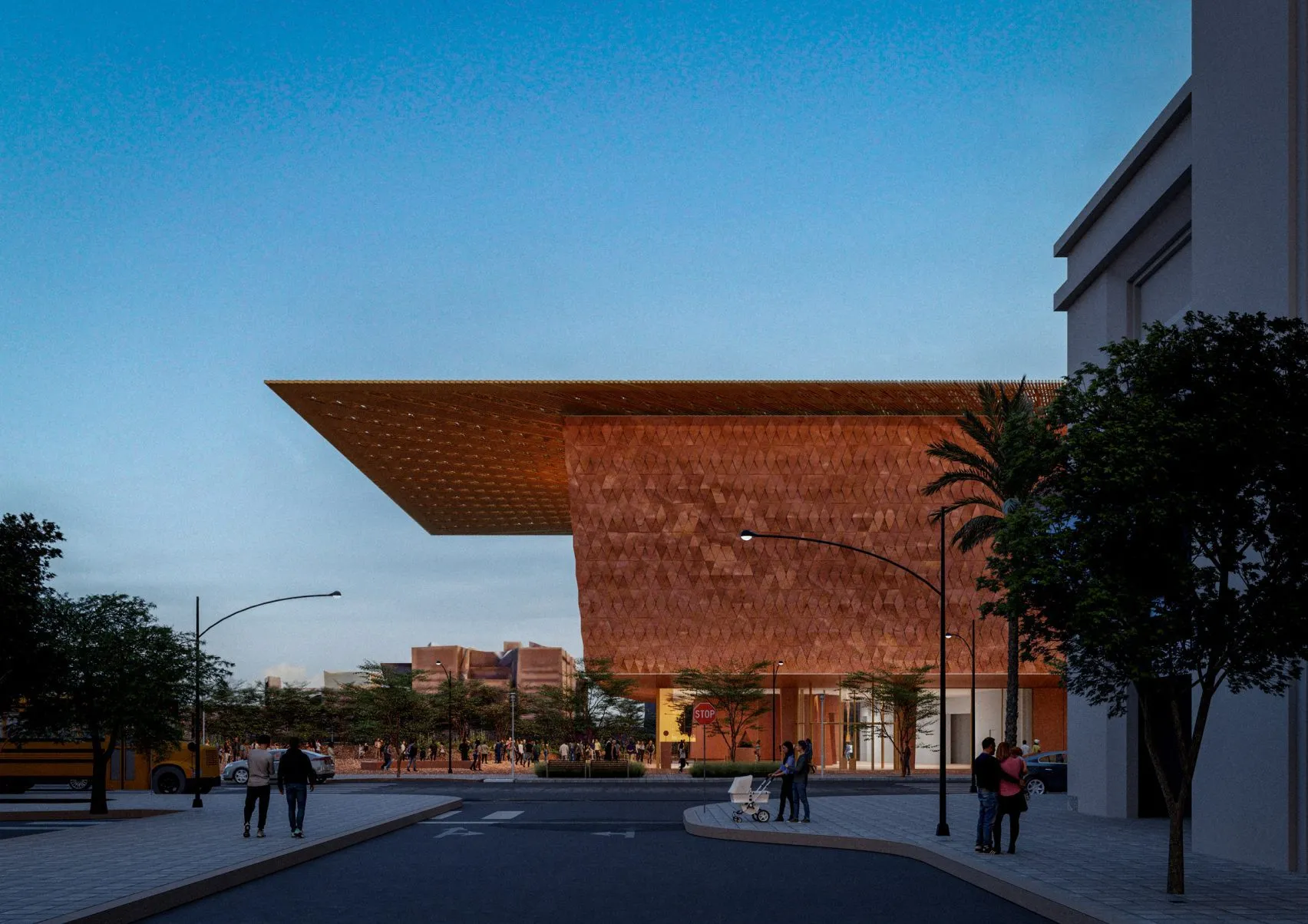
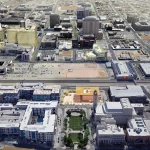
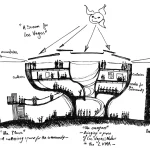
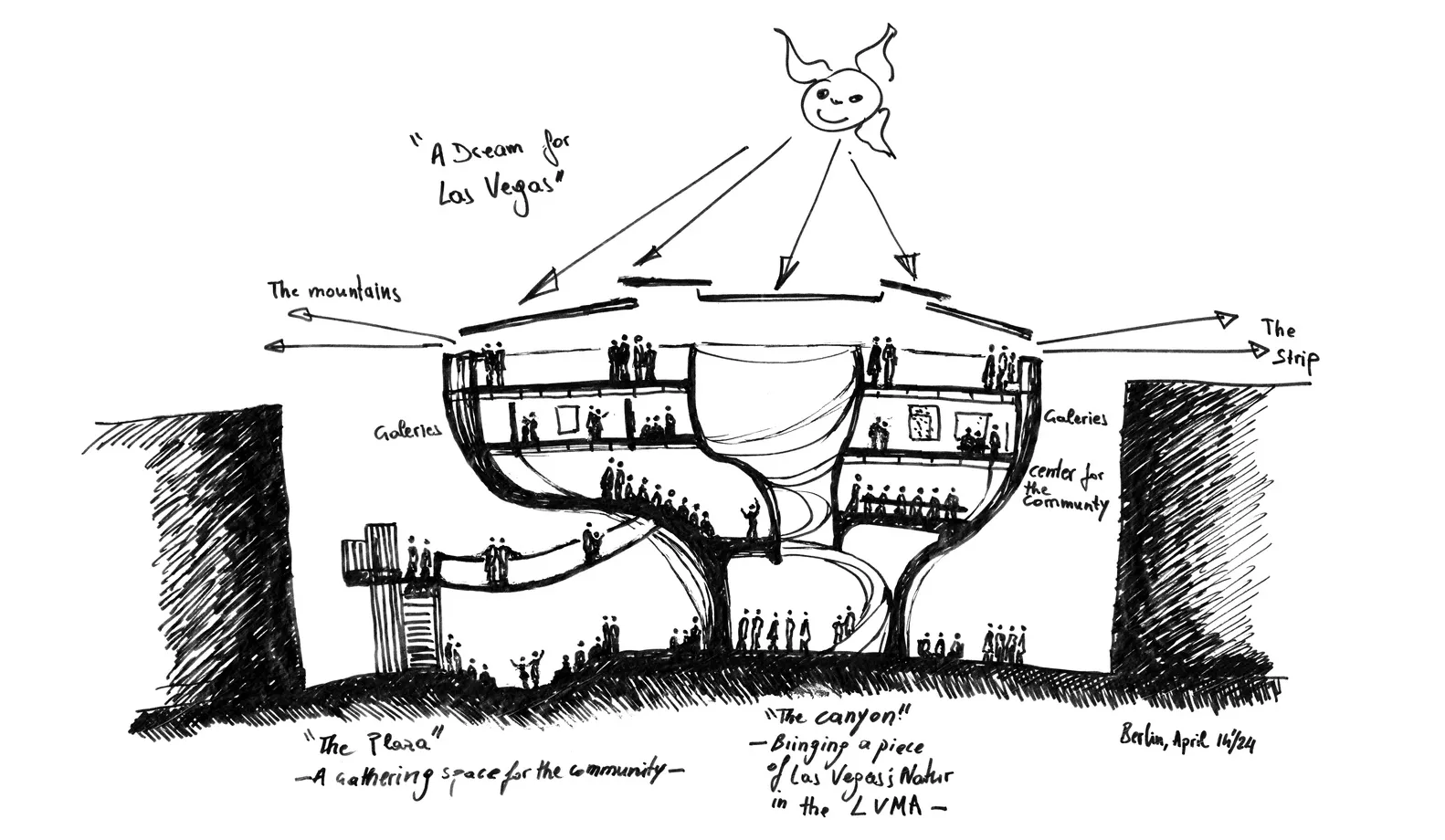
Located within the Symphony Park district in Downtown Las Vegas, the project emphasizes community-driven urbanism. Spanning 60,000 square feet, the facility responds to its context, featuring a climate-responsive structure that maximizes both spatial efficiency and civic impact. Conceptualized around two metaphors: the baobab tree and the desert canyon, the design is envisioned as a living tree rooted in the lands of the Southern Paiute people and the historic Union Pacific rail yard.
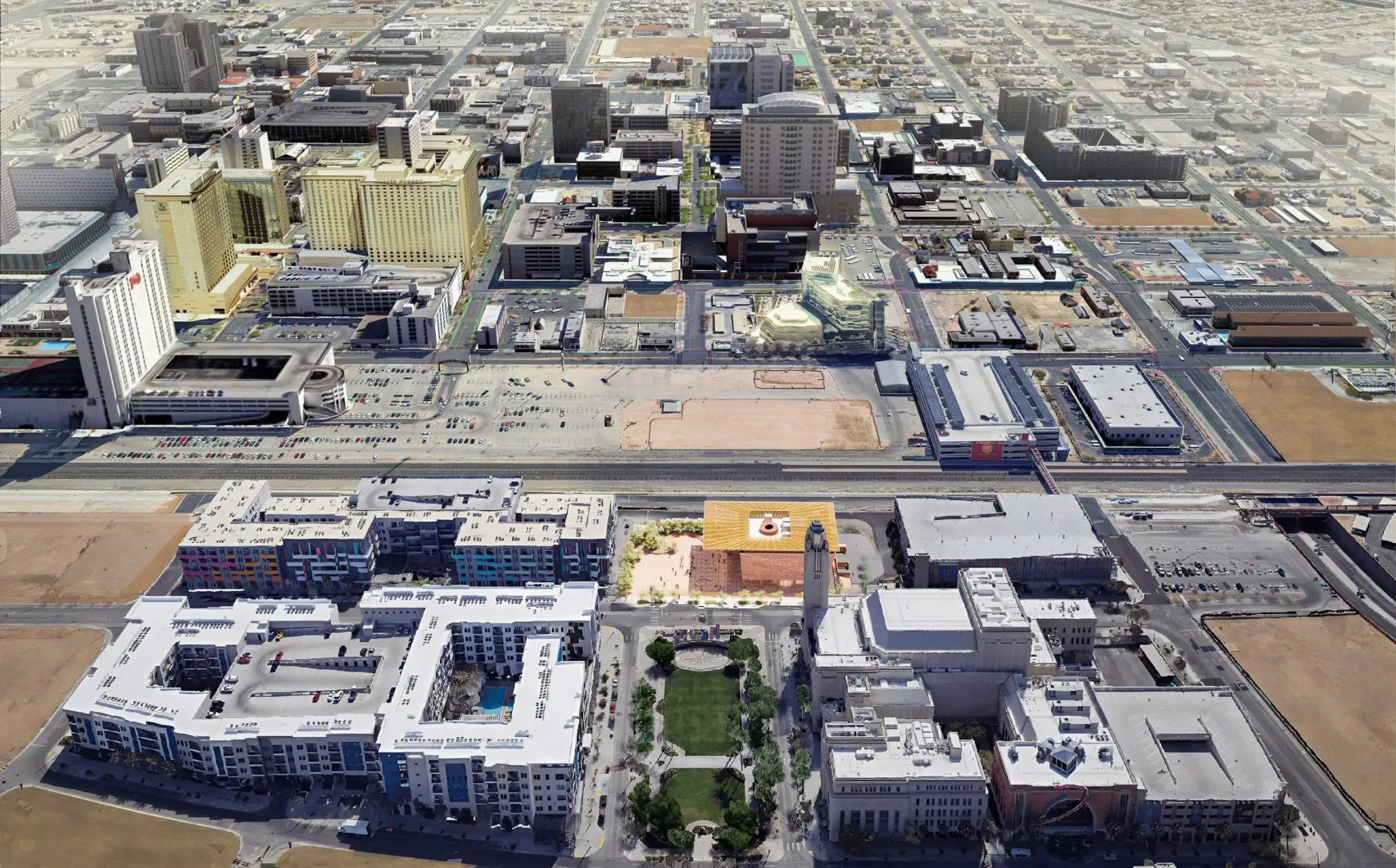
Francis Kéré, widely known for his people-centered architecture, draws inspiration from baobab trees of the African savanna, which serve as sites of communal life, education, and growth. Blending the natural landscape of the Mojave with the built form, the design reintroduces the presence of nature into an urban skyline dominated by neon-lit facades. The interiors of the structure are defined by a canyon motif, where a central vertical core serves as a metaphorical trunk, providing structural stability and organizing the circulation of visitors.
Materiality and Tectonics: The Mosaic of the Mojave
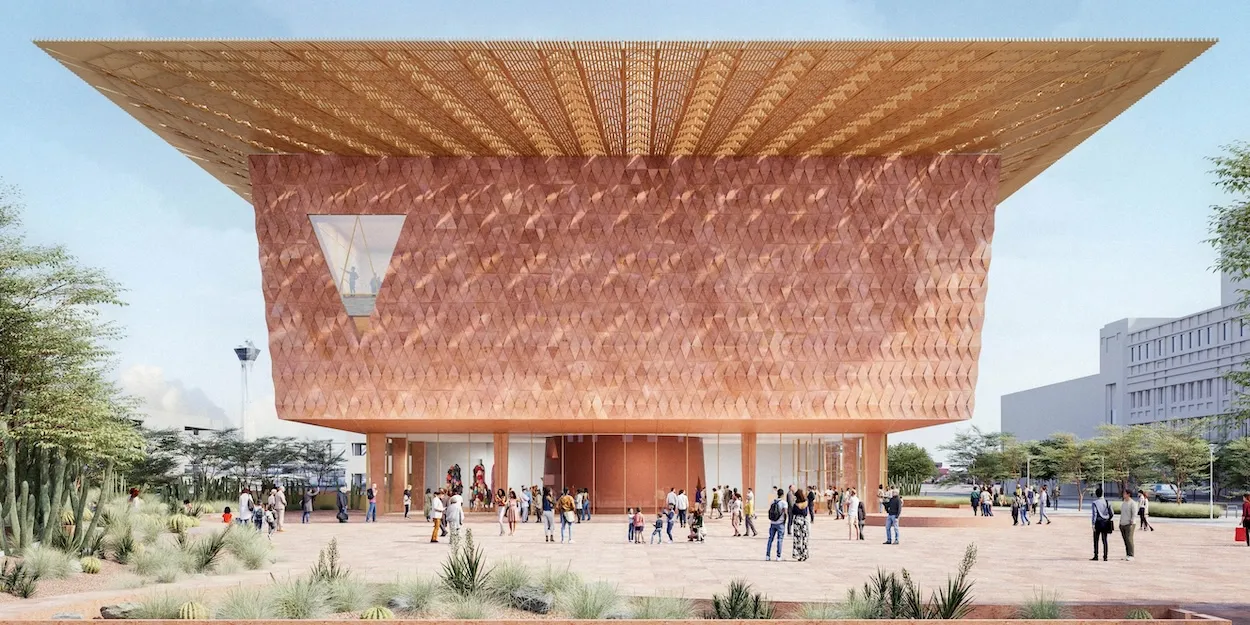
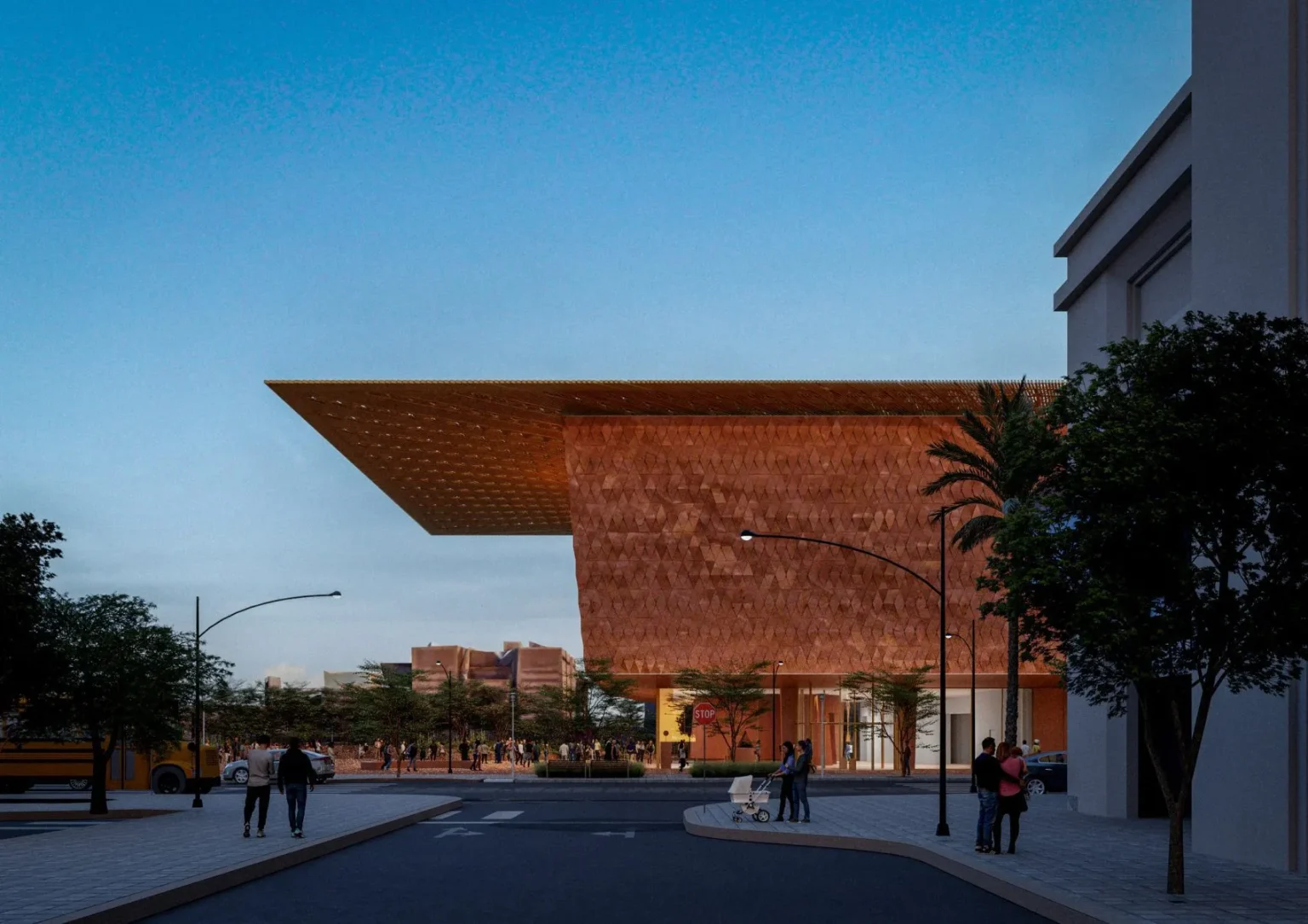
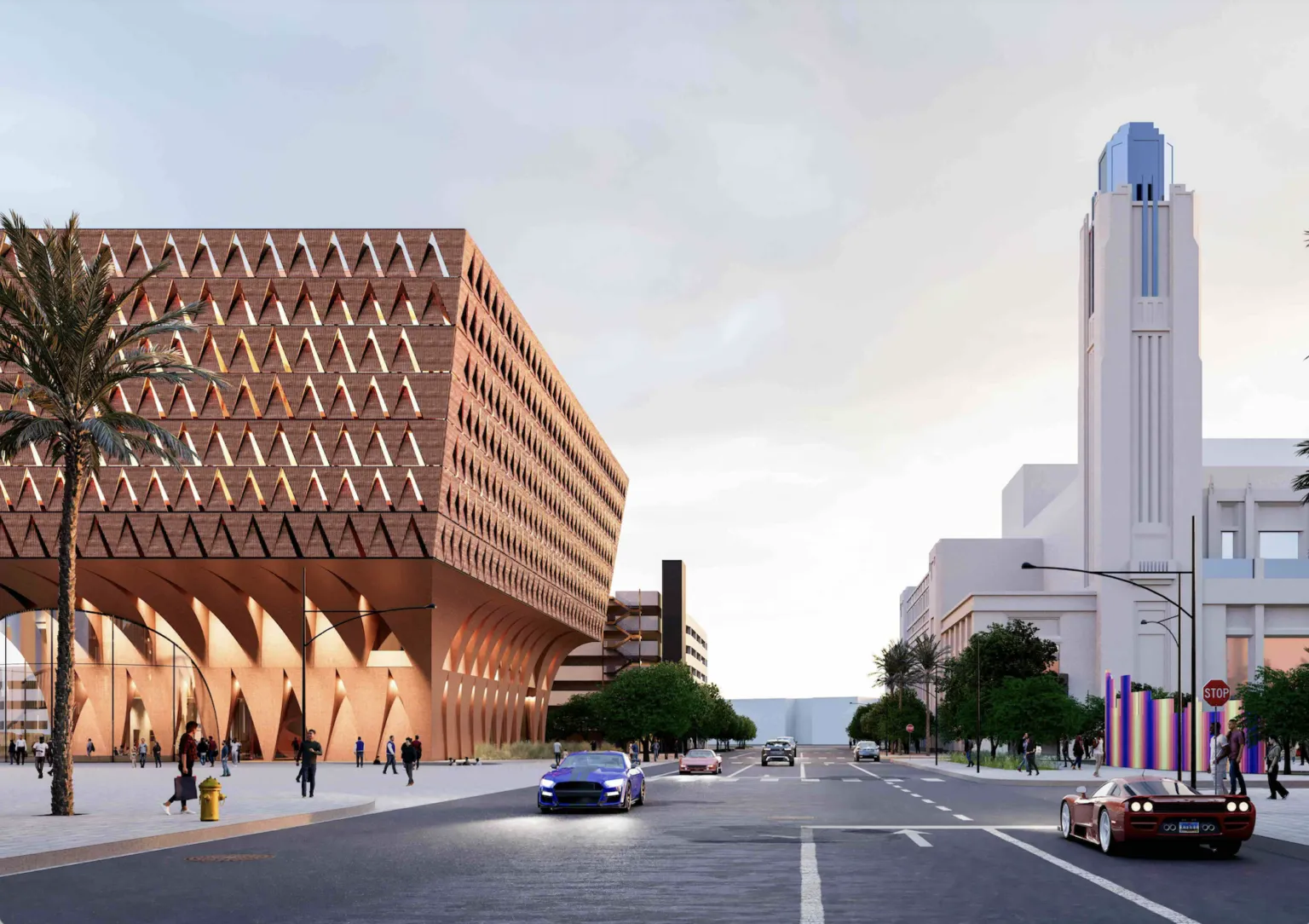
Enveloped in a mosaic of locally sourced stone, the structure intentionally departs from conventional glass-and-steel materiality. The mosaic was specifically chosen to echo the iron-rich sandstone of the nearby Red Rock Mountains. The use of diamond-shaped bricks on the facade provides a tactile, human-scaled texture while offering high thermal mass for enhanced energy efficiency.
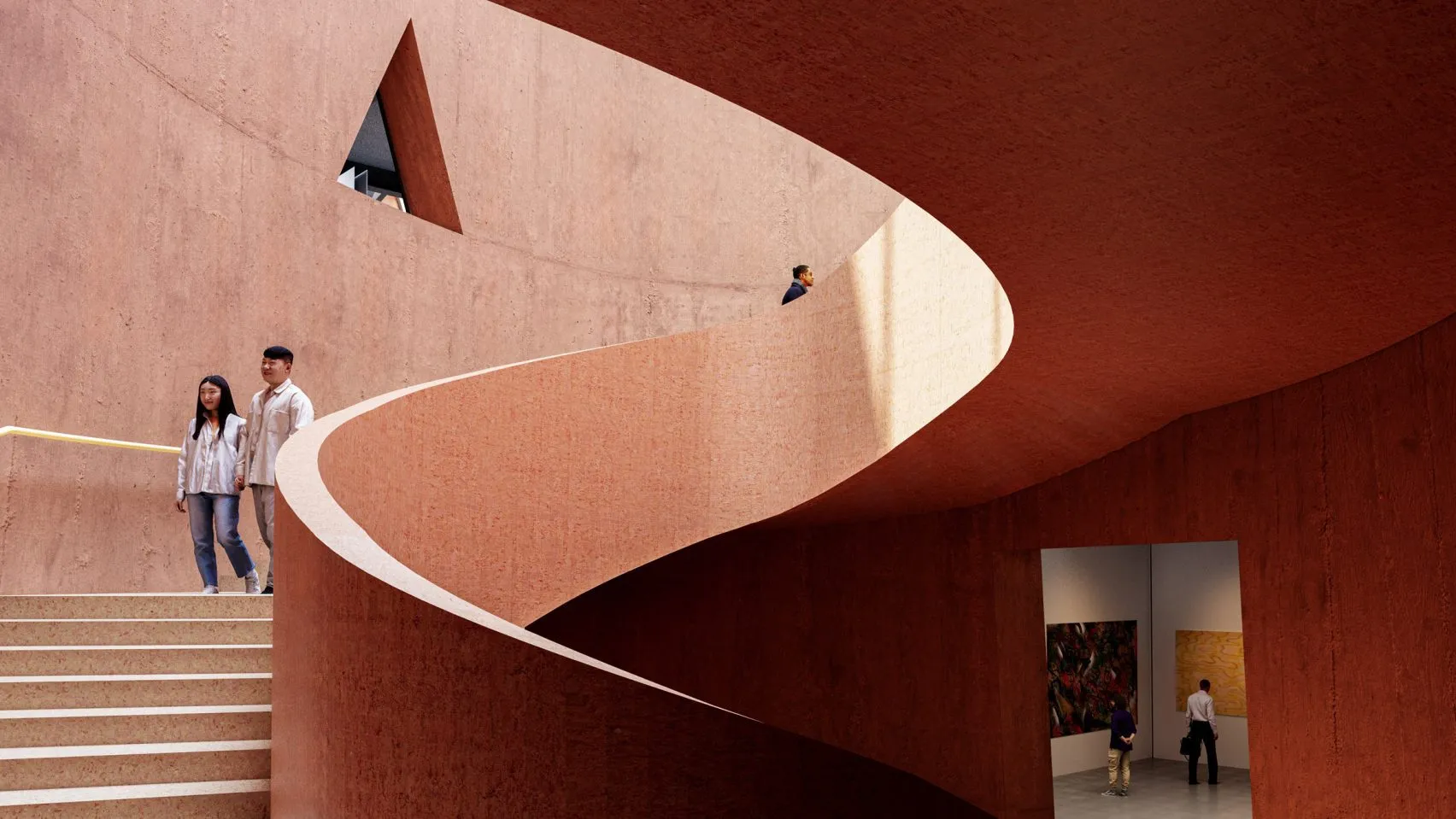
Following a sustainable ethos and employing regenerative materials, Kéré utilizes high-density materials that absorb solar radiation throughout the day and release it slowly during the cooler desert nights. The striking façade integrates a technical assembly of mosaic stones, creating a varied yet cohesive color palette. The approach allows the building to change appearance depending on the quality of light, from the harsh glare of midday to the soft, warm tones of dusk.
Interior Architecture: The Canyon and the Sanctuary
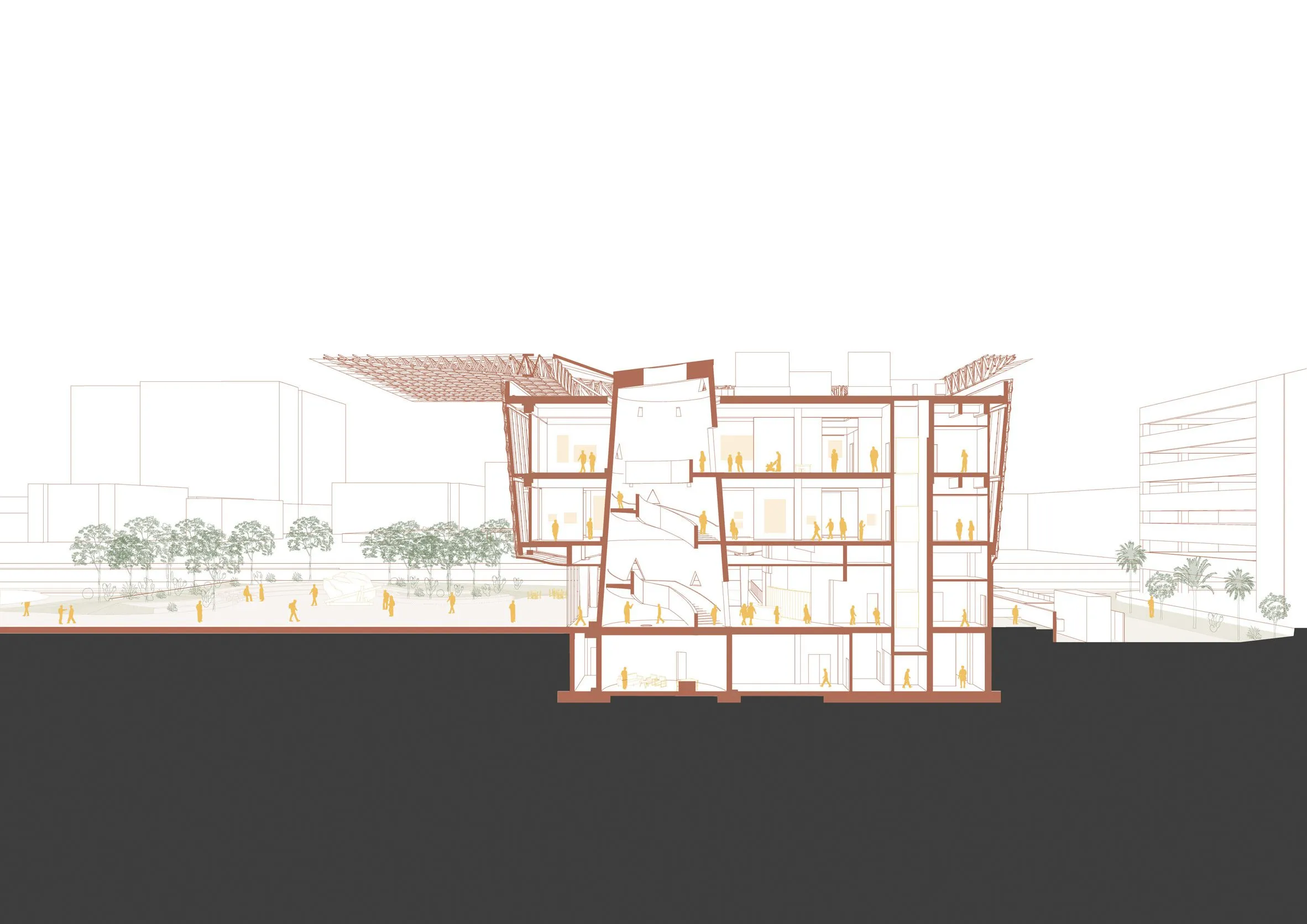
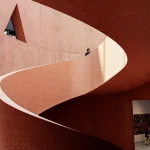
The interior of the LVMA is defined by the canyon staircase, a sculptural element cast in red-toned concrete that connects the lobby to the sky through a large central skylight. It acts as a visible signal to the museum’s civic openness. Bridging the interior and exterior, the floor-to-ceiling windows animate the interior with natural light and activity, providing transparency. This reinforces the idea of the museum as a gathering place where the entire community can see itself reflected.
The journey through the museum is designed to evoke the experience of ascending through a desert canyon, moving from shadow and enclosure toward light and openness. The second-floor galleries are inspired by the Guardian Angel Cathedral, using soft, indirect light to create a sense of calm and focus, contrasting with the high-energy environment of the city outside. These galleries appear to float above the base, a structural feat achieved through the collaborative engineering of SOM and AKT II.
To realize Kéré’s vision, SOM serves as the Architect of Record and Structural Engineer, supported by a team of specialist consultants who contribute to the museum’s performance and visitor experience. As the institution moves toward its 2029 opening, it will continue to advance its mission through the Family Album exhibition, the 2026 Media Lab, and ongoing engagement with the diverse communities of the Las Vegas Valley.
Photo Credits: © Kéré Architecture