



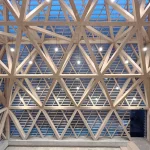
The Museum Historische Oberamteistraße in Reutlingen, Germany, designed by Wulf Architekten and engineered by str.ucture, bridges centuries through a spatial dialogue. The project is a contemporary reinterpretation of the 14th-century Steinernes Haus (Stone House), expressed in a transparent, timber-and-glass structure that seamlessly blends heritage and innovation. The new museum establishes a conscious dialogue between historical volume and contemporary materiality, highlighting timber construction, parametric design, and sustainable engineering.
Museum Historische Oberamteistraße’s Context
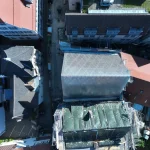
Located within one of Southern Germany’s oldest half-timbered ensembles, the museum aims to revive the city’s historic fabric. Commissioned by the City of Reutlingen and won in competition by Wulf Architekten of Stuttgart in 2017, the project’s primary aim is to safeguard one of Southern Germany’s most important monumental ensembles.
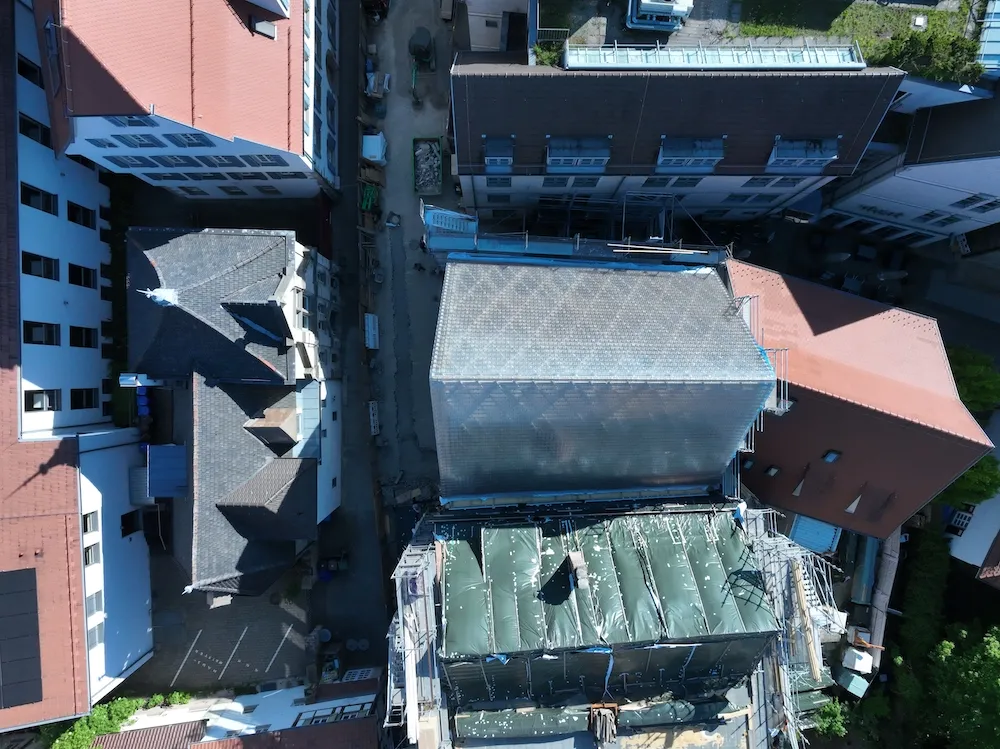
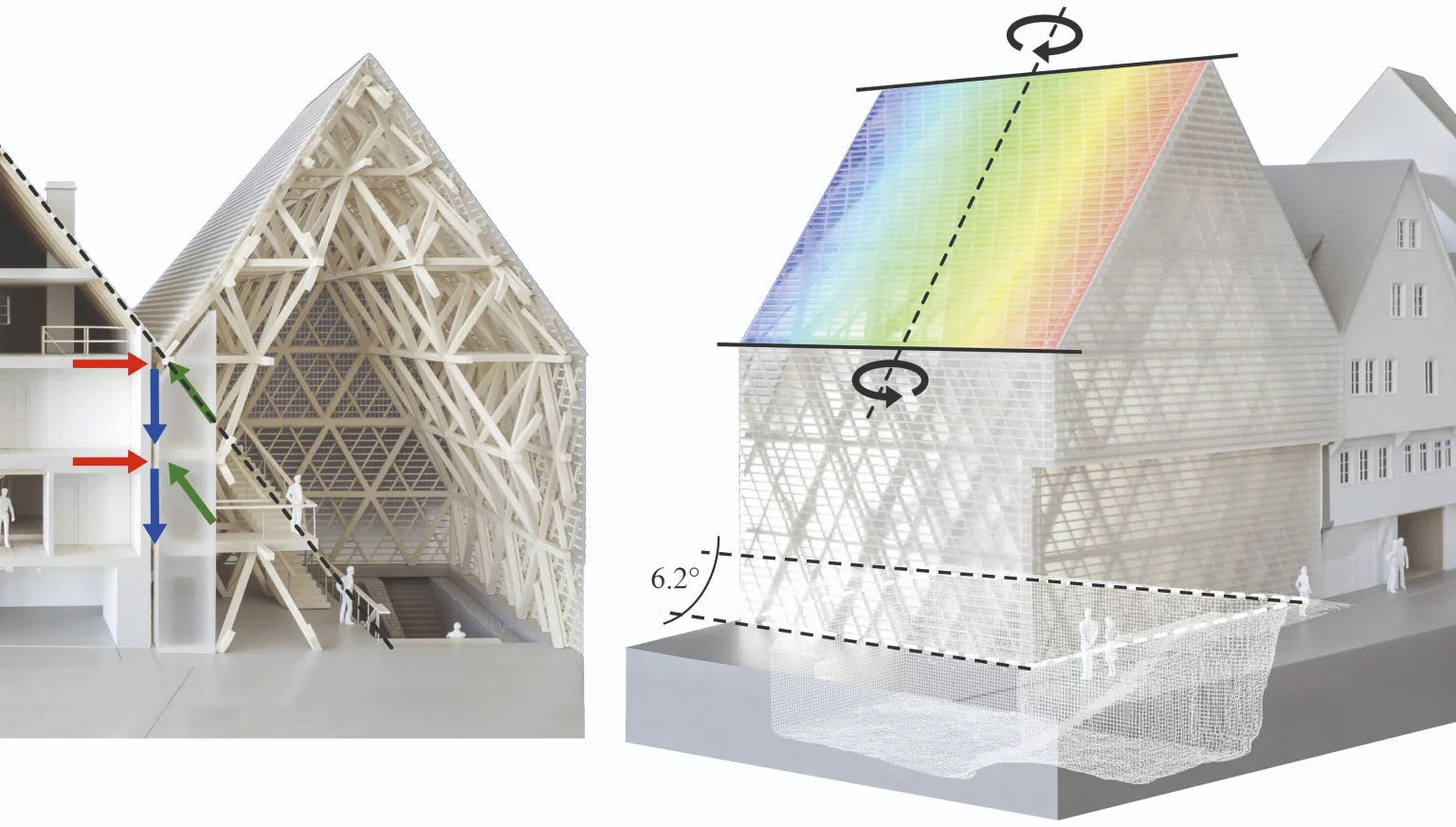
The Museum Historische Oberamteistraße was established as a direct response to a serious structural issue with a historic building. The structural issue stems from the demolition in 1972 of the original massive structure, known as the Tower House (Oberamteistraße 34), which had historically braced the entire row. Its removal caused the remaining half-timbered houses (Oberamteistraße 28-32) to shift and threaten collapse. Consequently, the new supporting structure’s primary function is to provide static stabilization of the existing buildings against normal loads, particularly under seismic conditions.
Computational Tools Shaping the Built Identity
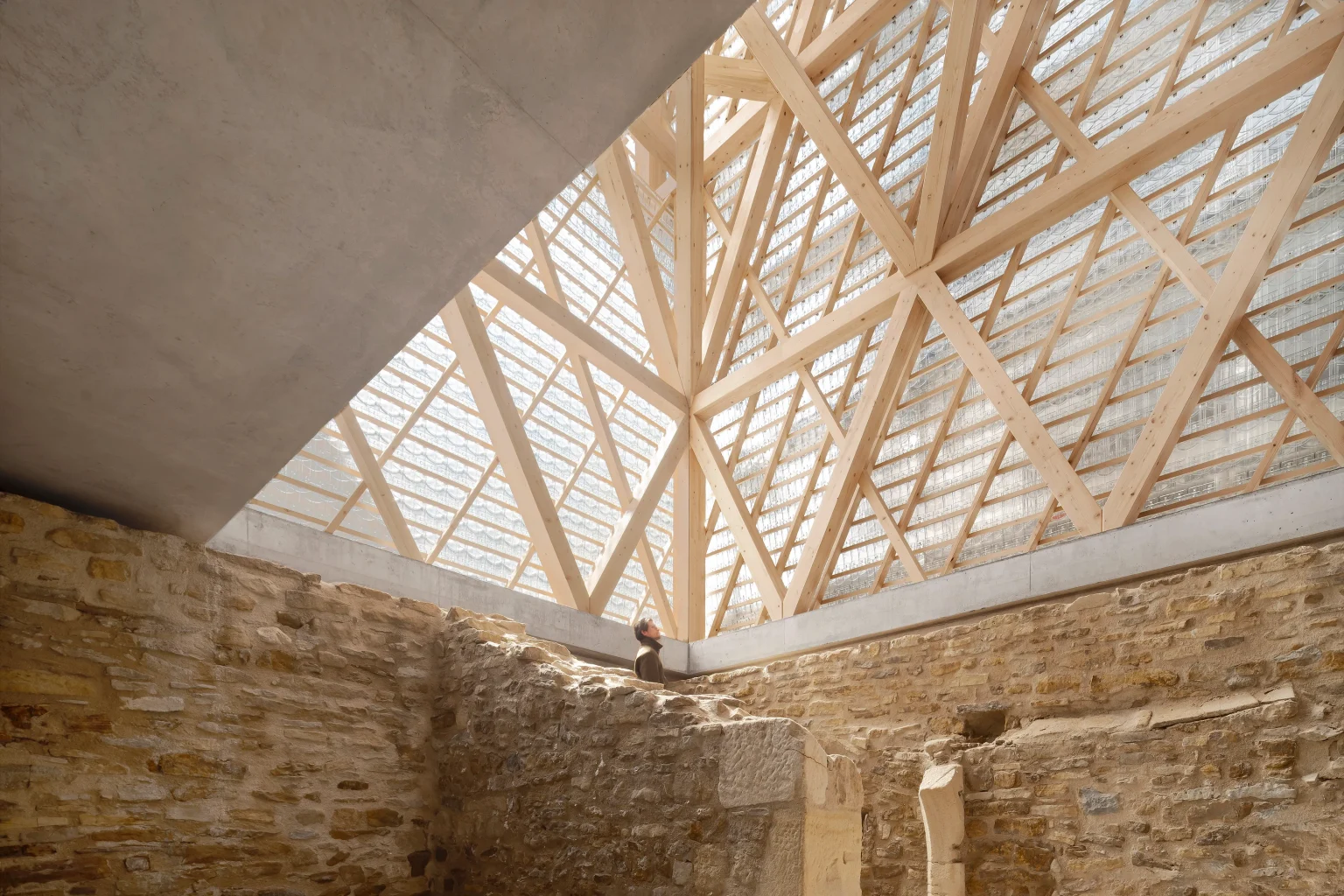
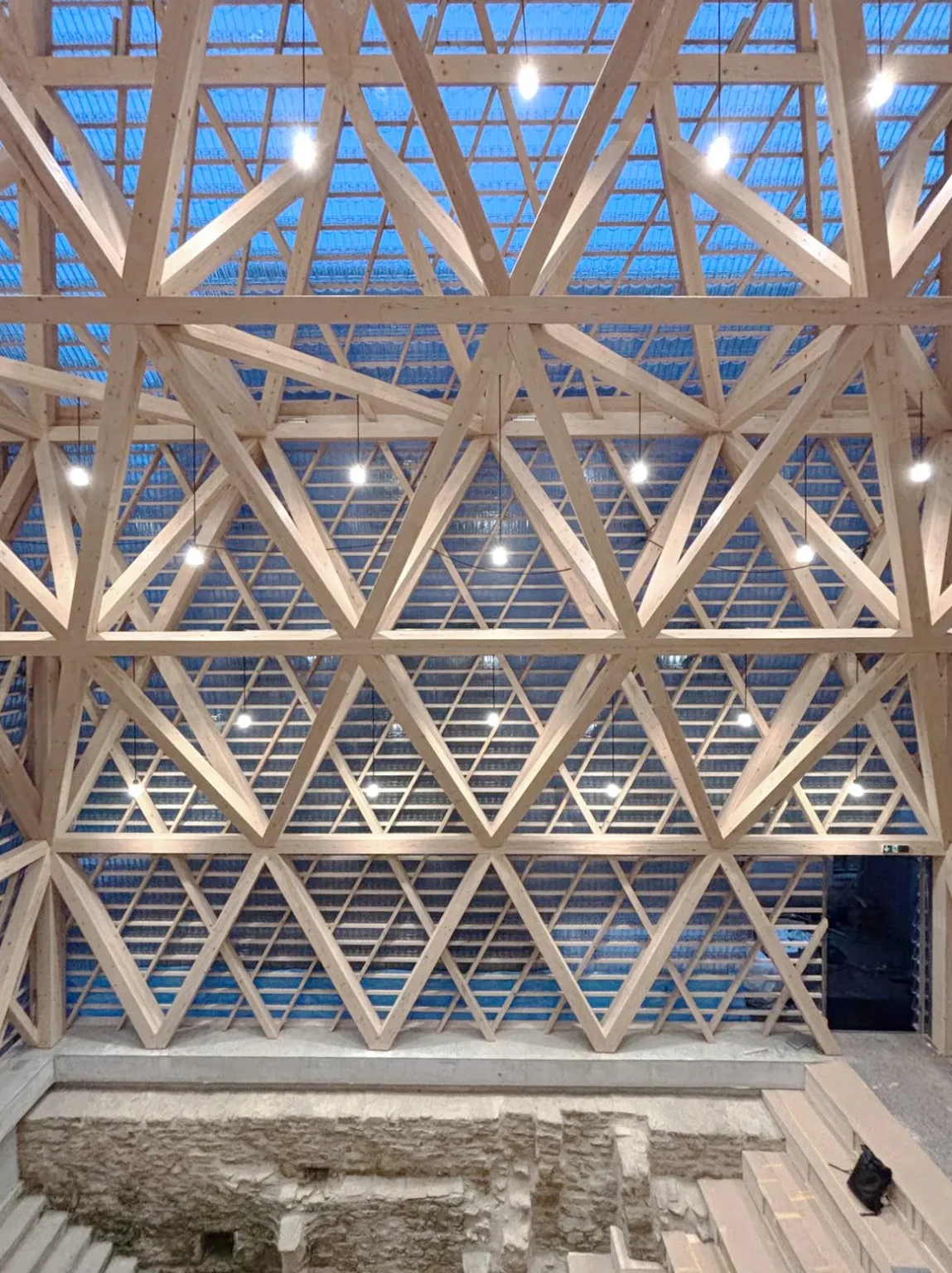
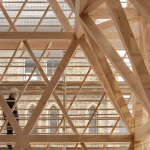
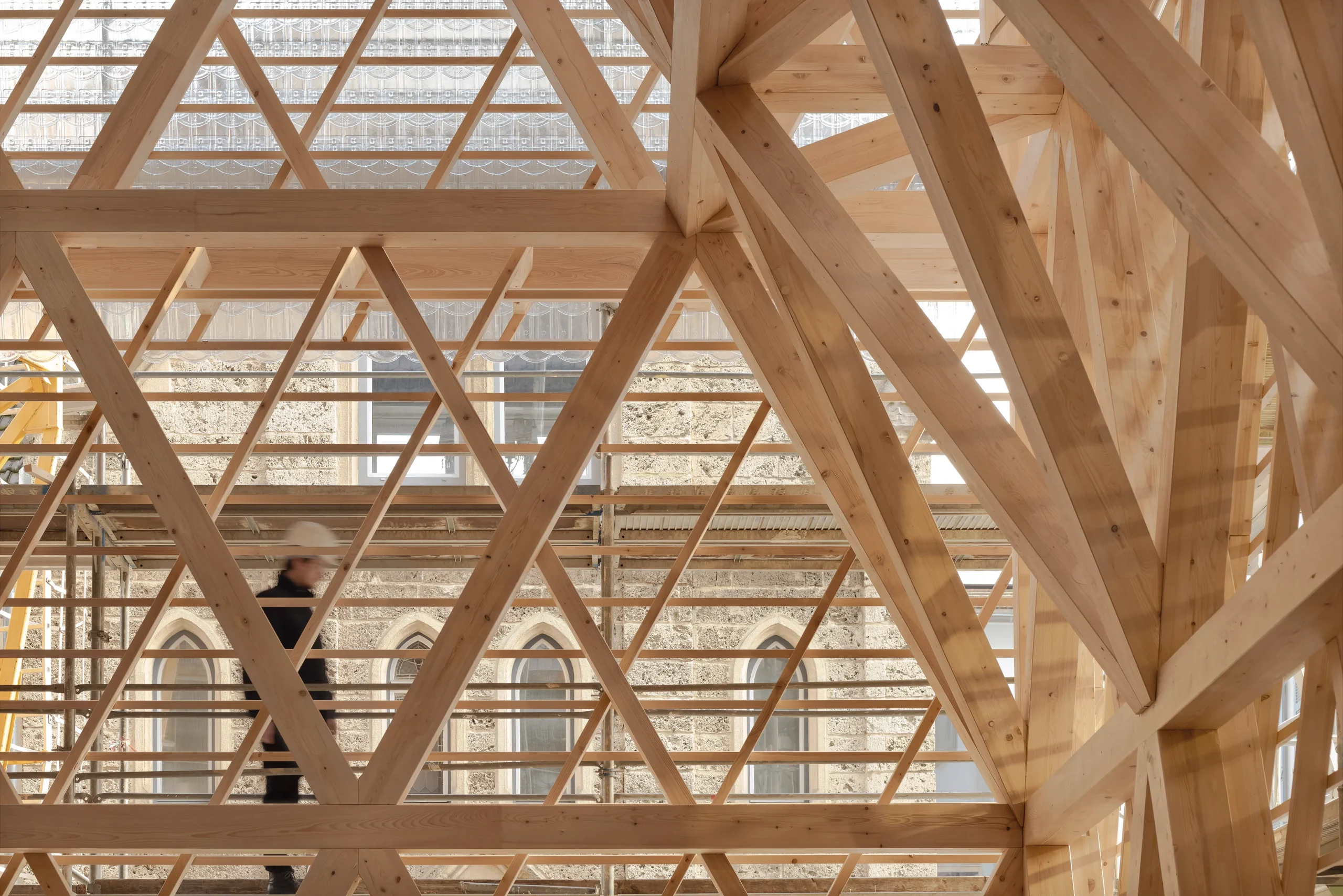
The museum design merges digital fabrication and heritage craftsmanship, echoing the form of the original stone house and adopting a translucent glass facade supported by a spatial timber frame made of locally sourced Black Forest silver fir. The Museum Historische Oberamteistraße embodies form and structure where every joint, intricate detail, and surface is expressive and engineered. The new building is constructed on a site complicated by a protected medieval cellar, restricting the foundation and planning. Despite its essential function as a structural anchor, the new construction maintains a compact footprint, with an approximate covered area of 225 m².
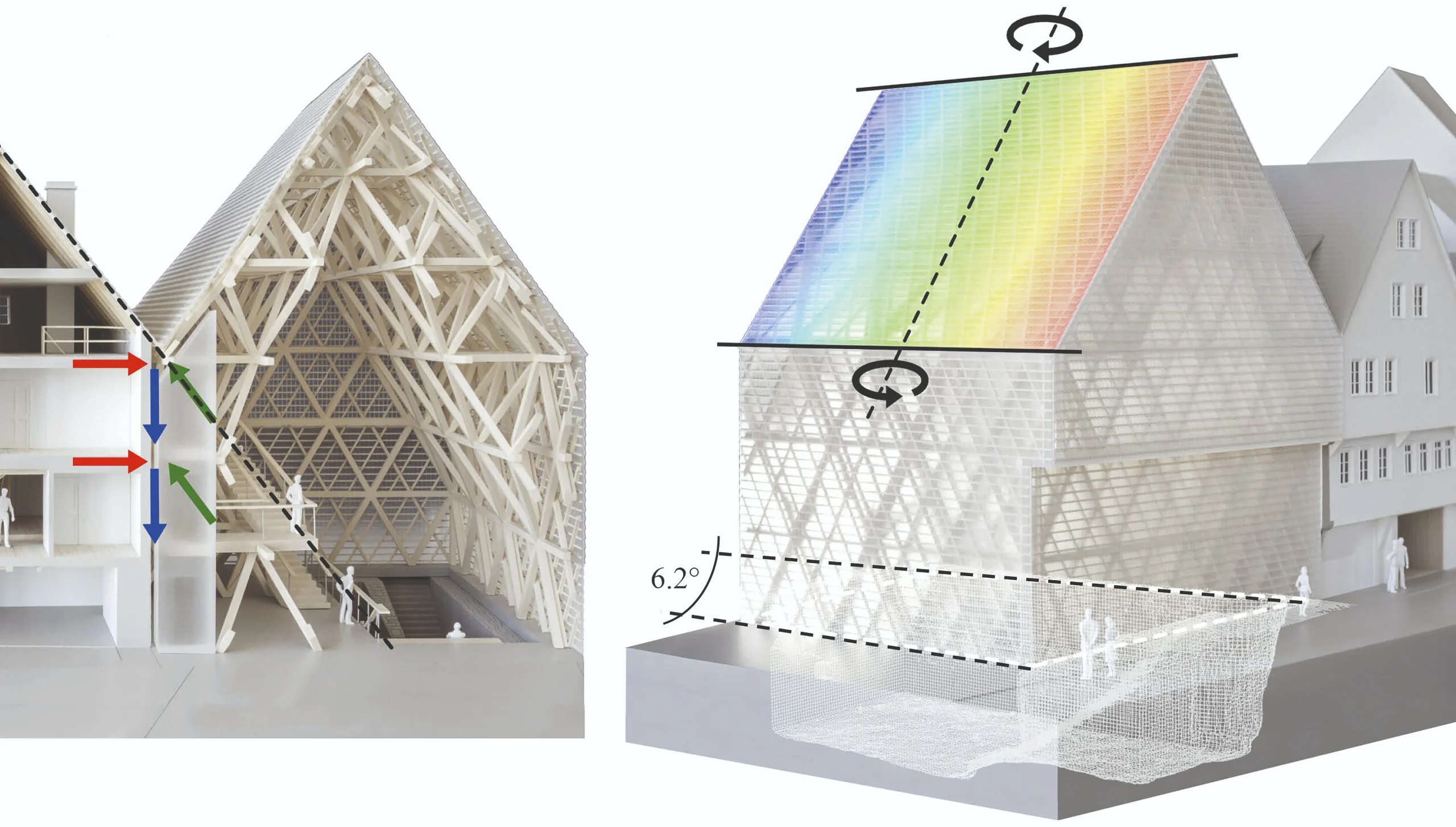
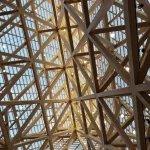
The architectural philosophy of design employs old and new elements, creating meaningful connections with a metaphor of a glass house that supports its surroundings. The striking translucent glass shingles ensure that this internal glulam timber skeleton remains visible only in outline from the outside.
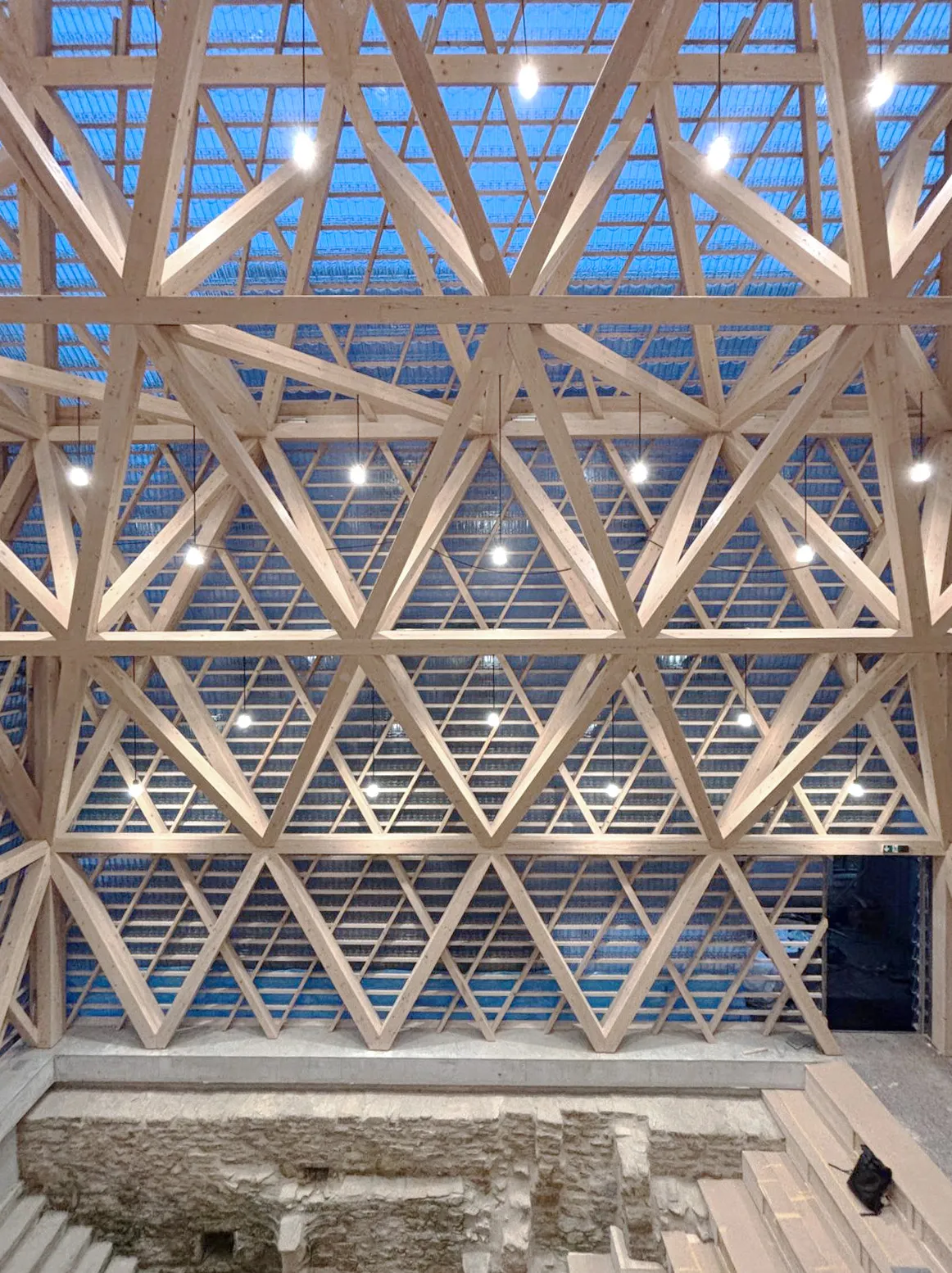
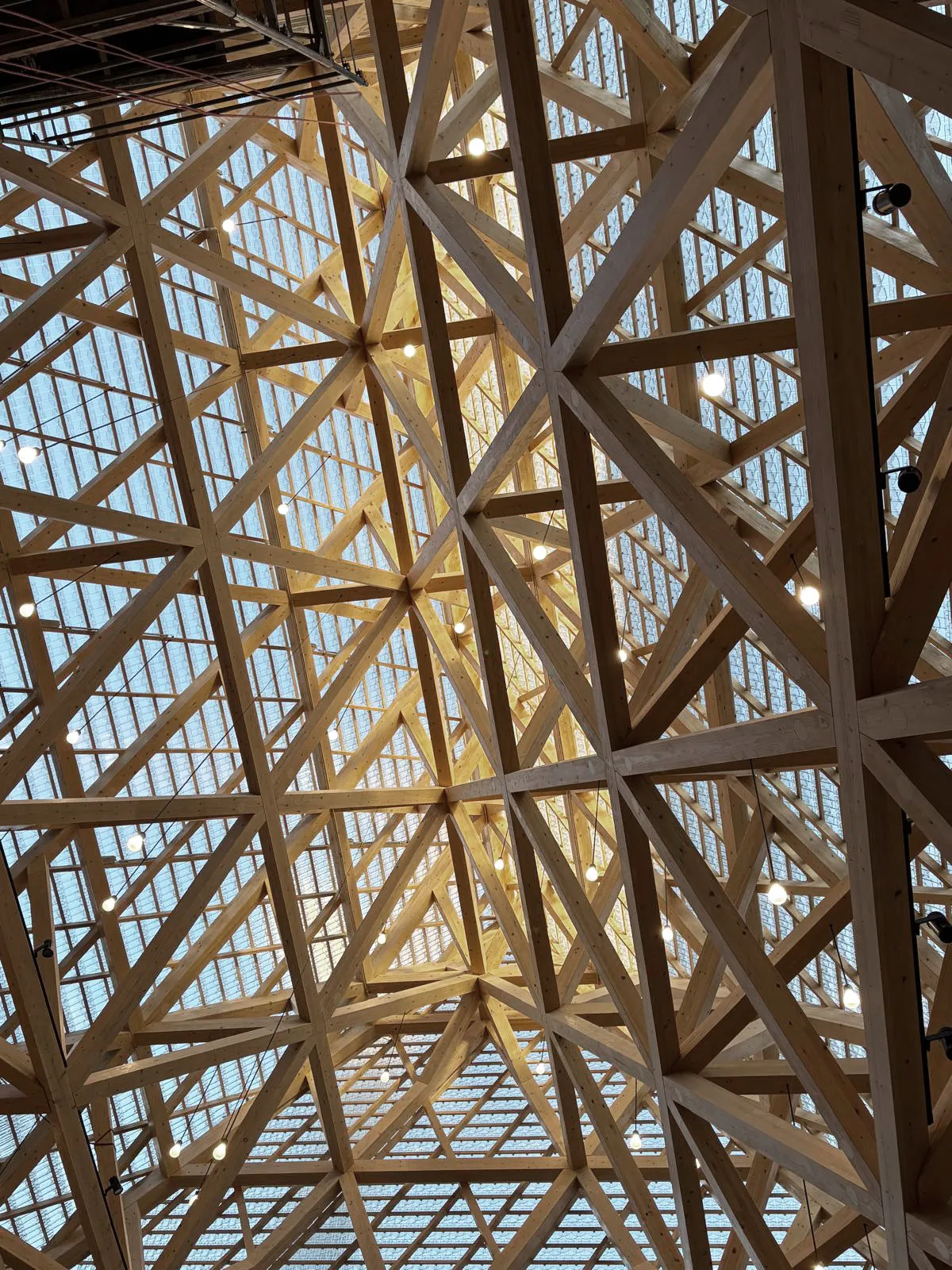
Entering the passageway, the interiors reveal the structural beauty, an expression crafted in light, shadow, and timber that not only emphasizes exhibition spaces but also reinforces adjacent half-timber houses. These subtle reflections and shifting translucency enhance the museum’s modern identity.
Parametric Design as Sustainability
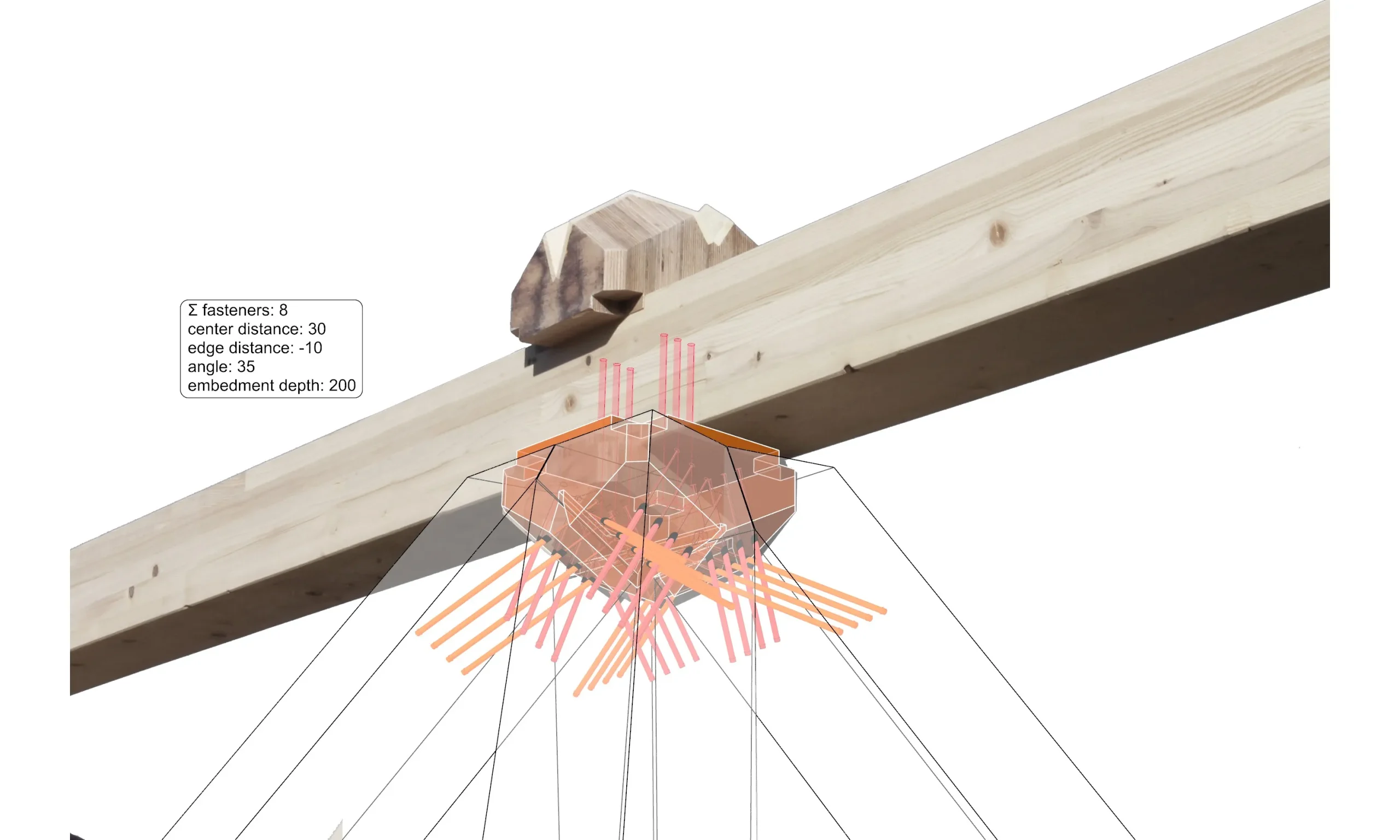
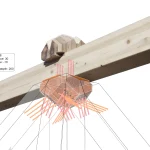
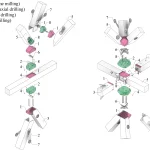
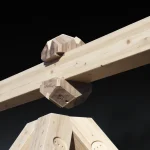
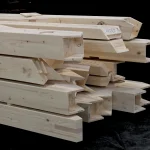
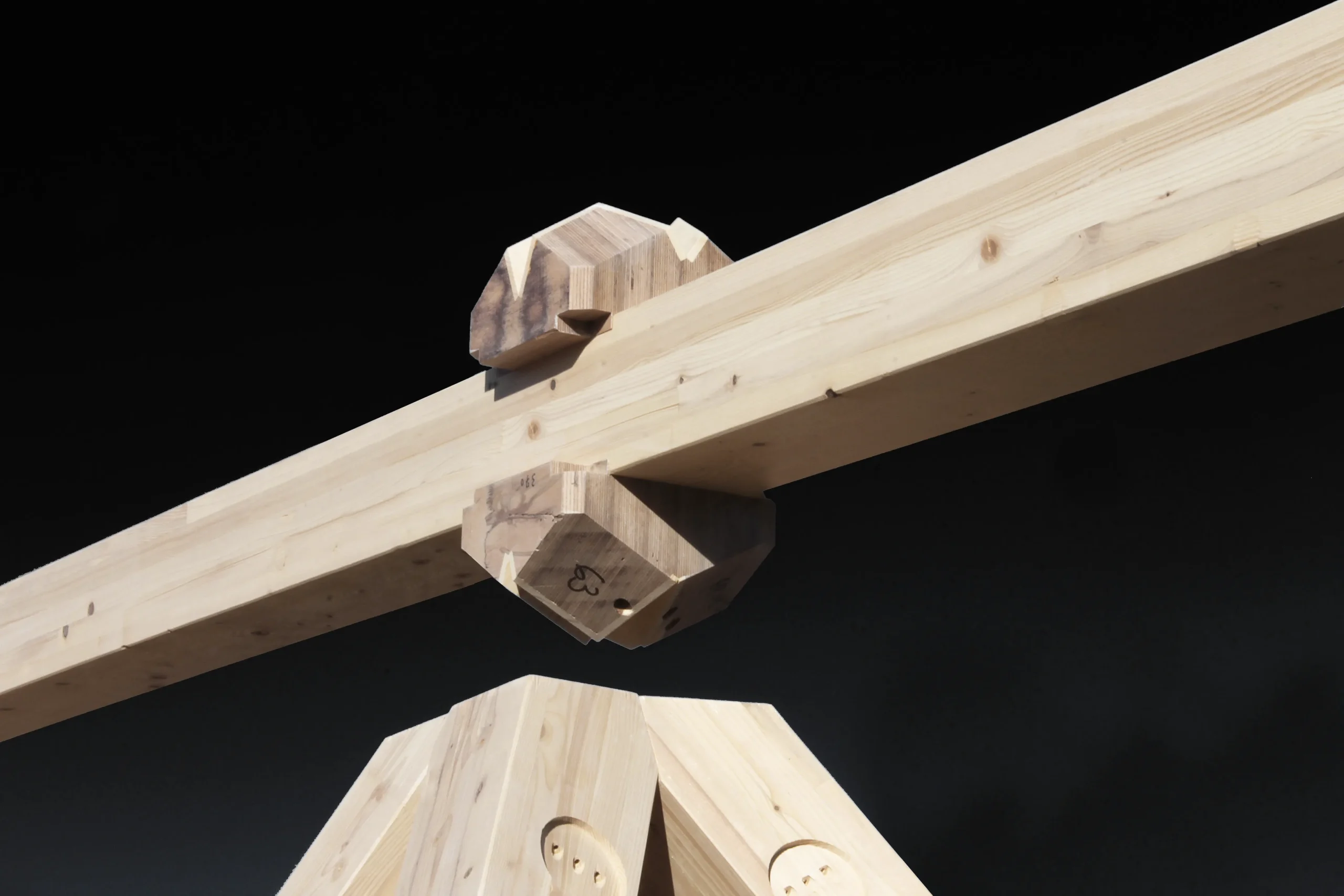
The project focused on sustainable ethos by building the structure with glulam beams and cross-laminated timber (CLT) panels, reducing transport emissions and supporting circular economy principles. The incorporation of noteworthy sustainable details using hardwood cleats made from laminated veneer lumber (BauBuche GL75) rather than steel connectors ensures precision and structural integrity.
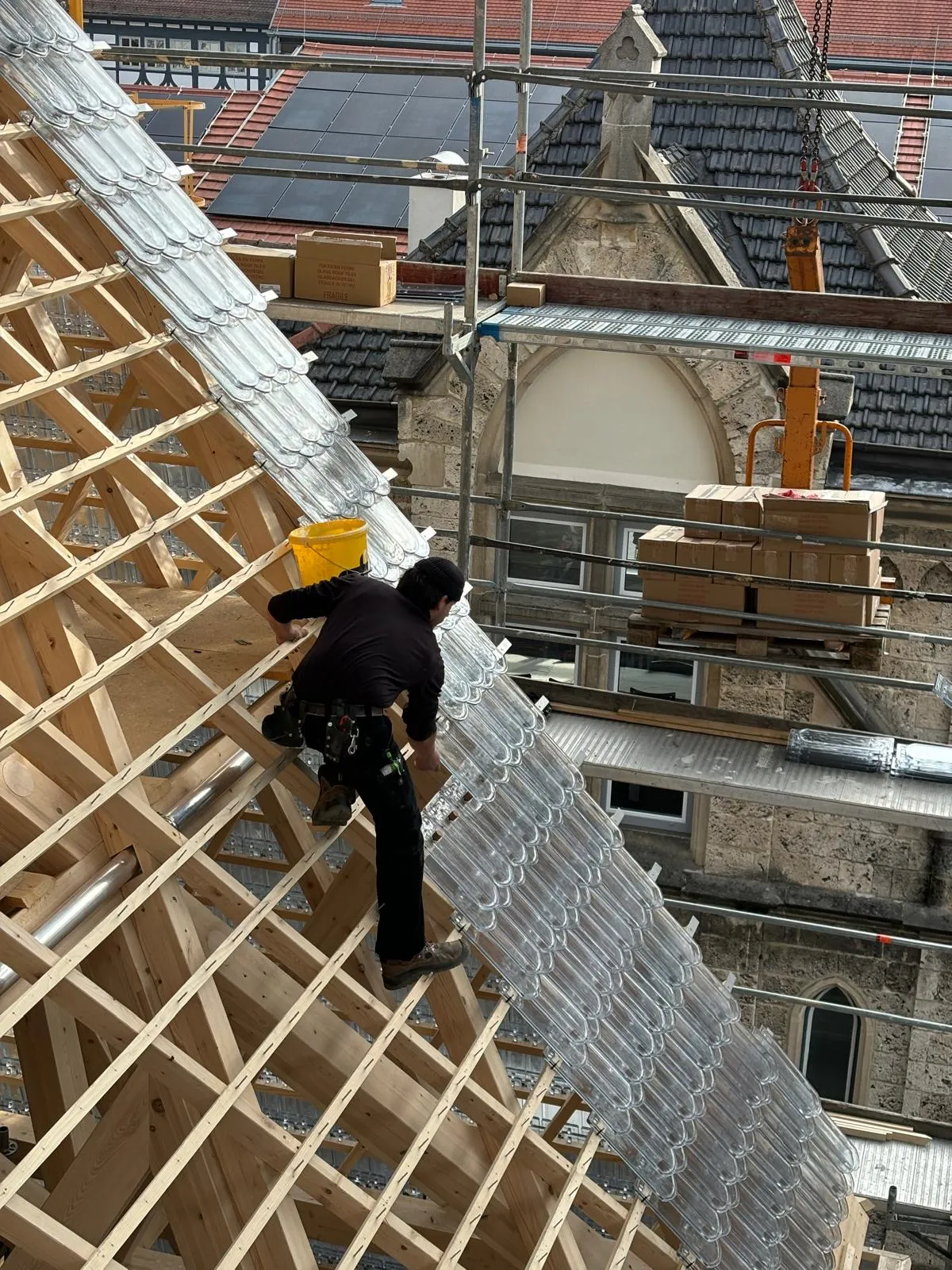
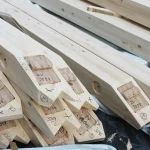
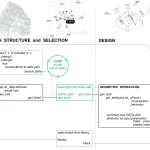
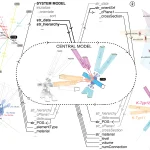
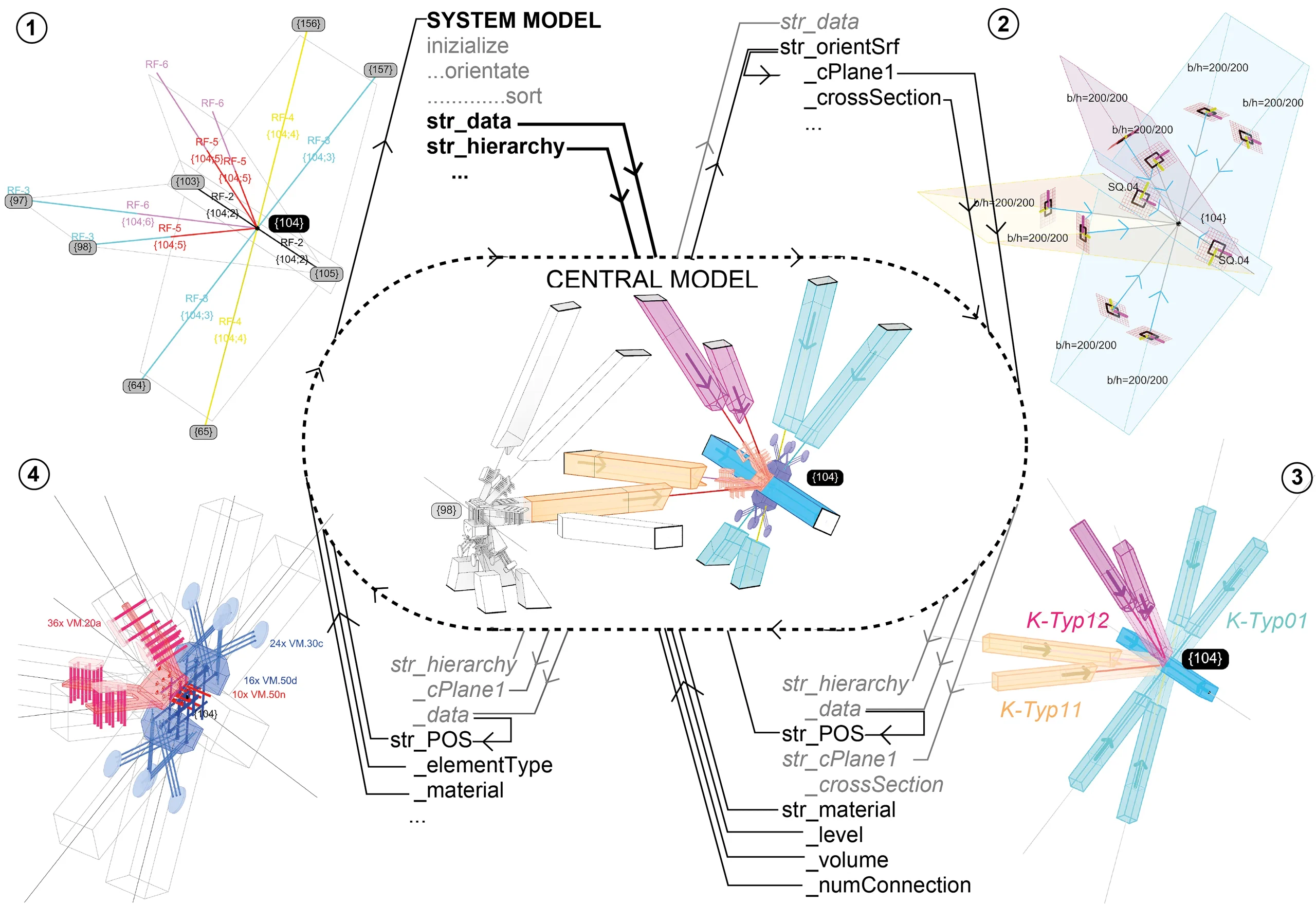
These form-fit, wood-to-wood joints, reinforced with full-thread screws, were digitally modeled using Rhino and Grasshopper, then CNC-fabricated for precise assembly. Parametric workflow improved site efficiency, reduced material waste and the project’s global warming potential by 99% compared to conventional steel connections, setting a benchmark for carbon-conscious timber engineering.
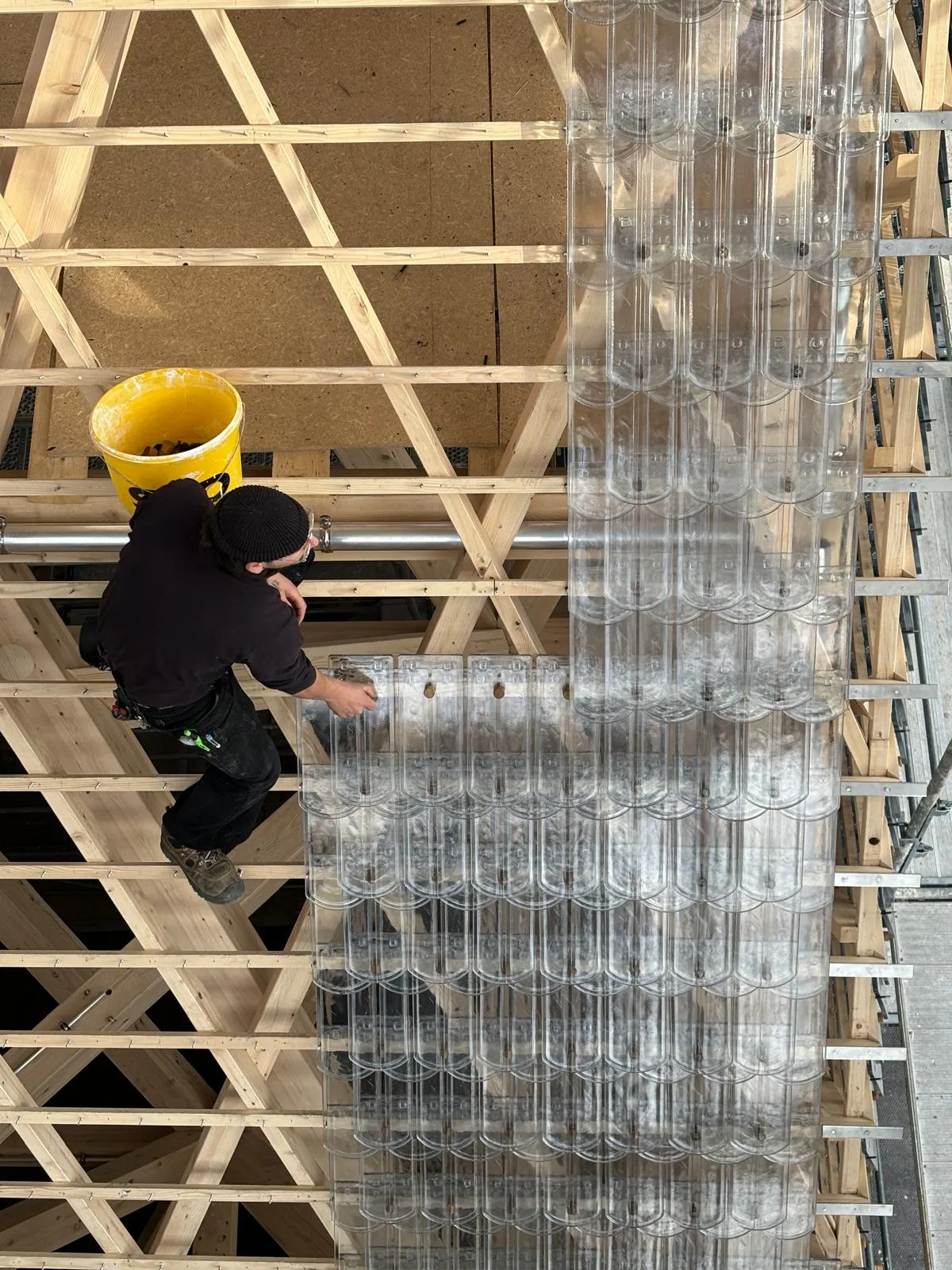
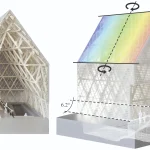
Due to the hyperbolic paraboloid roof structure derived from the trapezoidal footprint of the medieval cellar, planning had to be carried out using computational tools and parametric 3D modeling, creating an architecture that is both technologically advanced and contextually rooted.
Honoring History Through Modern Design
Described by the design team as the Antithesis of Heuristics in Timber Construction, the project utilizes a dedicated learning lab to interactively convey the complex topics of monument preservation and medieval building techniques. It showcases a contemporary approach to design using technology and creativity to preserve historic buildings and craft architecture that blends with the past while shaping a sustainable future.
Planned to open at the end of 2025, the Museum Historische Oberamteistraße will symbolize continuity, illustrating how digital design and ecological craftsmanship can revive the identity of historical urban cores. While the new supporting structure (Oberamteistraße 34) is planned for completion in 2025, the full renovation of the historical half-timbered houses (Oberamteistraße 28-32) is scheduled to be completed at the end of 2028
Museum Historische Oberamteistraße Project Details
Architects: Wulf Architekten
Location: Reutlingen, Germany
Structural Engineer: str.ucture
Parametric Modeling: str.ucture
Timber Construction: Holzbau Amann, Weilheim-Bannholz
Photographer: © Brigida Gonzalez, str.ucture, Wulf Architekten
Software: Rhinoceros 3D, Grasshopper 3D, Autodesk Revit, ArchiCAD, Others



.webp)