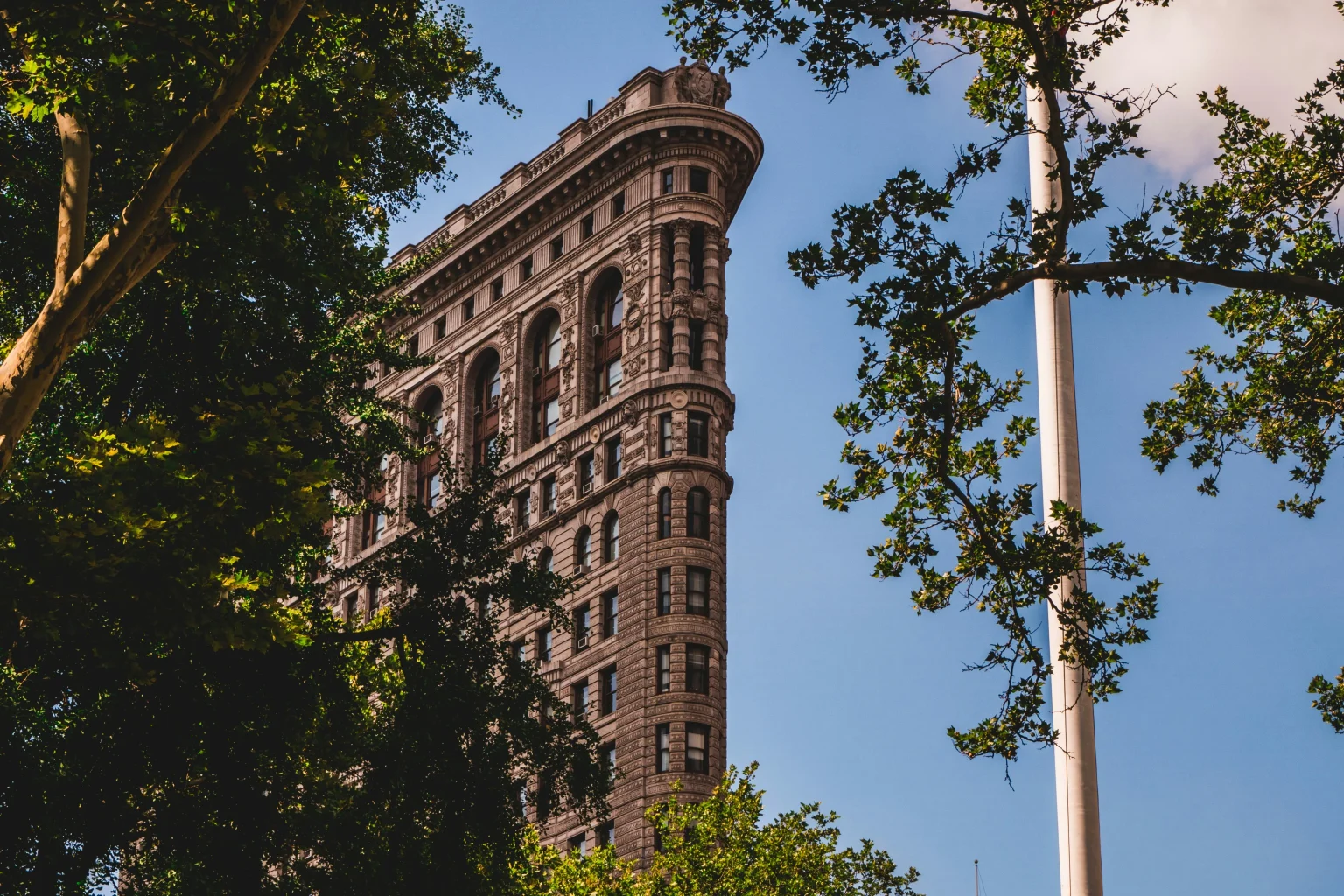

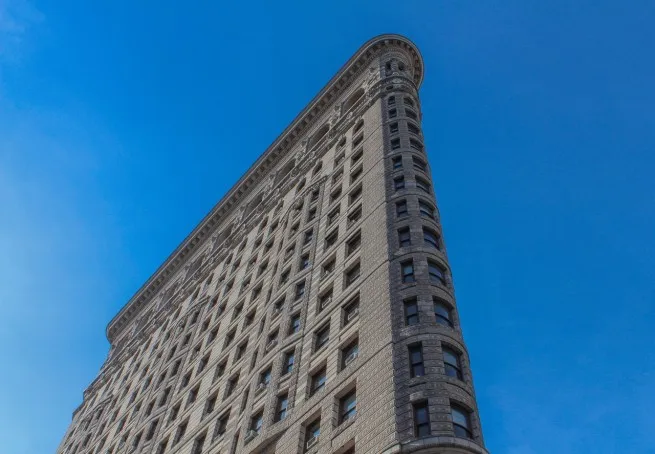




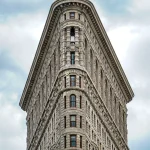
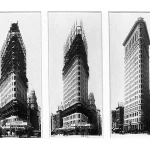



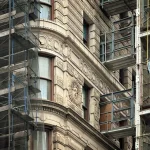
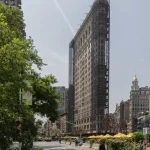

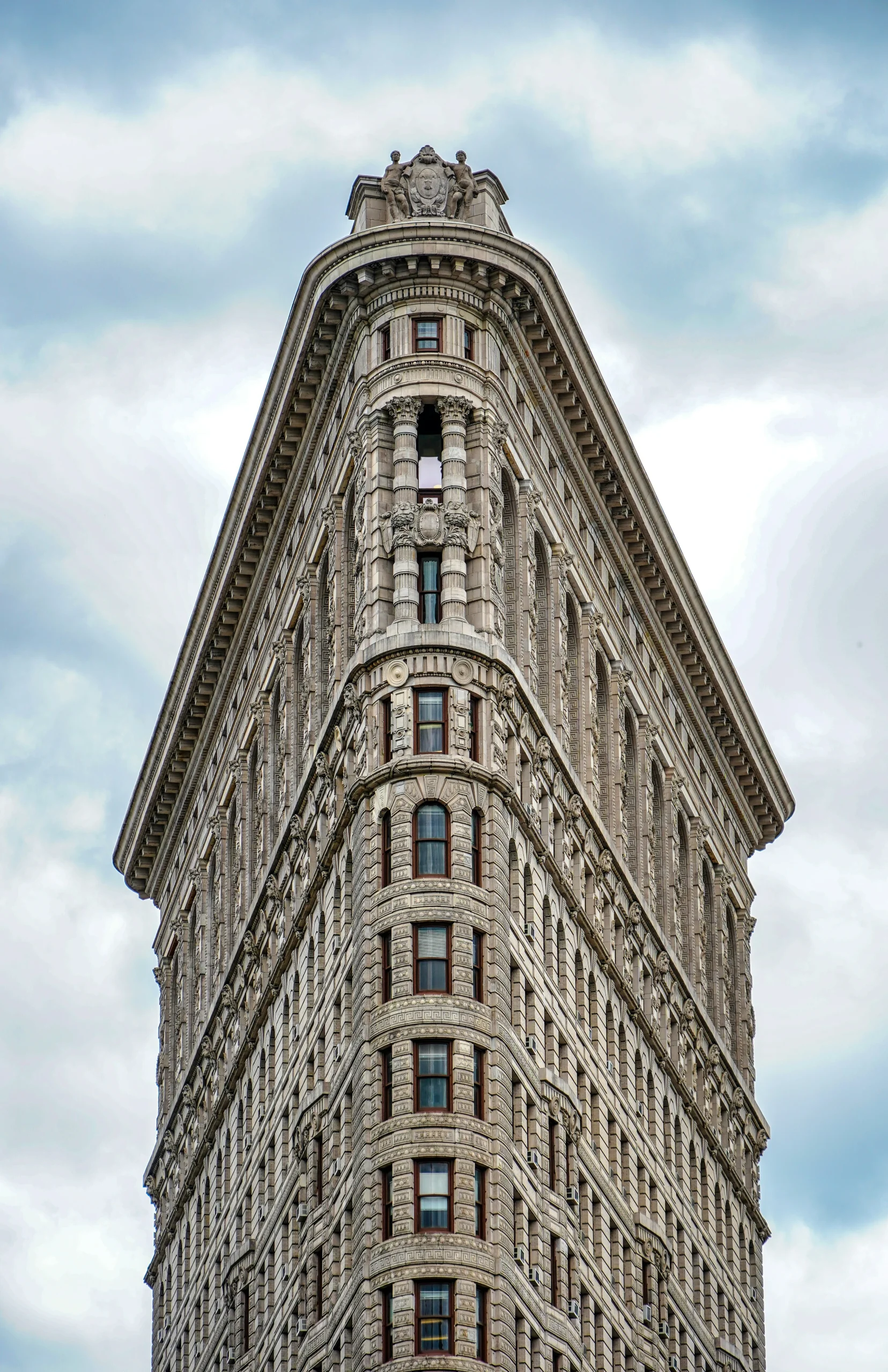
Sitting on a unique triangular site in Manhattan, the 20-story-high Flatiron Tower, draped in Beaux-Arts-style facades, is a timeless masterpiece standing as a testimony to many significant events in the history of New York’s architecture. The building itself is associated with many architects of that time who pioneered the design and development of modern steel skyscrapers.
The Flatiron District developed around the Flatiron Tower over time, signifying the impact the building had at the time of its inception. Featured in blockbuster movies like Reds, Godzilla, and Spider-Man, the Flatiron Building is an iconic, historical landmark that identifies the Flatiron District in New York.

The Flatiron Building, Its Titles, and Their Origins
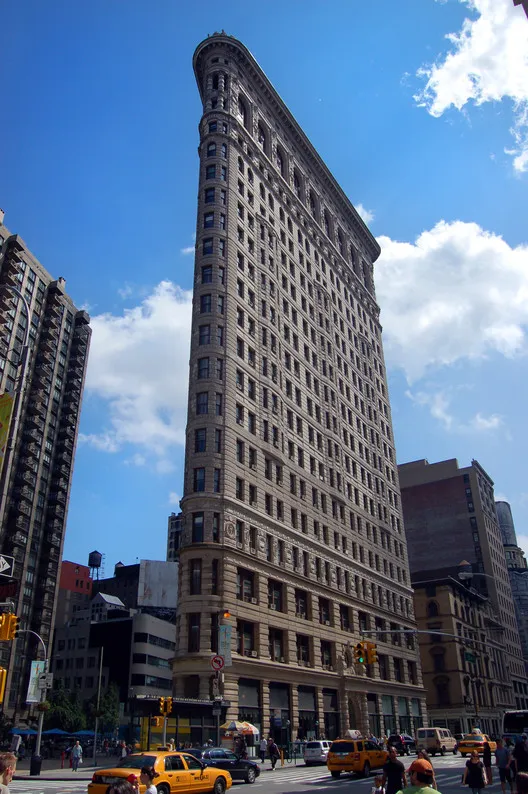
The Flatiron Building was originally called the Fuller Building in honor of George A. Fuller, a Chicago-based architect and real estate developer renowned as the inventor of modern skyscrapers in New York. The Fuller Company, run by his son-in-law Harry S. Black, owned the plot on which the Flatiron was built.
As the tower was officially named the Flatiron, the authorities insisted on calling it so. Since then, the tower has been renowned as the Flatiron. Probably the tower block’s triangular footprint, resembling that of a clothes iron, could have fetched it that name!
The Triangular Plot, Driver of the Flatiron Building’s Design
The plot on which the Flatiron Building was to be constructed was one of the typical, oddly shaped, small residual spaces formed by the streets, such as Canal and Broadway, that interrupted the Commissioners’ Grid System imposed in 1811 in New York.
The plot was precisely like a right-angled triangle, the shortest side being only 6 feet wide. Located at the intersection of 5th Avenue, Broadway, and 23rd Street, it was owned by Harry S. Black of Fuller Company.
The soil underneath the Flatiron Tower in Manhattan has a schist bedrock very deep underground, which is why only buildings up to a maximum of 20 stories high were allowed to be built. Following this, Burham designed the Flatiron Building as a 22-storey high 285-foot-tall steel-framed building at 175 Fifth Avenue in Manhattan, New York City.
The Architect and Architectural Style of the Historical Landmark Tower
Daniel Burnham designed the steel Flatiron Building, drawing on his previous experience with the 10-storey high steel commercial tower, the Montauk Building, which is believed to be the first building to be called a skyscraper.
Burnham established his own practice, the Burnham and Root Architecture practice, with his friend John Wellborn Root in 1873. Since then, for his contributions to the field, he has been known as the father of skyscrapers.
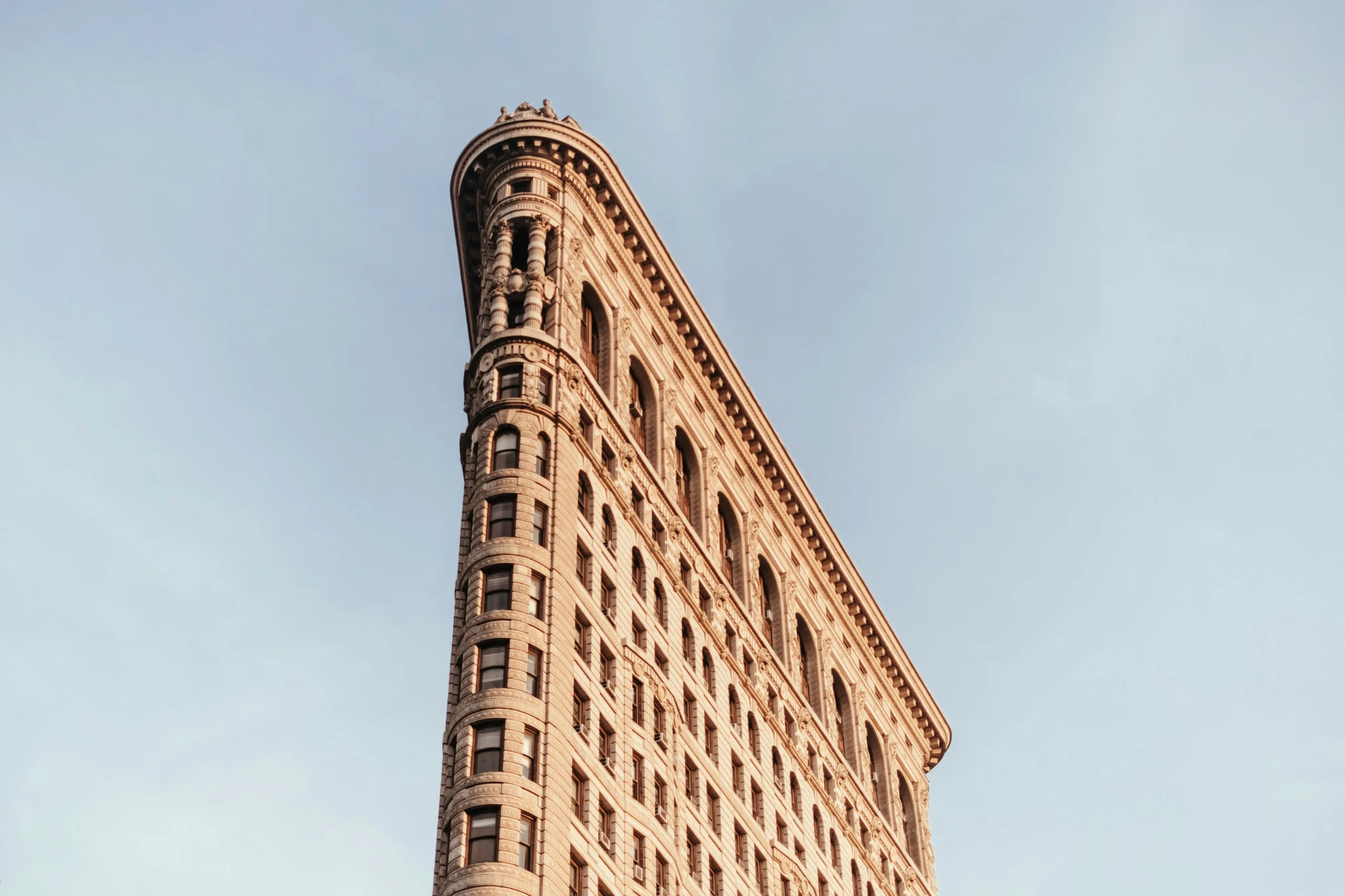
Burnham designed the Flatiron as a ‘Vertical Renaissance Palazzo’ inspired by the French and Italian Renaissance with elements like plaster, balustrades, etc., characteristic of the Beaux Arts Style. The facade of the tower was divided into parts using different materials similar to a classical Greek column, visually separated into a base, shaft, and capital. The lower sections of the tower were clad in limestone, which gradually gave way to walls adorned with glazed terracotta as it rose.
Sculpting one of the First Skyscrapers in Manhattan
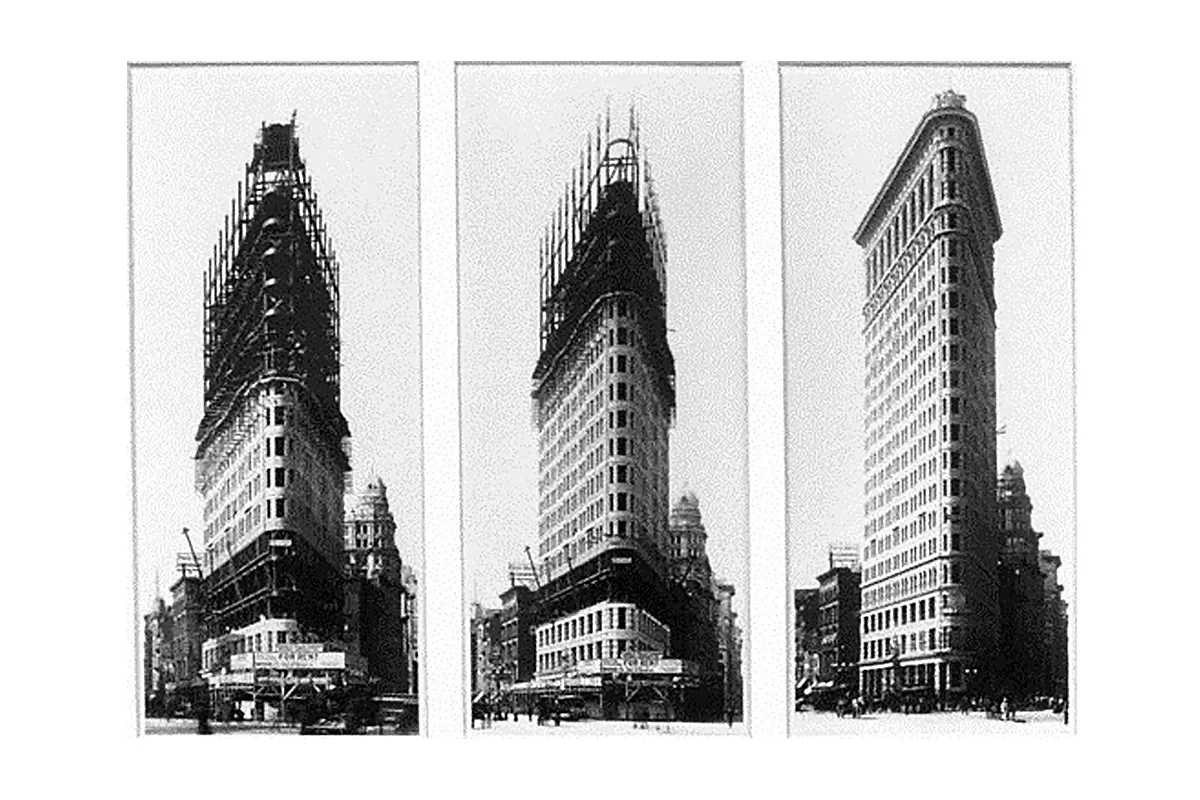
Burnham’s design for the tower was realized using a steel skeleton structural system filled with a curtain wall instead of masonry, which was quite revolutionary at that time.
Leveraging the amendment in New York City’s building codes in 1892, which suggested the use of masonry was not compulsory for fireproofing, the architect Burnham and structural engineers Purdy and Henderson opted for a steel structural system complemented by a curtain wall construction for the Flatiron Tower.
This solution also enabled quicker construction, as the steel elements were precut off-site and assembled on-site to complete one floor per week from the summer of 1901. By early 1902, the structural framing was complete, after which the terracotta curtain wall system was laid.
Within a year, in June 1902, the 307-foot-tall, 20-story high Fuller Building was completed, making it one of the tallest skyscrapers in New York at the time.
Enduring wind loads, standing the test of time
Steel skyscrapers, even as high as 20 storeys, were not ubiquitous at that time, and hence, even experts doubted the Flatiron’s ability to withstand New York’s strong winds. Moreover, the Flatiron’s structure was narrow due to the unique plot shape, leaving only a lesser volume to resist the wind loads.
However, Purdy and Henderson anticipated the problem earlier and strengthened the steel structure with bracing to endure four times the anticipated wind force.
Evolution of the Flatiron through its life
Initially, the Flatiron Tower was designed as a 20-storey building owing to the height restrictions set by the municipality. However, within just three years after its opening, in 1905, the Flatiron underwent significant changes.
A basement floor and an additional 21st floor were added to the Flatiron, making it a 22-storey tower. The 21st floor was added to accommodate a penthouse, and the ground-floor interface was modified to include retail outlets, generating extra income for its sustenance.
Jeenah Moon/Bloomberg via Getty Images
Although the Flatiron is a Beaux-Arts-style signature masterpiece today, this tower was indeed a significant experiment at the time of its construction. Due to this, even this landmark building suffers specific shortcomings. However, such defects didn’t let down the tower; instead, they served as reasons for its evolution.
The triangular-shaped footprint of the tower restricted indoor furnishing, as the space left for use was oddly shaped. The tower lacked separate washrooms for men and women on each floor; therefore, upon occupation, alternate floors were designated as women’s restrooms and men’s restrooms.
The mechanical and electrical systems of the tower also failed to meet expectations, especially in an era when technology was rapidly evolving. There was no centralized air conditioning system, and ventilation was dependent on the wood-framed, copper-clad windows. Moreover, the windows on the additional 21st floor had higher sill heights than those on the usual floors. The heating system used cast-iron radiators, and the sprinkler system was antiquated.
Although first-generation Otis water-powered hydraulic-type elevators were used in the Flatiron, they were slow, unreliable, and prone to flooding due to leaks. Moreover, the circulation became complex when the additional 21st floor was added, as the elevators stopped at the 20th floor, and visitors had to take another elevator. Only one staircase was allocated to meet the fire safety requirements.
Flatiron’s Proud Users and Tenants, and Its Future.
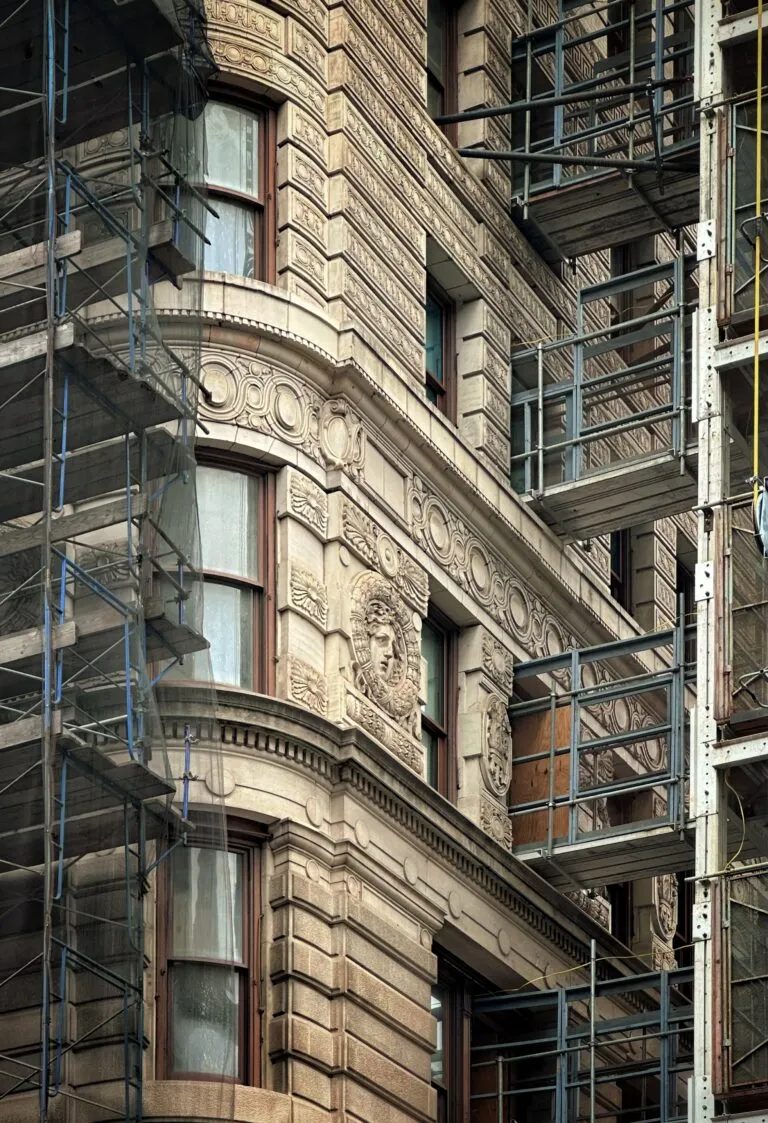
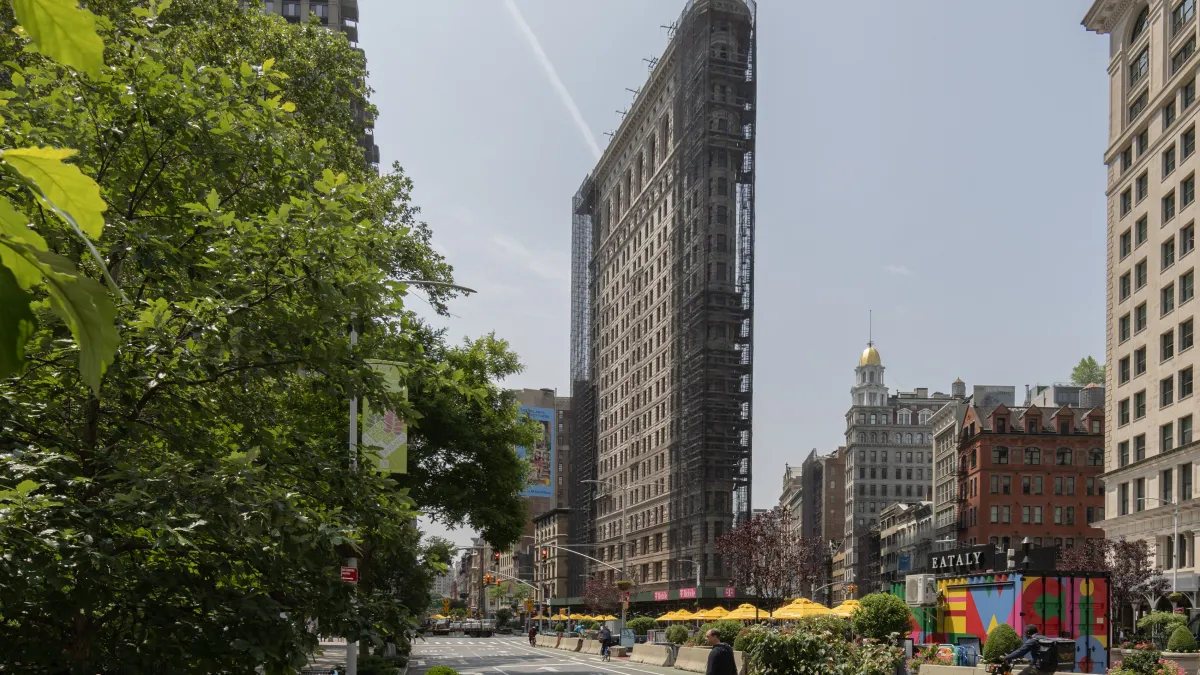
Many famous tenants have occupied the Flatiron for decades, including the Imperial Russian Consulate and the crime syndicate Murder Inc. during the 1920s and 1930s. Macmillan Publishers remained loyal tenants for 60 years until they vacated in 2019, after which restoration work began.
The retail front on the ground floor was occupied by United Cigar Stores. The basement floor, located more than 20 feet underground, housed some of the best restaurants of that time, including Flatiron Restaurant and Louis Bustano’s French restaurant, Taverne Louis, which acquired the former in 1911.
Over time, the Flatiron evolved into a bustling high-end shopping district with upscale restaurants that attracted the city’s young professionals. It was designated a New York City landmark in 1966 and a National Historic Landmark in 1989.
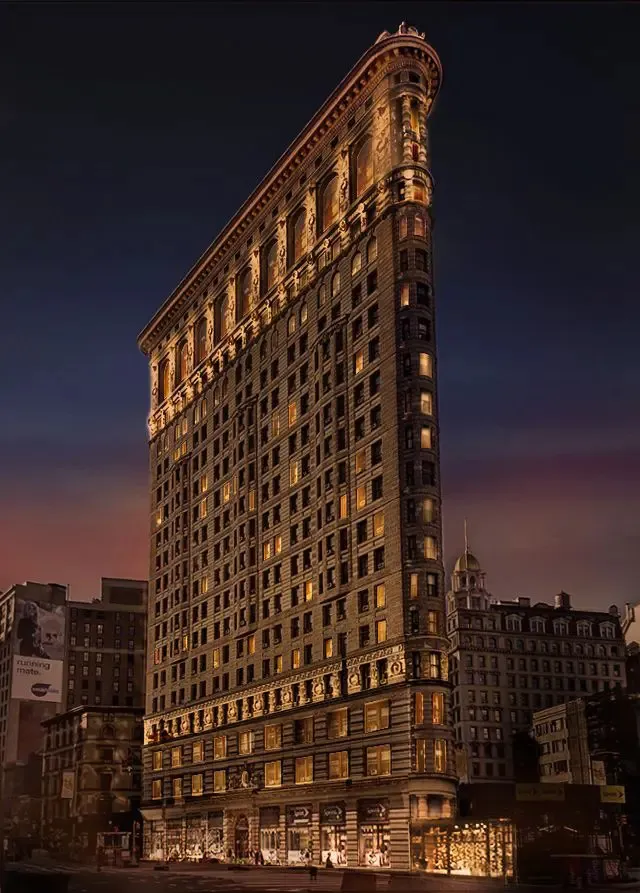
A new rendering of the iconic Flatiron Building, fully illuminated with a rejuvenated ground-floor interface designed by L’Observatoire International, Studio Sofield, and SLCE Architects, was released in August 2025. In early 2023, the property was auctioned and sold for $161.5 million to a group of Gural, Newmark, Sorgente Group, and ABS Partners. The Flatiron Building is expected to breathe new life by 2027 with a commercial-to-residential transformation.
Flatiron Building in the Bustling Manhattan Borough, New York City
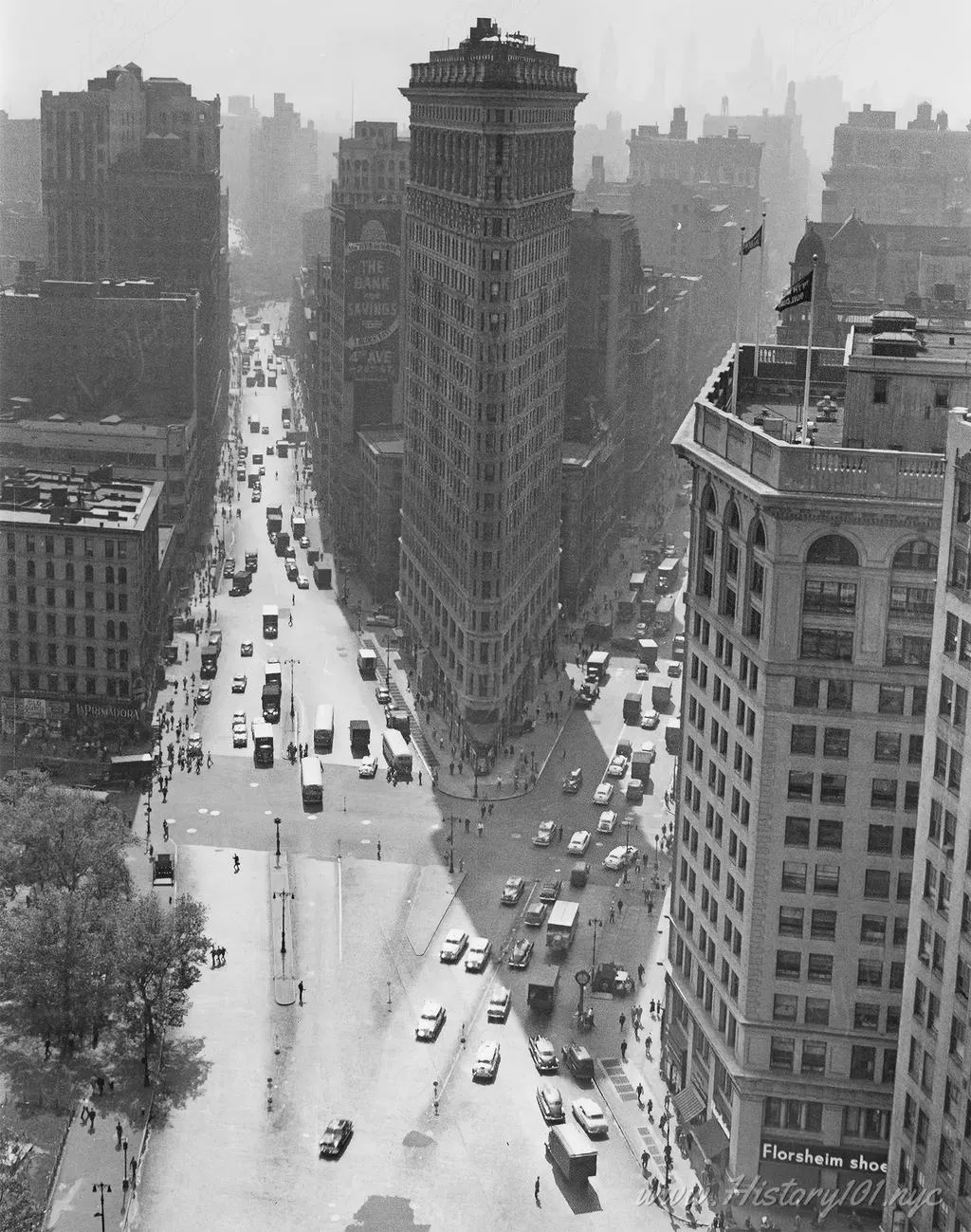
Through thick and thin, the Flatiron Building has evolved, improved, and established itself as one of the most stunning and iconic pieces of architecture in the Flatiron District, New York. All great architecture tells a story! And that of the Flatiron Building, which has sustained itself for over a century, tells us why great architecture, like living species, evolves.
Flatiron Tower Project Details
Project Name: The Flatiron
Client: Fuller Company
Project Architect: Daniel Burnham
Year: 1902
New Developers: Gural, Newmark, Sorgente Group, and ABS Partners
Restoration Architects: Studio Sofield and SLCE Architects
Expected Restoration Completion Year: 2027