MAD Architects, a pioneering figure in 21st-century architecture striving to reconnect with nature, was founded in 2004 by Ma Yansong. Led by Ma Yansong, Dang Qun, and Yosuke Hayano, the firm operates in futuristic environments, developing architectural designs rooted in a contemporary interpretation of the Eastern spirit of nature. Basing its vision of the city of the future on the spiritual and emotional needs of its residents, MAD strives to create a balance between humanity, the city, and the environment. Working with a diverse range of clients, MAD has created intriguing combinations of diverse project designs.
MAD Architects, which has designed projects in various countries such as China, France, Italy, Canada, Japan, the Netherlands, and the United States, works across a wide range of typologies including urban planning, mixed-use complexes, civic buildings, museums, theaters, concert halls, and residential developments, as well as art and design.
MAD Architects achieved global recognition by winning a residential tower design competition near Toronto in 2006, making it the first Chinese architectural firm to build a major skyscraper abroad. With offices in Beijing, Los Angeles, and Rome, MAD not only delivers impactful designs but also engages in architectural discourse through exhibitions, academic lectures, and public presentations that explore the intersections of architecture, culture, and art.
Here are 10 unique buildings designed by MAD Architects:
1. Ordos Museum
Location: Ordos, China
Year: 2005-2011
Type: Museum
Area: 41,227 m²
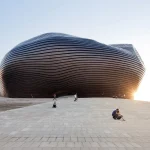
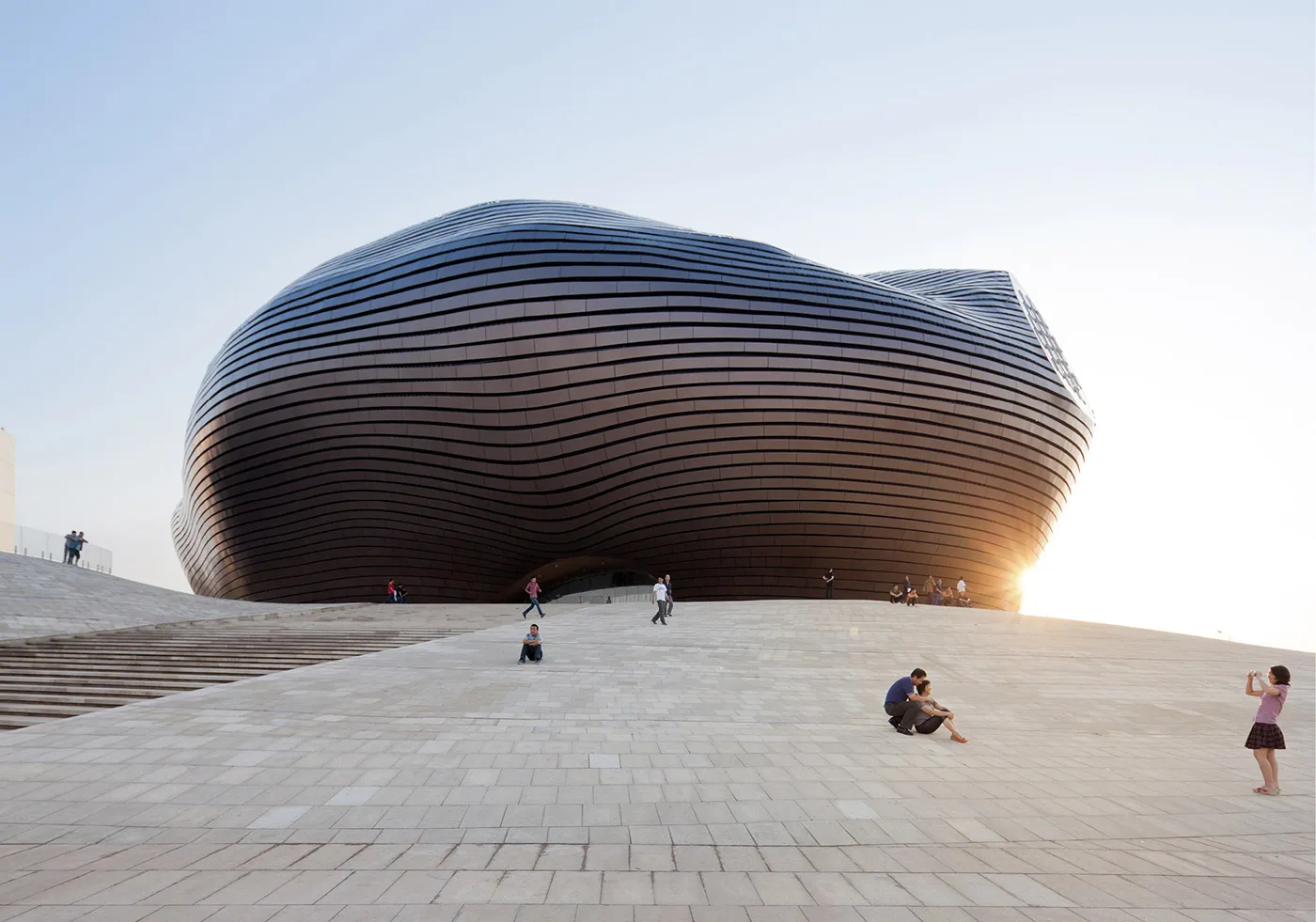
Built as a new symbol of Ordos, China’s “largest ghost town,” the Ordos Museum is one of MAD Architects’ most unique designs. Inspired by Buckminster Fuller‘s geodesic domes, the museum’s metallic shell was designed by MAD to withstand China’s harsh winters and sandstorms. This organically shaped shell envelops the entire structure, lending it a compact form while acting as a protective shield that preserves the city’s rich culture and history from its unpredictable urban expansion. The Ordos Museum, which appears to float on a 27,760 m² area, a wave-like dune, nods to the views that give way to the streets and buildings of the new cityscape. Rising to 40 meters, the museum’s fluid, organic form is described by MAD Architects as “familiar yet alien.”
The building’s organic approach is reflected in its interior architecture. Even the facade openings are unconventional and unexpected. The interior design, resembling an airy cave illuminated from above, defines the museum’s entrance as a void between the galleries and the exhibition area. This space, illuminated by an opening in the roof, is accessed by bridges. A garden space that receives natural light offers an inspiring work environment for the museum’s offices and research areas. The black and white interior design features some interior spaces suspended in mid-air to maximize the effectiveness of the space.
2. Harbin Opera House
Location: Harbin, China
Year: 2010-2015
Type: Theater, Cultural Center
Area: 79,000 m²
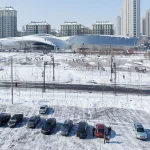
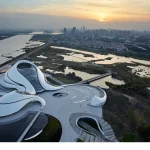
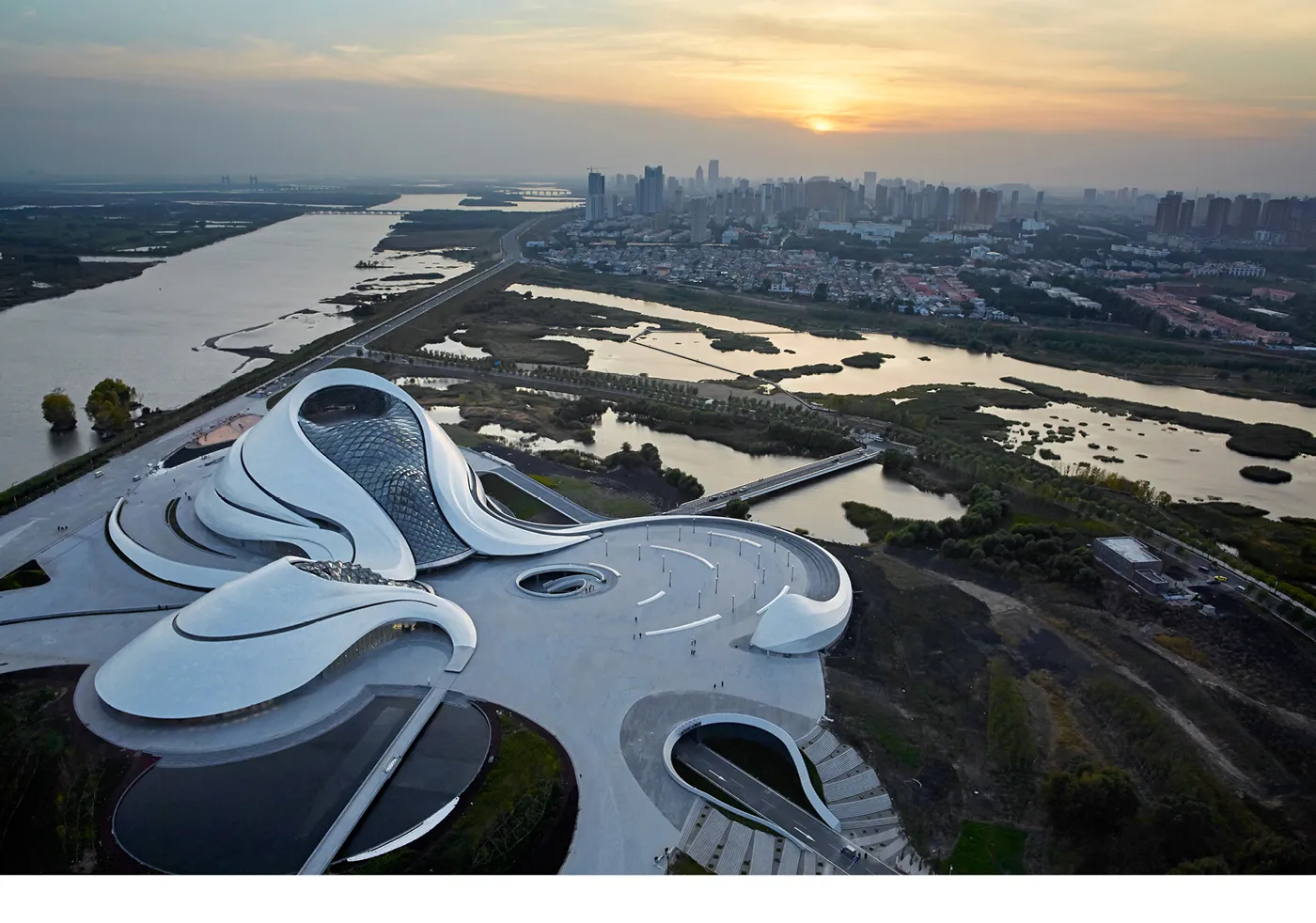
Harbin Opera House was built in 2010 after MAD Architects won the international competition held within the scope of Harbin Culture Island. Located at the heart of the “Cultural Island,” the opera house establishes a unique dialogue with the surrounding wetlands and features a striking, curvilinear form that seeks to create a natural formation within the landscape. The opera house, with its sculptural, monolithic appearance in harmony with its surroundings and topography, is a reflection of local identity, art, and culture.
The flowing façades, clad in white aluminum panels, reference Harbin’s undulating landscape and create a grand public plaza that begins at the bridge leading into the city and extends toward the opera house, giving the exterior its distinctive character. The fluidity seen in the exterior continues inside. The wood-paneled walls of the grand opera hall create an inviting atmosphere, while the materials and unique interior layout provide a good acoustic balance. Part of the lighting is provided by a subtle skylight, designed to connect the audience to the outside world.
3. Chaoyang Park Plaza
Location: Beijing, China
Year: 2012-2017
Type: Office, Commercial, Residential
Area: Above ground: 128,177 m², Below ground: 94,832 m²
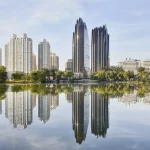
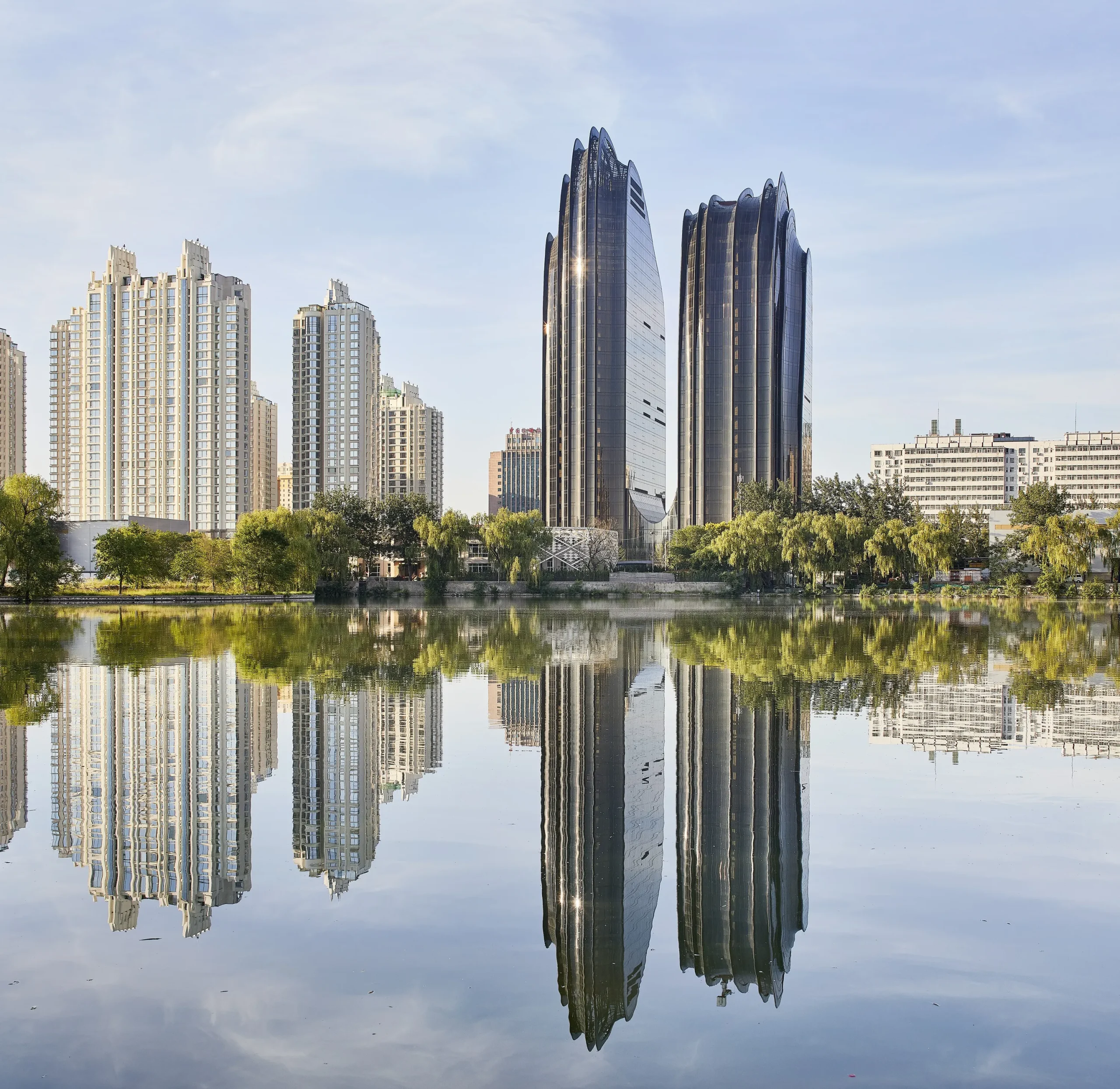
Chaoyang Park Plaza, one of the most unique structures designed by MAD, is located at the southern end of Chaoyang Park, the largest park in the Beijing Central Business District. The 10-building complex, which emerges like a classic Shanshui painting on an urban scale, stands at 142 meters tall. Designed as an extension of nature, the complex comprises office towers, residential areas, and public spaces. Blurring the line between the natural and the artificial, Chaoyang Park Plaza embodies a design philosophy where both elements reflect upon one another. Evoking the spirit of traditional Chinese gardens, it introduces natural forms into Beijing’s skyline, creating a sculptural silhouette that feels deeply connected to the landscape.
Integrating natural formations such as mountains, rocks, streams, valleys, and forests into the city, the complex’s northern asymmetrical twin towers sit atop a park lake, transforming into mountains rising from the water. The fully transparent towers are connected by a ground-level atrium. The transparent and luminous atrium, with its glass roof structure connecting the two towers, acts as a “drawstring.” Surrounding the towers are low-rise commercial buildings that appear randomly scattered, resembling rock formations shaped by long-term erosion.
Despite their seemingly irregular placement, they are strategically positioned to create a peaceful yet open urban garden that offers a nature-infused lifestyle at the city’s core. Located in the southwest corner of the complex, the two multi-story residential buildings, Armani Apartments, are designed with gradually rising balconies that taper upwards. The landscaping woven between the buildings draws from Eastern culture, incorporating classical Chinese garden elements, such as pine trees, bamboo, rocks, and ponds, to establish a deep connection between architecture and traditional spatial values.
4. Absolute Tower
Location: Mississauga, Canada
Year: 2006-2012
Type: Residential
Area: Tower A: 45,000 m² Tower B: 40,000 m²
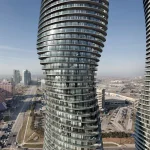
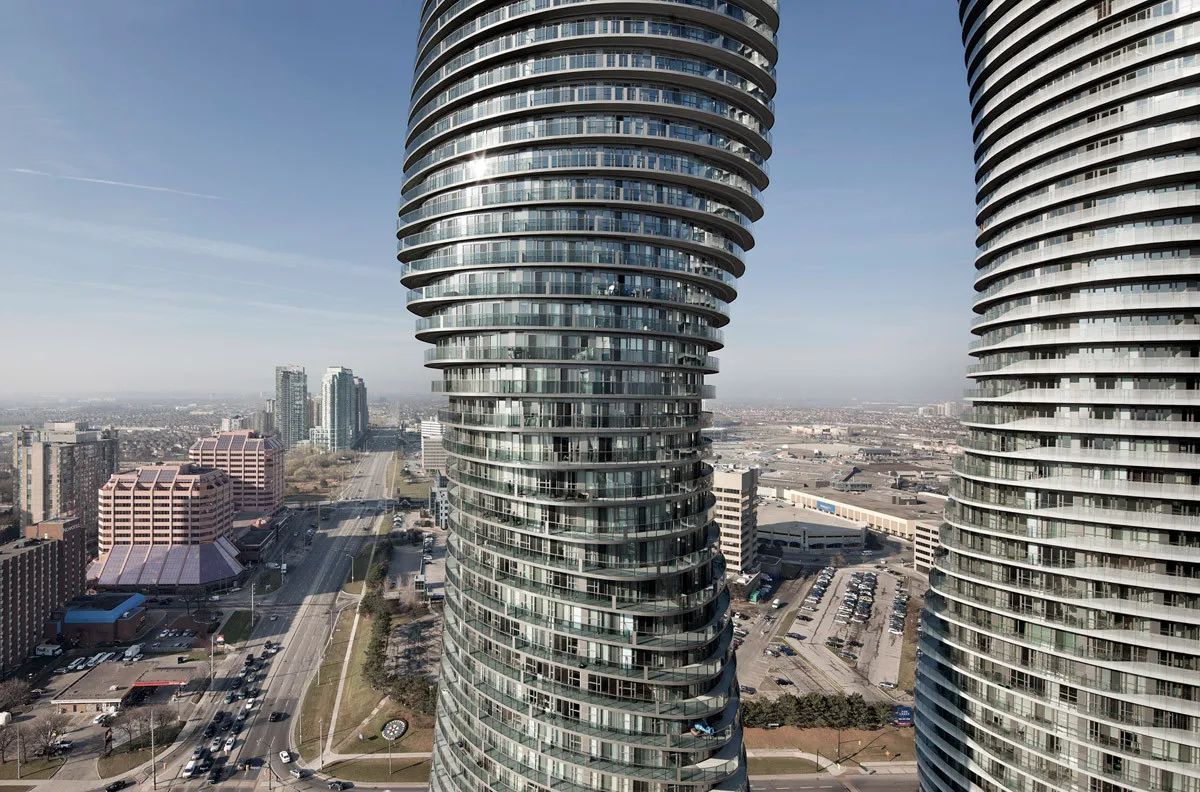
Challenging the concept of the skyscraper, which has become a symbol of technological extravagance, capitalist concentrations, and social projections of prosperity throughout urban development, MAD’s unique design, Absolute Tower, reflects the natural contours of human life with its twisting and turning structure. Nicknamed the “Marilyn Monroe Towers” by locals, its fluid silhouette creates an organic pause within the landscape.
Unlike typical box-shaped skyscrapers, Absolute Tower aims to offer a unique urban experience for every resident, expanding the individual viewing angle of each floor with its continuous balconies and fostering community at a micro-scale. The entire building rotates at varying degrees on different floors to harmonize with the surrounding scenery, providing each residential unit with a 360-degree panorama. This structure aims to connect residents with nature, the sun, the wind, and even the human body.
5. Hutong Bubble 32
Location: Beijing, China
Year: 2008-2009
Type: Courtyard Renovation
Area: Bubble: 10m²
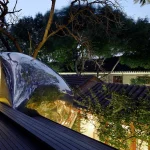
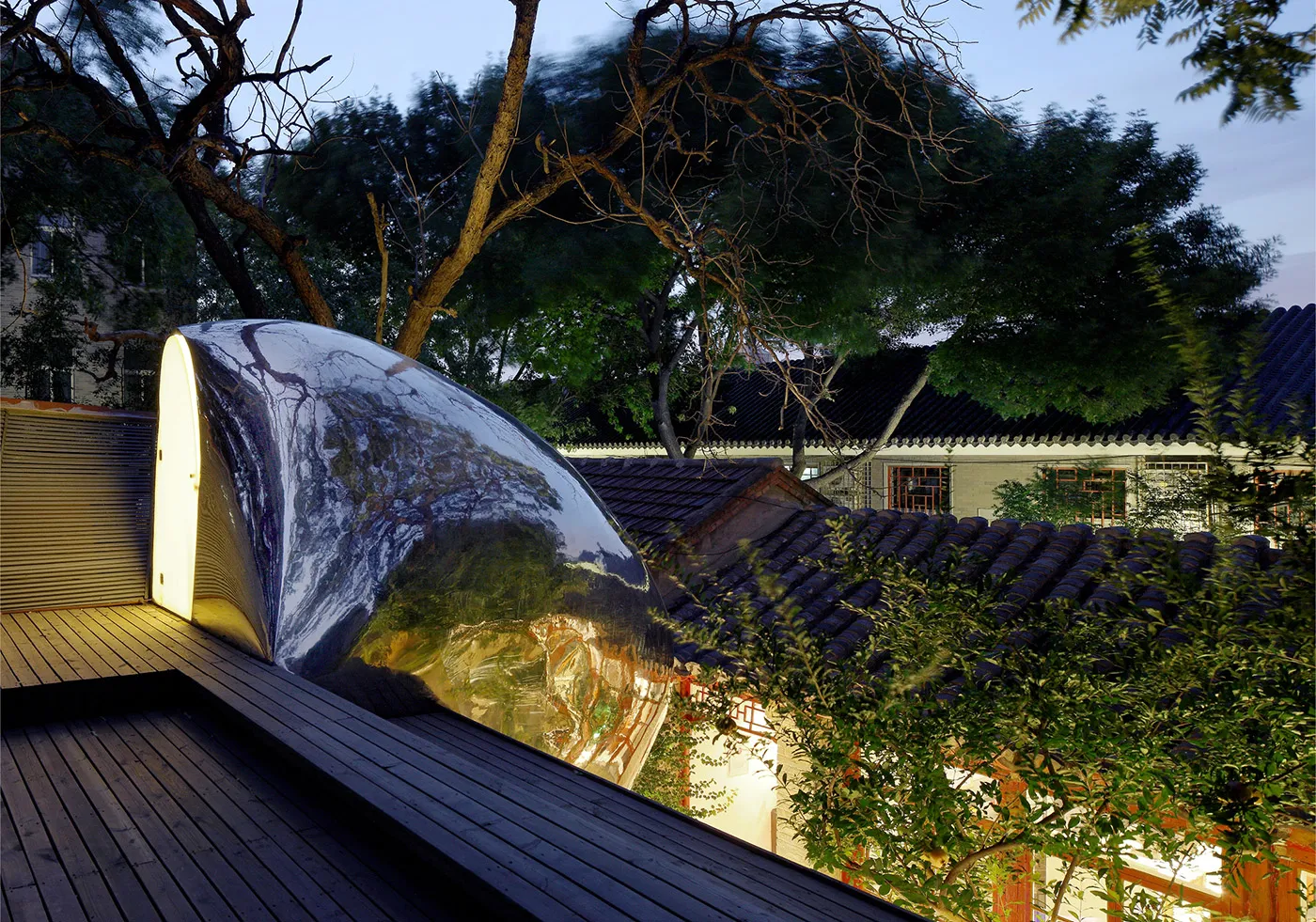
One of the proposals for a future Beijing in the MAD IN China exhibition at the 2006 Venice Architecture Biennale was “The Future of Hutongs,” featuring metallic bubbles scattered throughout Beijing’s oldest neighborhoods. Three years later, the first hutong bubble appeared in a small courtyard in Beijing. Hutong Bubble 32, a small-scale but impactful project, is a critical and experimental work.
Hutongs, a system of narrow streets in Beijing traditionally lined with single-story houses arranged around a courtyard, are losing their identity under the pressure of modernization. Developed by MAD, Hutong Bubble 32 encourages the transformation of older structures rather than their demolition, while testing how contemporary interventions can be implemented within the traditional fabric.
Hutong Bubble 32 features a staircase and a restroom leading to a rooftop terrace in a newly renovated courtyard house. While its glossy exterior may appear alien, the Bubble also transforms into the wood, brick, and greenery surrounding it. This allows past and future to coexist in a confined yet dreamlike world.
6. Huangshan Mountain Village

Location: Huangshan, China
Year: 2009-2017
Type: Residential Apartment
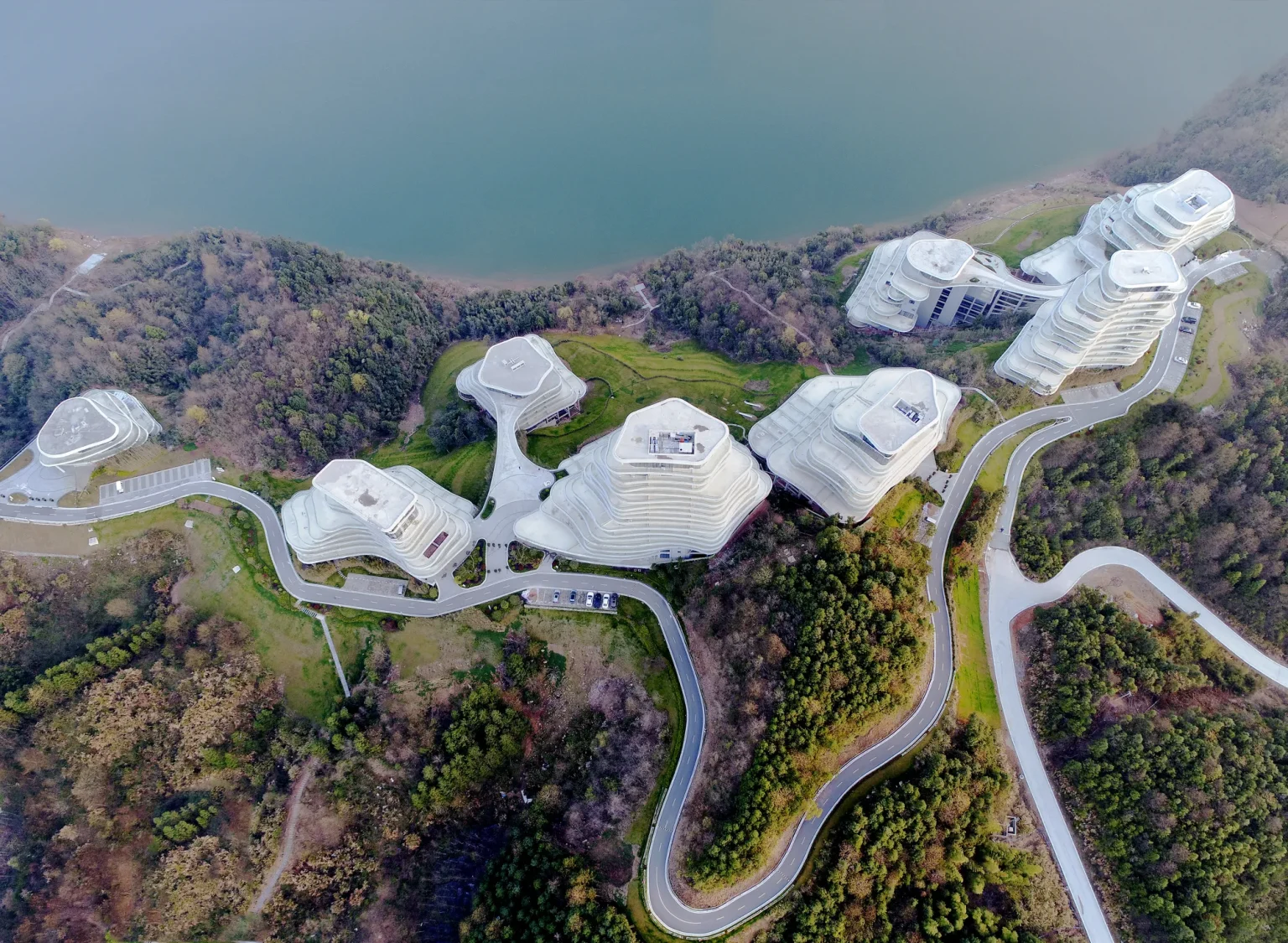
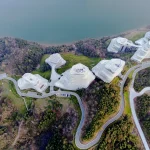
Located near two historic cities, Hongcun and Xidi, in Anhui, China, Huangshan Mountain Village is one of MAD’s most unique designs. As part of a tourism master plan for Taiping Lake and its surroundings, the Mountain Village was guided by the historical and natural beauty of the region. In addition to offering high comfort, the project aimed to enhance the significance of the area’s extraordinary landscape and mountain ranges.
Designing a built environment that harmonizes with the site’s topography and character was a priority. Huagsham Mountain Village, comprised of 10 distinct buildings, stands out with its forms that follow the traces of the topography and its structure reminiscent of small mountains. The buildings are articulated and connected at points where the slope eases, creating dynamic connections.
Each apartment in Mountain Village is designed as a quiet retreat. With its swollen form, each apartment references the traces of the topography, and its interiors feature balconies that open completely to the outside, fully integrating the user into the landscape. The forms of the buildings, shaped like individual sculptures, emphasize their own unique “natural” formations, reminiscent of shapes carved by wind and water. The design approach creates new possibilities for vertical living, opens a new dimension to the concept of mass housing, and becomes an element that creates its own nature.
7. Conrad Hotel
Location: Beijing, China
Year: 2008-2013
Type: Hotel
Area: 56,994 m²
Located in Beijing’s central business district, where high-rises were built according to Western standards, shaped by the industrial revolution of the early 20th century and symbolized by capitalism, the Conrad Hotel is a product of slow design.
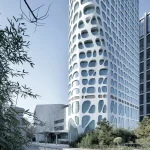
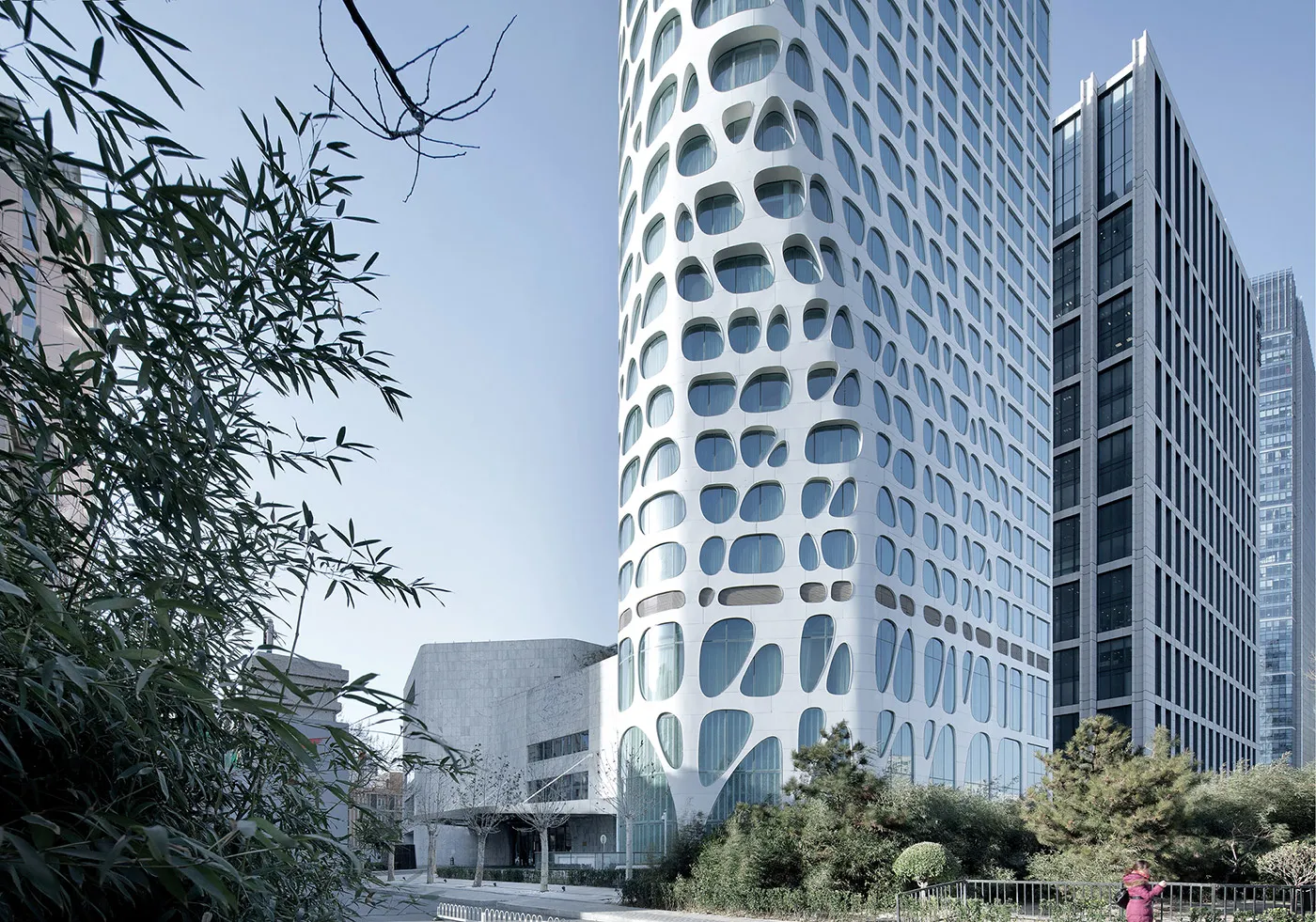
Located in Beijing’s central business district, where high-rises were built according to Western standards, shaped by the industrial revolution of the early 20th century and symbolized by capitalism, the Conrad Hotel is a product of slow design. Rising to a height of 106 meters, the hotel’s exterior is a network of nerves that responds to the interior grid and curves toward the sky.
Subtly penetrating the built landscape of nature, the Conrad Hotel softens the rigidity of otherwise efficient and anonymous structures. Located near Tuanjiehu Park, a tranquil natural landscape of unparalleled beauty, the building acts as a transition between this natural paradise and the urban landscape. The transformation of form breaks the monotony of the city, injects fresh energy, and raises expectations of what can be expected from urban life.
8. Clover House
Location: Okazaki, Aichi, Japan
Year: 2012-2015
Type: Kindergarten
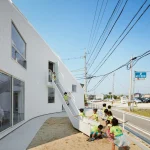
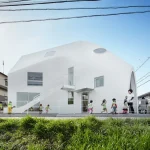
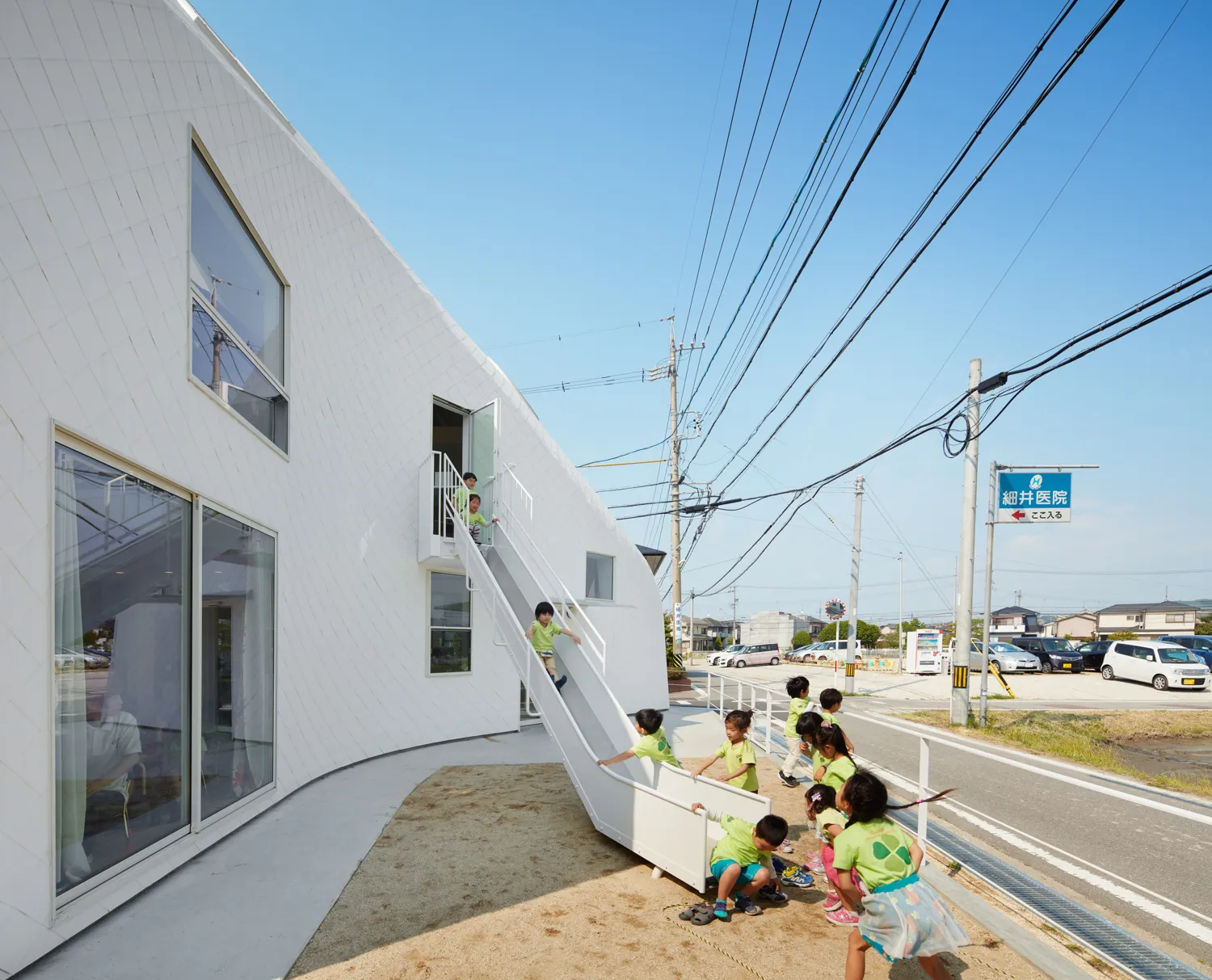
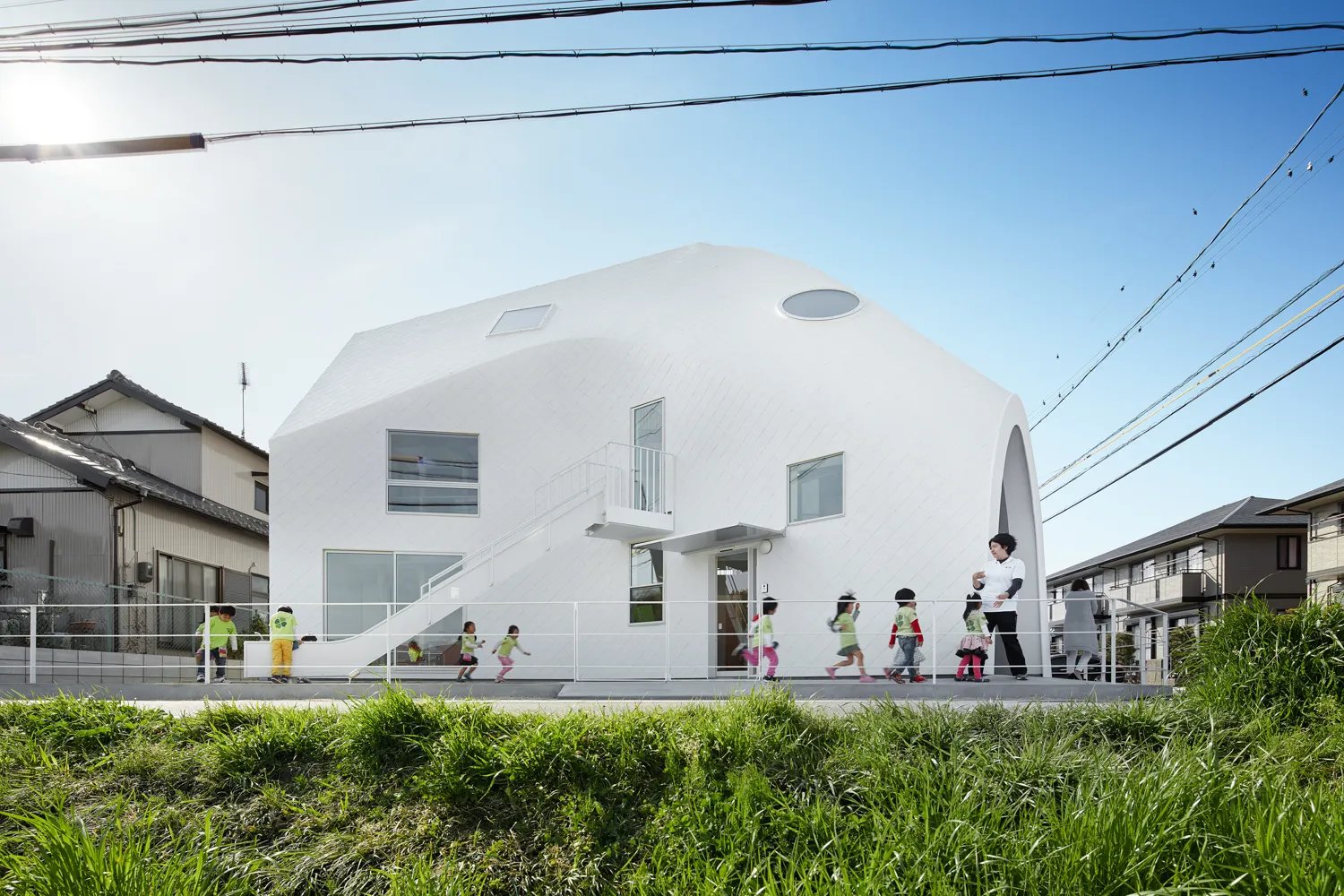
Designed as a nurturing environment where children can feel at home, Clover House is one of MAD’s most unique buildings. Created as a renovation of a local kindergarten owner’s family home due to limited land space, Clover House differs from traditional kindergartens in its role as a haven for learning during the day and a home in the evening. During the day, children and teachers can eat, study, communicate, rest, and play as if they were in a home. At night, the house becomes a living space for the owner’s family and teachers.
Like the surrounding houses, the 105-square-meter wooden house was built as a standard mass-produced residence. MAD repurposed the existing wooden structure and incorporated it into the design of the new building. Preserved throughout the main learning area, the original wooden frame serves as a symbolic reminder of Clover House’s history. Its translucent and enclosed spaces easily adapt to different teaching activities.
Windows in playful, easily recognizable geometries from a child’s perspective let sunlight filter inside, creating ever-changing shadows that spark curiosity and imagination. The repurposed building’s sloping roof creates dynamic interior spaces and allows its owners to remember the building as their home. The façade and roof use common soft roofing materials, such as asphalt shingles, for waterproofing, while the entire structure is enveloped in a paper-like cladding.
9. China Wood Sculpture Museum
Location: Harbin, China
Year: 2009-2013
Type: Museum
Area: 12,959 m²
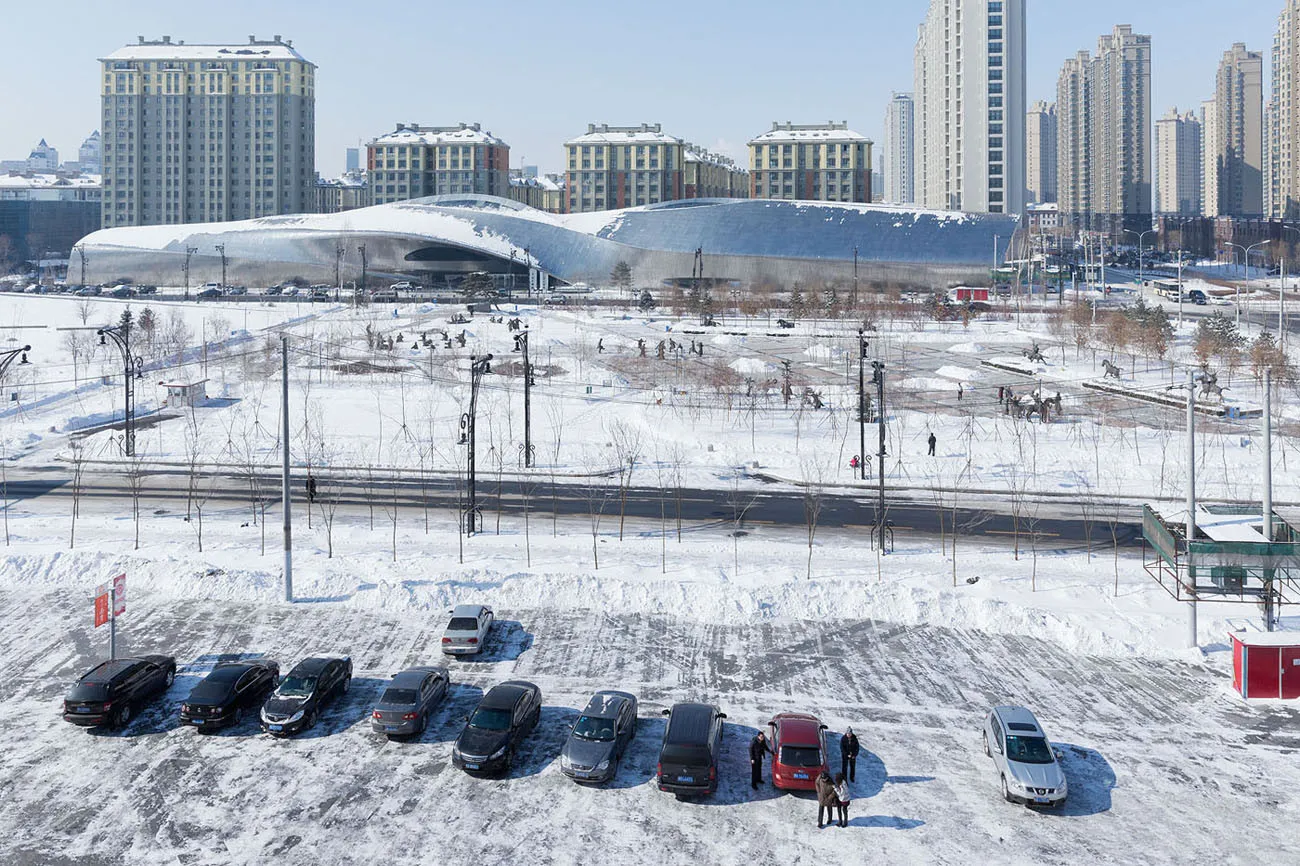
Inspired by the unique local winter landscapes, the China Wood Sculpture Museum creates a striking contrast between the elegance of nature and the pace of daily life. The museum embodies some of the most important conceptual and formal ideals that define MAD’s work, bringing the expression and abstraction of nature into an otherwise mundane setting. In this 13,000-square-meter building, the boundaries between solid and liquid blur, evoking the region’s natural scenery and landscape.
The museum’s linearly arranged interior is connected by a central entrance that both divides and unites the space. The curvature of the form creates shade and a public plaza for visitors entering the museum. Exhibition spaces are arranged around three atriums, each featuring skylights designed to capture the low path of the northern sun. A delicate balance of light and shadow guides visitors through the exhibitions, creating a poetic space that unites art, people, and nature. The building’s exterior is clad in polished steel sheets that reflect the surroundings and the changing light.
10. Fake Hills
Location: Beihai, China
Year: 2008-2015
Type: Residential
Area: 492,396 m²
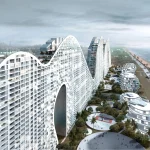
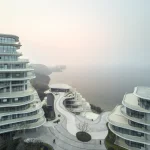
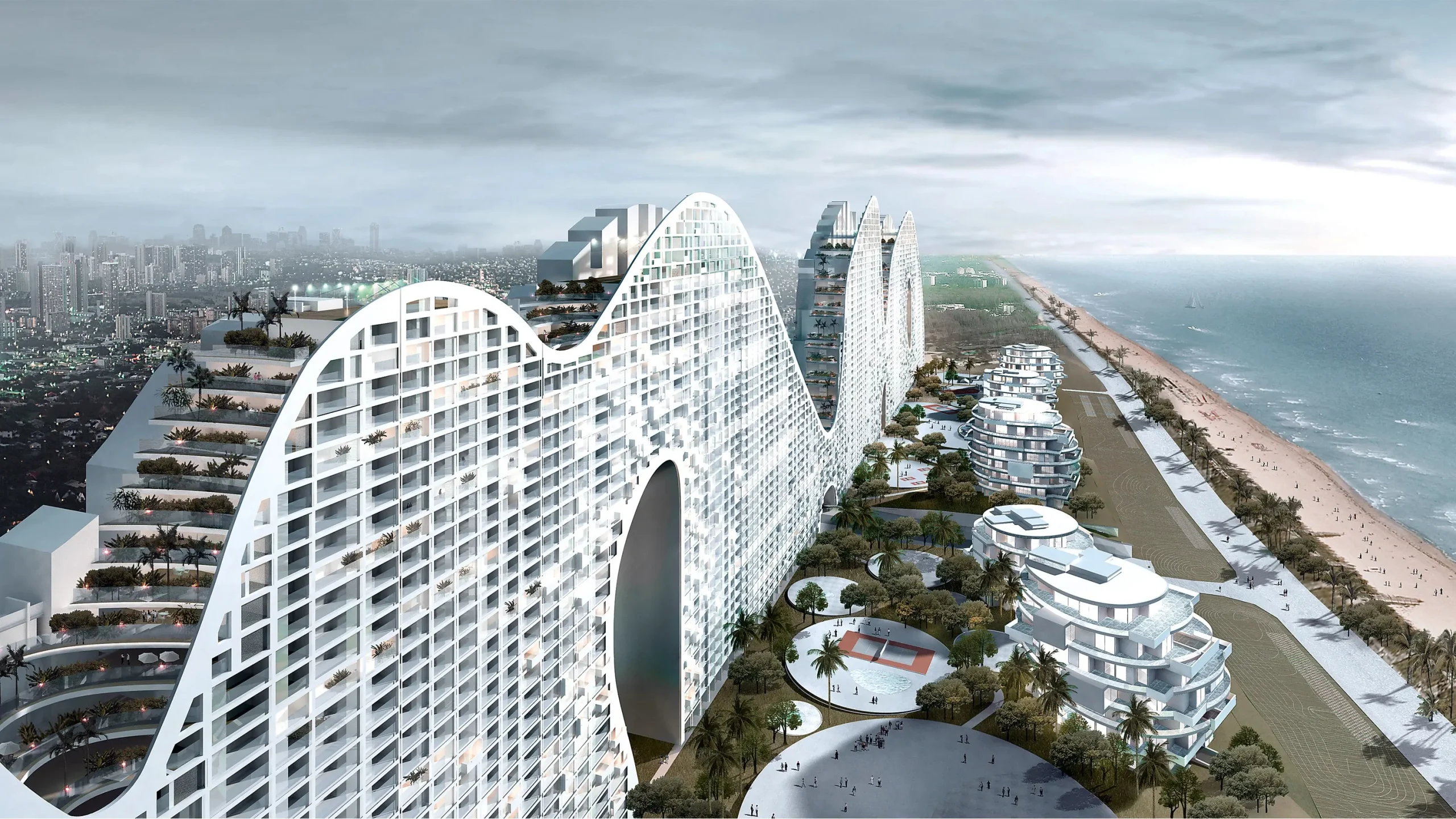
One of MAD Architects’ most distinctive works, Fake Hills was designed as an answer to the question: Is it possible to create architecturally innovative, high-density, and economically sustainable housing? Located along the coastline of Beihai, the project forms a hilly skyline where tall and low towers merge into a continuous ridge-like profile.
The project’s fundamental geometry combines two common yet contrasting architectural typologies, the high-rise and the ground-scraper, to create an undulating building typology and create a hilltop form. Its unique shape and slender profile ensure that residents enjoy optimal views, while a continuous rooftop platform transforms the crest of these man-made hills into public spaces featuring gardens, tennis courts, and swimming pools. Every opening in the building allows for sea breezes and ocean views from within.