

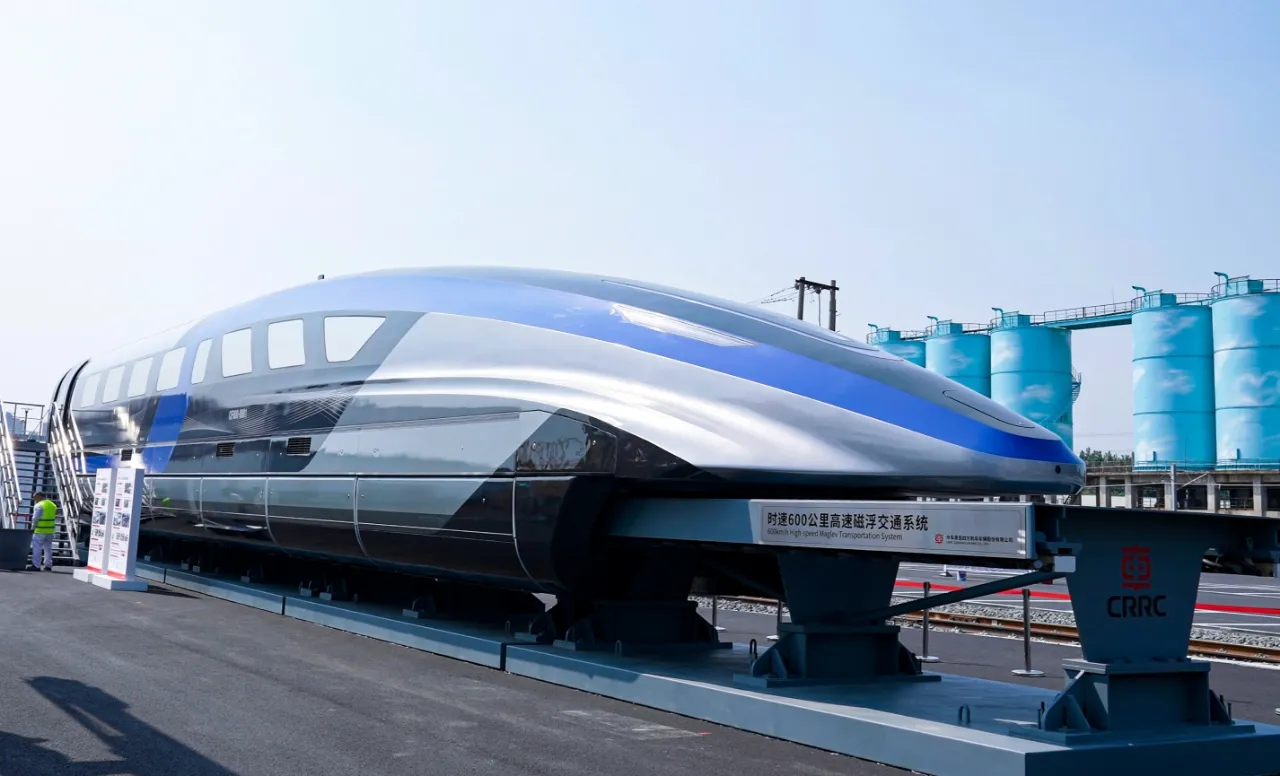


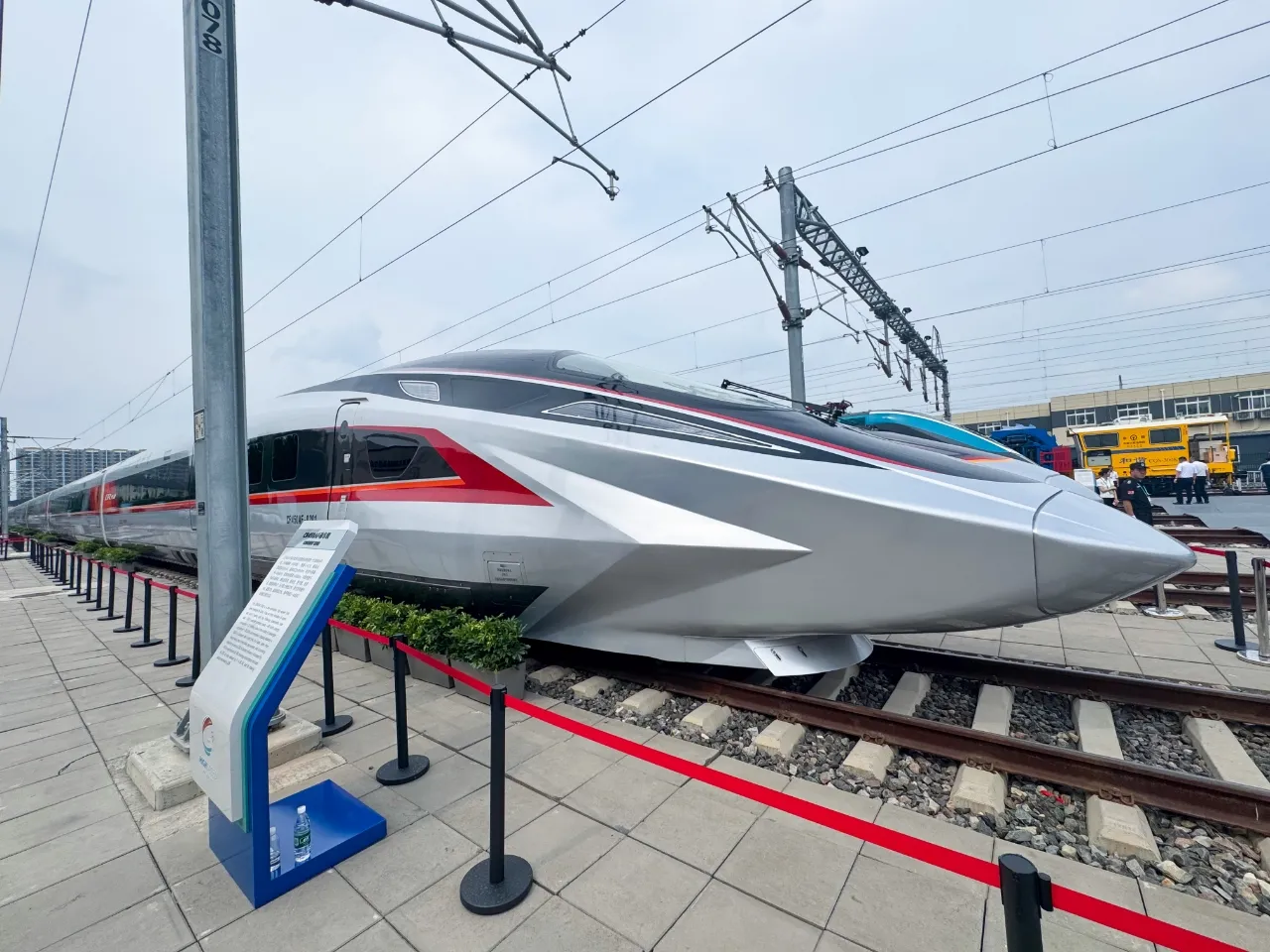


At the 12th UIC World Congress on High-Speed Rail held alongside the 17th Modern Railways exhibition, China’s state-owned CRRC (China Railway Rolling Stock Corporation) officially lifted the curtain on its latest superconducting maglev train. Capable of reaching a staggering 600 km/h (373 mph), the train was presented as a game-changer, narrowing the gap between rail and aviation speeds.
A Glimpse into the Future of High-Speed Transit
Displayed in Beijing from July 8 to 10, the cutting-edge maglev prototype boasts a sleek, aerodynamic form. Officials from CRRC framed it as a “point-to-point transport tool,” intended to bridge the speed gap between conventional high-speed rail and domestic air travel for distances of around 2,000 km.
If built on a direct alignment, CRRC says a 600 km/h maglev could cut Beijing–Shanghai times to roughly 2.5–3 hours; today’s fastest scheduled high-speed rail services on the corridor take about 4–4.5 hours (depending on stops).
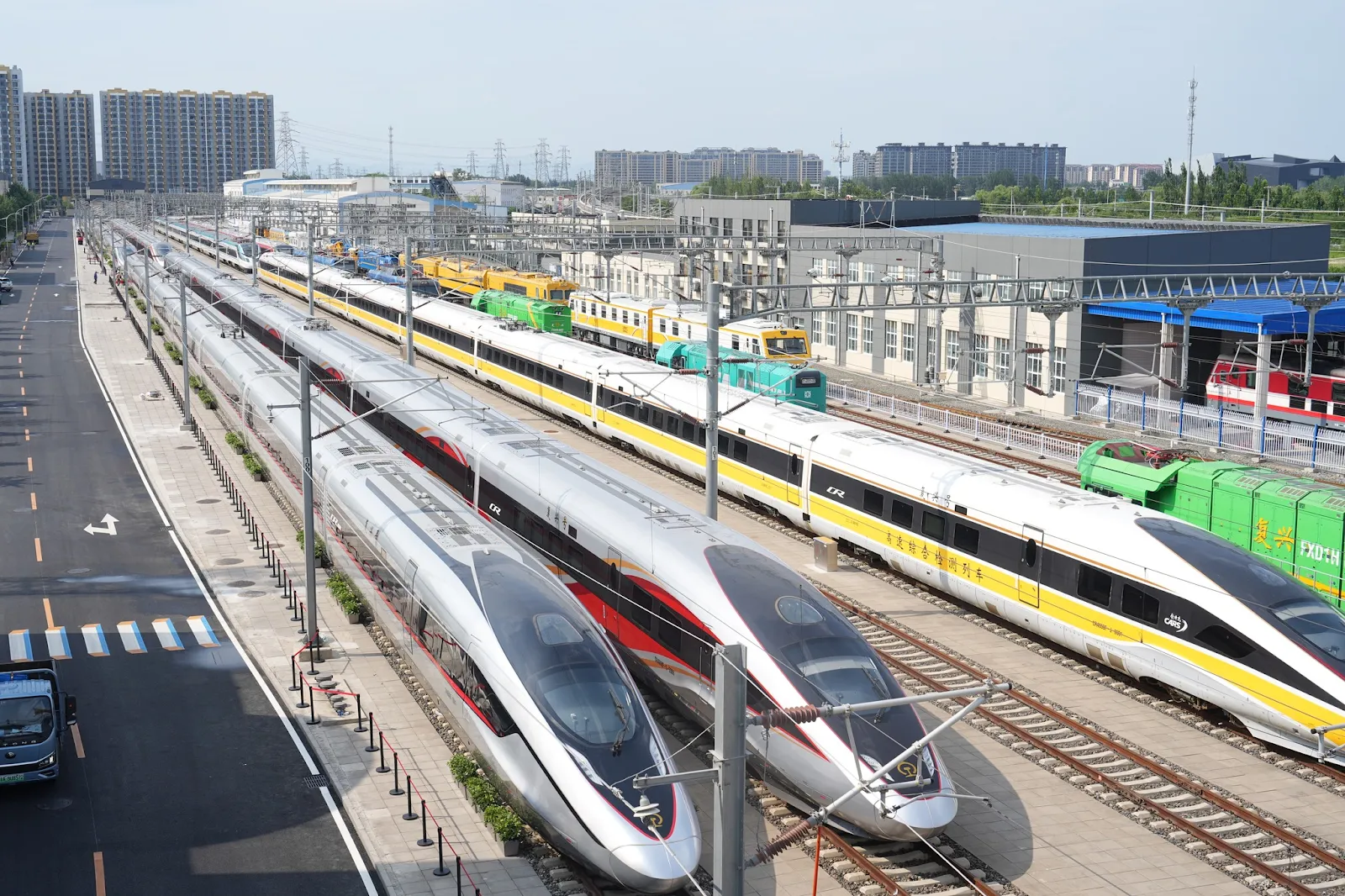
The Shanghai airport-to-city line, using imported German Transrapid tech, has remained the fastest commercial train in operation.
The new CRRC design appears to follow from the CRRC 600 project, a home-built derivative developed under license from ThyssenKrupp and leveraging Transrapid’s legacy. An academic paper even notes deep collaboration between German firms and CRRC’s Qingdao division.
The 600 km/h such speeds, trains exiting tunnels can generate powerful shock waves, or “tunnel booms,” even from short tunnels. Researchers estimate that a 600 km/h maglev would trigger such booms in tunnels as short as 2 km, compared with 6 km for conventional high-speed rail.
Engineers have devised a clever fix: porous, 100-metre-long soundproofing buffers combined with tunnel wall coatings that permit air to escape, a design that mitigates shock waves by up to 96%. If deployed at scale, this innovation could dramatically improve safety, reduce environmental disturbance, and enhance passenger comfort.
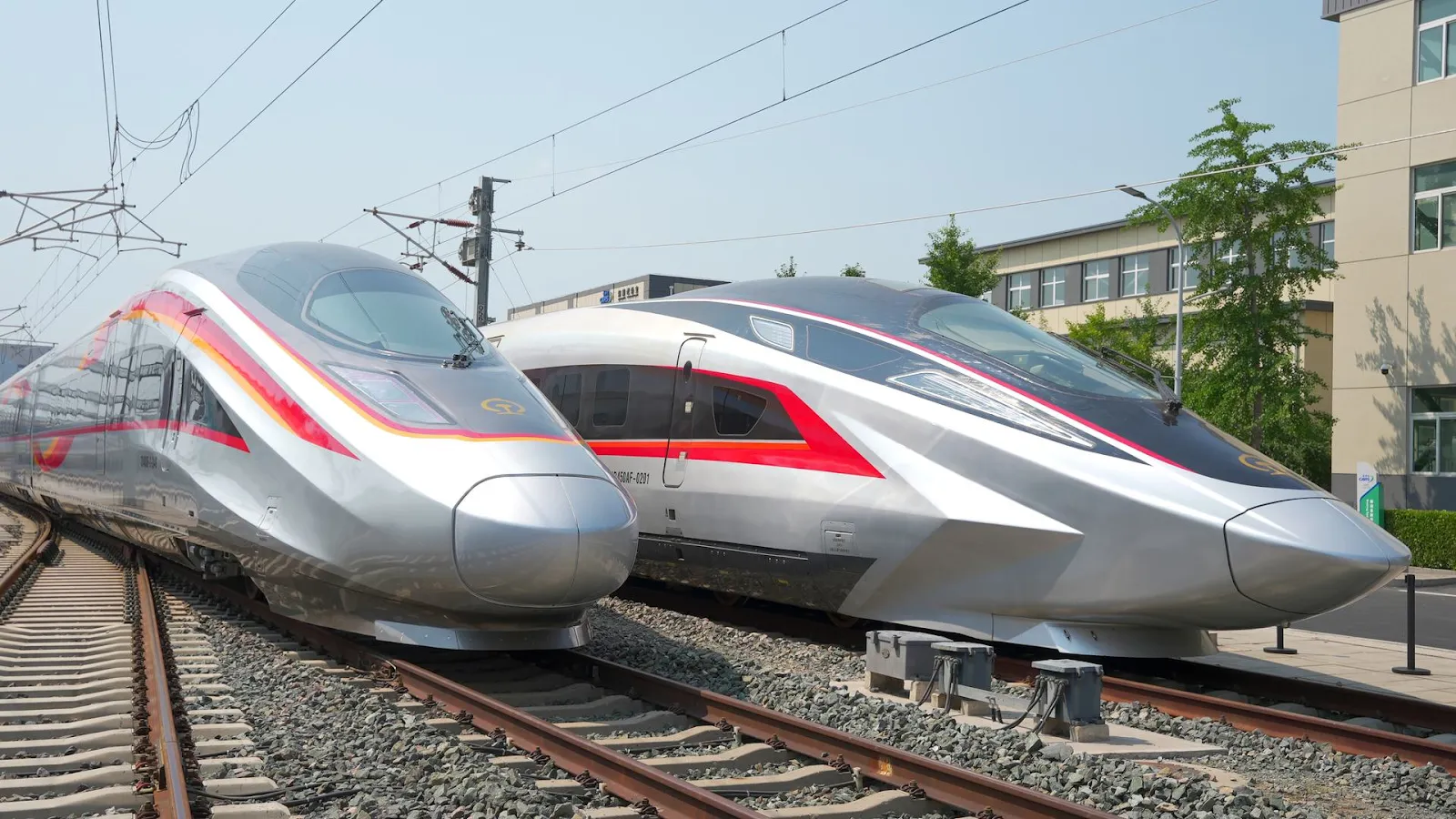
Why China’s 600 km/h Maglev Matters for the Future of High-Speed Rail
With a top speed of 600 km/h (about 373 mph), China’s new maglev prototype signals a major technological leap in rail transport, offering performance that rivals the speed and convenience of short-haul flights. It is designed not only to push the boundaries of speed but also to redefine passenger expectations for efficiency and comfort in long-distance travel.
The ability to cut journey times between megacities like Beijing and Shanghai to under three hours could transform mobility across the country. For both business and leisure passengers, such reductions promise new possibilities for same-day travel between major economic and cultural hubs, reshaping how people plan trips and conduct work.
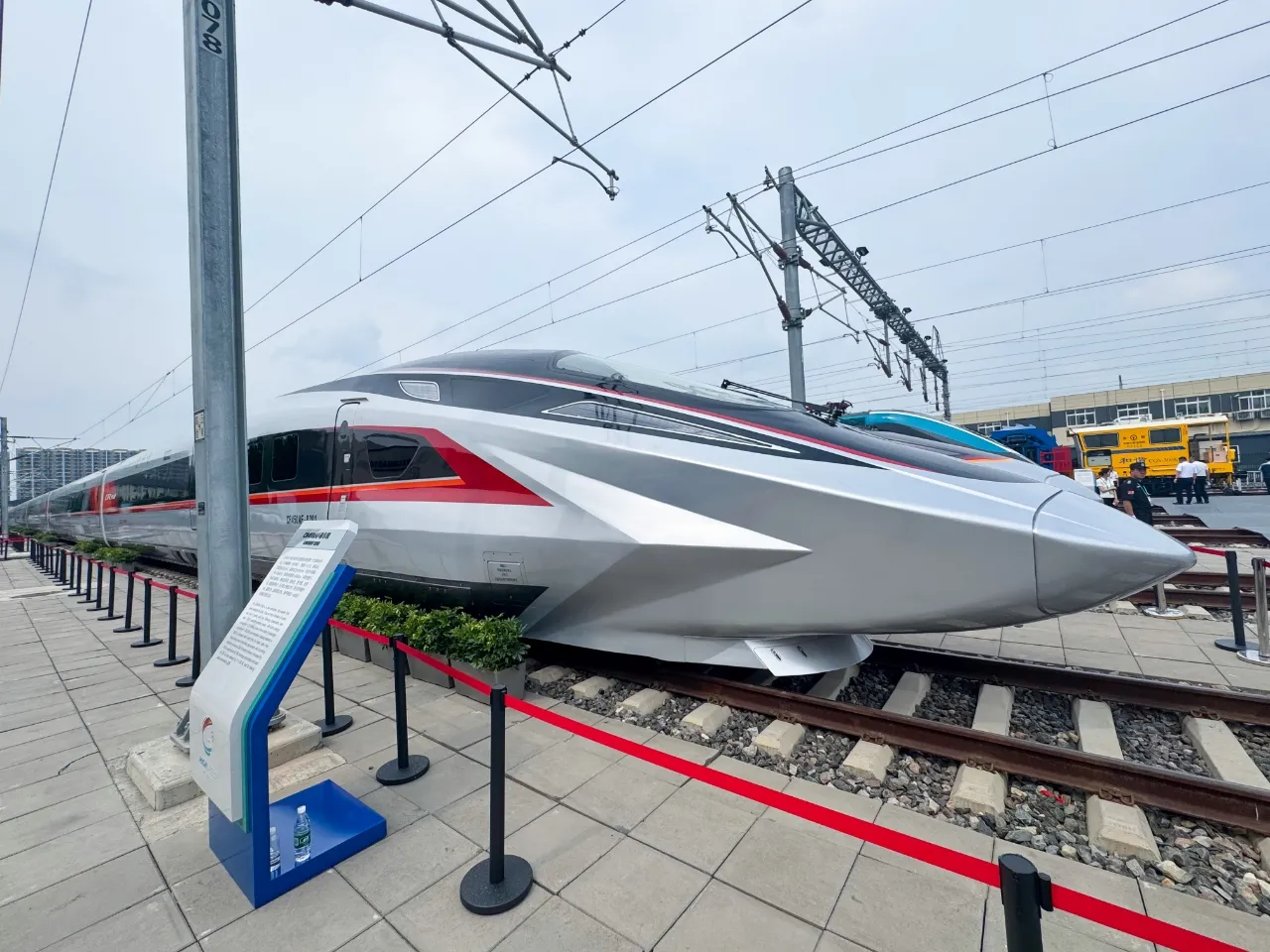
Beyond speed, the project demonstrates a commitment to smart, sustainable engineering. The design tackles environmental and acoustic challenges head-on, including the “tunnel boom” effect, through innovative soundproofing and airflow solutions. This focus on mitigating noise pollution and improving passenger comfort shows that speed does not have to come at the expense of environmental responsibility.
By debuting the train at the UIC World Congress, China has placed itself firmly in the global spotlight, showcasing the integration of domestic innovation, German-origin engineering, and practical solutions to high-speed limitations.