






Vietnam National Stadium: Vietnam is preparing a stadium that matches its growing ambitions on the world stage. Populous has unveiled designs for a 70,000-seat national arena in Ho Chi Minh City that draws its form from the region’s rivers and its purpose from the country’s sporting future.
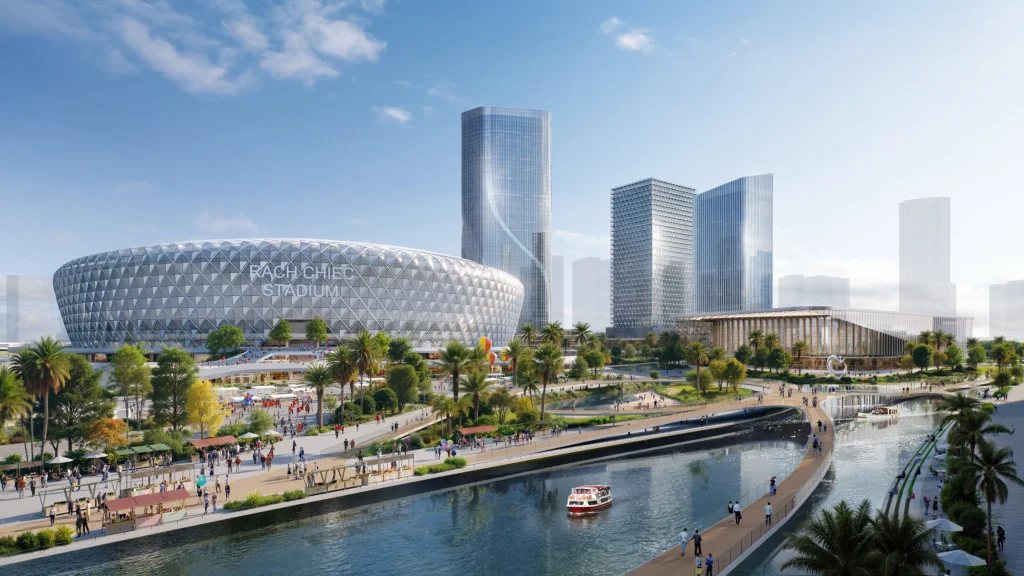
A country’s ambition often takes physical form first in its stadiums. Vietnam is now preparing one of the largest and most technically advanced arenas in Southeast Asia. Architecture studio Populous has released designs for Rach Chiec Stadium in Ho Chi Minh City, a 70,000-seat national venue that will sit at the center of a much larger sports precinct.
When completed, the stadium will become the country’s largest, offering roughly 30,000 more seats than the current record-holder, Mỹ Đình National Stadium in Hanoi. It is intended to host football and other team sports, along with approximately 90 percent of Olympic disciplines, positioning Vietnam to pursue major regional and international events.
A stadium shaped by local landscape
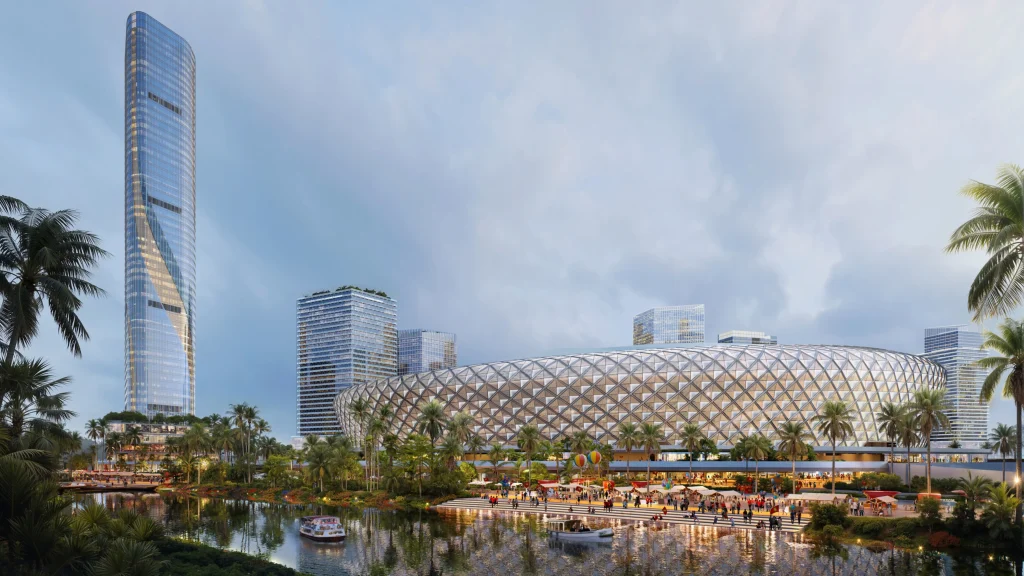
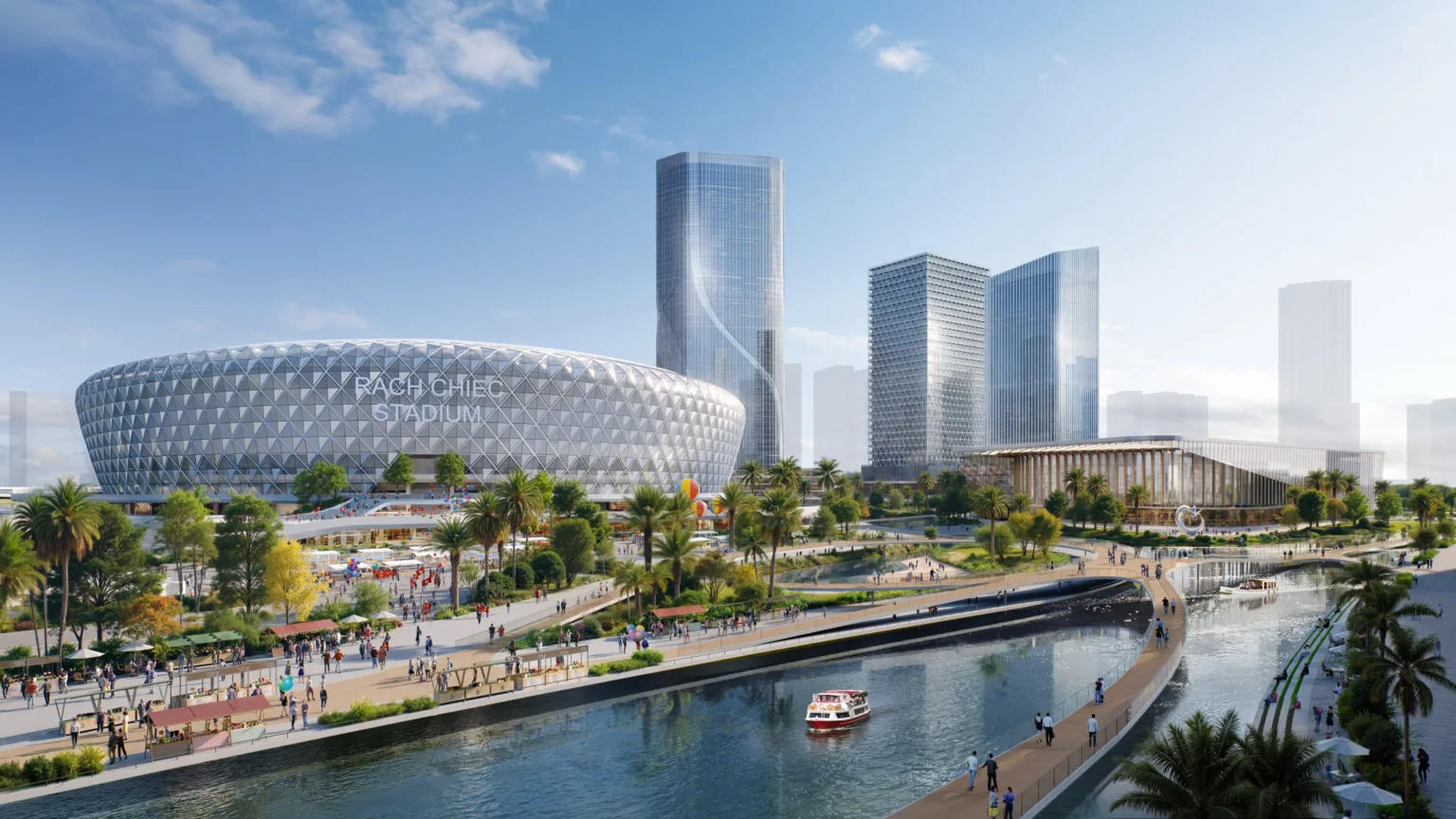
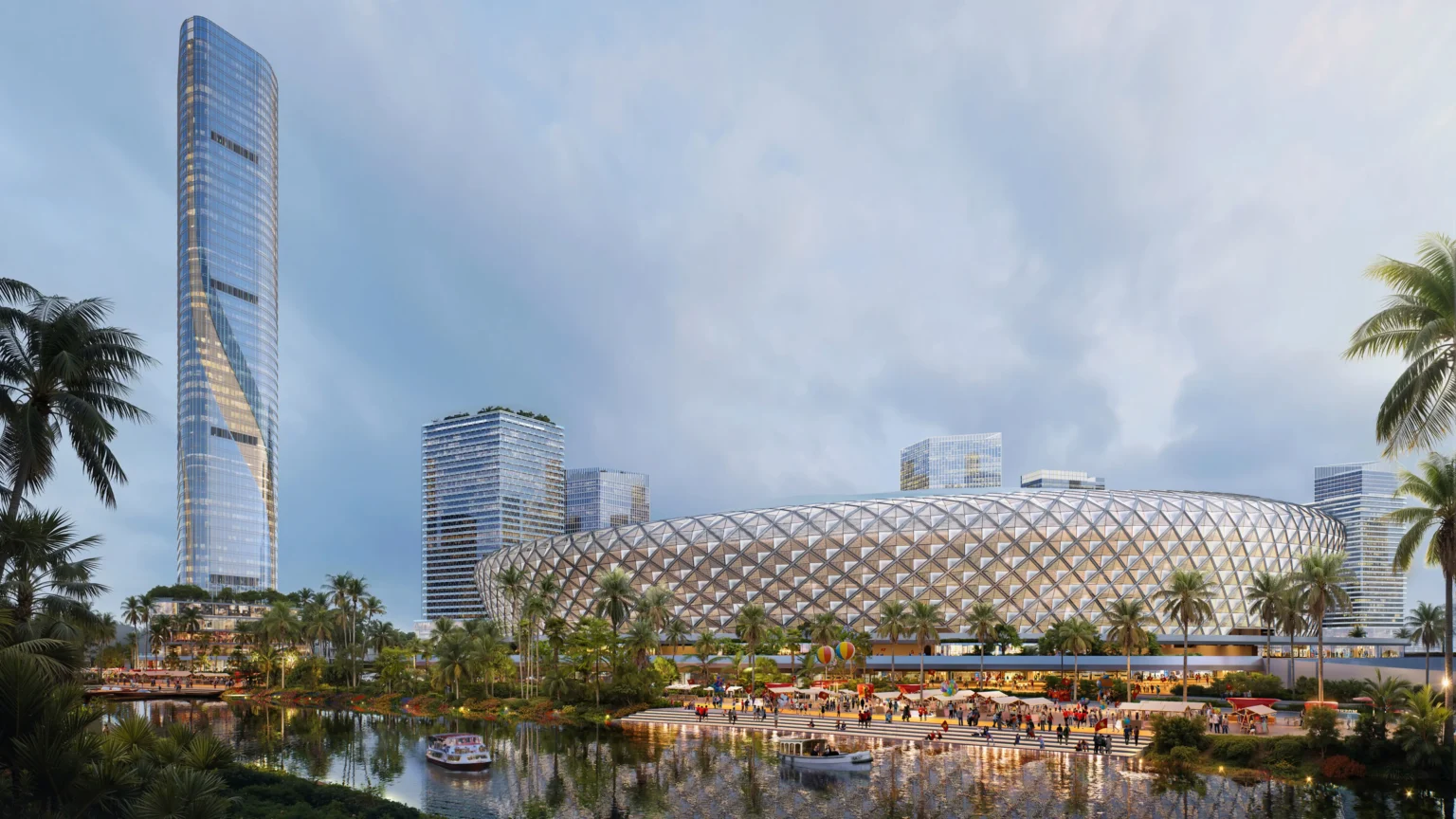
The exterior is wrapped in a diamond-patterned facade. Populous says the geometry was informed by the Nipa palms that grow along the rivers of the region. The pattern gives the large volume a textured, almost woven surface rather than a smooth skin, tying the building visually to the waterways that characterize the delta landscape around Ho Chi Minh City.
A fully retractable roof will cover the seating bowl and playing field. The roof allows environmental control inside the arena and, equally important, provides acoustic separation from surrounding residential areas. When the roof is closed, noise from concerts or large events can be contained. When it is open, the stadium connects more directly to the tropical climate.
Advanced air-conditioning systems are planned to adjust temperature by seating zone, an approach that responds to the demands of both elite sport and spectator comfort in a hot, humid environment.
Vietnam National Stadium: Part of a larger vision
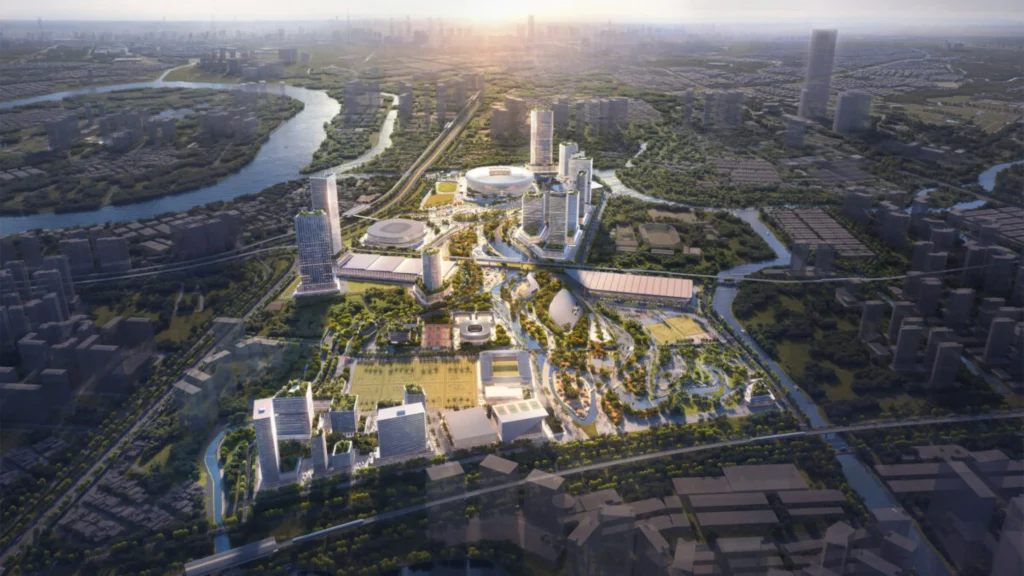
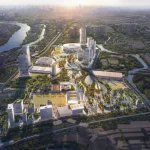
Rach Chiec Stadium is the centerpiece of the roughly 200-hectare Rach Chiec National Sports Complex, which Populous also master-planned. The wider precinct will include an 18,000-seat multi-purpose arena, additional sports halls, an aquatics center, tennis facilities, fitness and recreation spaces, and a substantial conference center. The total investment is reported to be in the region of 145 trillion Vietnamese dong.
According to Populous senior principal Andrew Tulen, the stadium and arena designs are informed by the overall masterplan. The venues are conceived as anchors for a park-like experience supported by commercial offerings and public activations. The emphasis is on accessibility, connectivity, and flexibility so that the complex can serve different demographics throughout the year, not only during major events.
Brett Wightman, Populous senior principal, has described the project as enhancing Vietnam’s sports infrastructure and laying the foundations for the country to host events such as the FIFA World Cup and the Olympic and Paralympic Games.
Beyond match days
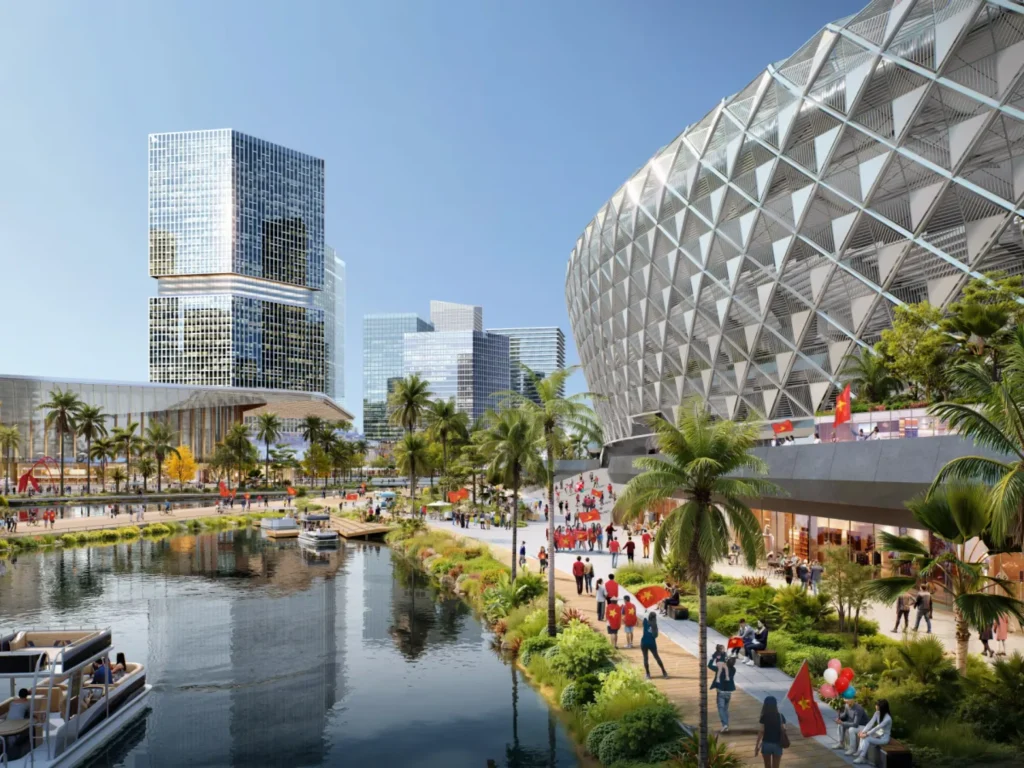
Image courtesy: Populous
Modern stadium design increasingly treats the building as a year-round asset rather than a facility that comes alive only on event days. At Rach Chiec the open-concourse approach is intended to keep the venue connected to the life of the city around it. The retractable roof and flexible configuration allow conversion for large-scale concerts and entertainment programs in addition to sport.
The complex is located on the outskirts of Ho Chi Minh City. Its scale and mix of uses are expected to act as a catalyst for further development in the surrounding area. Populous has stressed that the venues should function as community assets that give something back to the city every day of the year.
Technical ambition and cultural reference
The combination of a large seating capacity, a fully retractable and acoustically rated roof, zone-controlled climate systems, and a facade inspired by local flora places Rach Chiec among the more ambitious stadium projects currently under development in Asia. The design walks a line between global technical standards and regional identity.
Nipa palms are not merely decorative inspiration. They are a practical part of the local ecology, growing in brackish water along rivers and canals. Translating their diamond-like form into a large-scale facade pattern gives the stadium a distinctive silhouette while grounding it in the specific landscape of southern Vietnam.
Looking ahead

Construction of the wider complex has already begun, with a groundbreaking ceremony held earlier. Populous continues to work on other major sports and entertainment projects worldwide, but Rach Chiec represents a significant statement in Southeast Asia: a national stadium designed from the outset for both elite competition and everyday civic life.
Whether the finished building fully realizes the ambitions of its designers and clients will depend on execution, maintenance, and programming over many years. For now, the design itself sets a clear direction. Vietnam is building a stadium that aims to be more than a container for sport. It is intended as a flexible, climate-responsive, landscape-conscious public landmark capable of hosting the country’s largest gatherings and of remaining useful long after the final whistle.