



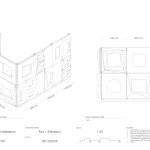
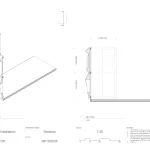
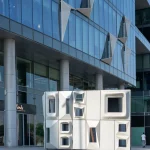
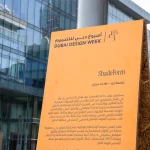
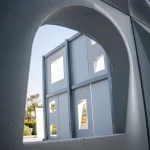
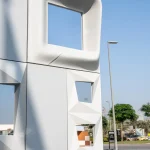
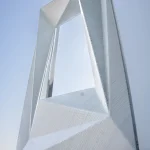
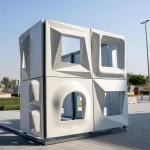
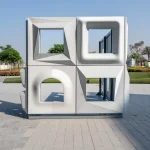
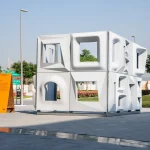
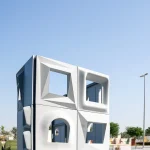
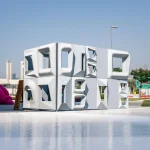
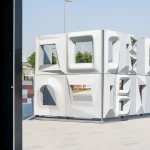
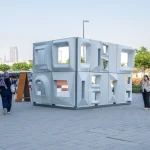
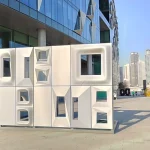
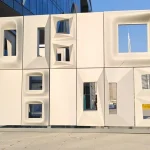
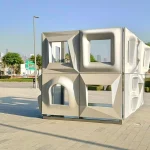
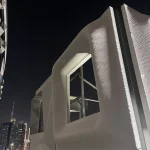
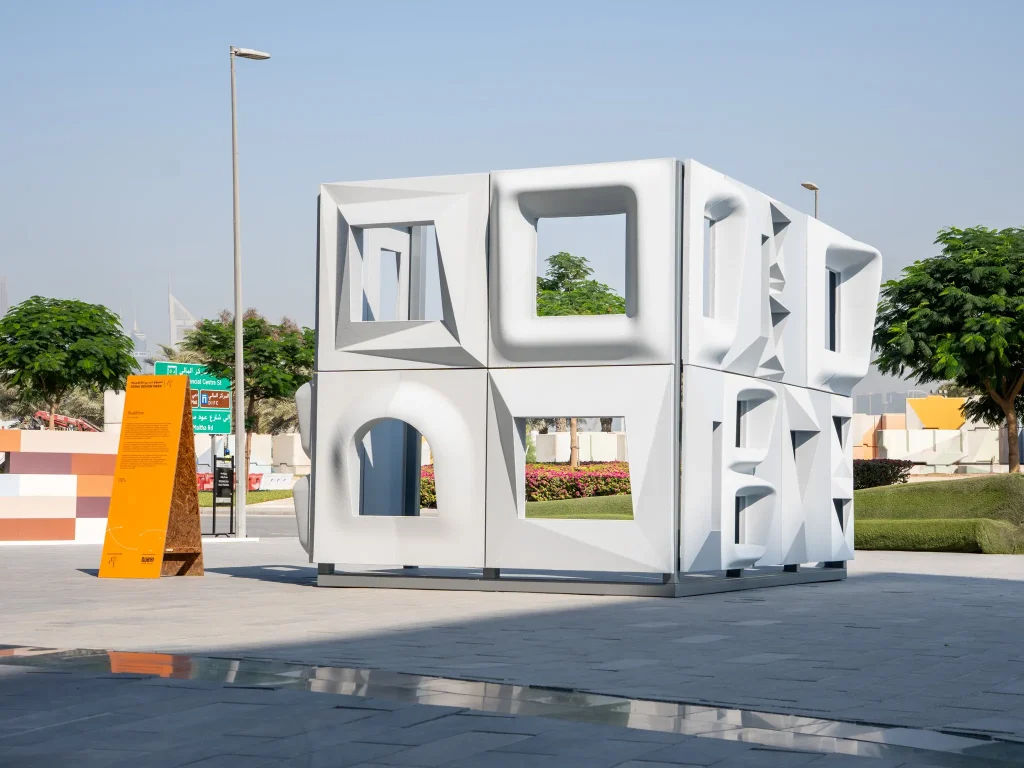
Dubai, UAE. ShadeForm is an outdoor installation presented at Dubai Design Week 2026, held at Dubai Design District (d3) from 3 to 8 November. Developed by the Collaborative Design Laboratory (co.de lab) at Zayed University, led by Dr. Basem Eid Mohamed, the installation is the public expression of an ongoing research project on modular, self-shading façade panels for the intense solar conditions of the Gulf. The research asks a simple question: what if a façade panel could shade itself?
When Shading Becomes Part of the Architecture
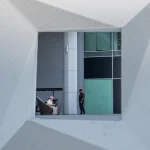
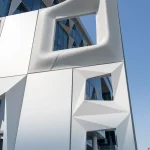
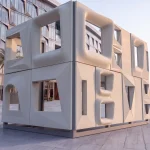
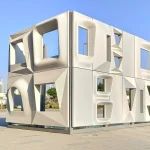
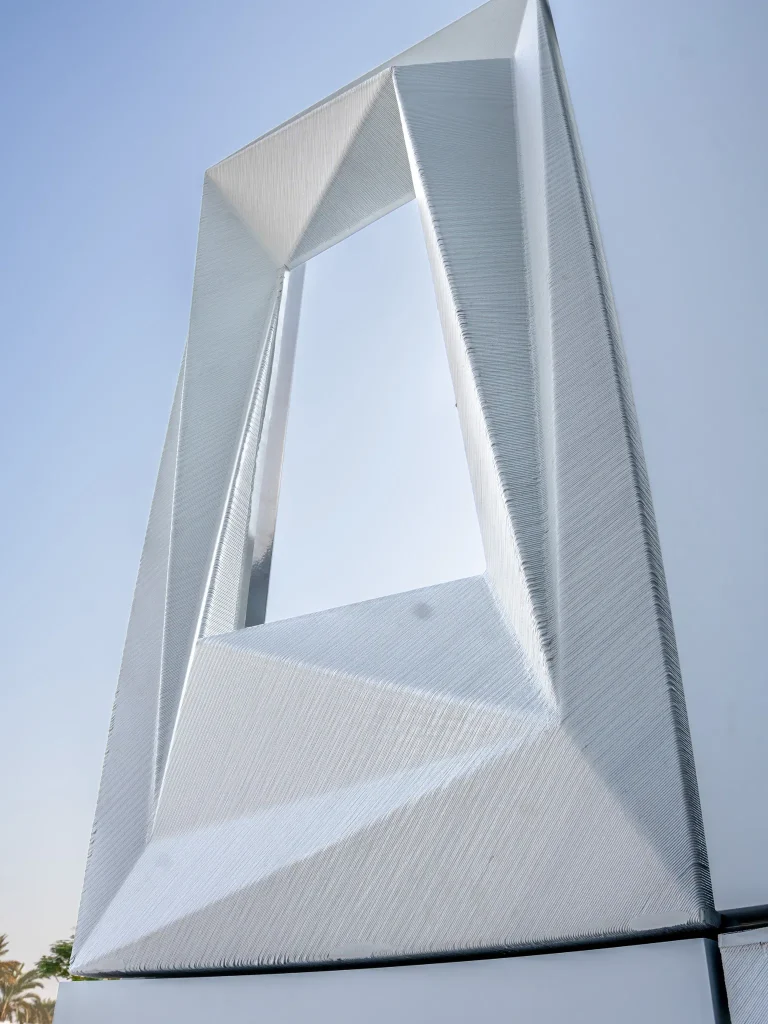
Across the region, solar control is usually an applied layer. Fins, louvers, and screens are fixed onto glazed envelopes once the architecture is already resolved. ShadeForm proposes the opposite approach. It explores how environmental performance can shape architectural form, developing façade geometries that integrate shading directly into their structure. Deep reveals, folds, and facets cast shadow onto the panel’s own surface and openings, so the building envelope becomes an active environmental system rather than a passive surface.
Designing with the Sun Through Computational Tools
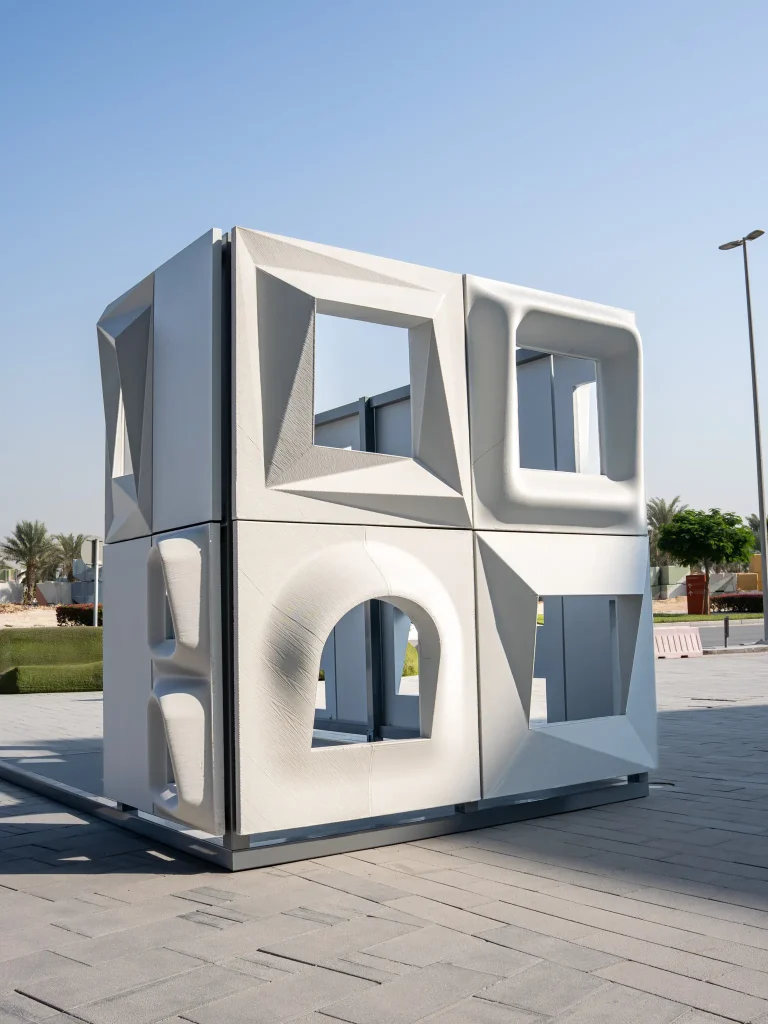
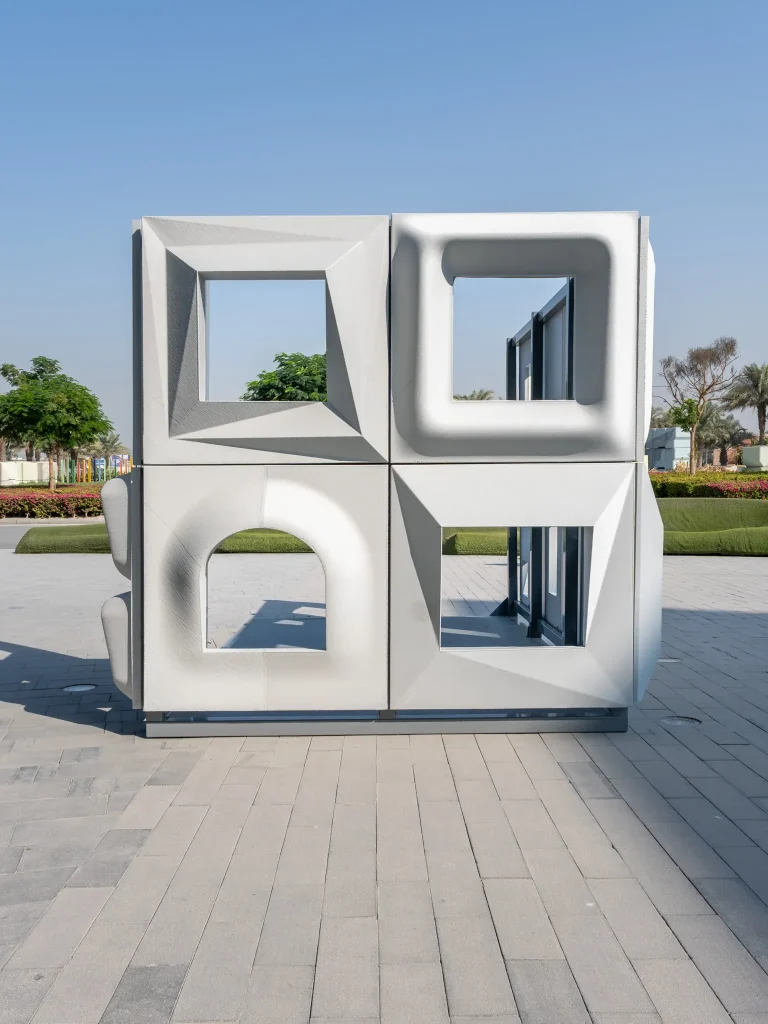
The research combines parametric modeling, AI-assisted design exploration, and environmental analysis. A generative workflow evaluates solar exposure across different orientations and adjusts panel depth, inclination, and aperture to reduce direct radiation while preserving daylight and views. The result is a family of panel types, each optimized to a particular orientation, that can be assembled into façades for housing and public buildings in hot, arid climates.
From Research to a Public Experiment
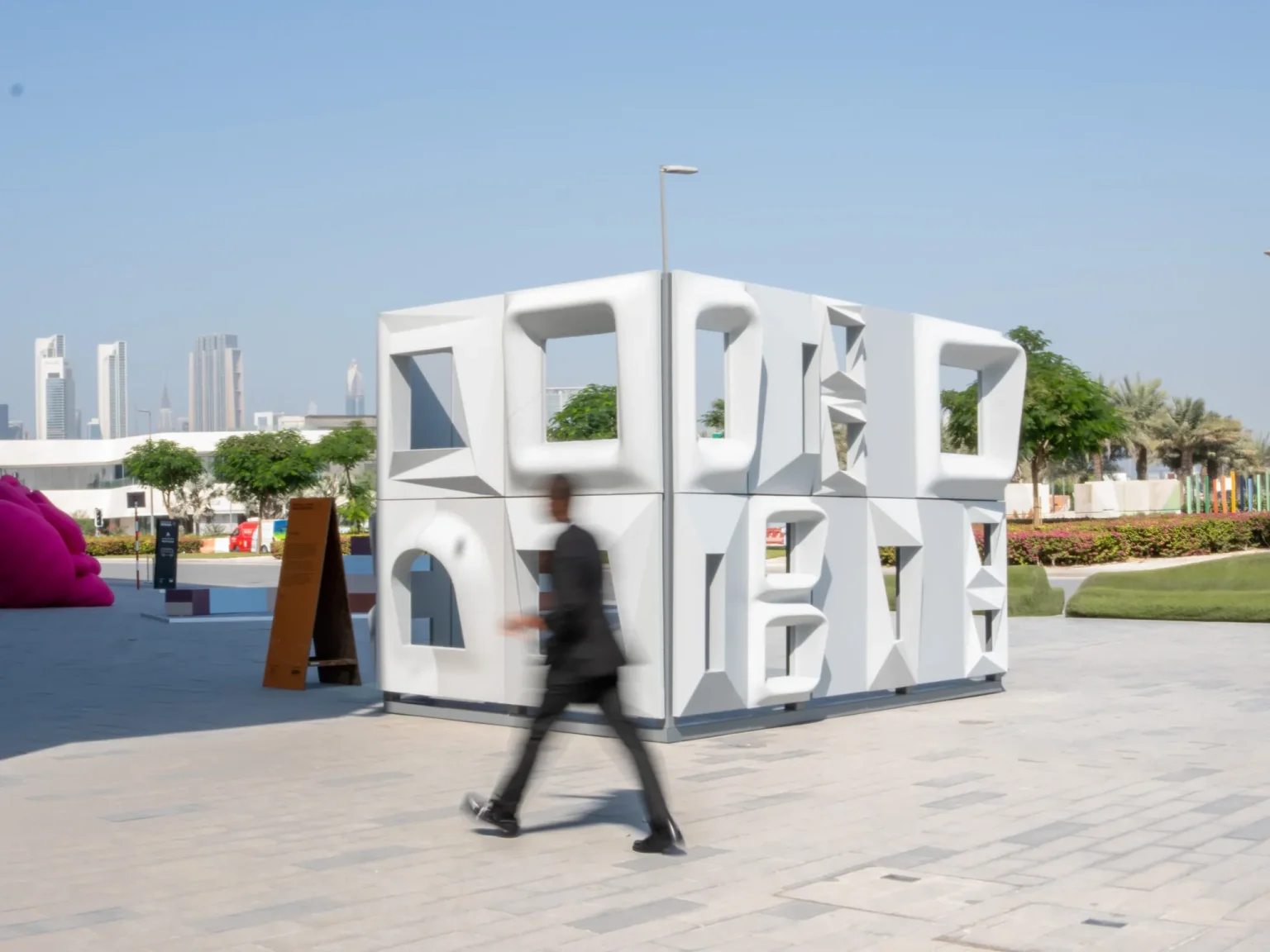
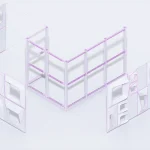
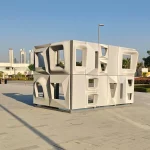
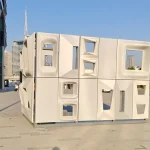
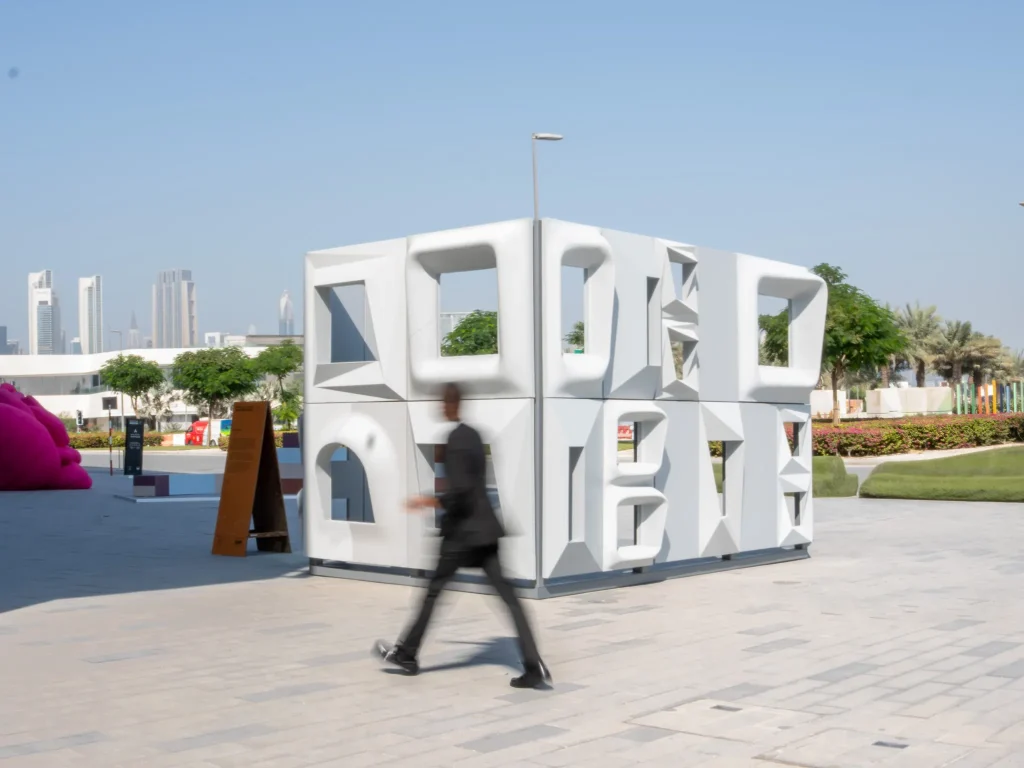
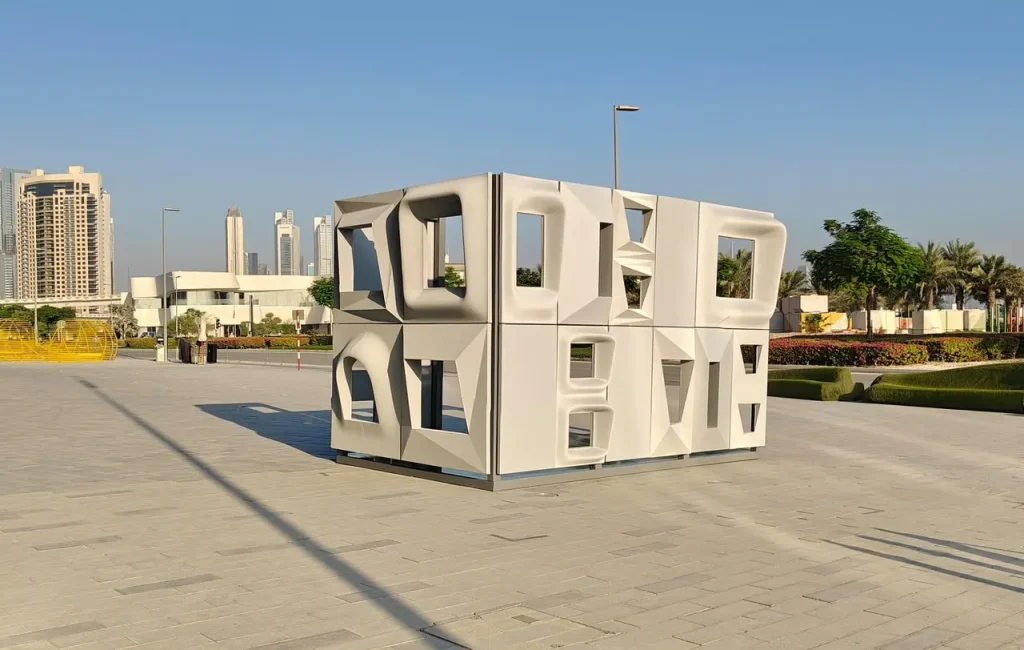
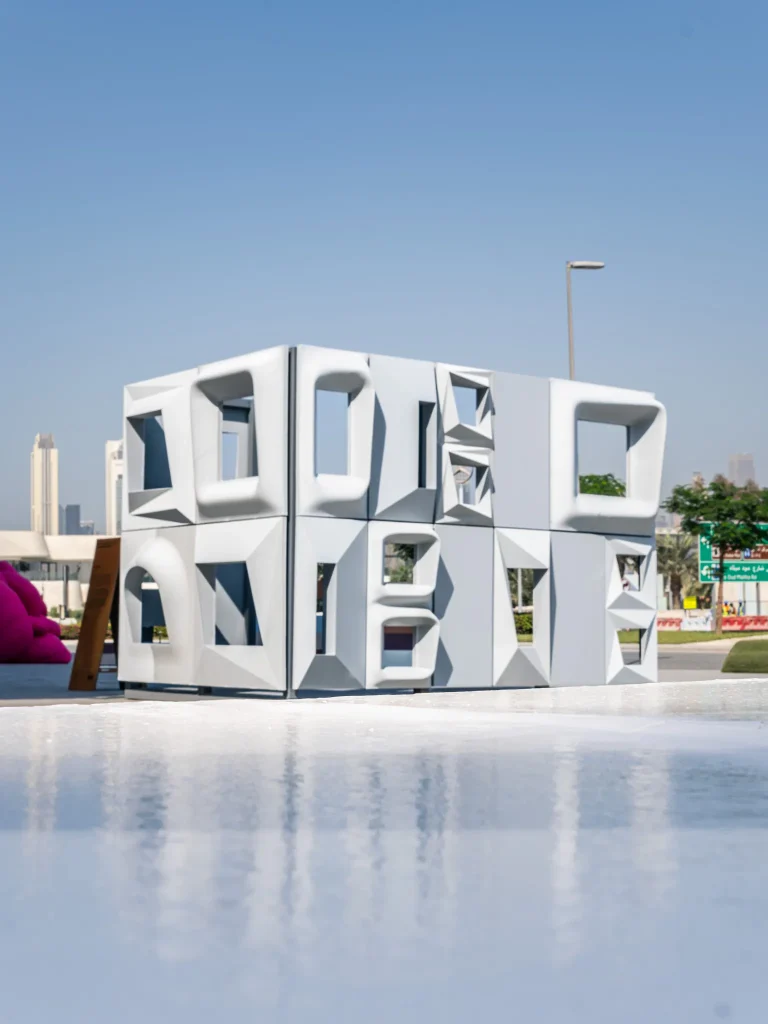
The installation is not intended as a pavilion or a finished building component. It is a display of the research ideas. A scaffold steel structure acts as an open exhibition frame, populated with selected panels adapted to the orientation of the site. The scaffold is deliberately raw and neutral. It recalls the temporary structures of construction sites and lets the panels, and the shadows they cast, take center stage. Placed outdoors under direct sun, the installation highlights the importance of shading in the Gulf climate and invites visitors to experience its effect first-hand.
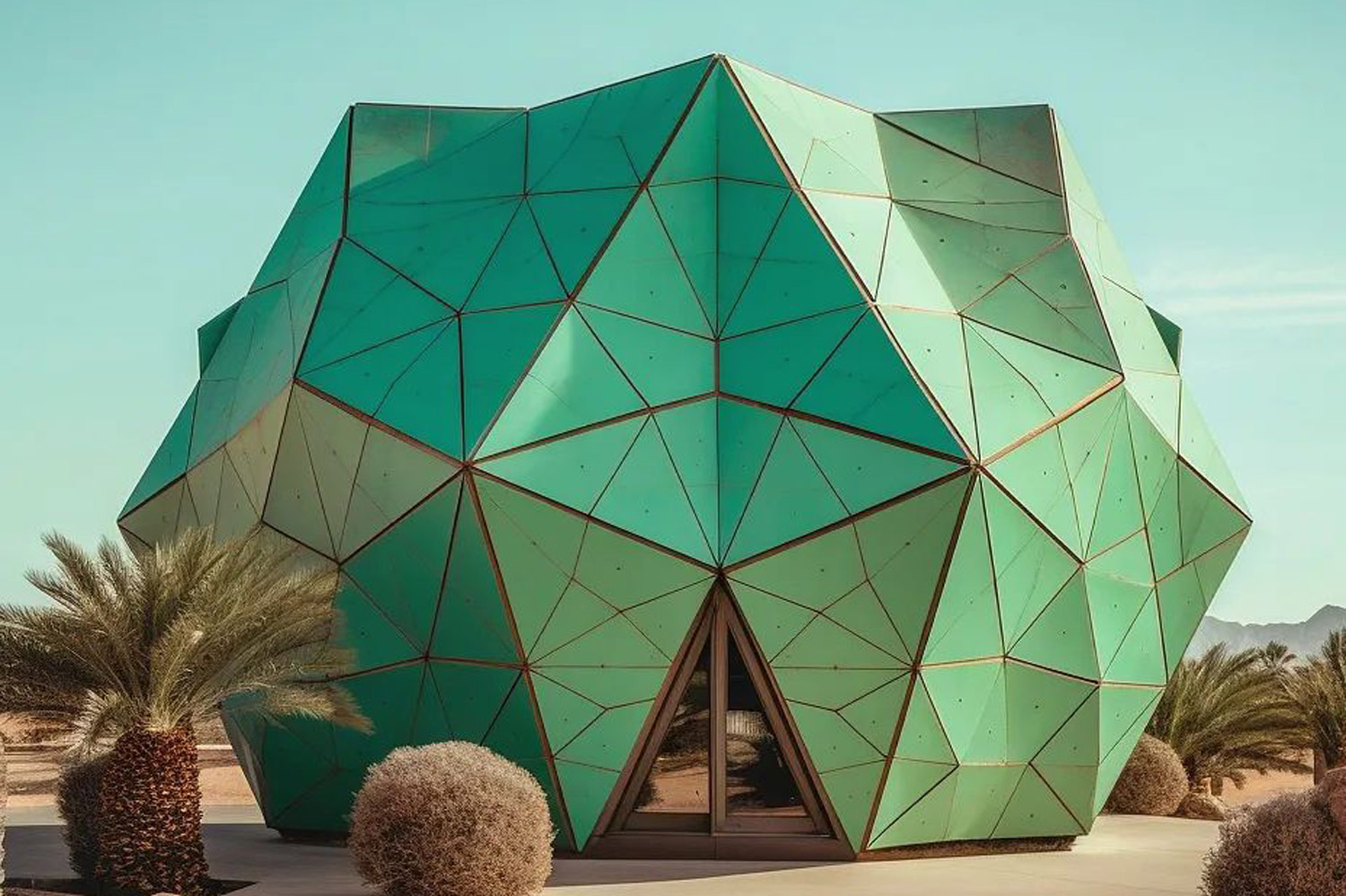
Two segments of the façade system are presented, replicated at approximately 1:2, 1:4, and 1:8 scale. Together they demonstrate how the form and arrangement of individual panels respond to solar exposure and generate shade. Two formal families anchor the set: soft, filleted frames with deep curved reveals that draw graded shadow into their openings, and sharp faceted pyramids that divide light into crisp planes of sun and shade.
Bringing Self-Shading Geometries to Life Through Robotic 3D Printing
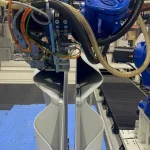
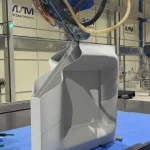
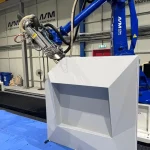
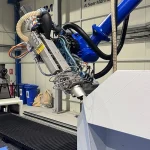
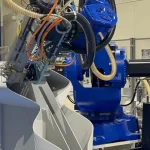
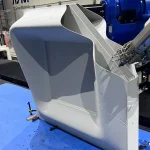
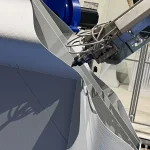
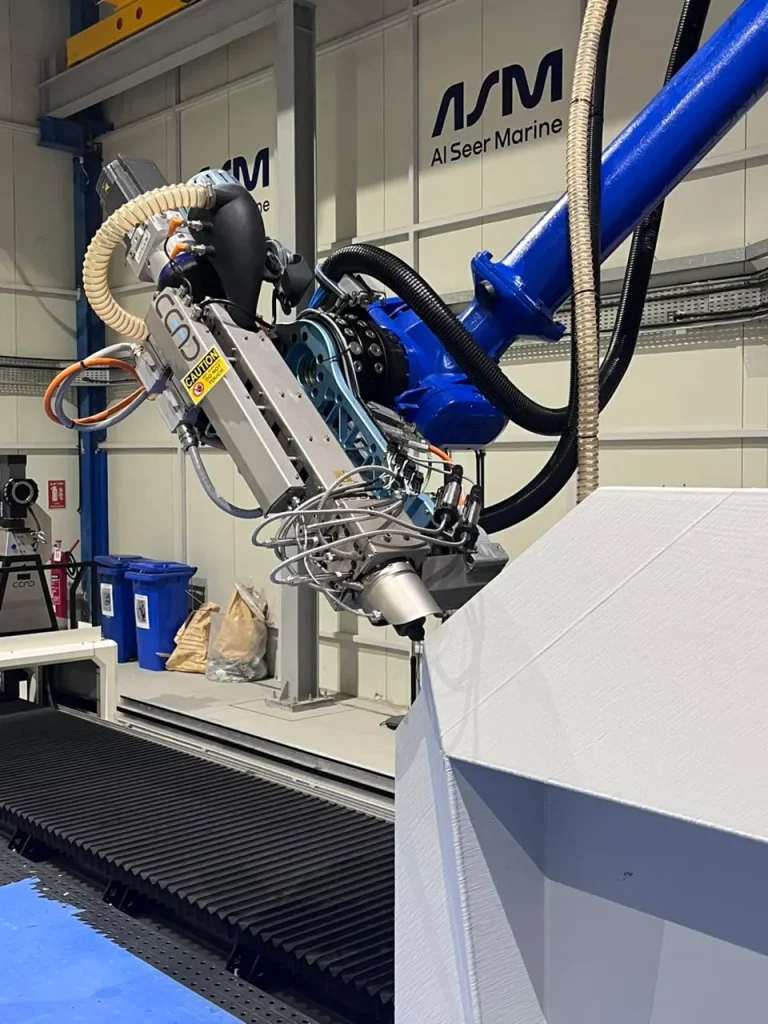
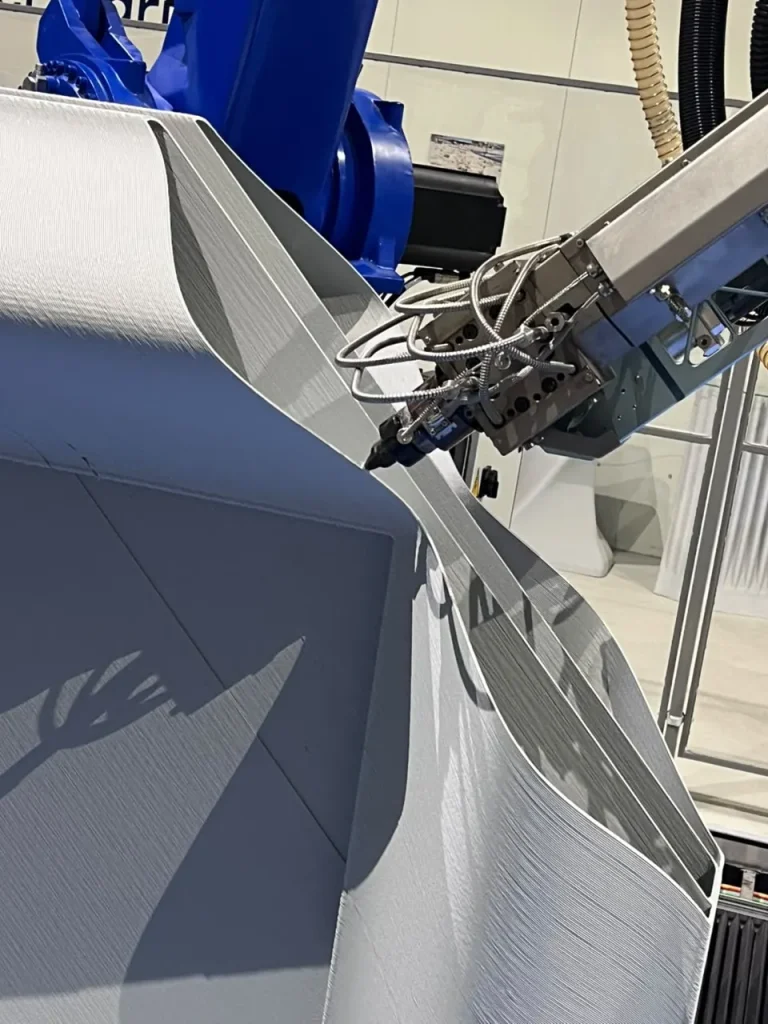
The panels were fabricated in collaboration with Al Seer Marine (ASM), whose large-scale additive manufacturing facility made the project possible. Printing was carried out on ASM’s MEGA II setup, a Comau robotic system with 6+1 axes and a build envelope of 40 m by 4 m by 3 m. The material is a recycled PETG reinforced with 30 percent glass fiber and compounded with UV stabilizers, chosen to extend the panels’ lifespan under the region’s intense sun and heat. The use of recycled feedstock also points to a more circular approach to temporary architecture. The layered texture of the printing process has been left exposed, so that every surface records how it was made.
A Changing Dialogue Between Geometry, Light, and Shadow
The installation responds to the sun throughout the day, and the shadow patterns on the panels shift continuously as the sun moves across the sky. In the early morning, low-angle light rakes across the frame and draws long, graded shadows into the reveals. As the sun climbs toward midday, the period of most intense radiation, the deeper geometries shade a larger part of their own surfaces and openings, demonstrating the self-shading principle exactly when it matters most. The site adds a further layer of meaning. Directly behind ShadeForm, a d3 building carries conventional applied shading fins over a glass curtain wall, so the two approaches can be read in a single view: shading added to architecture, and shading built into it.
Beyond the Installation: Towards Self-Shading Building Envelopes
The co.de lab is a research and teaching platform at Zayed University exploring digital fabrication, design pedagogy, prefabrication and robotic construction. ShadeForm was developed in collaboration with Hayder Albeer, Rowan Elselmy and Minatallah Abdulrhman, bringing academic research, design education and industrial fabrication together in a single public project.
Because the installation is a kit of parts mounted on a standard scaffold, it can be dismantled, reconfigured, and reoriented. This makes it a reusable testbed for further study of shading performance and surface temperature, and a step toward self-shading printed envelopes at building scale.
“In this climate, shading should not be an accessory added at the end of the design process,” says Dr. Basem Eid Mohamed. “ShadeForm tests what happens when the panel itself is shaped by the sun, and when digital fabrication allows that geometry to be produced directly.”
Collaborators
Hayder Al-Beer, Rowan Elselmy, Minatallah Abdulrhman
Robotic fabrication: Al Seer Marine ASM
Fabrication supervisor: Avin Quadros
Photography: Hans Pozon