




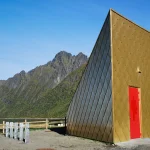
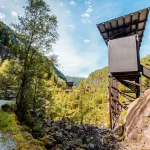
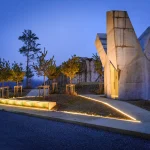
Donald Trump called Norway a “shithouse country” at a Michigan rally in late October 2026. Days later, Visit Norway answered with a list of some of the most carefully designed public toilets in the world. Located across Norway’s dramatic natural landscapes, these facilities demonstrate how even the most ordinary public infrastructure can become an architectural attraction through thoughtful design, material choices, and sensitivity to its surroundings.
At a campaign event in Port Huron, Michigan, Trump returned to a long-standing grievance: the Nobel Peace Prize, awarded by a committee based in Oslo. He told the crowd he did not want immigrants from Norway because he had not received the prize. Then he escalated. “Frankly, Norway sucks. Norway has become a shithouse country, actually.”
The phrasing was familiar. Trump had used similar language in the past about other nations. This time the target was a wealthy, high-trust Scandinavian country with one of the highest standards of living on the planet. The reaction inside Norway was a mixture of irritation and amusement. Visit Norway, the official tourism board, chose the second path.
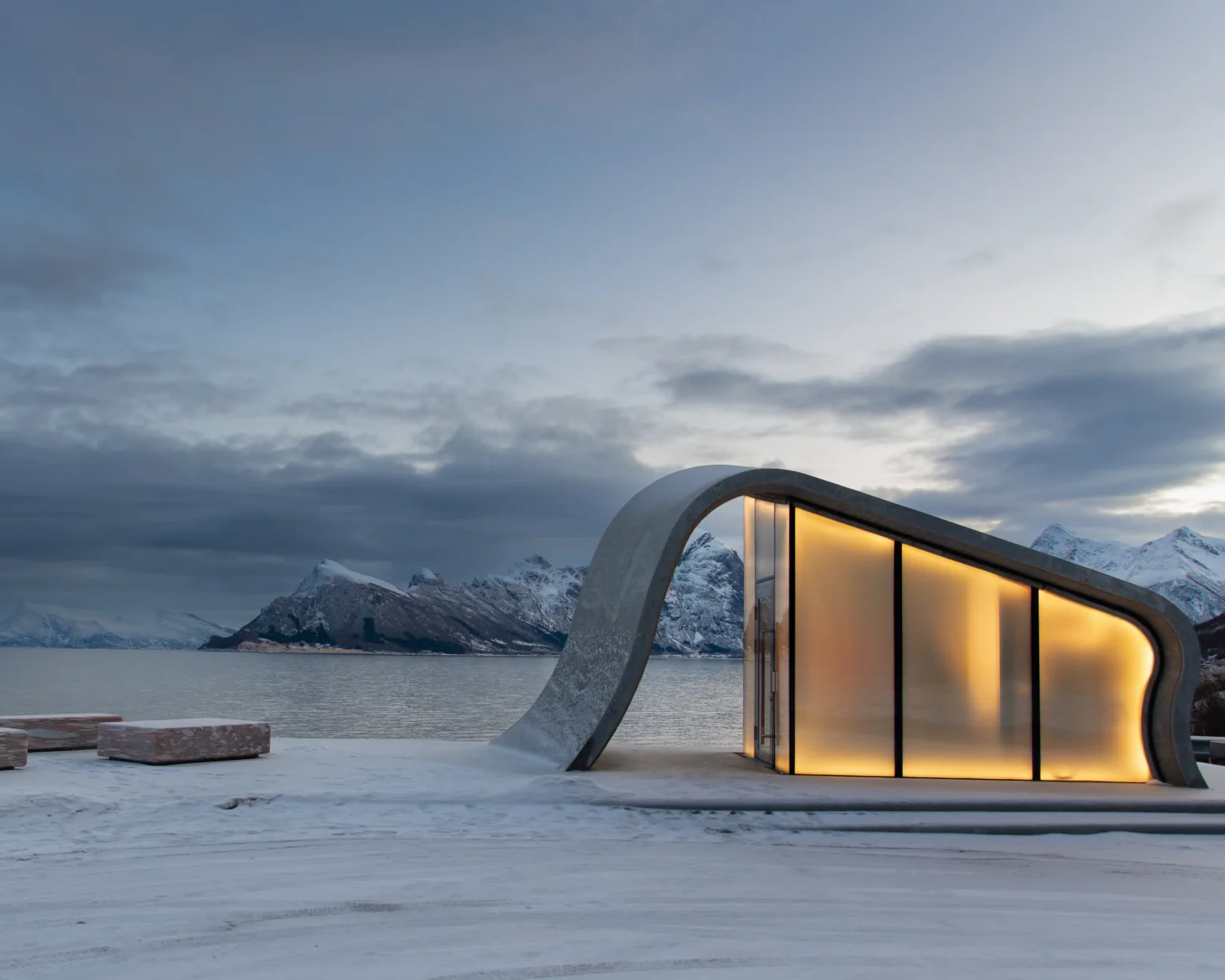
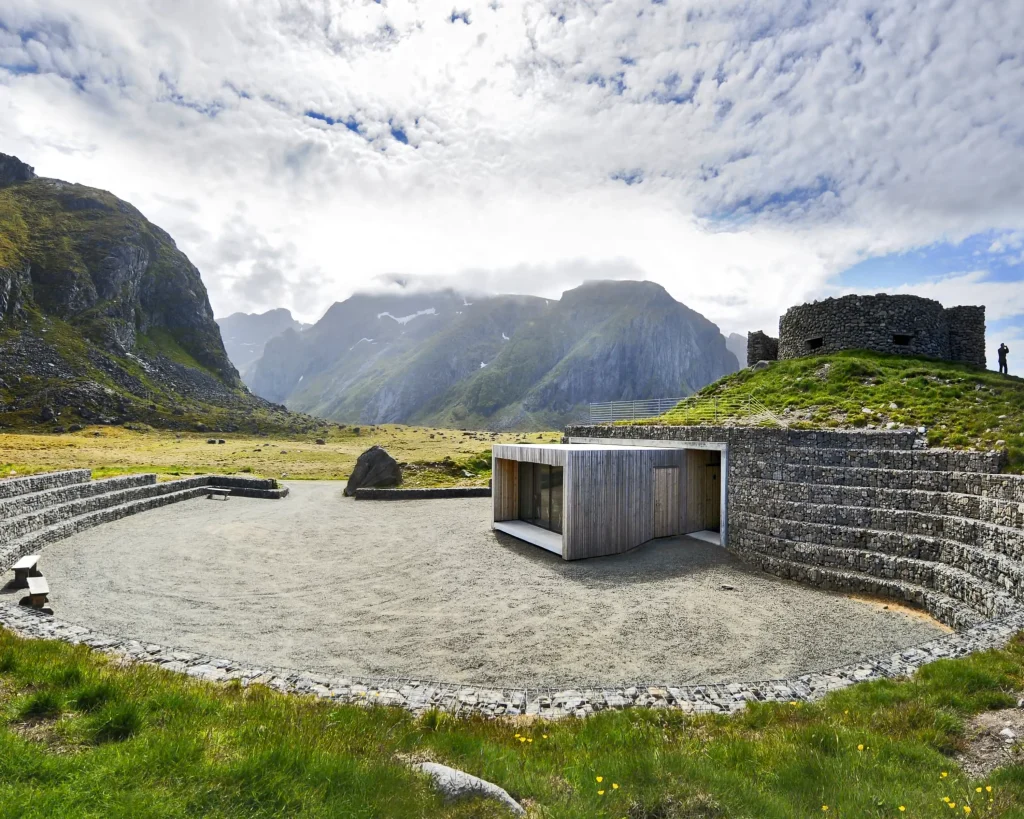
Within days, the agency published a feature titled “Are these the world’s best shit houses?” The accompanying text declared: “Norway makes shit houses great again.” The photographs showed not ordinary roadside facilities but a series of small, deliberate buildings set into some of the country’s most dramatic landscapes. The campaign was light in tone and precise in its aim. It took the insult at face value and answered with architecture.
Toilets as Architecture
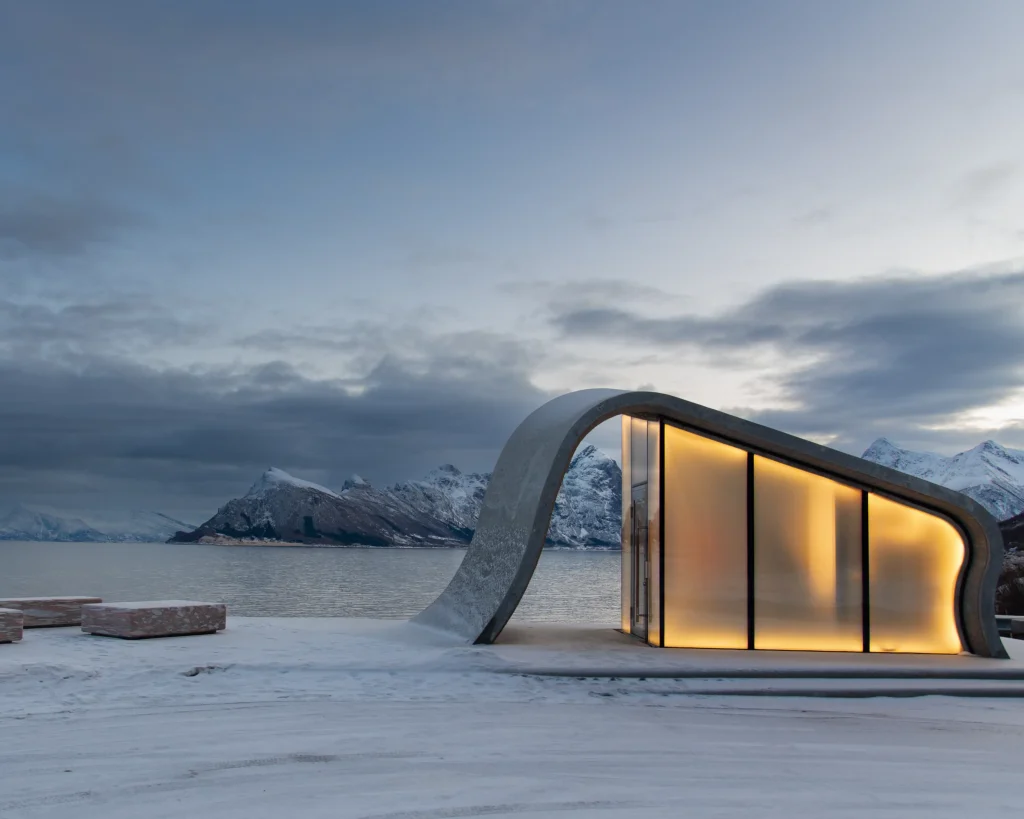
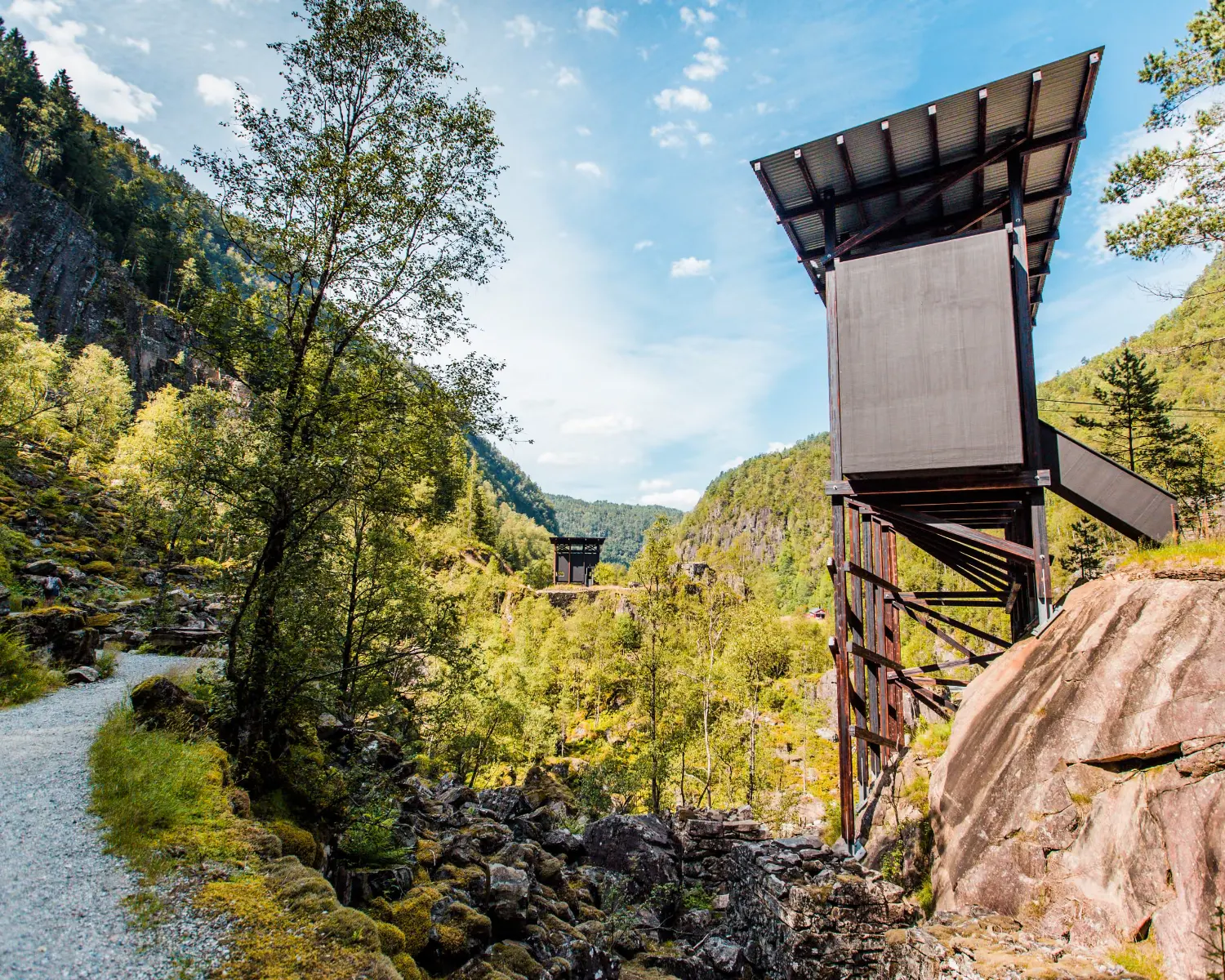
Norway has spent two decades treating public restrooms along its Scenic Routes as design projects rather than afterthoughts. The Norwegian Public Roads Administration commissions architects to create facilities that are functional, weather-resistant, and visually integrated with their settings. The results are often more interesting than many larger buildings.
One of the most photographed is the restroom at Ureddplassen on the Helgeland coast. Its curved concrete form and glowing glass panels sit against open water and distant mountains. At night, the structure becomes a soft lantern. Another, at Ostasteidn in Ryfylke, is designed so that moss will eventually cover the outer walls, allowing the building to recede into the landscape. The golden toilet on the island of Senja uses a metallic skin that catches the northern light and stands out against the fjord like a small, intentional object.
These are not luxury pavilions. They are public toilets. Yet they receive the same level of attention given to viewpoint platforms and roadside rest areas. Architects are asked to solve practical problems of durability, accessibility, and maintenance while also creating places that people might actually want to stop and look at. The result is a collection of small works that demonstrate how seriously Norway takes the idea of quality in everyday infrastructure.
Design That Invites Lingering
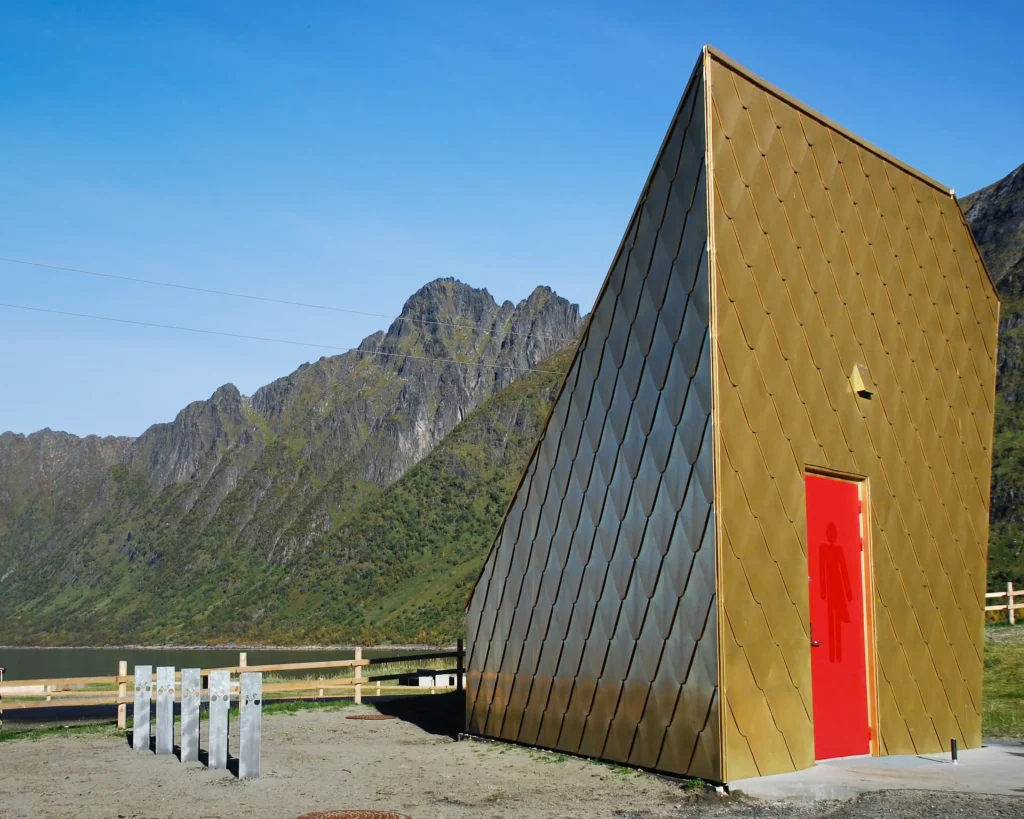
Visit Norway’s campaign makes a simple claim: these toilets are worth visiting even when you do not need to use them. That statement is only possible because the architecture supports it. Large windows frame views of fjords, mountains, or open sea. Materials are chosen to age well in harsh weather. Forms are often quiet enough to feel like part of the terrain rather than intrusions on it.
At Stegastein, high above the Aurlandsfjord, the restroom offers one of the most dramatic outlooks of any public facility in the country. Visitors regularly spend more time looking out the window than attending to the original purpose of the building. Similar logic appears at other sites. The architecture does not compete with the landscape. It frames it.
This approach reflects a broader Norwegian attitude toward public space. Infrastructure is not treated as pure utility. Roads, bridges, viewpoints and restrooms are all understood as opportunities to shape how people experience the land. The toilets are simply the most intimate version of that idea.
Humor as Soft Power
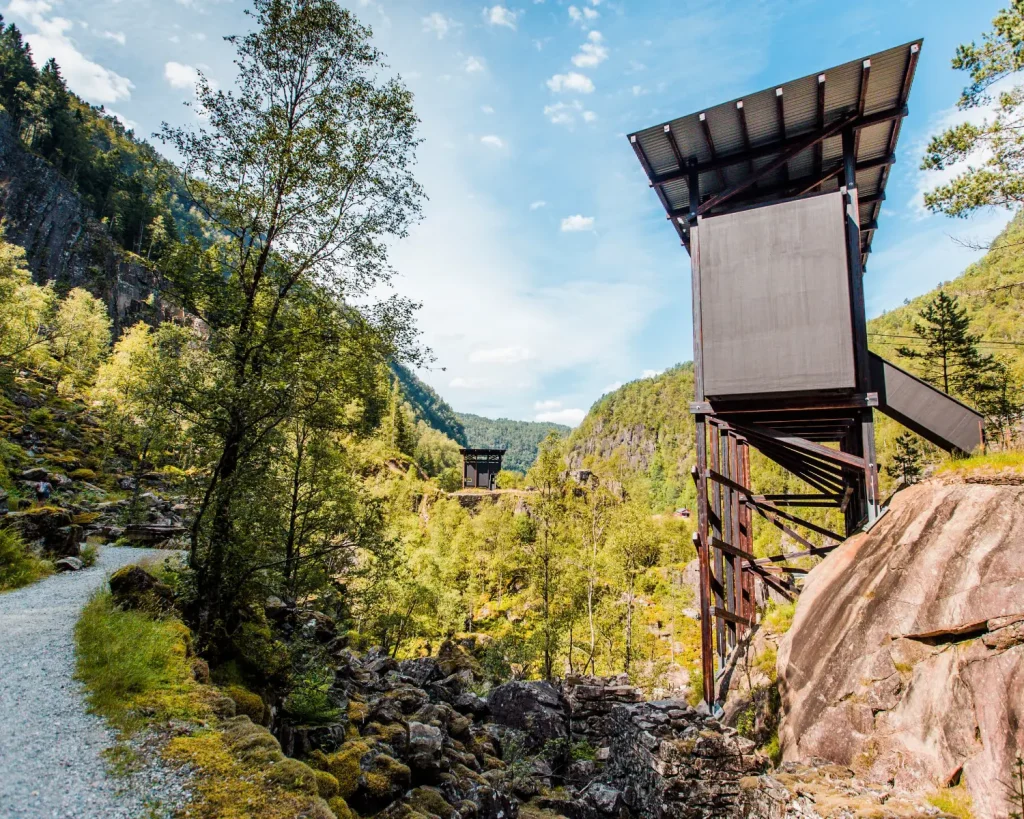
The campaign’s tone was deliberately playful. “Norway makes shit houses great again” is an obvious riff on a familiar political slogan, delivered without bitterness. Senior adviser Evgenia Egorova noted that sometimes a little humor and good architecture are enough. The response avoided diplomatic language and political rebuttal. It simply showed the work.
In doing so, Visit Norway turned a crude remark into free international publicity for one of the country’s quieter design achievements. Photographs of the toilets circulated widely. People who had never heard of the Norwegian Scenic Routes suddenly saw images of concrete curves, glass walls and moss-covered surfaces set against northern light. The insult became a distribution channel.
There is a larger point here about how design can function as soft power. A country that invests in the quality of its smallest public buildings projects a certain confidence. It suggests that care is applied even where most nations settle for the minimum. When that care is then used to answer an insult, the architecture itself becomes the argument.
More Than a One-Off Joke
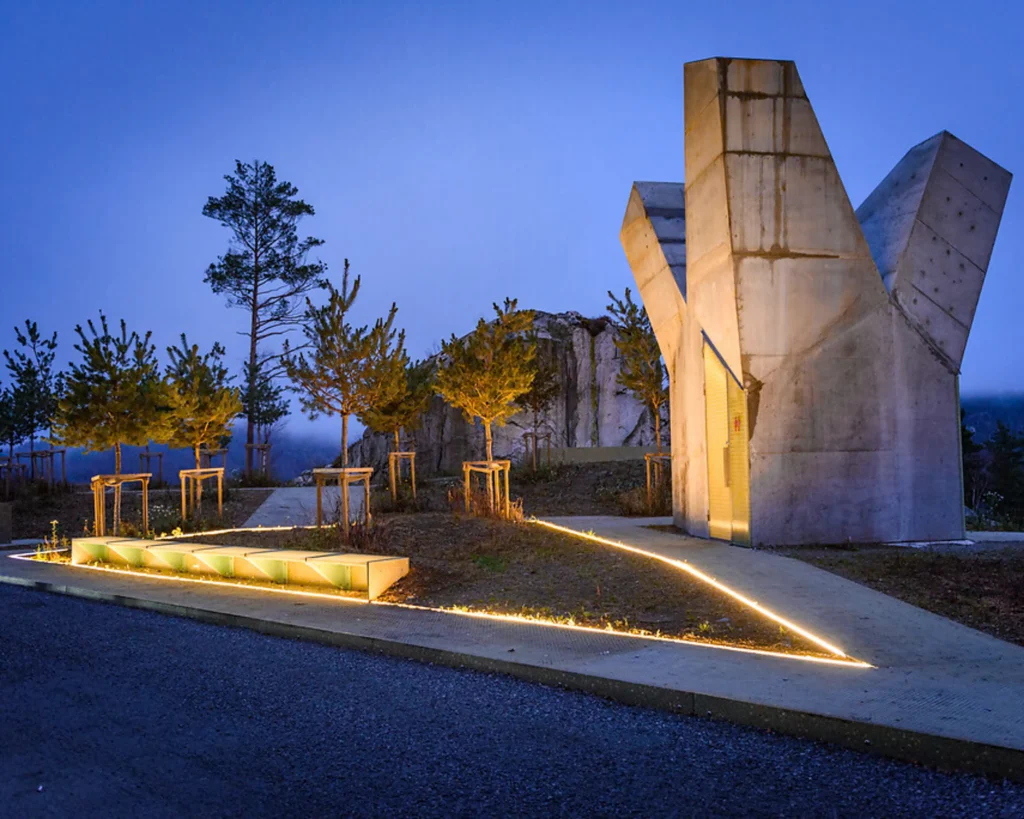
The toilets were not invented for the campaign. Many of them have existed for years, and some have already received international recognition. Design publications have previously listed Norwegian Scenic Route restrooms among the best public toilets in the world. The Trump episode simply gave Visit Norway a reason to gather them under one pointed headline.
The episode also highlights a difference in attitude toward public infrastructure. In many places, roadside facilities are designed to be cheap, easy to clean, and quickly forgotten. In Norway, they are treated as part of a continuous landscape experience. That decision has produced a body of small buildings that are now, somewhat unexpectedly, part of a global news story.
Whether the campaign changes anyone’s mind about larger political questions is beside the point. What it does demonstrate is the quiet effectiveness of treating ordinary needs with architectural seriousness. A toilet that frames a fjord is still a toilet. It is also evidence that someone cared enough to make the ordinary worth noticing.
In the end, Visit Norway’s reply was simple. If someone calls your country a shithouse, show them the actual houses. And make sure they are beautiful.