



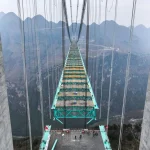
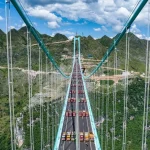
China is preparing to reveal yet another engineering accomplishment, the Huajiang Grand Canyon Bridge in Guizhou Province, which is set to officially open to traffic by the end of this month.
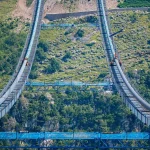
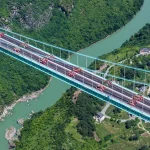
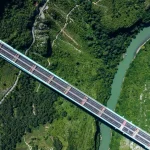
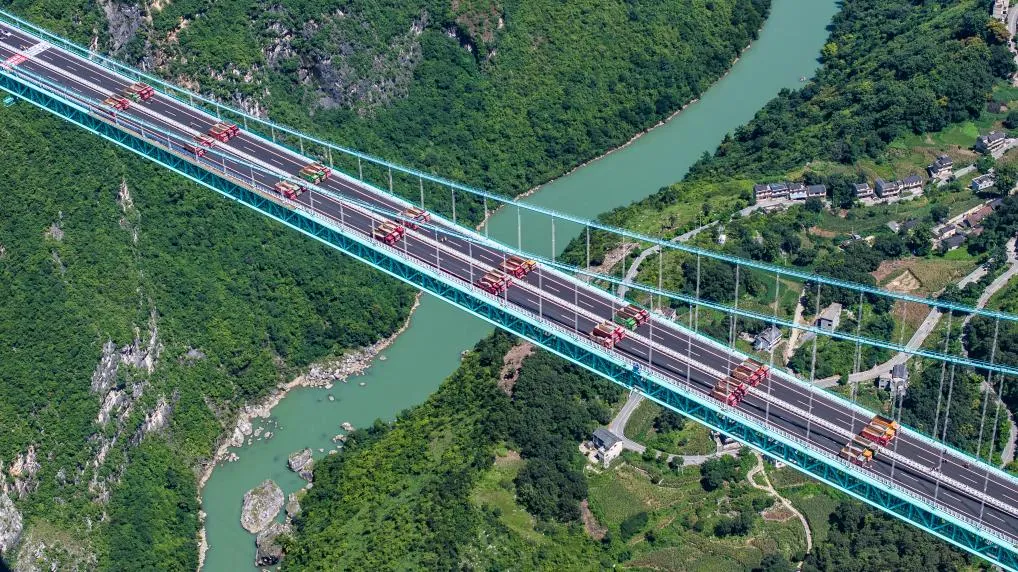
The Huajiang Grand Canyon Bridge, set to open in Guizhou, China, is a record-shattering engineering marvel that pushes the boundaries of modern bridge design. Rising 625 meters (about 2,051 feet) above the canyon floor, the deck of this suspension bridge makes it the highest in the world, twice the height of the Eiffel Tower and six times taller than the Statue of Liberty.
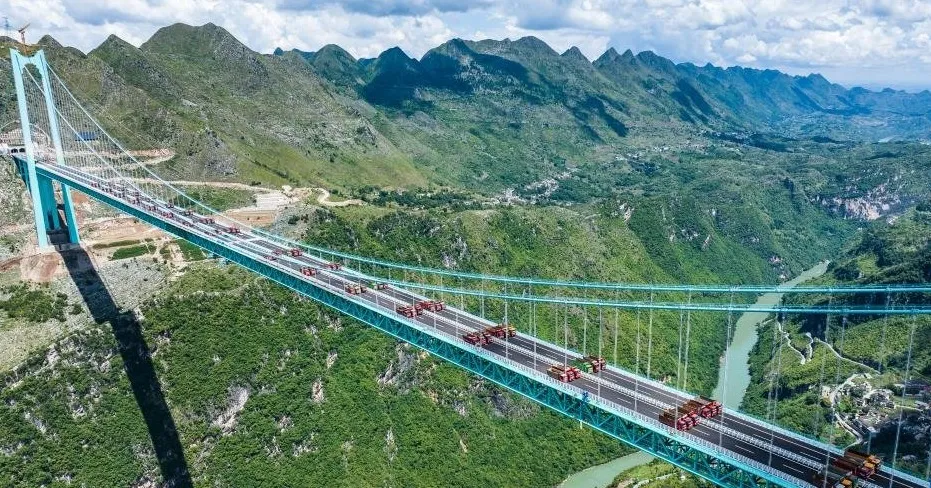
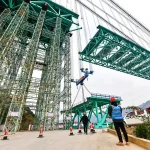
The structure extends a total of 2,890 meters (2.89 kilometers) in length, including its approaches, with a main suspended span of 1,420 meters. Supporting this immense distance are two soaring pylons, one reaching approximately 262 meters and the other about 205 meters, anchored firmly into the rugged canyon walls. Built with a steel truss-suspension system weighing nearly 22,000 metric tons, the bridge accommodates four lanes of highway traffic and also incorporates pedestrian walkways and tourist features such as viewing platforms and glass-bottom paths.
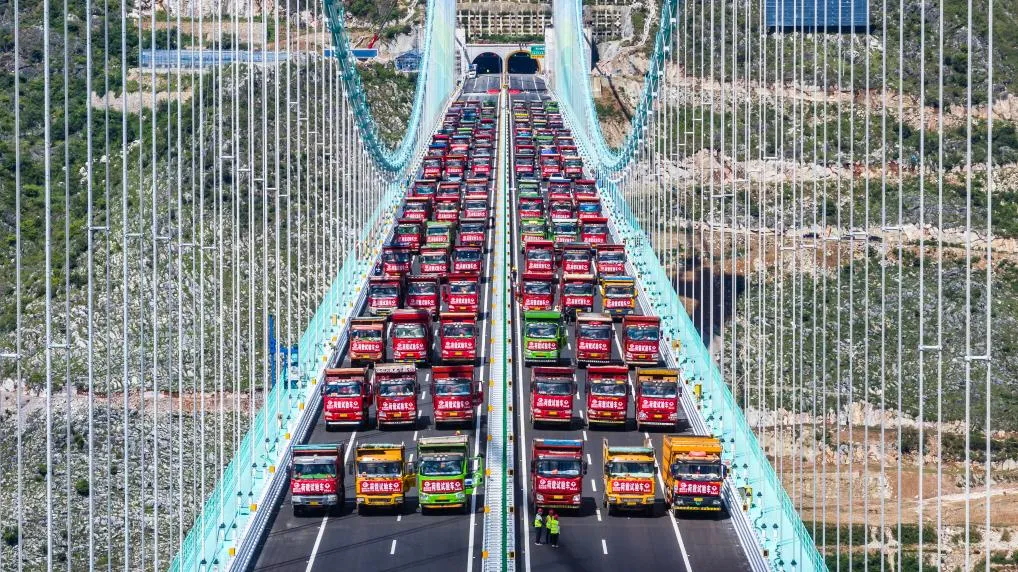
Construction began on January 18, 2022, requiring three and a half years of intensive work in one of China’s most challenging geographies. With a total cost of around USD 280 million (2.1 billion RMB), the project recently passed a rigorous five-day load test in August 2025, confirming its readiness for public use.
Design and Engineering Features of the Huajiang Grand Canyon Bridge
- Suspension + Steel Truss Hybrid: The bridge uses a suspension design with steel truss components. The trusses (≈ 22,000 tonnes) form the load-bearing pathway across the main span.
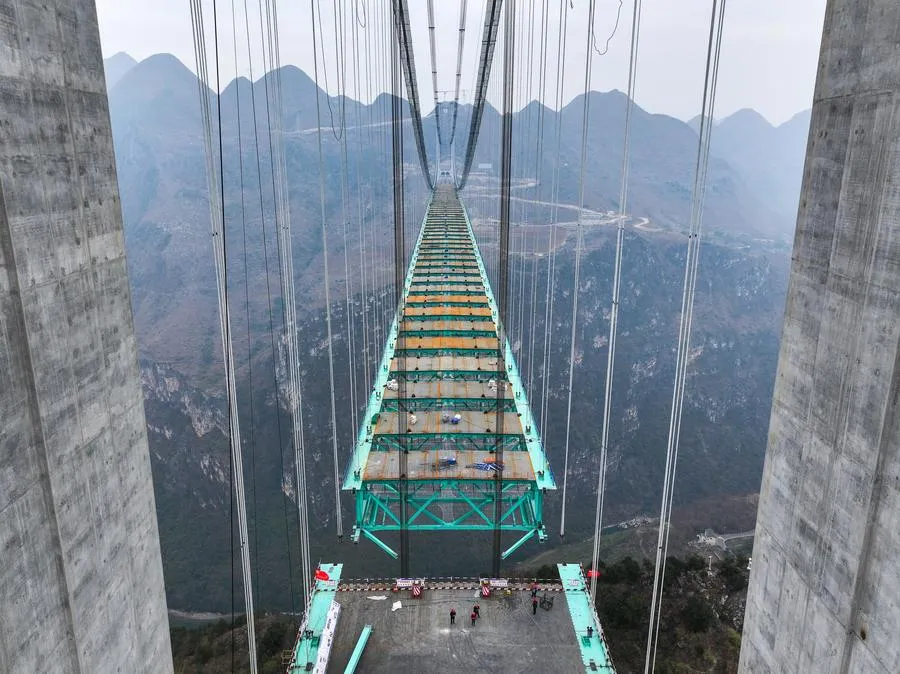
- Tower (Pylon) Structure: Two major pylons support the suspension, one ~262 m and another ~205 m. These towers are anchored into the canyon walls and terrain, designed for stability in high wind and geological constraints.
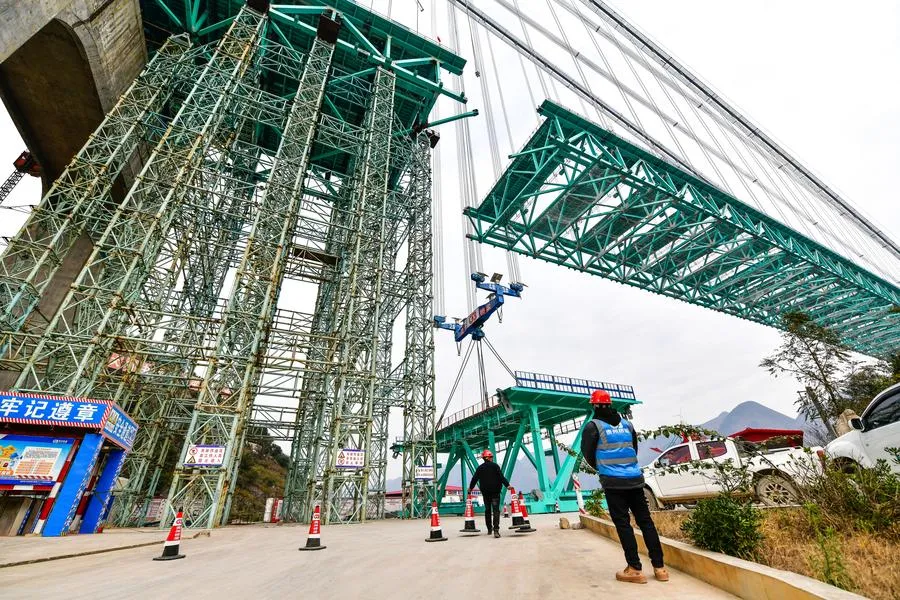
- Wind, Temperature, Geology Challenges: The location, on the edge of the Yunnan Plateau and the Lower Yangtze Valley Plain, leads to large temperature swings day/night, strong valley winds, convective weather, and steep terrain. These factors required careful design for wind resistance, vibration control, and materials that can tolerate thermal stress.
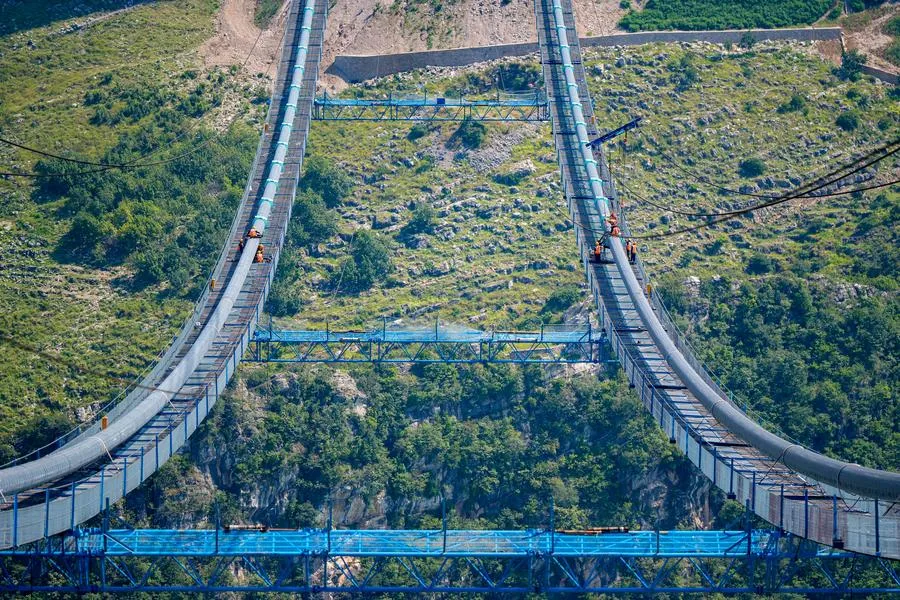
- Vertical Access & Construction Hoists: For construction, vertical hoists (Alimak SC 65/32) were used. These hoists are rack & pinion-powered and used to move workers and materials to the deck during the build. Special adjustments were made, like longer mast ties, solar-powered anemometers for monitoring wind, etc.
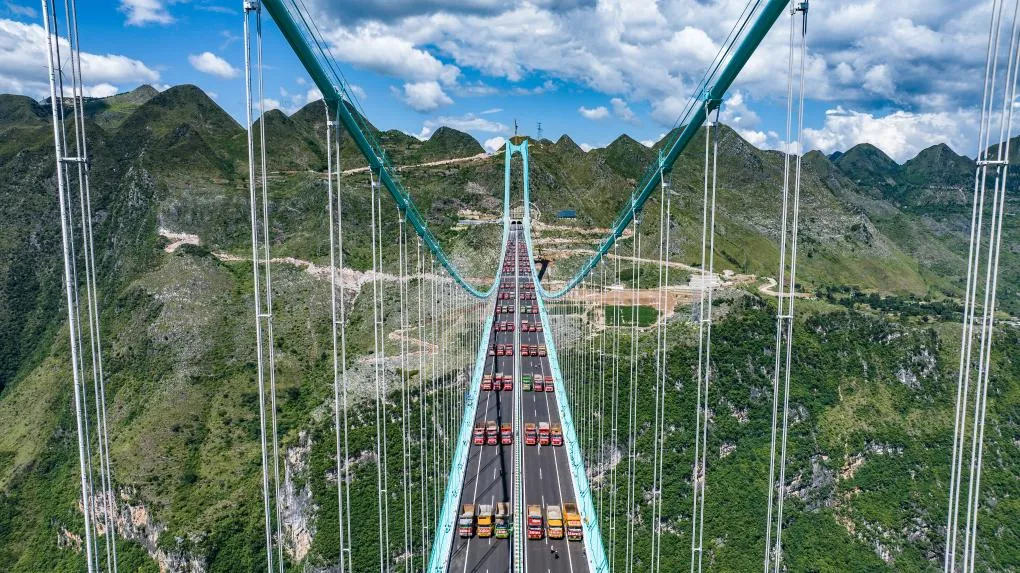
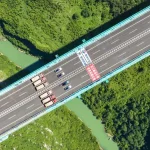
- Load/Stress Testing: A five-day load test was done in August 2025, including heavy trucks, to simulate stresses. The jacketing and support systems were proven safe.
The Huajiang Grand Canyon Bridge is expected to have a profound impact on transportation and daily life in Guizhou Province. By connecting sections of the Guizhou S57 Liuzhi–Anlong Expressway, the bridge will reduce travel times across the canyon. Previously, journeys between the two sides could take up to 70 minutes, and in some county routes, even two hours by car. With the bridge in place, that same trip will be cut to just over one minute to two minutes, depending on the route, a transformation that underscores the project’s role as a regional transportation lifeline.
The bridge also serves a population base of several hundred thousand people, providing remote communities with a new level of accessibility. This improved connectivity is expected to ease isolation, strengthen local economies, and offer residents better access to jobs, healthcare, and education.
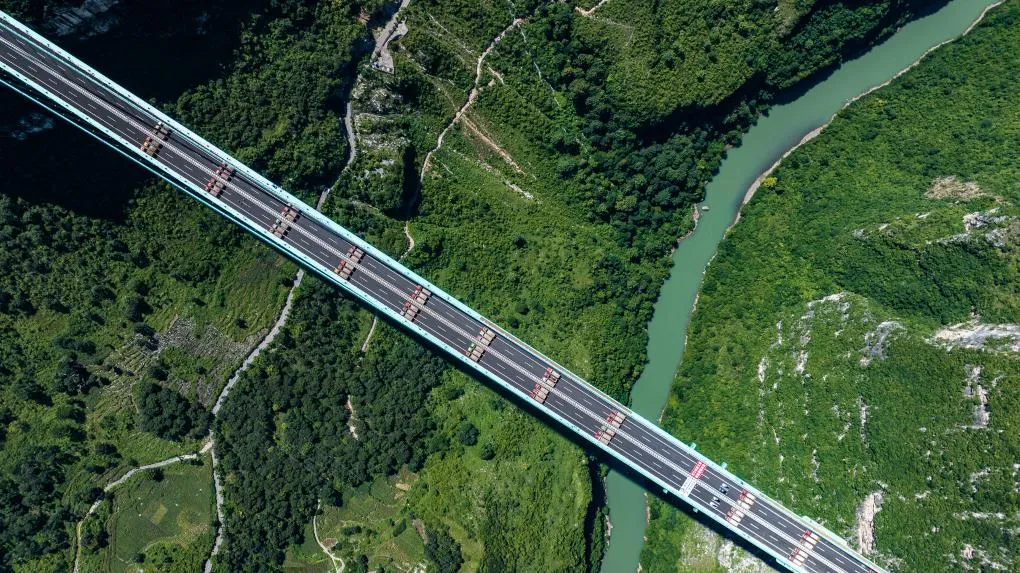
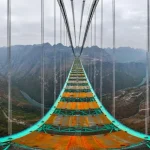
Beyond its functional value, the bridge has been designed as a tourism destination in its own right. Its features include glass-bottom pedestrian paths, viewing towers, and observation platforms, while one of the pylons may even house an elevator for visitors to experience breathtaking vertical views of the canyon. Plans for rest areas, cafés, and even a “Stargazing Bar & Café” around one of the towers point to the project’s dual purpose as both an infrastructure marvel and a cultural attraction.
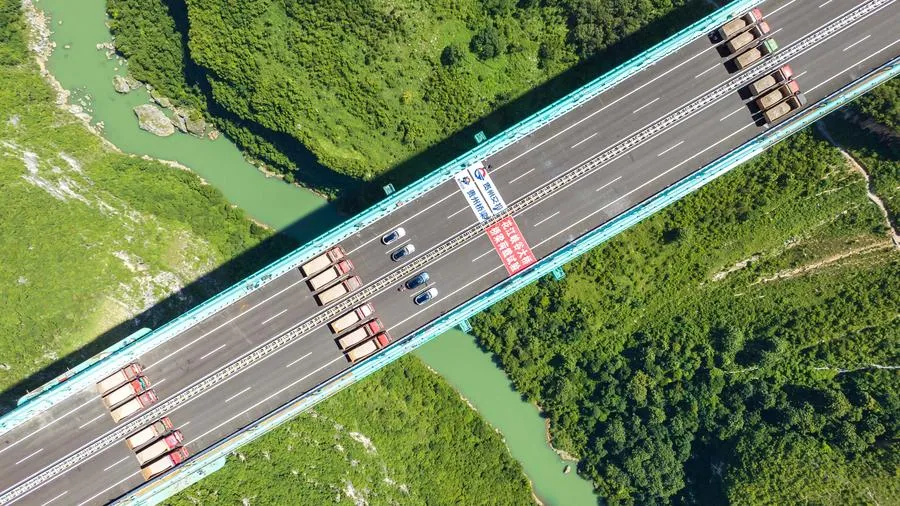
Engineering Challenges and Safety Tests of the Bridge
Building the Huajiang Grand Canyon Bridge came with immense challenges that tested the limits of modern engineering. The project site is defined by rugged karst topography, steep canyon walls, and vertical drops, all of which made construction access and logistics exceptionally difficult.
Engineers also had to contend with powerful valley winds and frequent temperature fluctuations in the region. To ensure stability, the design incorporated advanced monitoring systems such as anemometers and precise wind-resistance calculations, safeguarding both vertical access equipment during construction and the long-term performance of the bridge itself.
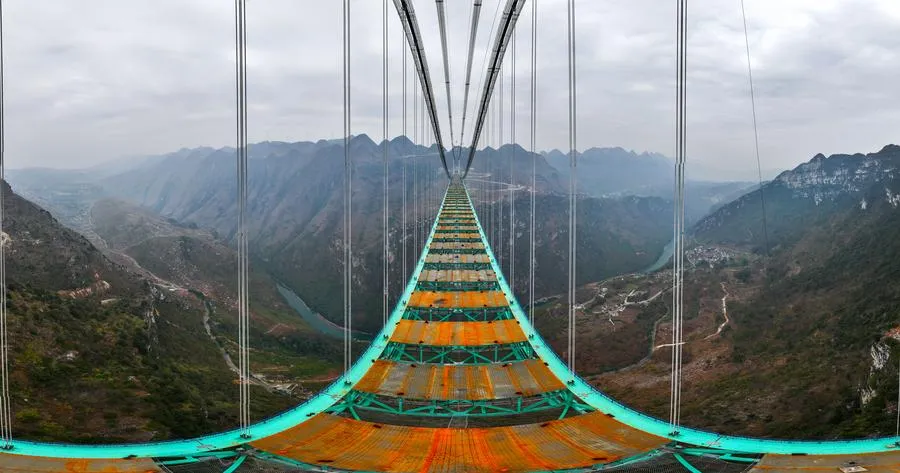
Material durability and structural safety were equally critical. With the bridge’s steel trusses weighing nearly 22,000 tons and bearing heavy loads across its vast span, issues like thermal expansion, fatigue resistance, and long-term stability demanded innovative solutions. A rigorous five-day load test conducted in August 2025 confirmed that the structure could safely withstand real-world stresses, paving the way for its public debut.
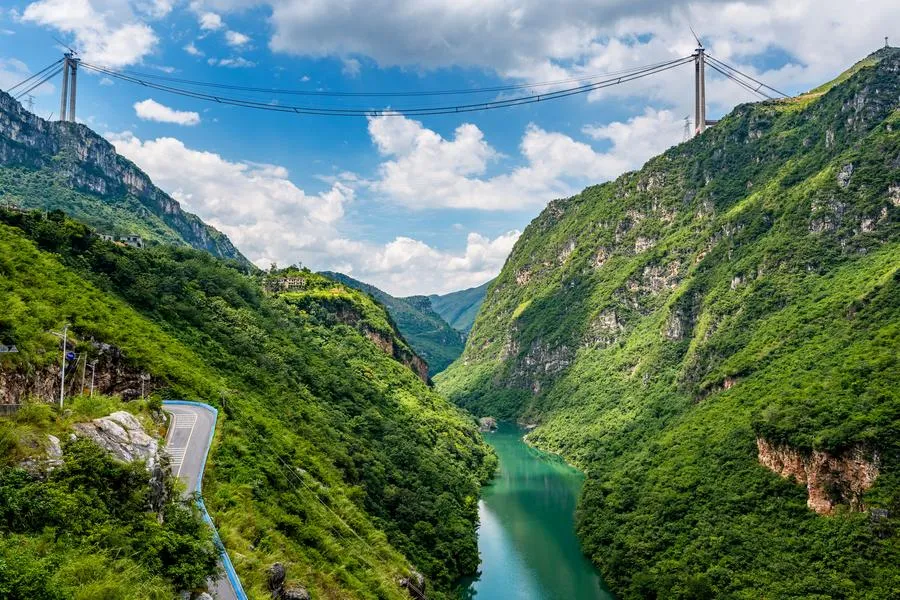
Construction of the Huajiang Grand Canyon Bridge began in January 2022, progressing steadily over three and a half years. By late August 2025, the major works were completed, and safety testing had been finalized. The bridge is now scheduled to open at the end of September 2025 officially.
Once the bridge opens, it will surpass previous record holders in deck height and stand as an example of the kind of infrastructure that provincial planners expect to use to reduce rural isolation and encourage tourism.
Image credit: Xinhua/Tao Liang