

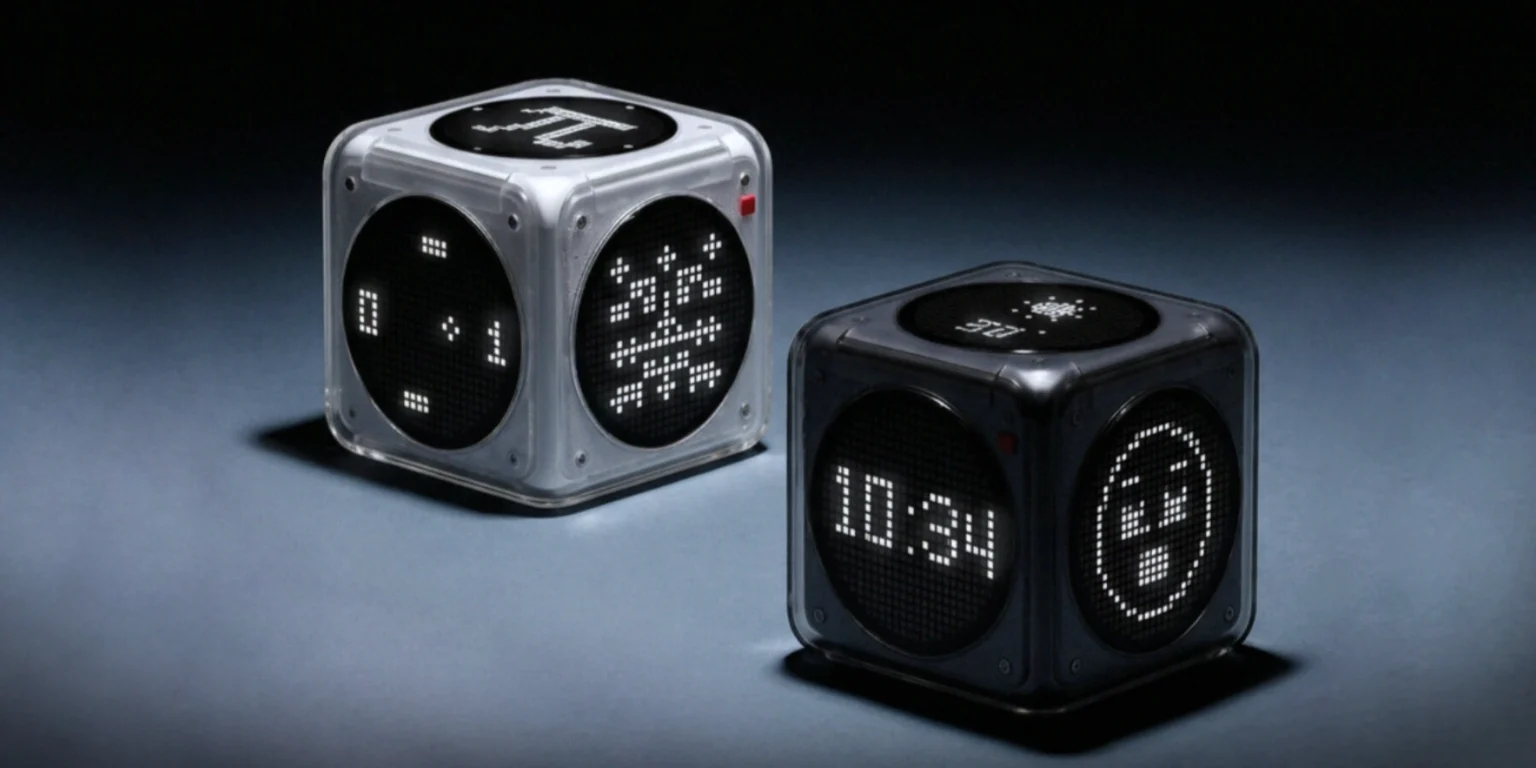
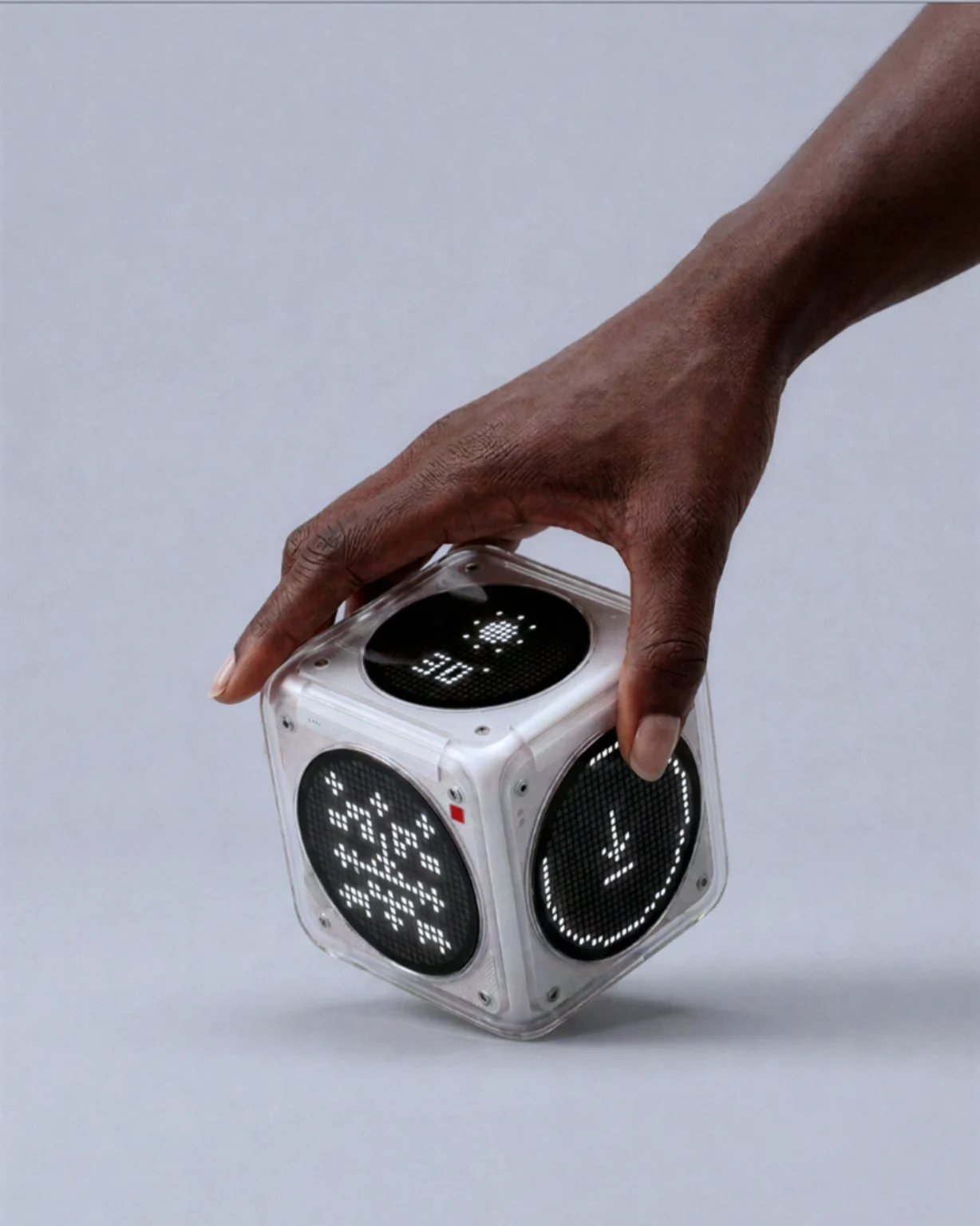


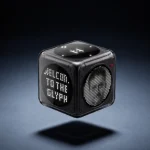

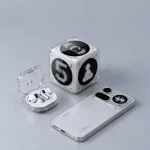
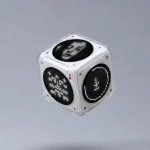

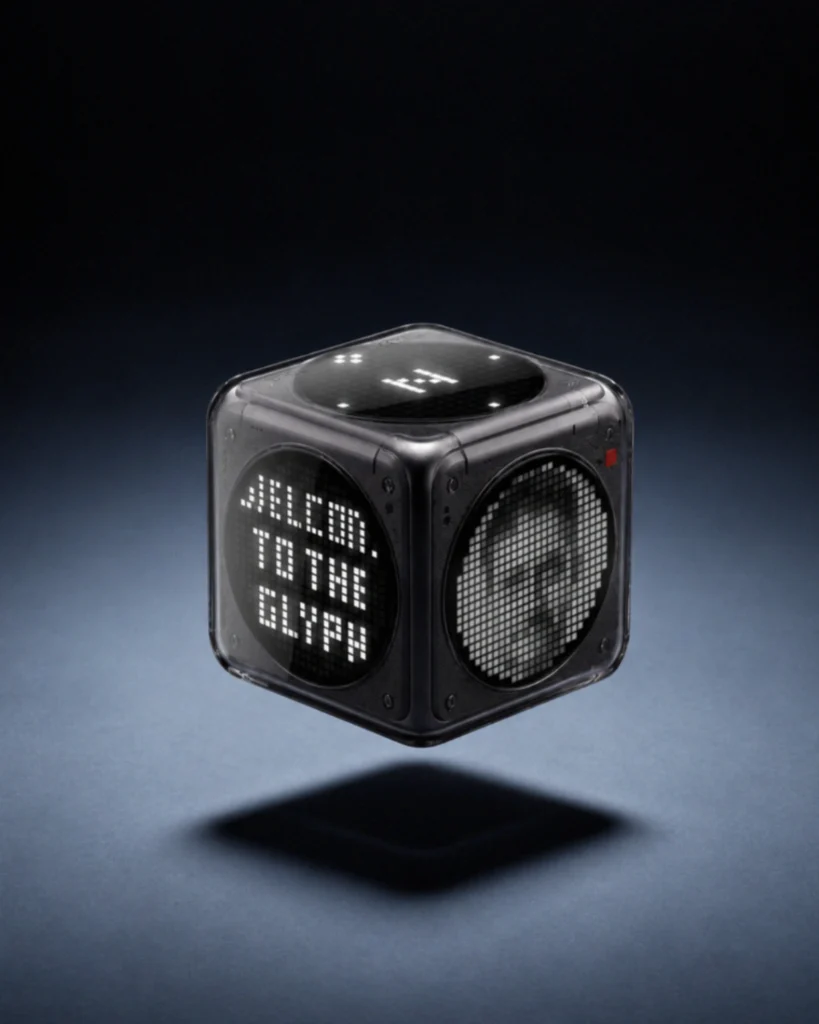
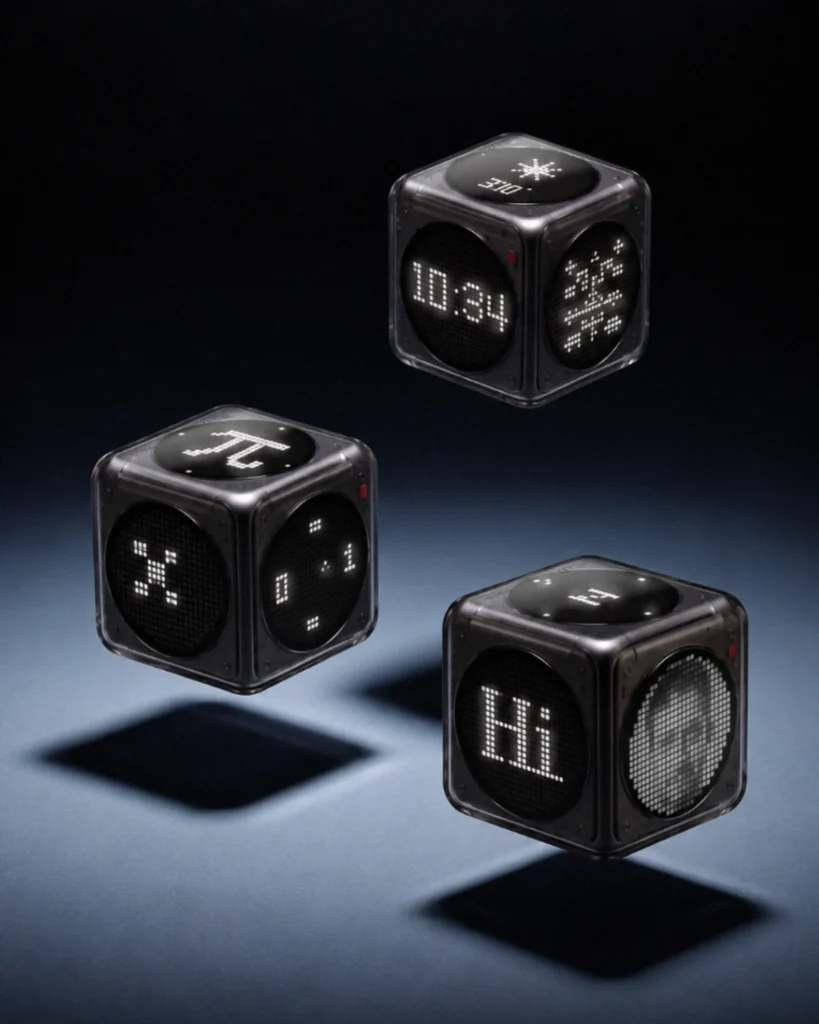
Industrial designer Adam Miklosi has released Glyph (1), a speculative six-sided transparent cube that replaces screens with orientation-based interaction. Each face carries a programmable LED matrix, so rotating the device activates a different AI or digital function without menus or displays.
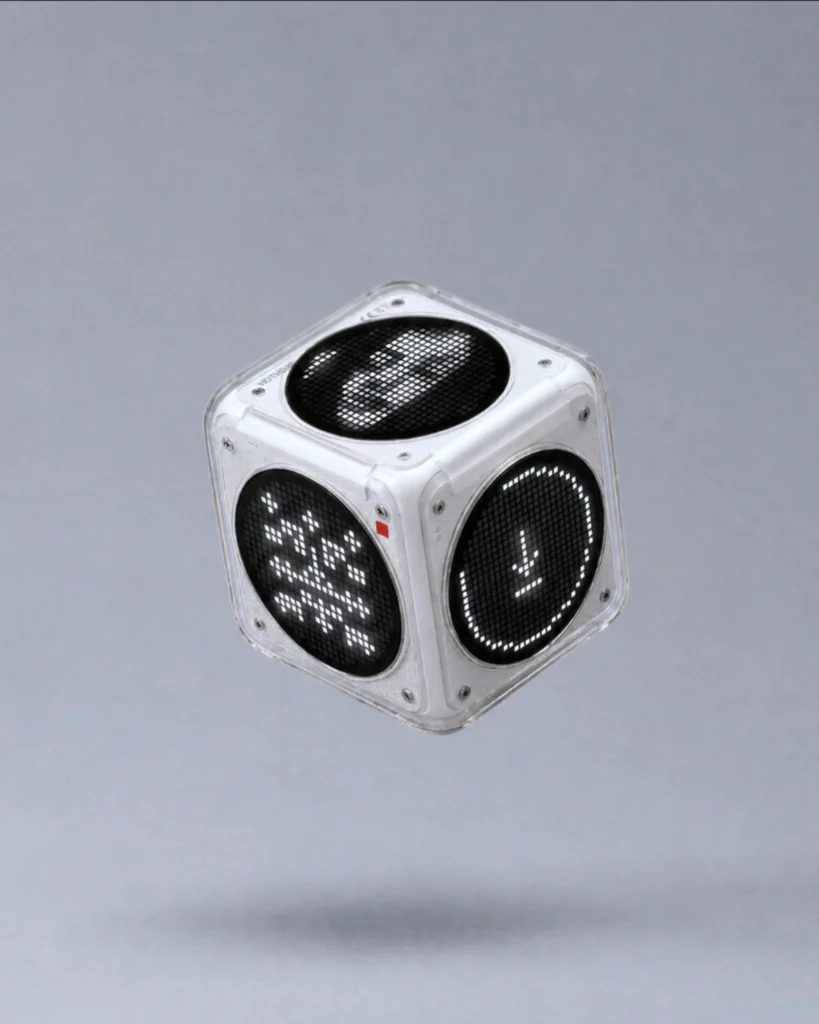
A die sits on a table. Its value is not hidden inside software or behind glass. It is declared by which face points upward. That elementary physical logic sits at the center of Glyph (1), the conceptual AI companion designed by Adam Miklosi. Instead of asking users to unlock a phone, navigate menus or speak layered commands, the device treats orientation itself as the interface. Turn one face up, and it becomes a timer. Turn another, and it becomes a music controller or an ambient AI assistant. The cube does not merely contain technology. It makes the choice of technology legible through the act of turning it in the hand.
Miklosi developed the concept as an independent exploration of Nothing’s visual language. The British brand has built its identity around transparent materials, visible components and the Glyph LED systems that appear on its phones. Glyph (1) takes those elements and builds a standalone object around them. The result is a compact cube with soft radiused edges, moulded from clear polycarbonate so that the textured inner chassis remains visible. Each of the six faces carries its own independent LED matrix capable of displaying simple icons, status graphics, notifications or telemetry in the familiar dotted Glyph style.
Orientation as Interface
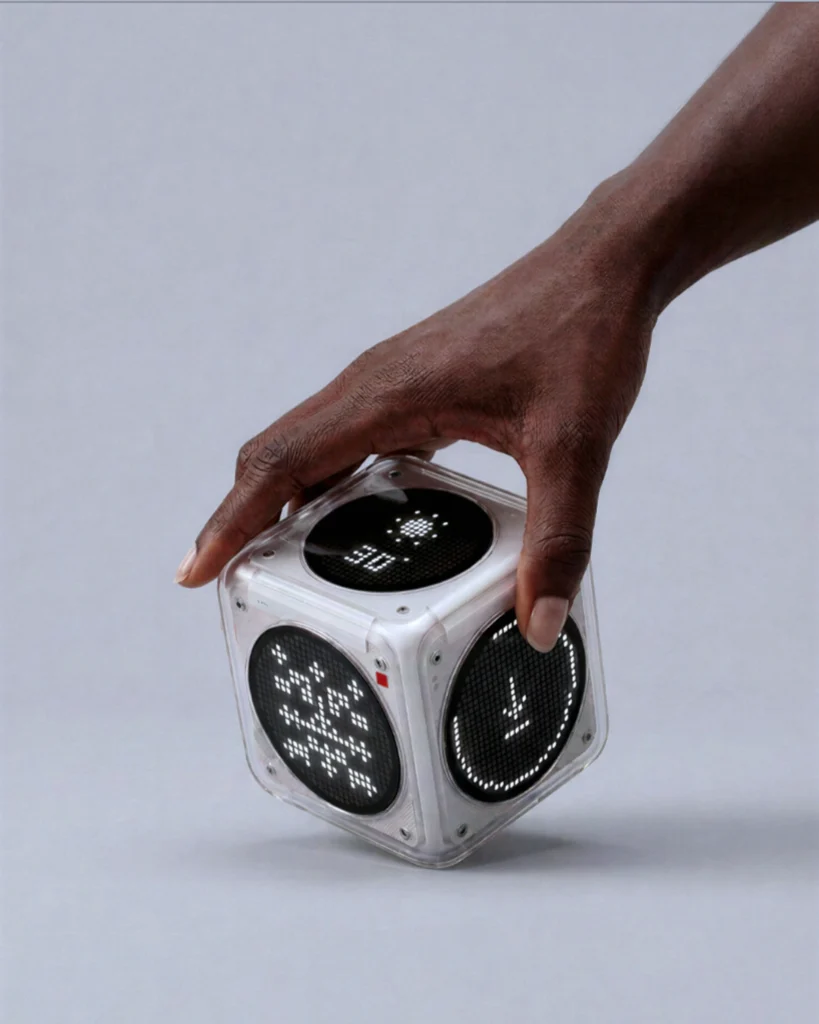
The core interaction is deliberately analog. Internal sensors detect which face is oriented upward. That detection triggers the function the user has previously assigned to that face. Possible mappings include smart-home controls, audio playback, focus timers, weather indicators, message alerts or a voice-based AI assistant. Because the change of mode requires a physical rotation, the device resists the endless scrolling and notification loops that characterize screen-based interaction. There are no sub-menus to lose oneself in. There is only the cube and the decision of which side faces the ceiling.
This approach places Glyph (1) within a broader conversation about screenless computing. As AI systems grow more capable, designers and companies are questioning whether every intelligent device needs a high-resolution display. Voice interfaces, ambient indicators and physical controls offer alternative paths that can feel less extractive of attention. Miklosi’s cube proposes one concrete form for that idea: a small, graspable object whose primary input is gravity and whose primary output is light.
Material Clarity and Tactile Presence
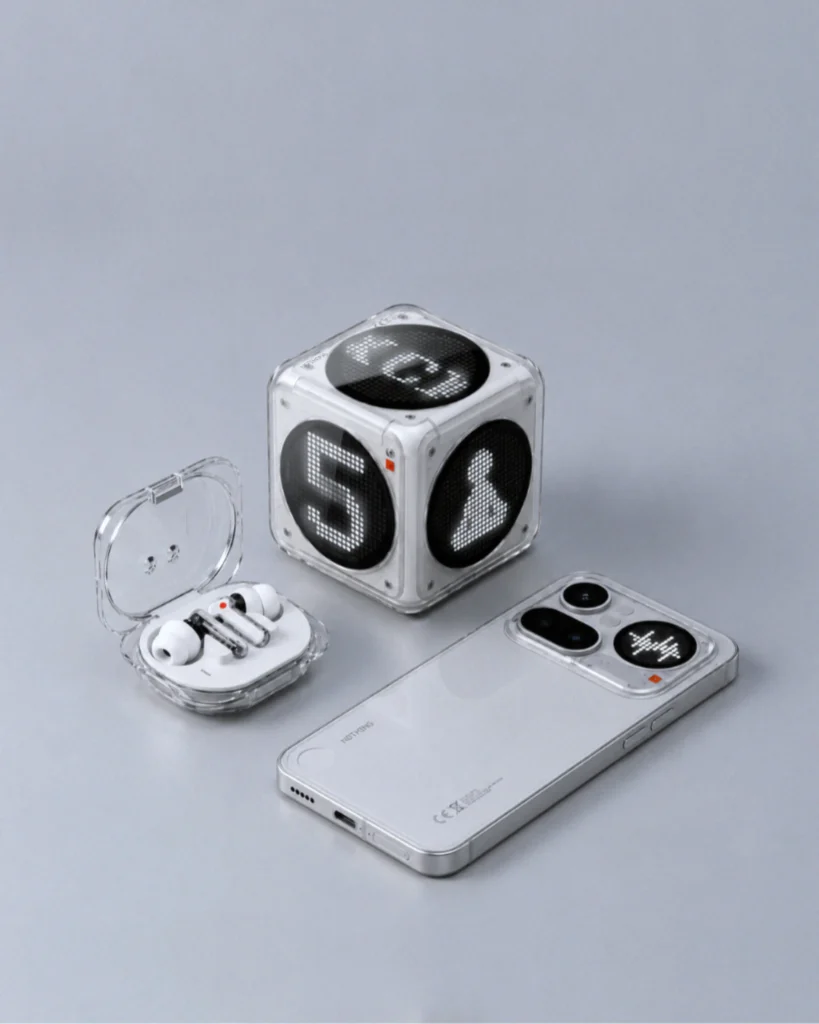
The transparent polycarbonate shell is more than an aesthetic choice. It continues Nothing’s tradition of revealing the internal architecture of devices rather than hiding it behind opaque skins. The rounded edges invite handling. The visible chassis and discrete mechanical details give the object a sense of honesty. In monochrome black or white editions, the LED matrices become the sole source of color and information, reinforcing the reduction of visual noise.
Because each matrix is independently programmable, the device can develop a personal visual language. A user might assign a particular icon set or animation style to the AI assistant face and a different graphic language to the music or timer faces. Over time the cube becomes a custom instrument rather than a generic appliance. The absence of a conventional screen also means the object can sit on a desk or shelf as a quiet presence rather than a glowing rectangle competing for attention.
Parametric Thinking in Physical Interaction Design
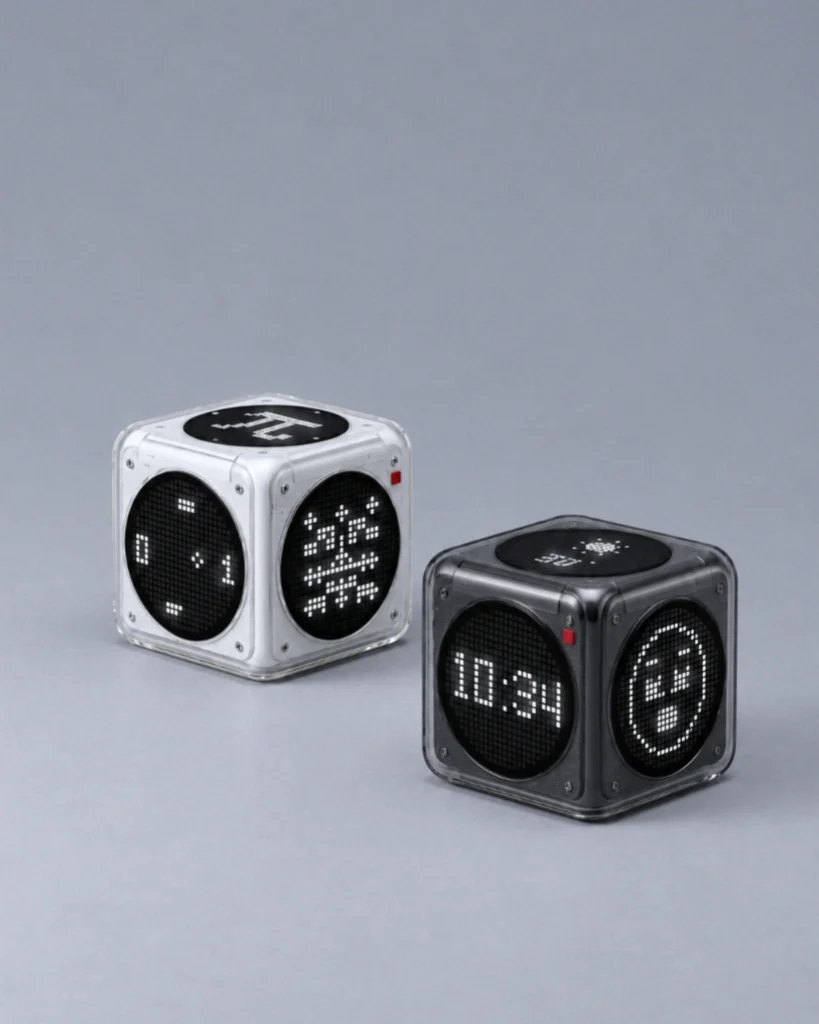
Although Glyph (1) is a physical product concept, its logic is deeply parametric. The six faces form a closed set of states. Orientation sensors convert continuous physical rotation into discrete mode selection. The LED matrices operate as variable displays whose content is defined by rules the user sets in advance. In computational terms, the cube is a finite-state machine whose state is determined by gravitational orientation and whose output is a constrained visual and functional language.
This structure allows for clear mapping between physical action and digital consequence. Designers can model the relationship between face assignment, sensor thresholds, matrix resolution and power consumption with precision. The limited number of faces imposes a productive constraint: users must decide which six functions matter most, rather than accumulating infinite options behind nested menus. The parametric system therefore includes both the hardware geometry and the cognitive geometry of prioritization.
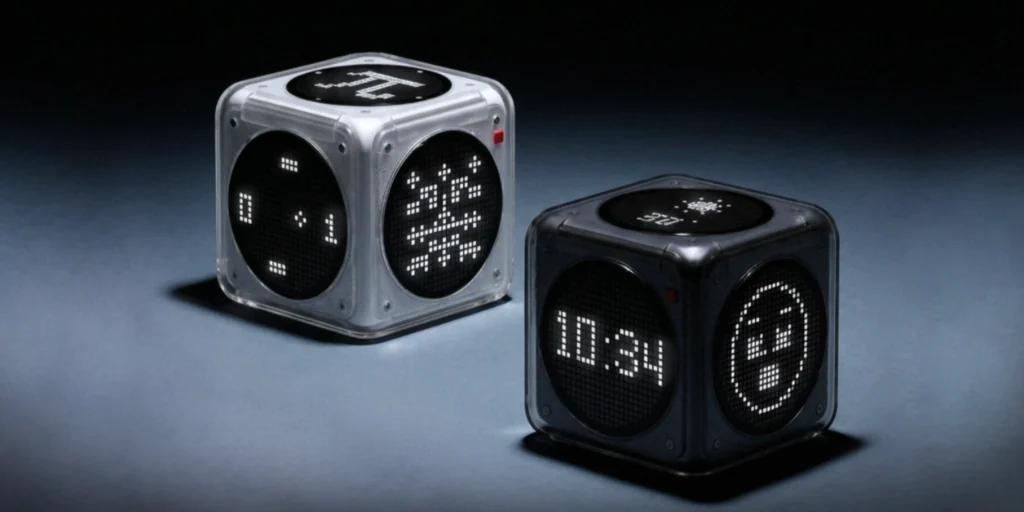
The same thinking extends to manufacturing and iteration. A transparent polycarbonate cube with radiused edges and six integrated matrices can be prototyped, tested and refined through digital models that simulate grip, visual readability from different angles, and the clarity of LED graphics under various lighting conditions. The concept demonstrates how parametric methods can serve not only form generation but the design of interaction itself.
A Quiet Alternative to Always-On Screens
Glyph (1) does not claim to replace the smartphone or the smart speaker. It proposes a different category of object: a dedicated, low-friction companion for a handful of essential digital tasks. By making mode selection a physical gesture and feedback a matter of simple light patterns, it reduces the cognitive overhead that accompanies most contemporary interfaces. The cube asks to be turned rather than tapped, spoken to rather than scrolled through.
In an era when attention has become a contested resource, such experiments carry weight. Miklosi’s design suggests that intelligence does not have to arrive wrapped in glass rectangles that demand constant visual engagement. It can live in an object that sits quietly until it is needed, announces its state with dots of light, and changes its purpose with a simple rotation of the hand. Whether or not Glyph (1) ever moves beyond the conceptual stage, it offers a clear and elegant argument for interfaces that respect both the body and the limits of attention.