


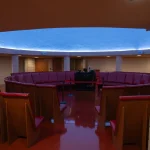
Beneath a concrete dome the sky once waited in silence. Now light returns, and the circle holds again.
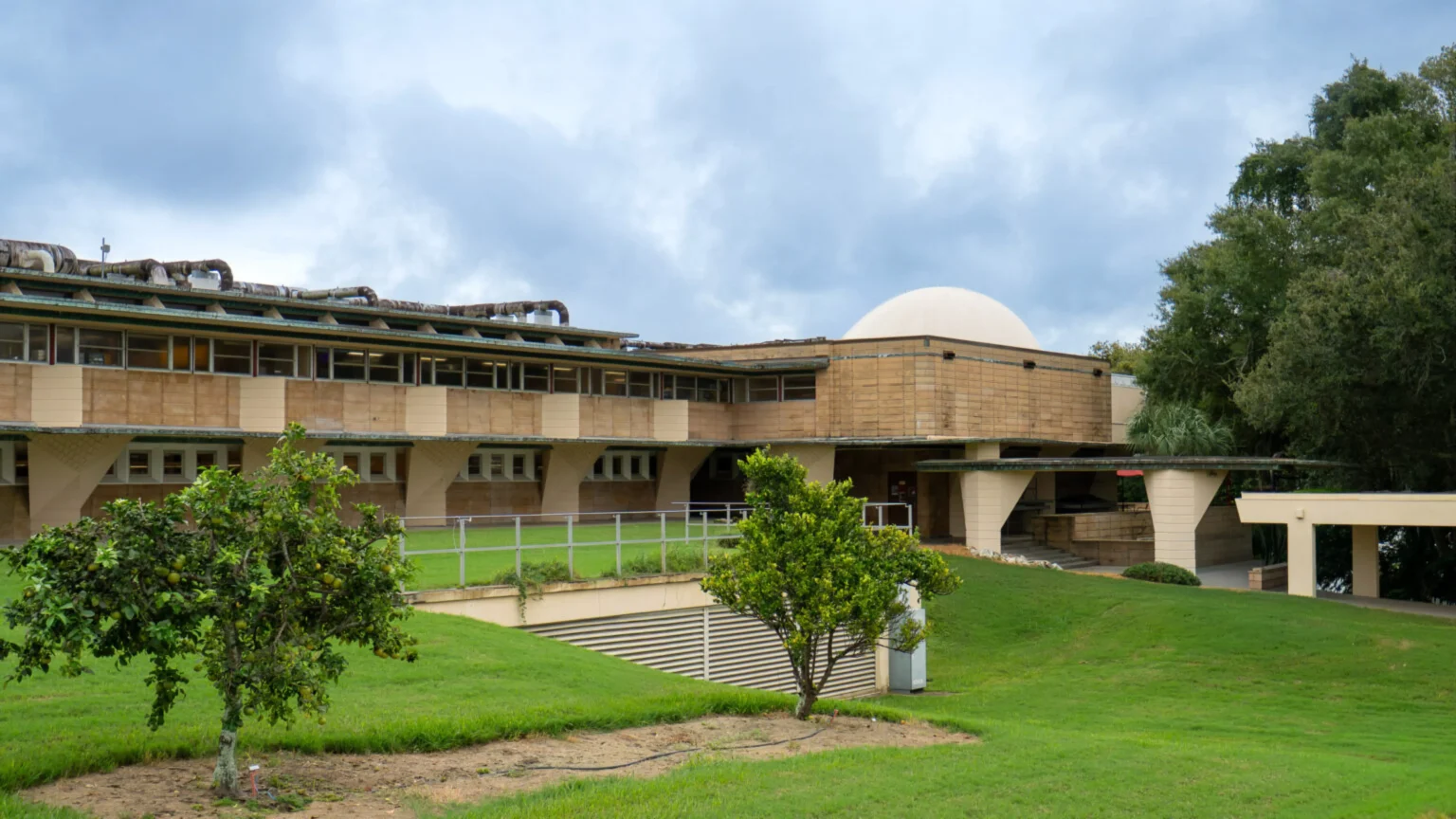
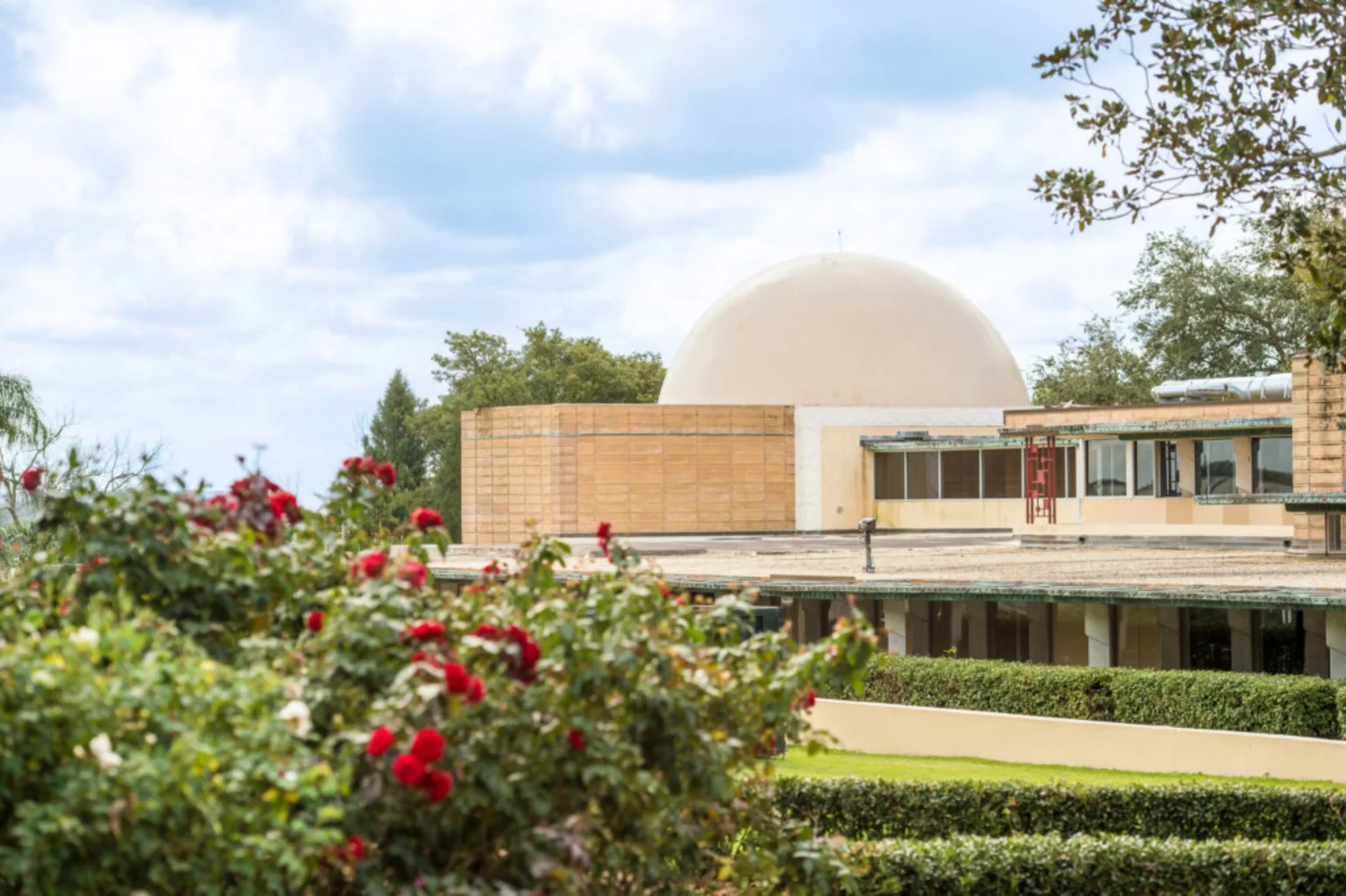
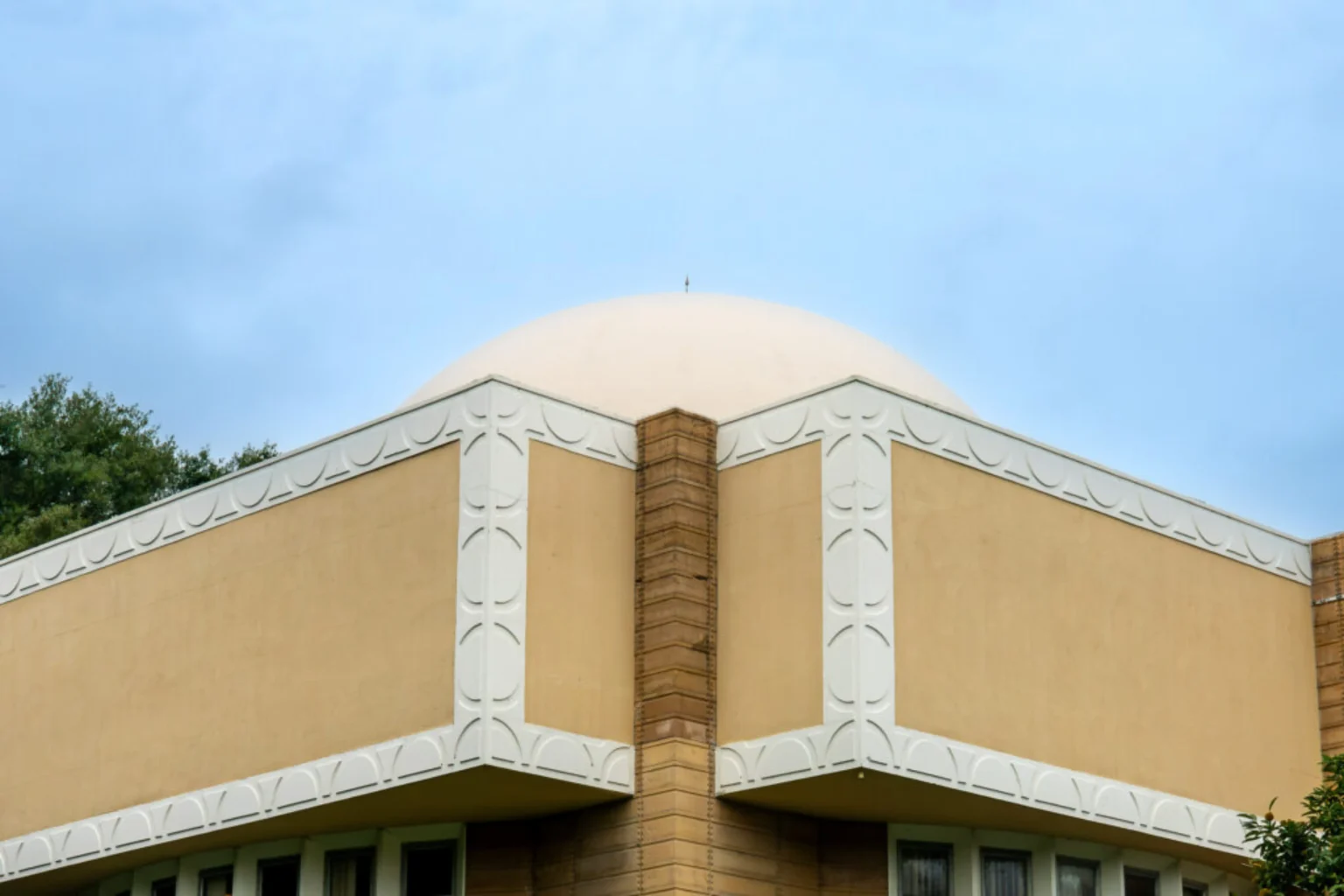
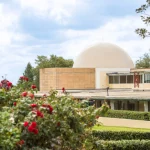
Florida Southern College has completed the restoration of the only planetarium ever designed by Frank Lloyd Wright. Located at the southern end of the Polk County Science Building on the college’s West Campus in Lakeland, the 75-seat space had been largely closed since 2004, when its original projection system failed. After phased exterior and interior work beginning in 2021, the planetarium has reopened for public shows, campus use and school groups.
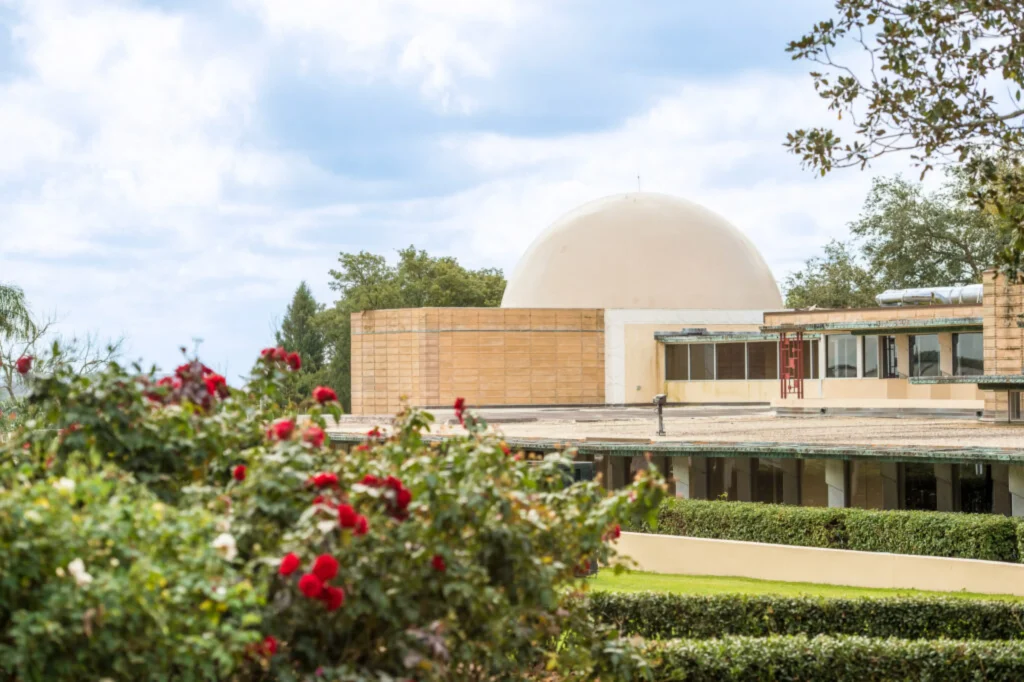
The project forms part of a longer effort to care for the largest single-site collection of Wright’s architecture in the world. Thirteen buildings designed by the architect between 1938 and 1958 stand on the campus he master-planned. The planetarium, completed in the late 1950s, is the most specialized of them.
Restoring an Elemental Space
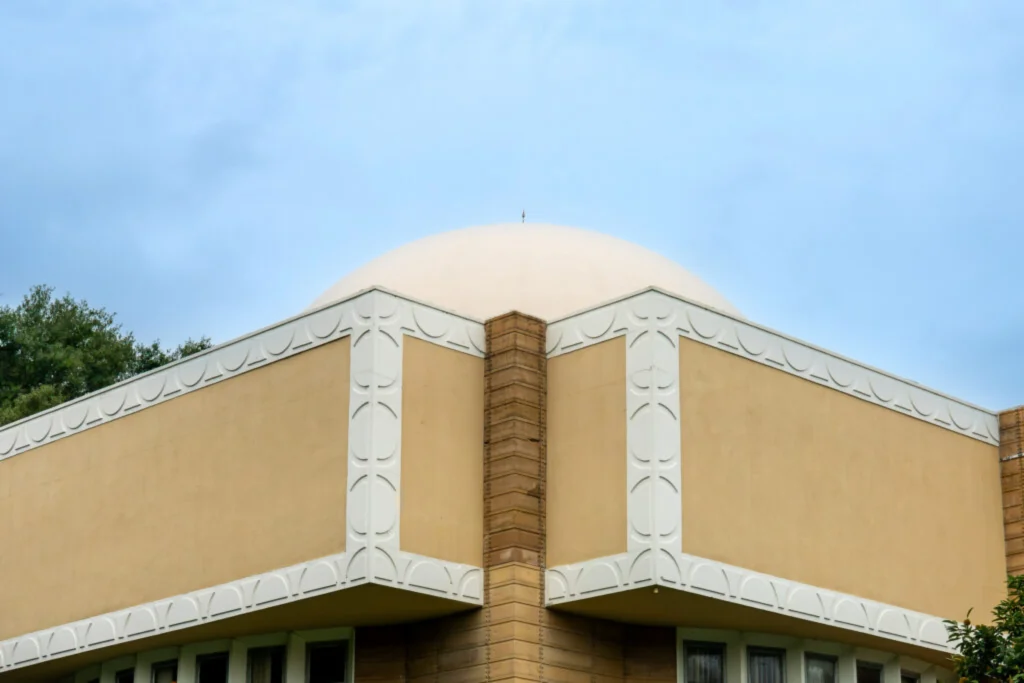
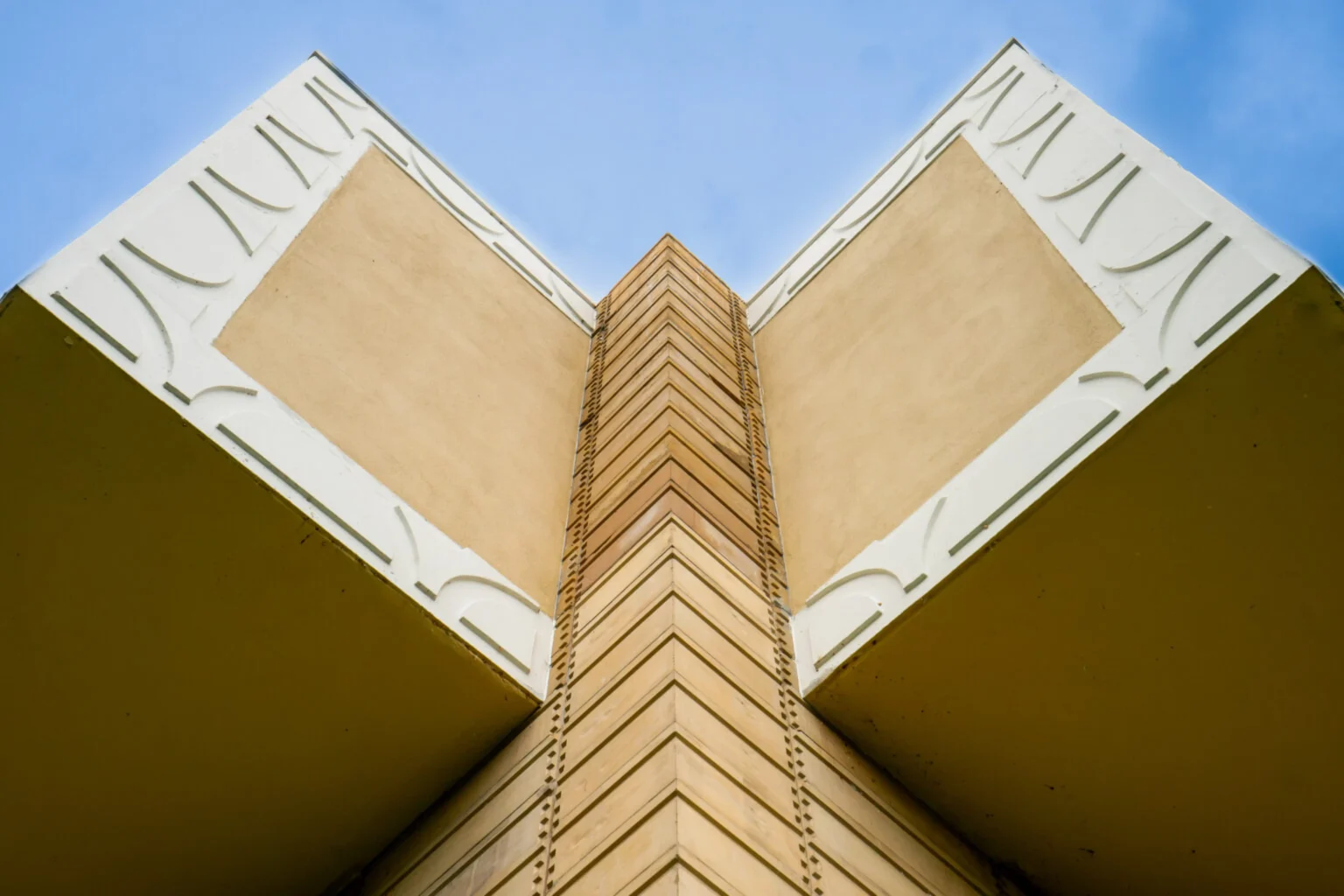
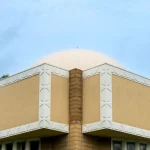
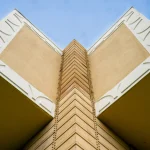
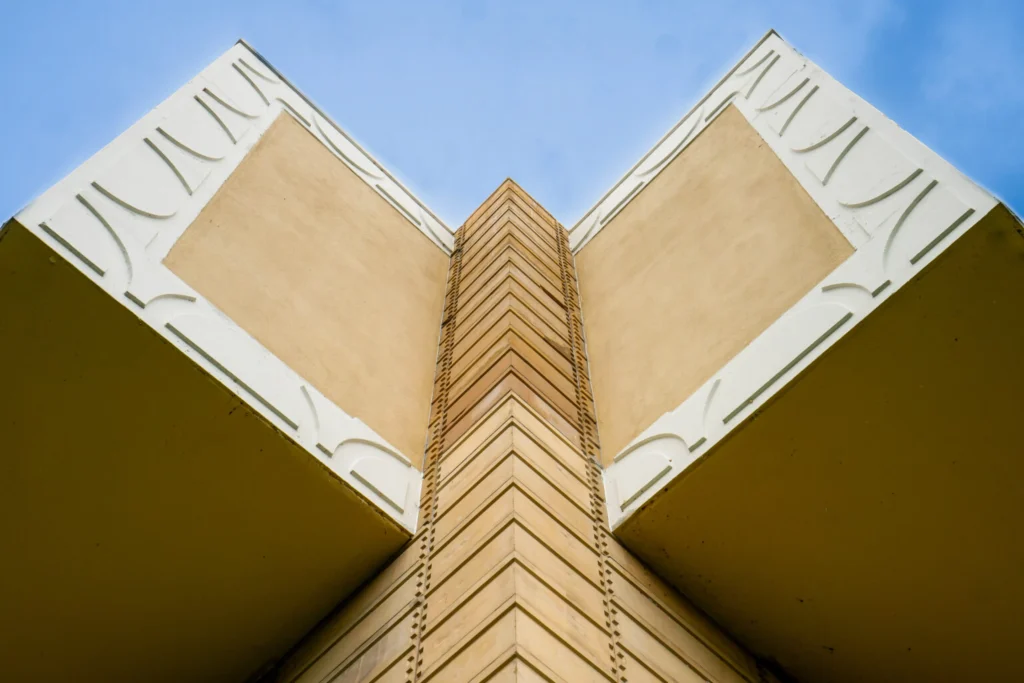
Campus architect Jeff Baker of MCWB Architects, who has worked on Wright projects at Florida Southern for two decades, guided the work. Exterior repairs addressed the roof, flashings, failed stucco and more than 280 hand-cast textile blocks that form the building’s characteristic perimeter. These concrete units, a signature of Wright’s later work, required careful matching and replacement to maintain visual continuity.
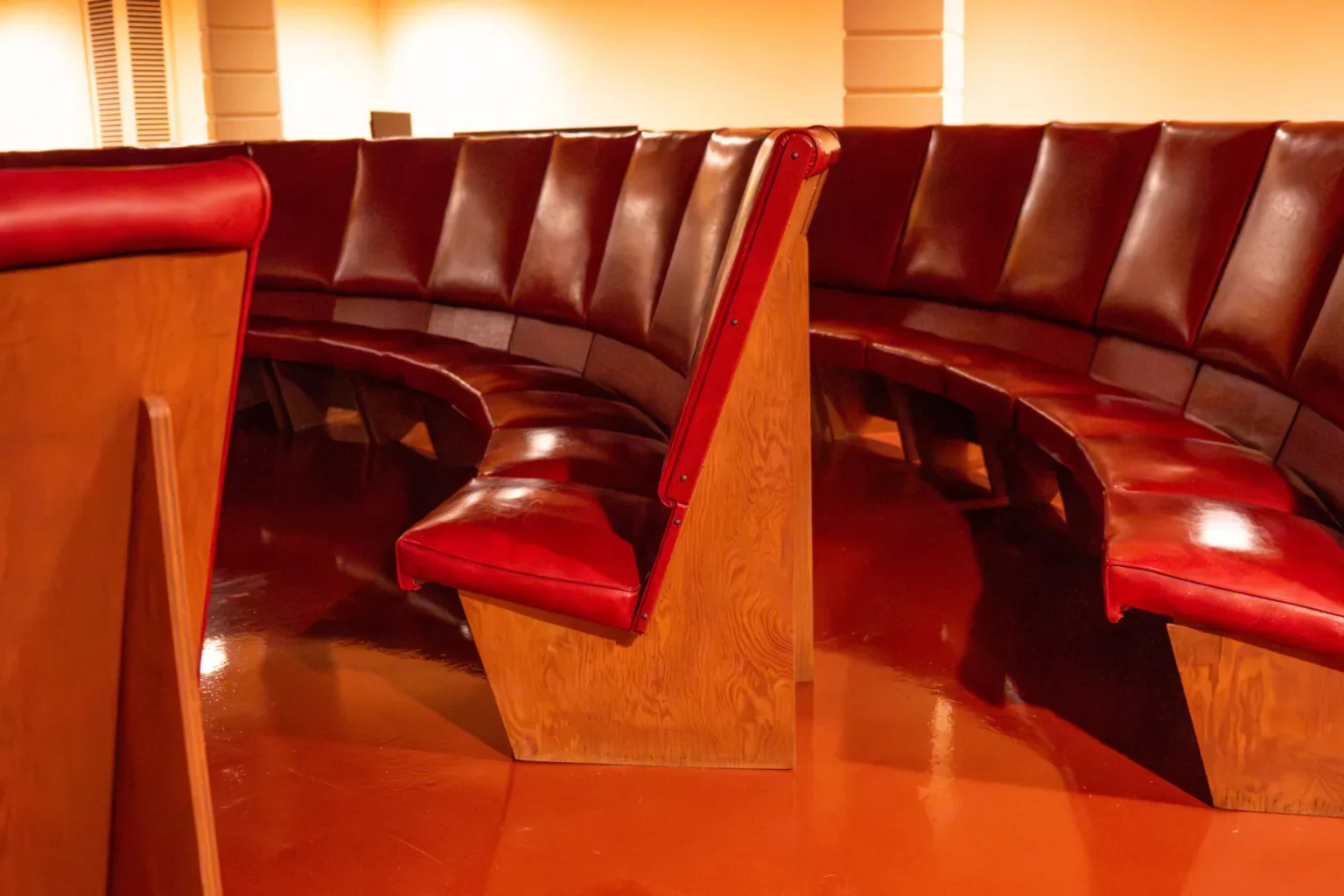
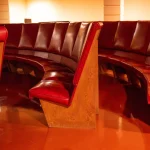
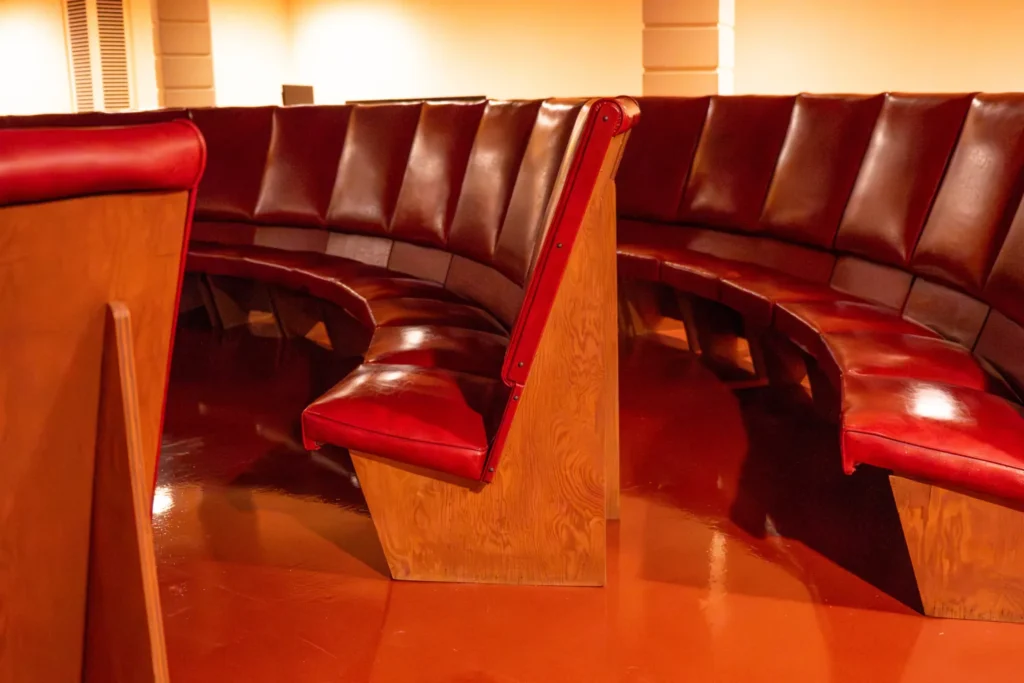
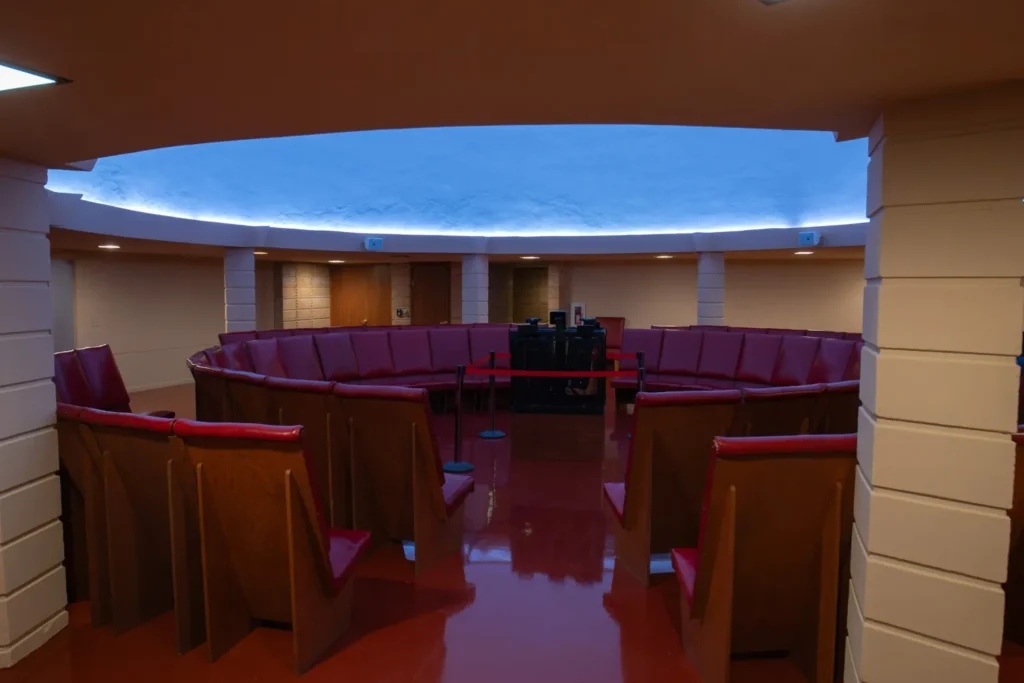
Inside, decades of later insertions had altered the room. A computer closet added in the 1980s was removed, restoring the original circular seating layout. The plywood seats with colored vinyl upholstery were repaired and returned to their intended positions. Walls were brought back toward original finishes, and the floor was restored in the Cherokee Red tone he favored. A new COSM projection system and Bowen sound system now allow contemporary programming while the architectural volume remains largely as designed.
Geometry, Structure and the Limits of Insertion
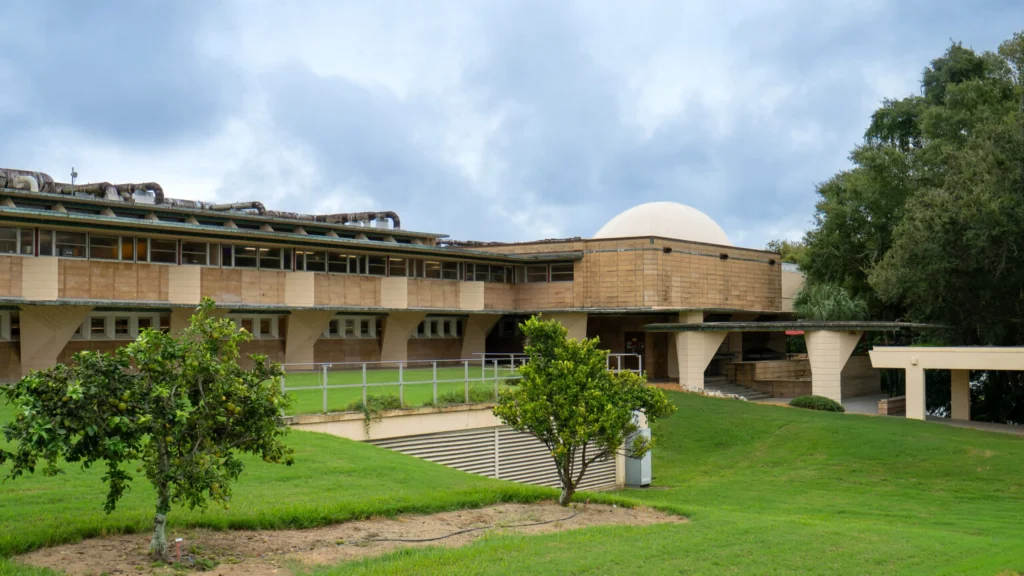
Wright’s architecture at Florida Southern is elemental. Floors are ceilings for the spaces below; ceilings are roofs. There is little hidden space in which to conceal modern services. Baker has noted that this quality made the insertion of contemporary systems especially demanding. Solutions had to be devised that met current technical and accessibility needs without eroding the clarity of the original geometry.
In computational and parametric terms, the planetarium offers a clear case of how a fixed geometric rule, the circle of seating beneath a dome, can organize both experience and structure. The circular arrangement is not merely stylistic. It places every viewer at a comparable distance from the projection surface and creates a shared field of attention. Restoring that arrangement required precise measurement, careful removal of later fabric, and the re-establishment of relationships that had been lost.
Digital documentation and fabrication methods supported the accurate reproduction of textile blocks and the verification of seating geometry, yet the underlying logic remains Wright’s: a simple, self-similar form that generates spatial unity.
Continuity Across the Campus
The planetarium joins earlier restorations of the Waterdome, the covered esplanades and the Annie Pfeiffer Chapel. Together these projects demonstrate a sustained institutional commitment to maintaining Wright’s vision while adapting buildings for present-day use. Funding came from a combination of National Park Service grants, State of Florida support, Save America’s Treasures funding and private donations, including a significant contribution from local philanthropist Gregory Fancelli.
The reopened planetarium now offers regular public screenings and educational programs. Visitors experience both the historic architecture and contemporary celestial imagery within the same carefully recovered volume.
Frank Lloyd Wright & A Quiet Continuity
A planetarium is a machine for looking upward. Wright’s version is also a lesson in how a single geometric idea can organise structure, seating and perception. Its restoration does not attempt to freeze the past. It recovers the spatial clarity that makes the past still useful, then equips that clarity with tools for the present.
In doing so, the work at Florida Southern affirms that careful stewardship and technical updating can coexist when the original design logic is understood and respected.