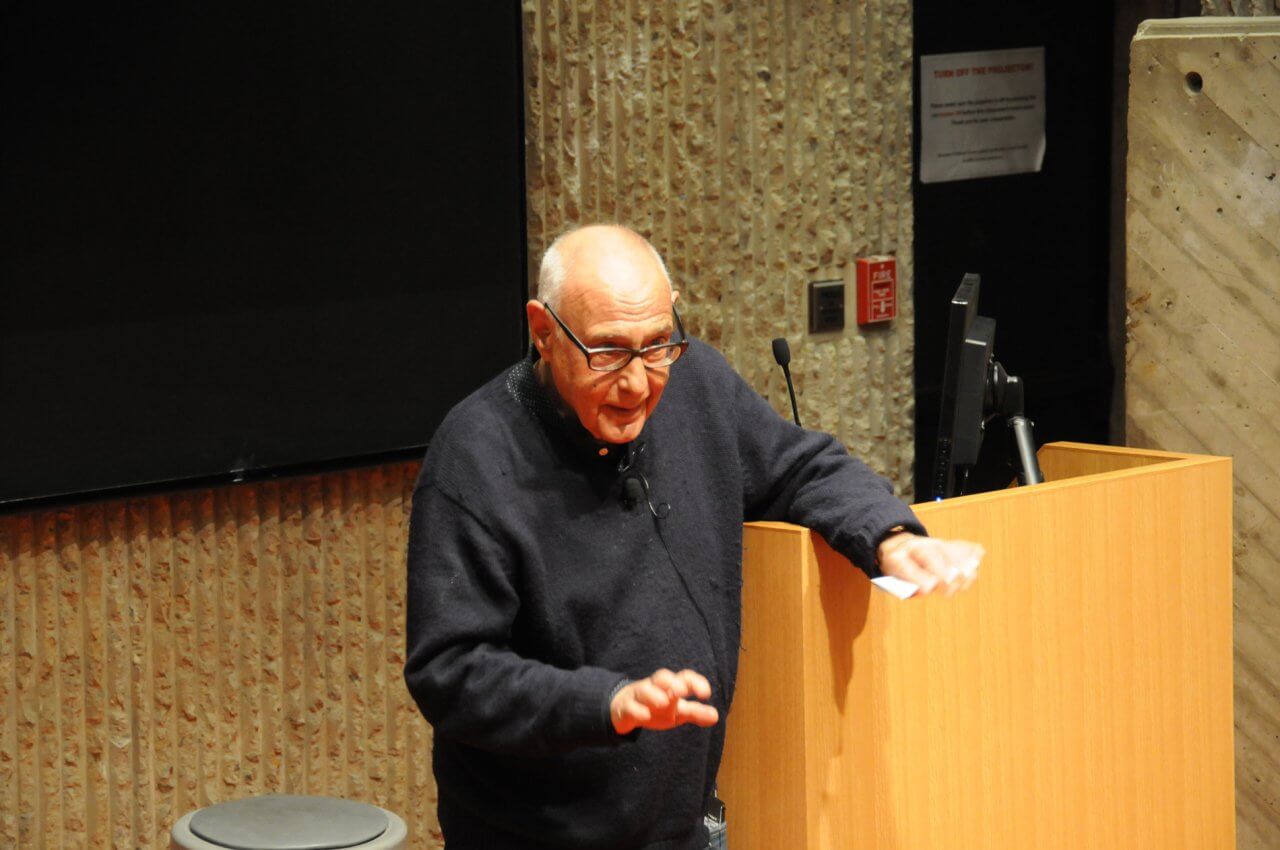

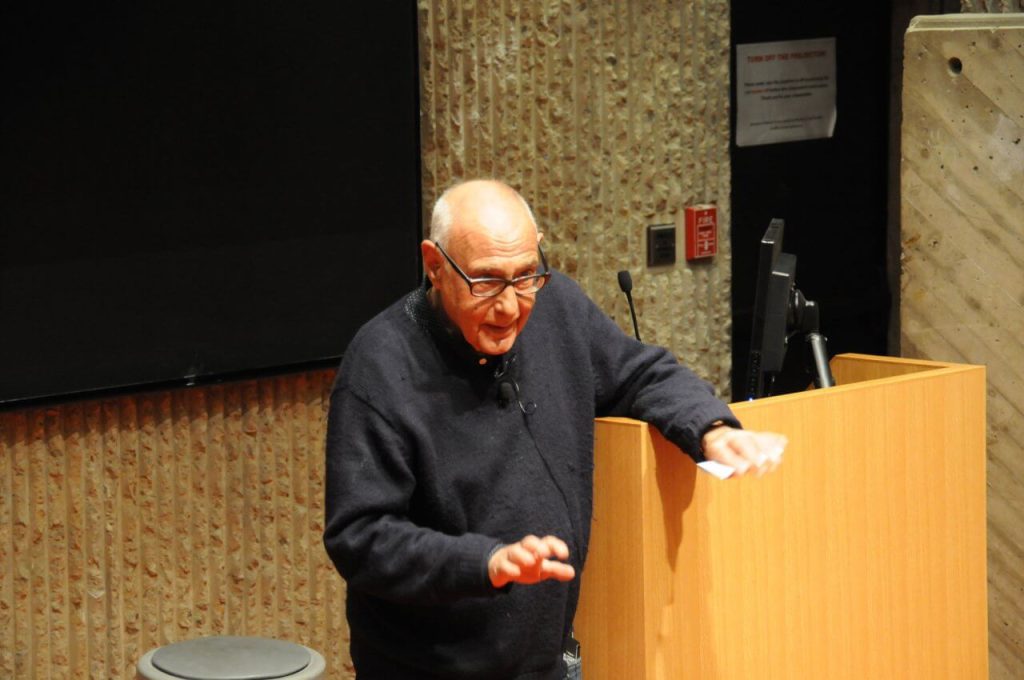
Elia Zenghelis, the Greek architect, educator, and co-founder of the Office for Metropolitan Architecture (OMA), died on August 30, 2026, at the age of 89. His death marks the loss of a major figure in late 20th-century architectural culture, whose influence reached well beyond the buildings and projects associated with his name. Through his long career in architectural education, Zenghelis helped shape the ideas, methods, and ambitions of generations of architects across Europe and the United States.
His True Monument Was Not a Building, But a Generation of Architects
Born in Athens in 1937, Zenghelis moved to London to study at the Architectural Association School of Architecture (AA), graduating in 1961. Shortly afterward, he joined Douglas Stephen and Partners, where he remained until 1971. At the same time, he began teaching at the AA in 1963, establishing an academic career that would eventually become as important to his legacy as his architectural practice.
During his years at the AA, Zenghelis became an important advocate for experimental and avant-garde approaches to architecture. His teaching contributed to the school’s reputation as an environment where conventional architectural assumptions could be questioned and new theoretical positions could emerge. The intellectual culture he helped foster would become particularly influential during a period when architecture was increasingly engaging with questions of the city, technology, representation, and popular culture.
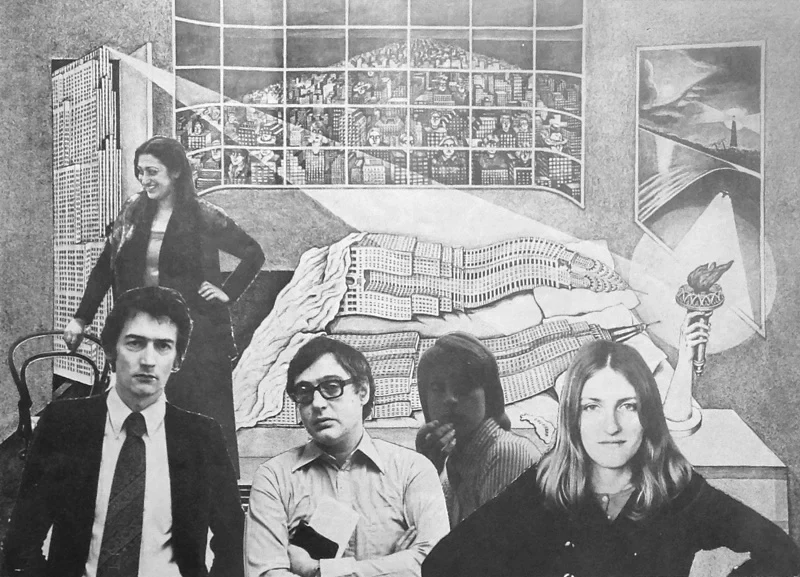
In 1975, Zenghelis co-founded the Office for Metropolitan Architecture with Rem Koolhaas, Zoe Zenghelis, and Madelon Vriesendorp. OMA would eventually become one of the world’s most influential architectural practices, but Zenghelis played a particularly important role during its early development. He headed OMA’s London office from 1980 to 1987 and its Athens office between 1982 and 1987.
During this formative period, he was involved in several important OMA projects and competitions. These included the proposed extension of the Dutch Houses of Parliament in The Hague in 1978, housing developed for the International Building Exhibition (IBA) in Berlin in 1981, and OMA’s celebrated competition proposal for Parc de la Villette in Paris in 1982. These projects reflected the practice’s interest in architecture as an intellectual and urban instrument rather than simply as a means of producing individual buildings.
Zenghelis’s architectural interests also evolved during the 1980s. A series of summer villas designed in Antiparos, Greece, led him toward a deeper engagement with Mediterranean and Aegean architectural traditions. At the time, critics characterized this transition as a movement “from Manhattanism to Mediterraneanism,” describing a shift from the dense metropolitan imagery associated with OMA toward a more regional architectural language.
This change did not represent an abandonment of urban concerns. Zenghelis continued to explore architecture within complex metropolitan environments, particularly through OMA’s work for IBA Berlin. Among these projects was a housing block near Checkpoint Charlie, developed when the Berlin border crossing was still an active symbol of the divided city.
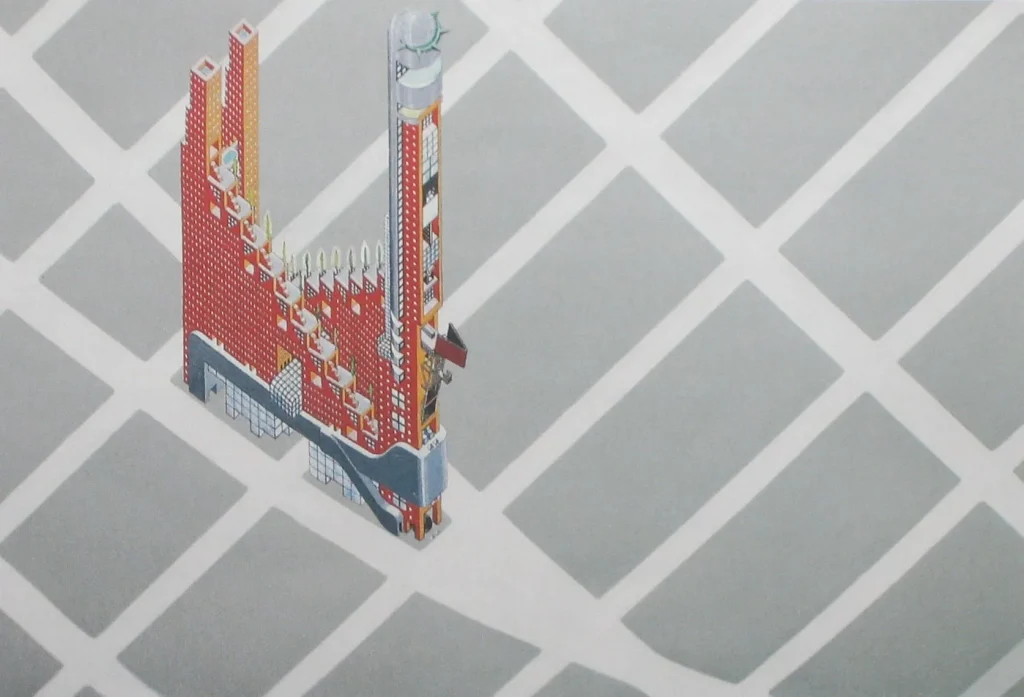
His collaboration with Zoe Zenghelis also extended into architectural representation. Together, they produced paintings that illustrated and communicated OMA’s architectural proposals. These images became an important part of the practice’s visual identity, demonstrating how drawing and painting could operate not simply as presentation tools but as instruments for developing architectural ideas. Several of their works are now part of the collection of the Museum of Modern Art (MoMA) in New York.
In 1987, Zenghelis left OMA and established Gigantes Zenghelis Architects with architect Eleni Gigantes. The practice worked primarily between London and Athens and later expanded its presence to Brussels. One of its notable completed projects was the Ashikita House of Youth in Kumamoto, Japan, designed between 1996 and 1998 for Kumamoto ArtPolis.
From the early 1990s onward, however, Zenghelis increasingly shifted his attention away from architectural practice and toward teaching. Education gradually became the defining focus of the second half of his career, allowing him to influence architectural culture through students and academic institutions around the world.
An Architect Who Built Ideas, Not Just Buildings
His academic career included some of Europe’s most prominent architecture schools. In 1989, he was appointed to the Baukunst professorship at the Kunstakademie Düsseldorf, succeeding James Stirling. He remained in the position until 2002. He also taught at the Berlage Institute in the Netherlands, as well as EPFL in Lausanne, ETH Zurich, and the Accademia d’Architettura in Mendrisio.
Zenghelis maintained a strong connection with Greece and was eventually named Professor Emeritus at the University of Thessaly. His teaching activities also extended to the United States. At Yale School of Architecture, he served first as Davenport Visiting Professor and later as Norman R. Foster Visiting Professor.
His contribution to architectural education was formally recognized in 2000, when the Royal Institute of British Architects awarded him the Annie Spink Award for Excellence in Education. The honor reflected an aspect of Zenghelis’s career that became increasingly central to his legacy: his ability to use architecture as a platform for critical thinking, speculation, and debate.
Zenghelis leaves behind a legacy that is difficult to measure solely through completed buildings. As an architect, he helped establish OMA during its formative years; as an educator, he influenced generations of architects and contributed to the development of radical architectural discourse. His career demonstrates how teaching, representation, theory, and practice can overlap, with architectural ideas sometimes having an influence far greater than the physical structures in which they eventually materialize.