



At Chaka Salt Lake, architecture does not stand still. It bends, flutters, and catches light, showing how computation can help a building behave more like the landscape around it.
Most train stations are designed to be predictable. Platforms align, roofs shelter, passengers move from the ticket counter to the track in a straight, efficient line. Chaka Train Station in Qinghai Province takes a different route. It treats arrival as an experience shaped by wind, salt, color and distance.
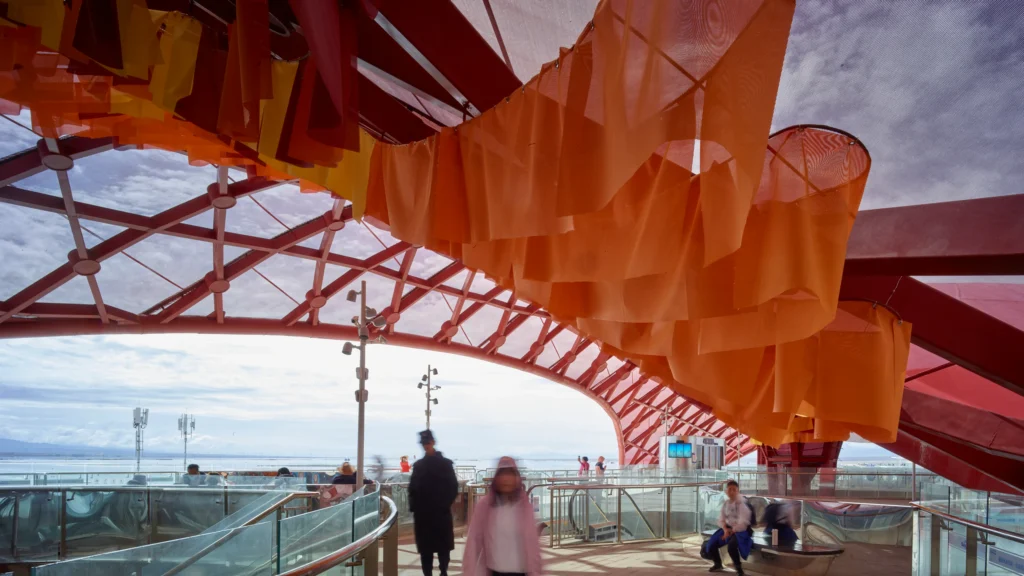
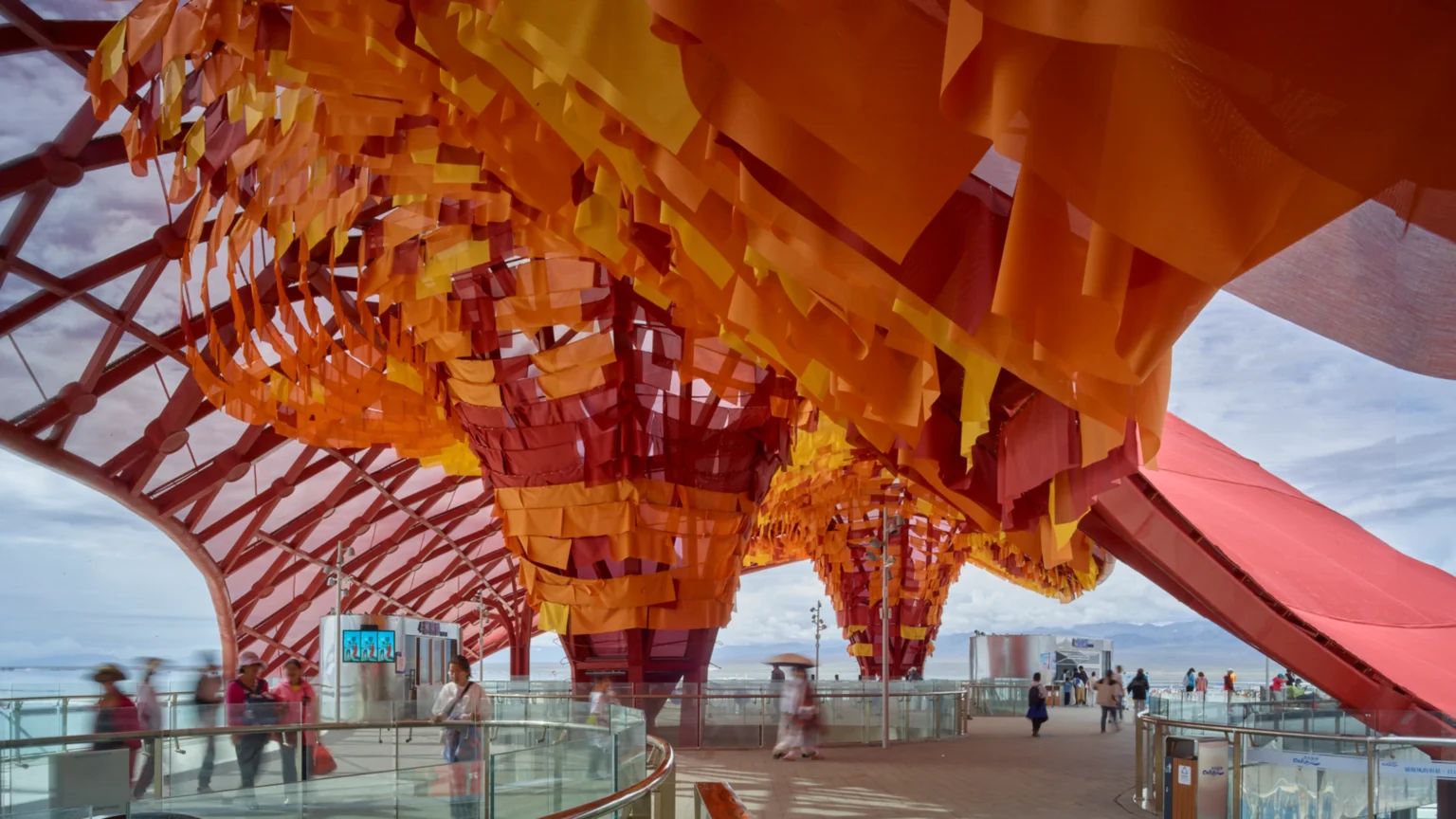
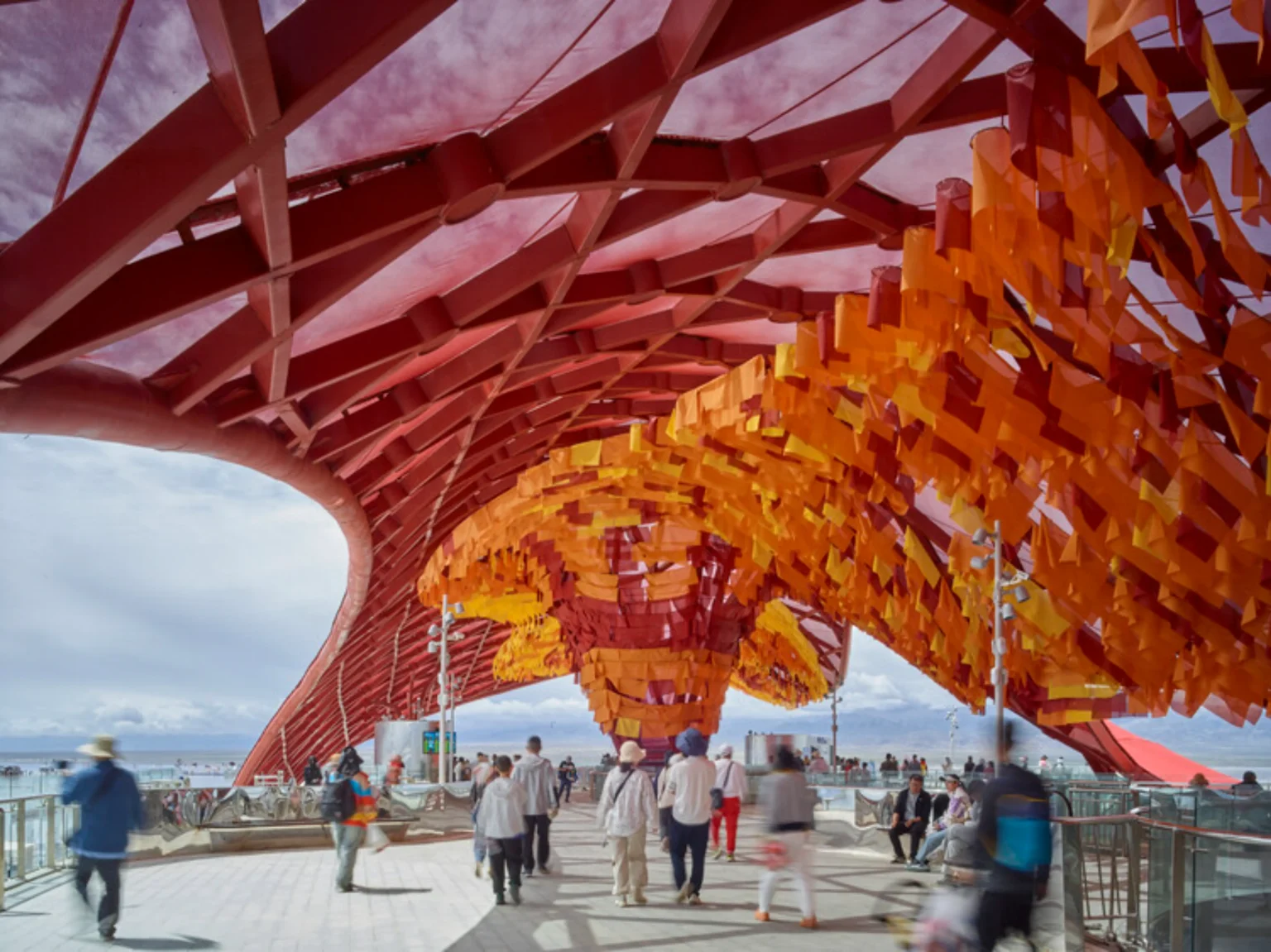
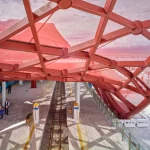
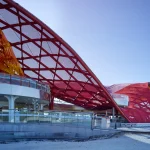
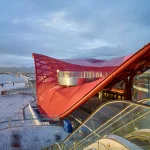
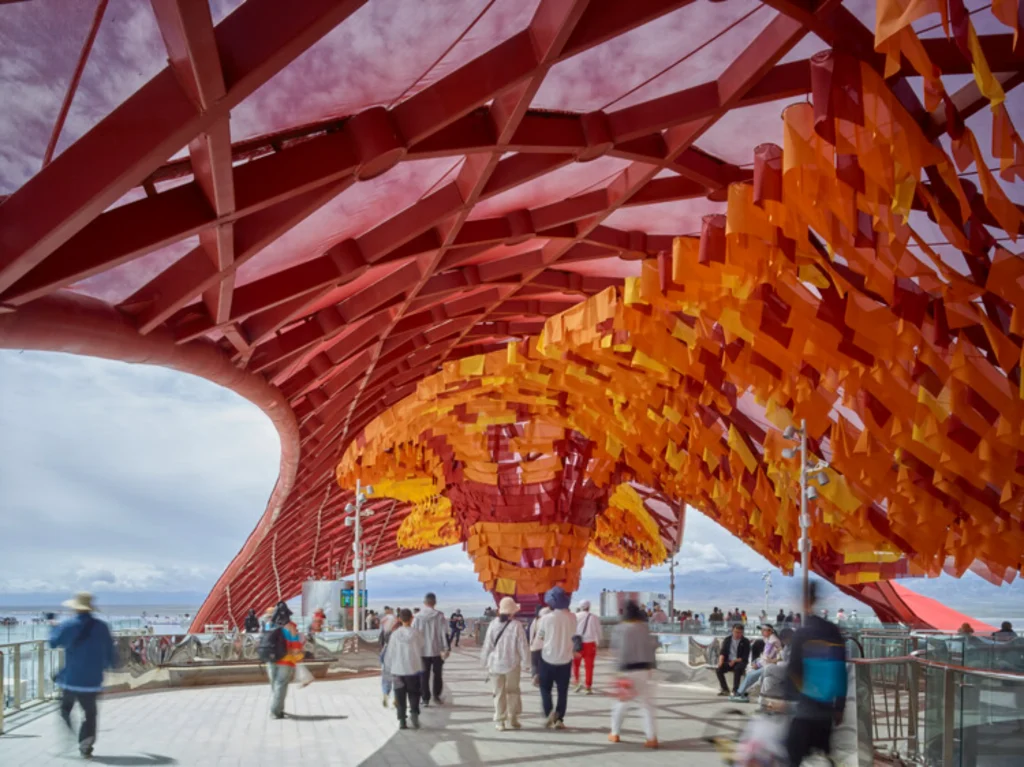
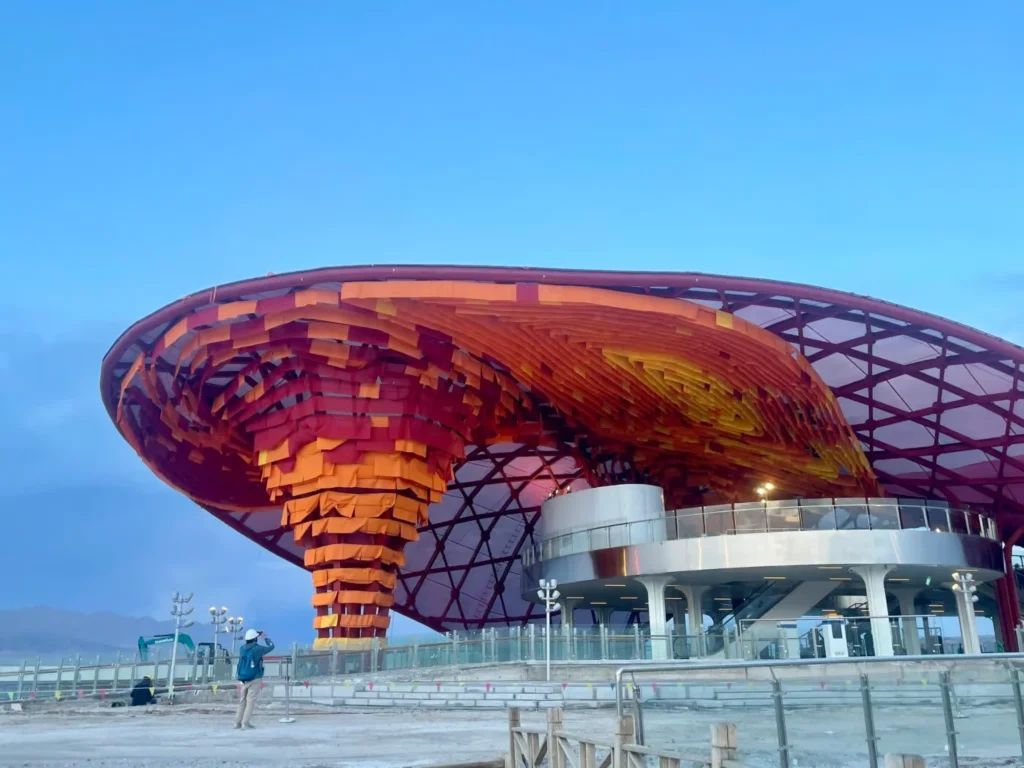
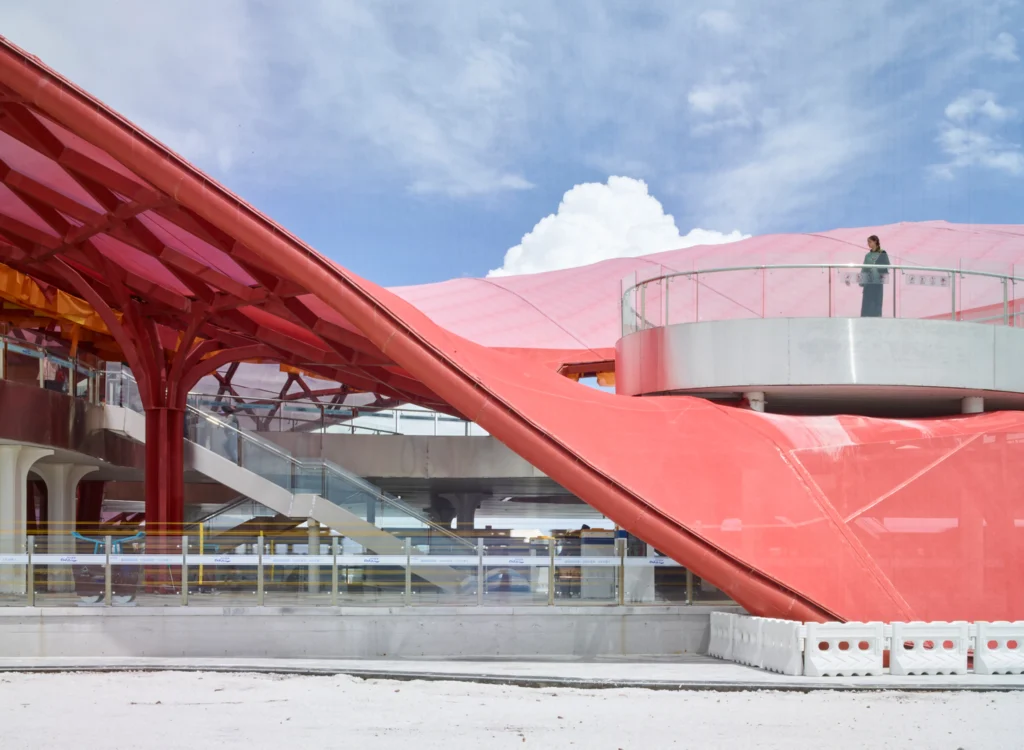
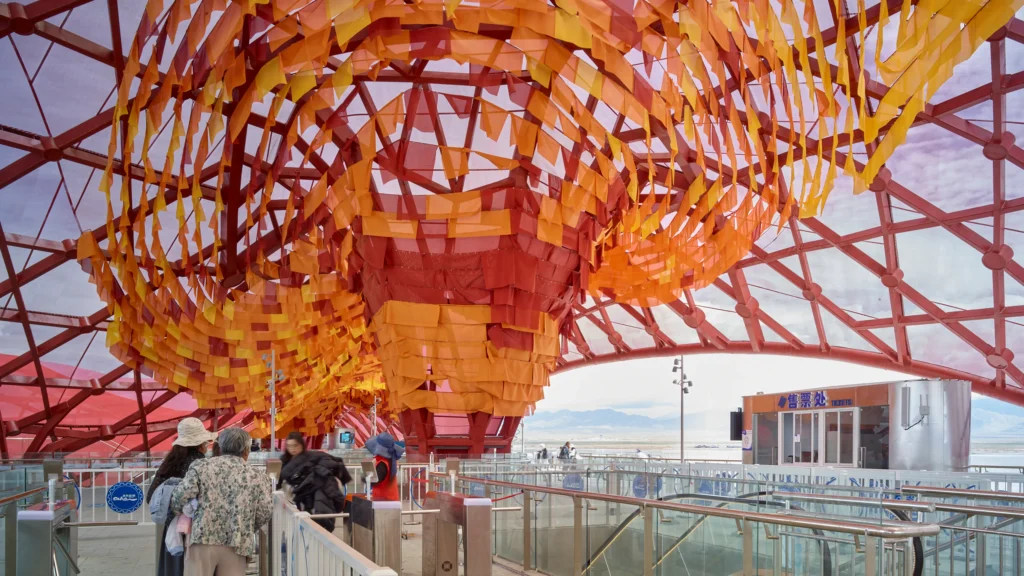
Designed by Song Yehao and the SUP Atelier of Tsinghua University Architectural Design and Research Institute, the station sits beside Chaka Lake, a vast salt lake often called the “Mirror of the Sky.” Its red, curved roof rises from the pale landscape like a ribbon caught mid-flight. That image is not decoration. It is the design idea made physical.
Parametric Design As A Conversation
Parametric design is often explained through software and complex geometry. At Chaka, it is better understood as a conversation between conditions: wind direction, sunlight, visitor movement, structural spans, fabrication limits, and the visual character of the lake.
The station’s free-form roof was not drawn first and engineered later. Its curved steel and membrane surface emerged from the need to create shelter, openness and a memorable landmark while using prefabricated steel and tensile fabric. Digital technology connected the concept, design development and construction, allowing a fluid form to be resolved into buildable parts.
This is the quiet power of computational design. It does not replace the architect’s intuition. It gives intuition a way to test itself against reality: how a surface will behave under load, where daylight will enter, how a canopy will be assembled, and how thousands of visitors will move through the space.
Fabric That Responds To Weather
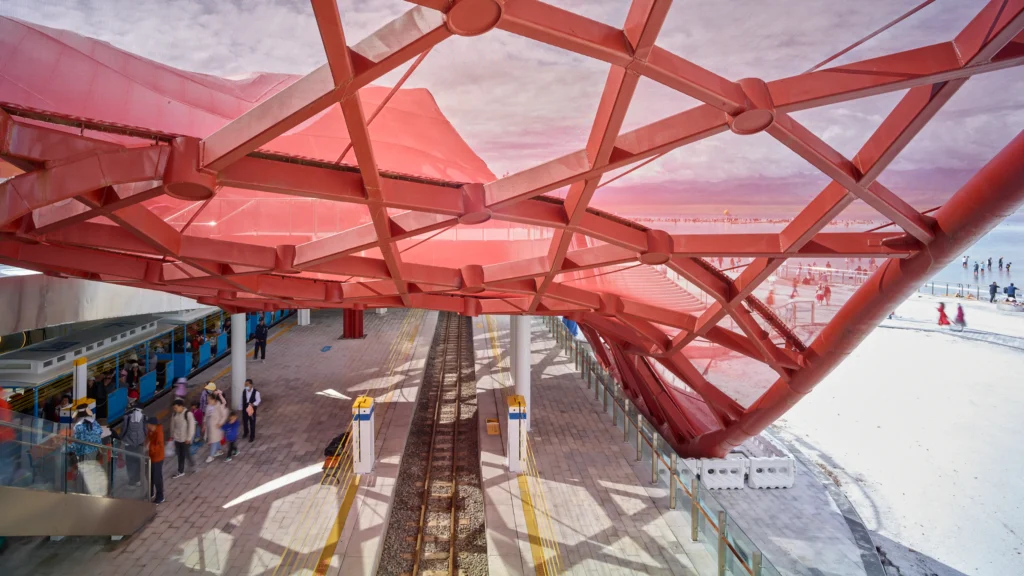
The roof uses red PTFE membranes from Serge Ferrari Group. Two variants, GFM-21-LT and GFM-21, cover 3,077 square meters and 3,171 square meters, respectively. They bring controlled daylight into the station while offering mechanical strength and long-term durability.
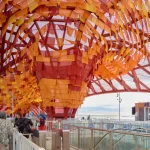
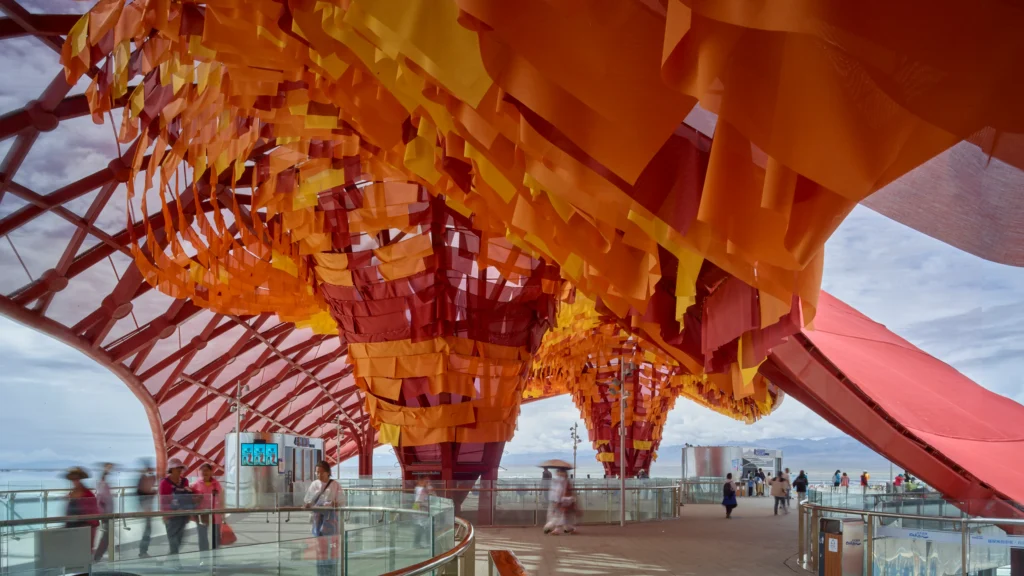
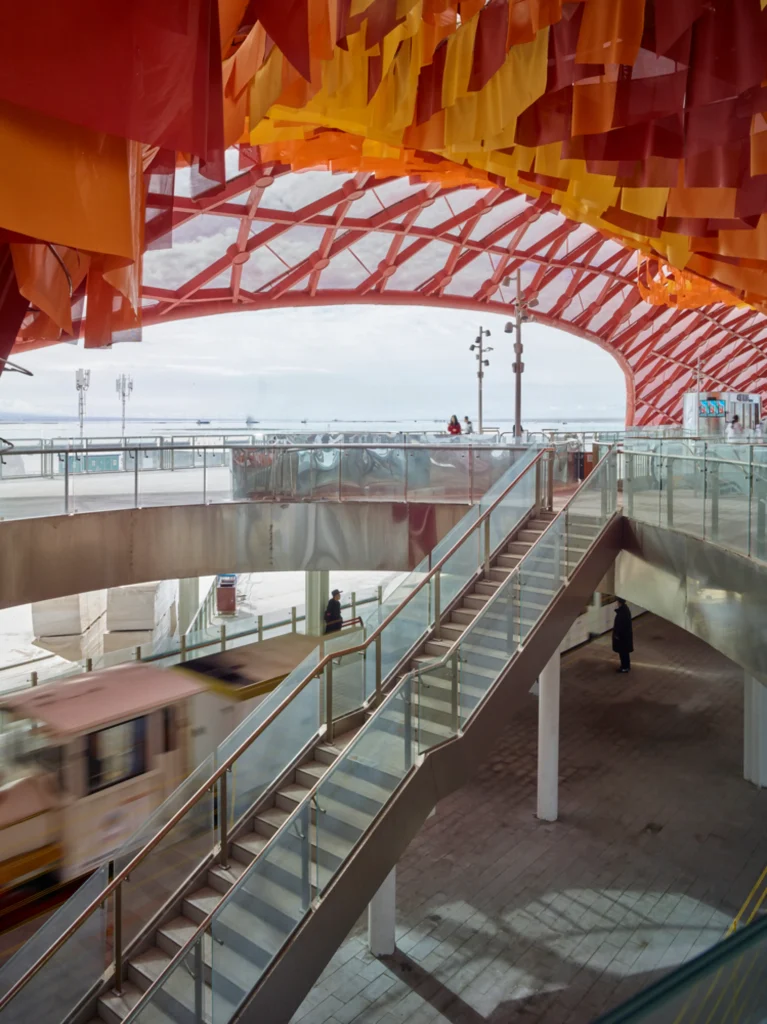
Around the funnel-shaped columns, 4,125 square meters of brightly colored Soltis 86 fabric squares move with the breeze. The project describes them as leaves on a tree, and the comparison fits. They introduce movement, shade, sound and changing patterns of color into a transport building.
Here, parametric thinking extends beyond the roof geometry. The design accepts wind as a collaborator. Instead of sealing the station against its environment, it lets the environment become part of the architecture.
Why Chaka Matters
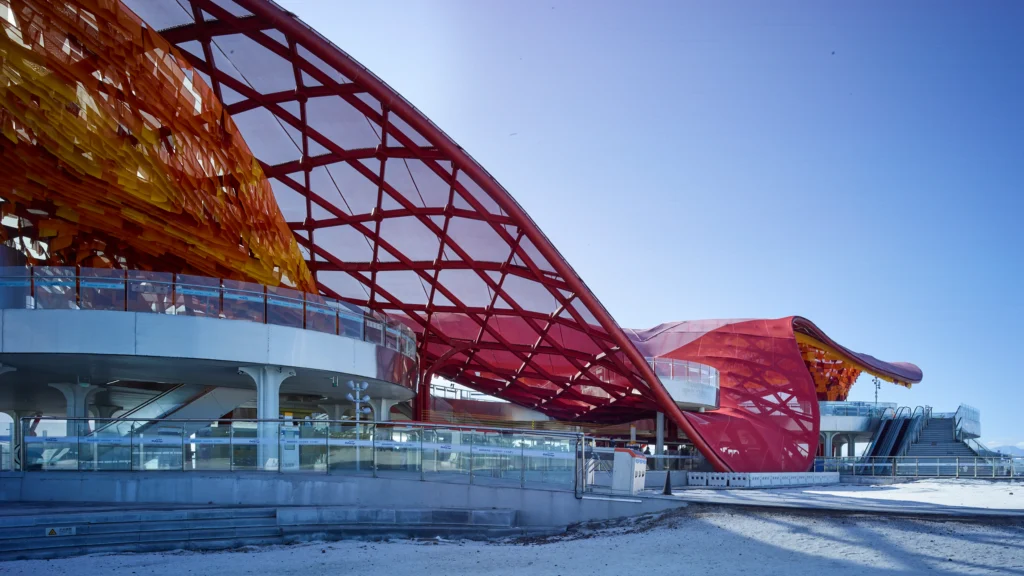
Chaka Train Station is important because it makes computational design feel human. The building is not a cold demonstration of digital tools. It is a public gateway to a fragile, beautiful landscape, built quickly and designed to be experienced through the body.
Visitors see a red form moving against the horizon. They feel air pass through suspended fabric. They walk beneath a roof that filters light rather than blocking it. The station organizes transport, leisure and viewing, but it also gives people a sensory memory of the place.
That is a useful lesson for workplace design, hospitality, airports and cultural buildings alike. Technology should not produce complexity for its own sake. Its real value lies in helping designers respond more precisely to climate, material behavior, human movement and local identity.
A Different Kind Of Landmark
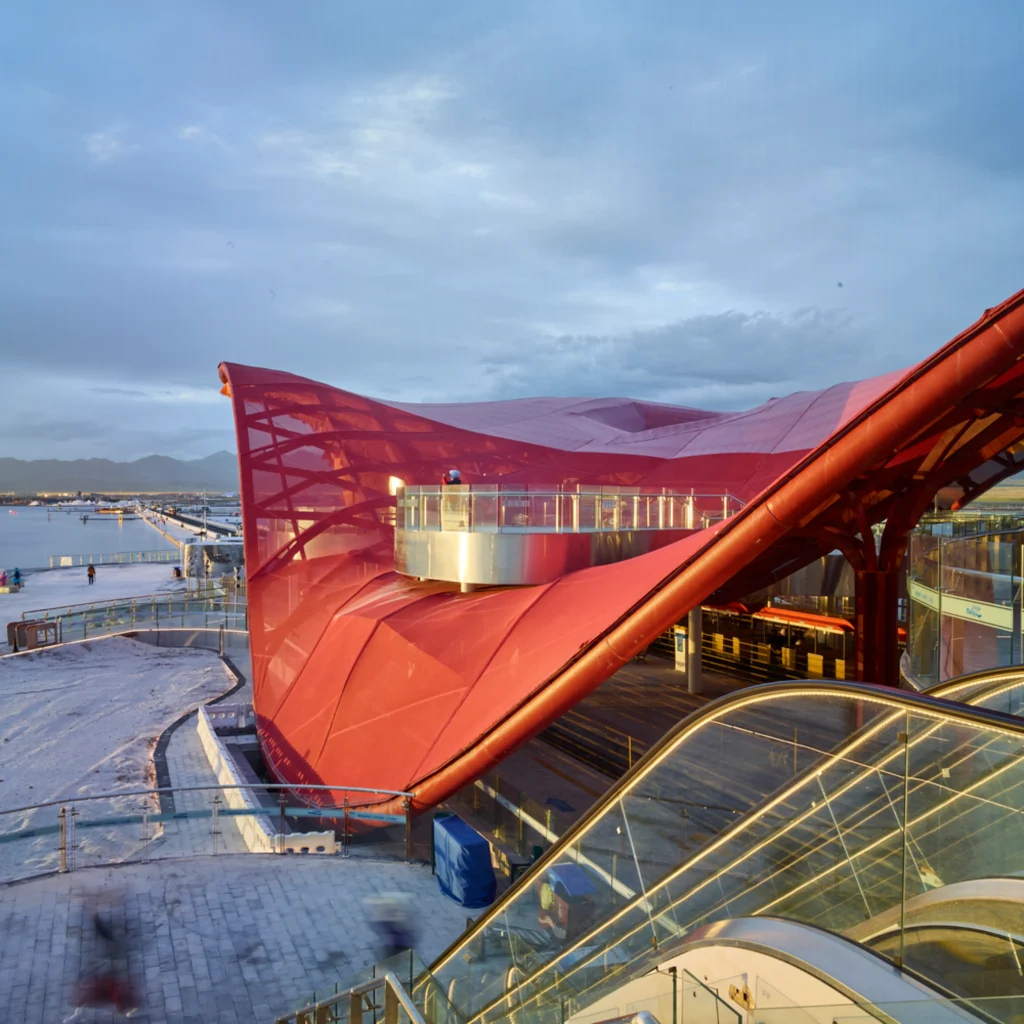
Many landmarks try to dominate their setting. Chaka Train Station takes another approach. It borrows the visual language of the red scarves and ribbons associated with visitors to the lake, then translates that cultural image into steel, membrane and movement.
The result is architecture that belongs to its site without imitating it. It is modern, but not detached. Digital, but not distant. Bold, but sensitive to the scale of the salt lake.
Closing Thoughts
Chaka Train Station suggests a future where buildings are less like fixed objects and more like responsive instruments. Parametric architecture and computational design give architects the ability to shape that responsiveness with intent. At Chaka, the result is simple and powerful: a station that does not merely sit beside the wind, it moves with it.