

Free tools rarely feel this useful inside Revit, yet BIMCraft manages to cut through everyday BIM friction without asking for a credit card.
For years, the conversation about Building Information Modeling has sounded the same. BIM sits at the center. Most practices learn it, most clients expect it, and most software around it is built to talk to it. The cost of that arrangement has always been high, both in money and in the quiet sense that the tools themselves are closed. Then a small open-source project appeared that can open actual Revit files and run on almost any machine. It is called BIMCraft, and it is still early. That early stage is precisely what makes it interesting.
A Clean-Room Rebuild
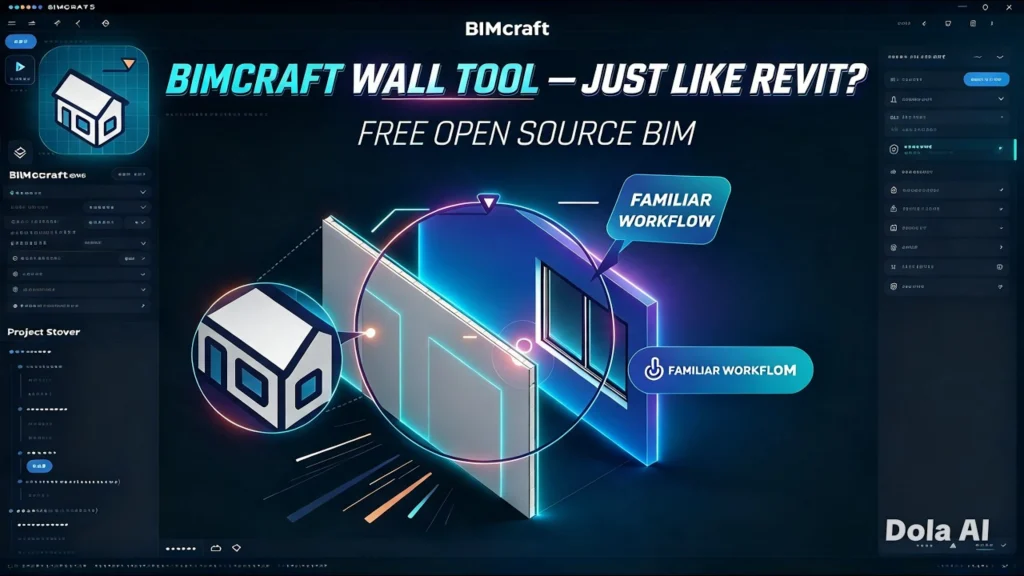
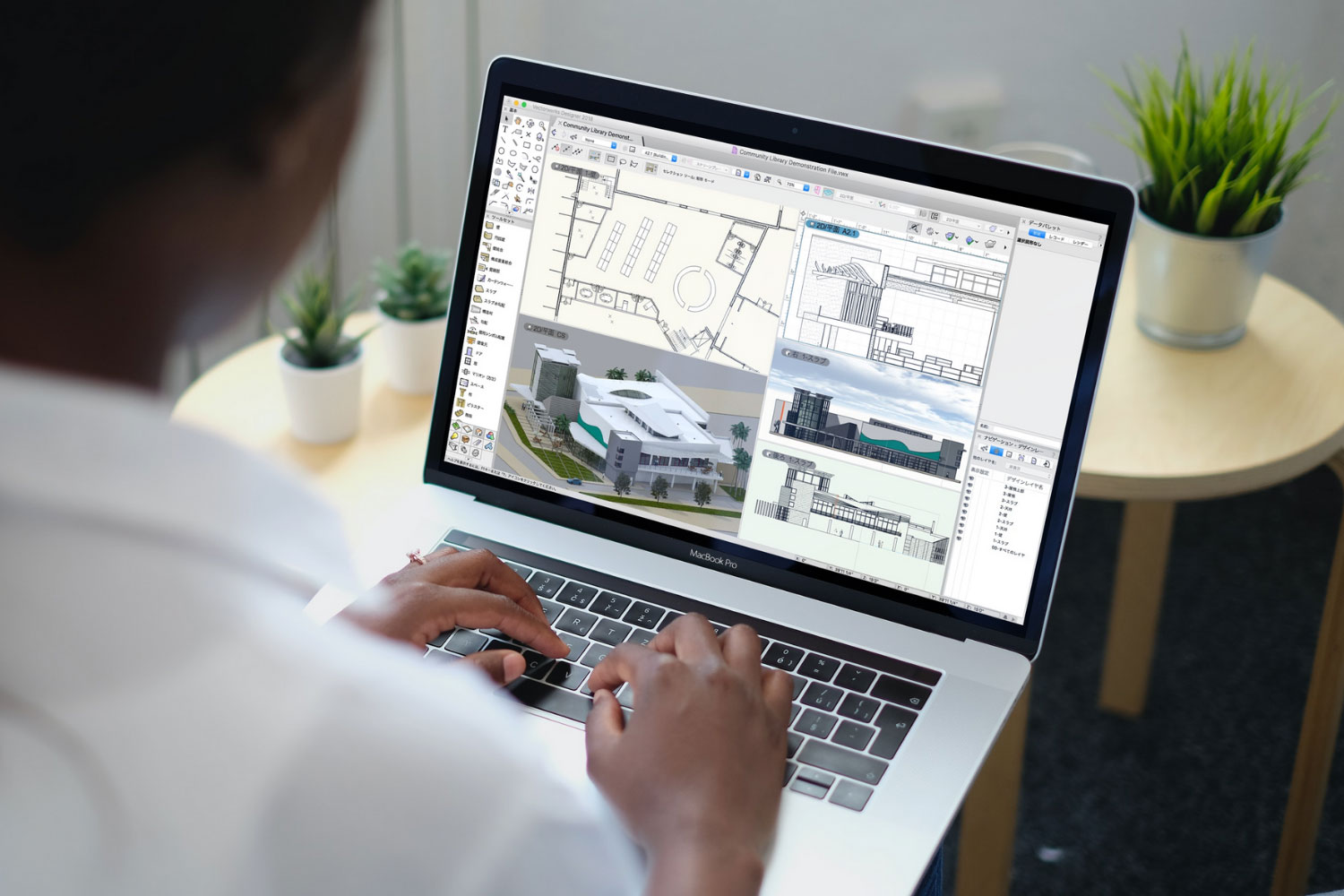
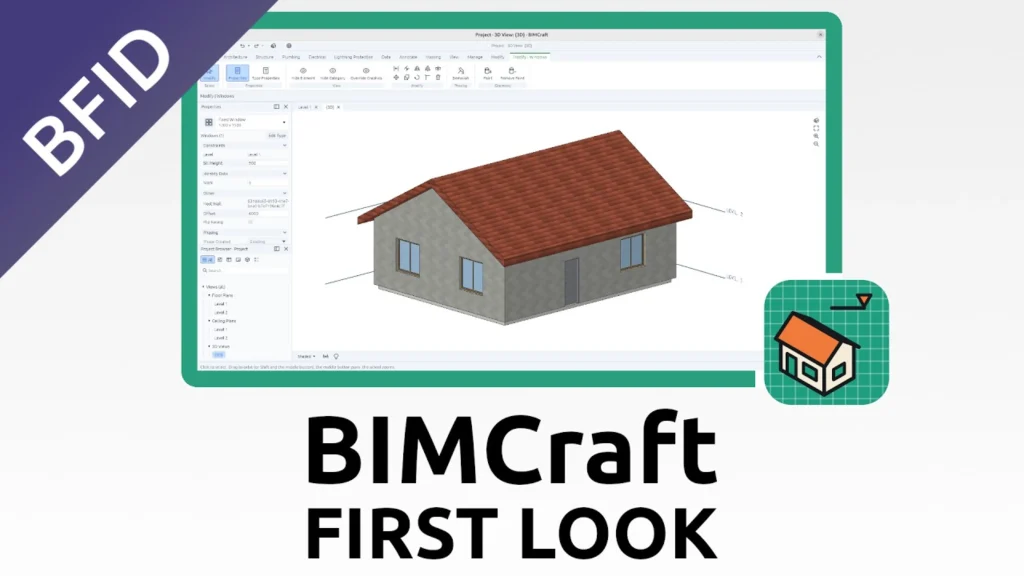
BIMCraft is written in pure Rust by a developer known as IPedrax. It is a clean-room take on the Revit workflow. The interface deliberately echoes the familiar ribbon, properties panel, project browser, and many keyboard shortcuts that architects and engineers have internalized over years. You can place levels, walls, doors, windows, floors, roofs, rooms, and columns. Plans, sections, elevations, and a 3D view are generated from the same model. Sheets can be laid out. IFC can be read and written. Every action is treated as a command, which means software agents can drive the tool as well as human users.
What sets it apart is the file handling. BIMCraft can open real .rvt files from a wide range of Revit versions. The import is read-only. Glass walls and some more complex elements may not yet come across cleanly, but the core geometry and many of the relationships do. For a free tool, this is already a notable achievement. It means a student, a small practice or an independent researcher can look inside a commercial model without needing a full Revit license.
Why the Timing Matters
The architectural software landscape has been dominated by a handful of large vendors for a long time. Licensing costs, hardware requirements, and the difficulty of moving data between platforms have created real barriers, especially for smaller offices, academic work, and practices in regions where software budgets are limited. Open-source alternatives have existed, but few have attempted to meet the industry so directly on its own ground. BIMCraft does not try to invent an entirely new paradigm. It tries to recreate the one people already know, then make it free and open.
That choice is both pragmatic and radical. Pragmatic because the muscle memory of thousands of users is already trained on Revit-style interaction. Radical because it refuses the idea that the only way to work with that workflow is to pay continuous subscription fees to a single company. The fact that the entire application runs on Windows, Mac, and Linux removes another layer of friction. Suddenly the same tool can live on a student’s laptop, a site tablet or a server farm without complicated workarounds.
Agents and the Next Layer
One of the more forward-looking aspects of BIMCraft is its design for agents. Because every tool and field is exposed as a command, an external system can drive the software, inspect the model, and even render views. In an era when many practices are beginning to experiment with automated checking, generative design, and AI-assisted documentation, this architecture is significant. The model is no longer locked inside a closed application that only a human can operate. It becomes something that other software can reason about and act upon.
This does not mean the tool is ready for production use on large commercial projects. The developer is clear that the project is still early. Features that everyday users take for granted in mature software are still missing or incomplete. Performance on very large models has not yet been proven at scale. Data security, version control, and the long-term reliability that firms require for multi-year projects are open questions. These limitations are real and should not be glossed over.
What the Project Actually Tests
BIMCraft is less a finished product than a living experiment. It tests whether a community-driven, open-source effort can reach a level of practical usefulness that challenges the closed ecosystem. It tests whether the industry’s dependence on proprietary file formats is as absolute as it has seemed. And it tests how quickly users will forgive incompleteness if the fundamental access is free and the direction of development remains open.
The response so far has been a mixture of excitement and caution. Some see it as the beginning of a long-overdue shift. Others point out that open-source tools in architecture have often struggled to maintain momentum once the initial enthusiasm fades. Both reactions are reasonable. Software that sits at the center of professional liability and multi-million-pound projects cannot be treated lightly. At the same time, the concentration of power in a few commercial platforms has created its own risks: rising costs, limited innovation outside the vendor’s roadmap, and a generation of practitioners who have never experienced a truly open modeling environment.
Looking Past the Hype
The most useful way to regard BIMCraft is not as a sudden replacement for Revit, but as a pressure point. It demonstrates that the technical barriers to an open alternative are lower than many assumed. It shows that a single developer, working in public, can produce something that already opens commercial files and runs across platforms. Whether that effort grows into a sustained community project or remains a valuable proof of concept will depend on how many people choose to contribute, test, and fund its development.
For now, the tool sits in that rare and productive space between ambition and incompleteness. It is free. It is open. It can already do things that previously required expensive licenses. And it forces a simple but uncomfortable question: if a usable, agent-ready, multi-platform BIM environment can be built outside the closed commercial system, why has the industry accepted that system for so long?
The answer will not come from a single release. It will come from whether enough people decide that the walls of the model should no longer belong exclusively to the software that first drew them.
In a profession still wrestling with slow, repetitive digital tasks, a free Revit plugin that simply works may prove more valuable than another expensive platform promise.