



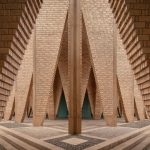
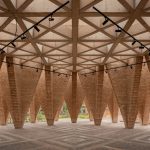
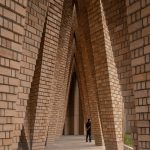
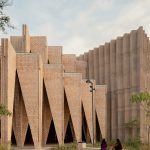
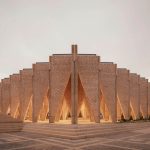
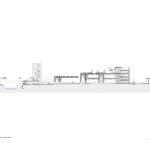
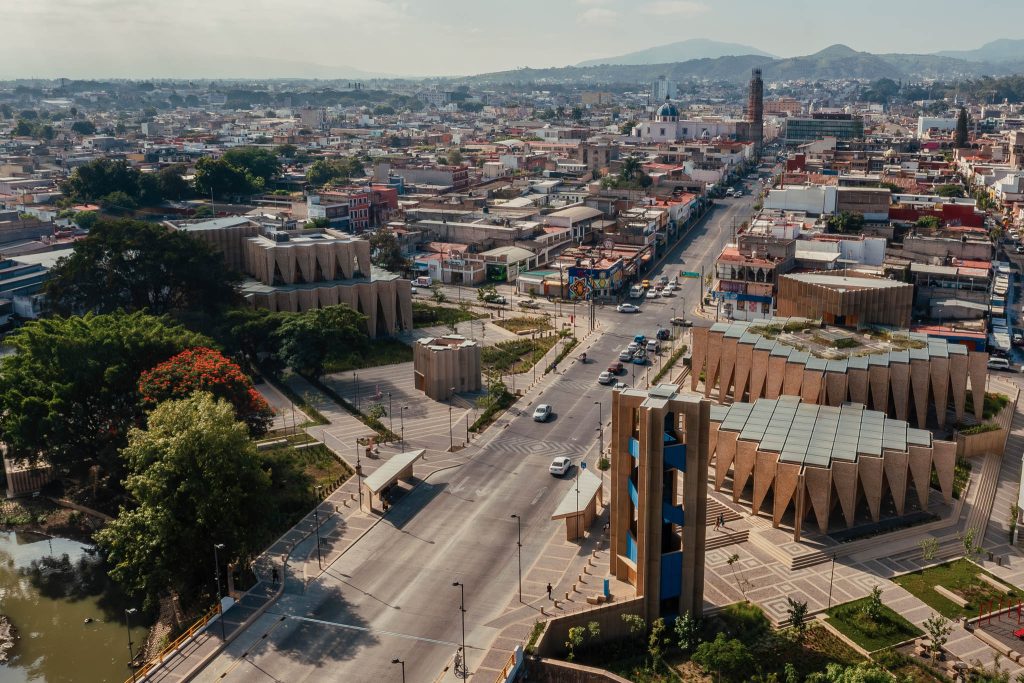
In the center of Tepic, where the Mololoa River meets one of the city’s main avenues, a once-fragmented and neglected site has been transformed. The City of Indigenous Arts, designed by Mexican studio Estudio MMX and completed in August 2024, is not a museum that stands apart from daily life. It is a working cultural infrastructure made of four brick buildings, open plazas, walkways, and a restored river edge. Workshops, exhibition spaces, markets and teaching areas sit alongside places for rest and gathering. The project gives physical form to the multicultural identity of Nayarit while recovering a piece of the city that had long been disconnected from its surroundings.
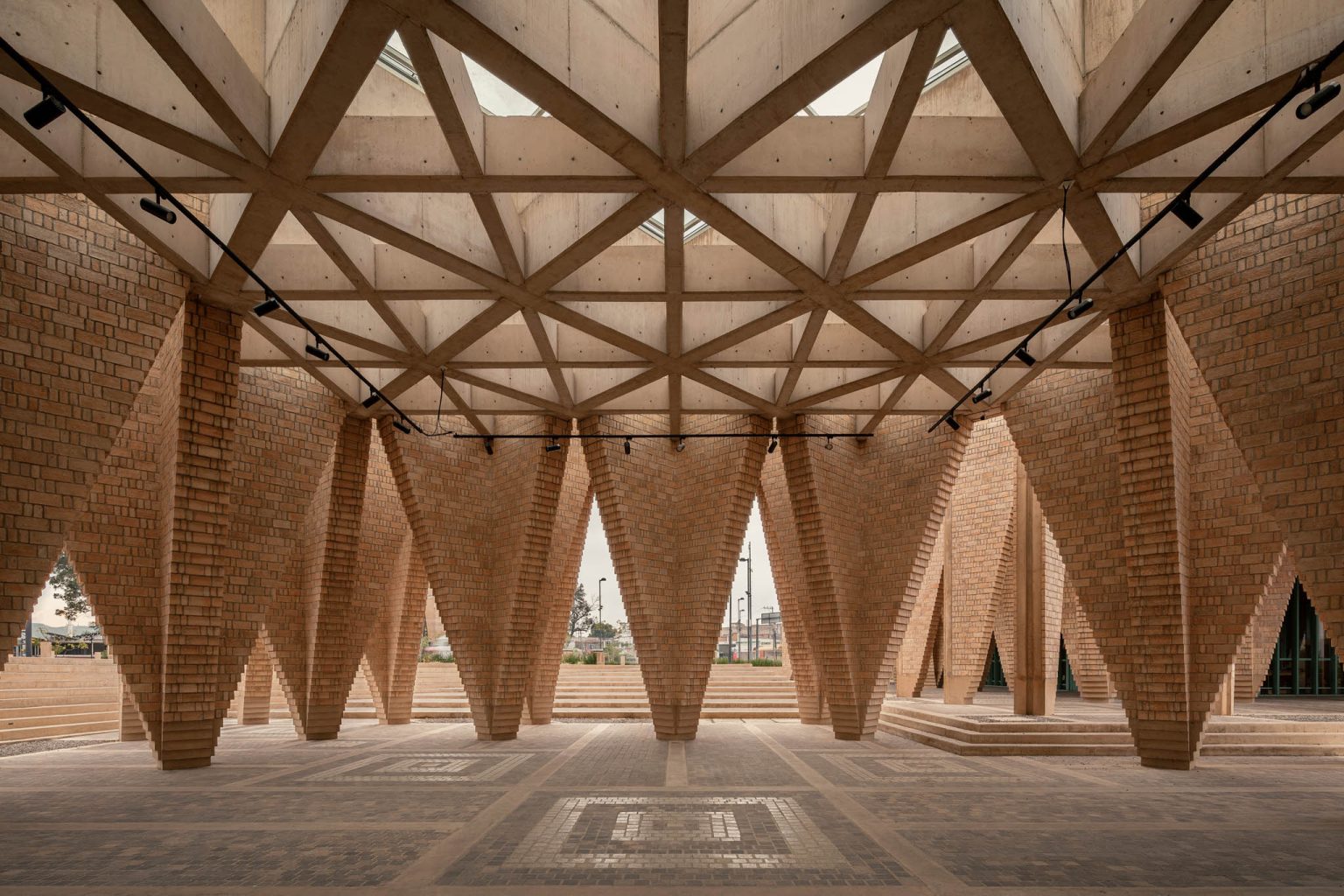
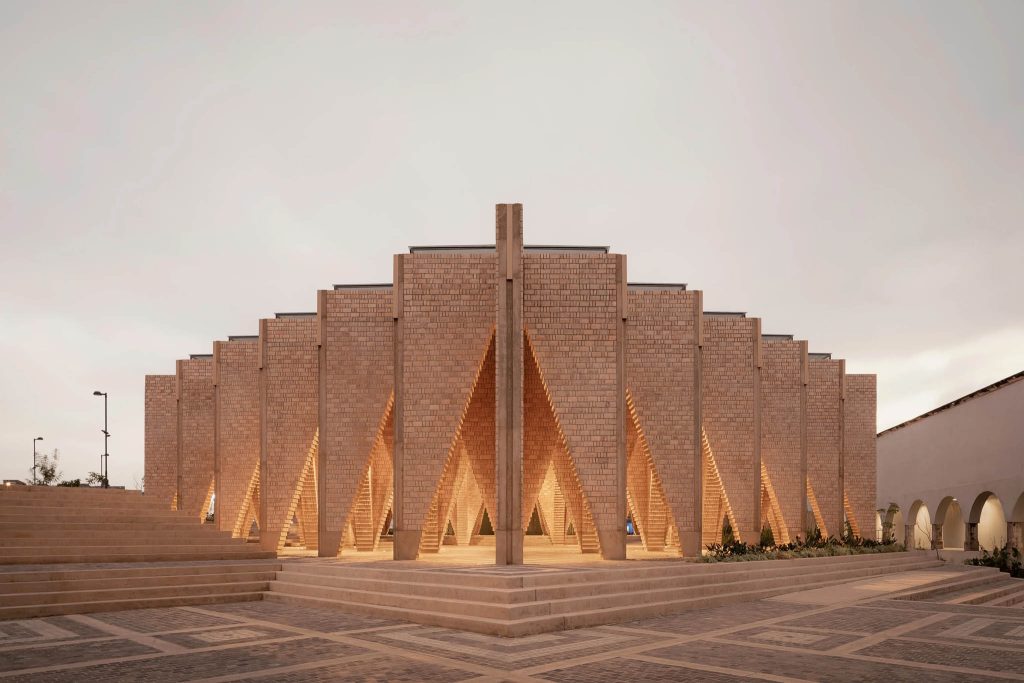
Brick is the primary material. Ordinary clay units, laid with care and repetition, create both the structure and the character of the place. The same material that appears in countless modest buildings across Mexico is here elevated to an urban scale, forming porticos, inverted pyramidal supports, patterned floors and thresholds that invite people in.
A Site Reclaimed
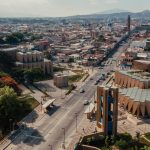
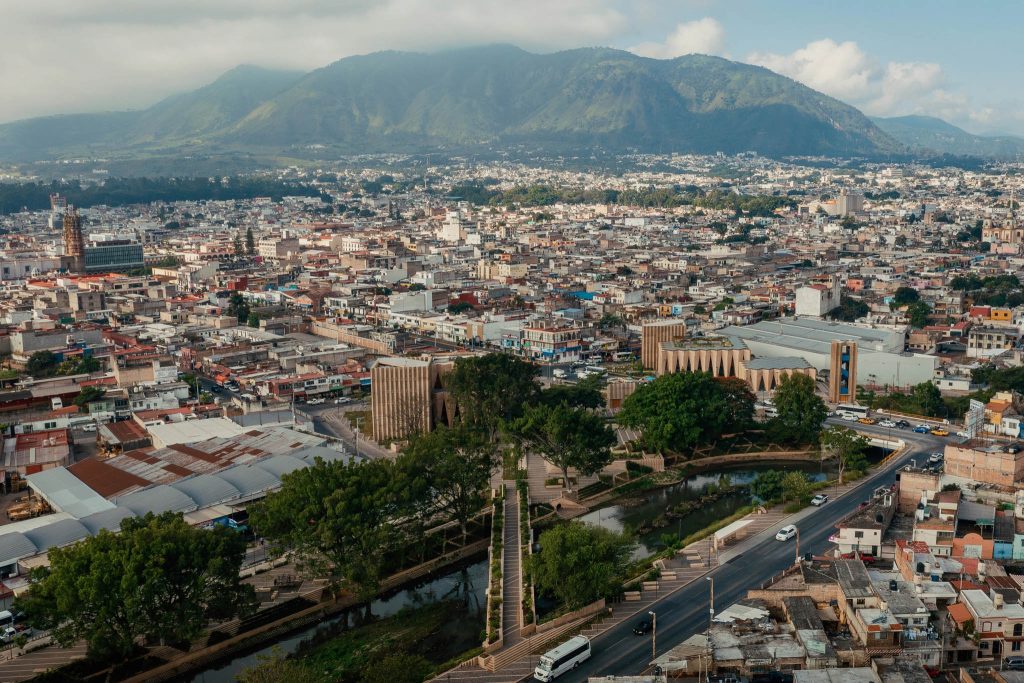
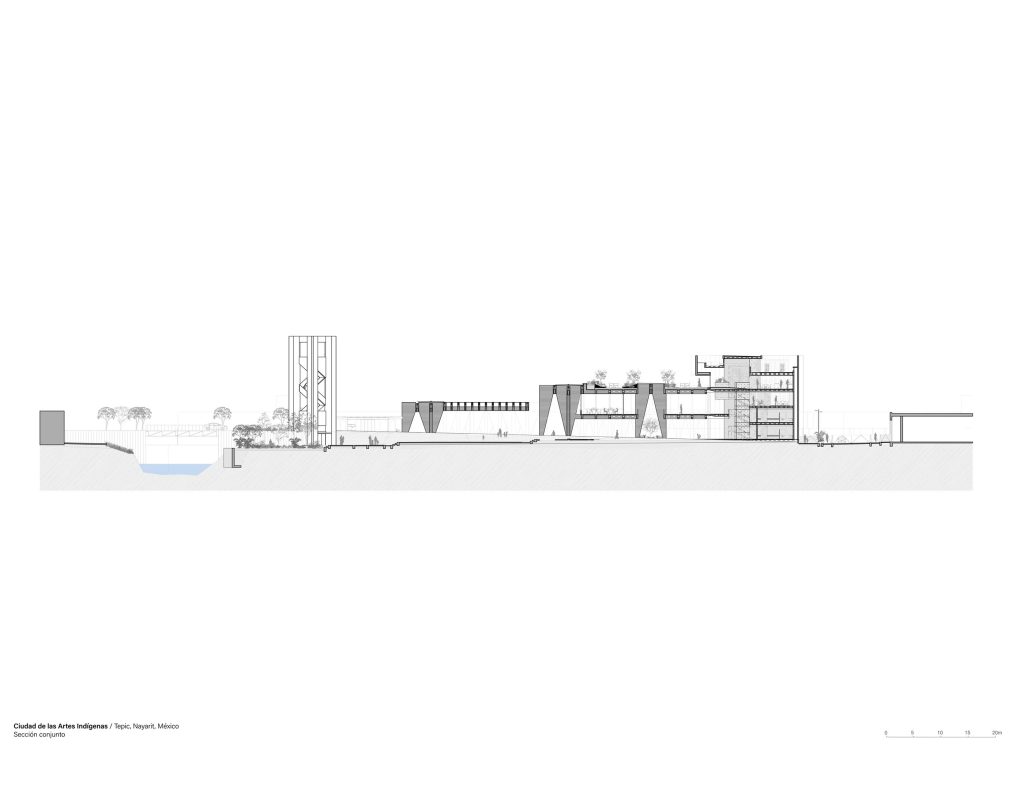
The location is strategic. The Mololoa River and Avenida México Norte converge at a point that should have been a natural civic node. Instead, the area had become residual: an aging market, an isolated plaza and a degraded river corridor. MMX treated the commission as an integral urban project rather than a collection of standalone buildings. New paving, lighting, furniture and extensive planting reconnect the site to the surrounding streets. The river itself is brought back into the life of the city through landscape interventions, walkways and ecological recovery.
The complex covers more than 32,000 square meters, of which roughly 10,000 square meters are built. The balance is public space. This proportion is deliberate. Culture here is not confined to galleries. It unfolds outdoors, under shaded porticos, along the water and in the plazas that link the buildings to one another and to the city.
Geometry Drawn from Living Traditions
The formal language of the project grows from the geometric patterns found in the crafts and worldviews of the region’s Indigenous communities. Embroidery, weaving, and beadwork often rely on the repetition of small units that accumulate into larger, coherent figures. Estudio MMX translated that logic into architecture. What appears complex at first glance is the informed repetition of simple actions: courses of brick stepped outward to form inverted pyramids, modules arranged into stepped rhomboid plans, thresholds set at varying heights.
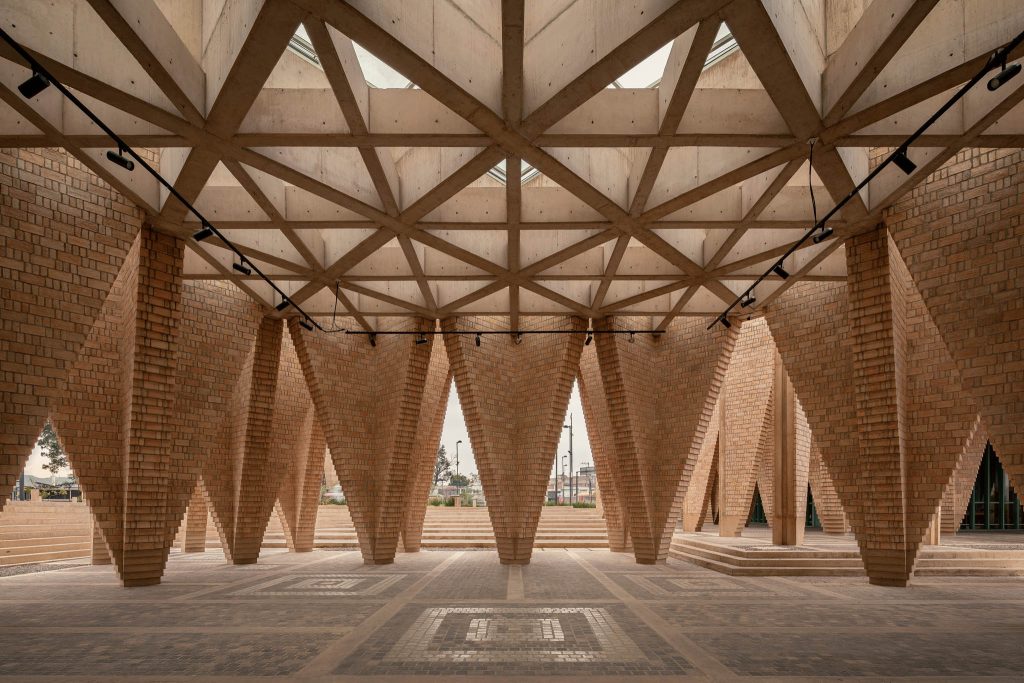
Brick proved ideal for this approach. As a unit, it is small and familiar. Through careful stacking and corbelling it can generate three-dimensional form without specialized pieces. The inverted pyramidal columns that define the main covered spaces are built course by course, each layer projecting slightly beyond the one below until the sides meet. The technique recalls traditional false arches while remaining entirely constructible with ordinary materials and local skills.
The result is an architecture that feels both contemporary and continuous with regional building culture. The craftsmanship of the brickwork itself becomes a quiet echo of the artisanal work that takes place inside and around the buildings.
Four Buildings, One Public Realm
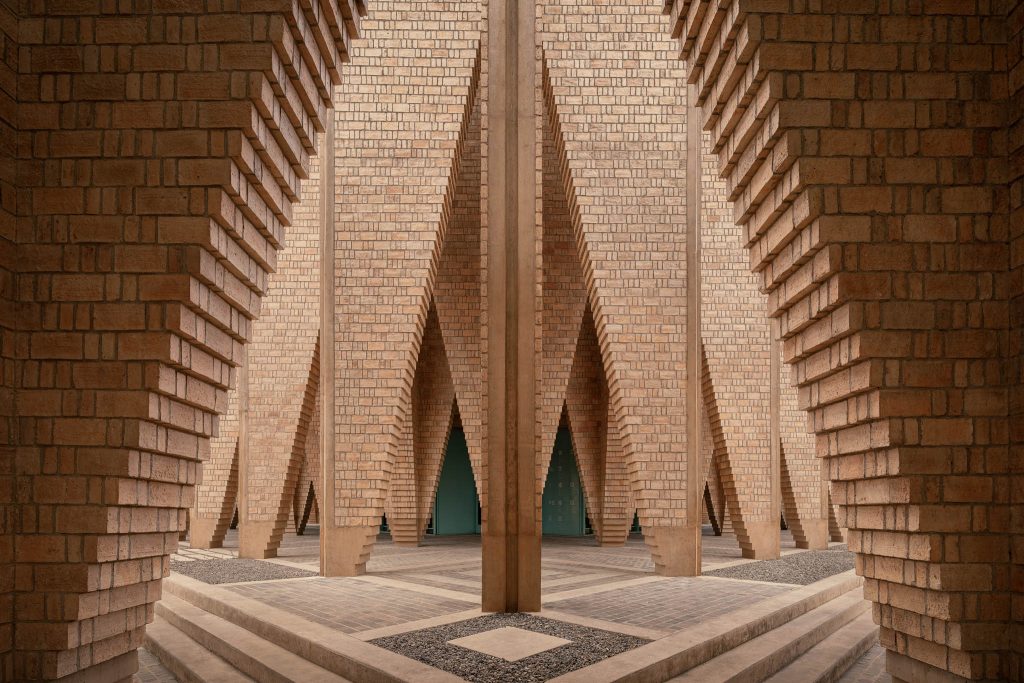
The program is distributed across four volumes. Workshops allow artisans to produce and teach traditional techniques. Exhibition spaces display the results. Market areas enable fair-trade commerce. Supporting spaces accommodate administration and services. All volumes are naturally ventilated and daylit, creating comfortable conditions for the activities they house without heavy mechanical systems.
Between the buildings, open spaces form a continuous sequence of plazas and shaded routes. These areas host gatherings, temporary markets, festivals and everyday leisure. The river edge is treated as an extension of this public realm rather than a boundary. Medicinal and edible plantings, play areas and seating reinforce the sense that the project belongs to the community rather than to a single institution.
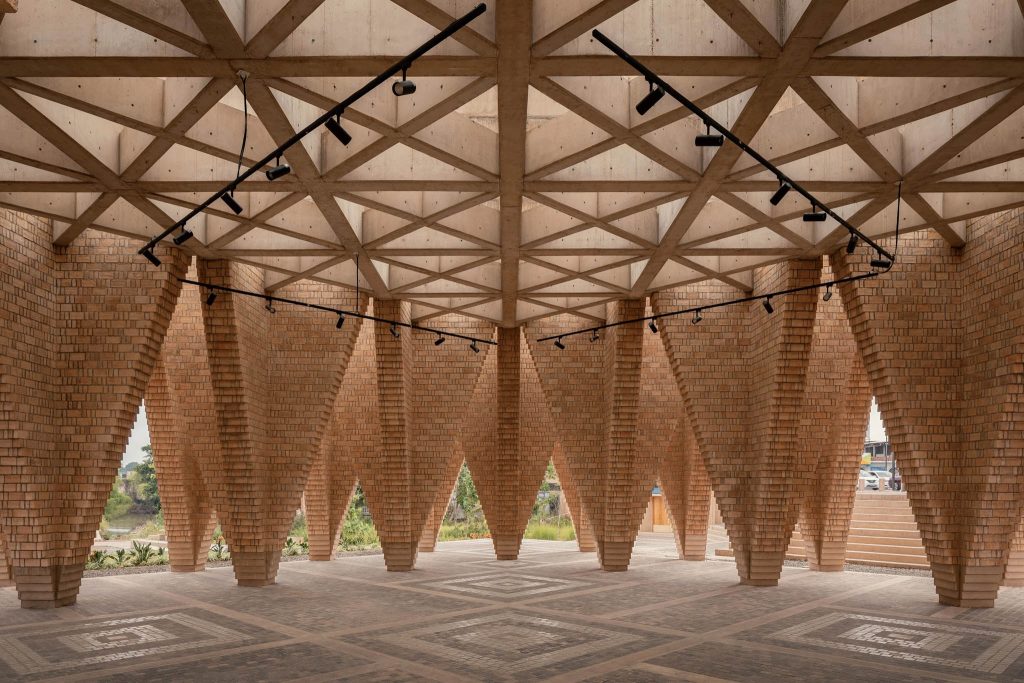
The interiors are warm and restrained. Brick walls, concrete roofs with geometric ribs, and carefully placed openings create spaces that feel dignified without being formal. The atmosphere supports concentration in workshops and quiet looking in exhibition rooms, while remaining open enough for larger public events.
Material as Cultural Statement
Choosing brick was not only a practical decision. It was a cultural one. Brick connects the project to the ordinary building practices of the region while allowing the architects to achieve expressive form. Its durability suits intensive public use and requires little maintenance. Its thermal mass and the deep shading provided by the porticos contribute to passive comfort in Tepic’s climate.
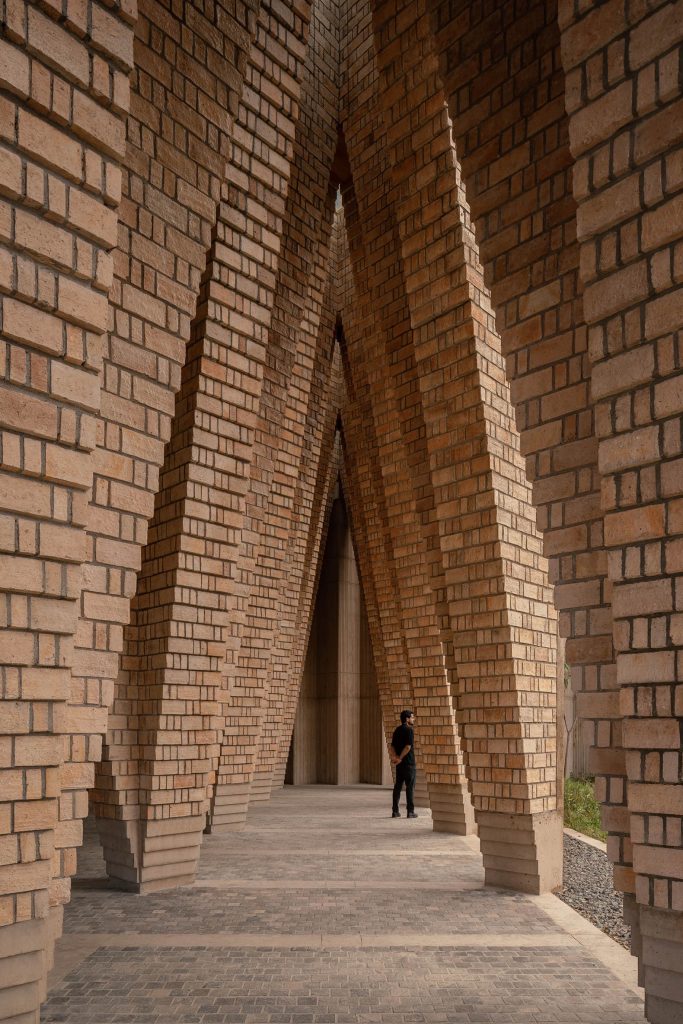
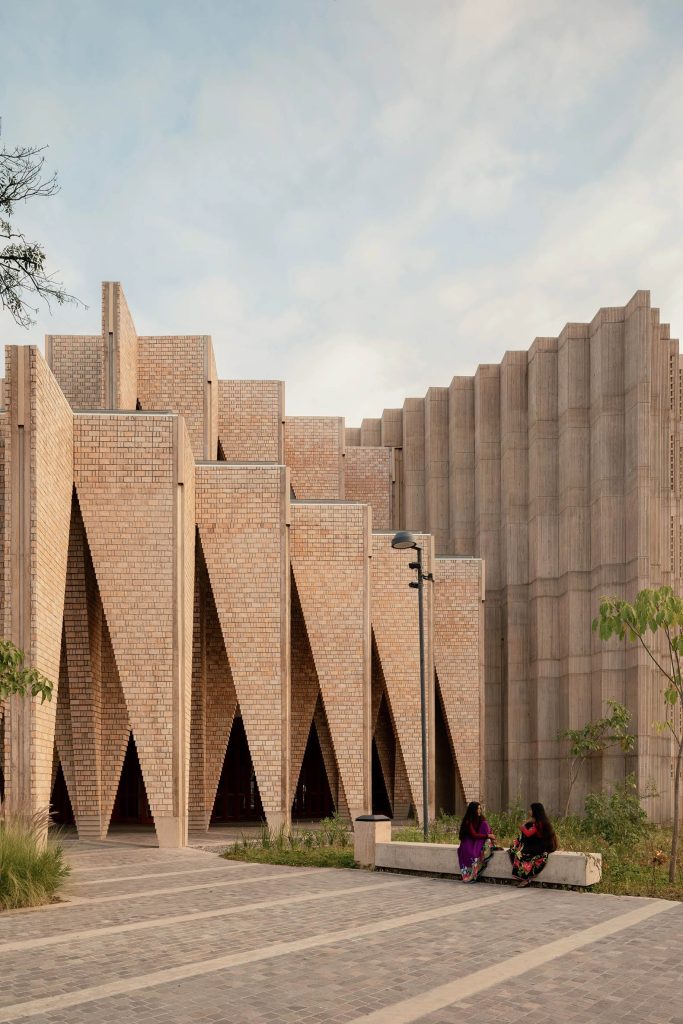
By taking a common material to an urban scale and refining its use through repetition and geometry, Estudio MMX demonstrates that architectural ambition does not require exotic or imported systems. The buildings feel rooted. They also feel generous. The craft of their construction honors the craft they are designed to support.
An Architecture of Recognition
The City of Indigenous Arts is explicitly framed as a place of recognition and transmission. It does not freeze Indigenous cultures as heritage objects. Instead, it provides infrastructure for living practices: the teaching of techniques, the production of work, the exhibition of results, and the economic exchange that allows traditions to continue. Artisans are not visitors to the complex. They are its primary users.
This orientation shapes every aspect of the design. Spaces are sized for workshops rather than only for display. Circulation is open and legible. Outdoor rooms invite informal occupation. The river, once ignored, becomes part of the daily experience of the place. In recovering a neglected urban fragment, the project also recovers a relationship between the city and the knowledge systems of its original peoples.
A Model for Cultural Infrastructure
Completed in 2024, the project has already received international attention, including recognition at the Brick Awards and selection as a finalist for the Seoul Design Award. These accolades matter less than the everyday life the complex now supports. People gather under the brick porticos. Children play near the river. Artisans work and sell. Visitors encounter living traditions rather than static displays.
Estudio MMX has produced more than a set of buildings. It has produced a piece of the city that is both specific and open-ended. Specific in its material, its geometry, and its commitment to the communities it serves. Open-ended in the ways those communities will continue to inhabit and transform it.
In Tepic, brick, geometry, and public space come together to create a lasting home for Indigenous arts. The City of Indigenous Arts shows that architecture can honor cultural identity not by representing it from the outside, but by providing the physical conditions for it to continue to grow.