

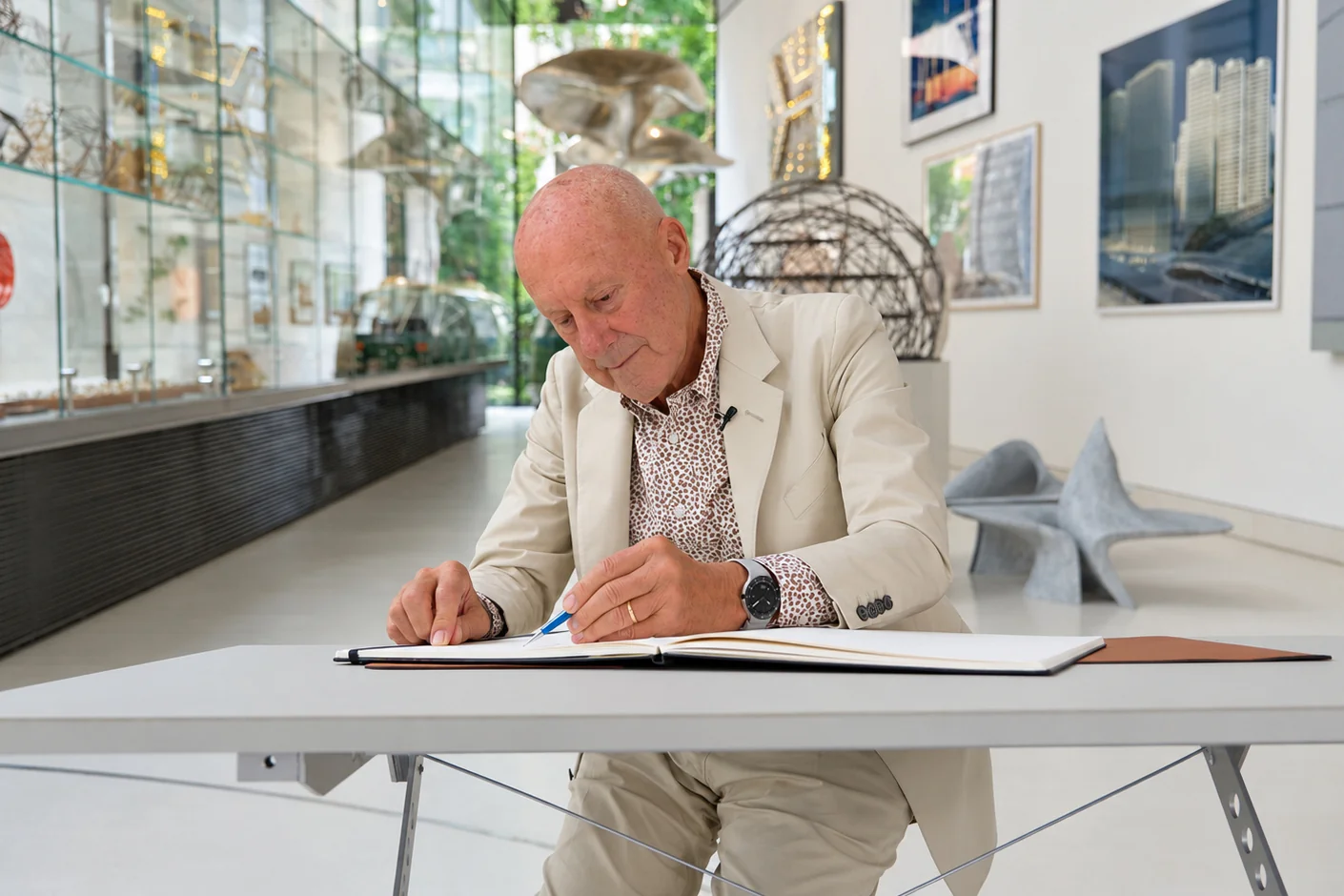






Norman Foster has designed his first watch in collaboration with Lebond. Named Lebond Norman Foster, the watch is neither a miniature building nor jewelry. It is a functional tool, shaped by the same questions that have guided his architecture for six decades: how something is made, how it performs, and how it feels in daily use.
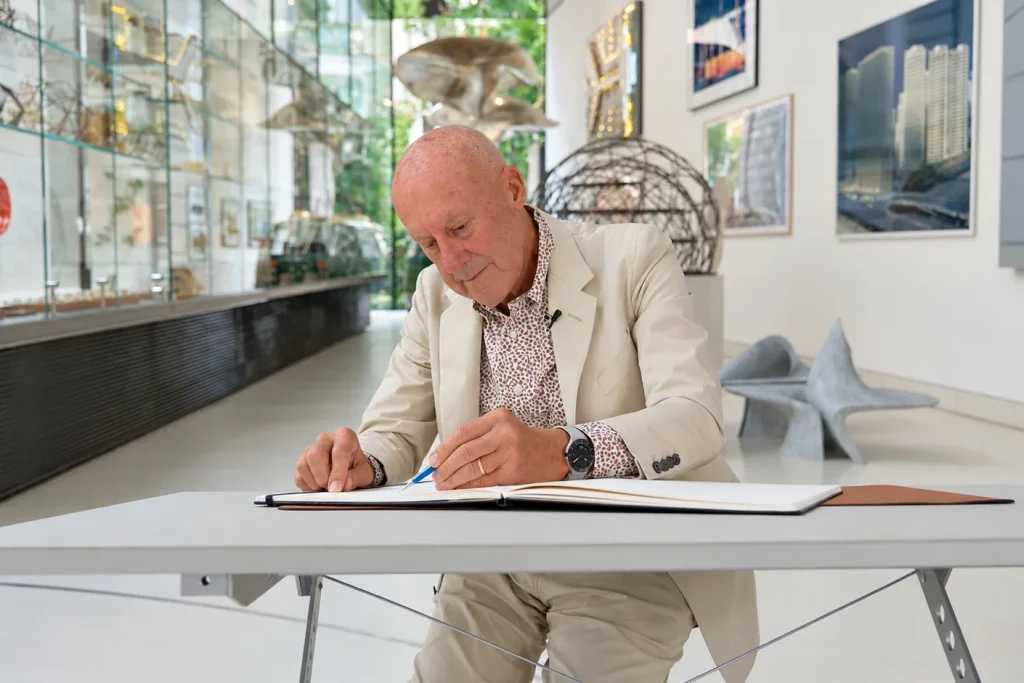
“Good design is a matter of scale. The principles that hold a bridge together can also hold a watch on a wrist.”
A Continuous Form Without Lugs
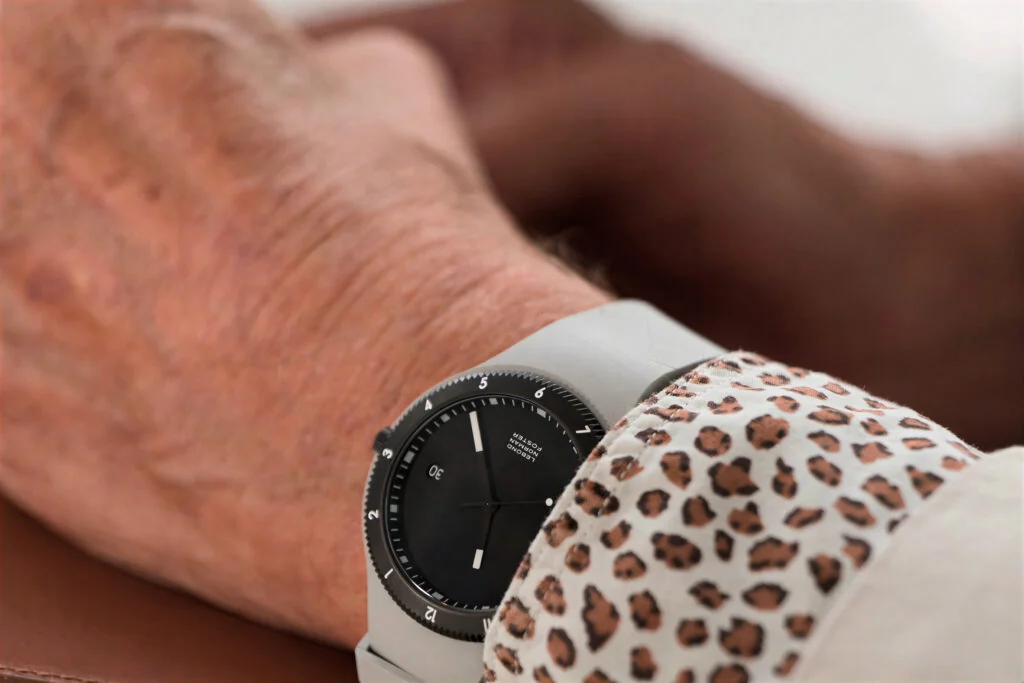
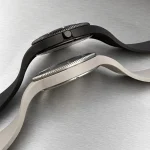
The collaboration with Swiss independent brand Lebond and the Design & Innovation Unit of the Norman Foster Foundation produced a 38.5-millimeter Grade 5 titanium watch that widens to 40 millimeters where the strap joins the case. Traditional lugs have been removed. The strap wraps continuously around the case, creating a single streamlined profile. Foster described the decision simply: once the strap is treated as a continuation of the case rather than an attachment, the whole object begins to make sense.
Material Clarity and Everyday Performance
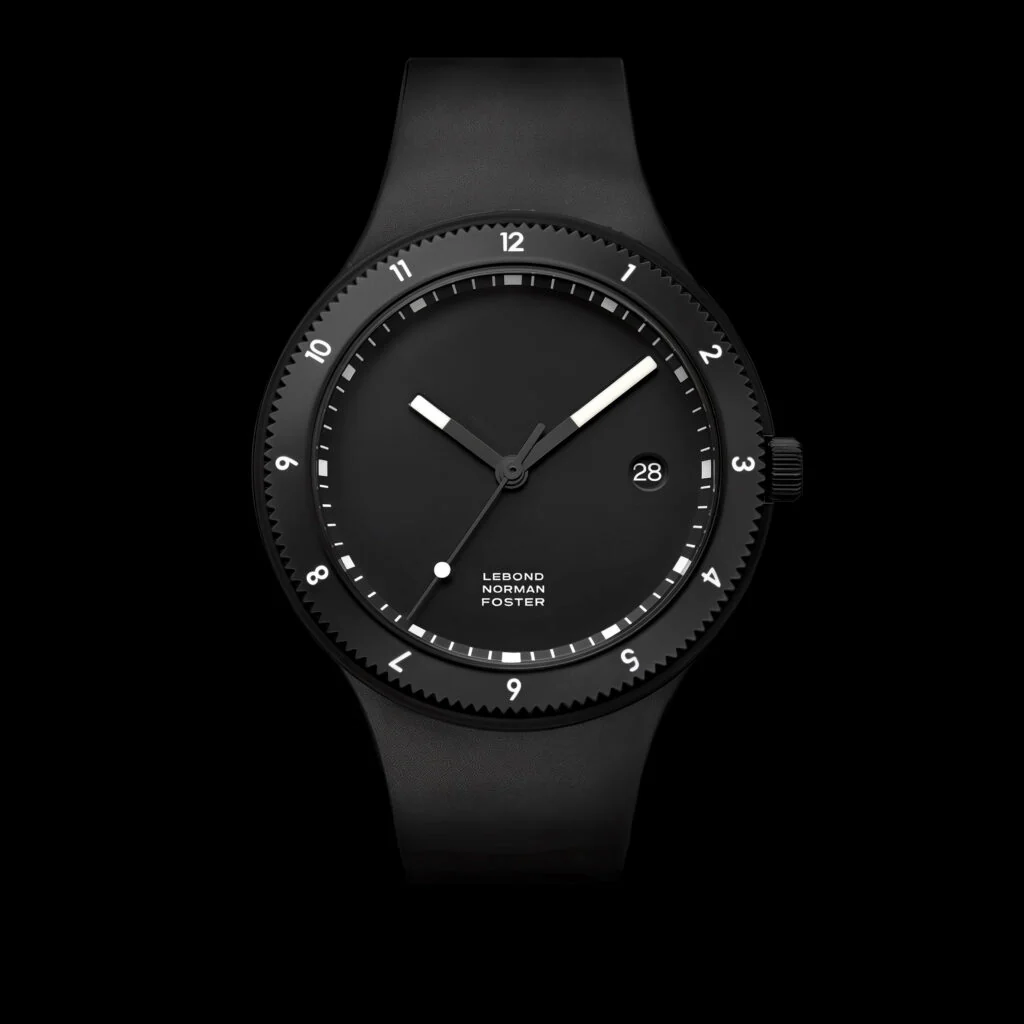
The material choice is deliberate. Grade 5 titanium is light, strong, and resistant to corrosion. It is finished either with a micro-sandblasted surface for the Natural Titanium Edition or with a matte black diamond-like carbon coating for the Black Edition. Both versions carry a bidirectional 12-hour rotating bezel that allows a second time zone to be read from the main hour hand. The function comes directly from Foster’s life as a pilot and frequent traveler. There is no extra GMT hand. The solution is economical and clear.
The dial is restrained. Hands are coated with Super-LumiNova. Typography is legible. A date window sits cleanly at three o’clock. A slightly domed sapphire crystal with anti-reflective coating protects the surface. Water resistance is rated to 50 meters.
Visible Engineering

Inside sits the Swiss automatic ETA 2892-A2 movement with a 50-hour power reserve. Through the sapphire case back, the custom rotor is visible, perforated with five precise openings and finished in blue for the Natural edition and red for the Black edition. Foster has said that engineering can be beautiful when the way something works is made visible. The rotor is the clearest expression of that belief.
Design Thinking Across Scales
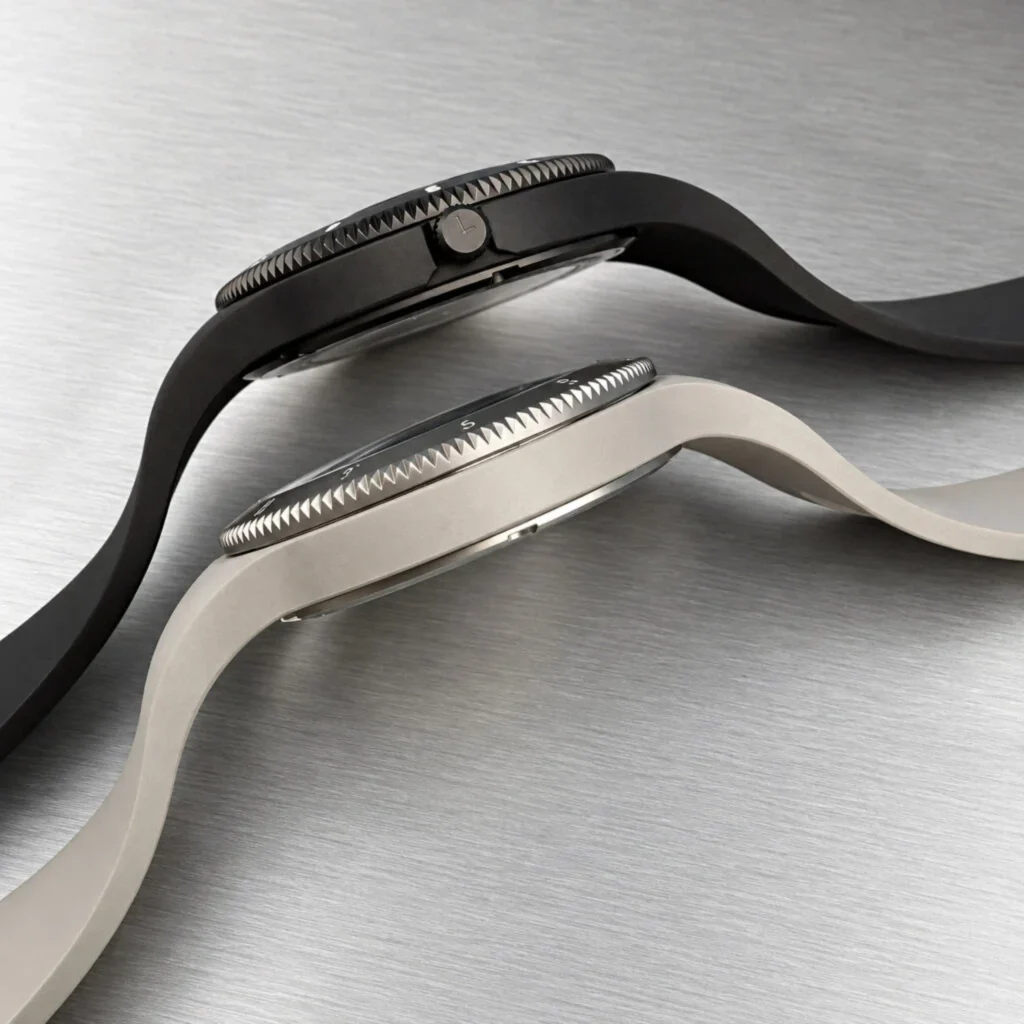
What makes the project interesting from a design and computational perspective is the consistency of method. Foster has long used digital tools to test structural efficiency, material performance and human comfort at the scale of airports, towers and bridges. Here the same logic is applied to an object that must sit against skin for twelve hours a day. The continuous case-to-strap junction was refined through iterative modeling so that the watch would neither dig into the wrist nor feel loose. The proportions were adjusted until the 10-millimeter thickness felt substantial without becoming bulky.

The price is €3,500 for either edition. The watch is available directly from Lebond with worldwide shipping. It is not positioned as a limited collector’s piece. It is offered as a working instrument that happens to carry the name of one of the most influential architects of the past half-century.
A Timeless Tool
In interviews, Foster has returned to the same idea: a watch is intensely personal. It travels with you. It becomes part of everyday life. He hopes the Lebond Norman Foster feels timeless rather than fashionable. Looking at the finished object, the claim holds. There is no decorative excess. Every surface and every junction has a reason. The same clarity that defines the Hong Kong Bank or the Millau Viaduct appears here in titanium and rubber, reduced to the scale of the wrist.