



Distinguishing places around the world as either natural formations or human-made structures may not always be straightforward. Many places dating back to antiquity bring these two worlds together: cliffs and temples, caves and sacred sites, coastal bays and ancient fortresses. In cities and buildings carved into mountains or caves, often to provide security and stability, every architectural curve seems to emerge naturally from the mountains or rivers.
Across the globe, civilizations have carved impressive cities, buildings, temples, and settlements directly into mountains and rock faces. Among the most fascinating examples of harmony with nature, these ancient structures carved into mountains reveal the creativity and skills of ancient civilizations. Rather than transporting materials from elsewhere, ancient craftspeople utilized the stone already present, constructing their edifices directly into the slopes of mountains and cliffs. Designed for longevity, many of these ancient structures can still be seen around the world today.
Across the globe, civilizations have carved impressive cities, buildings, temples, and settlements directly into mountains and rock faces. Among the most fascinating examples of harmony with nature, these ancient structures carved into mountains reveal the creativity and skills of ancient civilizations. Rather than transporting materials from elsewhere, ancient craftspeople utilized the stone already present, constructing their edifices directly into the slopes of mountains and cliffs. Designed for longevity, many of these ancient structures can still be seen around the world today.
Here are 15 fascinating structures carved into mountains:
1. Petra, Jordan
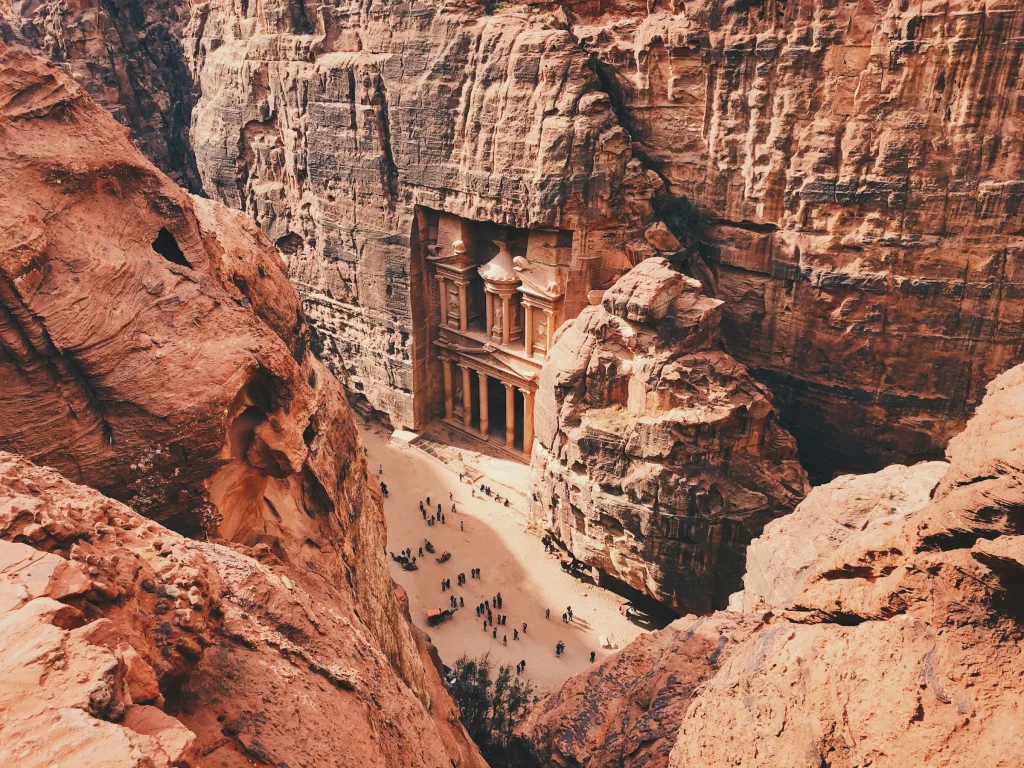
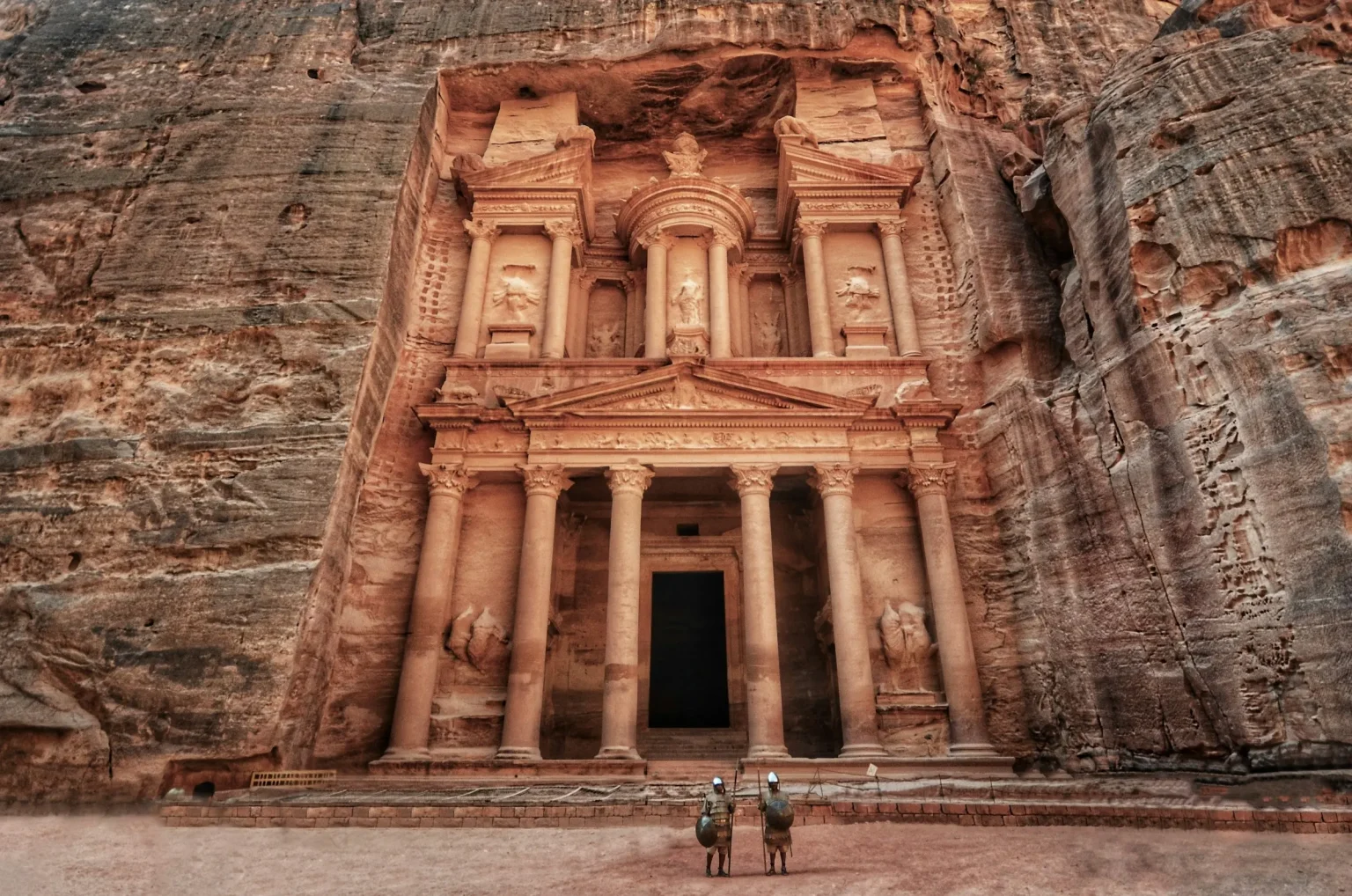
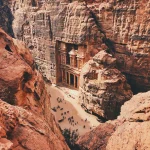
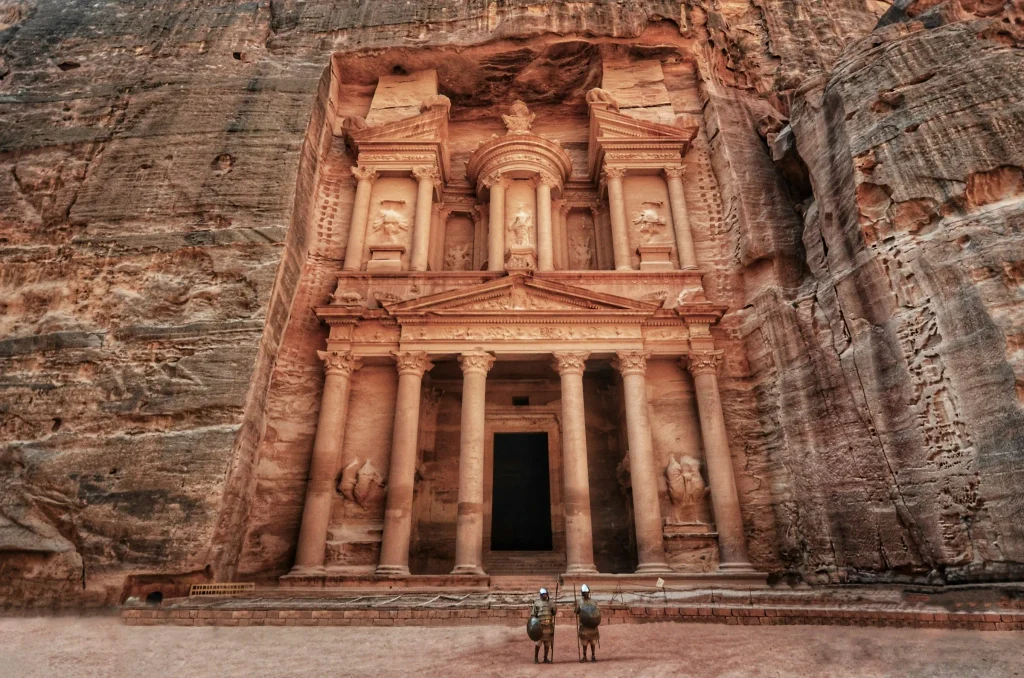
Half-built and half-carved into rock, Petra is surrounded by mountains filled with narrow passages and canyons. Inhabited since prehistoric times, this Nabataean caravan city is situated between the Red Sea and the Dead Sea, serving as a vital crossroads between Arabia, Egypt, and Syria-Phoenicia. Blending ancient Eastern traditions with Hellenistic architecture, Petra is renowned for its sandstone buildings carved directly into the mountains.
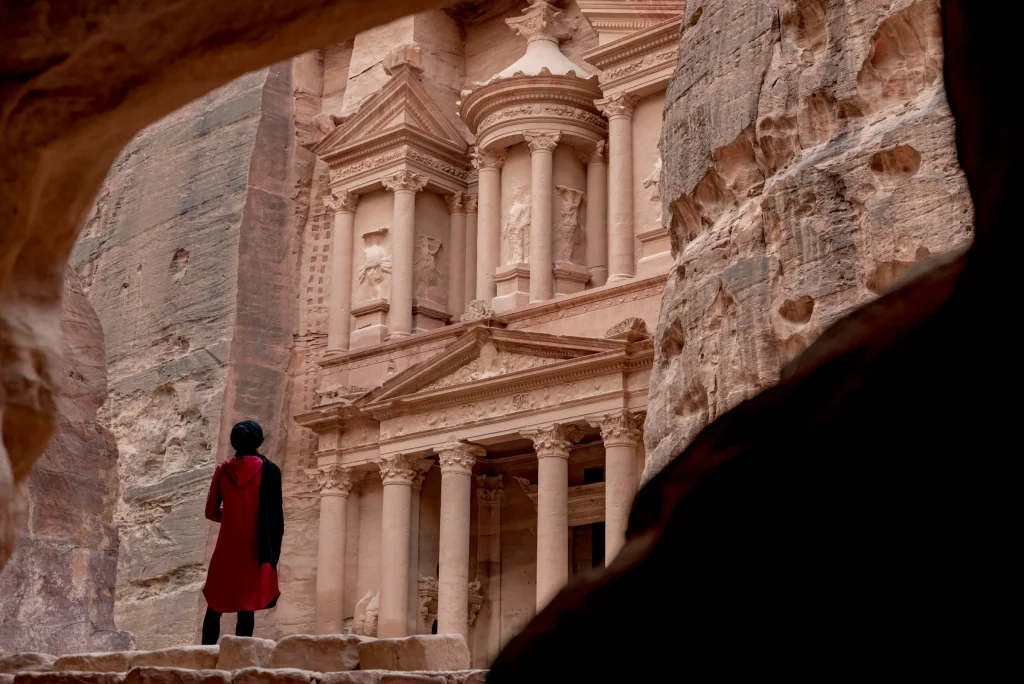
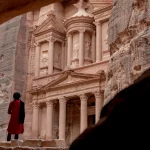
The outstanding universal value of Petra lies in its extensive and elaborate tomb and temple architecture; its high places of worship; a sophisticated network of cisterns, reservoirs, channels, tunnels, and diversion dams designed to manage and conserve seasonal rainfall; and its vast archaeological remains, which include evidence of copper mining, temples, churches, and other public buildings. Visitors passing through the narrow Siq Canyon encounter Al-Khazneh, carved into a sandstone rock face. Featured in films such as Indiana Jones and the Last Crusade, Petra is also a UNESCO World Heritage Site.
2. Lycian Tombs, Türkiye
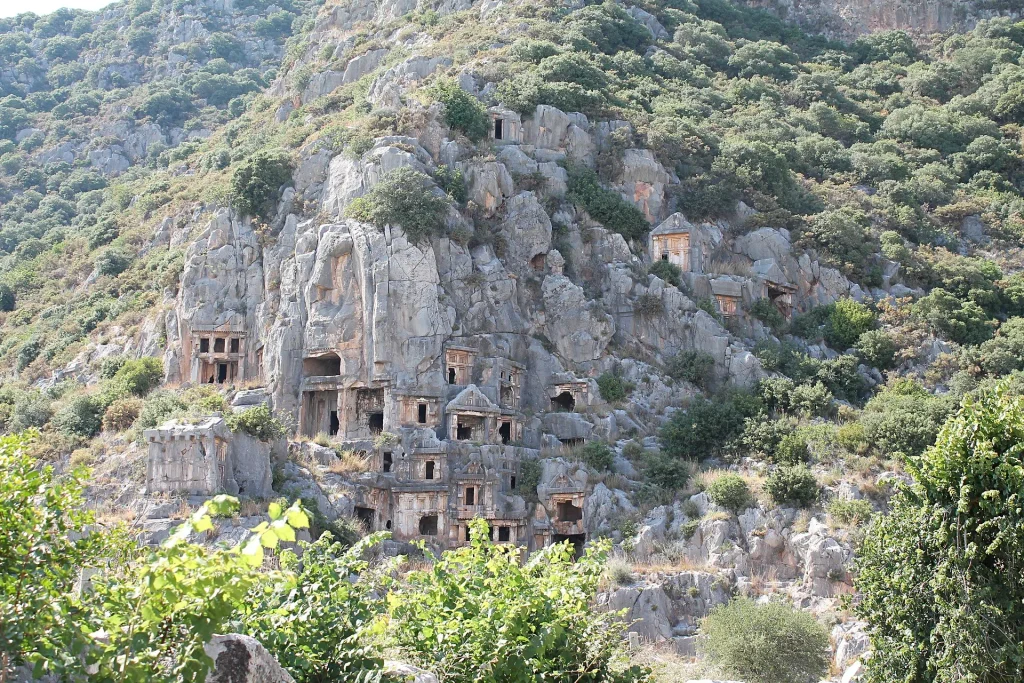
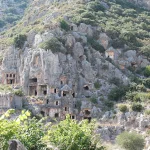
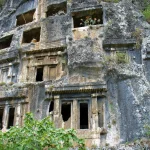
The Lycian Tombs, overlooking the town of Fethiye in Türkiye, date back to the 4th century BC. Carved into steep rocky cliffs along the mountainside, these monumental burial chambers dominate the town and the bay below, serving as one of the most visible reminders that ancient Telmessos once occupied the same Mediterranean hillside. The Lycians buried their dead in elevated locations, driven by the belief that magical, winged creatures would carry the departed into the afterlife. This belief explains why they carved tombs high into the vertical limestone faces overlooking the settlements.

Carved from soft limestone, the facades of the Lycian tombs resemble Hellenistic temples, complete with columns on either side. The most striking example, the Tomb of Amyntas, imitates traditional Lycian wooden house architecture adapted to stone. Identified by an inscription carved into its façade, the tomb features a temple-style front with Ionic columns, a triangular pediment, and a burial chamber carved into the rock inside.
3. Mesa Verde Cliff Dwellings, USA
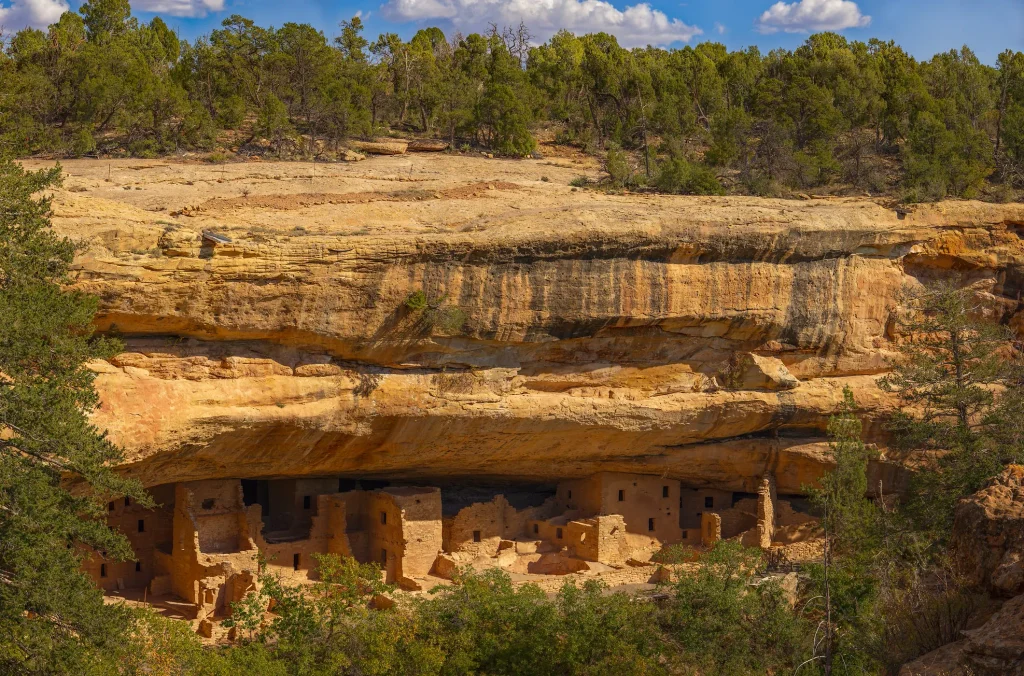
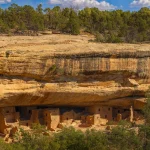
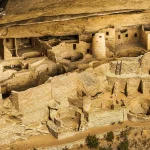
Mesa Verde National Park in Colorado is home to some of the largest and best-preserved cliff dwellings in North America. Nestled within a picturesque canyon, these complex sandstone and mud structures were built by the Ancestral Pueblo people in the 12th century. Although they were inhabited for only a century, the structures were built to last and were cherished as homes by those who lived in them. The original inhabitants were eventually forced to abandon the settlement in the 13th century due to decades of drought.
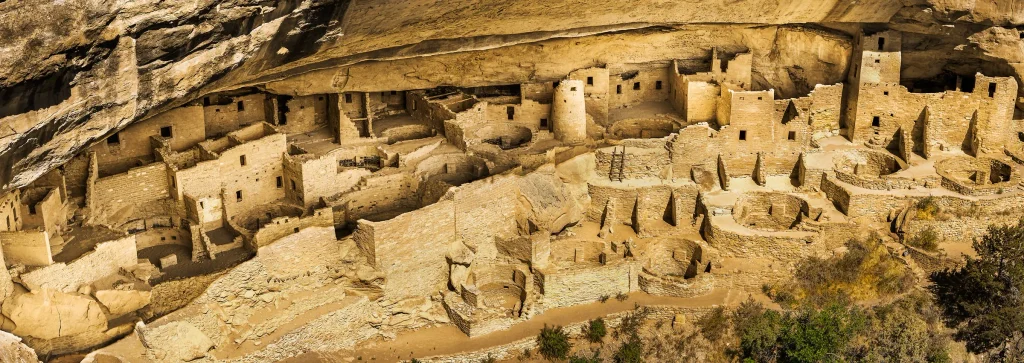
Most of the dwellings built into the cliffside rock formations contain fewer than five rooms. Living areas can be identified by the presence of hearths for fires and granaries used for grinding corn. The most iconic site in Mesa Verde, Cliff Palace, was a lively and bustling community with 150 rooms and 23 kivas, likely housing more than 100 people. With approximately 600 cliff dwellings and several thousand other archaeological structures, Mesa Verde is a UNESCO World Heritage Site of major historical and engineering significance.
4. Gila Cliff Dwellings, USA
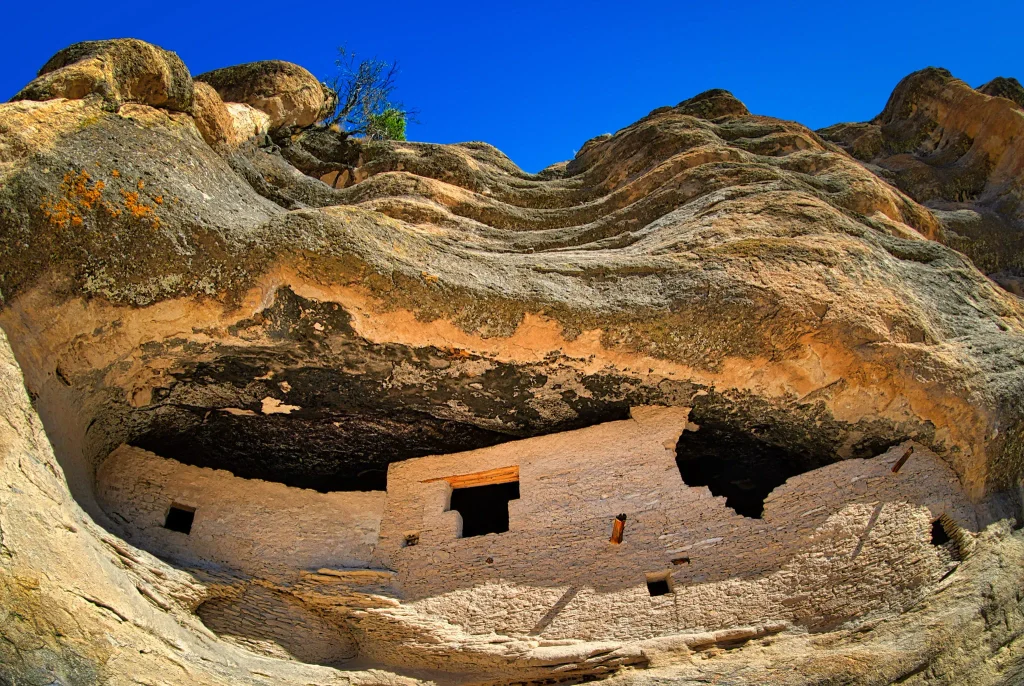
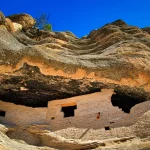
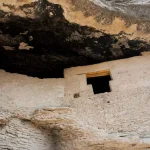
Located approximately 400 miles south of Mesa Verde National Park in Colorado, the Gila Cliff Dwellings are a remarkable example of ancient cave settlement architecture. Built primarily in the 1280s, this cliffside settlement offers a glimpse into the homes and lives of the people of the Mogollon culture. Archaeologists estimate that about 8 to 10 families lived in these cliff alcoves over the course of a single generation. By around 1300, the Mogollon people had left the settlement, leaving the walls behind.
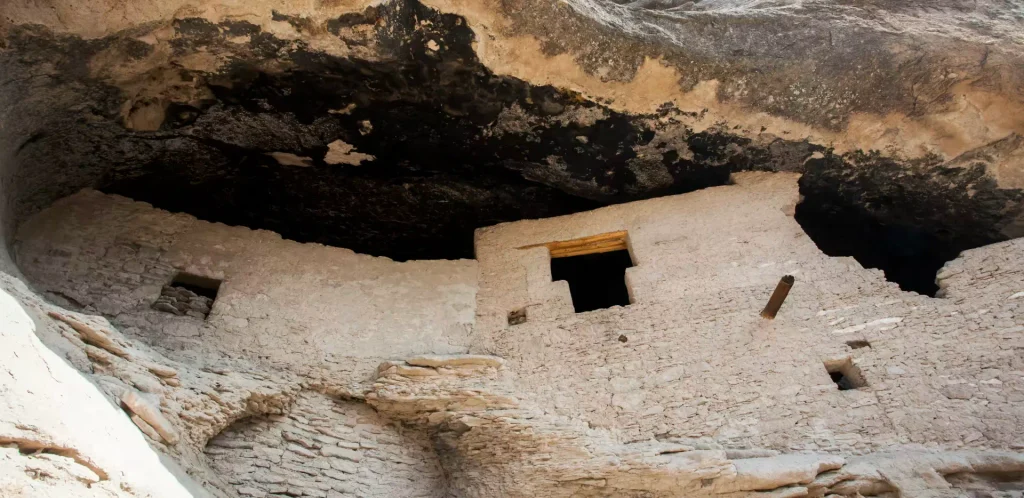
The dwellings occupy five natural caves formed by erosion, which once housed the Tularosa Mogollon people. Approximately 42 rooms were constructed using locally sourced stone. All the wooden beams visible in the dwellings are original.
5. Ellora Caves, India
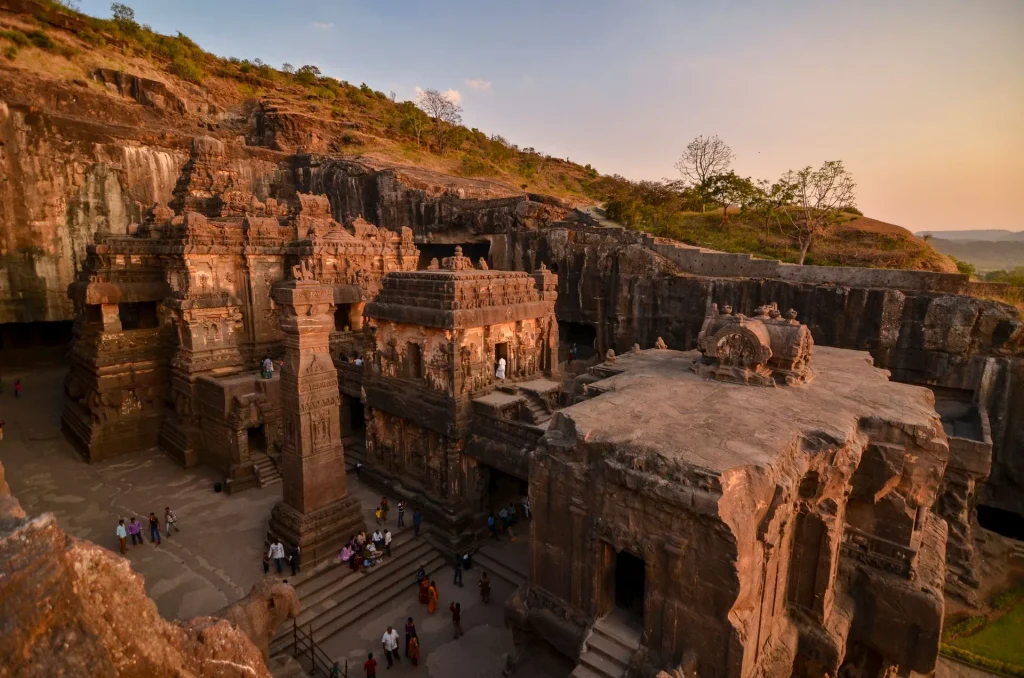
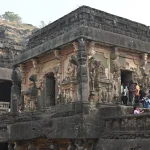
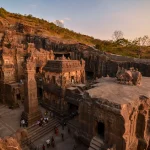
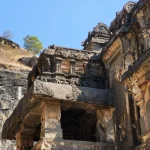
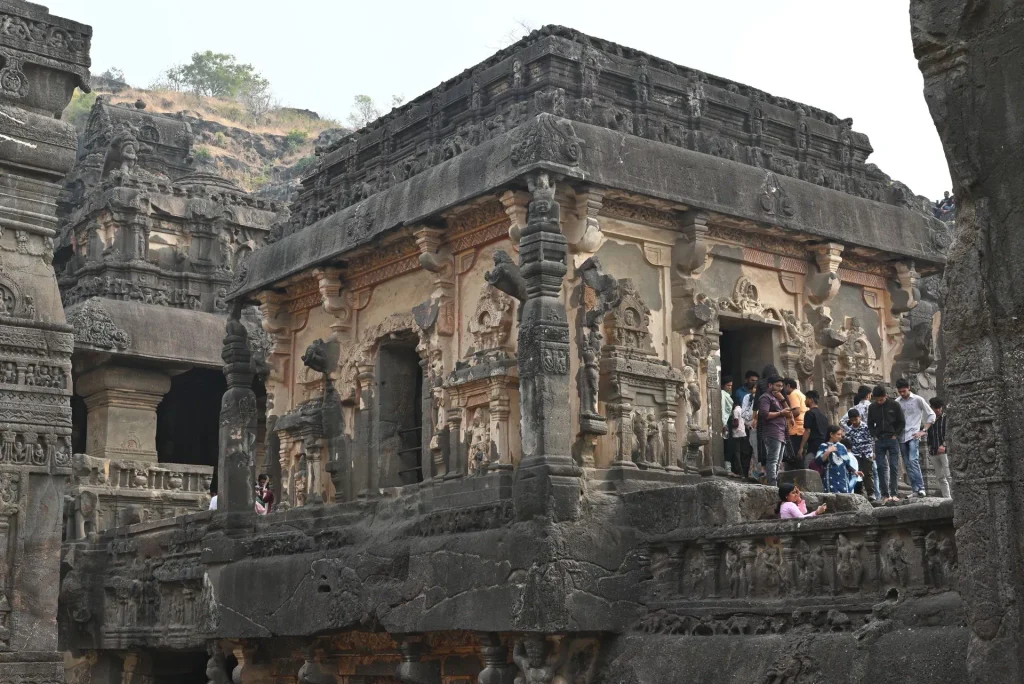
Spread across a 2-kilometer area in Maharashtra, India, Ellora is a UNESCO World Heritage Site known for its magnificent temples and monuments carved into volcanic rock. Featuring 100 caves carved into basalt cliffs, this complex was created by excavating a single mountain. Of these, 34 temple caves are open to visitors, including 17 Hindu, 12 Buddhist, and five Jain caves. This archaeological site highlights the coexistence of different religions and the spirit of religious tolerance in India. The design of each temple, all carved into the basalt rock, varies according to the specific faith it represents.
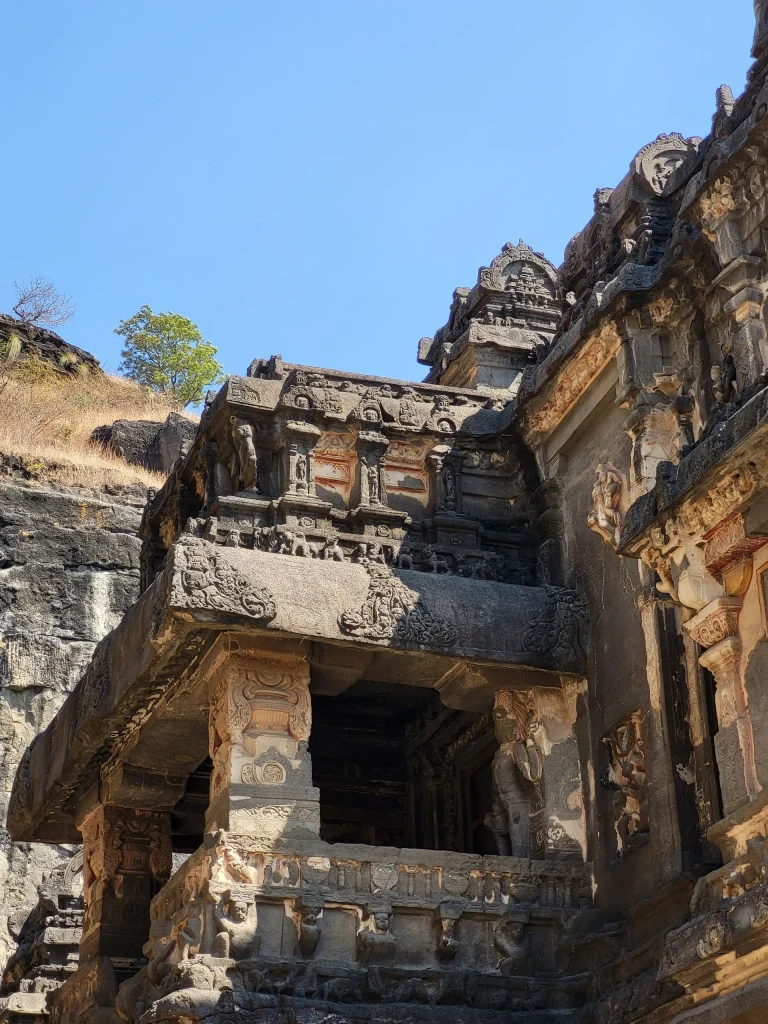
Dating back to between 600 and 1000 CE, Ellora represents one of India’s greatest architectural achievements through its continuous series of monuments. As both a unique artistic creation and a technological feat, Ellora also reflects India’s spirit of tolerance.
6. Church of Saint George, Ethiopia
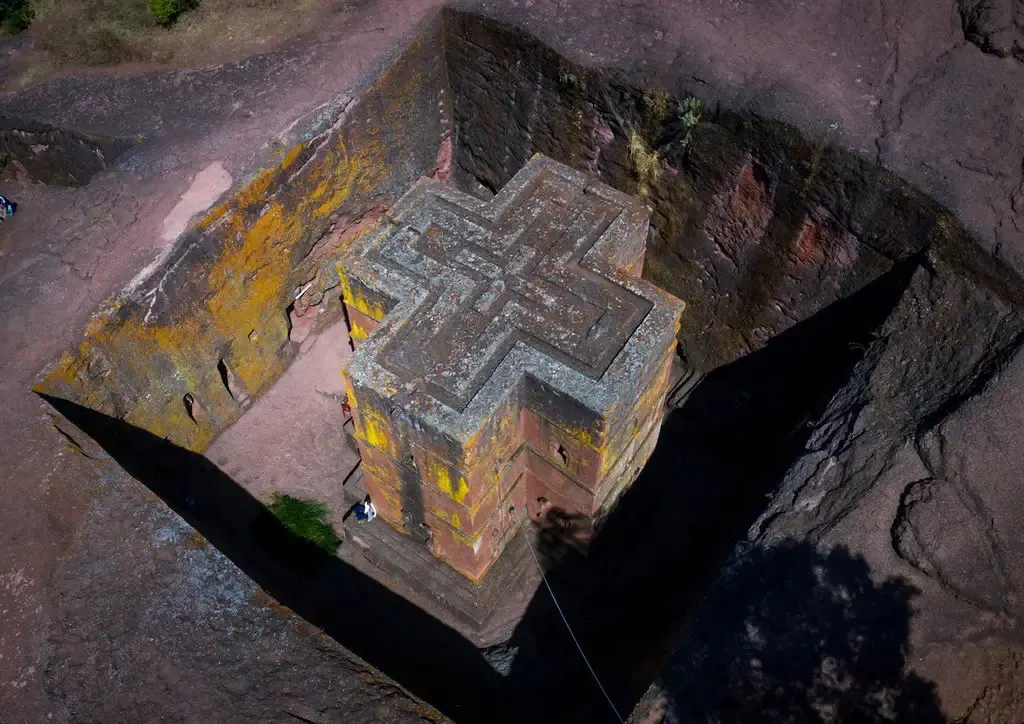
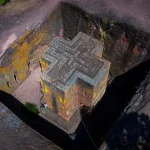
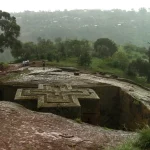
The Church of Saint George, also known as Bete Giyorgis, is a cross-shaped church carved from a single block of rock. As the last of the 11 rock-hewn churches built in Lalibela, it was commissioned in the late 12th or early 13th century by King Gebre Mesqel Lalibela of the Zagwe dynasty. Connected to the other churches by a series of trenches, this monolithic structure was carved downward from the top.
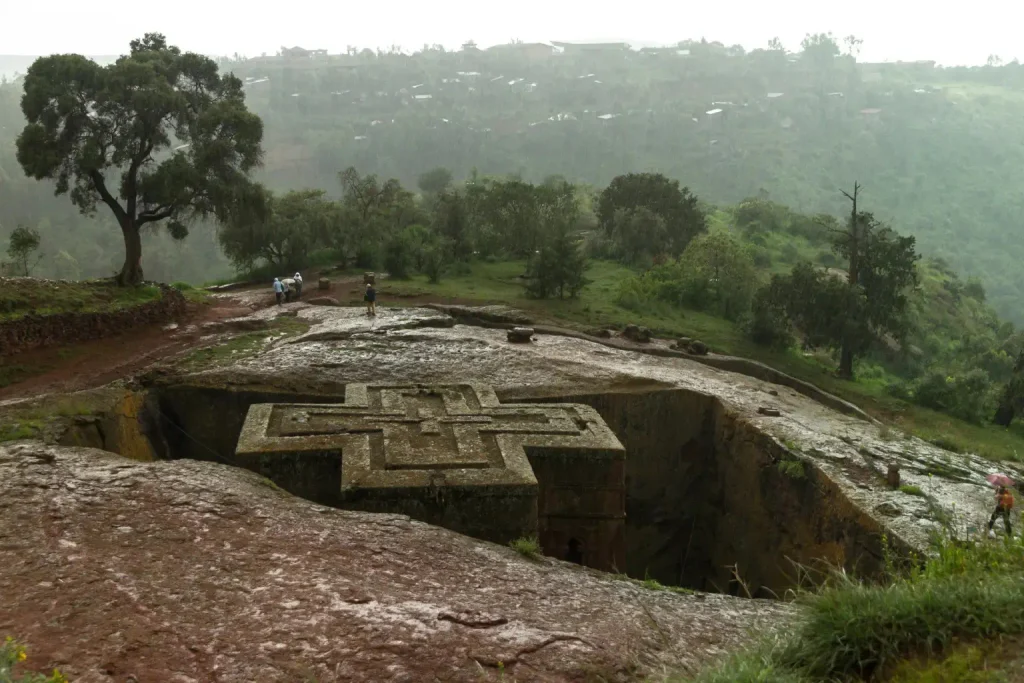
Holding great cultural and religious significance, the Church of Saint George was excavated 12 meters into the ground, with its roof forming the shape of a Greek cross. Inside the church, a priest stands beside a curtain protecting the sanctuary and displays books and paintings to visitors. A replica of the Ark of the Covenant rests in the shadow of one of the arms of the cross-shaped church.
7. Ajanta Caves, India
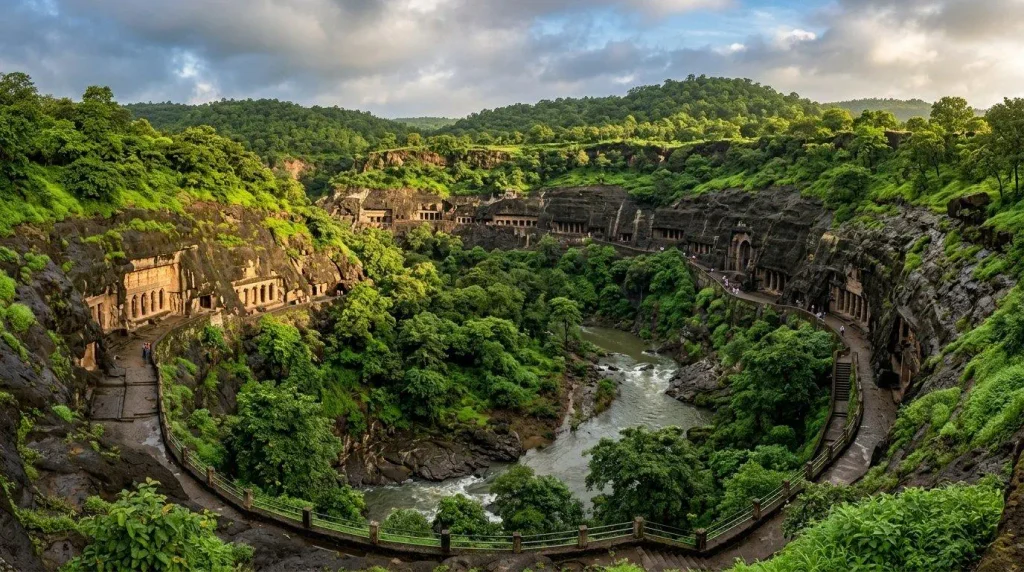
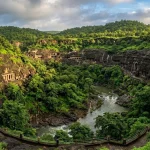
The earliest Buddhist cave monuments at Ajanta date back to the 2nd and 1st centuries BCE. During the Gupta period (5th–6th centuries CE), additional caves, decorated far more richly than the original group, were added to the complex. Carved into a vertical cliff above the left bank of the Waghora River, the Ajanta Caves consist of 30 Buddhist cave monuments, including some that remain incomplete. Five of these caves served as chaityagrihas (shrines), while the remaining caves functioned as sangharamas or viharas (monasteries). Rock-cut stairways connect the caves to the river below.
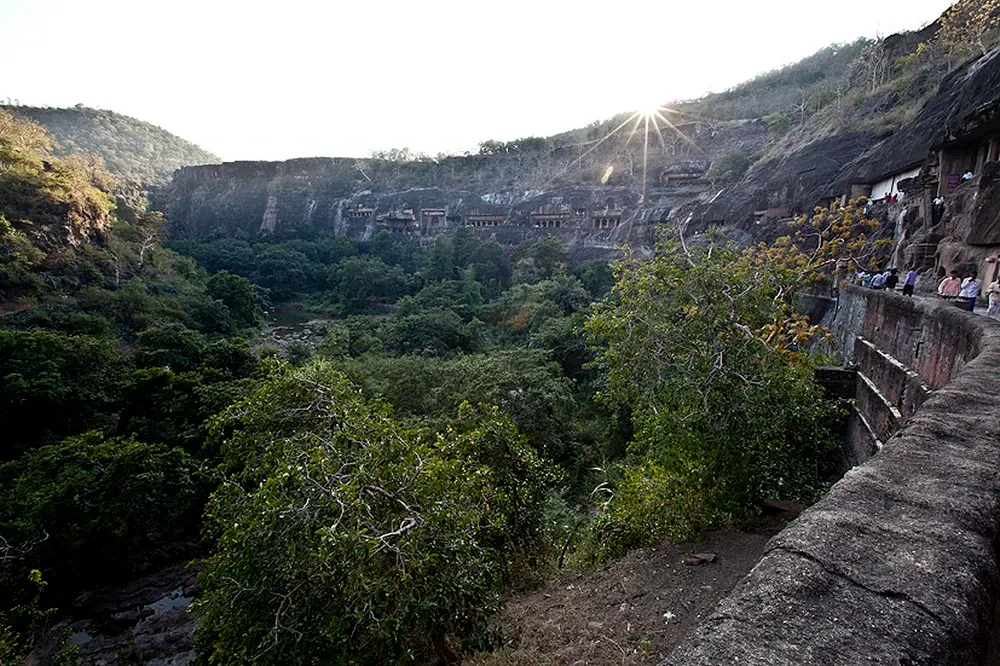
The first six caves, excavated by followers of the Hinayana/Theravada tradition of Buddhism, are simple and unadorned, with only sparse wall paintings. In the second phase, as followers of Mahayana Buddhism came to dominate the rock-carving activities, several new caves were excavated. The walls were adorned with exquisite tempera paintings, while the columns, pillars, doorframes, shrines, and façades were richly embellished with magnificent sculptures. Representing one of the greatest achievements in ancient Buddhist rock-cut architecture, the Ajanta Caves have been designated a UNESCO World Heritage Site.
8. Longmen Grottoes, China
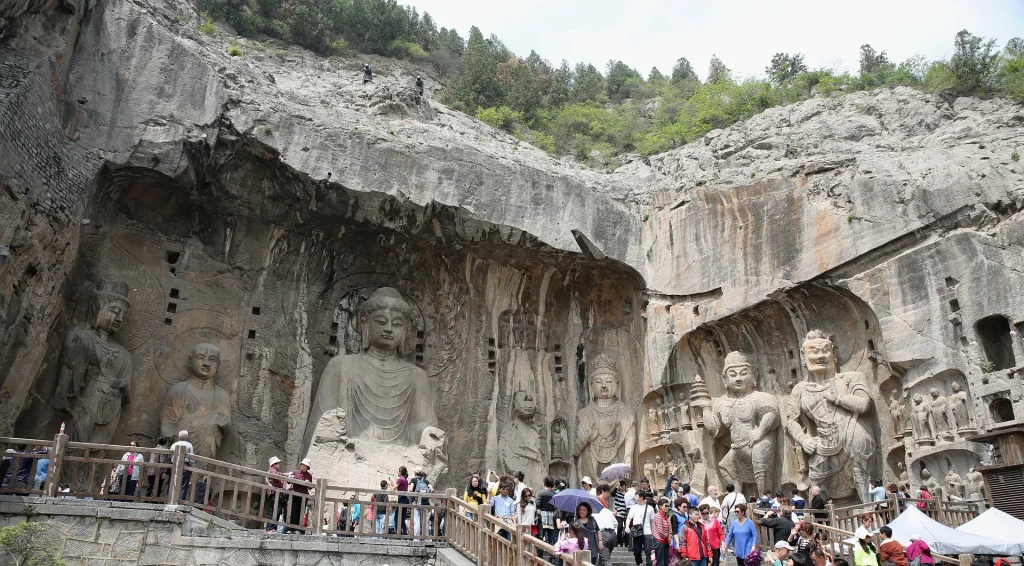
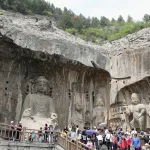
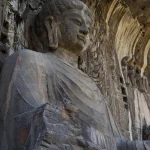
Located on both banks of the Yi River, south of Luoyang, the former capital of Henan Province, the Longmen Grottoes comprise more than 2,300 caves and niches carved into steep limestone cliffs along a 1-kilometer stretch. They contain approximately 110,000 Buddhist stone statues, more than 60 stupas, and 2,800 inscriptions carved into stone tablets. The Longmen Grottoes, which perfectly showcase the intricacies of ancient Chinese stone art, also offer a window into the cultural, political, and artistic perspectives of the Wei and Tang periods.
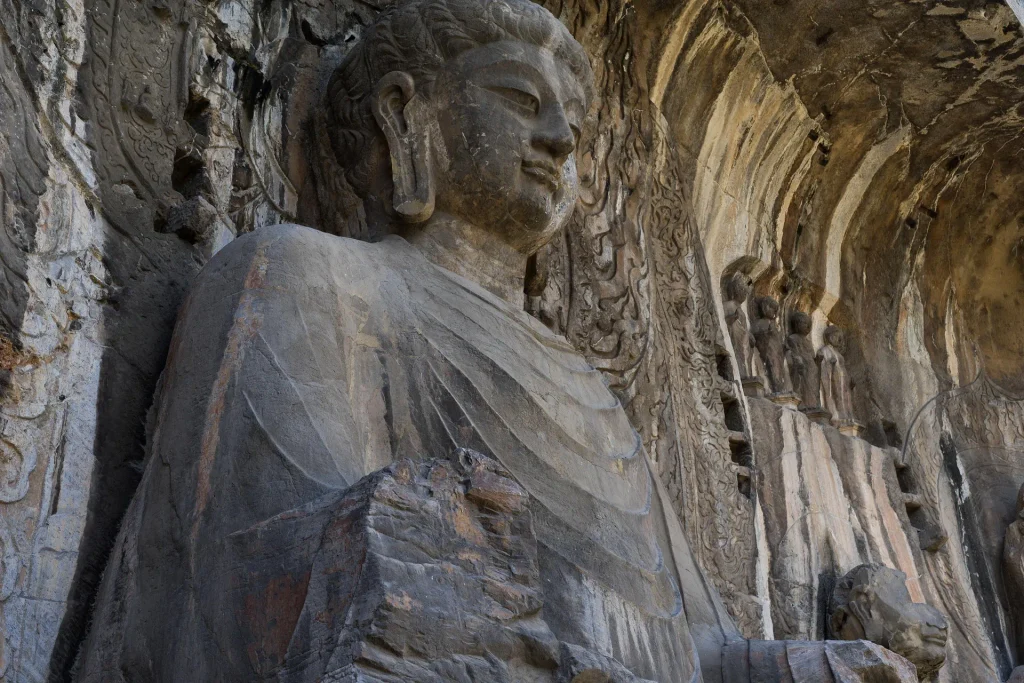
Construction began in 493 and continued for nearly five centuries. Among the earliest caves carved into the cliffs of the West Hill in the late 5th and early 6th centuries are Guyangdong and the Three Binyang Caves, which contain large Buddha figures. The Yaofangdong Cave features 140 inscriptions that record treatments for various illnesses and ailments. Sculptural work within this cave continued for 150 years, reflecting shifts in artistic style. The sculptural styles found in Buddhist caves dating from the 7th and 8th centuries, during the Tang dynasty, particularly the colossal statues in Fengxiansi Cave, represent some of the most complete examples of royal cave temple art.
9. The Sassi and the Park of the Rupestrian Churches of Matera, Italy
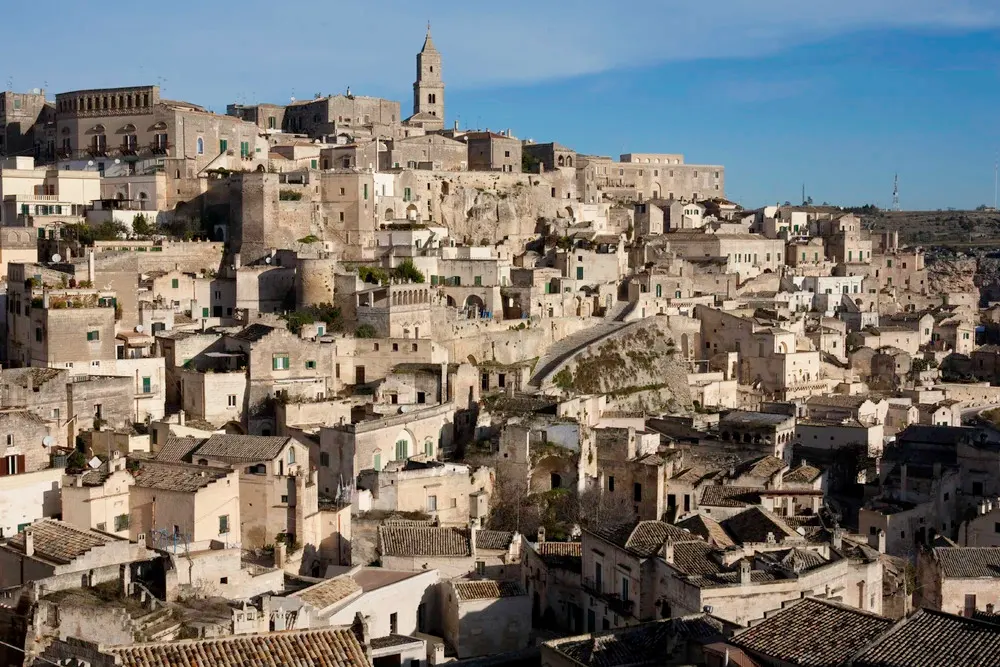
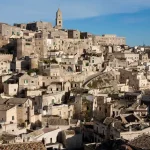
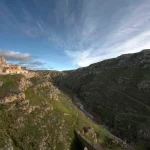
Located in the Basilicata region of Southern Italy, the Sassi and the Park of the Rupestrian Churches of Matera comprise a complex of dwellings, churches, monasteries, and hermitages built into the natural caves of the Murgia plateau. As the most extraordinary and best-preserved example of cave settlements in the Mediterranean region, this site spans 1,016 hectares and comprises over a thousand dwellings, along with numerous shops and workshops. Inhabited since the Paleolithic period, the Matera area has been continuously transformed over generations, with caves, houses, churches, and tombs constructed over time.
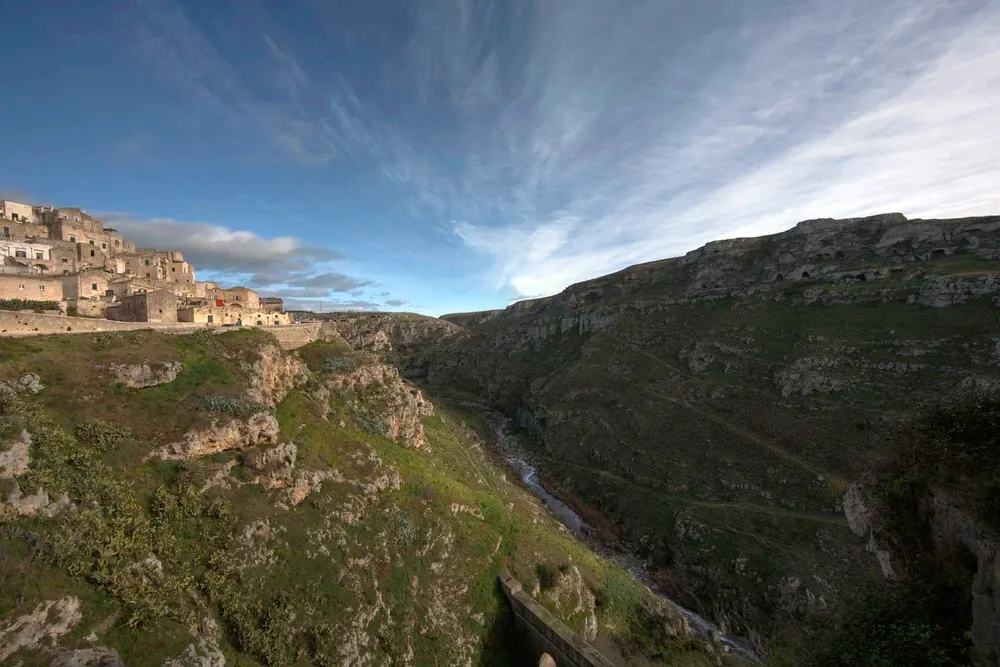
Listed as a UNESCO World Heritage Site, the Sassi and the Park of the Rupestrian Churches of Matera represent an outstanding example of traditional human settlement and land use. The oldest dwellings in the settlement are simple caves, enclosed by walls built from carved stone blocks, located within two cave districts known as Sasso Caveoso and Sasso Barisano. In the 13th century, a Romanesque cathedral was constructed in the Civita area, situated between these two cave districts.
10. Kropfenstein Castle, Switzerland
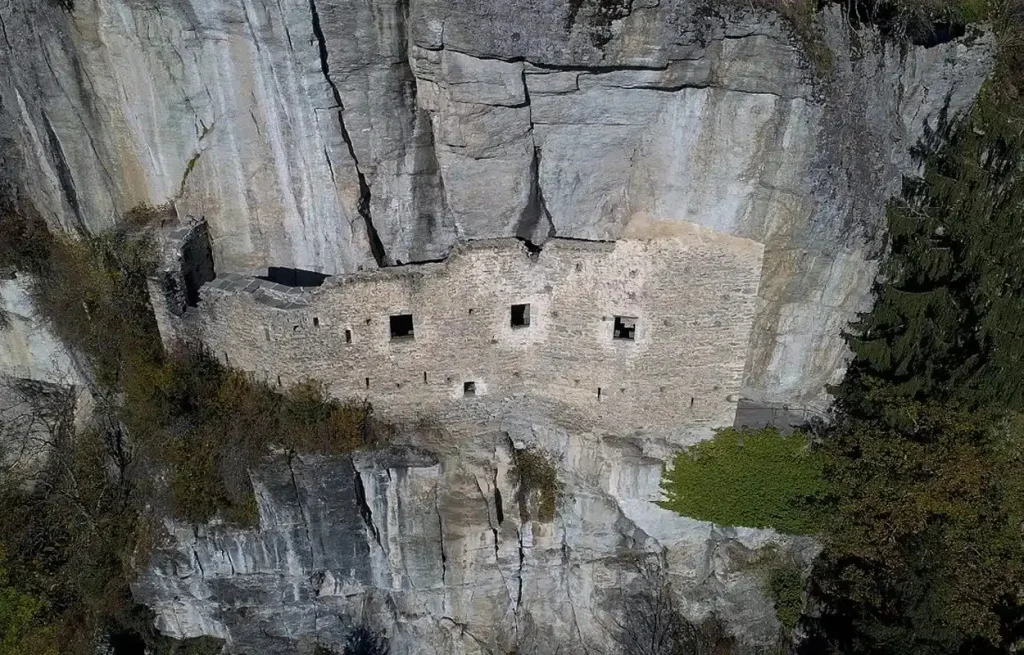
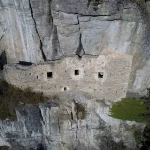
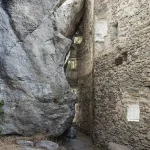
Located above Waltensburg in the Swiss canton of Graubünden, Kropfenstein Castle is a cave castle built around 1312. Unlike many cave castles used solely as refuges, Kropfenstein served as a residence for several noble families, including the von Kropfenstein and von Rhäzüns, before falling into disrepair in the late 15th century. Access from the eastern side is possible via a narrow strip of rock running around a cliff overhang. Today, this passage has been widened and reinforced with railings. The living quarters, windows, and even a relief now displayed at the Rätisches Museum remain identifiable.
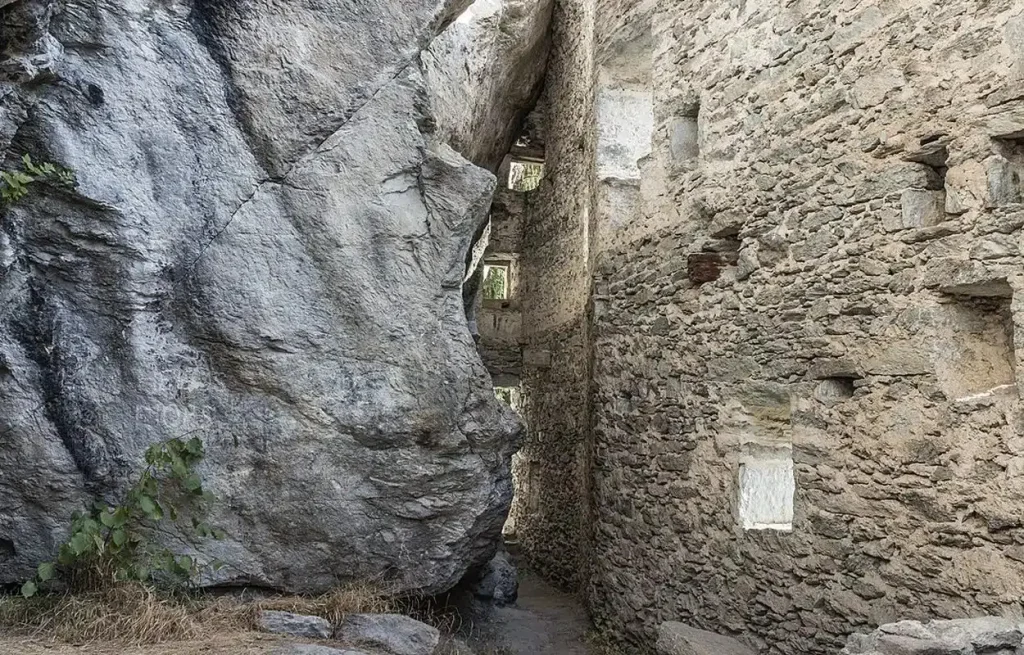
Kropfenstein Castle consists of an elongated building wing, a large portion of which is situated beneath an overhanging rock face. Three floors are still visible. The eastern section of the structure forms a narrow passage approximately 1.5–2 meters wide, which was probably used primarily for storage and defense. The main living quarters are located in the wider western section. In the eastern section, above the door, there is a square window and a firing port. On the southern wall, there are several narrow slit windows for illumination, as well as square windows with openings measuring approximately 70 x 50 cm
11. Göreme National Park and the Rock Sites of Cappadocia, Türkiye
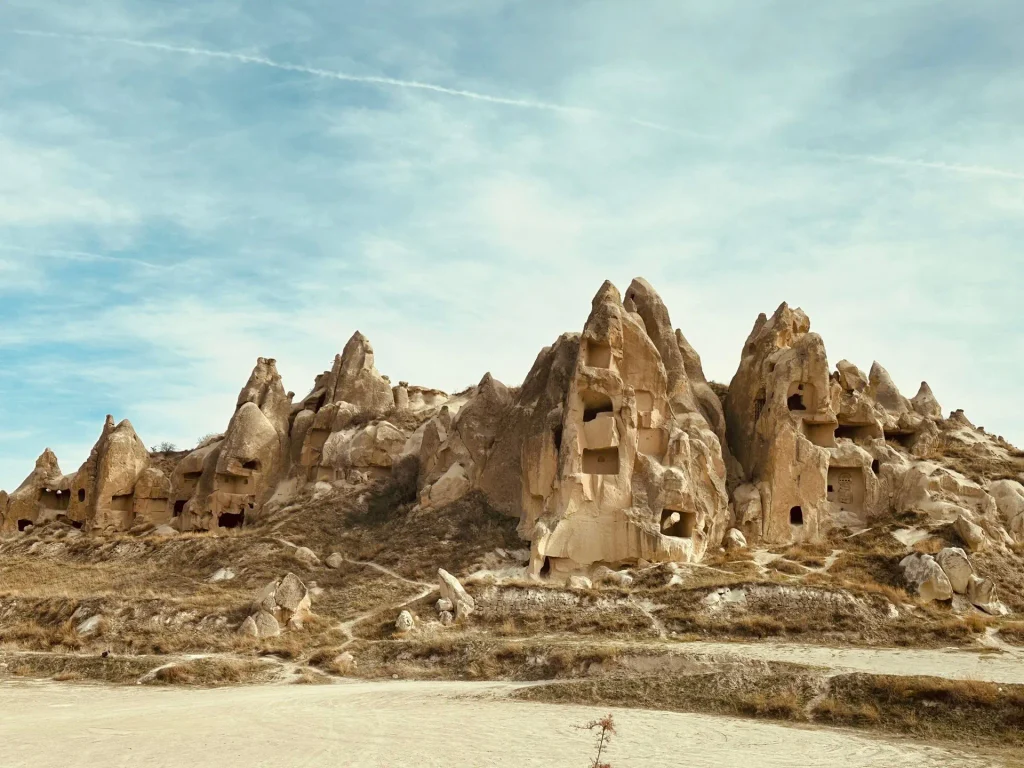
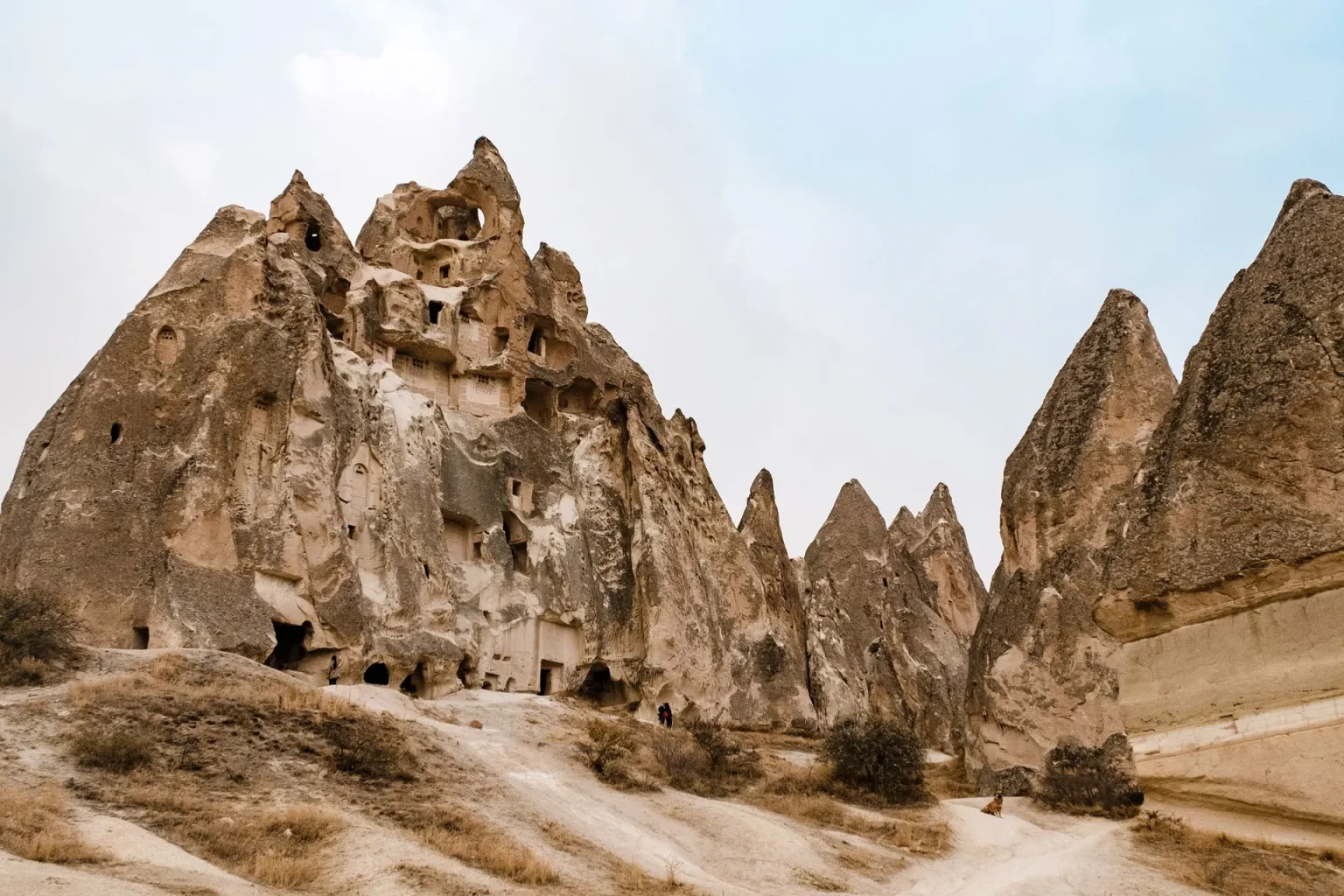
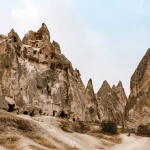
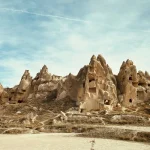
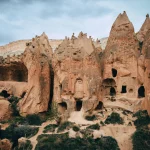
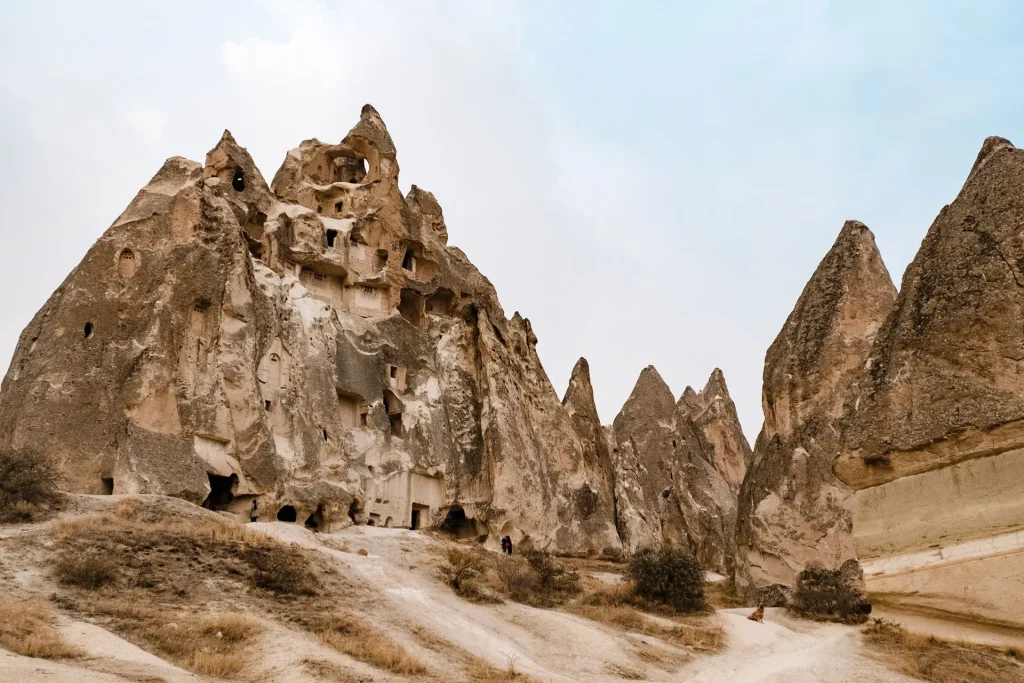
Home to numerous cave dwellings dating back thousands of years, Cappadocia was an ideal place for carving entire settlements into rock formations thanks to its soft volcanic rock. The landscape, filled with volcanic rock formations, began to be transformed into human settlements as early as the 4th century. The density of rock-cut cells, churches, cave villages, and underground cities within these formations makes Cappadocia one of the world’s most striking and extensive cave settlement complexes.
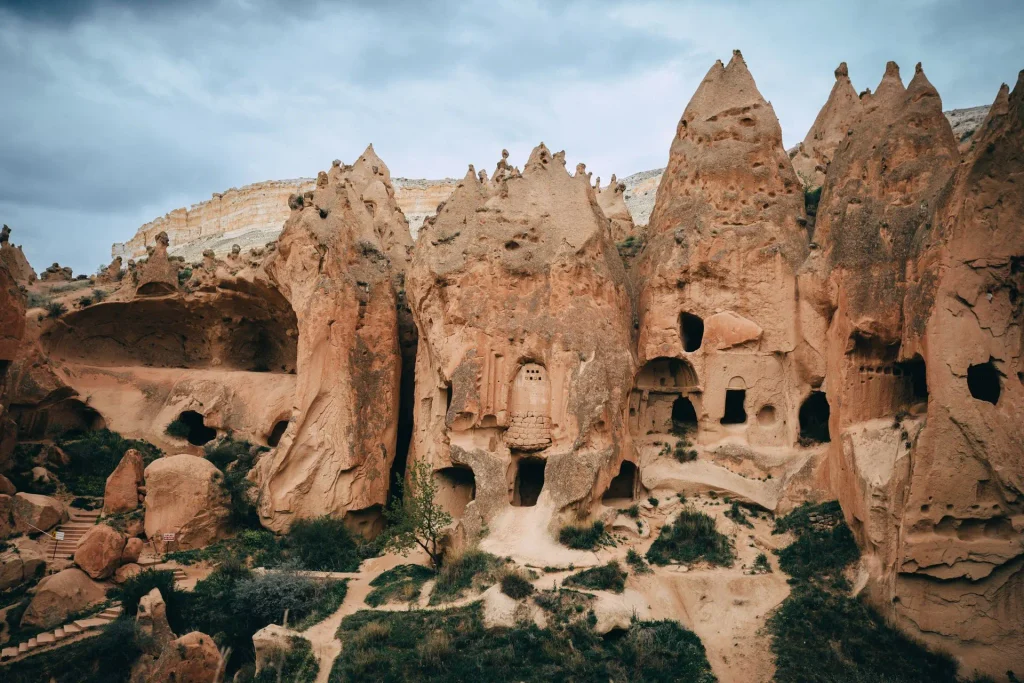
Over thousands of years, erosion has given some rock formations mushroom-like shapes. These rock pillars, known as “fairy chimneys,” preserve remarkable examples of ancient civilizations and Byzantine art. Although monasticism was already established in Cappadocia during the Iconoclastic period (725–842), many rock-hewn churches were constructed after 842 and richly decorated with brightly colored figurative paintings. Among the churches in Göreme Valley are Tokalı Church and El Nazar Church (10th century), the Church of Saint Barbara and the Hidden Church (11th century), and Elmalı Church and the Dark Church (late 12th to early 13th century). Göreme National Park and the Rock Sites of Cappadocia are listed as a UNESCO World Heritage Site.
12. Abuna Yemata Guh, Ethiopia
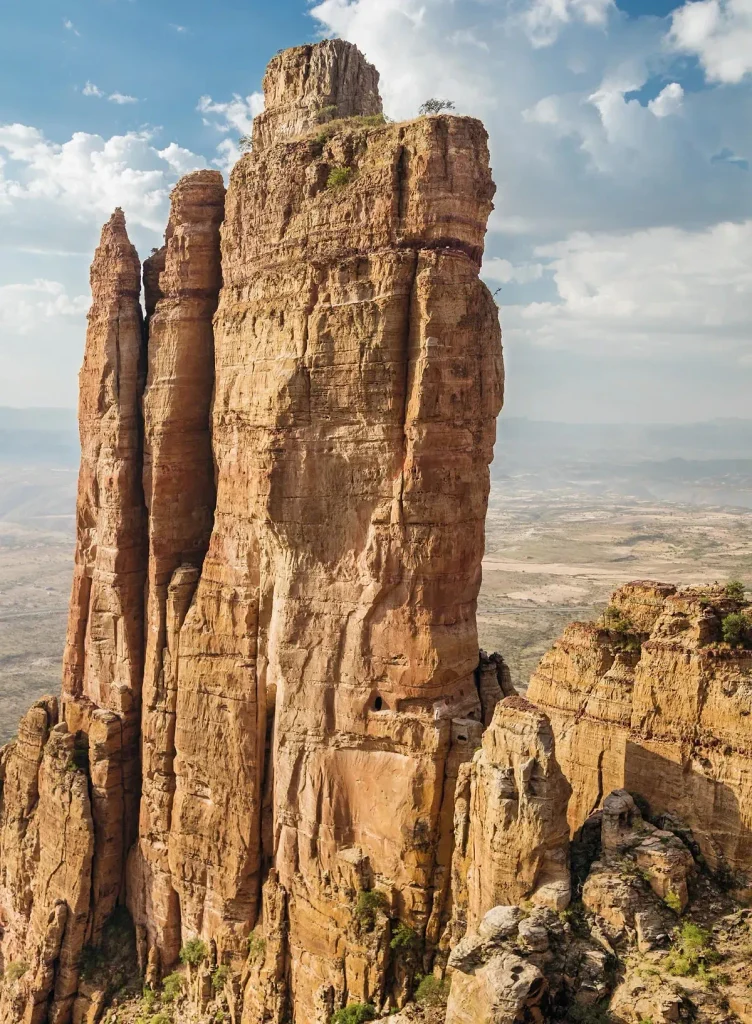
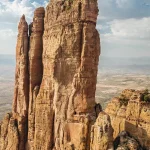
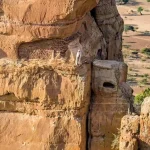
Abuna Yemata Guh, a historic rock-hewn church, is located in the Tigray region of Ethiopia. Believed to have existed since the 5th century, the church has served the community for centuries. Situated at an estimated altitude of 2,589 meters, it can only be reached via a remarkably steep and challenging climb. One of the world’s most extraordinary examples of cliffside architecture, Abuna Yemata Guh has been regarded as an important religious center of the Ethiopian Orthodox Church for centuries.
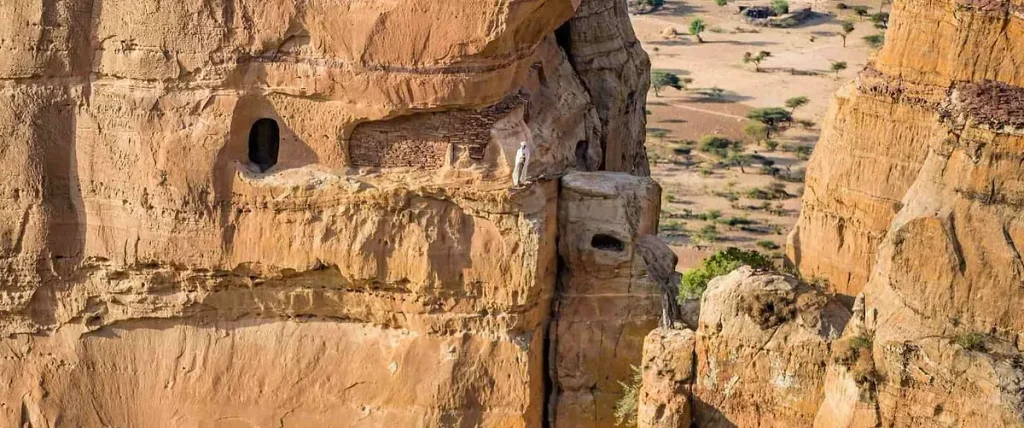
The ceiling of the cave is covered with two beautiful frescoes featuring intricate patterns, religious imagery, and the faces of nine of the twelve apostles of Jesus. Paintings depicting figures from the Old Testament outnumber those illustrating scenes from the New Testament. The dry climate and lack of humidity have helped preserve these frescoes in their original condition.
13. Kandovan, Iran
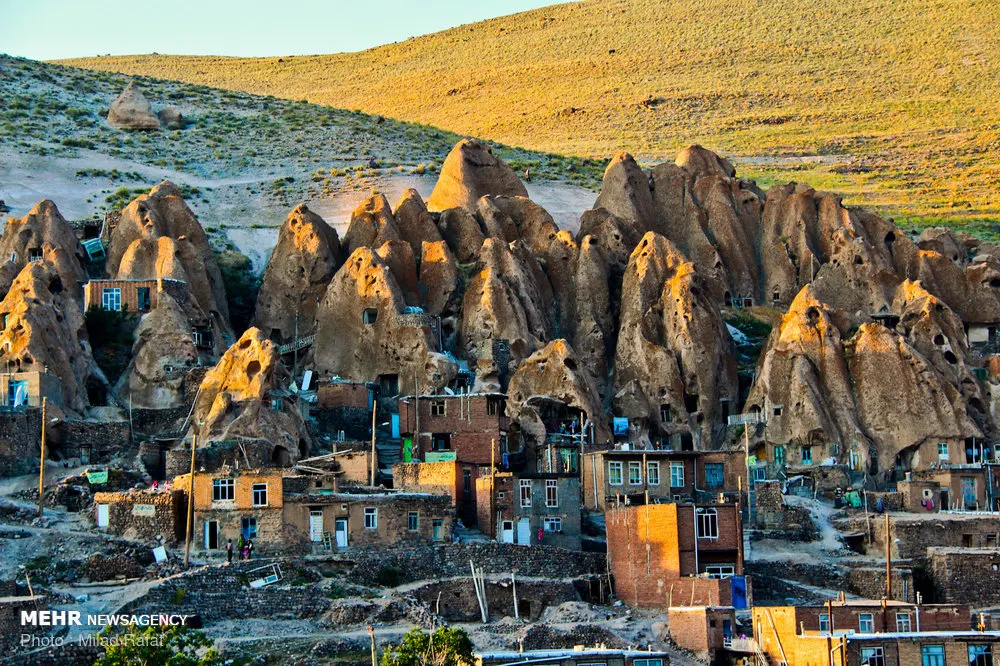
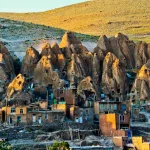
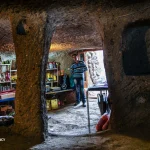
Located in northwestern Iran, the village of Kandovan is renowned for its natural beauty and unique rock-carved architecture. It is famous for its cone-shaped, hand-carved, pea-colored, cave-like stone dwellings, which are built into the foothills of a mountain. As one of the few remaining cave settlements in the world, Kandovan is home to modern-day inhabitants who reside in these meticulously carved dwellings, fashioned from volcanic rock. The eco-friendly accommodation units used to host tourists in the village are historic local buildings that blend harmoniously with the traditional village architecture. These accommodations feature various soft furnishings, such as curtains, tablecloths, and pillowcases, woven by local women.
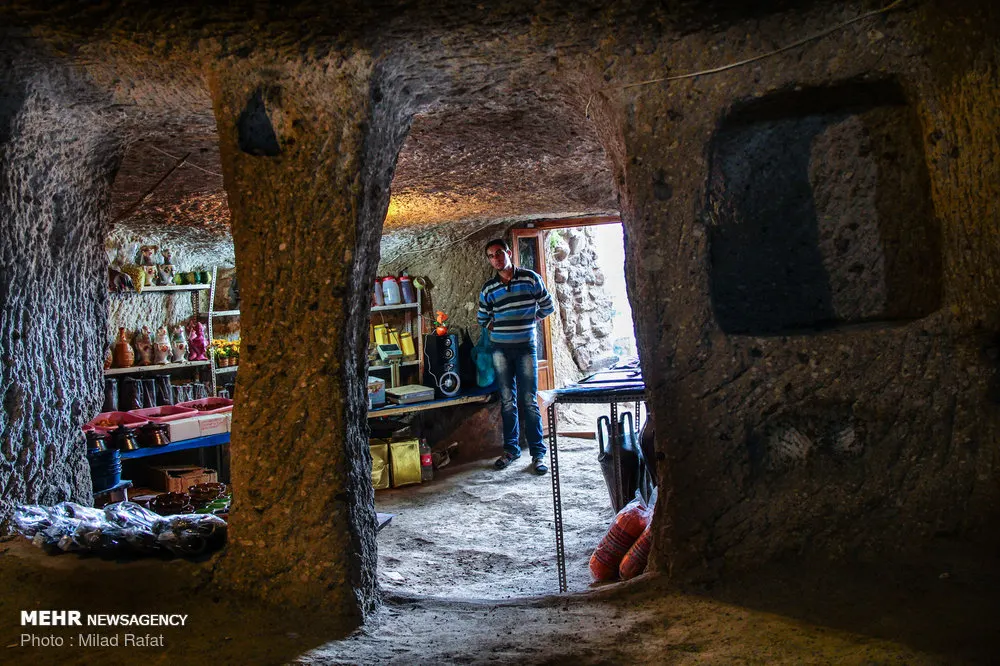
Despite its proximity to a modern city like Tabriz, Kandovan has preserved its authenticity for thousands of years. To this day, changes to its simple, traditional way of life have been kept to a minimum.
14. Vardzia, Georgia
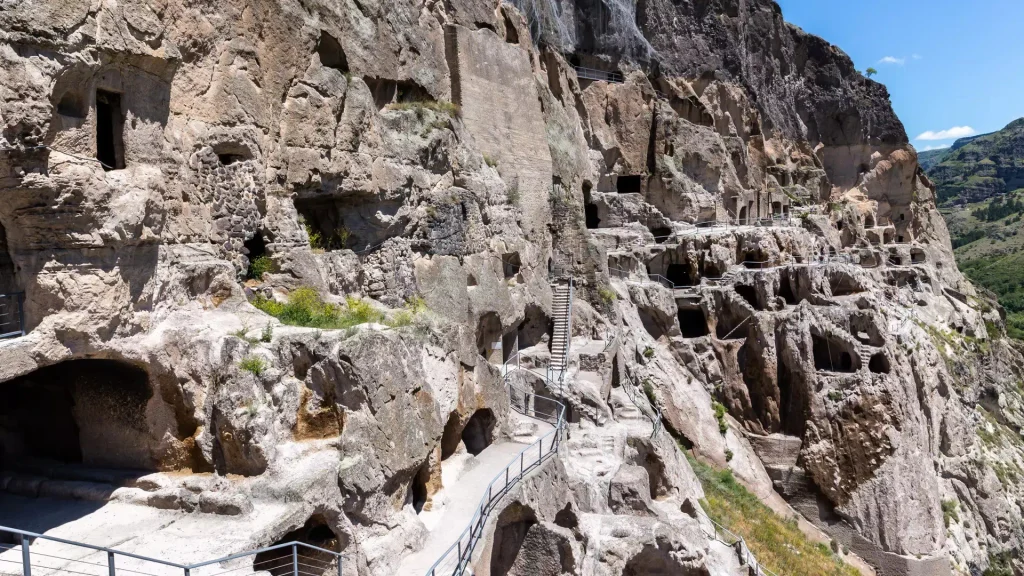
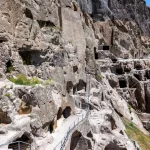
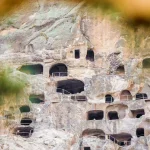
Vardzia, a magnificent complex of medieval rock-hewn architecture, is one of Georgia’s most popular monuments. Located in the historical province of Meskheti, Vardzia was primarily constructed during the 12th century and is associated with the reigns of King George III and his daughter, Queen Tamar. Vardzia is a cave city carved into a cliff, stretching 900 meters in length and divided into multiple levels connected by tunnels running throughout the rock face. Around 900 years ago, this cliffside city had a sophisticated urban infrastructure, including a water supply system.
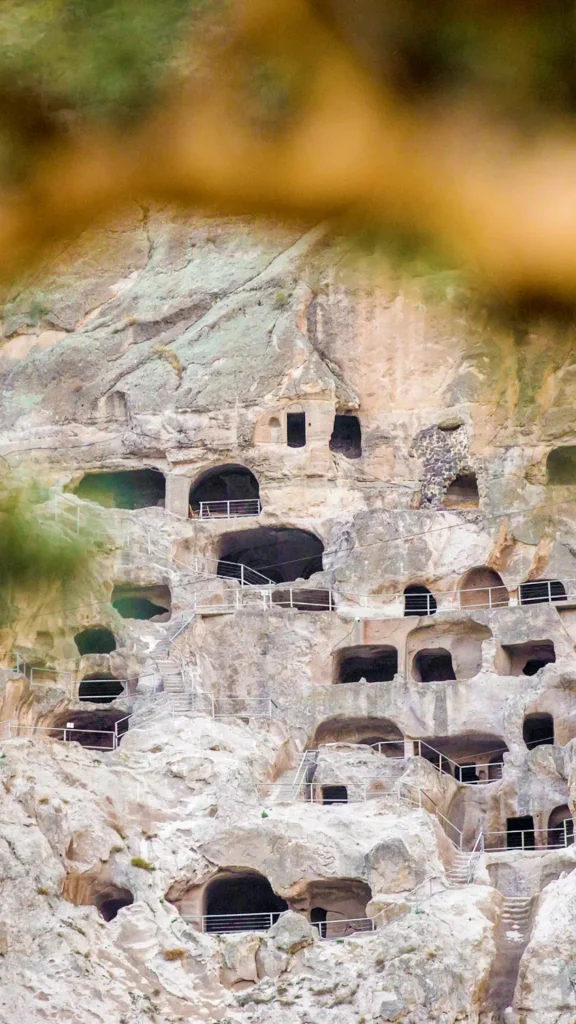
At its peak, Vardzia housed 28 wine cellars containing 235 qvevri (traditional Georgian clay wine vessels). However, centuries of warfare and earthquakes caused significant damage to the complex, leaving only a few of its original cellars intact today. In total, there are 242 caves in modern-day Vardzia that have been either partially or fully preserved. The Church of the Dormition of the Mother of God, adorned with frescoes, still stands at the heart of the complex.
15. Predjama Castle, Slovenia
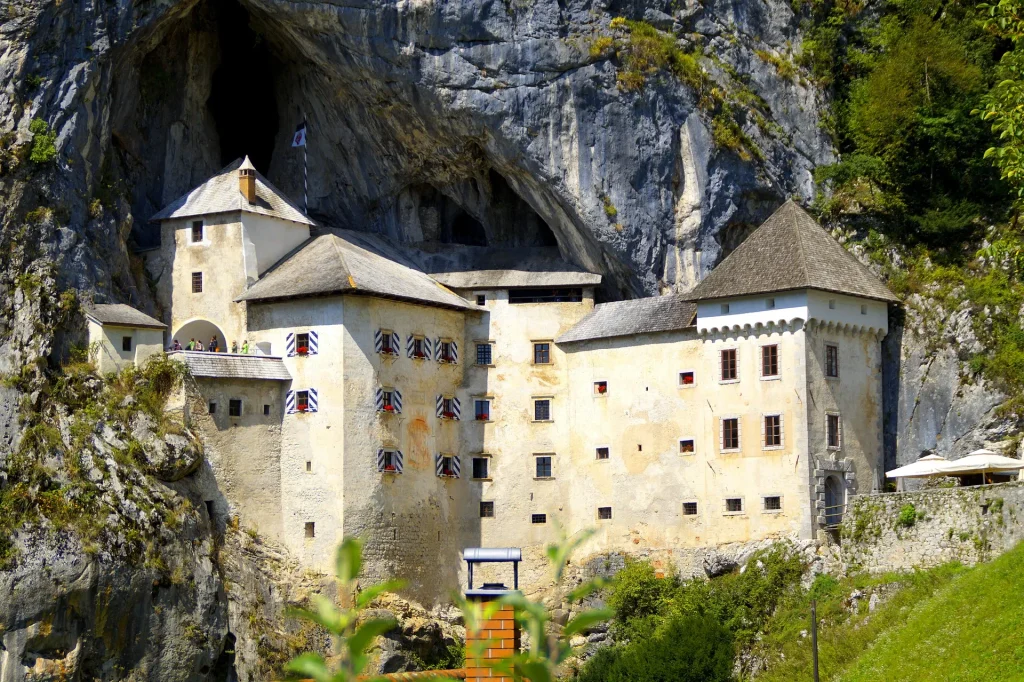
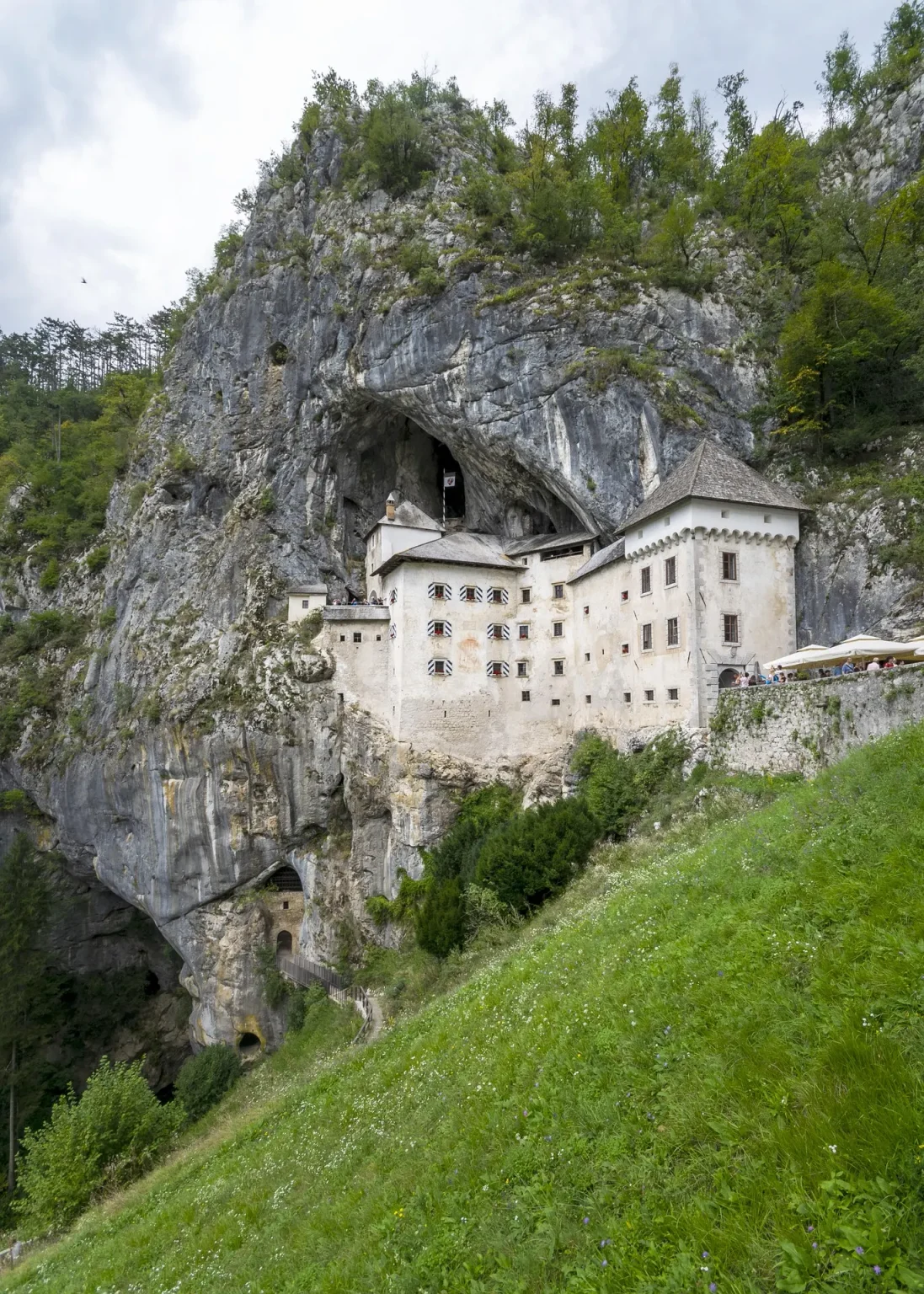
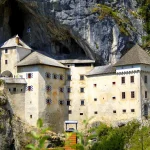
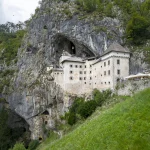
Built more than 800 years ago into the middle of a 123-meter-high cliff, Predjama Castle is the largest cave castle in the world. The castle was originally constructed in the 13th century beneath a natural rock arch and was later acquired and expanded by the noble Luegg family. Designed to be inaccessible and virtually impregnable, the fortress was built to withstand sieges and protect its inhabitants. Behind the castle lies a network of secret tunnels through which the knight Erazem of Predjama reportedly embarked on his raiding expeditions.
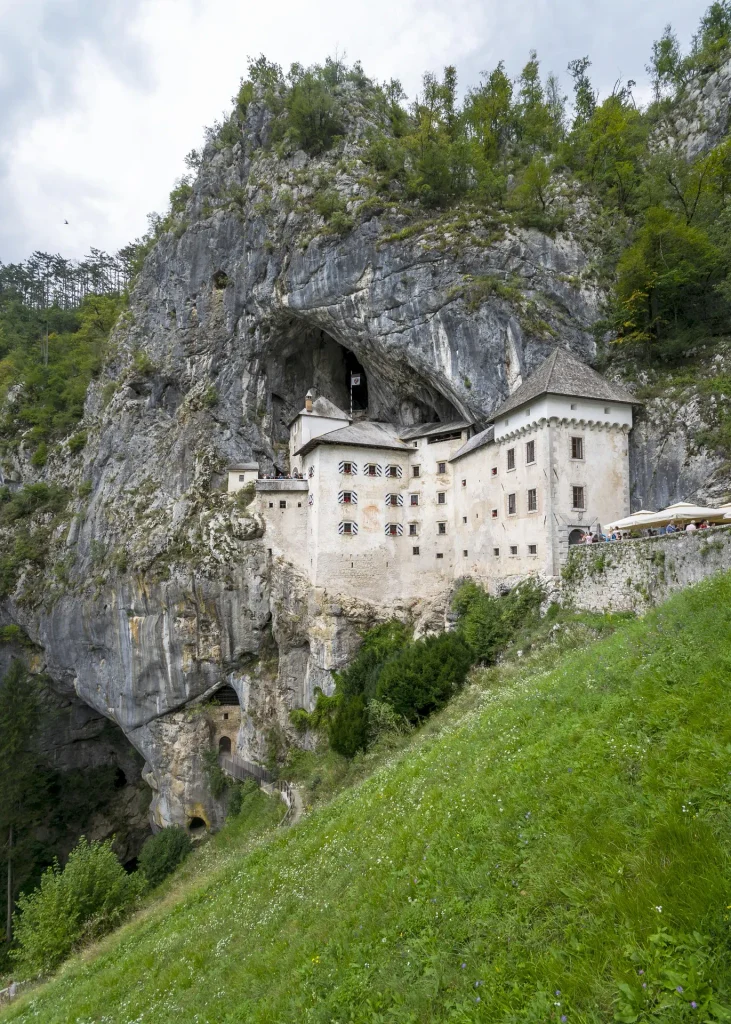
Predjama Castle is built not only into the rock face but also atop a network of karst caves. The four-level cave beneath the castle, formed by karst processes, is the second-longest cave in Slovenia. Today, it is home to a colony of bats.