

London Design Festival 2026| 24th edition from 12 to 20 September ’26
London has a habit of revealing itself in September. For nine days, the city opens workshops, galleries, showrooms, and temporary structures that, for the rest of the year, stay behind locked doors or quiet shopfronts. This year marks the 24th edition of London Design Festival, running from 12 to 20 September 2026.

The festival no longer feels like a single event. It has become a temporary map of the city’s creative clusters. Eleven Design Districts now stretch from Bankside and Brompton to the newly added Soho Design District and an expanded Shoreditch Design Week. Each area hosts its own exhibitions, installations, talks and late openings. Visitors can spend a whole day in one neighborhood without needing to cross the city. The density of activity is higher than in recent years, and the tone feels more grounded in making and materials than in pure spectacle.
Landmark projects that set the tone
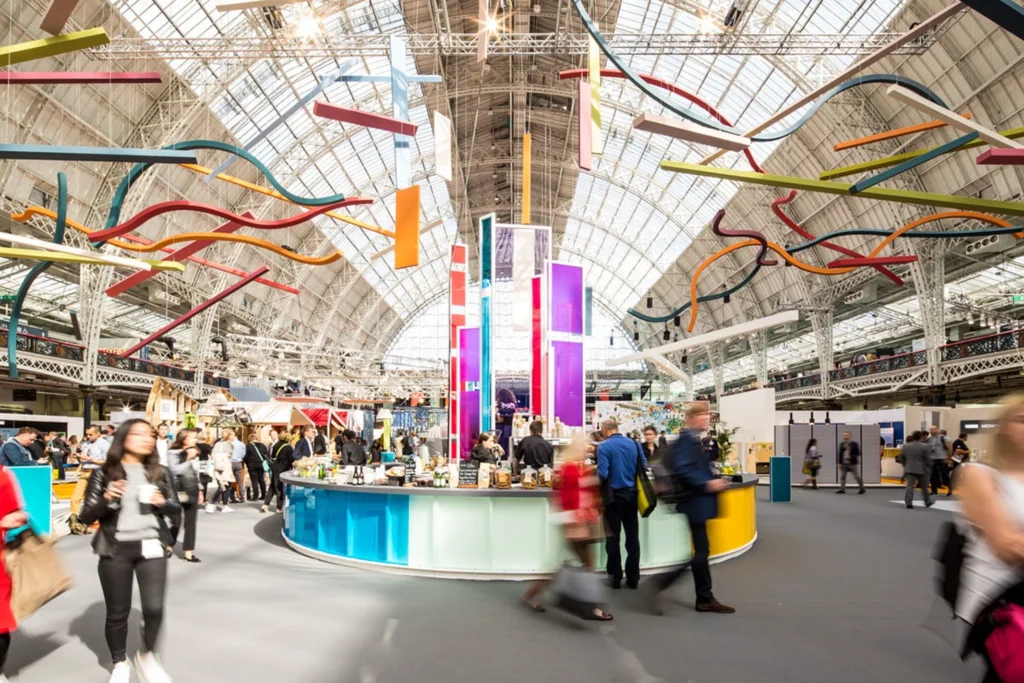
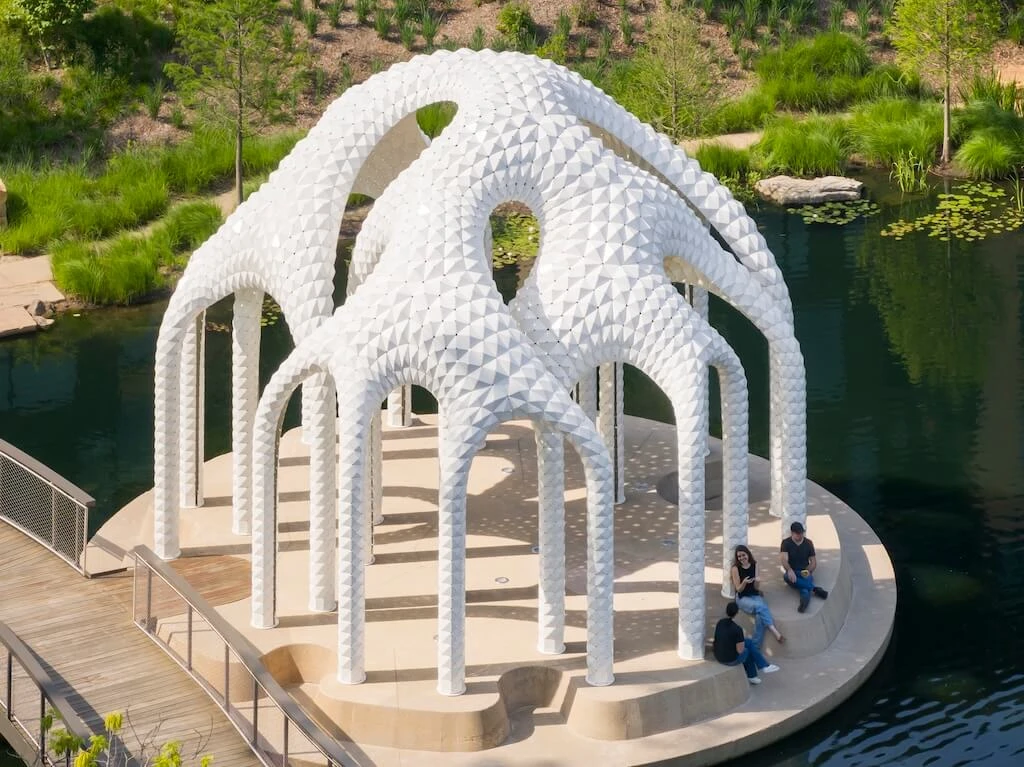
On the Strand, Studio Saar’s Pangolin Shield rises as the festival’s main public installation. A bamboo grid-shell covered with shields, it sits opposite India House and turns questions of protection, aggression, and colonial history into a structure people can walk through.
The material choice is deliberate. Bamboo is light, strong, and renewable. Achieving the curved form while keeping the structure buildable and transportable required careful computational modeling. The geometry was tested digitally against load, joint behavior, and fabrication constraints before the physical frame was produced. Visitors experience a pavilion that feels organic, yet every curve has been calculated.
At London Design Festival 2026, the partnership between Victoria and Albert Museum and Awakenings continues. The program brings artificial intelligence, traditional craft, and the moving body into the same galleries. One commission by Playfool uses a game format to reflect on human labor in an age of AI. Another, by Nina Davies, examines how human movement is beginning to echo patterns generated by algorithms.
Craft x Tech pairs Japanese artisans from the Tokai region with international designers, including Philippe Malouin and Bethan Laura Wood. The collaborations produce objects that sit between hand skill and digital precision. Patterns that once existed only in textile traditions are translated through contemporary processes without losing their tactile quality.
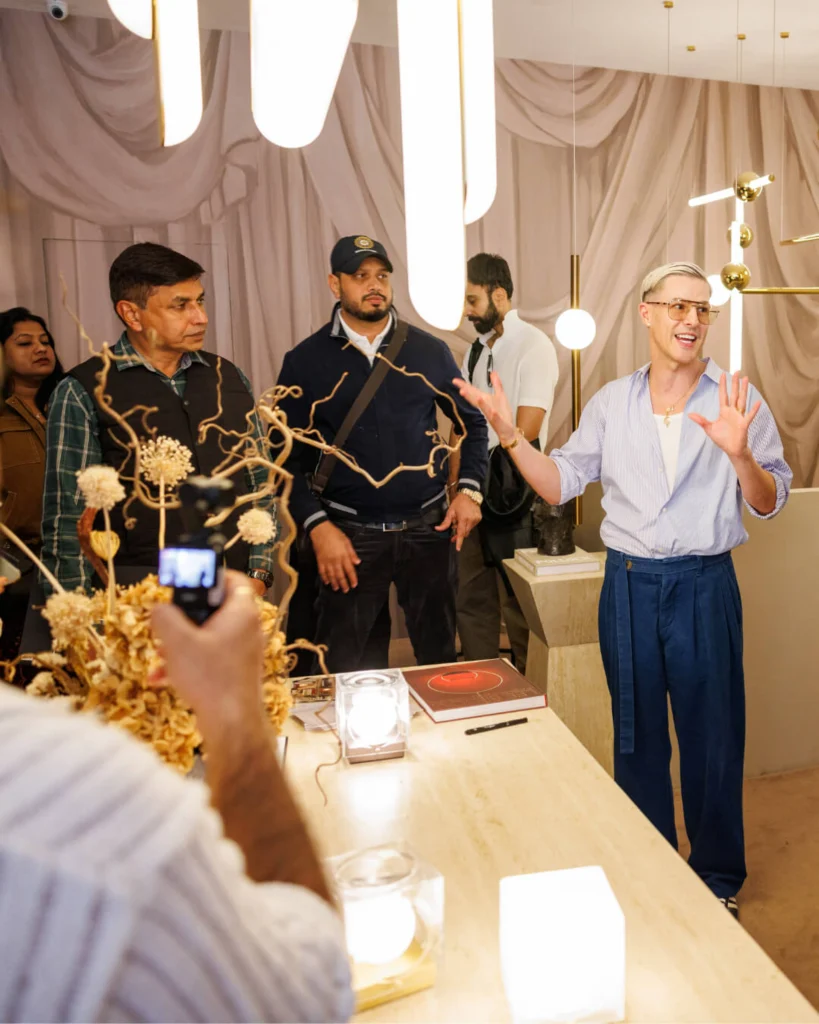
Shoreditch Design Week has become the largest single district, with more than sixty venues. Material Matters returns with a strong focus on natural, reclaimed and experimental materials. Smaller open-call shows give the festival its freshest energy. Design Everything’s presentation at Aram gathers work by 102 emerging designers, each responding to clear limitations of space, time or budget. The result is a collection that feels urgent and resourceful rather than polished for its own sake.
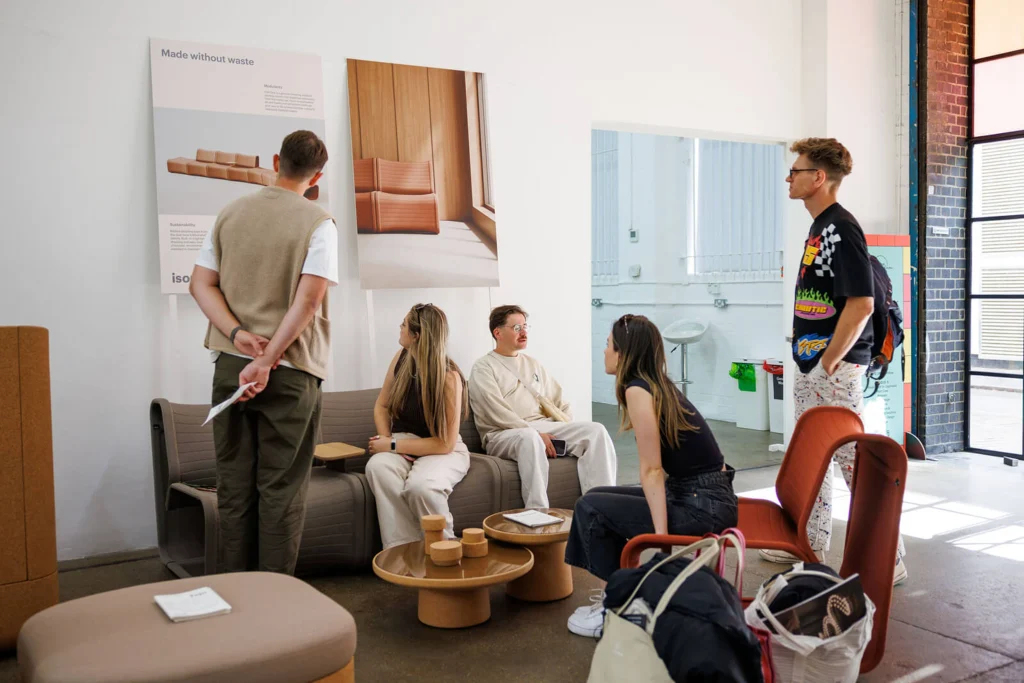
Soho appears on the official map for the first time. The new district activates spaces such as the Heal’s Building and the Soho Lighthouse with installations, talks, and open studios. The visual language of the district draws on neon, counterculture, and the area’s long history of creative disruption. It brings a different temperature to the festival, less institutional and more restless.
The Global Design Forum and the medals
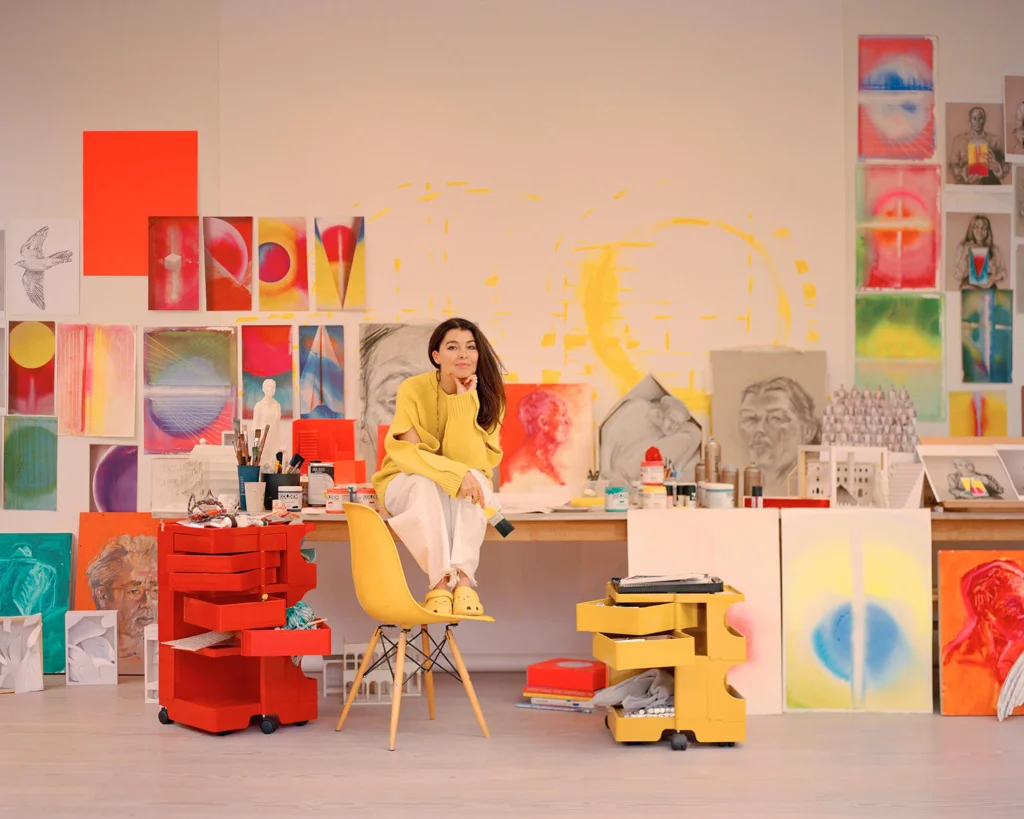
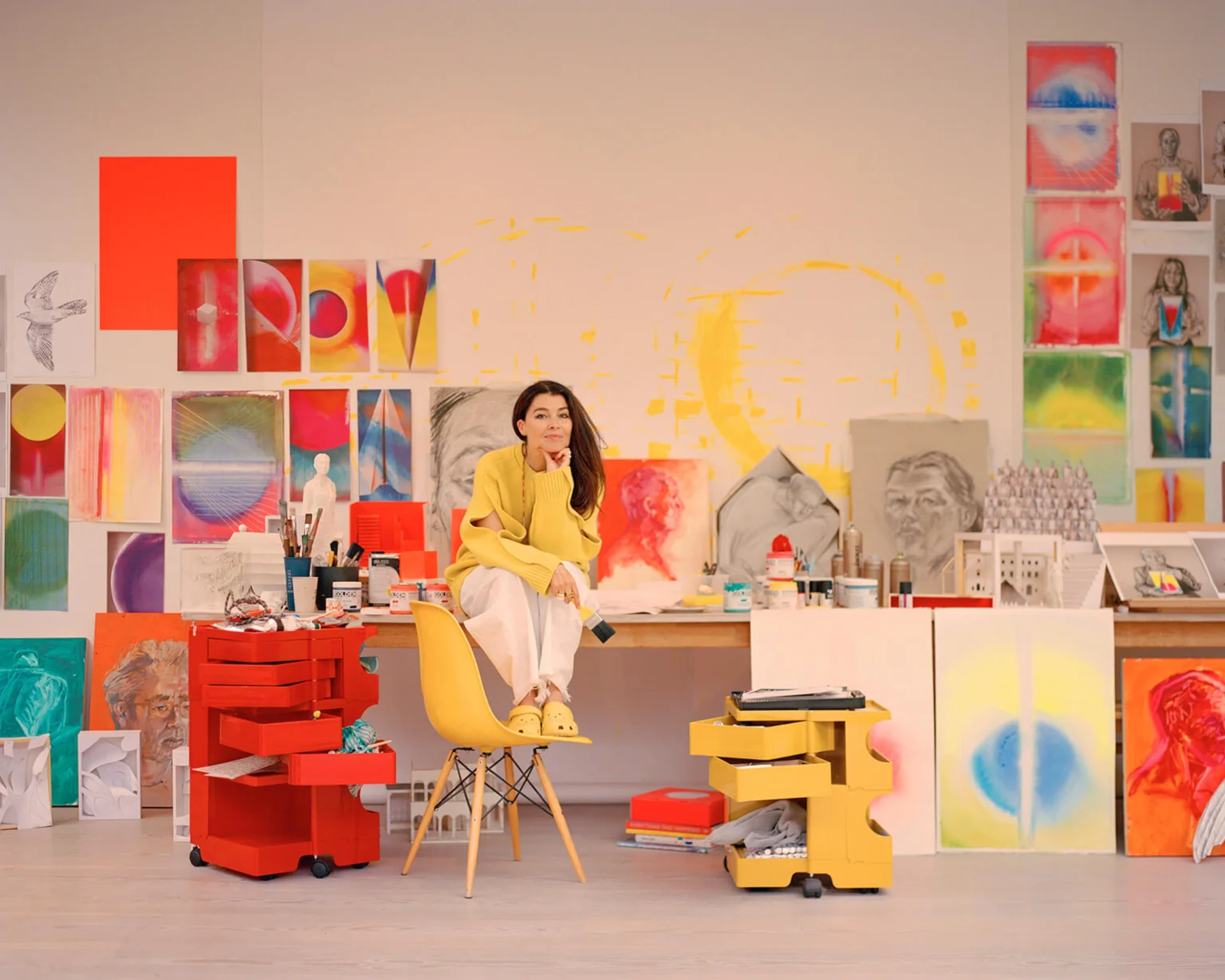
Image Courtesy: Cian Oba-Smith
The Global Design Forum runs from 12 to 14 September at the V&A under the theme Worlds in Motion. Guest-curated by Rhiarna Dhaliwal, the free program includes keynotes and conversations with Es Devlin, Anab Jain, Asif Khan and others. The talks treat design as a way of thinking about systems, environments and possible futures rather than isolated objects. Sessions range from automotive form language to the politics of materials and the role of craft in a digital age.
The 2026 London Design Medals recognize four distinct contributions. Jonathan Anderson receives the London Design Medal for his work across fashion and craft at JW Anderson, LOEWE, and Christian Dior. Sir Christopher Frayling is awarded the Lifetime Achievement Medal. Anab Jain takes the Design Innovation Medal for her practice at Superflux, which consistently tests possible futures through design. Solveiga Pakštaitė receives the Emerging Design Medal. The choices reflect a festival that values both established voices and new directions of inquiry.
Parametric and computational design as quiet infrastructure at London Design Festival 2026
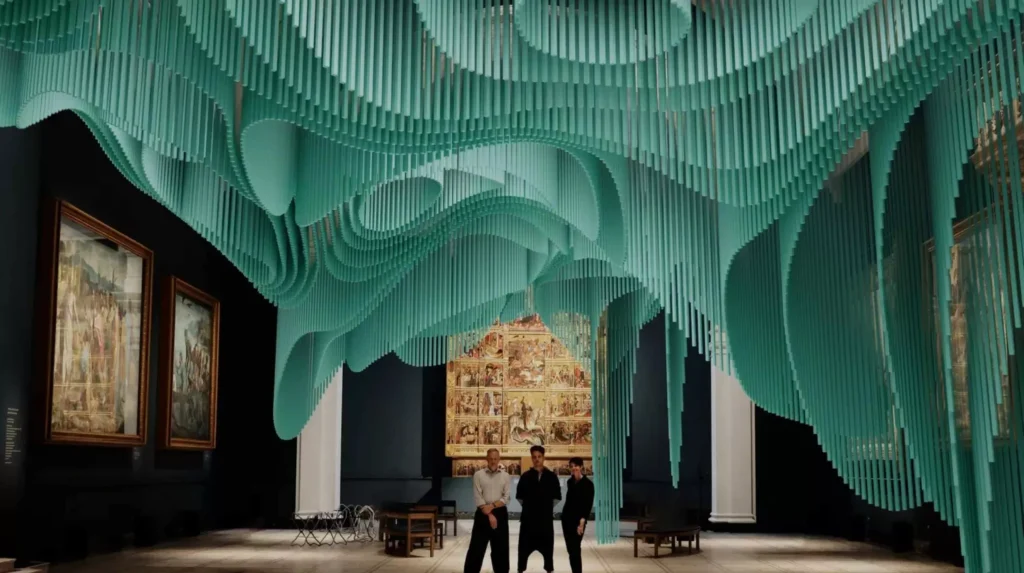
Many of the strongest projects this year carry the quiet influence of parametric and computational design. These tools rarely appear as the main subject of an exhibition. They sit in the background as the method that makes certain forms and performances possible.
The Pangolin Shield is a clear example. The bamboo grid had to satisfy structural requirements, transport limits and the desire for a continuous curved surface. Parametric modeling allowed the team to adjust joint angles, member lengths, and overall curvature in response to real-world constraints. The final form is the result of thousands of digital iterations rather than a single sculptural gesture.
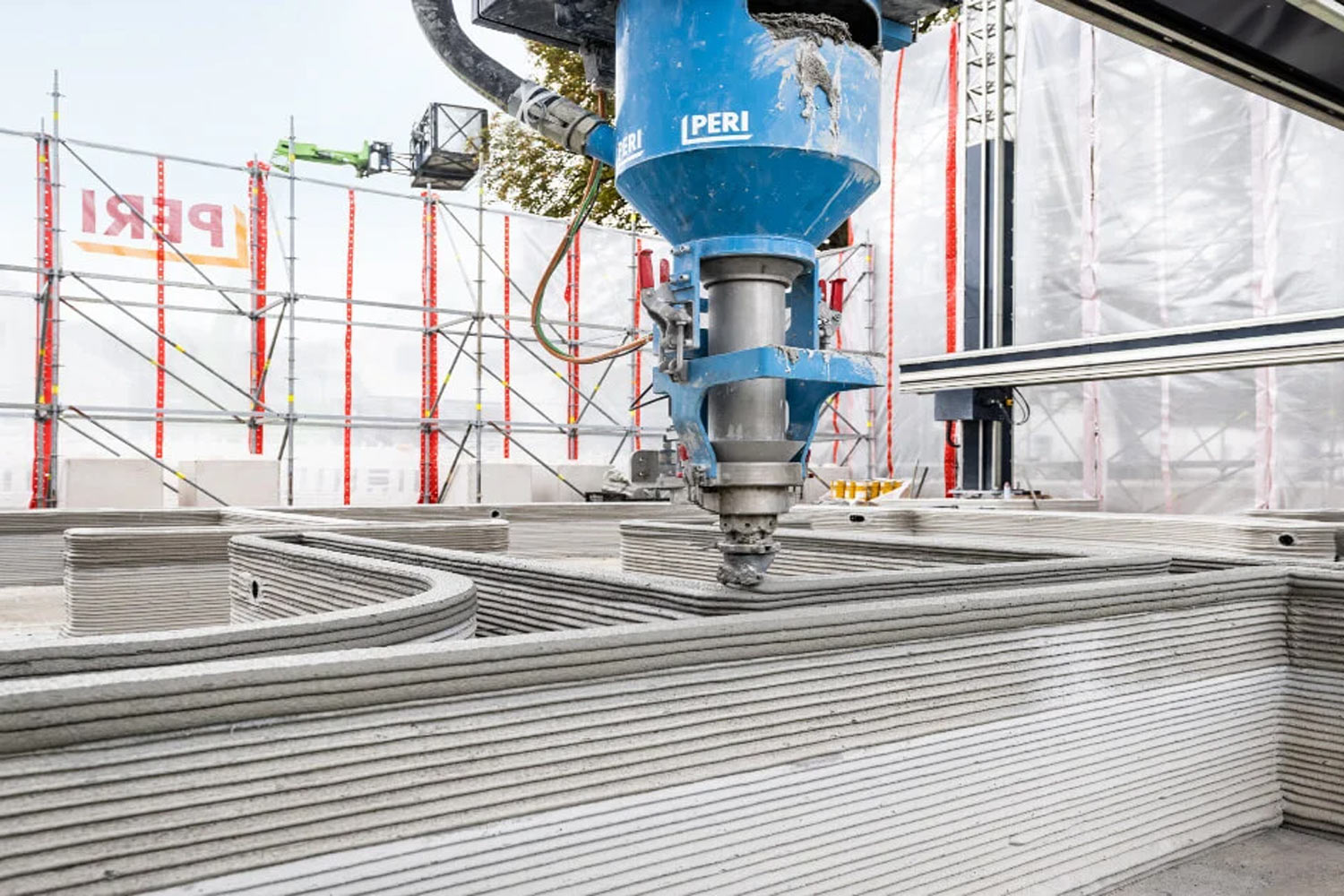
Similar processes appear in experimental furniture and lighting across Shoreditch and the V&A commissions. Complex surfaces are tested against structural, environmental, and fabrication criteria before any material is ordered. Digital fabrication workflows reduce waste and improve precision. In some cases, the same digital model that generates the geometry also produces the cutting files or toolpaths for production.
Even the craft-focused projects benefit. When traditional techniques meet contemporary designers, computational tools often help translate patterns, scale components, or simulate behavior under different conditions. The results remain handmade, yet the pathway from idea to object has been refined through digital testing.
What visitors experience is the outcome: forms that feel precise yet organic, structures that perform efficiently, and objects whose making process has been clarified through iteration. The festival makes those outcomes public for nine days while the underlying methods stay largely invisible. That invisibility is itself interesting. Computational design has moved from a specialized language spoken by a few practices to a practical tool used across a wide range of projects, from temporary pavilions to small-batch furniture.
A city still making itself
London Design Festival has always been less about spectacle and more about density. In its 24th year, the density has shifted. New districts appear, older ones expand, and the conversation between craft, technology, and everyday use grows more interesting. Walking the program is a way of reading the city’s current creative temperature, one open door at a time.
The most lasting impression is not any single installation. It is the sense that design in London continues to operate as a practical and speculative activity at the same time. Buildings, objects and systems are tested in public for a short period, then absorbed back into the ordinary life of the city. The 24th edition simply makes that process visible again.