
By fusing computational climate mapping, localized material logistics, and systemic public land protection, Spain’s Balearic Housing Institute (IBAVI) wins the 2026 OBEL Award under the theme “Systems’ Hack”—proving that algorithmic precision and municipal administration can unite to drive sustainable design.
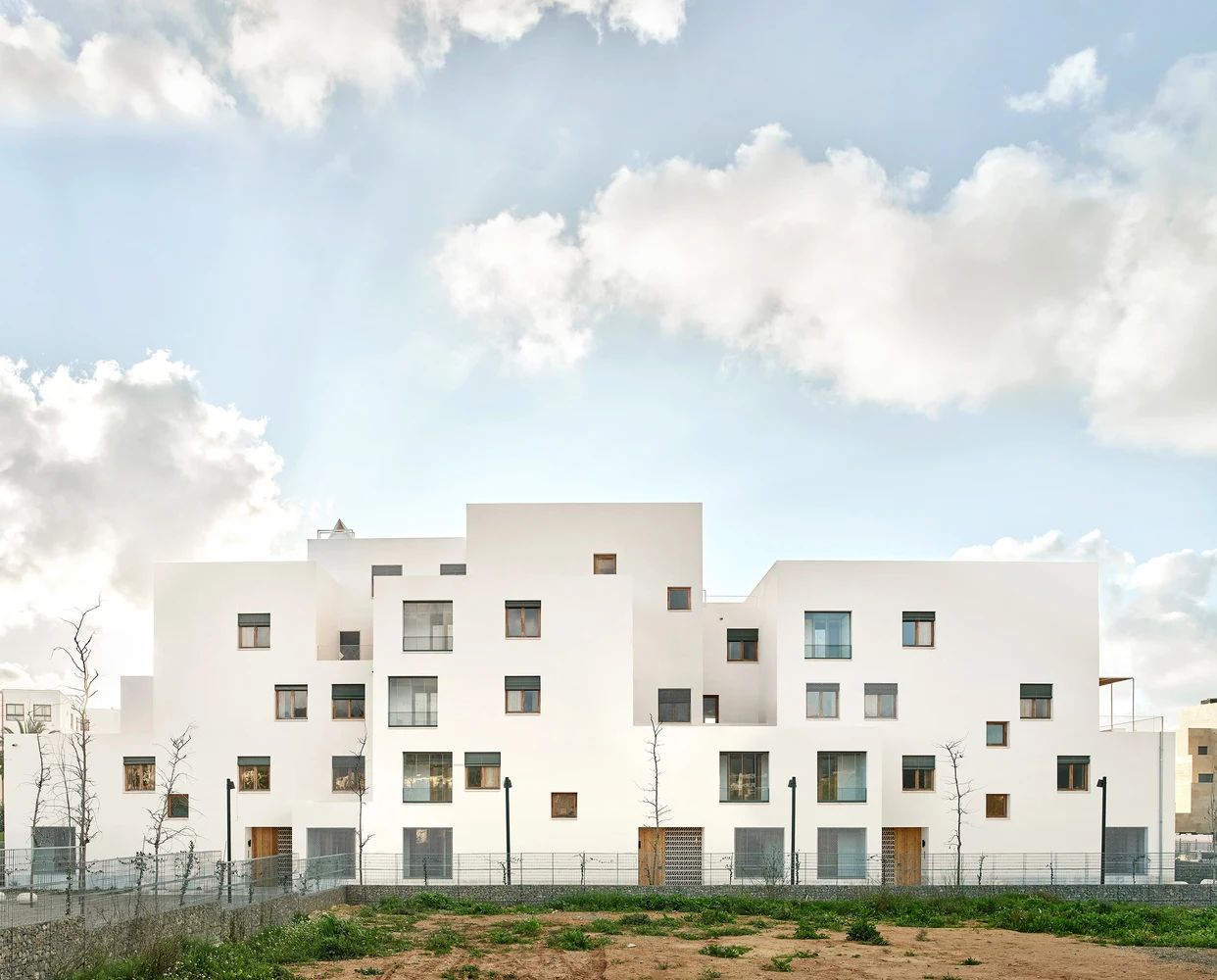
Across the Mediterranean perimeter, residential architecture has long operated as a canvas for high-end luxury escapism. In the Balearic Islands, hyper-tourism and speculative investment historically pushed public infrastructure to its limits, turning shelter into a market asset rather than a fundamental civic right.
However, an administrative and architectural counter-movement has fundamentally rewritten this spatial paradigm.
The Balearic Social Housing Model, developed through the Balearic Housing Institute (IBAVI) under leadership including former managing director Cris Ballester Parets and technical chief Carles Oliver Barceló, has officially secured the 2026 OBEL Award.
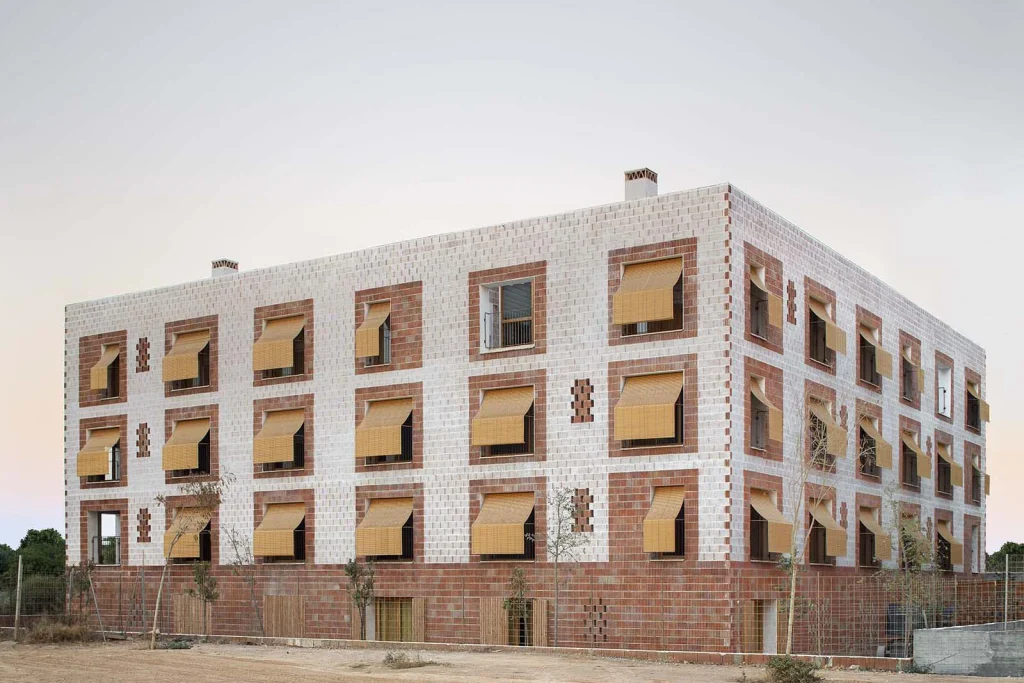
Evaluated by an international jury chaired by MVRDV founding partner Nathalie de Vries, the initiative shifts the global discipline. It demonstrates that high-performance sustainable architecture achieves true impact not through singular luxury towers, but by using parametric environmental modeling to optimize public procurement, revive regional material networks, and build non-speculative civic infrastructure.
The Algorithmic System Hack: Rewriting Public Administration
Before this structural reform, standard public housing across Spain relied on private developers constructing subsidized units for eventual private sale. The Balearic model disrupted that mechanism at every level. The institution pivoted exclusively to permanent public rental stock. By retaining state ownership over municipal land, the team shielded public property from real estate inflation while turning public construction funds into enduring community infrastructure.
Realizing that policy directives alone could not reduce embodied carbon, leadership transformed IBAVI into a living design laboratory. The agency commissioned residential developments directly from regional architectural practices, utilizing public procurement rules to test decarbonized material compositions, passive heating corridors, and computationally optimized spatial layouts.
Parametric Bioclimatism and Vernacular Materiality
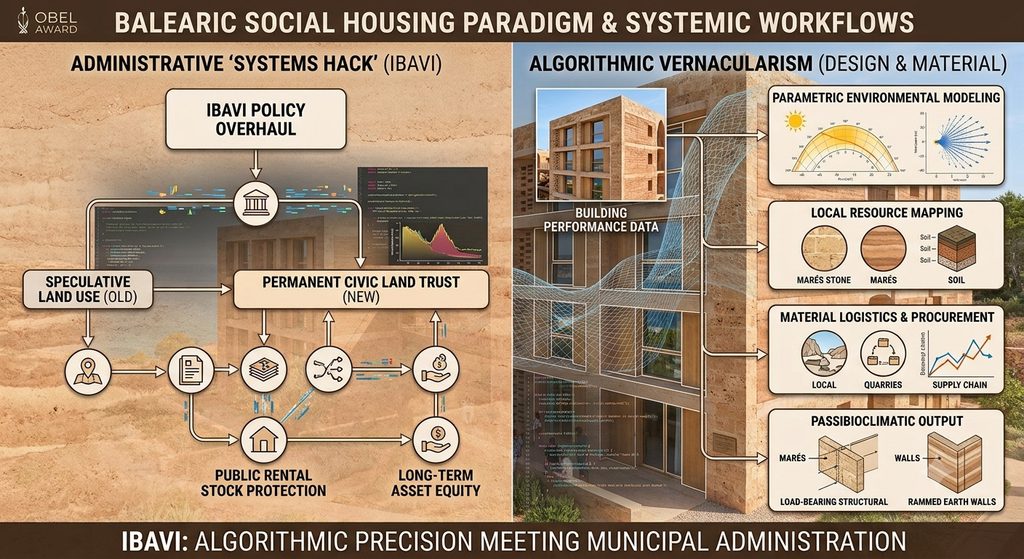
At the center of this housing framework lies a sophisticated synthesis between computational analysis and historic building techniques. Architects within the IBAVI network executed comprehensive digital mapping across the islands’ geography. They processed solar irradiation vectors, prevailing sea breezes, and hyper-local material availability directly into generative spatial software.
Computational Marés Optimization
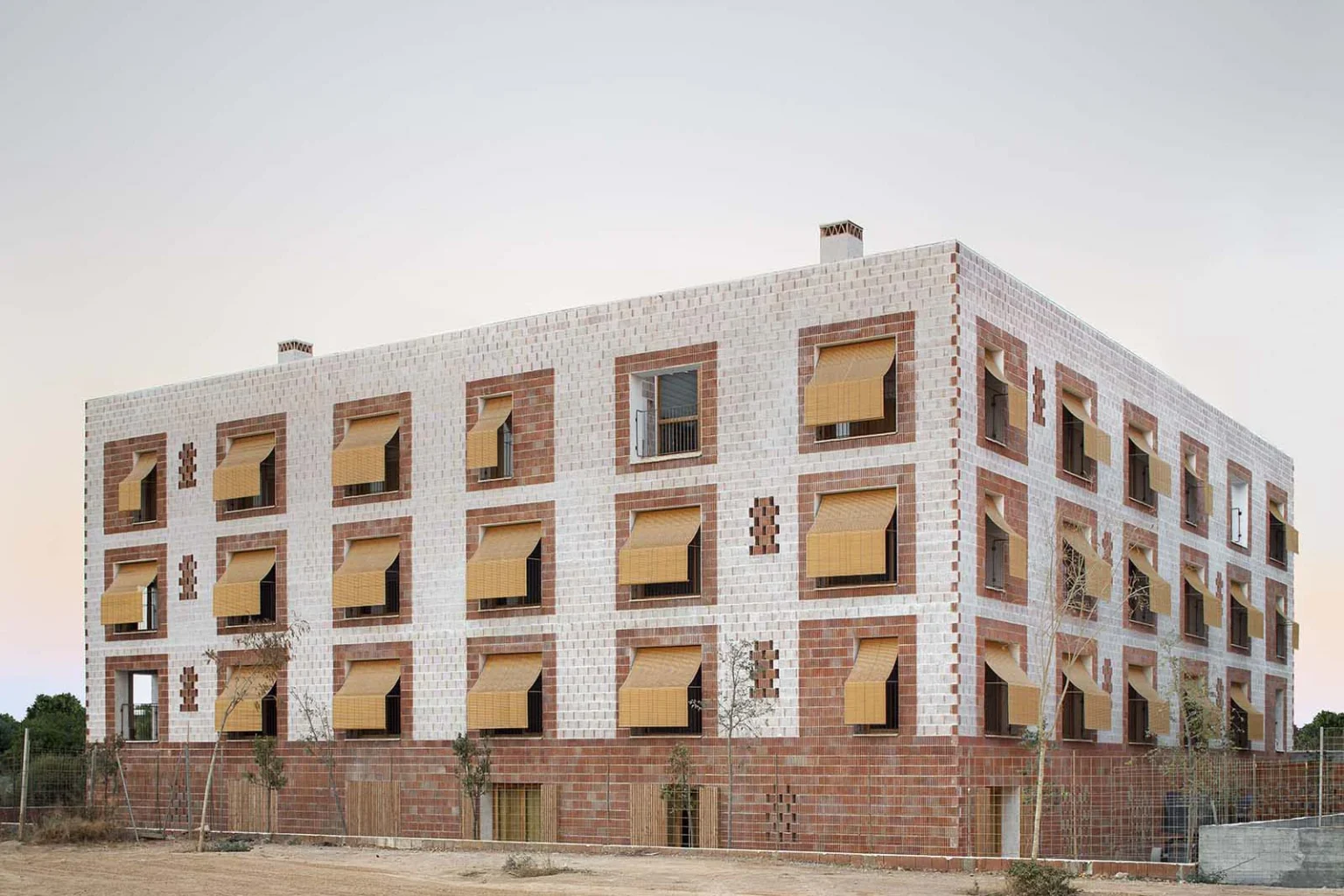
Historically restricted to heritage restoration or high-end coastal villas, Marés, a calcarenite sandstone native to the archipelago, was structurally analyzed using digital mass models. By simulating structural loads digitally, teams replaced concrete frames with load-bearing stone block envelopes offering high thermal mass.
Parametric Earth and Low-Carbon Assemblies
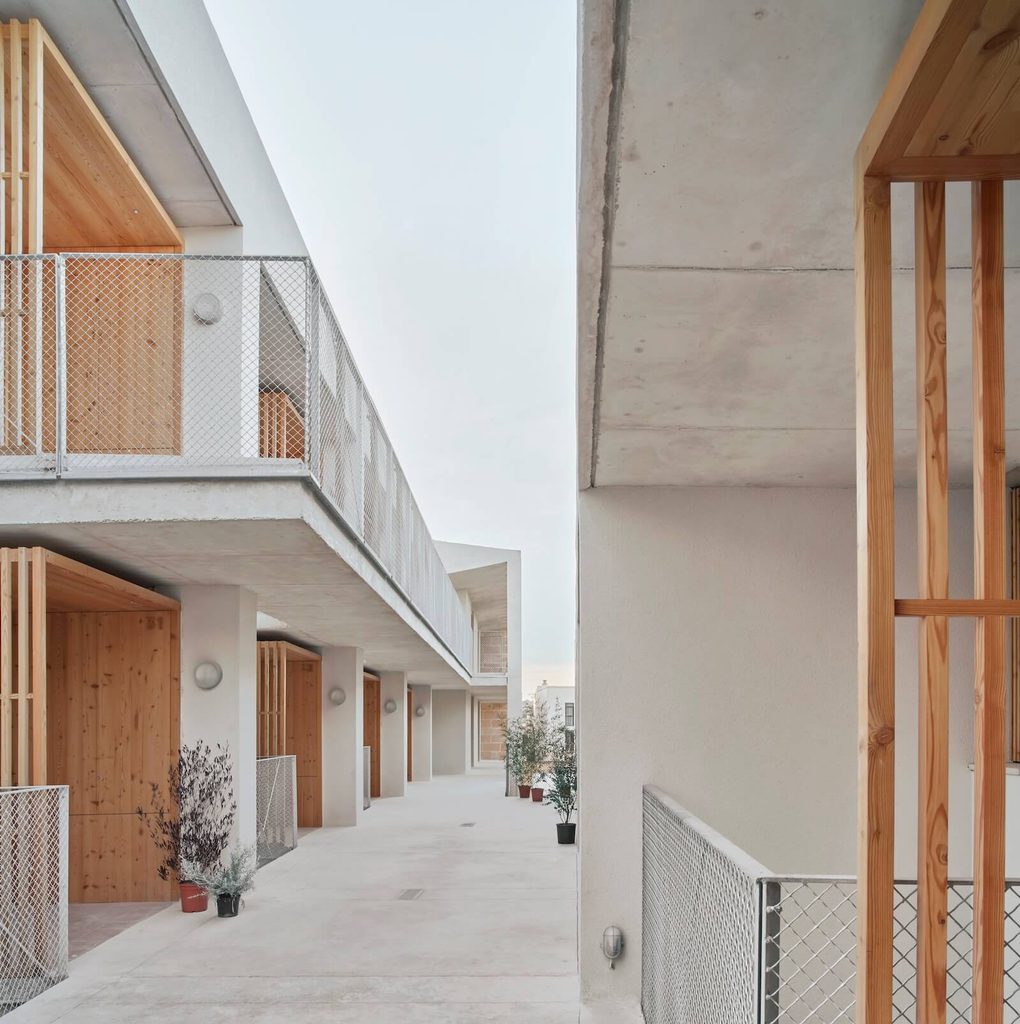
Projects such as the 43 social housing units in Mallorca designed by Peris + Toral Arquitectes utilized 20-centimeter-thick load-bearing rammed-earth blocks. Algorithmic simulations determined exact wall densities and sun-shading profiles to maximize seasonal heat storage.
Generative Structural Vaulting
By using funicular structural logic to design vaulted brick and stone ceilings, projects achieved maximum structural strength with minimal material thickness, significantly reducing floor mass and inter-unit acoustic transfer.
Scalable Design Frameworks for Global Practice
Jury members for the 2026 OBEL Award emphasized that the primary value of the Balearic model lies in its global adaptability. While contemporary architectural media frequently celebrates isolated landmark projects, IBAVI provides an adaptable computational and administrative blueprint for municipalities worldwide.
The Balearic model proves that systemic decarbonization requires structural change inside civic institutions. Connecting local supply chains with algorithmic design and progressive public policy allows municipal agencies to lower carbon emissions, lower long-term building maintenance costs, and deliver high-performance, dignified housing for local communities.
Digital Material Intelligence and Open-Source Protocols
Beyond physical site execution, the Balearic model introduces a digital layer to civic material sourcing. IBAVI established a geographical matrix mapping raw deposits, active stone quarries, and agricultural waste streams across Formentera, Ibiza, Mallorca, and Menorca. By integrating material data directly into BIM workflows, architects dynamically adjust structural wall thicknesses based on inventory within a 50-kilometer radius.
All in All
Architecture must expand its focus beyond individual building forms to address the regulatory, computational, and material networks that shape the built environment. By proving that public governance and parametric thinking can drive sustainable progress, the Balearic Social Housing Model and the OBEL Award presents a transformative framework for spatial equity and ecological design.