

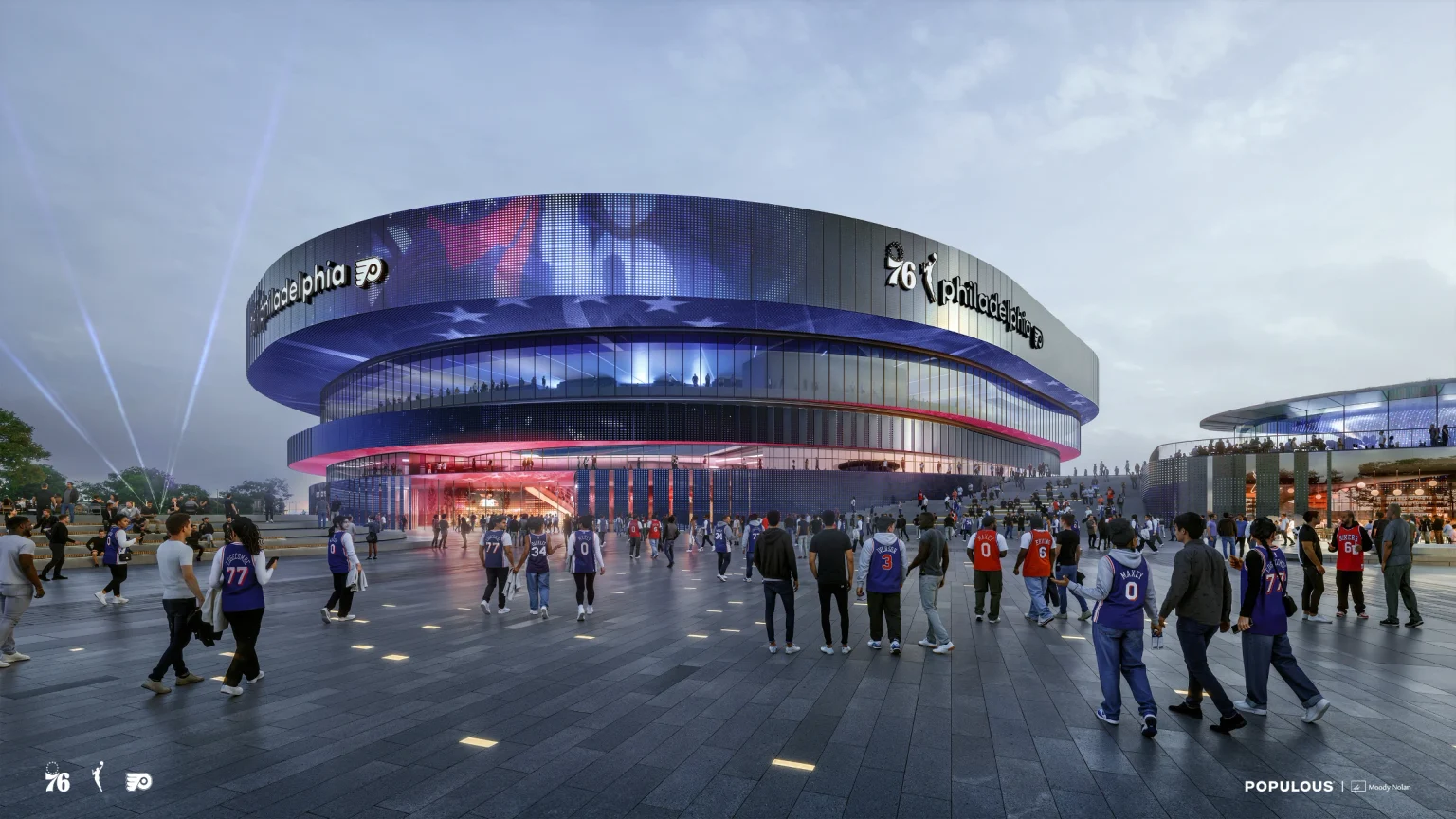


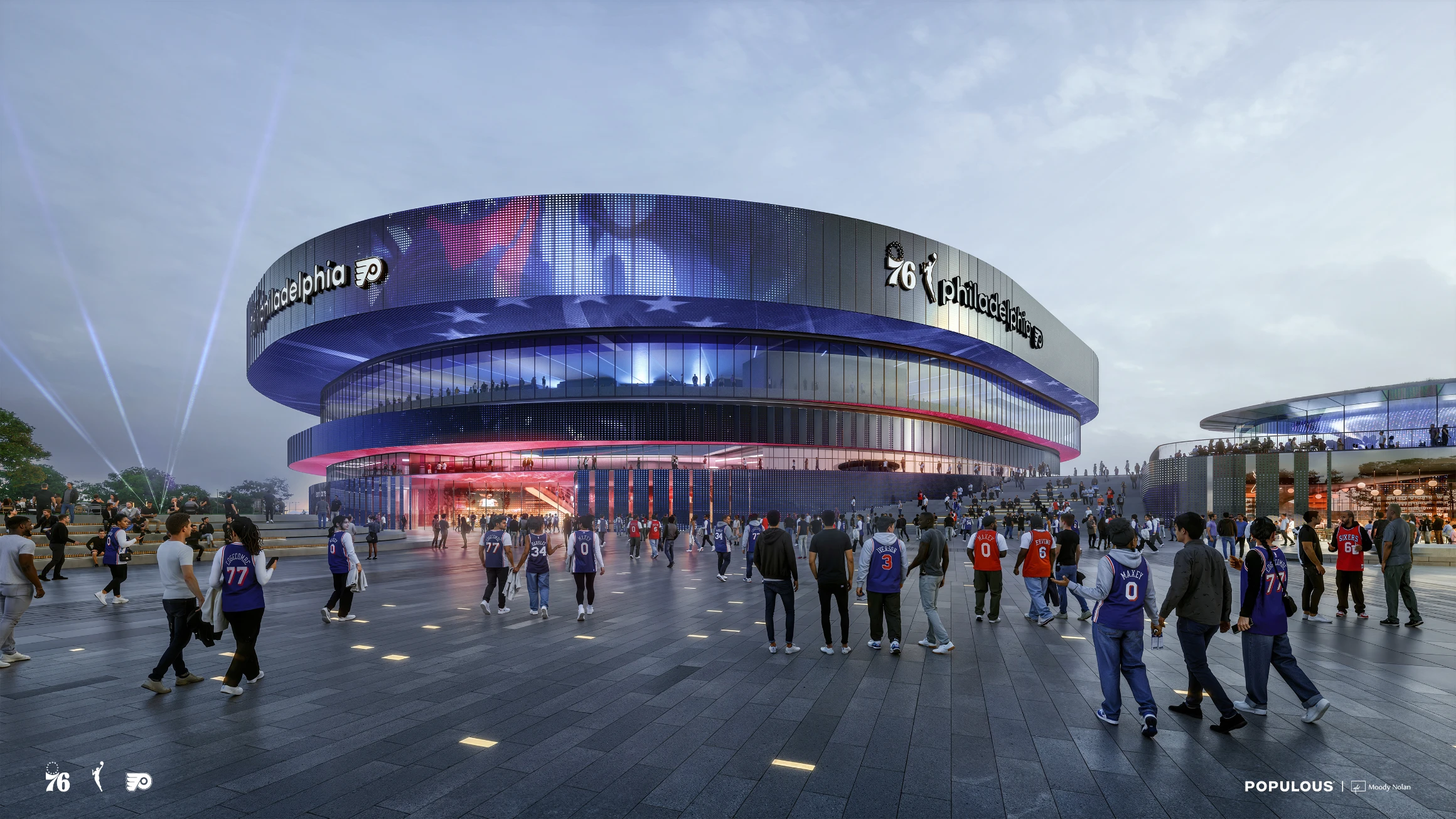
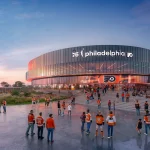
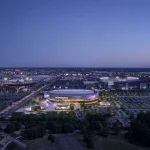
The Philadelphia 76ers and Philadelphia Flyers have released the first exterior images of the arena they will call home starting in 2030, a building that will also house the city’s newest professional team once the WNBA arrives in Philadelphia. The renderings, shown publicly this week, offer the clearest picture yet of a project years in the planning, one that will rise on ground already thick with sporting memory.
That ground once held the Spectrum, the arena that opened in 1967 and spent more than four decades hosting championship runs, sold out concerts and the kind of nights Philadelphia fans still talk about. When architecture firm Populous and associate architect Moody Nolan sat down to design what comes next on that site, they faced a question that goes beyond steel and glass: how do you build something new on ground this loaded with meaning, without losing what made the old building matter?
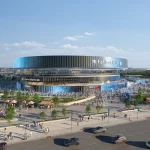
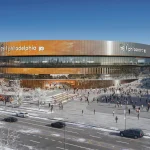
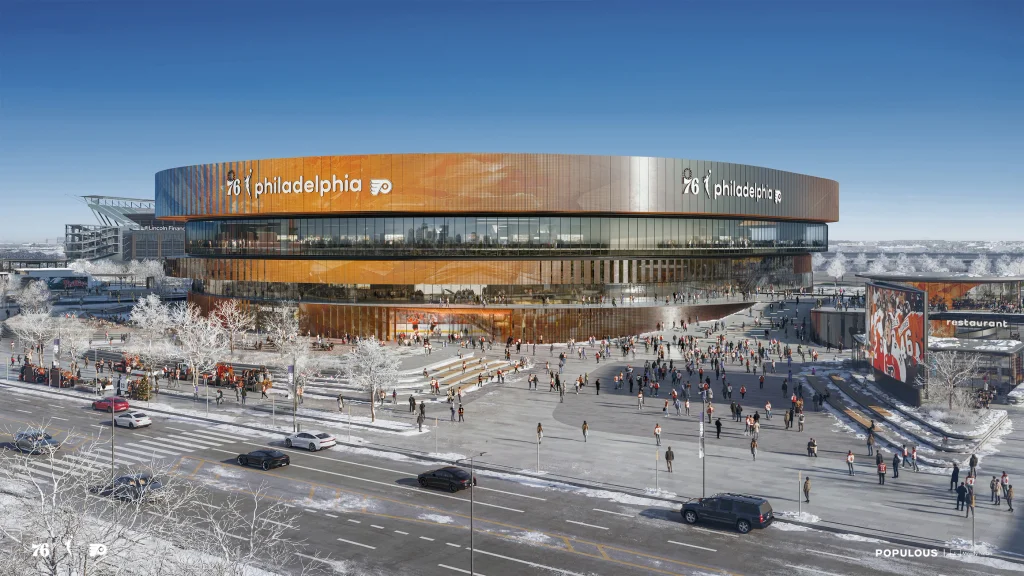
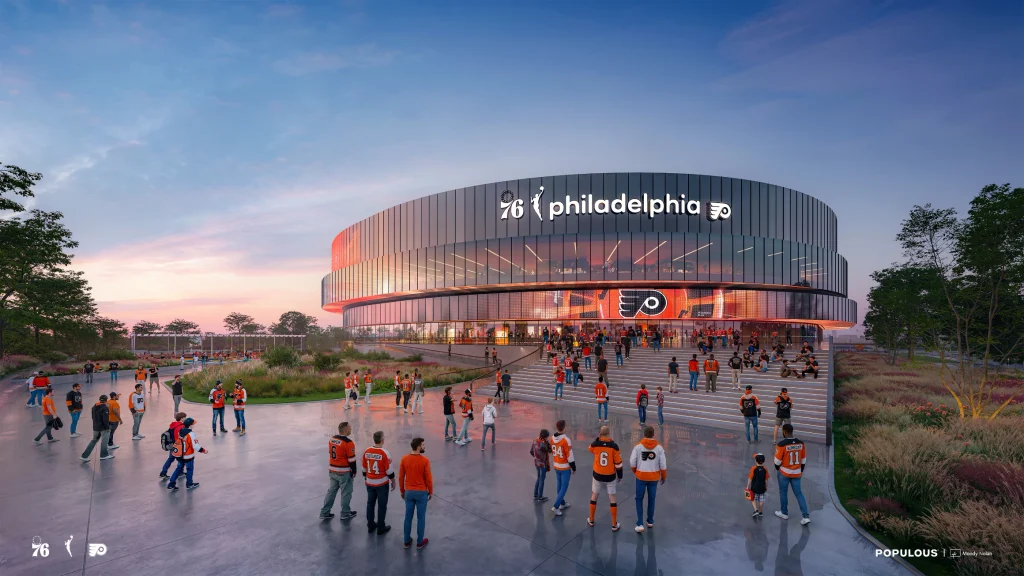
Their answer takes the form of a facade built from layered, curving bands that step back and rise in sequence around the exterior, a shape drawn directly from the Spectrum’s own silhouette and scaled up for a new era. Jonathan Mallie, who leads Populous’ work across the Americas as Global Director and Managing Director, has described the approach as building on what the Spectrum represented rather than starting from a blank page, translating that legacy into a form suited to a far larger, more technically ambitious building. The result reads less like a monument and more like a continuation, a building that remembers where it stands even as it grows past it.
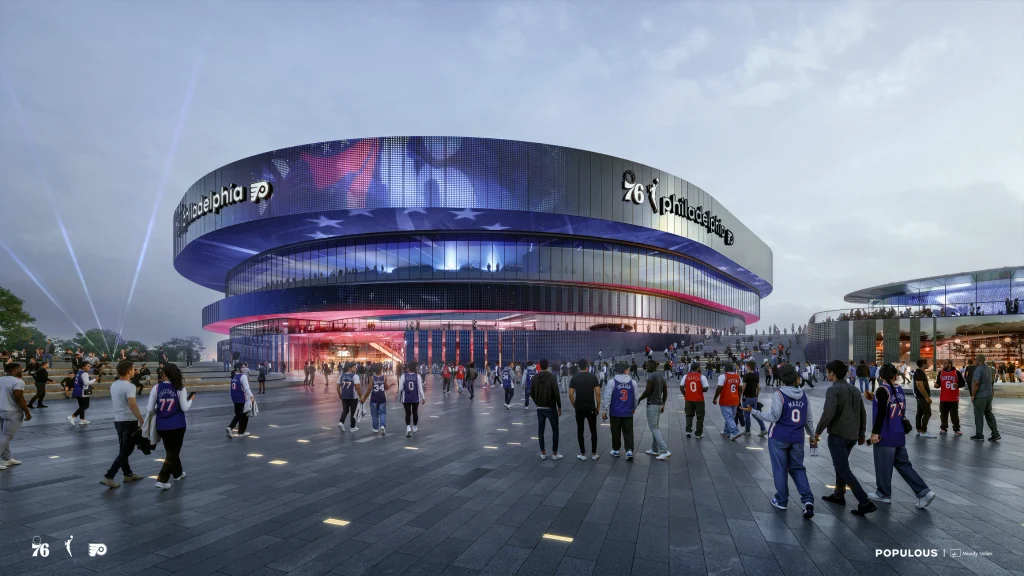
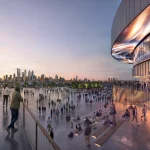
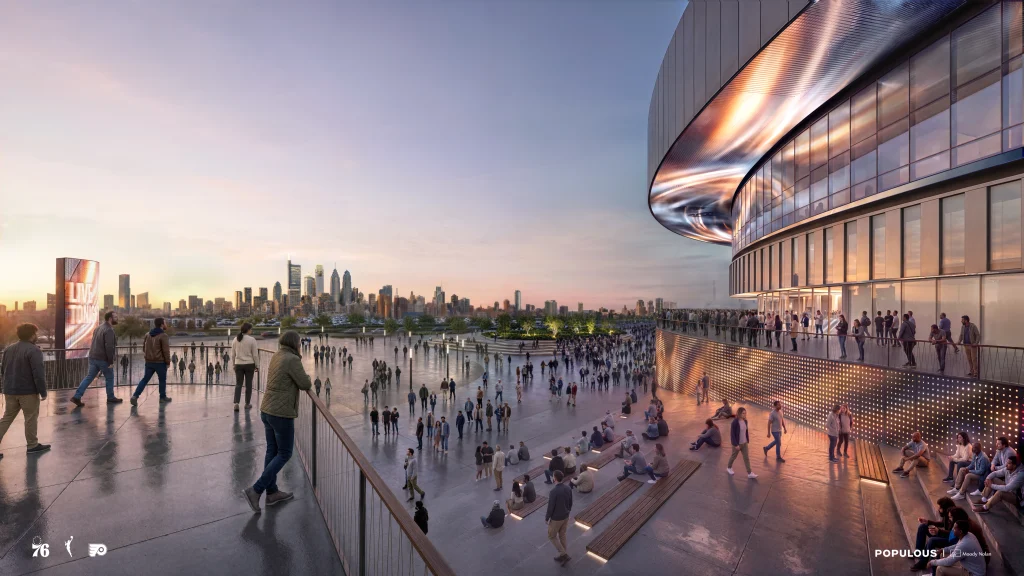
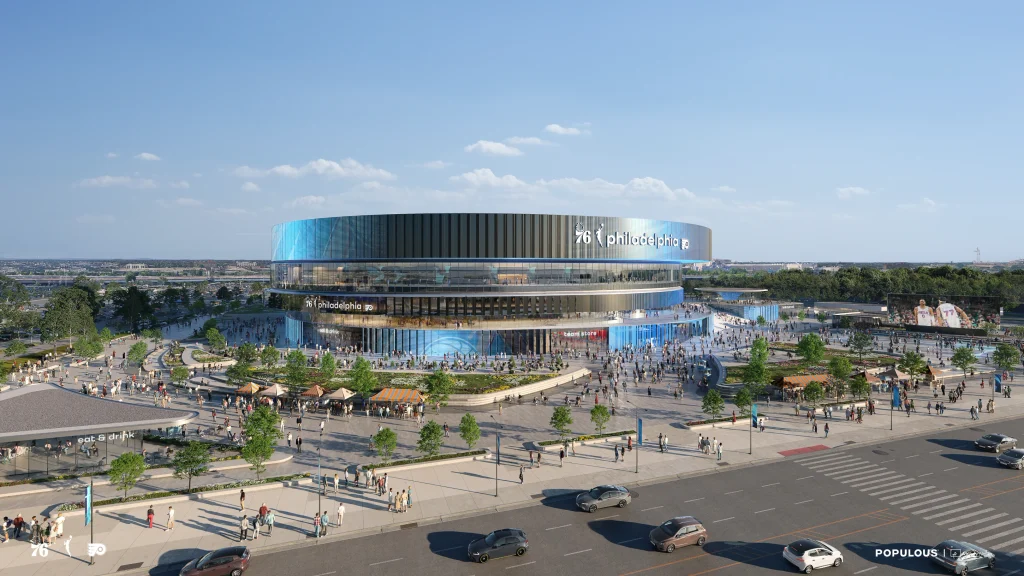
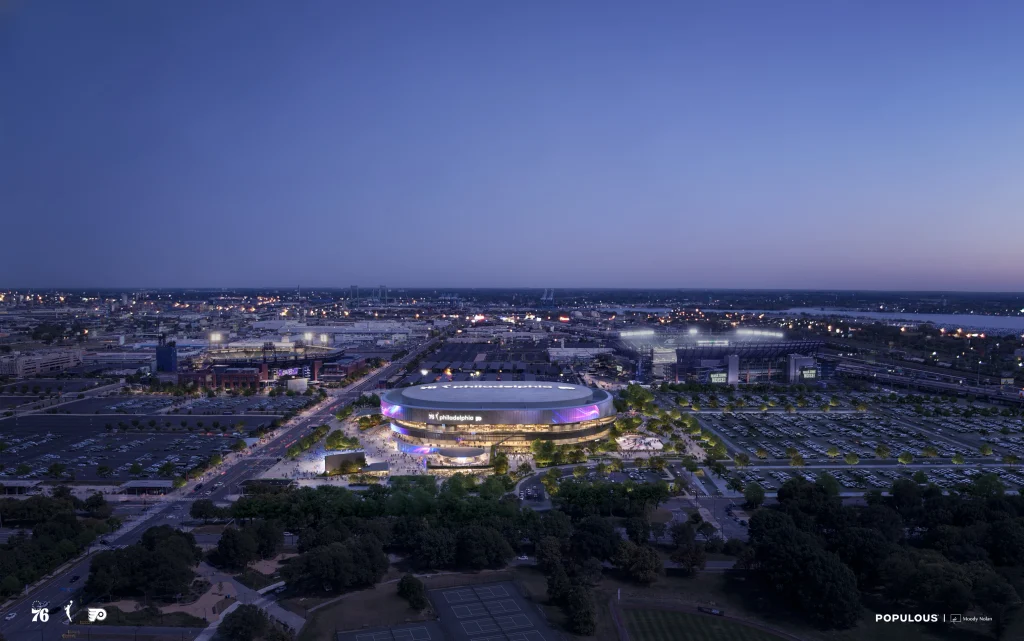
Walk through the renderings and the arena’s public face comes through clearly. A stepped plaza greets fans on the northwest side, built to double as gathering space on quiet days and overflow energy on game nights. Aerial views show a building that widens and narrows as it climbs, its bands catching light differently depending on the angle and the hour, an exterior meant to look different on a Tuesday afternoon walk-up than it does lit up for a Saturday night concert.
Nothing about the massing reads flat. The building is designed to be read from a car window, from the sidewalk and from twenty stories up, and it shows in the level of detail across every rendered angle.
Materials have not been fully specified in what’s been released so far, though the scale of the banding points toward metal and glazing built to hold up against South Philadelphia’s stadium sized neighbors. Populous has built a career on getting this balance right elsewhere, producing facades that read as sculptural from a distance and durable up close, built to age well under decades of weather, television lights and foot traffic. More specificity is expected as construction drawings progress and the project moves from renderings toward groundbreaking.
What separates this reveal from a typical arena unveiling is how it got here. The design wasn’t handed down and shown cold. Fan surveys, focus groups and rounds of community input shaped decisions about public space, amenities and what residents actually wanted from the city’s next major venue, and that process is set to continue through design and approval. It is a slower, more accountable way to build something this size, and it shows in details like the plaza and the stepped approach, both clearly built around how people will move through the site rather than how the building looks in a single hero shot.
The people behind the project are framing it as more than a home for three franchises. Josh Harris, who co-founded Harris Blitzer Sports and Entertainment and serves as managing partner of the 76ers, has pointed to the arena as a privately funded investment expected to create thousands of jobs and drive business for the restaurants, shops and vendors near the South Philadelphia sports complex.
Comcast Chairman Brian Roberts, whose company will hold the naming rights once a name is chosen, has tied the project to the city’s civic leadership, crediting Mayor Cherelle Parker and City Council President Kenyatta Johnson as partners in getting the deal this far. The ownership group, which also includes David Blitzer, David Adelman and Dan Hilferty, has treated the build as a shared civic undertaking as much as a real estate one.
None of this would carry the same weight without the firm behind the drawings. Populous has spent more than four decades earning exactly this kind of trust from cities and franchises, growing from a sports focused studio founded in Kansas City in 1983 into one of the largest design practices in the world dedicated to venues where people gather. Its offices now stretch across the Americas, Europe, the Middle East and Asia Pacific, and its portfolio runs past 2,500 completed projects worth tens of billions of dollars in construction value.
The firm’s name sits behind some of the most recognized venues on the planet: Yankee Stadium in New York, Tottenham Hotspur Stadium in London, the main stadium built for the 2012 London Olympics, and Seattle’s Climate Pledge Arena, the first arena in the world built to net zero carbon standards.
In Beijing, Populous designed the National Speed Skating Oval, nicknamed the Ice Ribbon, for the 2022 Winter Olympics. In Manchester, its Co-op Live became the largest arena in the United Kingdom. Closer to home, its arena work includes UBS Arena in New York, Fiserv Forum in Milwaukee and T-Mobile Arena in Las Vegas. Moody Nolan brings its own record in venue design, including work on Chicago’s Wintrust Arena and the renovation of Cleveland’s Progressive Field, adding a second set of hands with deep experience building for both professional and civic use. Philadelphia’s new arena joins a list of work that spans six continents, and it will be judged against that standard.
What makes the site itself worth the attention is what stood there before. The Spectrum opened in 1967, a scrappy, undersized building put up in under a year and a half to keep the newly formed Flyers in the city. It nearly went bankrupt within its first four years before Ed Snider, the Flyers’ founder, pulled together the money to save it and turn it into what fans came to call America’s Showplace. The Flyers won back to back Stanley Cups there in 1974 and 1975, the first expansion team in NHL history to do it.
The Grateful Dead played the building fifty three times, more than any other act in its history. Elvis Presley gave one of his final live performances inside its walls. When the Spectrum closed in 2009 and came down the following year, it took four decades of Philadelphia sports memory with it, but not the ground itself, and not, it seems, the idea of what a Philadelphia arena is supposed to feel like.
That is the weight this new building has been asked to carry. It is set to open in 2030, just ahead of debut seasons for Philadelphia’s NBA, NHL and WNBA teams under one roof, with a name still to be announced once Comcast finalizes its naming rights deal. Between now and groundbreaking, more renderings, more public input sessions and more design detail are expected to follow. For a city that has gone the better part of two decades without an arena standing on that exact patch of South Philadelphia, the wait for what comes next is, for the first time in a while, starting to take visible shape.
For now, the renderings are a first word, not the last one. What stays fixed is the destination: a 2030 opening, three teams sharing one roof, and a piece of South Philadelphia built to hold its past and its future in the same set of walls, together, for good.