Topic: Eco-Parametric Architecture 2.0
Date: November 21-22, 2026
Time: 14:00 – 19:00 GMT
Format: Online on Zoom
Duration: 2 Sessions (10 Hours)
Registration Deadline: November 20th, 2026
Total Seats: 50 seats
Difficulty: Intermediate
Language: English
Certificate: Yes
General Registration: 120 EUR
Join free: with Full Access membership
Fee for Digital Members: 102 EUR (15% discount available only for Digital Members)
Organized By: PAACADEMY
Tutor: Studio Mamou-mani
Recordings: Recordings will be available for all participants indefinitely afterward.
Introduction to Eco-Parametric Architecture 2.0
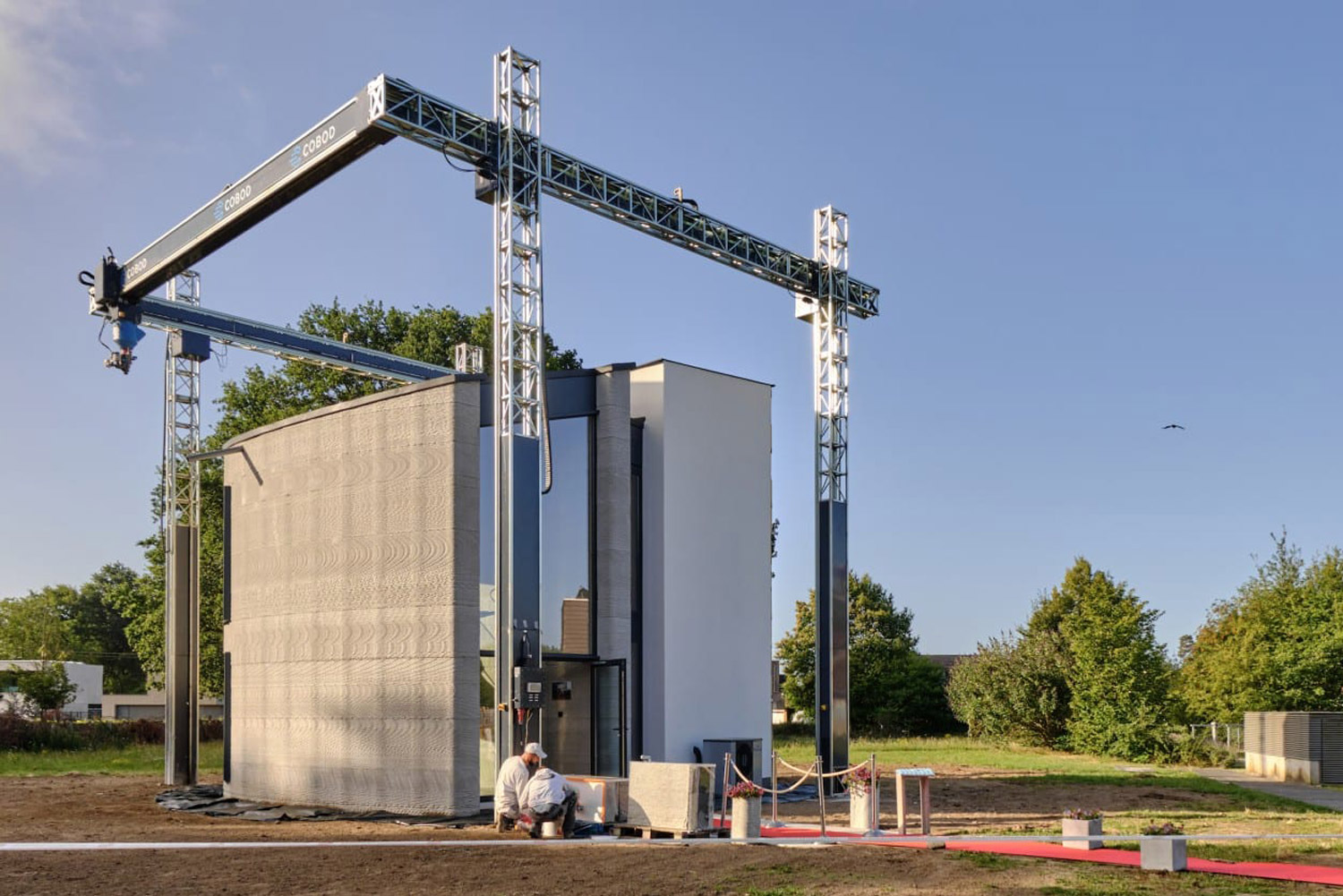
This workshop demonstrates integrated methods for leveraging parametric tools and circular materials to translate initial design concepts into production-ready physical structures and examine how these systems can be disassembled for future reuse.
Participants will discover how to construct modular Grasshopper algorithms shaped by material volume, curvature, and joint logic. They will subsequently learn how to convert complex geometry into robotic toolpaths and G-code tailored for large-scale 3D printing with recycled compounds.
Upon completing the course, attendees will gain far more than pre-packaged scripts. They will master the ability to engineer and refine complete digital-to-physical pipelines on their own.
Attendees will grasp the core algorithmic logic and physical constraints driving these processes, empowering them to innovate, test, and design custom fabrication strategies tailored to their unique architectural vision and material requirements.
The objective is not merely to execute a pre-designed script, but to develop the skills needed to formulate and advance circular design frameworks autonomously.

Methodology:
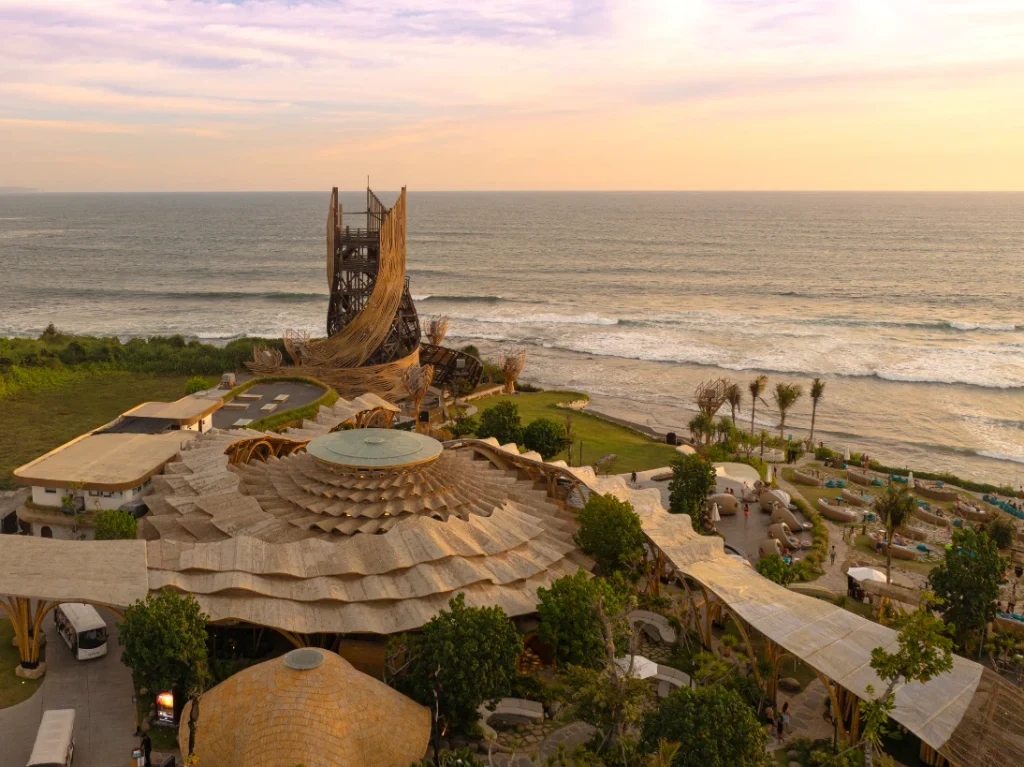
Participants will develop a new modular architectural system created specifically for the workshop. It will draw on principles from Mamou-Mani’s architectural projects and Fab.Pub’s circular-material research without reproducing client work or disclosing proprietary files.
The project will progress through concept development, parametric modelling, material constraints, modularisation, robotic toolpathing, assembly and future reuse.
The material focus will be large-scale 3D printing with reclaimed or recycled compounds. Available material volume, print bed size, layer height, minimum curvature, overhang analysis, connections, print direction, and disassembly requirements will inform the design and fabrication strategy.
A live revision session will take place two weeks after the workshop to check your progress and answer any remaining questions.
Students will:
- Interpret an architectural brief and define its regenerative-material objectives.
- Use AI-assisted exploration to test design directions and visualise the system in context.
- Develop an adaptable architectural system in Rhino and Grasshopper.
- Translate material and fabrication constraints into geometry, modules and connections.
- Prepare a selected component for robotic fabrication and large-scale 3D printing.
- Reassemble the components and evaluate disassembly, reprocessing and future reuse.
- Demonstrate RunChat as a bridge between precise parametric geometry and rapid visual iteration.
Key Learning Topics:
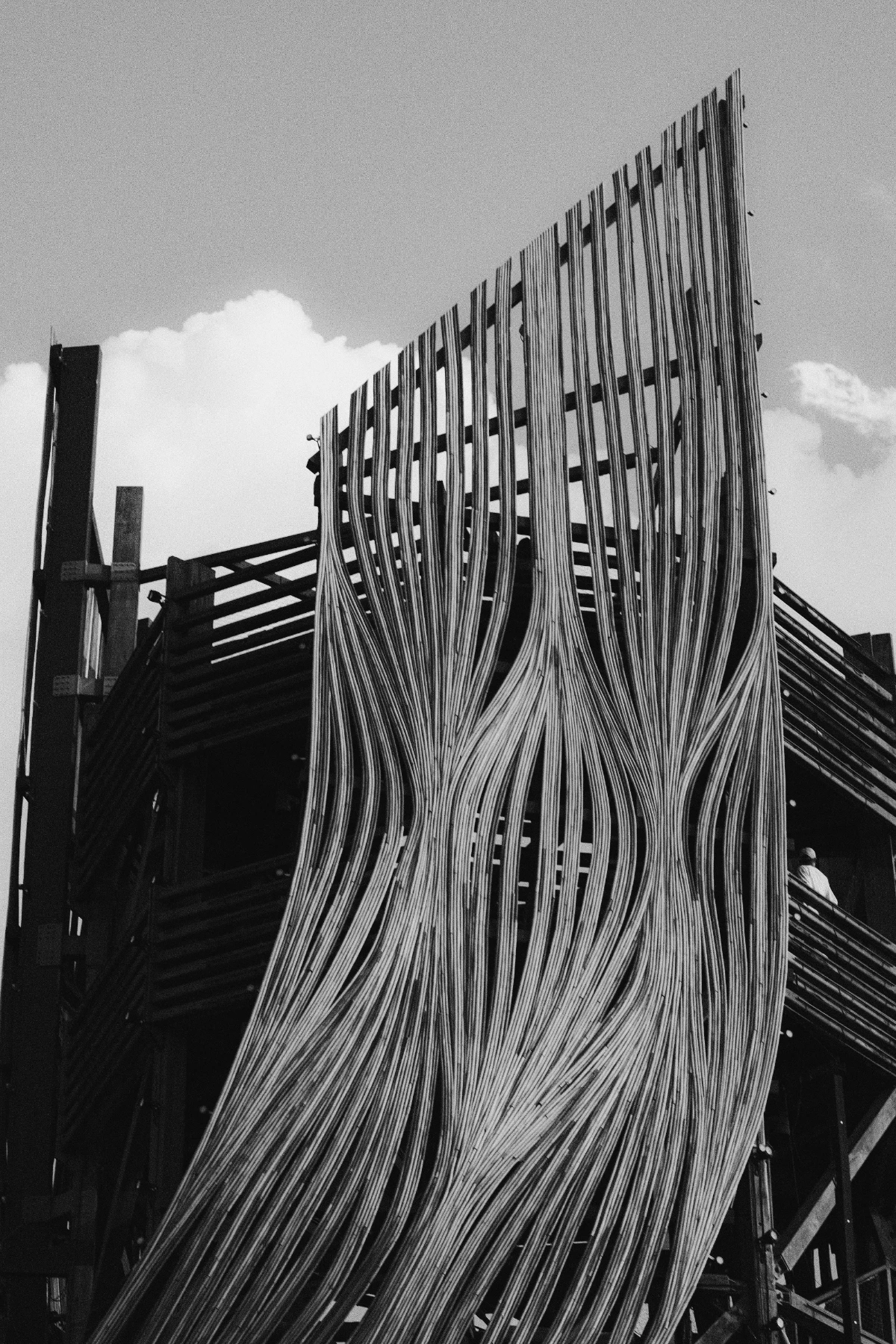
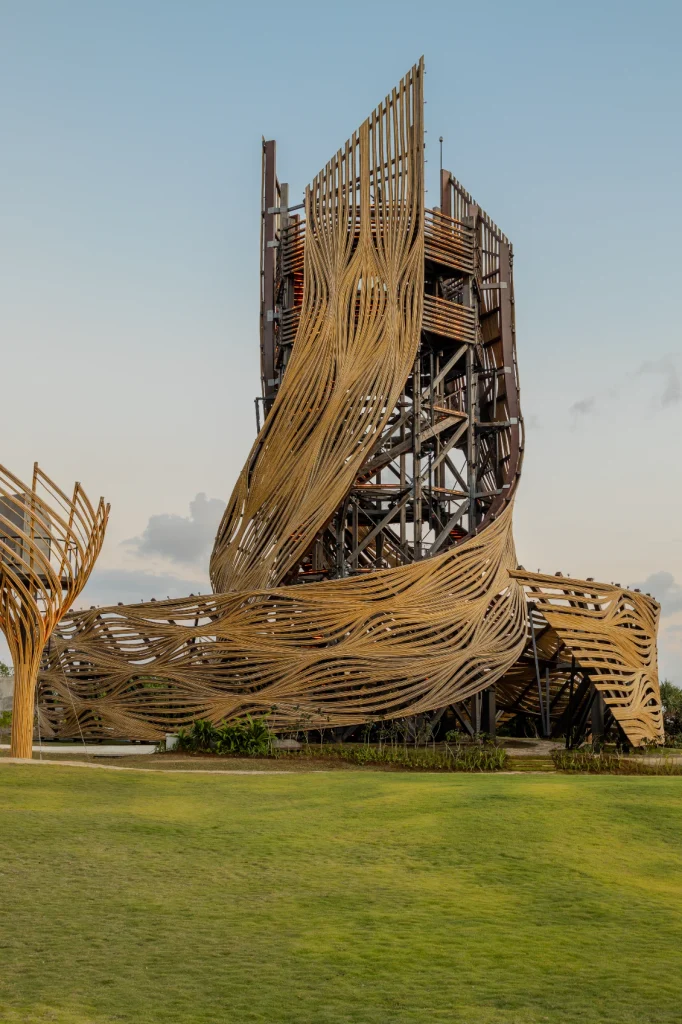
- Translate briefs into parametric systems.
- Shape geometry using material behavior.
- Control modules and fabrication limits in Grasshopper.
- Prepare components for robotic 3D printing.
- Account for layer heights, overhangs, and print orientation.
- Convert digital geometry into toolpaths and G-code.
- Design for assembly, disassembly, and circular reuse.
- Use AI exploration without sacrificing geometric precision.
Program:
Day 1: Brief to Parametric System
Block 1 – From Brief to System:
- Introduction to the single canopy or pavilion brief
- Review of relevant built precedents
- Definition of regenerative-material objectives
- Role of AI in transitioning from narrative intent to a controlled design system
Block 2 – Building the Parametric System – Led by Fun Yuen:
- Live build of the workshop project in Grasshopper
- Parametric control over module dimensions, density, and curvature
- Integration of connections, material limits, and fabrication constraints
Day 2: Robotic Toolpathing & Circular Workflow
Block 3 – From Geometry to Robotic Toolpath – Led by Clinton Mendonca:
- Transitioning Grasshopper geometry into robotic fabrication
- Setting tolerances, print orientation, and componentisation
- Defining bead and layer logic, robotic toolpaths, and G-code
- Conducting production checks for reclaimed printing compounds
Block 4 – Completing the Circular Workflow:
- Reassembling components into the complete canopy or pavilion system
- Testing assembly and disassembly logic
- Evaluating reprocessing and reprinting strategies
- Using AI-assisted visualization to present the design in context
Software:
- Rhinoceros 3D
- Grasshopper
- Runchat
Workshop Notes:
- Software Installation is NOT a part of the workshop! Students must have all the software installed before starting the workshop.
- Basic knowledge of AI is required.
Instructors:
Arthur Mamou-Mani

Arthur Mamou-Mani – AA dipl, ARB/RIBA FRSA – is a French architect and director of the award-winning practice Mamou-Mani Architects, specializing in a new kind of digitally designed and fabricated architecture. He is a lecturer at the University of Westminster and founded a digital fabrication laboratory called the Fab.Pub, which develops mobile factories to allow people to experiment with large-scale 3D Printers. Since 2016, he is a fellow of the The Royal Society for the Encouragement of Arts, Manufactures, and Commerce. He has won the Gold Prize at the American Architecture Prize for the Wooden Wave project installed at BuroHappold Engineering and the RIBAj Rising Star Award in 2017.
Arthur gave numerous talks, including the TedX conference in the USA, and has been featured on the cover of the FT, in The New York Times, and in Forbes. His work has been exhibited at the Sir John Soane Museum, and the Wired Mag Highlight show at the Tate Modern in London. Before founding Mamou-Mani in 2011, he worked with Atelier Jean Nouvel, Zaha Hadid Architects, and Proctor and Matthews Architects.
Fun Yuen

Fun is an architectural designer at London-based Architectural practice Mamou-Mani Ltd., specialising in generative design and fabrication processes. Her work incorporates research, parametric design, and fabrication management. She is also a faculty assistant at the Institute for Advanced Architecture of Catalonia (IAAC) and has been giving Grasshopper 3D workshops at the Architectural Association in London. She is also a member of the SimplyRhino Ltd. Grasshopper 3D training team.
She holds an MSc (Distinction) in Emergent Technologies and Design from the Architectural Association (2019) and a BSc (Hons) in Creative Media and Computer Science joint degree from the City University of Hong Kong (2016).
Clinton Glen Mendonca

Clinton Glen Mendonca is an Architect and a Computational designer, riveted in parametric, computational and generative design & completed his Postgraduate degree from Emergent Technologies at the Architectural Association. He is explorative in the fields of digital fabrication and manufacturing, computational and data-driven design, and extended reality visualisations.
He believes in the integration and co-existence of physical and digital media as the future of the built environment. Prior to working at Mamou-Mani Architects, he worked as an architect at various design firms based in Mumbai, India.
Important Notes:
- The “Eco-Parametric Architecture 2.0: From Regenerative Materials to Fabrication” workshop by PAACADEMY will start at 14:00 (GMT) on Saturday, November 21st, 2026.
- Total sessions: 2 Sessions (10 Hours).
- The teaching duration per session will be 5 hours.
- Students will have time for a break between teaching hours.
- The workshop will be recorded, and videos will be available for participants just a day after the class for an unlimited time.
- PAACADEMY will provide a certificate of attendance.
- The studio has limited seats. Tickets are non-transferable & non-refundable. Please read carefully before you register.
Topic: Eco-Parametric Architecture 2.0
Date: November 21-22, 2026
Time: 14:00 – 19:00 GMT
Format: Online on Zoom
Duration: 2 Sessions (10 Hours)
Registration Deadline: November 20th, 2026
Total Seats: 50 seats
Difficulty: Intermediate
Language: English
Certificate: Yes
General Registration: 120 EUR
Join free: with Full Access membership
Fee for Digital Members: 102 EUR (15% discount available only for Digital Members)
Organized By: PAACADEMY
Tutor: Studio Mamou-mani
Recordings: Recordings will be available for all participants afterward indefinitely.