










Over the last three decades, Chile has emerged as one of the most influential countries in contemporary architecture. Despite its relatively small population and limited economic resources compared to Europe or North America, Chilean architecture practices have earned an international reputation for producing innovative, environmentally responsive, and socially conscious designs. Their projects regularly appear in prestigious architectural publications, receive major international awards, and influence architectural education worldwide.
This success is not accidental. It is rooted in a combination of geographical challenges, economic realities, high-quality architectural education, and a distinctive design philosophy that values simplicity over spectacle. Rather than competing through extravagant forms or expensive technologies, Chilean architects have demonstrated that thoughtful design, careful use of materials, and sensitivity to landscape can create architecture of exceptional quality.

The international recognition of practices such as Elemental, Pezo von Ellrichshausen, Smiljan Radic, and others reflects a broader transformation of Chilean architecture into one of the most respected architectural cultures of the twenty-first century.
Why Chilean Architecture Has Flourished
Several interconnected factors explain the remarkable rise of Chilean architectural practices.
Geography as a Design Laboratory
Chile stretches more than 4,300 kilometers from north to south, encompassing deserts, mountains, forests, glaciers, volcanoes, and coastlines. Few countries contain such diverse climatic conditions within one territory. Architects must therefore design for earthquakes, heavy rainfall, extreme temperatures, high winds, and steep topography.
Instead of treating these conditions as obstacles, Chilean architects embrace them as opportunities. Buildings are carefully adapted to their landscapes through orientation, natural ventilation, passive solar design, and structural innovation. Earthquake-resistant construction has also become a defining characteristic of Chilean practice, encouraging engineers and architects to collaborate closely from the earliest stages of design.

Limited Resources Encouraging Creativity
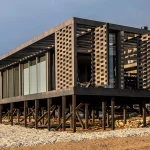
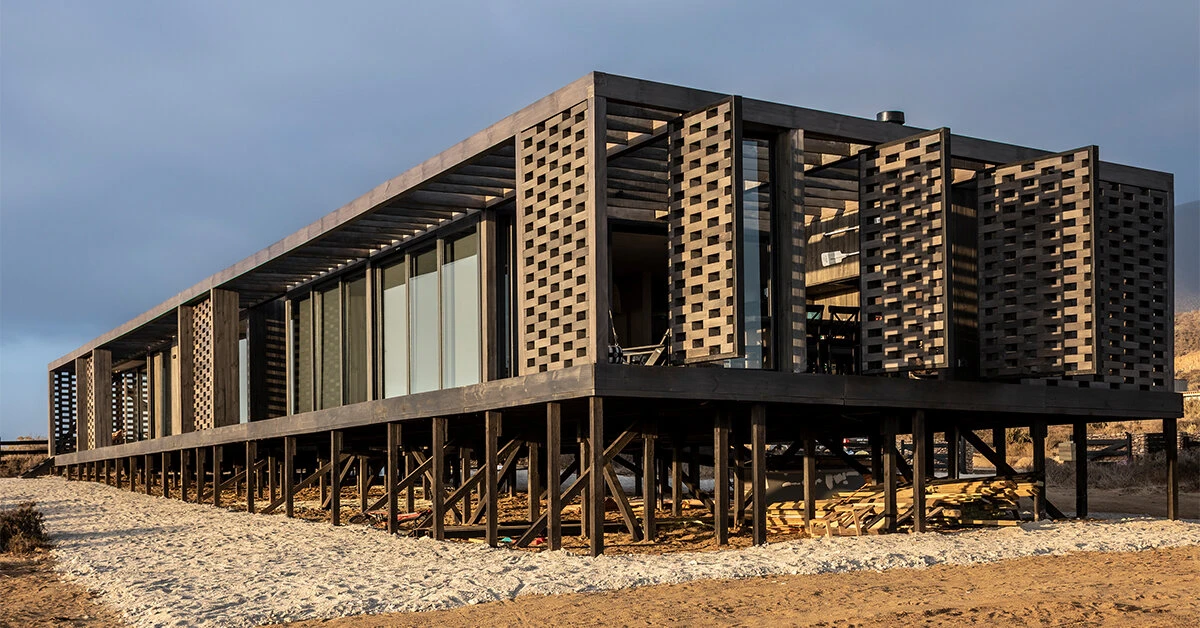
Unlike many wealthy countries where architecture often depends on expensive technologies and luxurious finishes, Chilean architects frequently work with modest budgets. Timber, exposed concrete, galvanized steel, local stone, and plywood are commonly employed not simply because they are affordable, but because they express honesty in construction.
This economic constraint has become a creative advantage. Rather than hiding structural systems behind decorative surfaces, Chilean architecture celebrates construction itself. The result is buildings that feel authentic, durable, and closely connected to their environments.
Strong Architectural Education
Schools such as the Pontifical Catholic University of Chile and the University of Chile have cultivated generations of architects who combine rigorous theoretical thinking with practical experimentation. Studio education often emphasizes direct observation, construction techniques, landscape analysis, and social responsibility instead of purely formal aesthetics.
Many internationally recognized architects continue to teach while maintaining active professional practices, ensuring a productive dialogue between academia and real-world projects.

International Recognition
The global architectural community began paying close attention to Chile during the early 2000s. International exhibitions, architectural biennales, and publications increasingly featured Chilean work. The turning point came when Alejandro Aravena received the 2016 Pritzker Architecture Prize, demonstrating that architecture focused on social impact could achieve the profession’s highest recognition. Smiljan Radić Clarke’s 2026 Pritzker Prize represents a shift in contemporary architectural values, moving away from the dominance of monumental icons toward an architecture of intimacy, ambiguity, and emotional depth.
Rather than creating isolated masterpieces, Chilean architects collectively established an architectural identity characterized by restraint, precision, and contextual sensitivity.
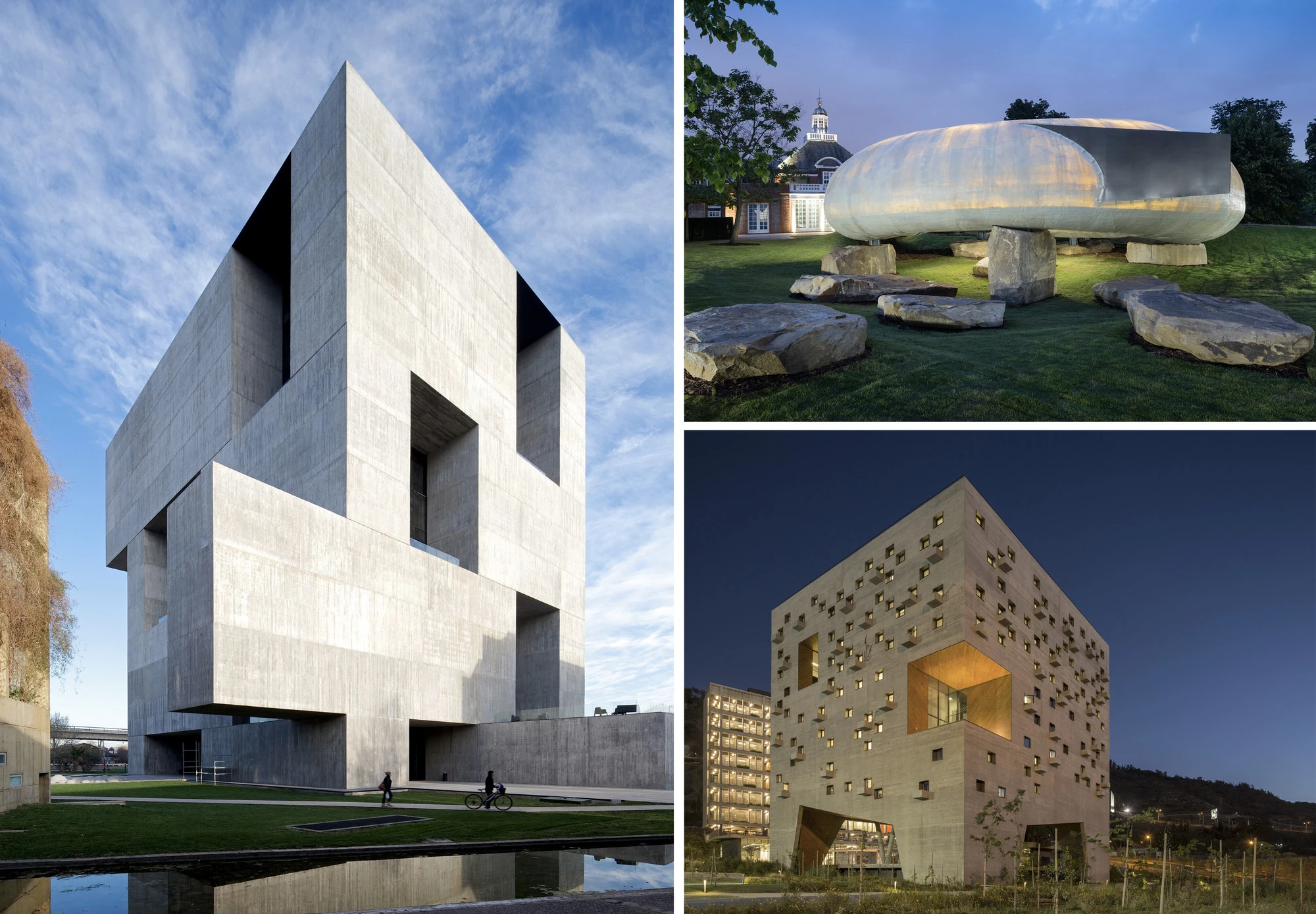
Five Landmark Buildings That Define Contemporary Chilean Architecture
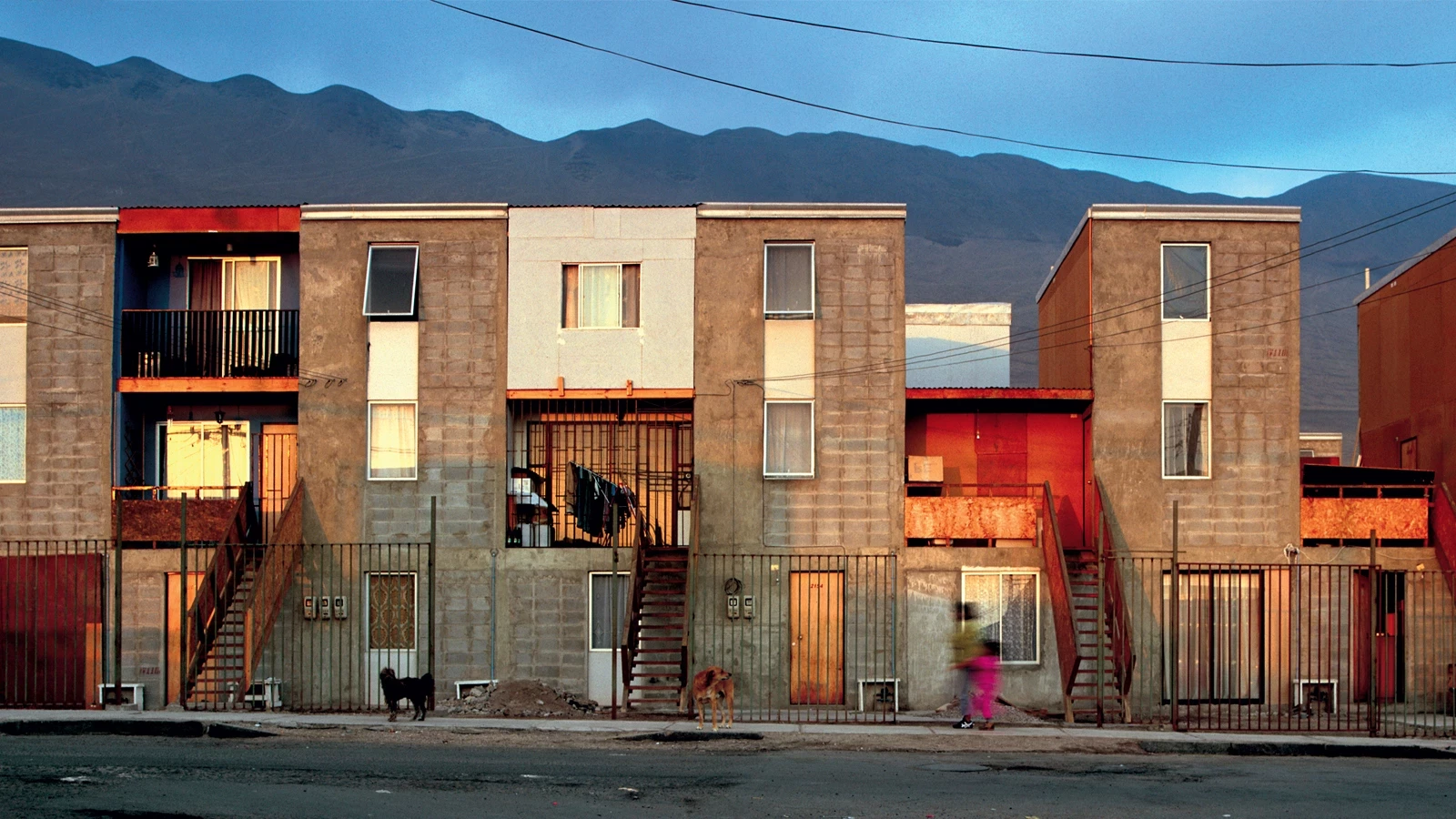
1. Quinta Monroy Housing
Architect: Alejandro Aravena / Elemental (2004)
Among the most influential housing projects of the twenty-first century, Quinta Monroy fundamentally changed international thinking about affordable housing.
Instead of relocating low-income families to distant suburbs, Elemental retained residents on valuable urban land while working within an extremely limited government budget. The architects introduced the concept of “incremental housing,” constructing only the essential half of each house while allowing residents to complete and expand the remaining portion over time according to their financial means.
This strategy transformed public housing from a finished product into an evolving framework. Families became active participants in shaping their own homes rather than passive recipients of standardized dwellings.
The project attracted worldwide attention because it demonstrated that architecture could address social inequality through intelligent design rather than increased expenditure. Today, incremental housing has influenced housing policies in numerous countries.
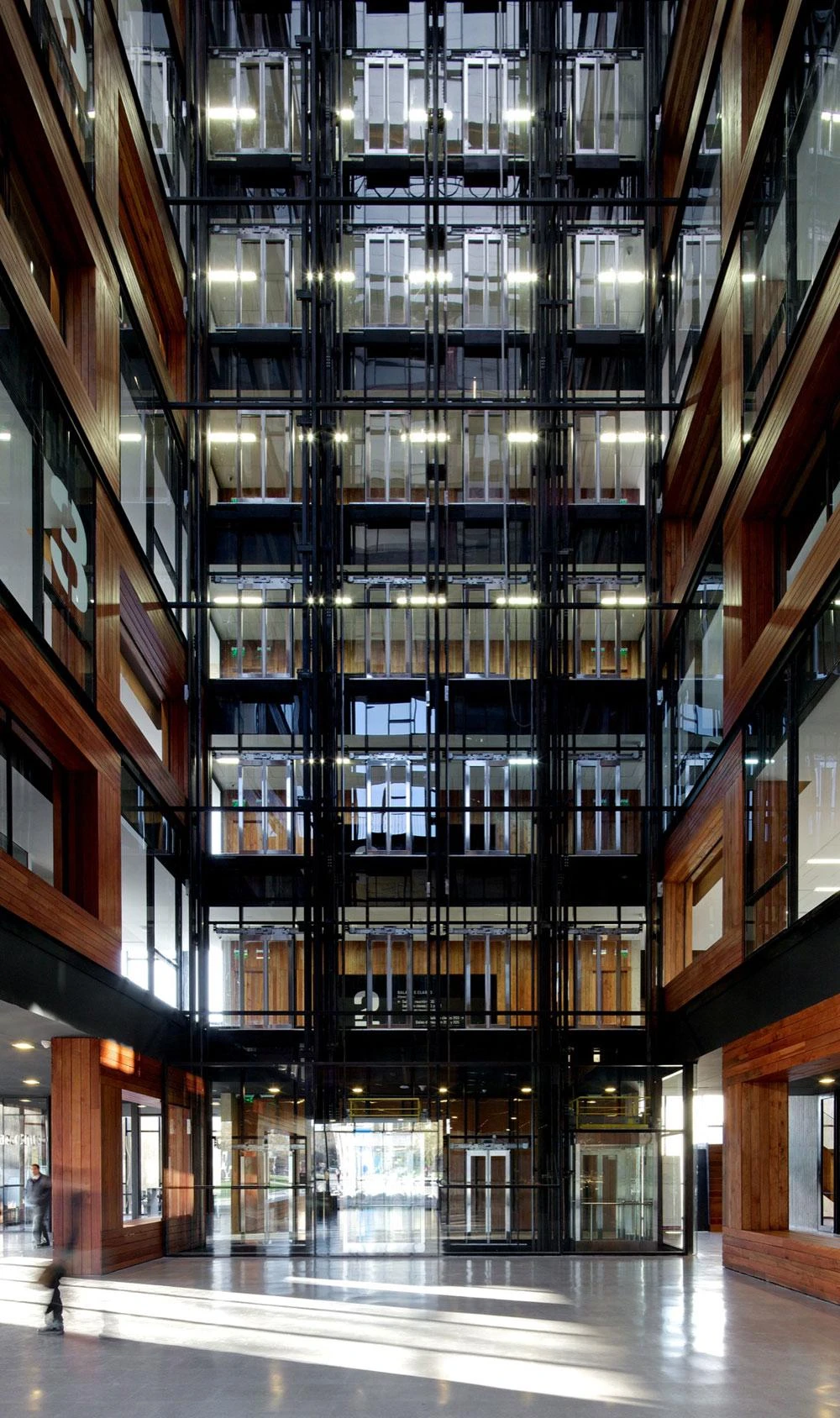
2. UC Innovation Center Anacleto Angelini
Architect: Alejandro Aravena / Elemental (2014)
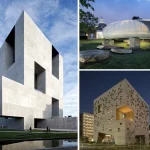
The Innovation Center at the Pontifical Catholic University of Chile represents one of the finest examples of environmentally responsive institutional architecture.
Rather than relying heavily on mechanical cooling systems, the building employs thick exposed concrete walls, deep openings, natural ventilation, and carefully designed shading devices. These passive environmental strategies significantly reduce energy consumption while providing comfortable interior spaces.
Its monumental concrete exterior contrasts with highly flexible collaborative interiors that encourage interdisciplinary interaction among researchers, entrepreneurs, and students.
The building demonstrates how sustainability can emerge from architectural intelligence rather than technological complexity, reinforcing Chile’s reputation for environmentally responsible design.
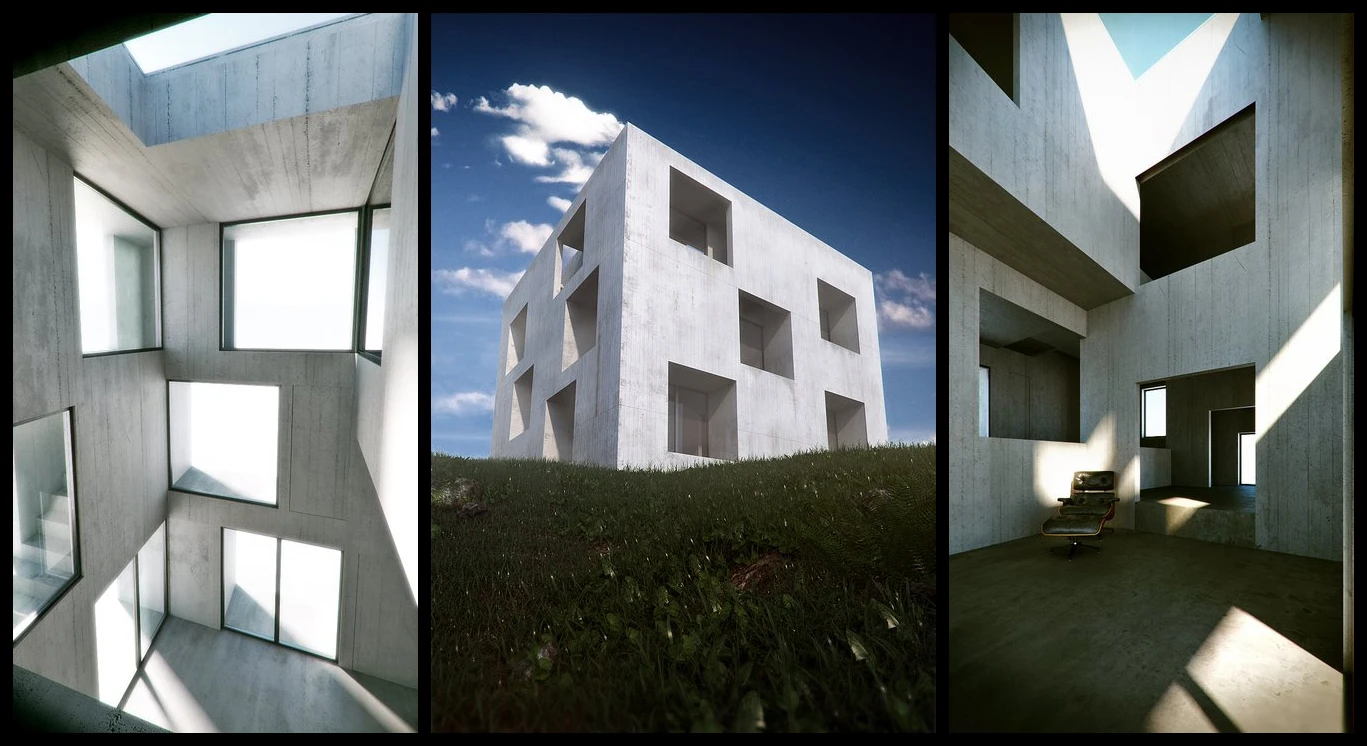
3. Casa Poli
Architects: Pezo von Ellrichshausen (2005)
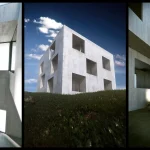
Located dramatically on Chile’s Pacific coast, Casa Poli has become one of the most photographed contemporary houses in South America. The project consists of a simple cubic concrete volume positioned on rugged cliffs overlooking the ocean. Inside, interconnected spaces create constantly changing relationships between light, sea, sky, and landscape.
The building rejects conventional domestic design. Instead, it functions simultaneously as a residence, artist residency, and architectural experiment. Its powerful geometric simplicity recalls minimalist sculpture while remaining deeply connected to its natural setting. Casa Poli illustrates one of the defining characteristics of Chilean architecture: achieving extraordinary spatial richness through seemingly simple forms.
4. Serpentine Pavilion
Architect: Smiljan Radic (2014)
Although located in London rather than Chile, Smiljan Radic’s Serpentine Pavilion significantly elevated the international visibility of Chilean architecture.
The pavilion appears as a translucent fiberglass shell resting delicately upon large natural stones. Inspired by primitive shelters, ancient vessels, and geological formations, the structure combines fragility and permanence in a highly poetic composition.
Rather than emphasizing digital complexity, Radic focused on atmosphere, materiality, and imagination. The pavilion demonstrated that Chilean architects could contribute not only technically sophisticated buildings but also deeply emotional architectural experiences.
Its success established Radic among the world’s most respected contemporary architects.

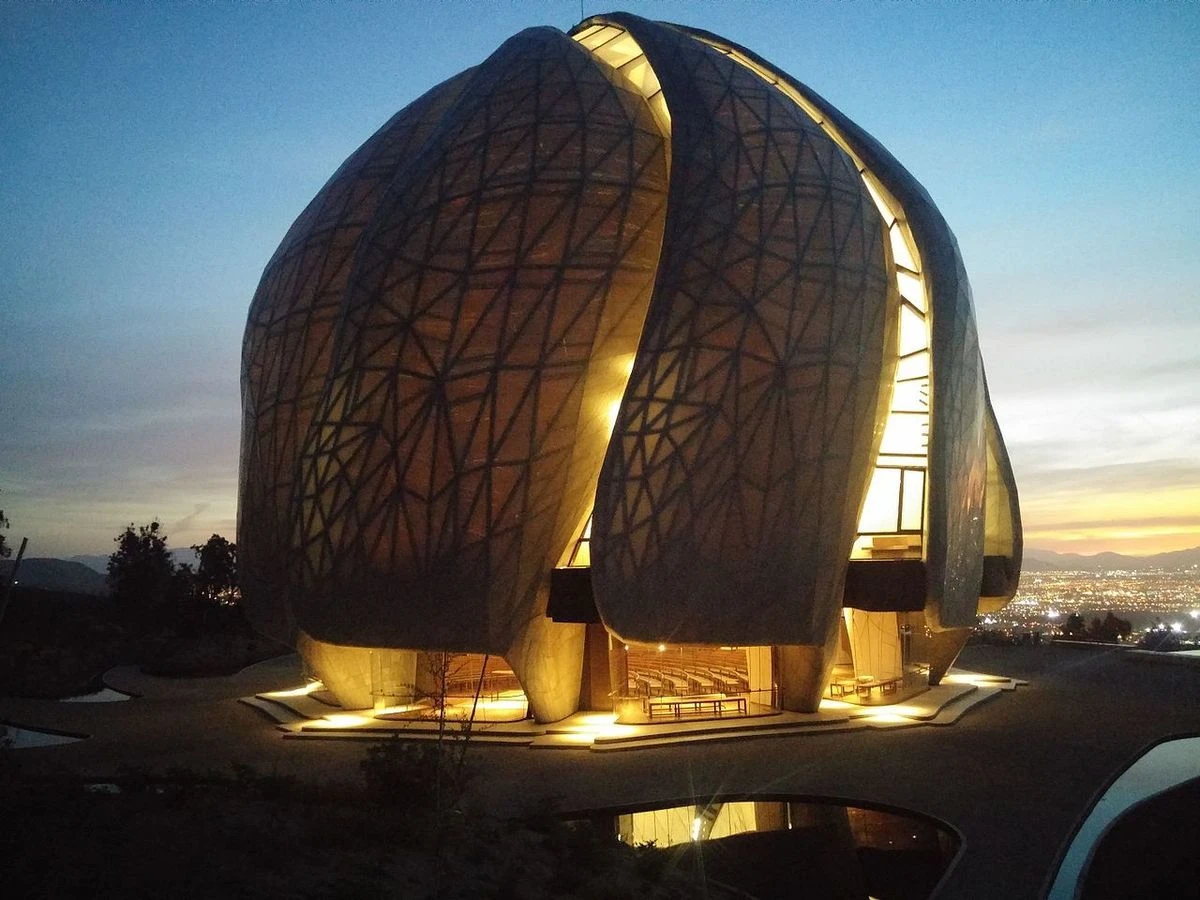
5. Bahá’í House of Worship for South America
Architect: Hariri Pontarini Architects (completed with extensive Chilean collaboration, 2016)
Situated in the foothills of the Andes overlooking Santiago, the Bahá’í Temple has become one of Chile’s architectural landmarks. Nine translucent wings formed from cast glass and Portuguese marble surround a luminous central space. Throughout the day, changing sunlight transforms the building into a glowing sculptural object that appears almost weightless.
Although designed by the Canadian firm Hariri Pontarini Architects, the project depended extensively on Chilean engineers, contractors, and specialists to solve complex structural and seismic challenges.
The temple illustrates Chile’s capacity to execute technically demanding projects while maintaining exceptional craftsmanship and environmental integration.
Lessons from Chilean Practice
The global influence of Chilean architecture extends beyond individual buildings. It represents a fundamentally different approach to architectural practice.
First, Chilean architects consistently prioritize context over formal expression. Buildings emerge from careful observation of climate, topography, and local culture rather than predetermined stylistic ambitions.
Second, they demonstrate that limited budgets need not reduce architectural quality. Economic constraints often inspire greater innovation by encouraging efficient planning, honest materials, and flexible construction methods.
Third, collaboration between architects, engineers, craftsmen, and communities plays a central role. Many celebrated Chilean projects are the result of interdisciplinary cooperation rather than individual artistic expression.
Finally, Chilean architecture reminds the profession that social responsibility and architectural excellence are not mutually exclusive. Projects such as Quinta Monroy show that design can improve lives while remaining intellectually ambitious.
The remarkable success of Chilean architectural practices reflects decades of thoughtful experimentation rather than sudden international recognition. Architects have transformed geographical challenges, seismic risks, economic limitations, and environmental concerns into opportunities for innovation. Their work demonstrates that architecture does not require monumental budgets or iconic forms to achieve global significance.
Buildings such as Quinta Monroy, the UC Innovation Center, Casa Poli, the Serpentine Pavilion, and the Bahá’í House of Worship collectively illustrate the diversity of contemporary Chilean architecture. They range from affordable housing to cultural landmarks, yet all share common qualities: precision, restraint, material honesty, and a profound respect for place.
In an era increasingly dominated by environmental uncertainty and social inequality, the Chilean model offers valuable lessons for architects worldwide. Rather than pursuing architecture as spectacle, Chilean practices have shown that enduring success comes from designing buildings that respond intelligently to people, climate, materials, and landscape. Their achievements suggest that the future of architecture may belong not to those who build the biggest structures, but to those who build the most meaningful ones.