

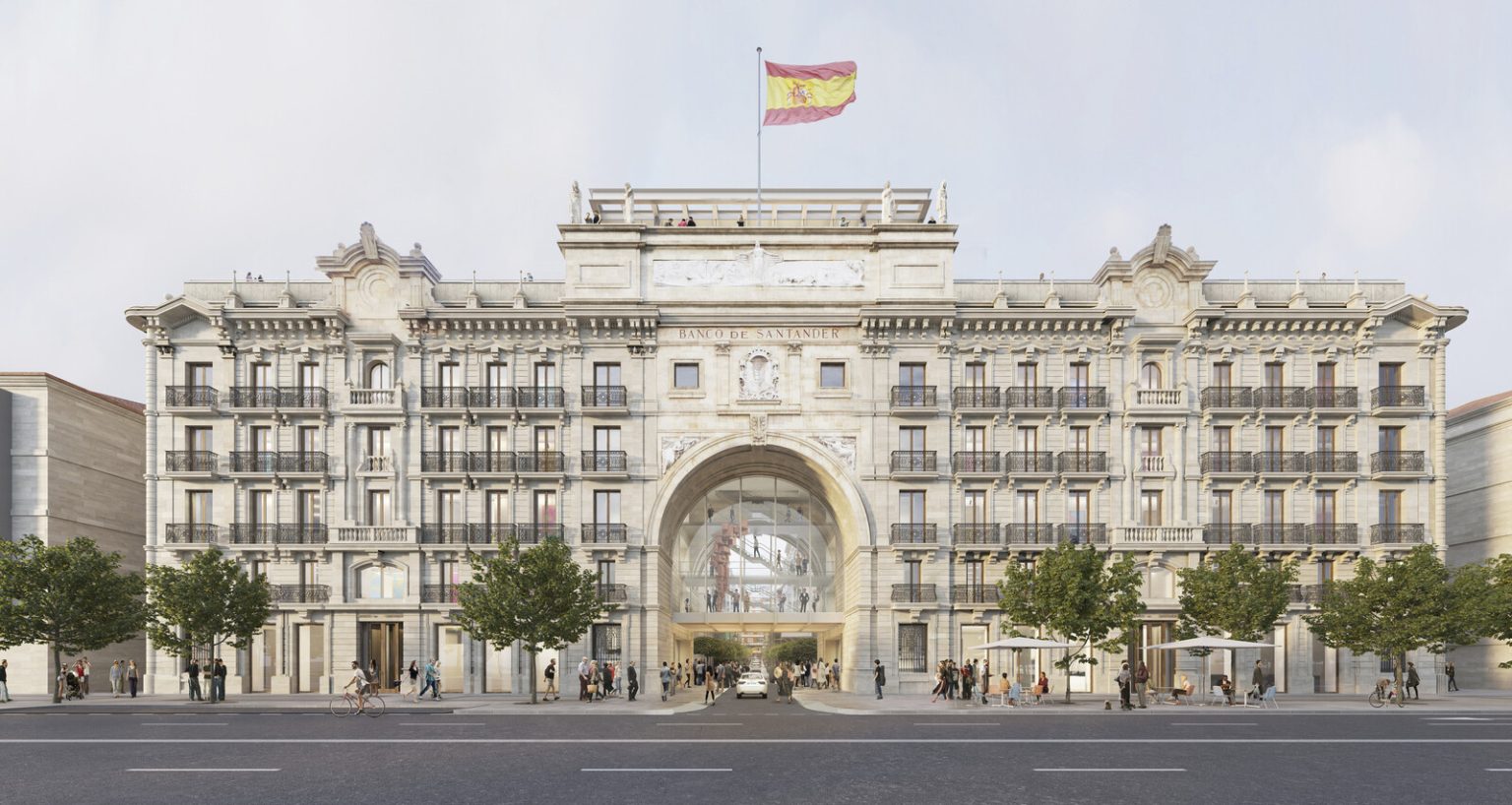
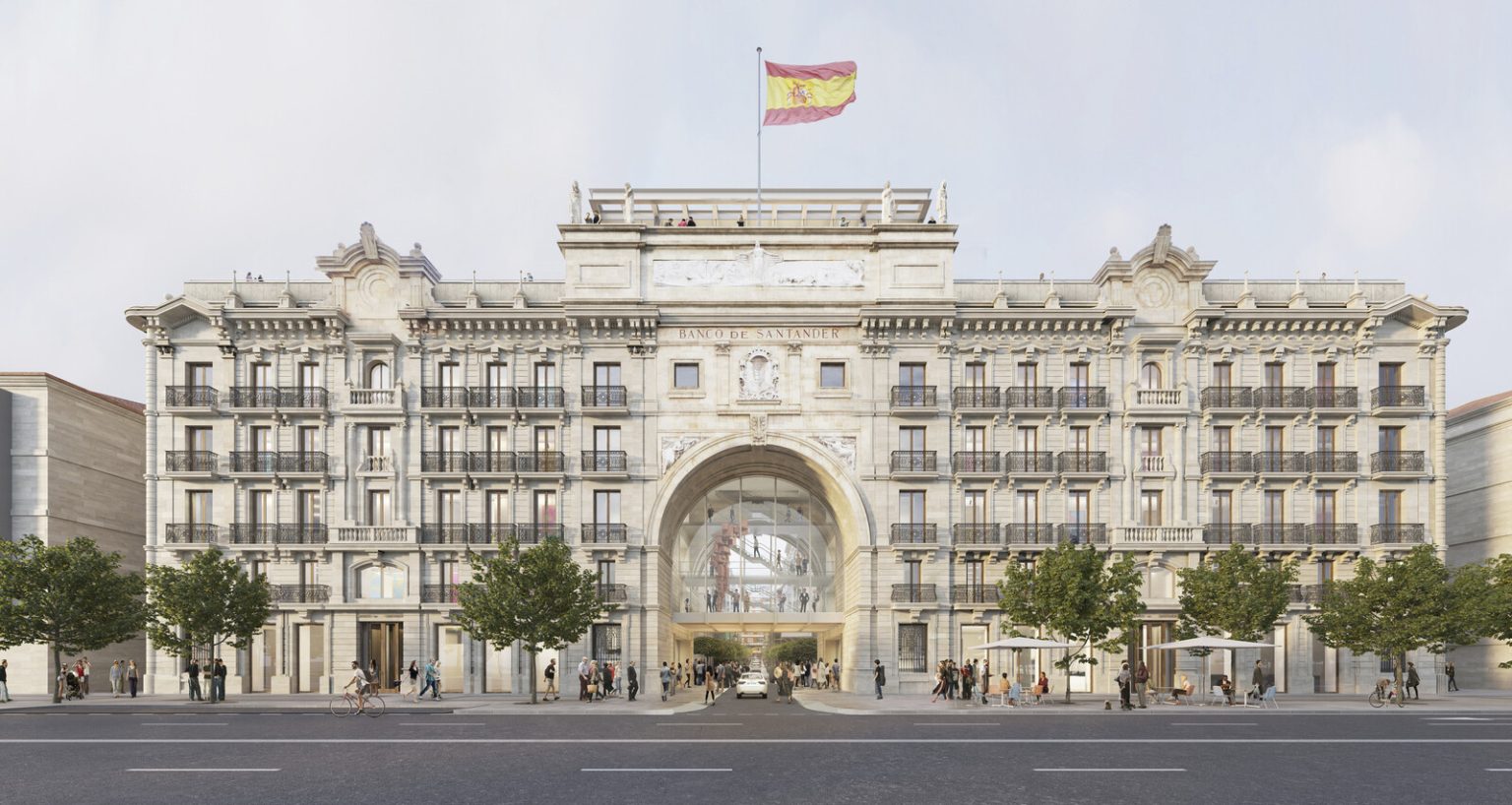





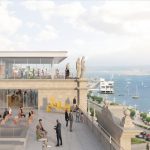

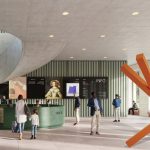

On Santander’s waterfront, the historic Pereda Building is being transformed into Faro Santander, a new cultural institution designed by David Chipperfield Architects. The project reimagines Banco Santander’s long-standing headquarters as a publicly accessible destination for art, culture, events, and civic life while preserving the architectural identity of one of the city’s most recognizable landmarks.
A Historic Building on the Bay
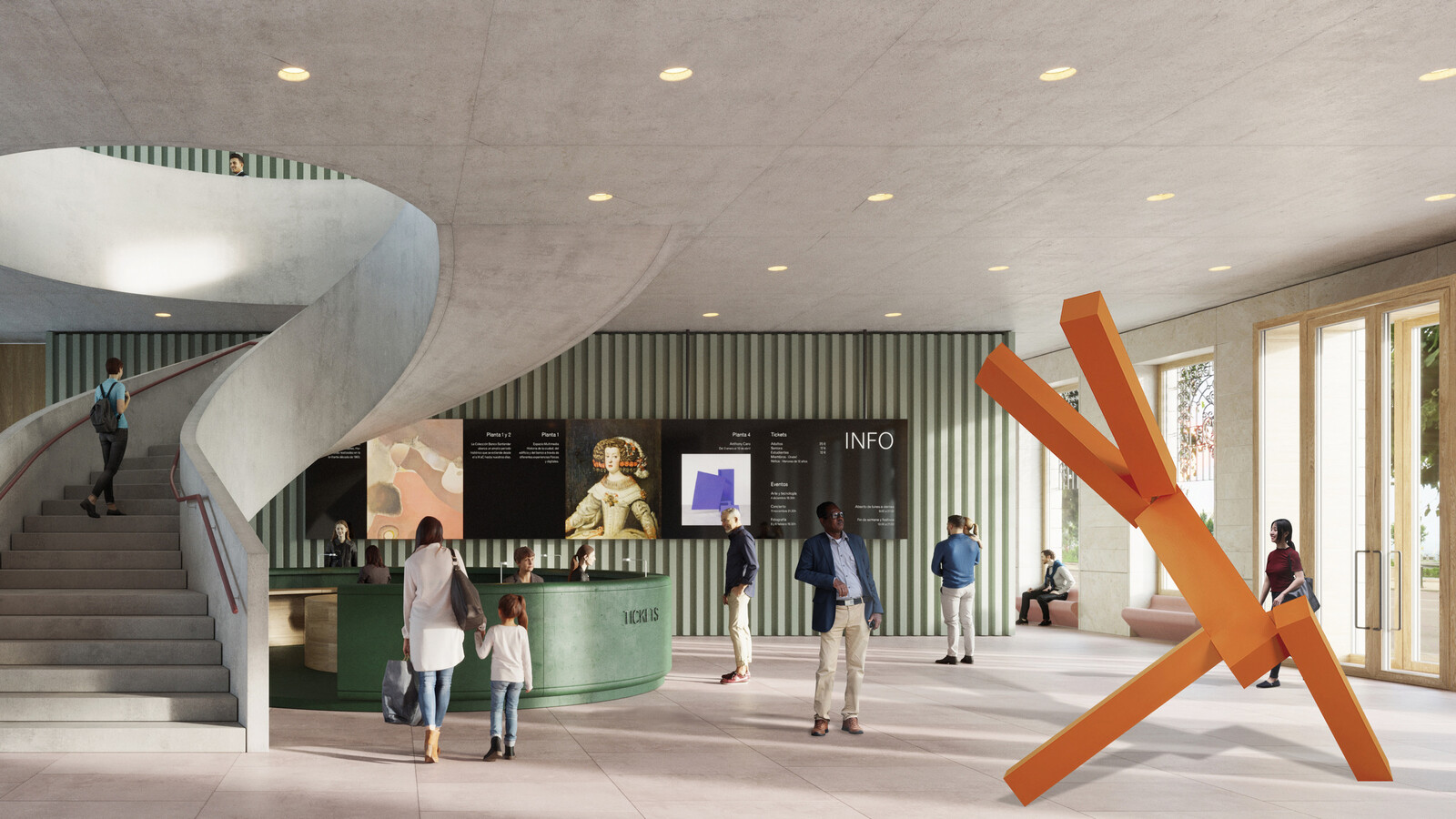
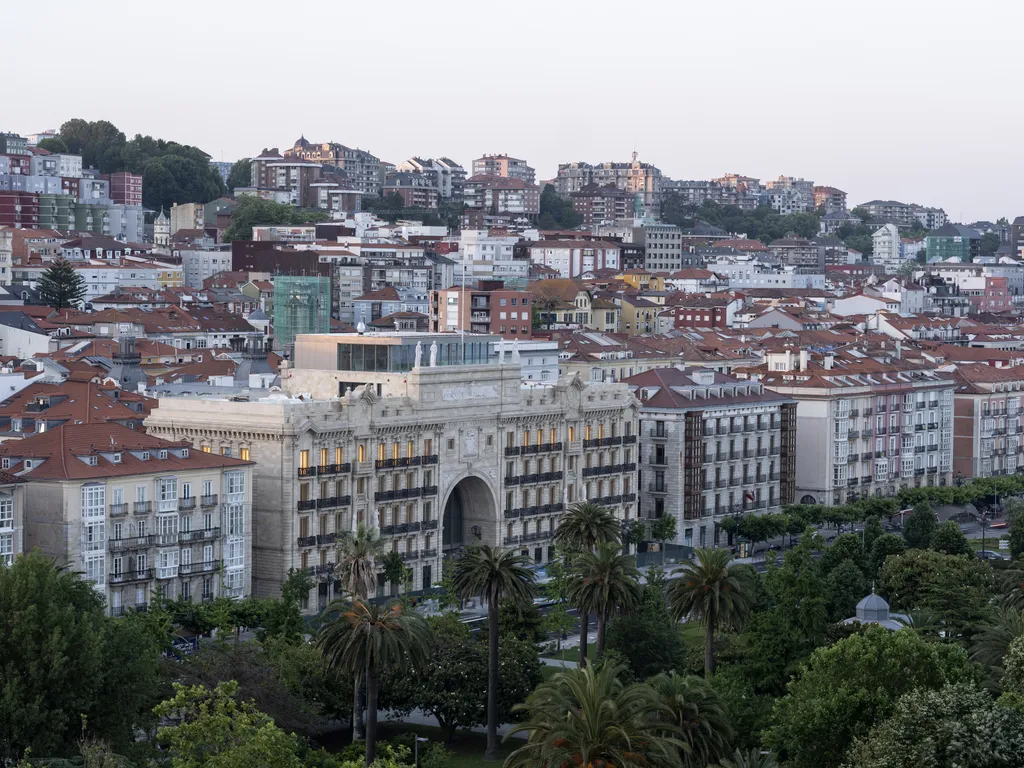
The Pereda Building occupies a prominent position along Paseo de Pereda, facing the Bay of Santander. Its history stretches back to the late 18th century, and over time it has served multiple roles, including a hotel, a rowing club, and eventually the headquarters of Banco Santander for nearly a century. The building grew through successive additions, resulting in a complex architectural composition that reflects different periods of the city’s development.
A defining feature of the complex is the monumental arch that links the twin volumes of the headquarters. Originally introduced during the building’s expansion in the mid-20th century, the arch became an emblem of Banco Santander and a recognizable element of Santander’s urban landscape.
David Chipperfield Architects’ Intervention
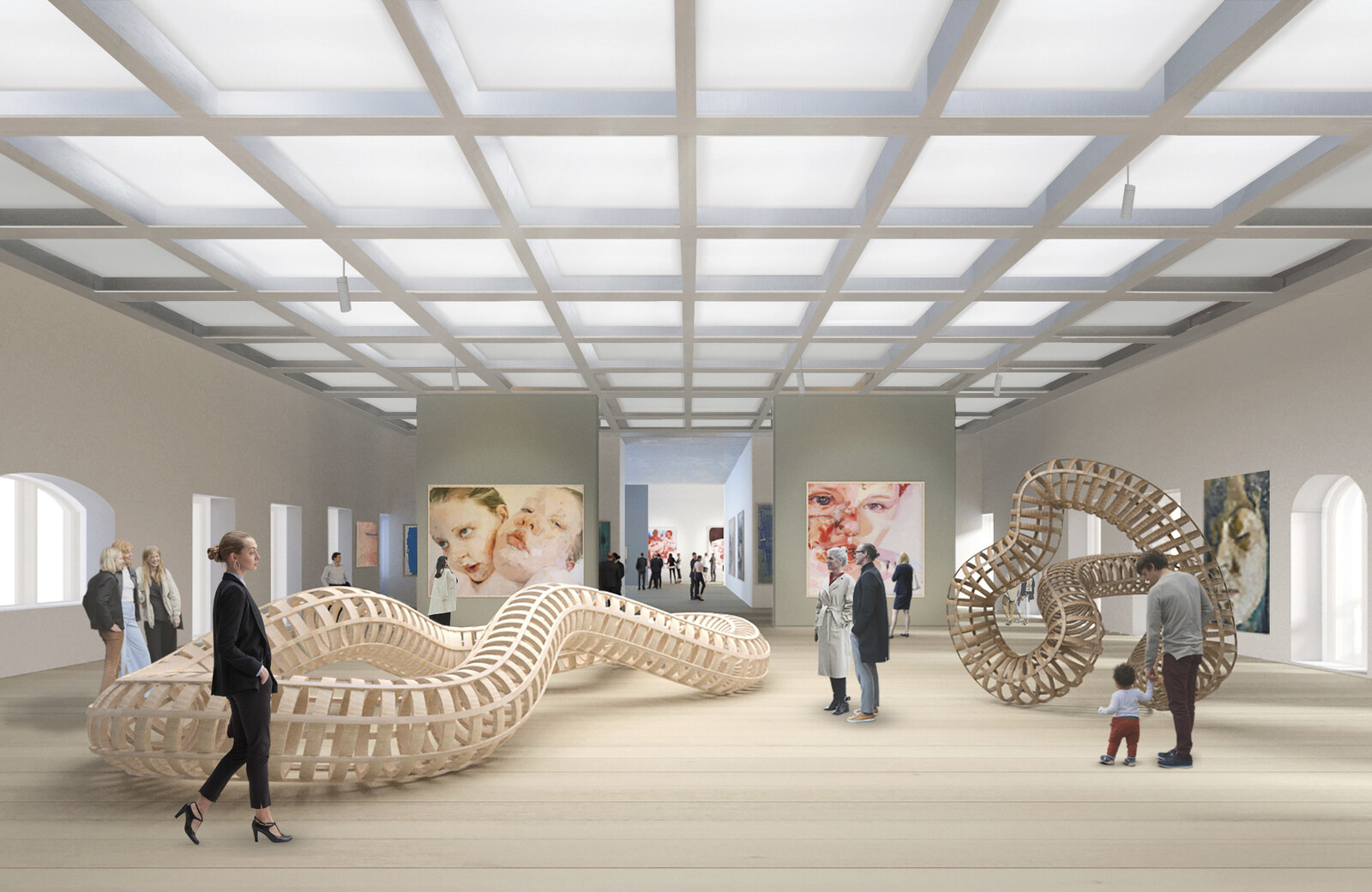
David Chipperfield Architects approached the project as a careful transformation. The design seeks to make the building permeable and publicly accessible while revealing the layered history embedded within its fabric.
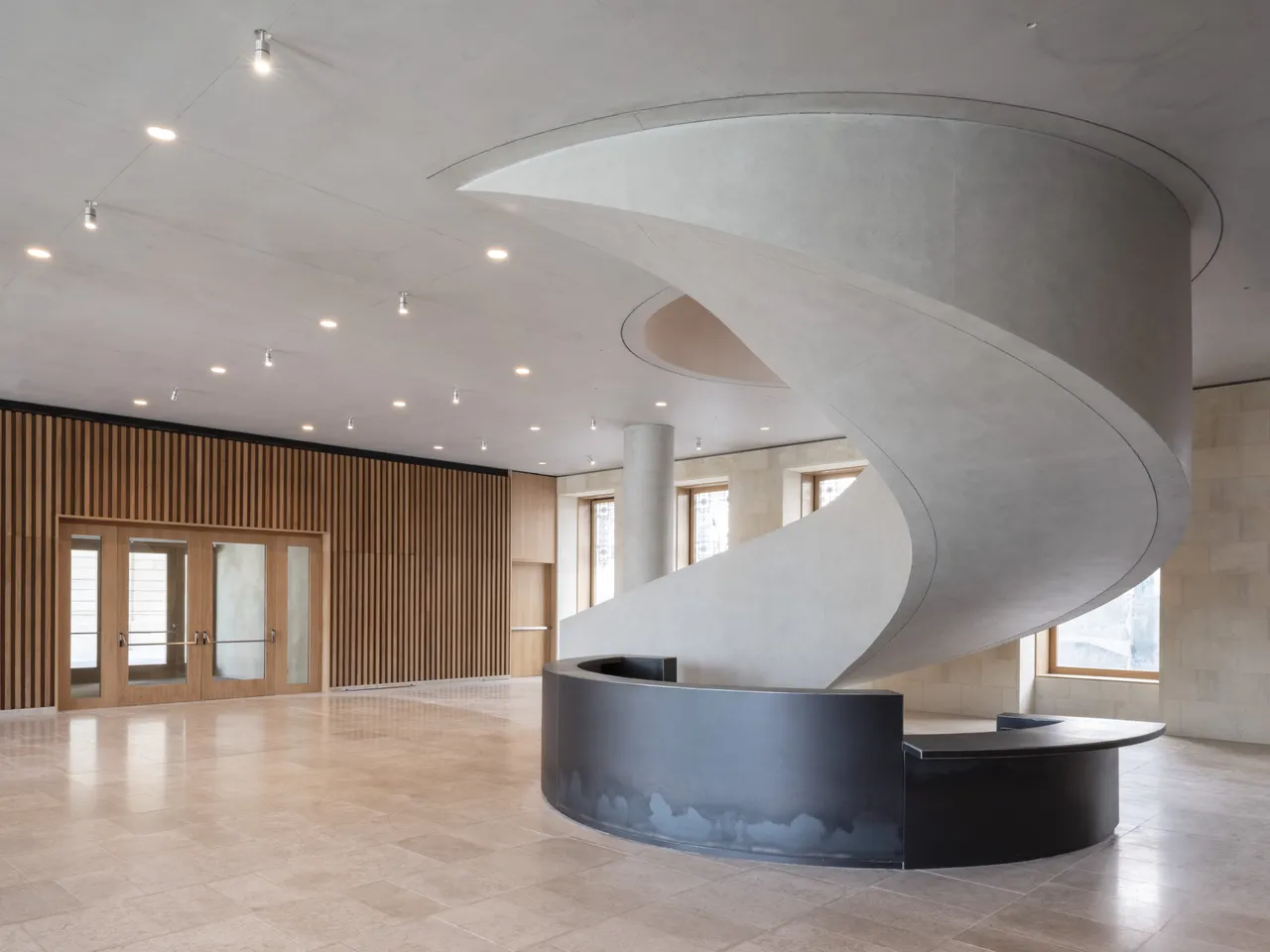
At the center of the intervention is the reinterpretation of the historic arch. The architects treat it not merely as a façade element but as the building’s central spine, organizing circulation and connecting the various public spaces. New circulation routes become visible within the arch, signaling the building’s shift from a private corporate headquarters to an open civic institution.
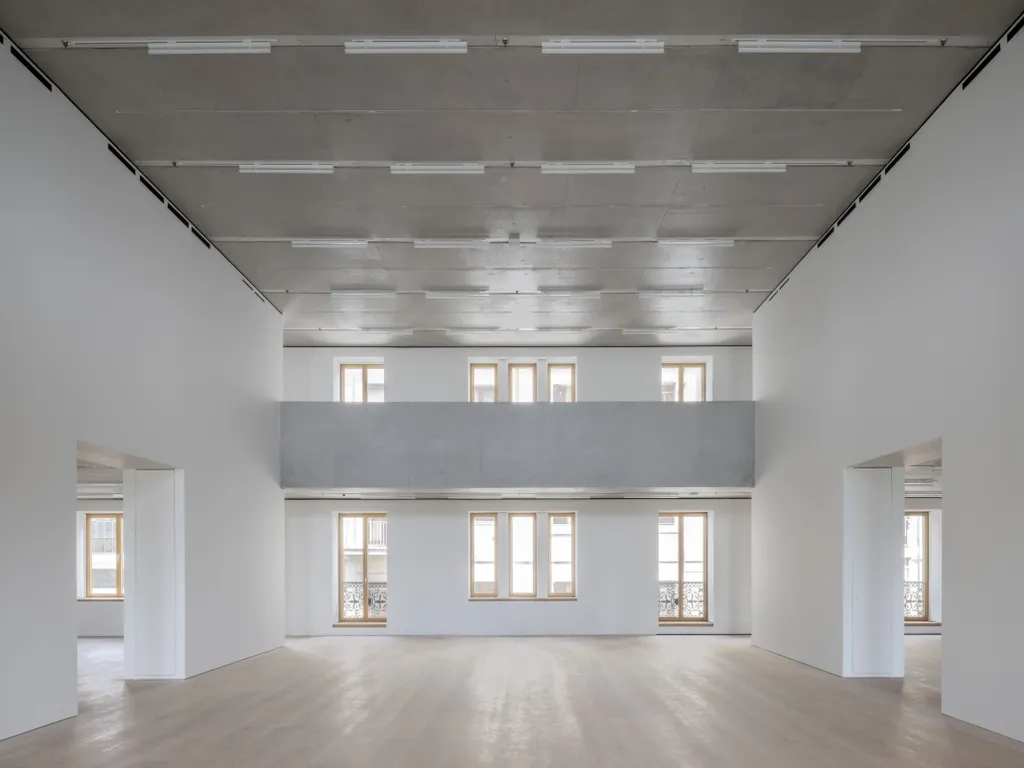
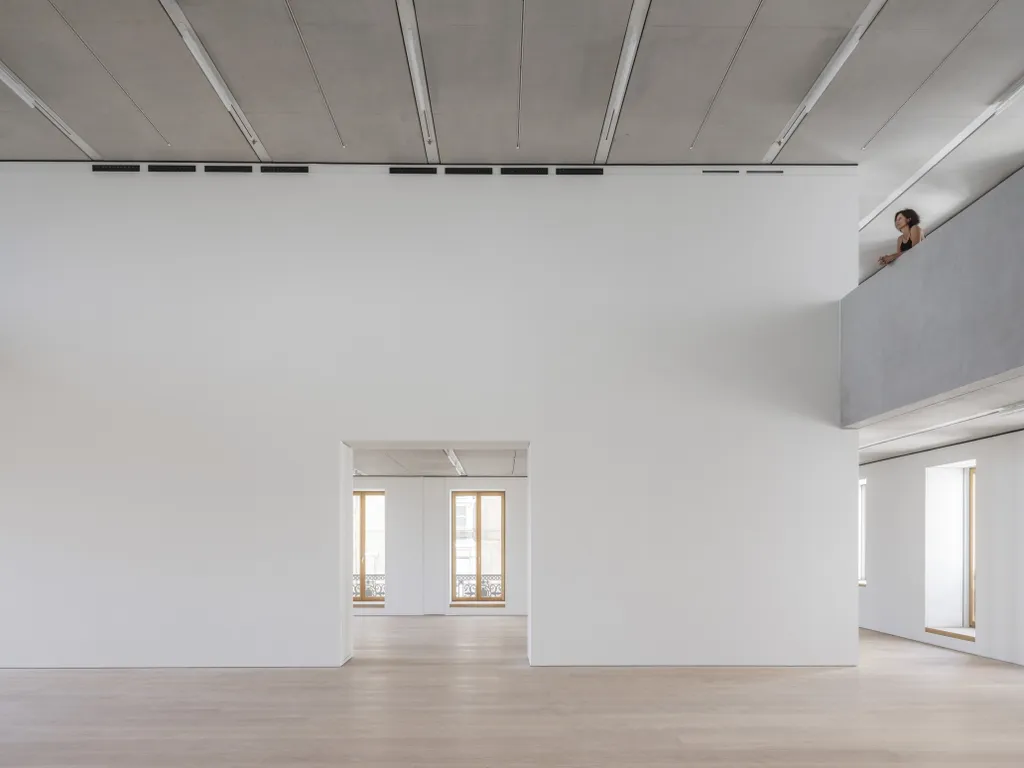
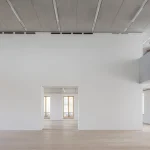
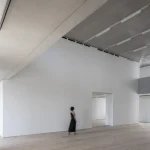
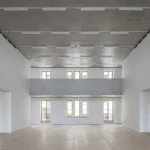
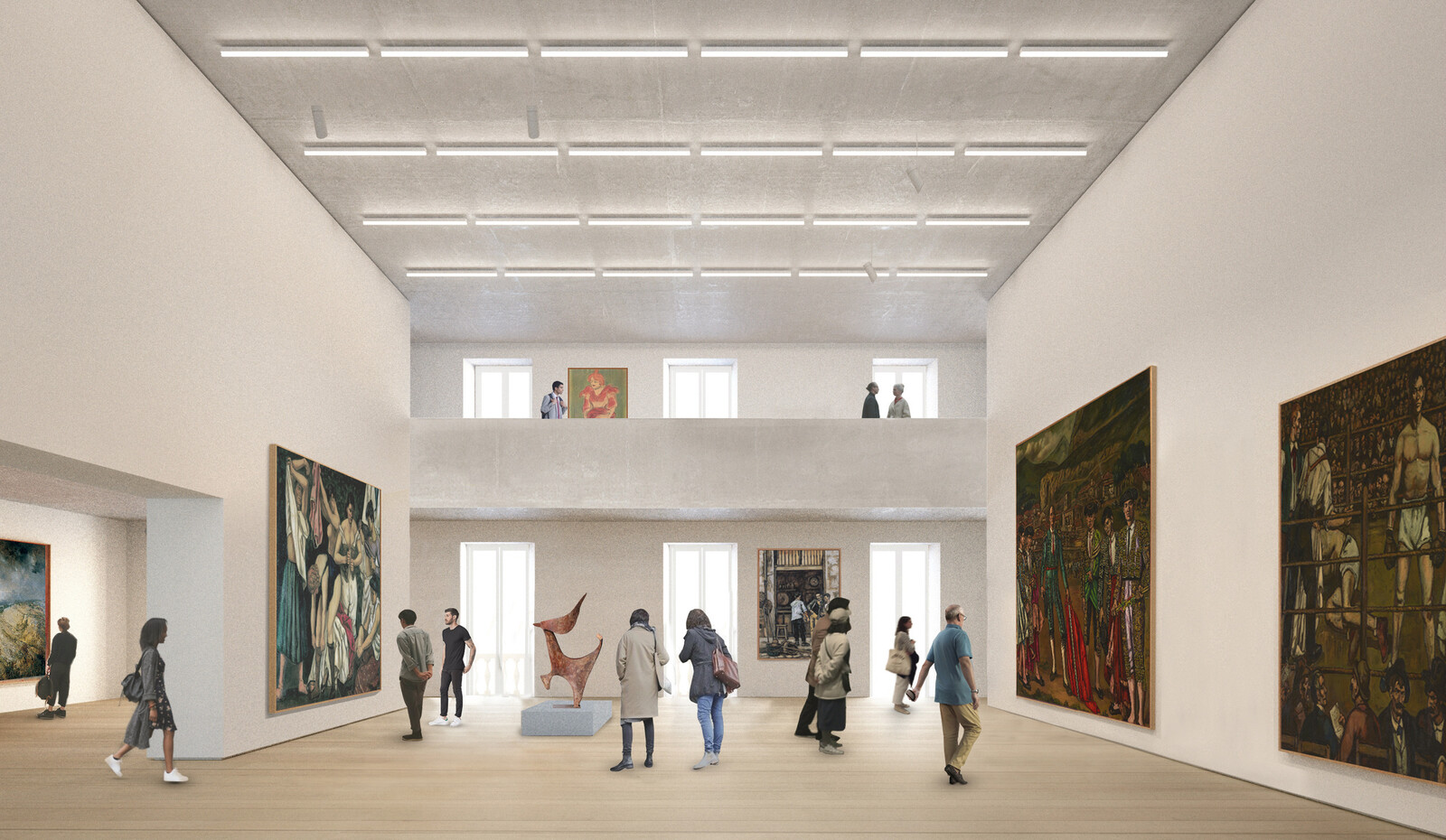
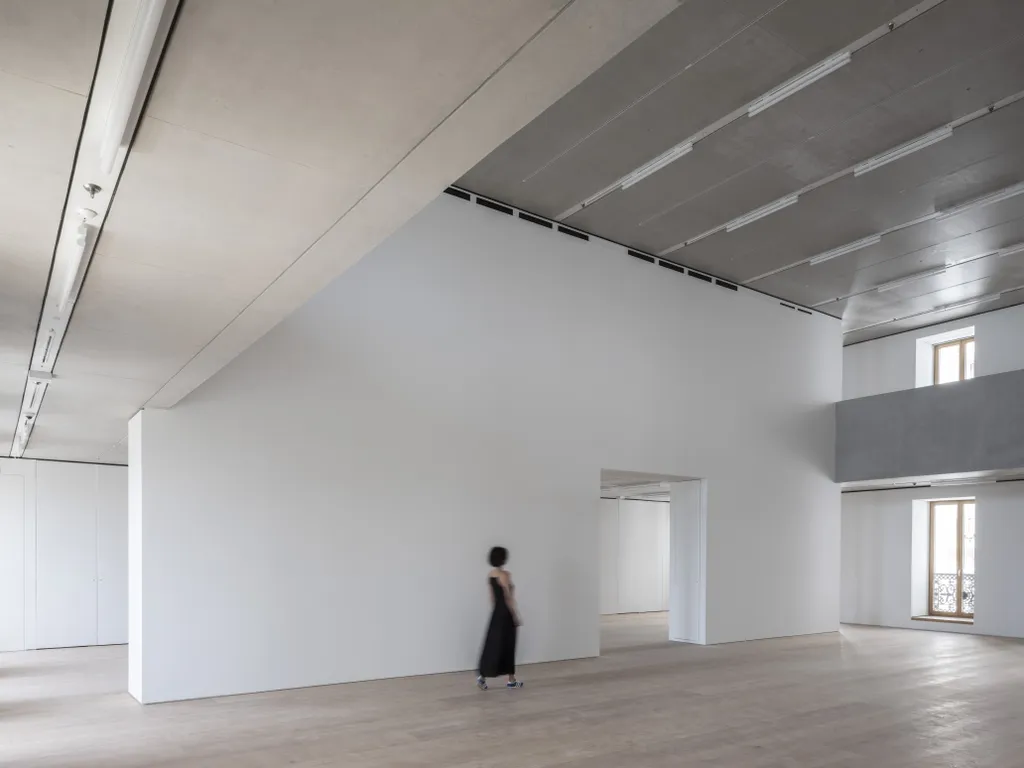
Faro Santander will provide approximately 10,000 square meters of usable space distributed across ten levels. Around 3,000 square meters are dedicated to exhibition spaces.
Connecting City and Bay
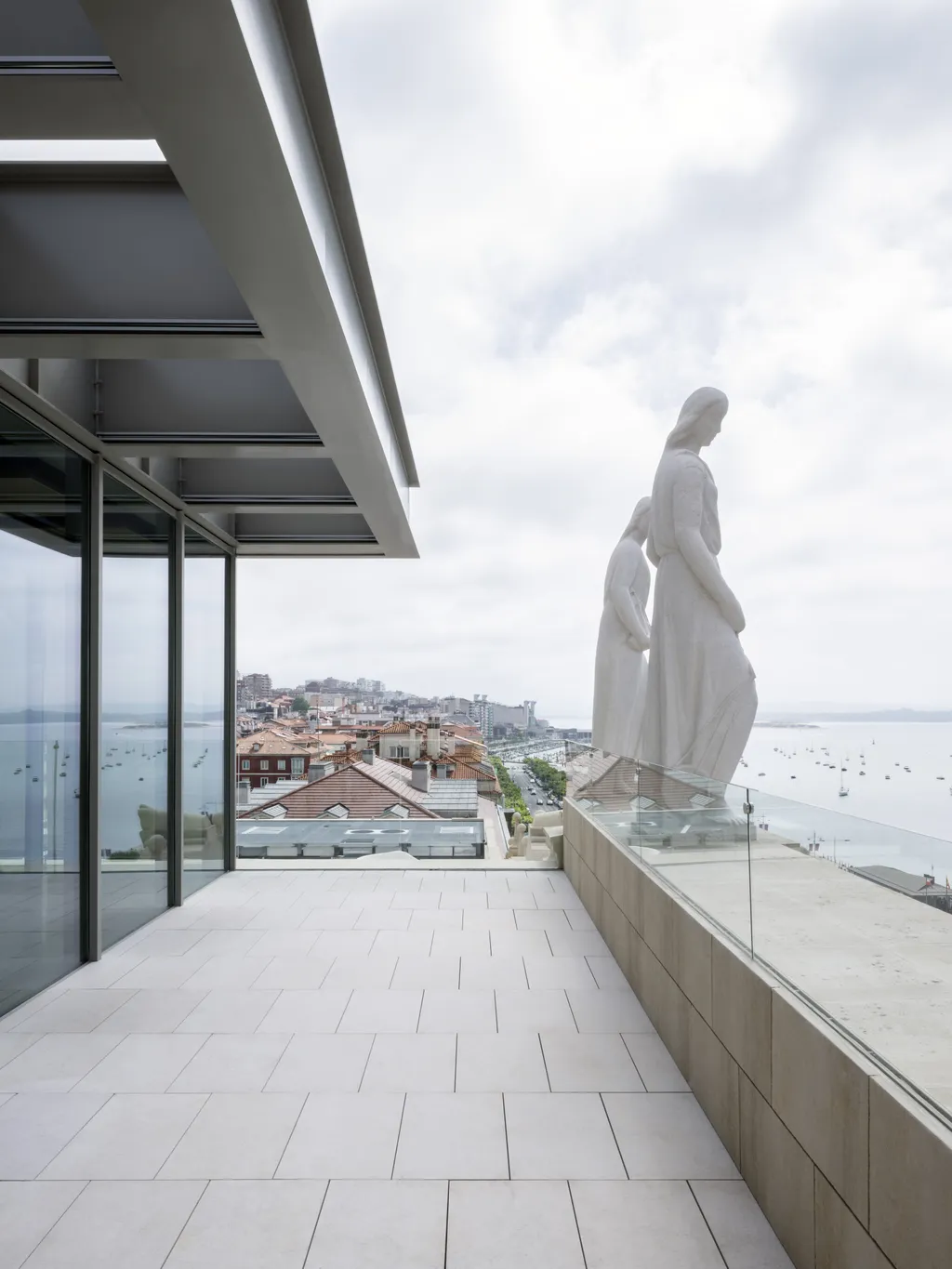
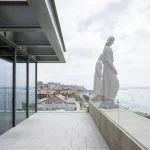
One of the project’s most significant urban gestures is the creation of a stronger connection between Santander and its waterfront. The historic arch acts as a gateway between the city and the bay, while the new public routes and rooftop spaces encourage movement through the building.
A publicly accessible rooftop terrace overlooking the Bay of Santander is conceived as a new meeting place for residents and visitors, extending the building’s civic role beyond the exhibition galleries.
From Corporate Headquarters to Cultural Institution
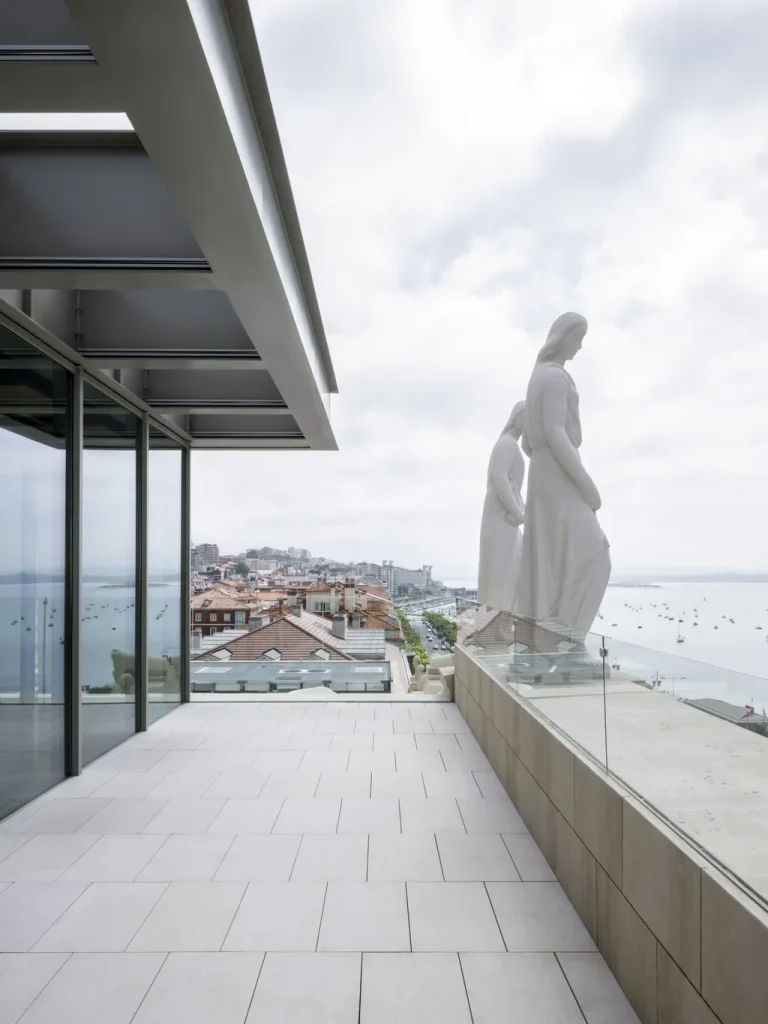
The transformation marks a broader shift in the relationship between Banco Santander and the city in which it was founded. The former headquarters is being opened to the public to house the Banco Santander art collection alongside temporary exhibitions, educational programs, cultural events, and spaces dedicated to innovation and experimentation.
According to the project information released by Fundación Banco Santander, Faro Santander is intended to become a cultural landmark for northern Spain, combining heritage preservation with contemporary public use.
An Architecture of Continuity
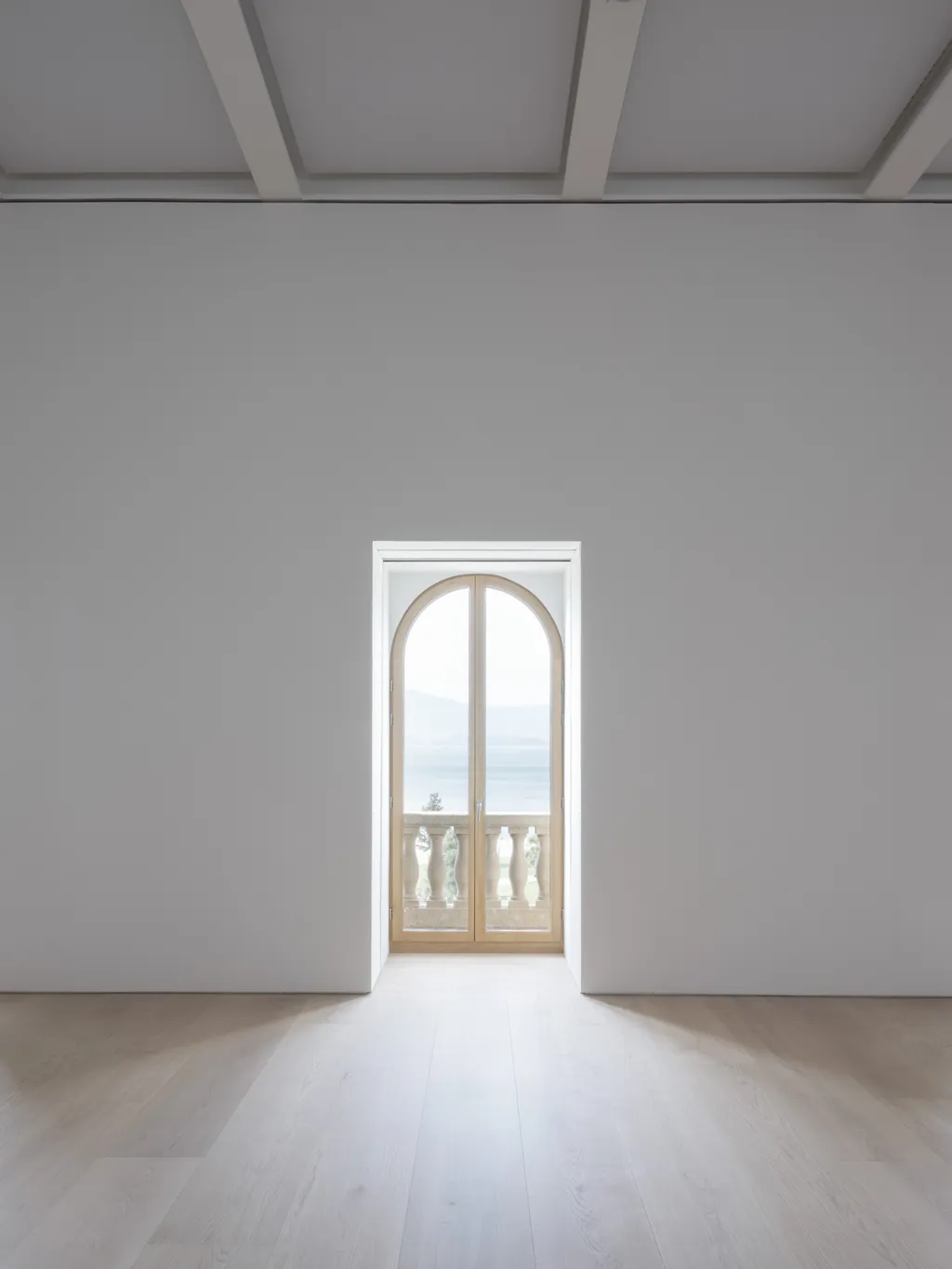
What distinguishes Faro Santander is its emphasis on continuity rather than contrast. David Chipperfield Architects preserves the building’s historic character while introducing new spatial relationships that support public life, cultural programming, and contemporary circulation. The result is neither a museum inserted into a historic shell nor a conventional restoration, but a reworking of an urban landmark into a new civic destination for Santander.
Faro Santander Project Details
Project: Faro Santander
Architect: David Chipperfield Architects
Lead Architect: David Chipperfield
Location: Santander
Address: Pereda Building
Client / Promoter: Fundación Banco Santander
Former Use: Banco Santander Headquarters
Project Type: Adaptive reuse and heritage renovation
Status: Completed (Opening scheduled for September 2026)
Total Usable Area: Approximately 10,000 m²
Exhibition Area: Approximately 3,000 m²