



Off the coast of Madagascar, a speculative megastructure called Baobab Waterfall proposes an unusual combination of renewable energy infrastructure, social rehabilitation, ecotourism, and biomimetic architecture. Designed by architect Ahmad Eghtesad as an entry for the Jacques Rougerie Foundation Competition, the conceptual project takes its form from one of Madagascar’s most iconic natural symbols, the baobab tree, and transforms it into a floating ocean-based infrastructure intended to address some of the island nation’s most pressing challenges.
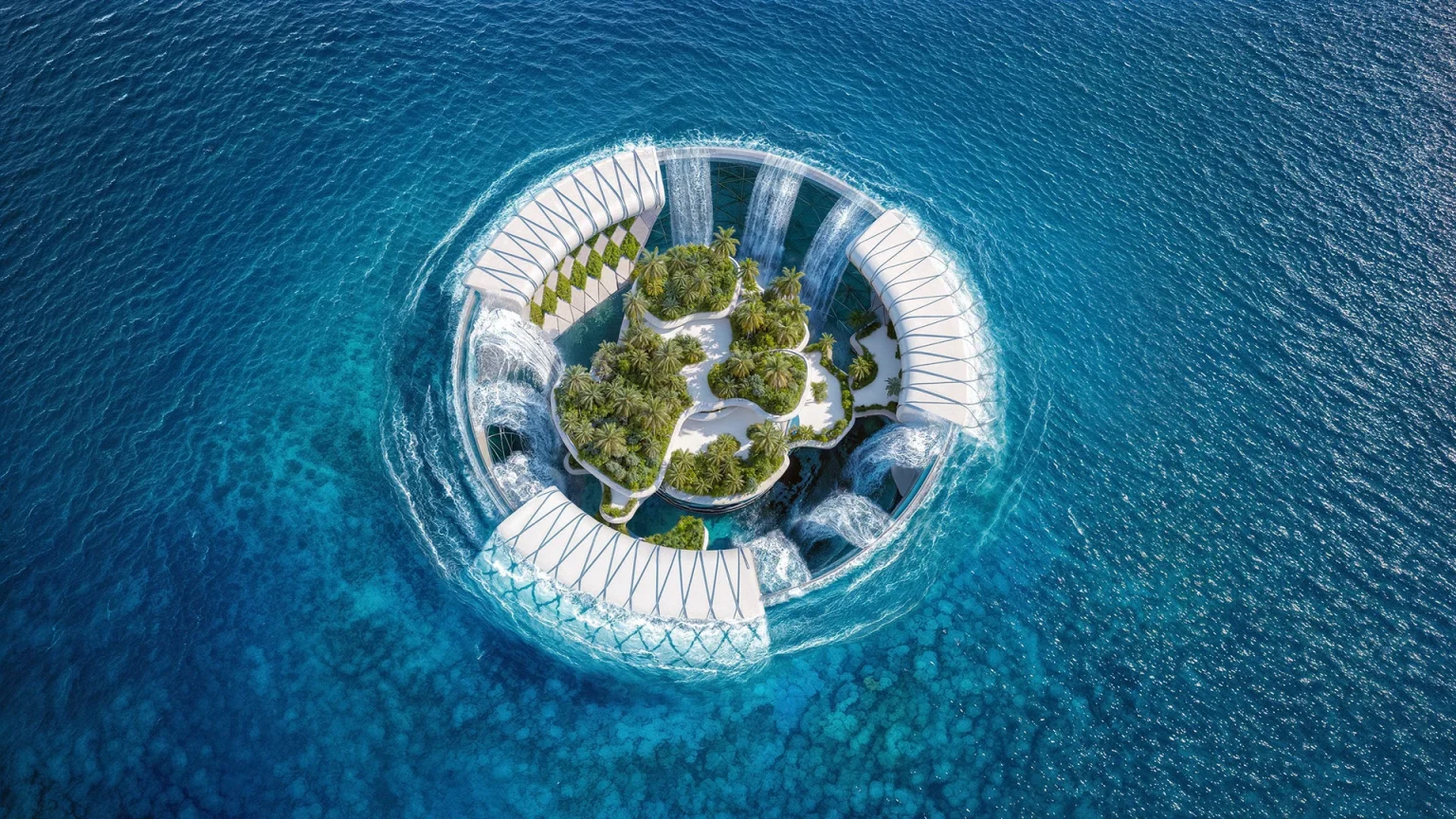
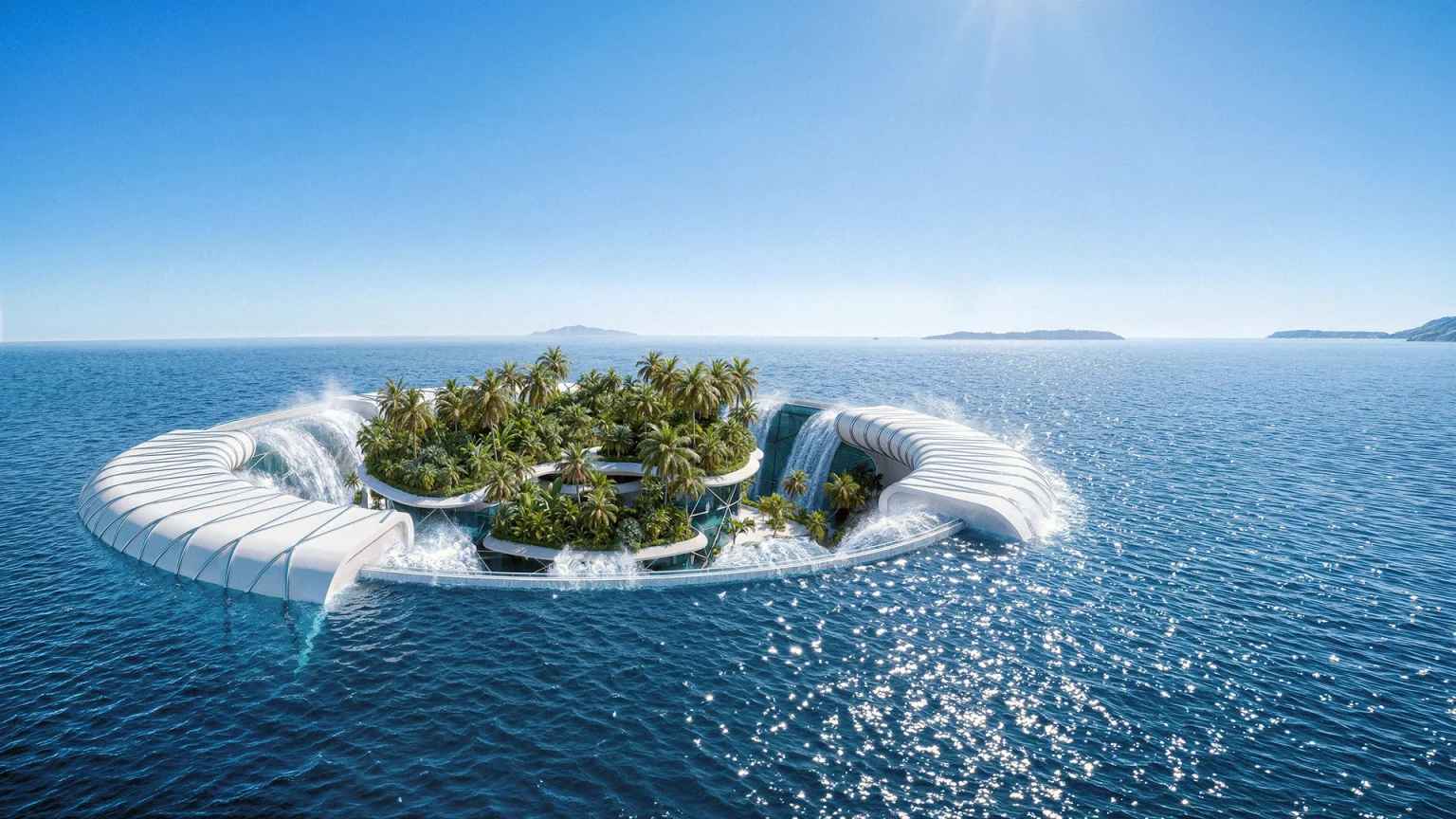
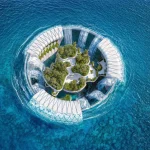
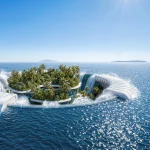
Although unbuilt, the proposal has gained international attention for its dramatic imagery: a circular floating island ringed by cascading waterfalls, enclosing a lush tropical sanctuary and crowned by a towering baobab-inspired structure. Yet behind the striking visuals lies an ambitious attempt to connect architecture, energy production, environmental stewardship, and social reform within a single framework.
Drawing Inspiration from Madagascar’s Baobab Trees
The project’s architectural identity is rooted in the baobab tree, a species deeply associated with Madagascar’s landscape and cultural identity. Known for its massive trunk, ability to store water, and resilience in harsh climatic conditions, the baobab serves as both a symbolic and functional reference for the proposal.
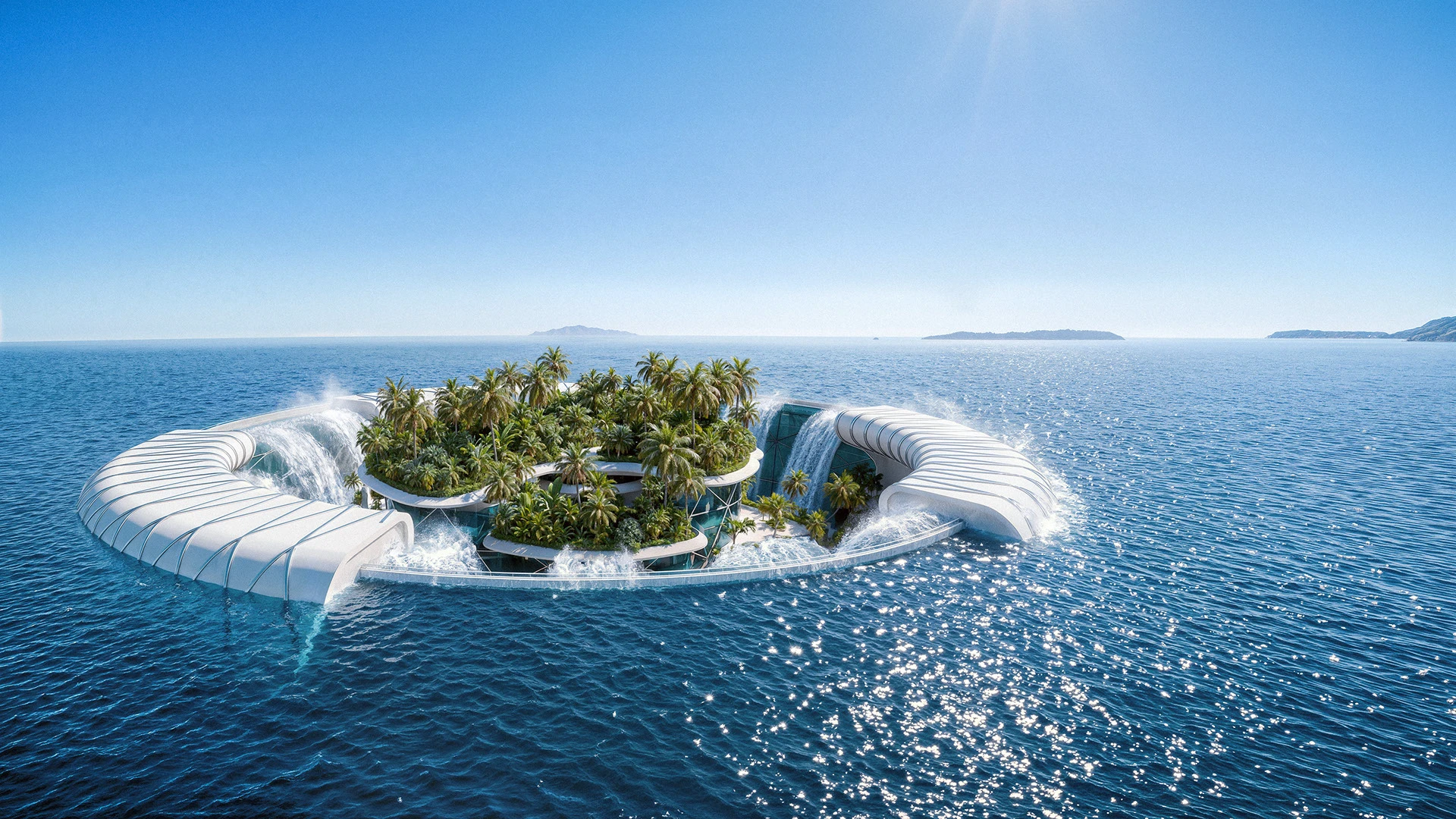
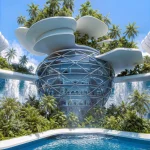
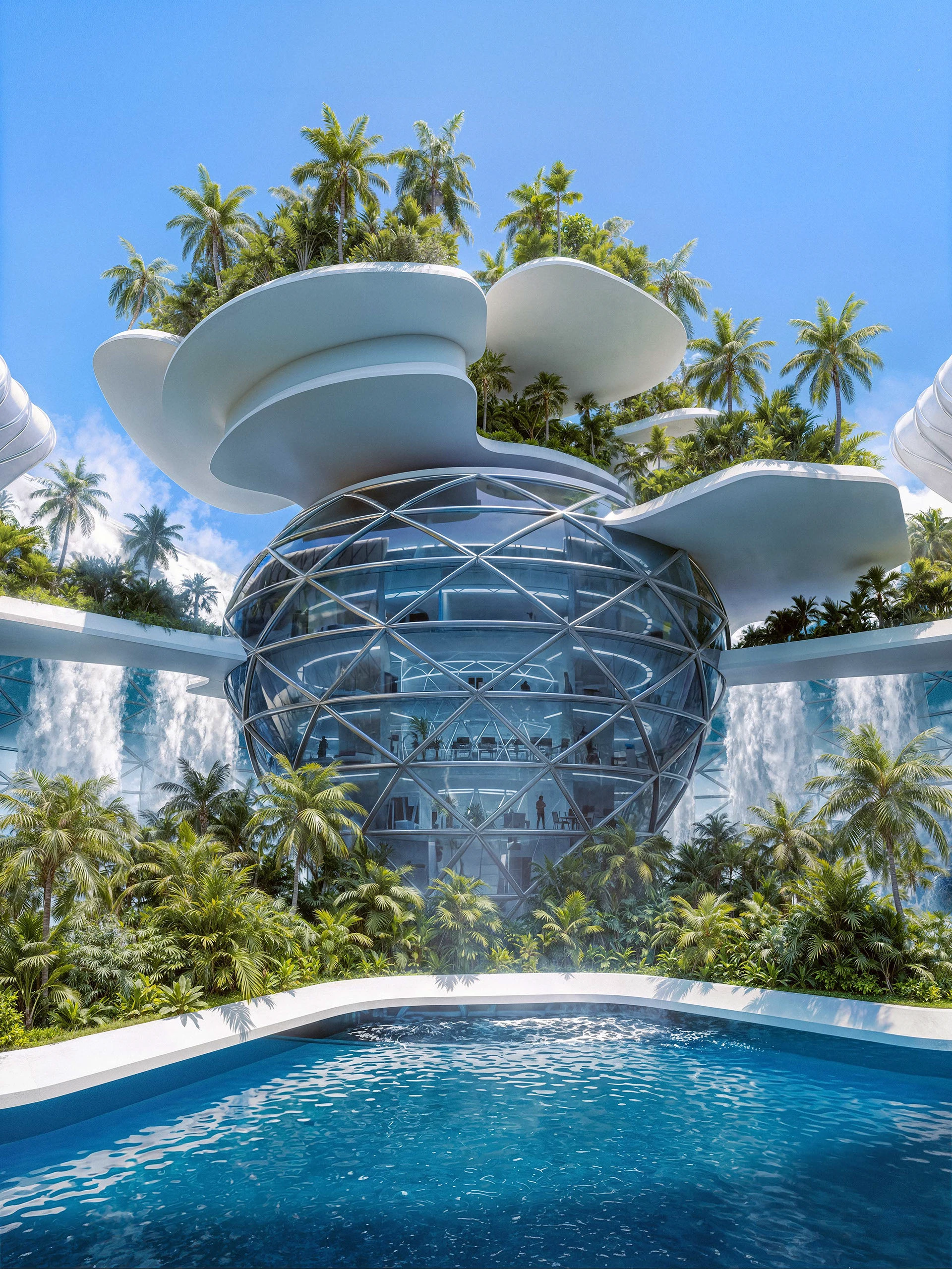
The central tower resembles the thick trunk of a baobab, rising from the middle of the circular island. Around it, elevated canopies and interconnected platforms echo the tree’s sprawling branches. The design uses this biomimetic language to represent a structure capable of sustaining life, generating resources, and acting as a protective ecosystem within the ocean.
Treating the baobab as an adoptive tree embraces the tree’s ecological role as a model for resilience and resource management.
Architecture as a Response to Madagascar’s Challenges
The proposal emerged from research into Madagascar’s socio-economic conditions. Despite possessing abundant natural resources and exceptional biodiversity, large portions of the population continue to experience limited access to electricity. The concept positions architecture as an active participant in addressing these issues.
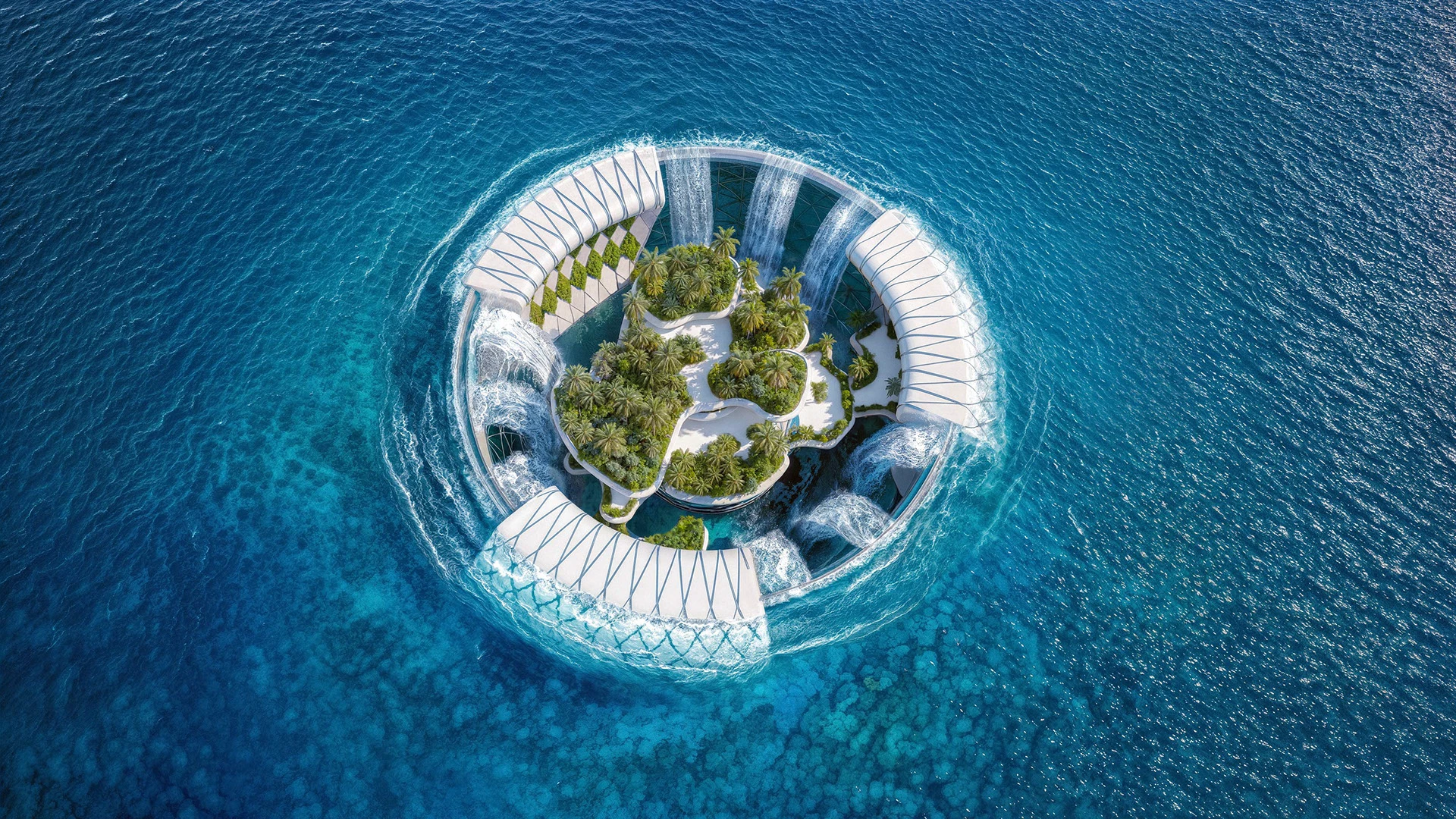
Baobab Waterfall proposes a self-sustaining offshore complex capable of generating renewable energy while simultaneously creating opportunities for education, rehabilitation, tourism, and economic development. The project attempts to transform infrastructure into a social catalyst.
The Circular Waterfall Power Generation System
The most distinctive feature of the proposal is its enormous circular ring of artificial waterfalls surrounding the central island.
The design imagines seawater being directed through a continuous engineered system where water descends through deep shafts containing turbines positioned beneath the structure. According to the concept, these controlled waterfalls would generate renewable electricity while creating one of the project’s most recognizable visual elements. The waterfalls form a dramatic perimeter around the island, creating a protective ring between the inner sanctuary and the open ocean.
Unlike conventional hydropower projects that rely on rivers and dams, the proposal explores a marine-based approach where the ocean itself becomes part of the energy-generation mechanism. The waterfalls are envisioned as infrastructure and an attraction capable of drawing international visitors.
A Floating Island Organized Around Life and Learning
The project features the baobab-inspired tower, functioning as the administrative, residential, and educational center of the complex.
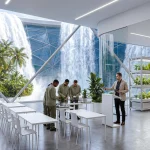
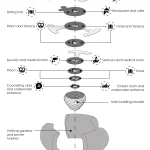
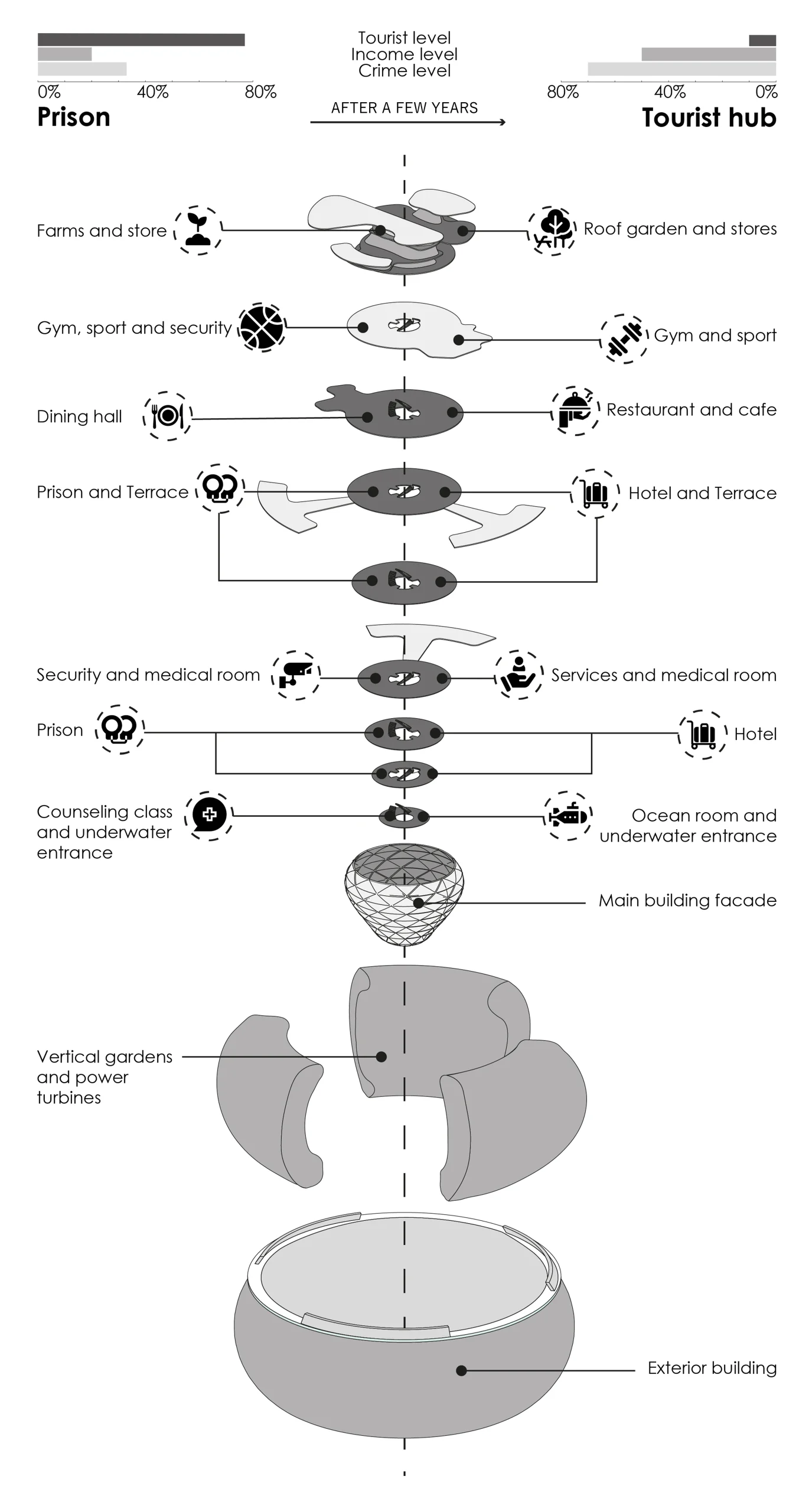
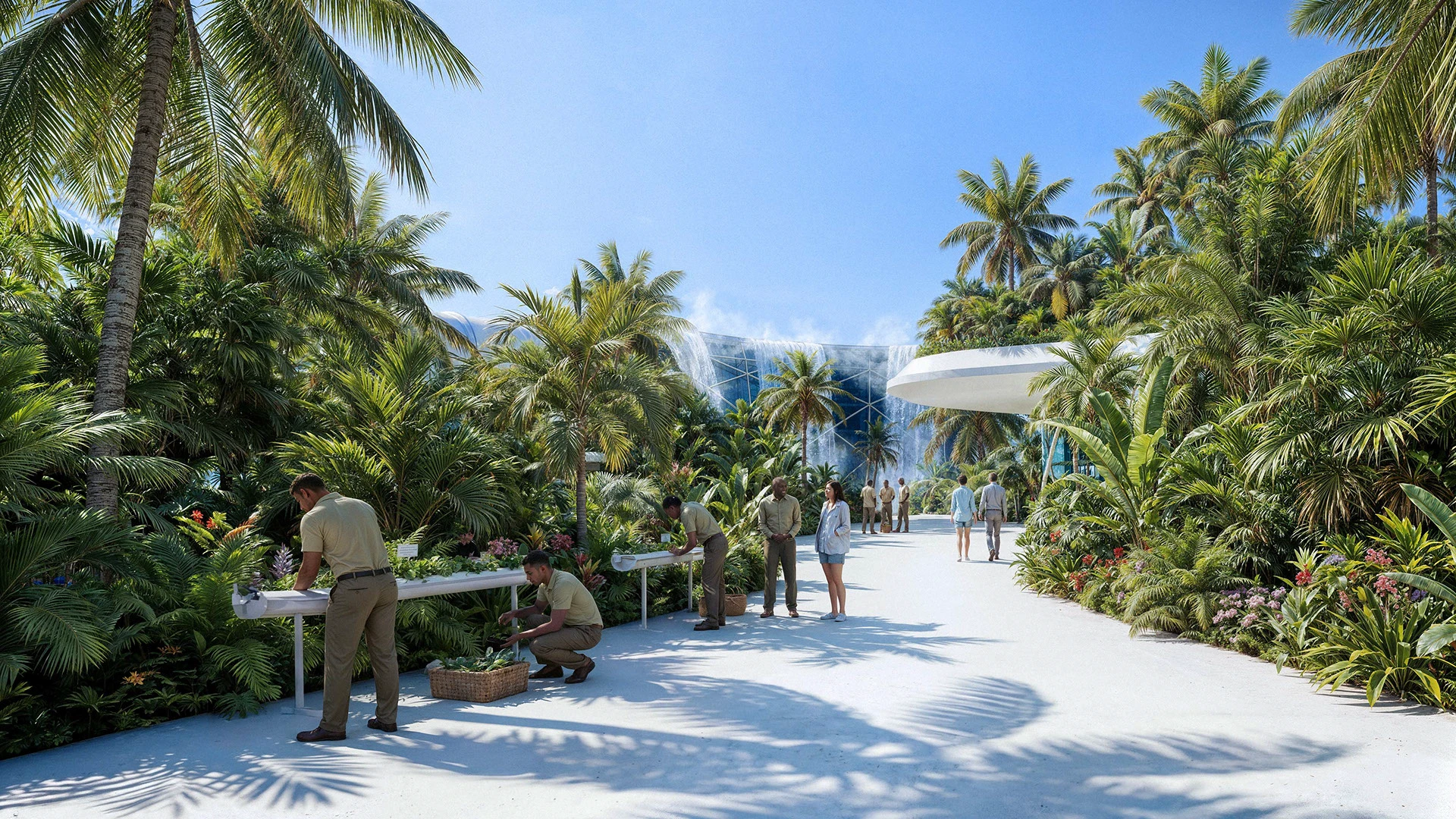
Transparent multi-level greenhouses wrap around the central structure, creating spaces for food cultivation, research, and vocational training. These agricultural facilities are integrated directly into circulation routes, allowing residents and visitors to interact with productive landscapes rather than isolated institutional environments.
The master plan introduces the following:
- Vertical farming facilities
- Educational and training spaces
- Community marketplaces
- Residential units
- Public pedestrian pathways
- Eco-tourism amenities
- Renewable energy infrastructure
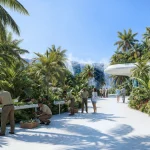
The protected inner zone of the circular island is designed as a tropical landscape filled with vegetation, walkways, and gathering spaces, creating a contrast to the surrounding ocean environment.
From Rehabilitation Facility to Eco-Tourism Destination
One of the project’s more unconventional aspects is its proposed social program.
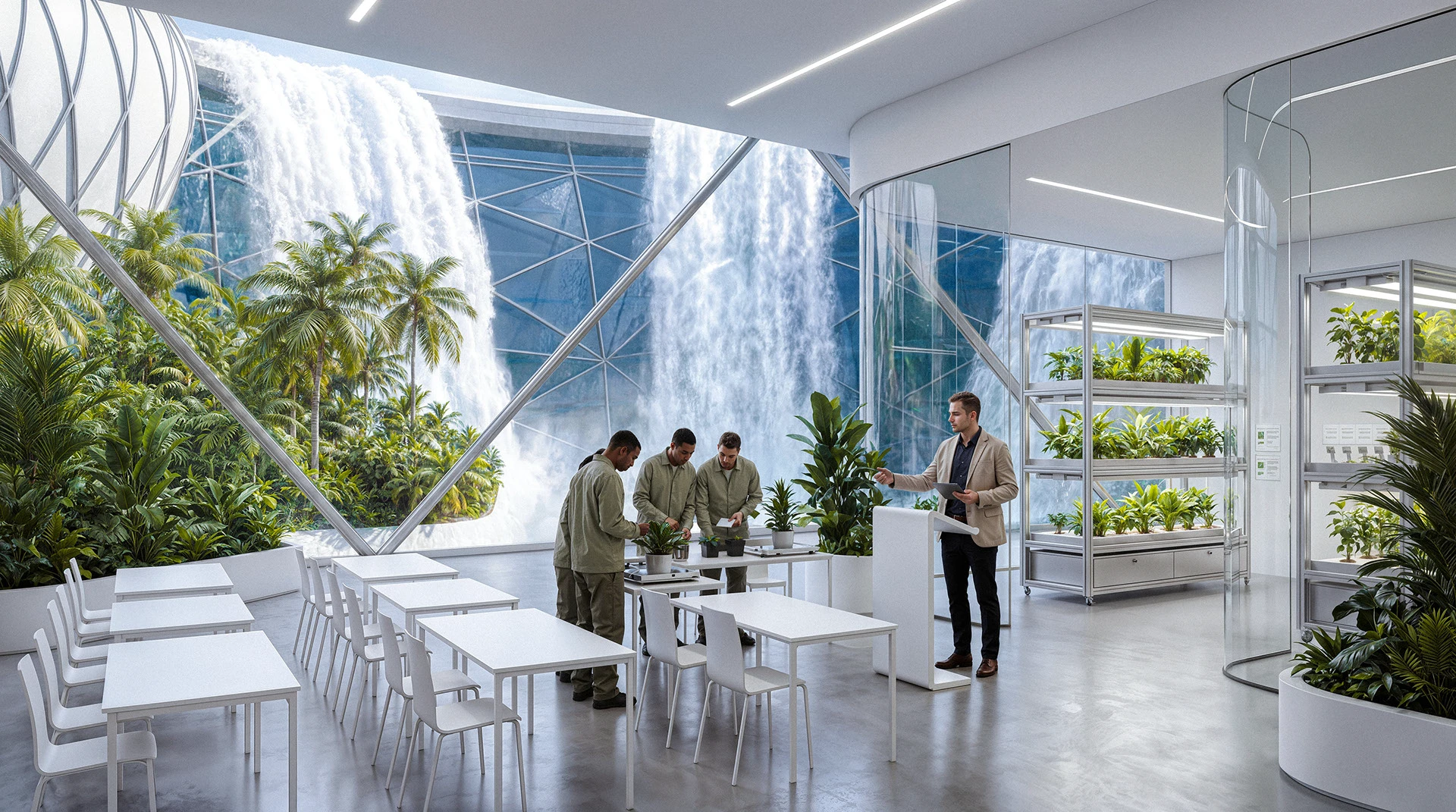
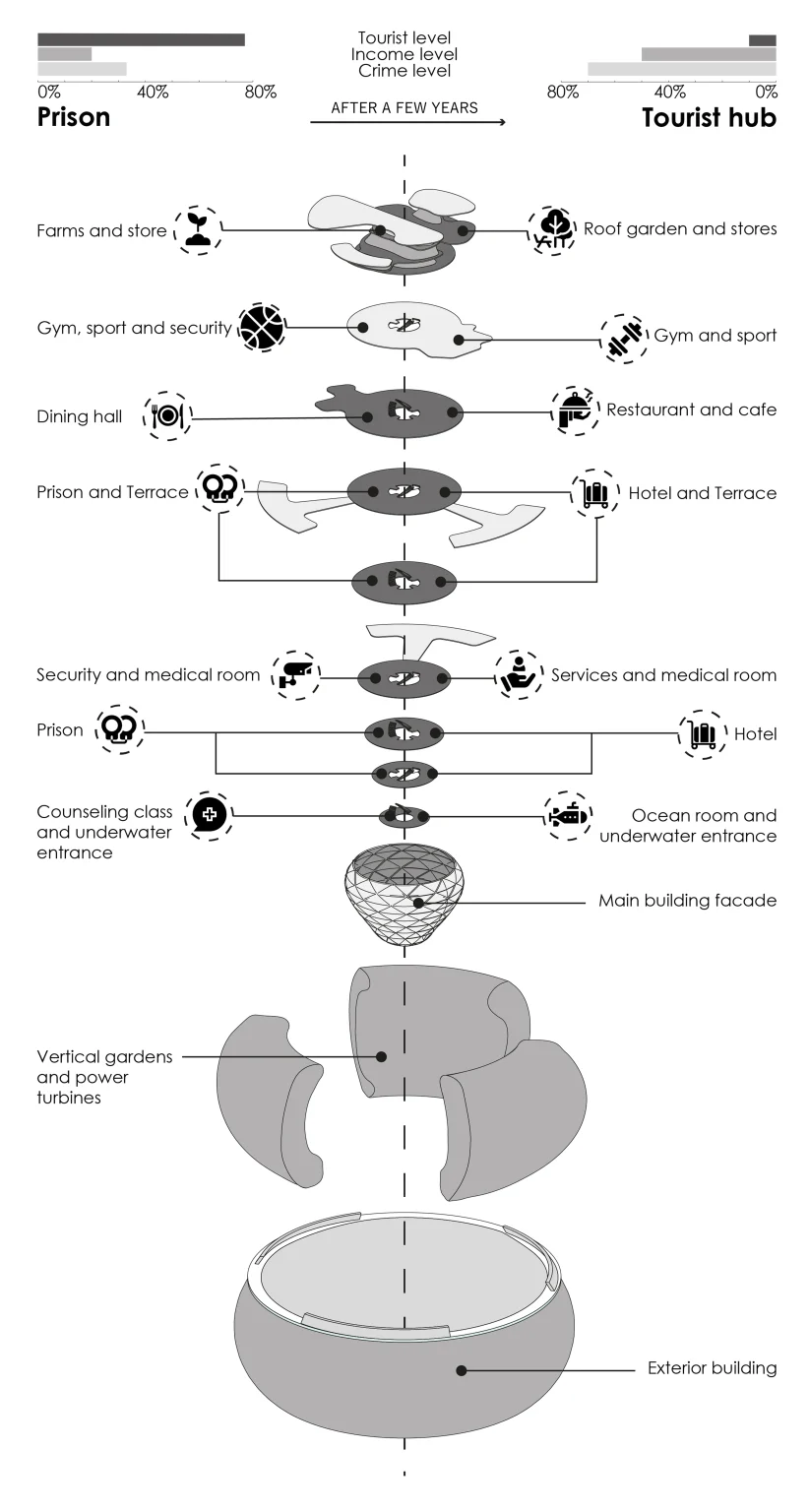
Initially conceived as a rehabilitative correctional facility, the architecture seeks to replace traditional prison environments with a model focused on education, agriculture, trade, and interaction with society. Residents would participate in farming activities, acquire practical skills, and contribute to local economic systems through production and exchange.
The concept envisions a gradual transformation over time. As rehabilitation goals are achieved and social conditions improve, the complex could evolve into a mixed-use destination incorporating hospitality, tourism, and research functions while retaining its renewable energy infrastructure. In this future scenario, the island becomes a self-sustaining eco-resort and innovation hub.
The Underwater Dome and Marine Integration
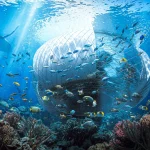
Beneath the surface, the proposal introduces one of its most visually compelling spaces: a large underwater observation dome.
The submerged structure allows occupants to experience Madagascar’s marine ecosystem from within the ocean environment itself. Designed as a pressure-resistant glass enclosure, the dome creates direct visual connections with coral reefs, marine life, and migrating species. The design attempts to immerse people in nature within it.
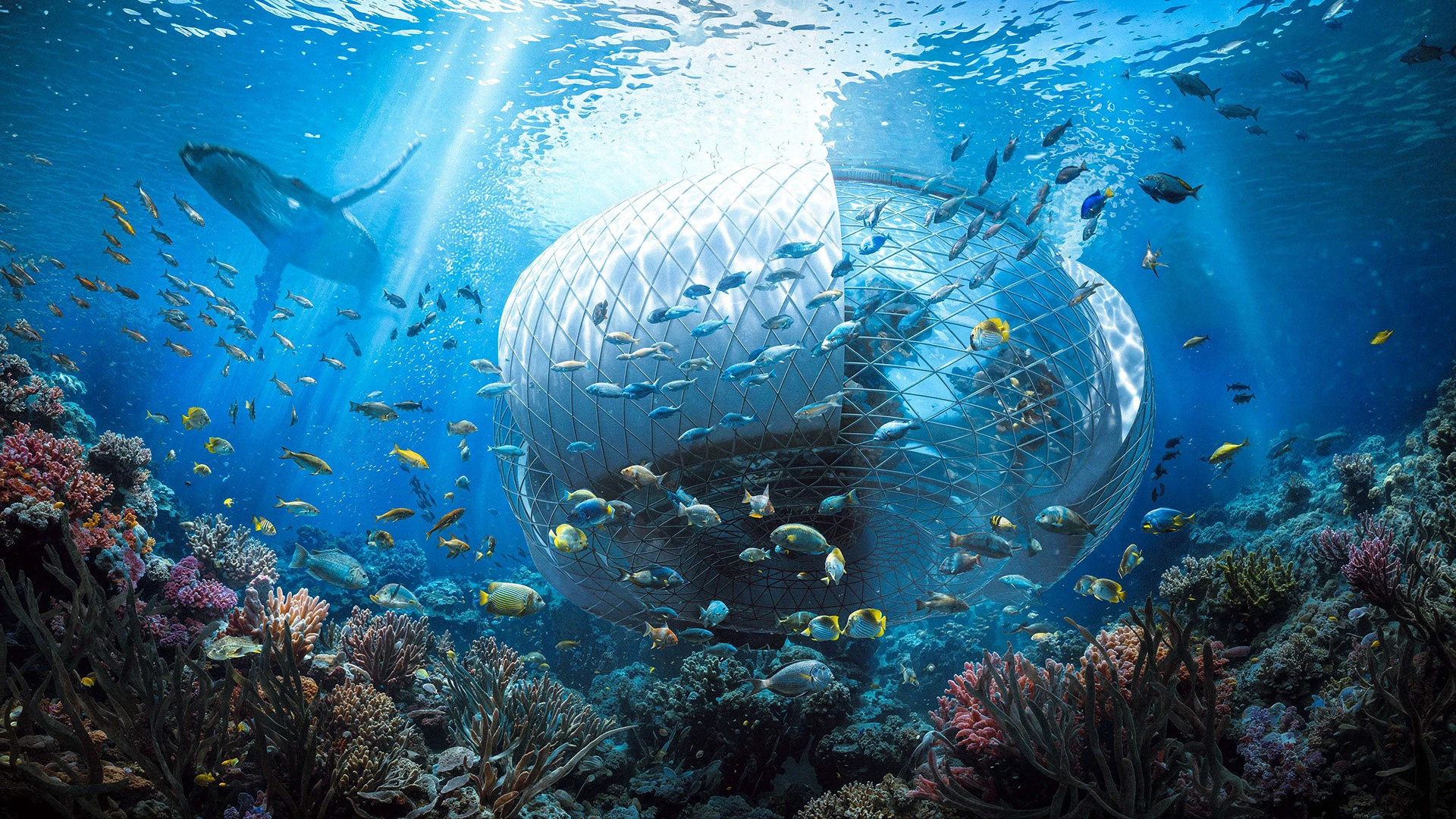
This underwater component reinforces the project’s broader aim of integrating environmental awareness, tourism, and scientific observation into the architectural experience.
Architectural Language and Visual Character
Baobab Waterfall combines several design approaches:
- Biomimetic architecture inspired by natural forms
- Megastructure planning
- Floating infrastructure
- Eco-tourism architecture
- Renewable energy design
- Futuristic landscape integration
The visual composition is dominated by three elements:
- The monumental baobab-inspired tower.
- The circular ring of engineered waterfalls.
- The tropical green interior is protected from the surrounding ocean.
The result resembles a hybrid between an artificial island, a vertical greenhouse, a marine research station, and a renewable energy plant.
A Visionary Proposal Between Architecture and Speculation
Baobab Waterfall operates at the intersection of visionary architecture and speculative infrastructure. Its purpose extends beyond conventional building design, proposing an integrated system where energy generation, environmental stewardship, tourism, education, and social rehabilitation coexist within a single floating ecosystem.
Whether viewed as a futuristic infrastructure prototype or an architectural thought experiment, the project demonstrates how contemporary conceptual design increasingly seeks to address multiple societal and environmental challenges through one interconnected architectural vision. For Madagascar, the proposal imagines a future where a national symbol, the baobab tree, becomes the inspiration for an entirely new model of living, learning, and generating renewable energy in the middle of the ocean.
Baobab Waterfall Project Details
Project Name: Baobab Waterfall
Location: Madagascar
Lead Architect: Ahmad Eghtesad
Project Architects: Mohammad Aghaei, Nastaran Fazeli
Tutor: Ali Nazari
Competition: Jacques Rougerie Foundation
Status: Concept Proposal / Unbuilt
Typology: Mixed-Use Infrastructure
Design Period: 2020–2026