





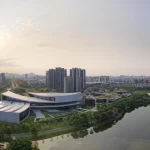
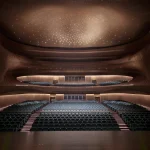
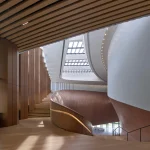
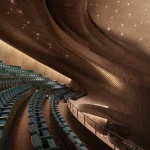


The Songshan Lake Exhibition and Performance Center by Zaha Hadid Architects (ZHA) has opened in Dongguan, China, introducing a major cultural destination within the Songshan Lake Science City. Designed as a multifunctional venue for exhibitions, performances, conferences, and public events, the project integrates cultural infrastructure and public space into a single architectural composition. Located within one of China’s leading innovation districts, the center reflects the city’s ambition to strengthen its cultural offerings while creating a new civic landmark. With its flowing architectural form, integrated landscape, and flexible interior program, the development demonstrates how contemporary cultural buildings can support both everyday public life and large-scale events.
A Cultural Hub Within Songshan Lake Science City
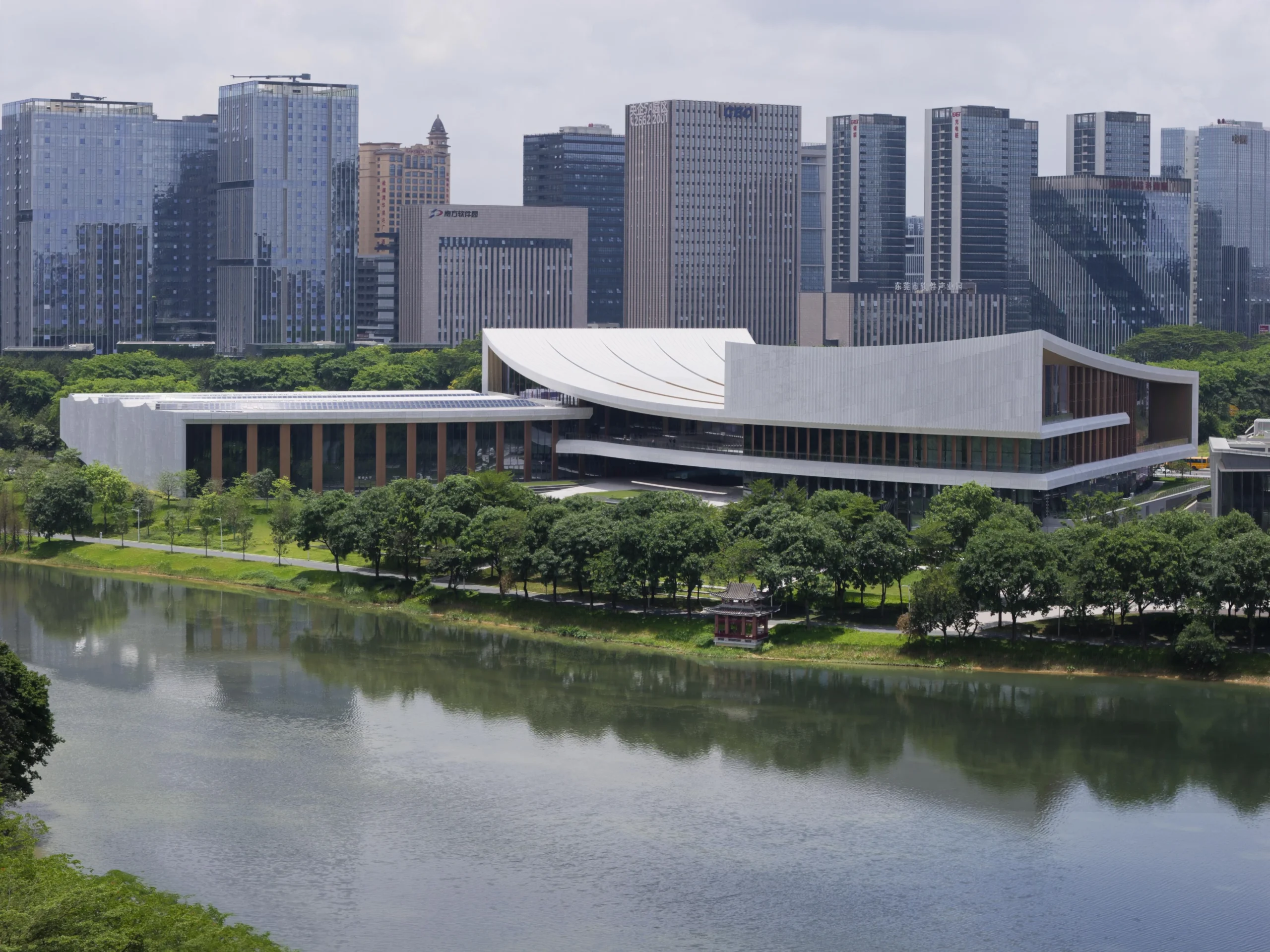
Positioned along the waterfront of Songshan Lake, the project occupies a strategic site within the rapidly developing Songshan Lake Science City. The district is known for its concentration of research institutions, technology companies, and innovation-driven industries. The cultural center was conceived to complement this environment by providing spaces dedicated to public engagement, exhibitions, performances, and community activities.
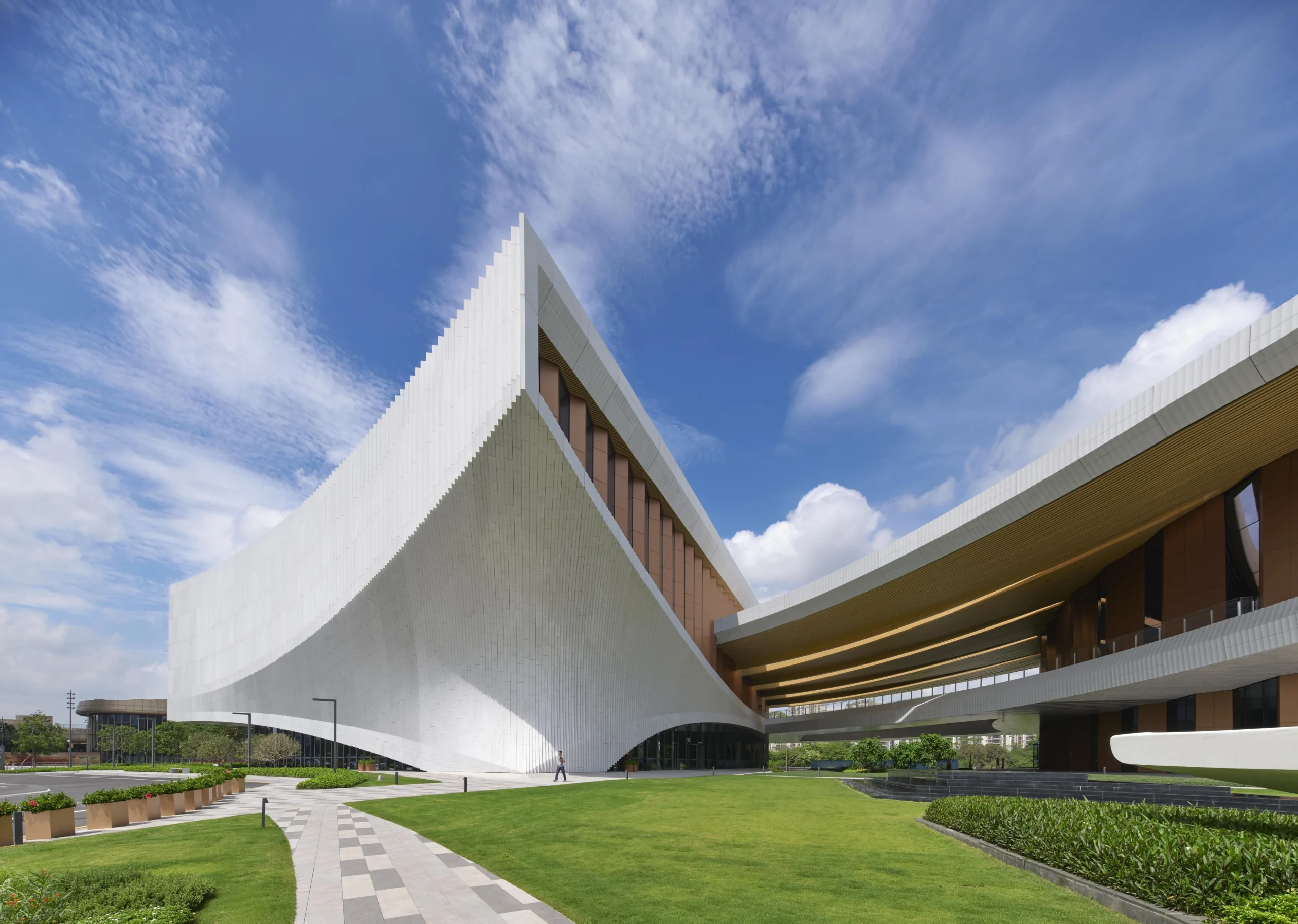
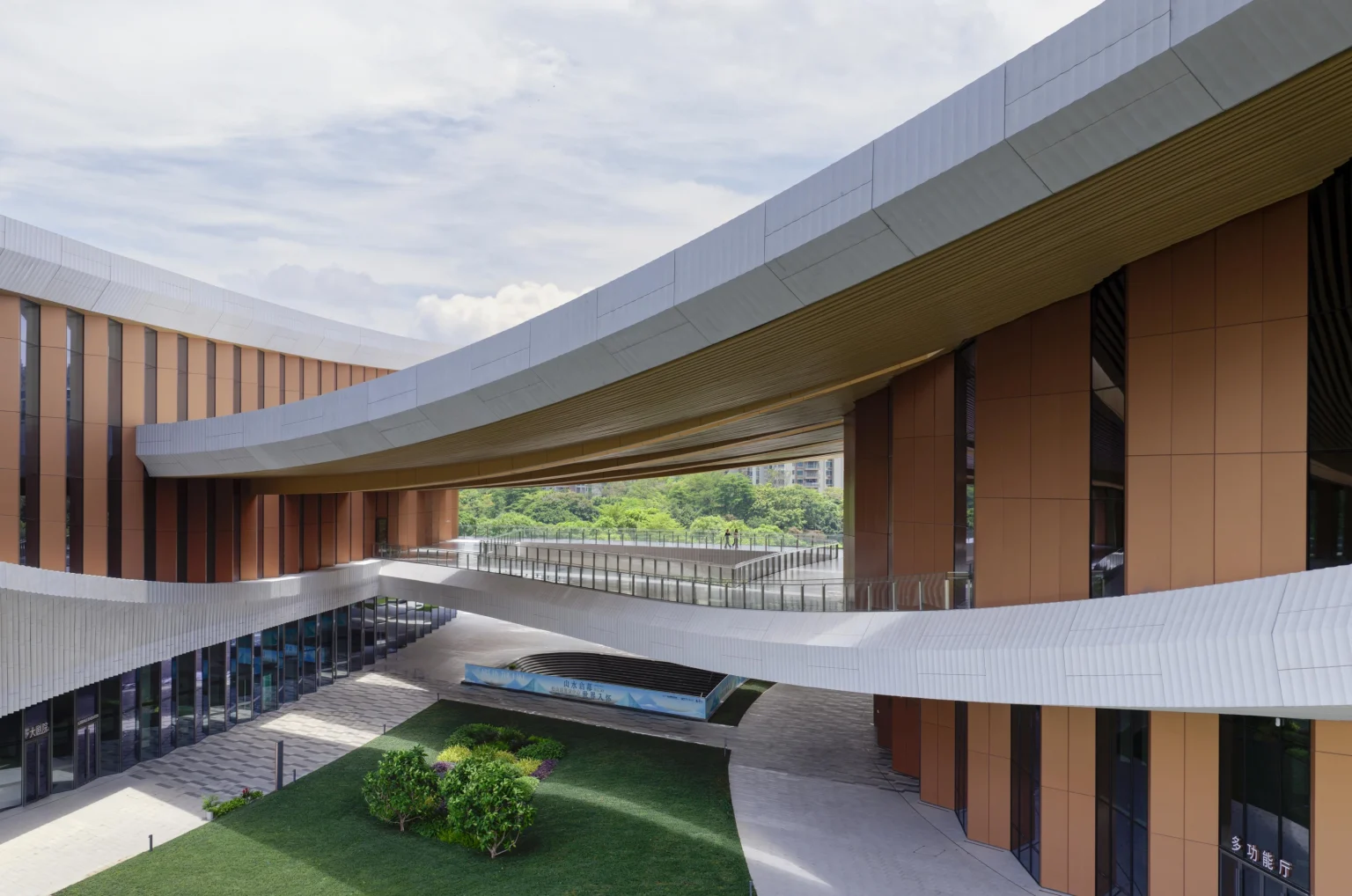
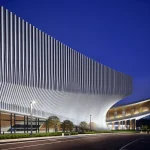
The building combines multiple programs under one roof. Exhibition facilities, performance venues, event spaces, meeting areas, and public amenities are designed to accommodate a wide range of cultural activities year-round. This mixed-use approach allows the center to remain active beyond scheduled performances and exhibitions, strengthening its role as a public destination. Facing the lake and connected to surrounding pedestrian routes, the building extends the public realm into the cultural complex, encouraging visitors to move between indoor and outdoor spaces.
Architectural Form Inspired by Cantonese Opera
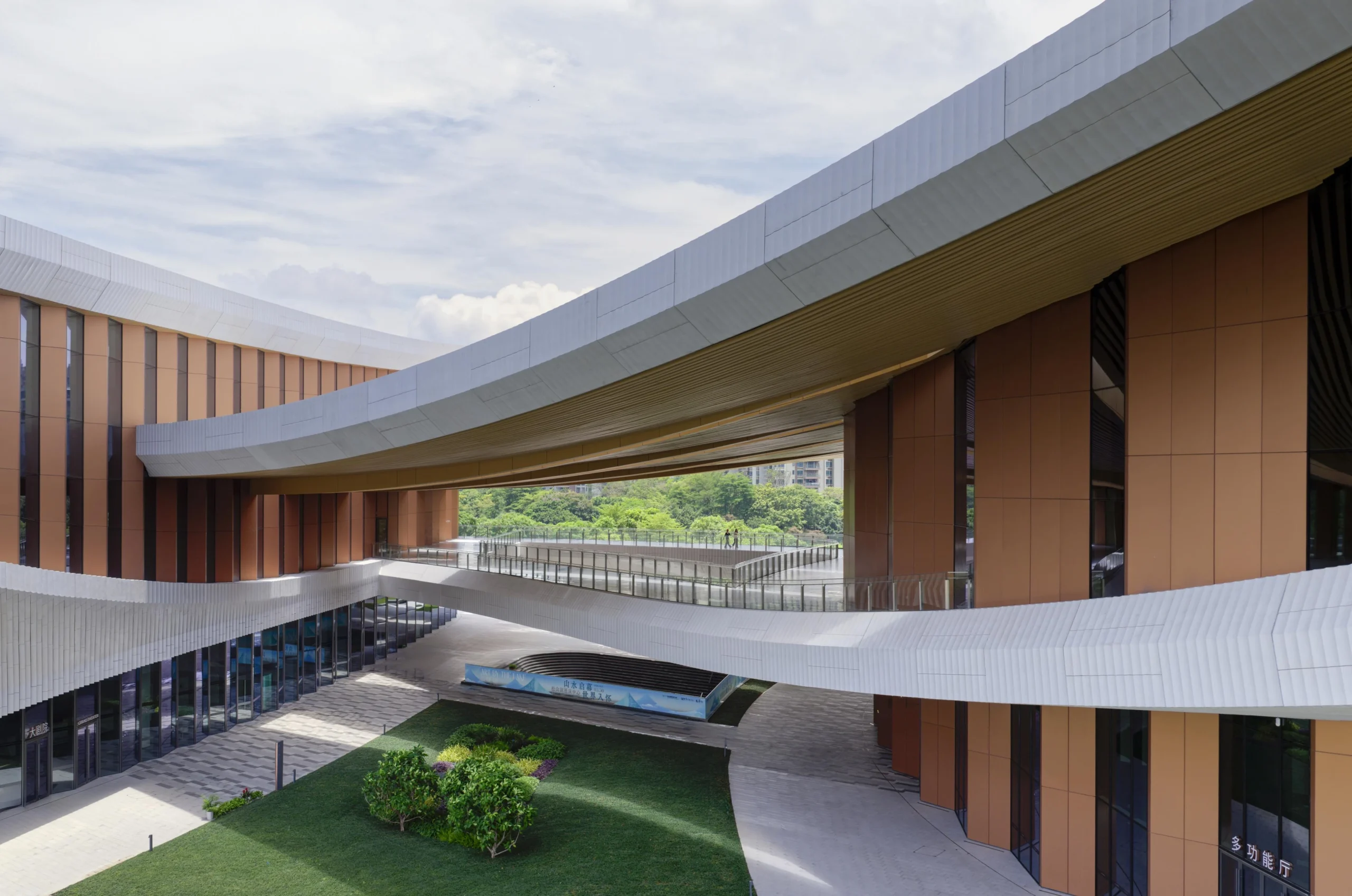
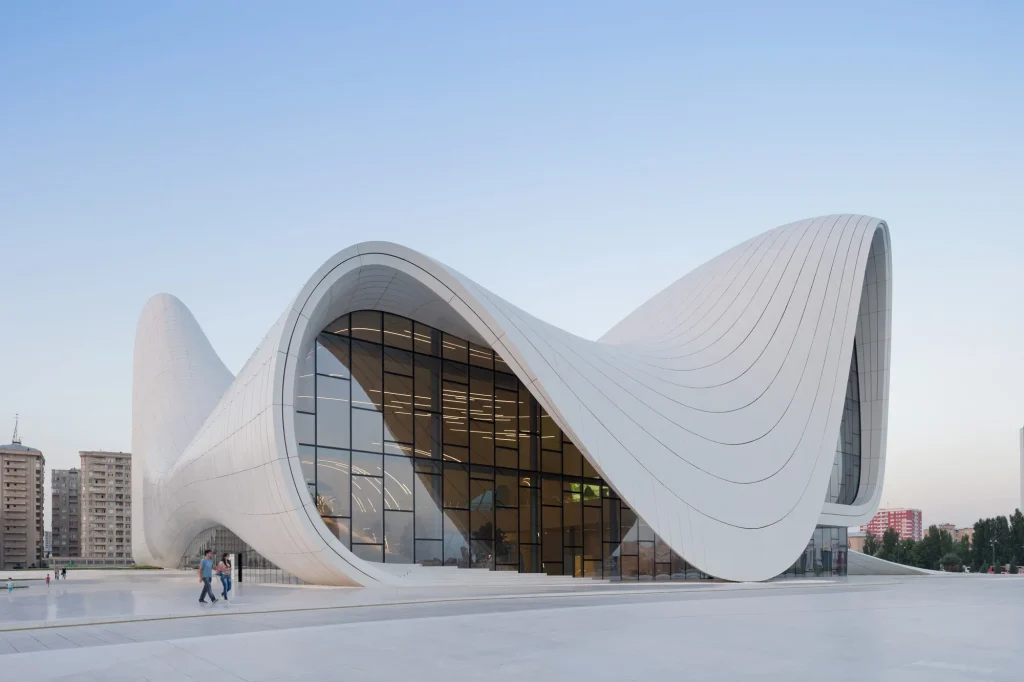
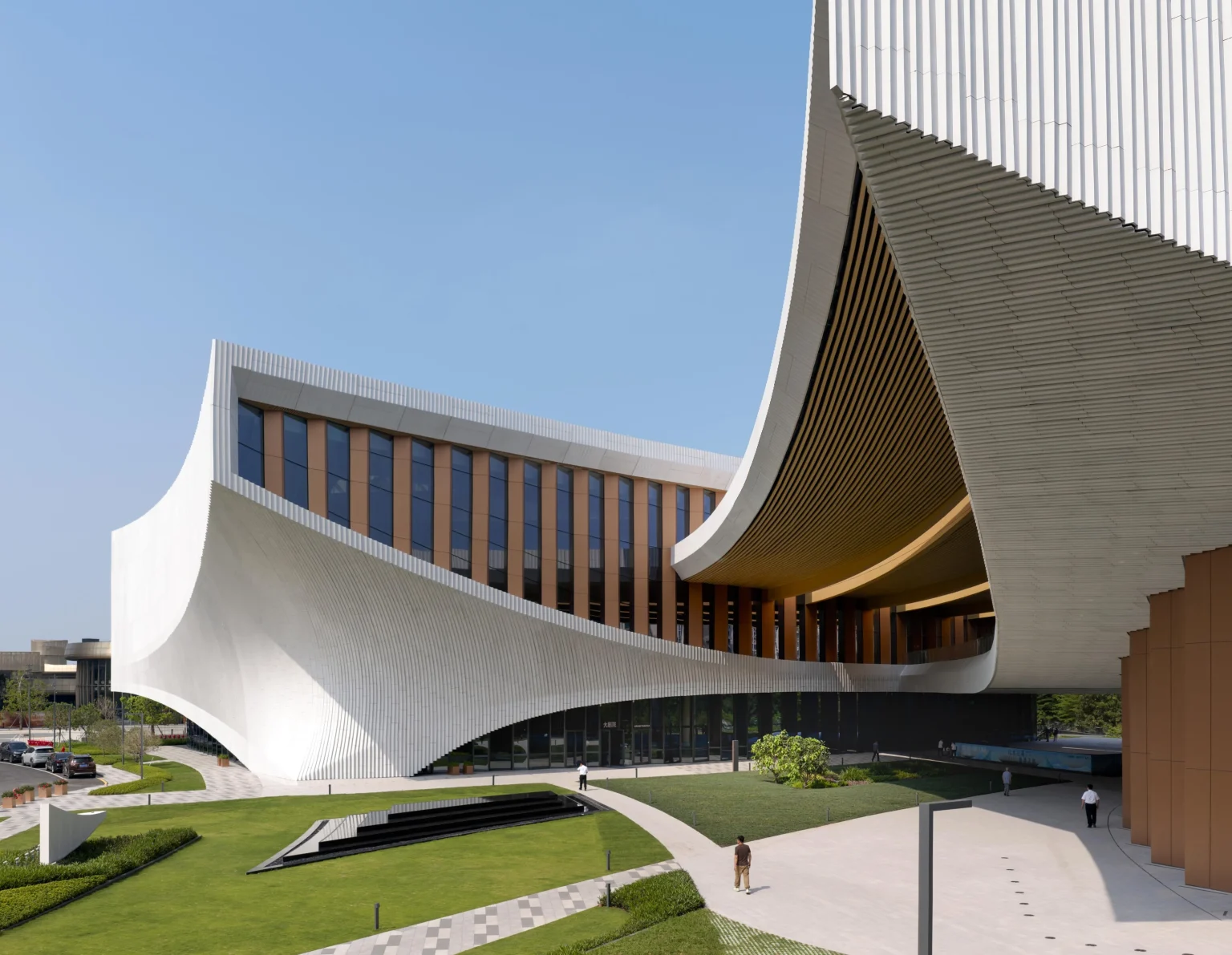
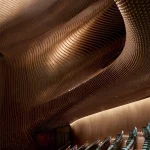
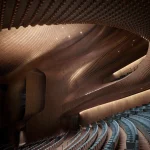
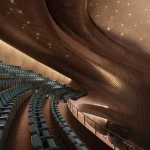
The architectural language of the center draws inspiration from the movement, rhythm, and visual qualities of Cantonese Opera, one of the region’s most significant cultural traditions. ZHA translated these references into a series of fluid forms that define both the exterior envelope and interior circulation spaces.
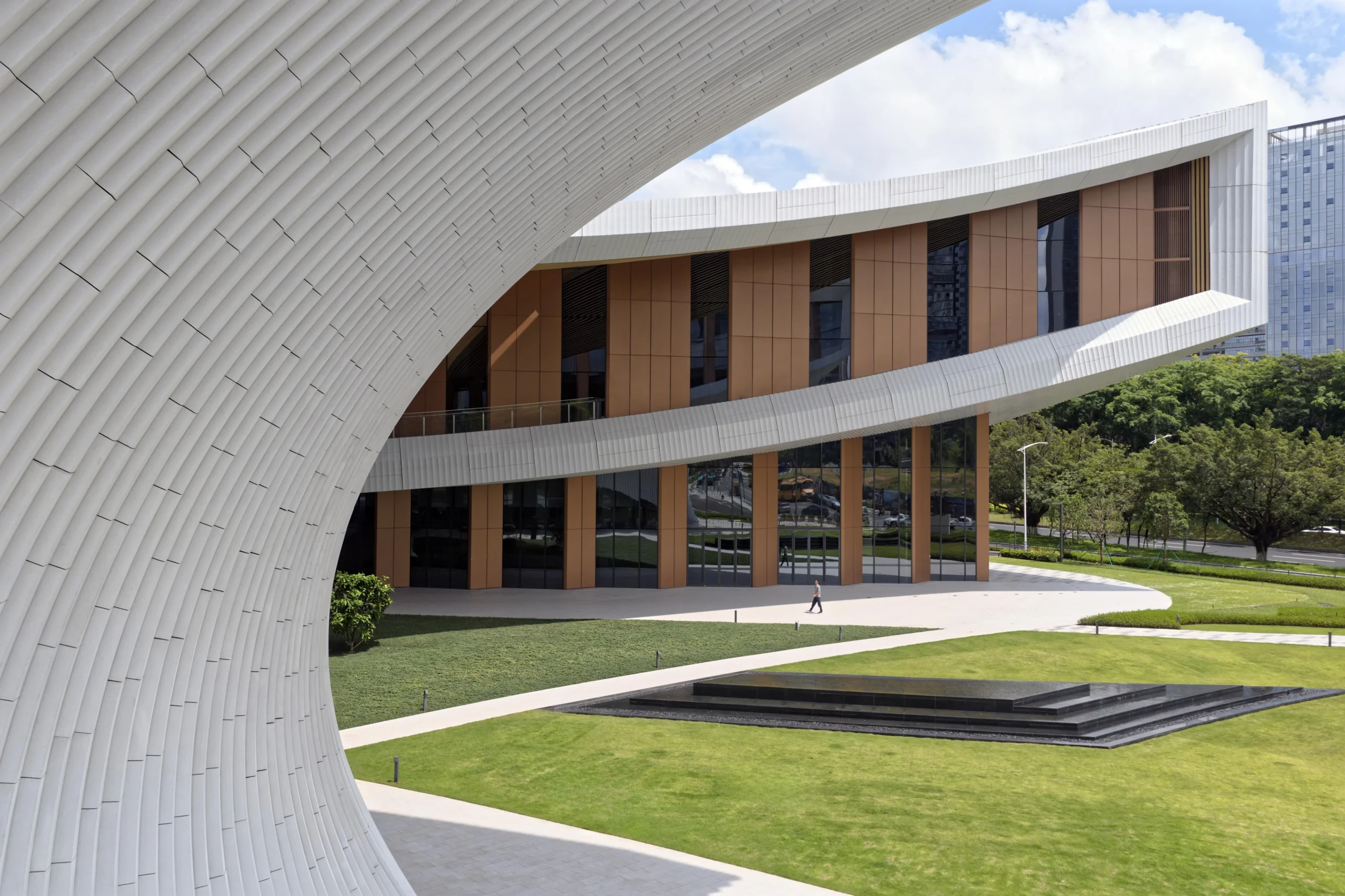
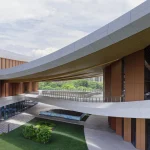
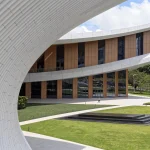
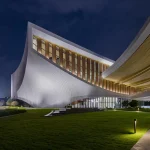
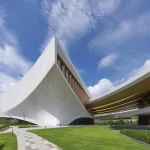
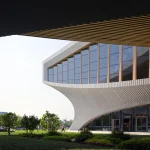
The building’s sweeping rooflines and sculpted façades create a strong visual presence along the waterfront. Curved surfaces guide visitors toward entrances while establishing a sense of movement across the site. The design uses continuity between architecture, landscape, and circulation routes to shape the visitor experience.
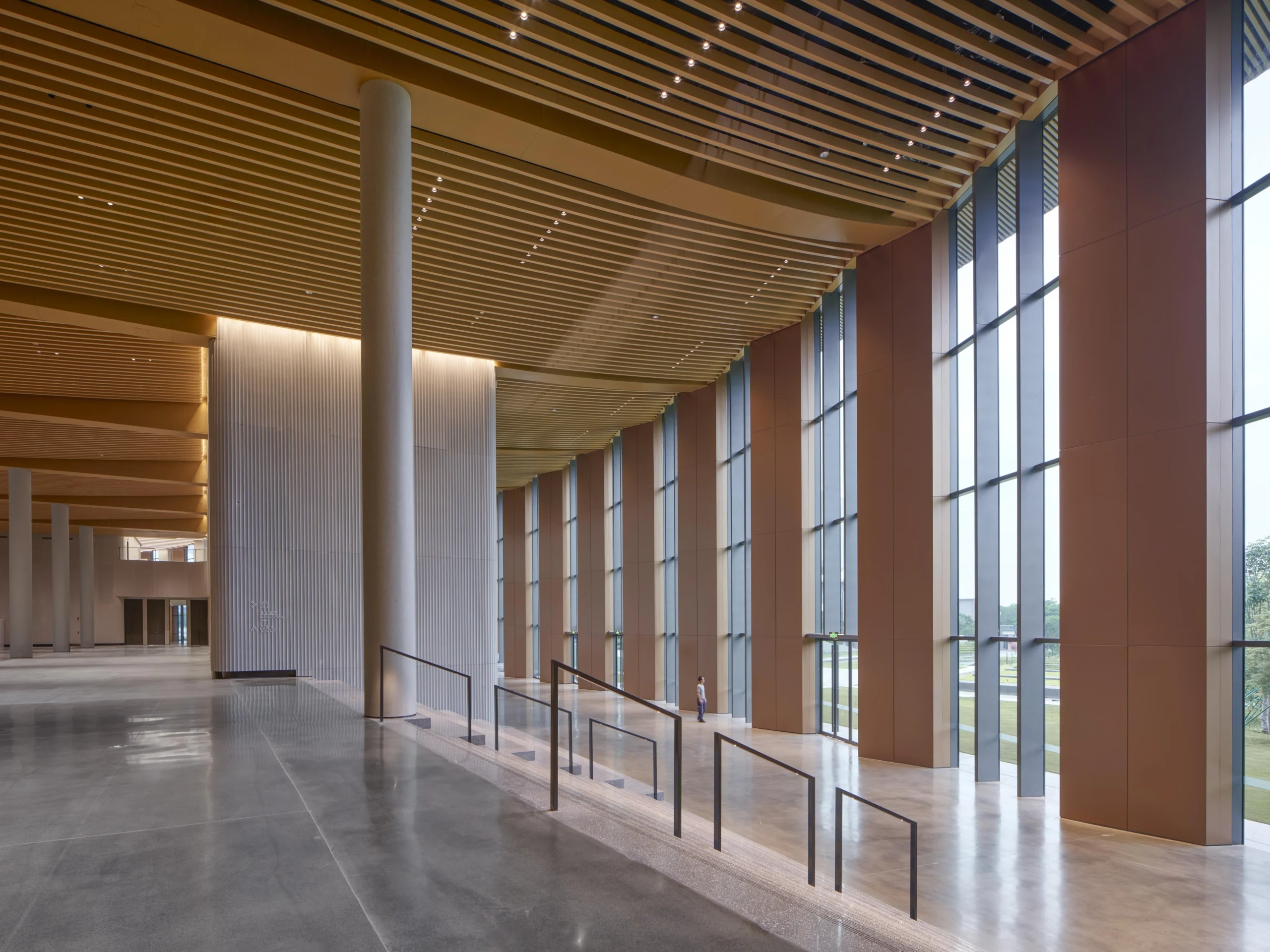
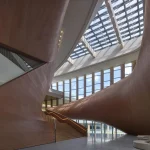
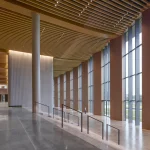
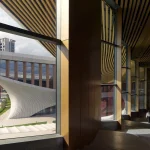
Large glazed areas introduce daylight into public spaces while maintaining visual connections to the surrounding lake and parkland. The combination of solid and transparent surfaces creates varying levels of openness throughout the complex, supporting both exhibition functions and performance-related activities.
Flexible Spaces Designed for Events and Public Engagement
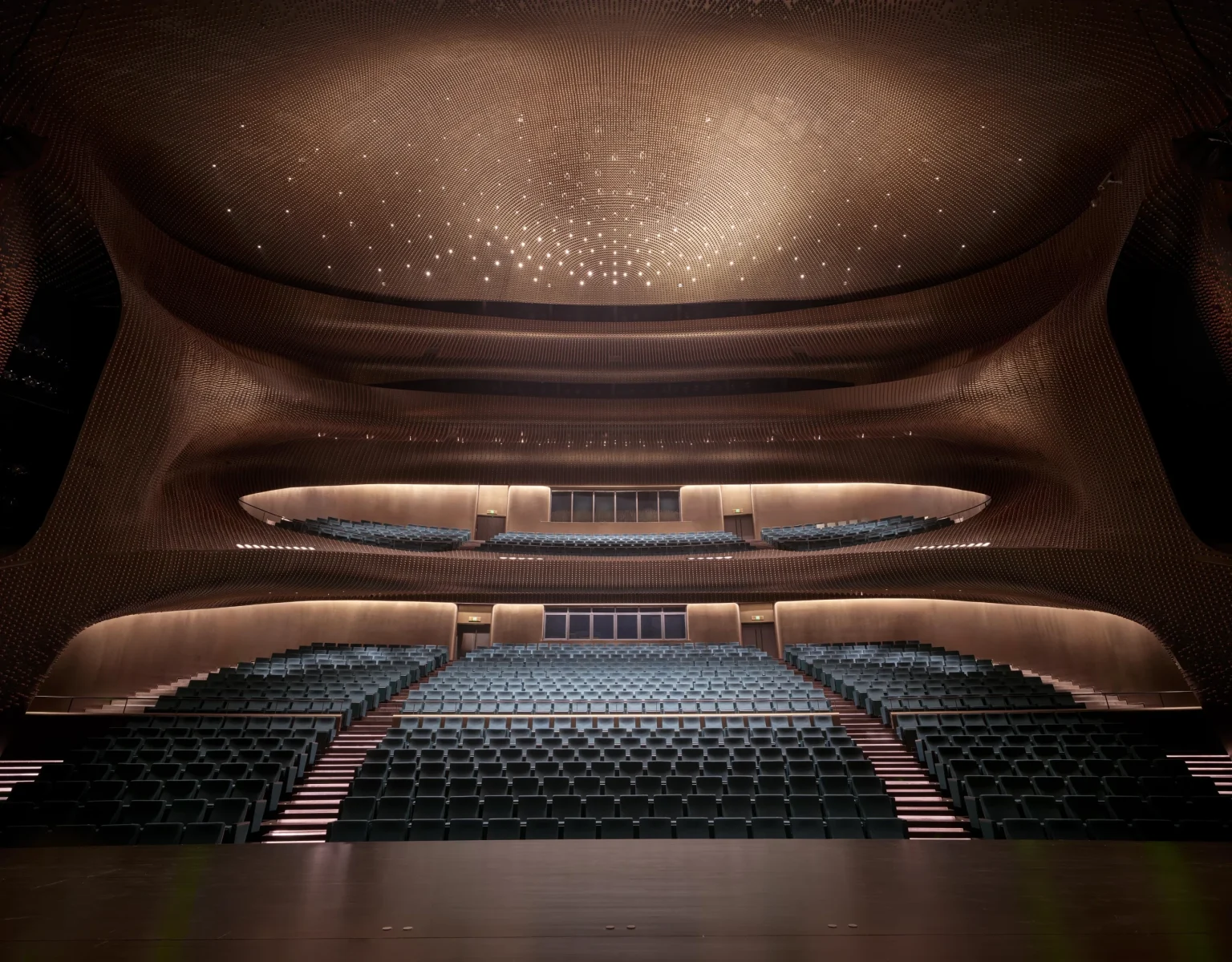
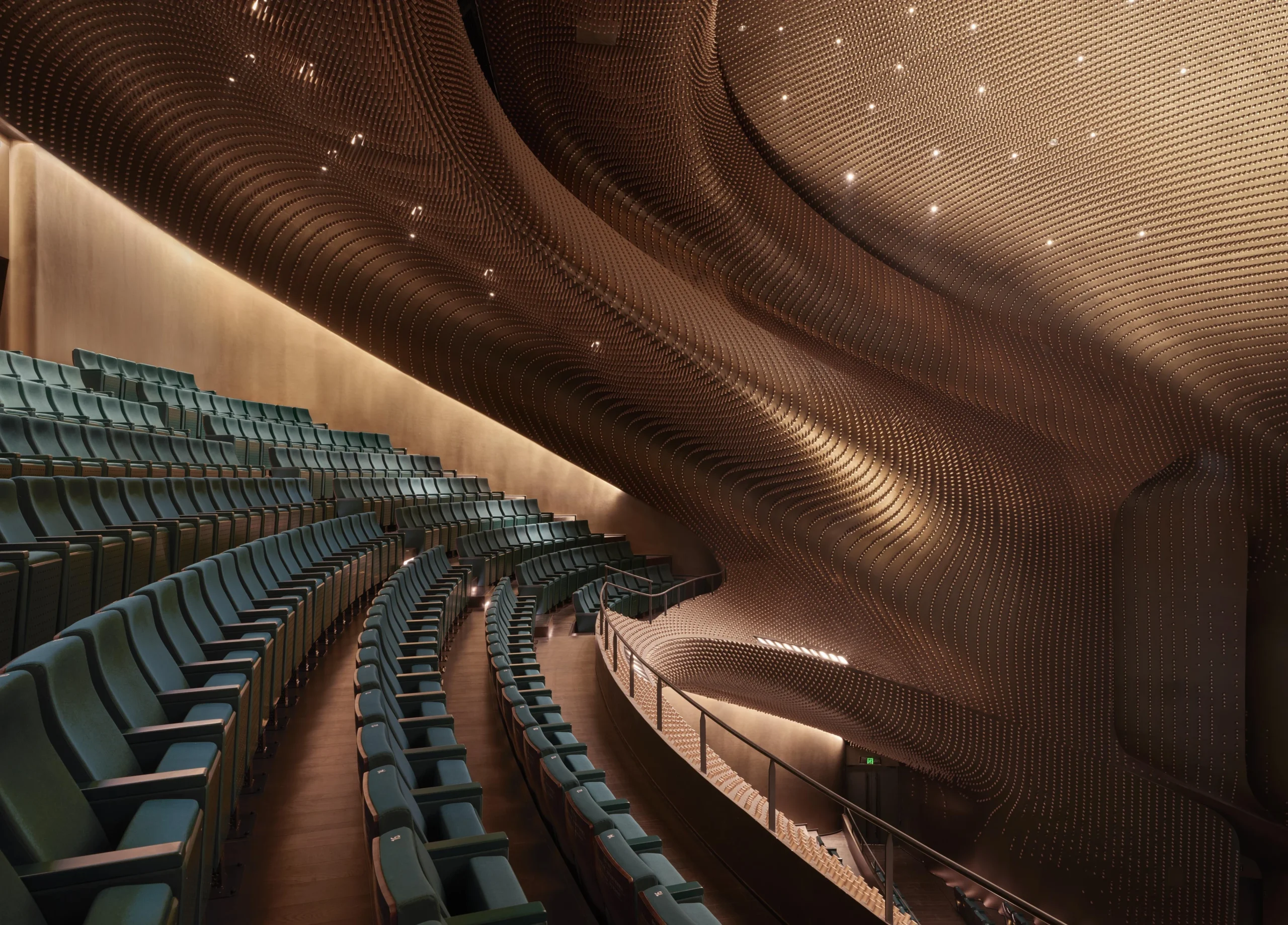
At the core of the project is a collection of adaptable interior spaces designed to accommodate changing cultural and community needs. Exhibition galleries provide flexible layouts for temporary installations, while performance facilities support theatrical productions, concerts, and cultural events. Conference and event spaces further expand the building’s program, allowing it to host business gatherings, educational activities, and public forums.
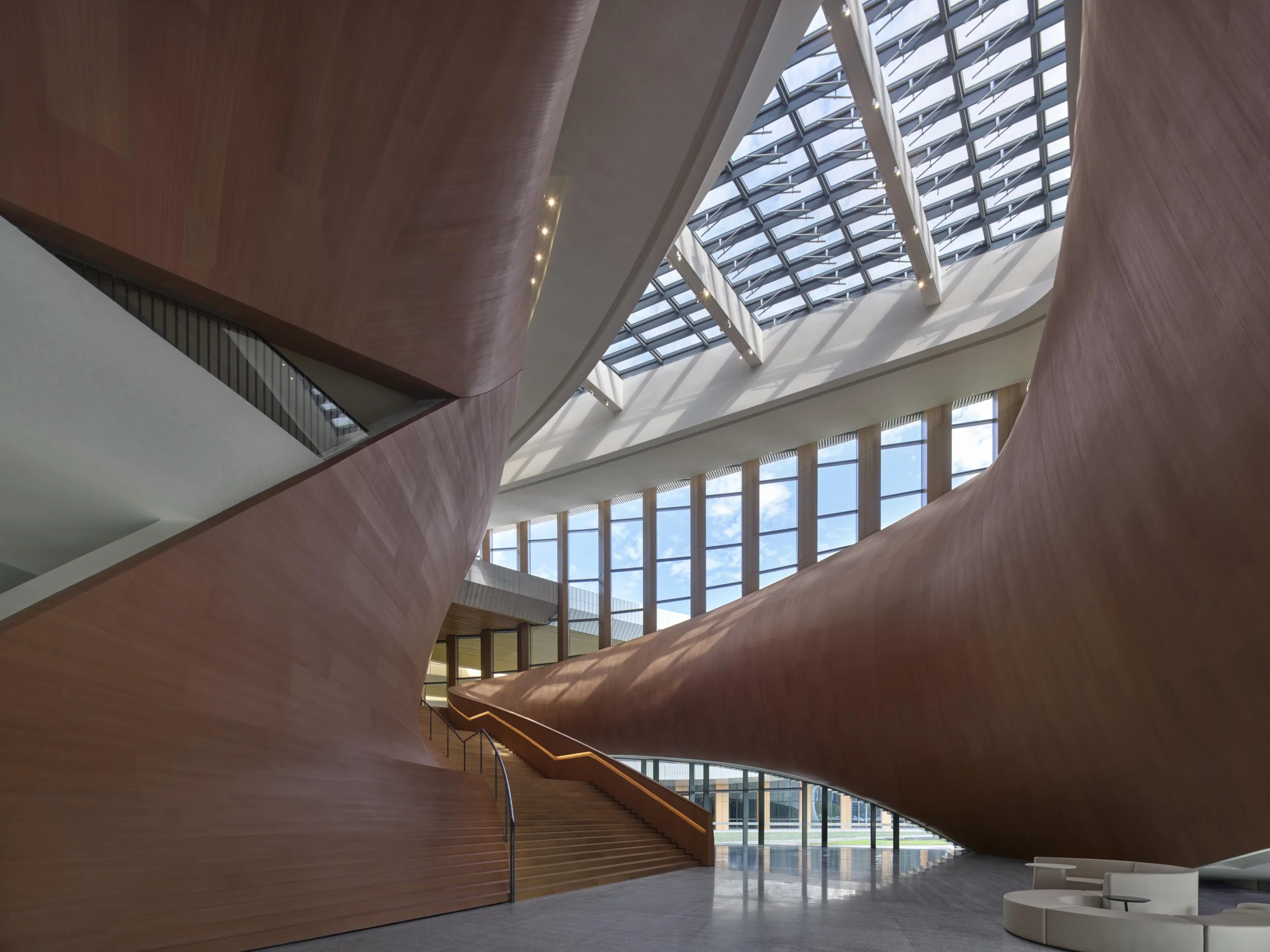
Circulation spaces are designed as extensions of the public realm. Generous atriums, open foyers, and interconnected gathering areas encourage social interaction and informal use throughout the day. These spaces help the center function as a civic destination even when major events are not taking place.
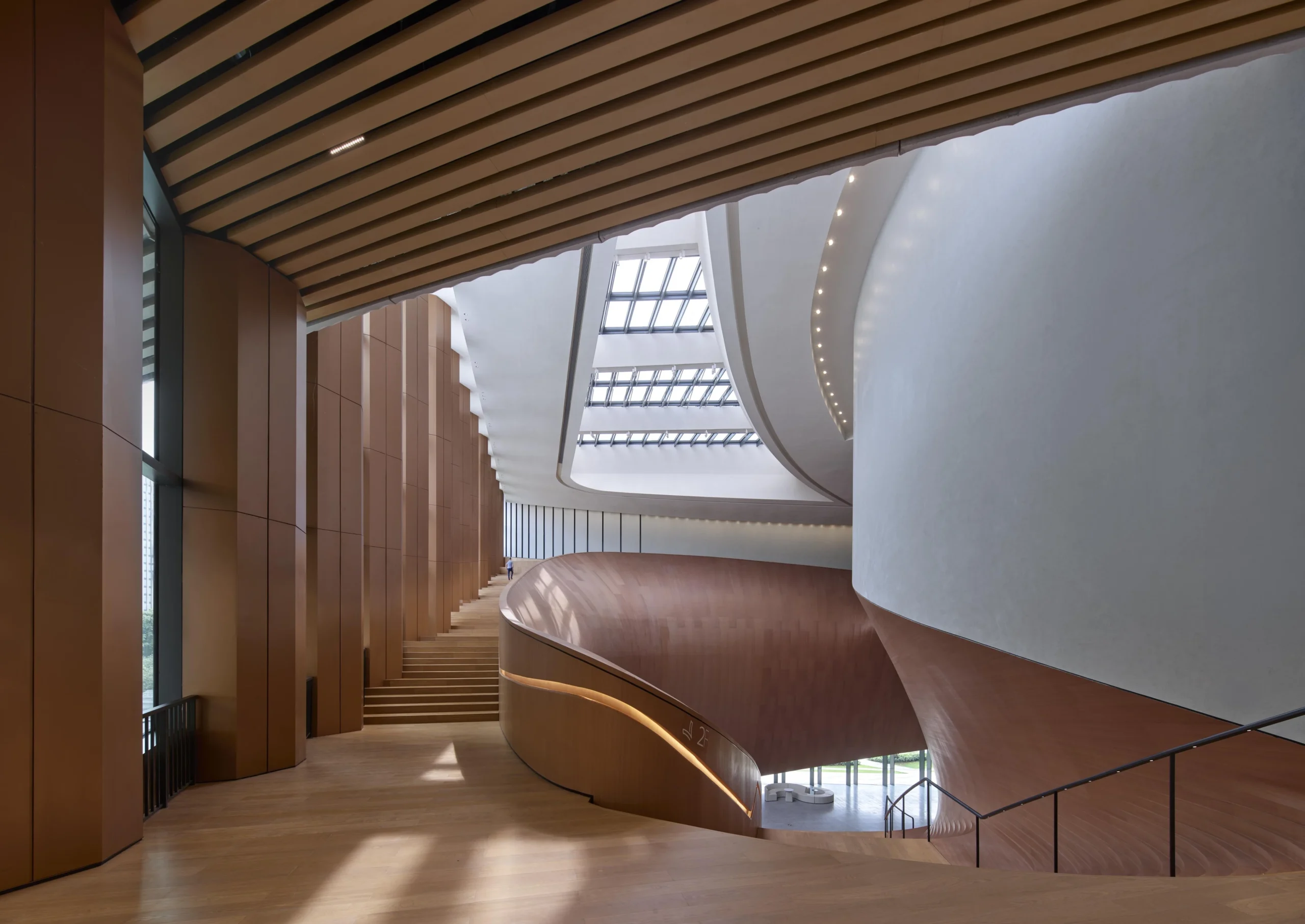
Advanced digital infrastructure and contemporary performance technologies have been integrated into the venue to support a broad range of cultural programming. This flexibility ensures that the building can adapt to future requirements while serving diverse user groups.
Integrating Architecture and Landscape
Landscape design of the building is embedded within a network of pedestrian pathways, public plazas, and waterfront spaces that connect the center to the broader Songshan Lake environment. Outdoor terraces and viewing areas extend visitor activity beyond the enclosed building and strengthen connections with the natural setting.
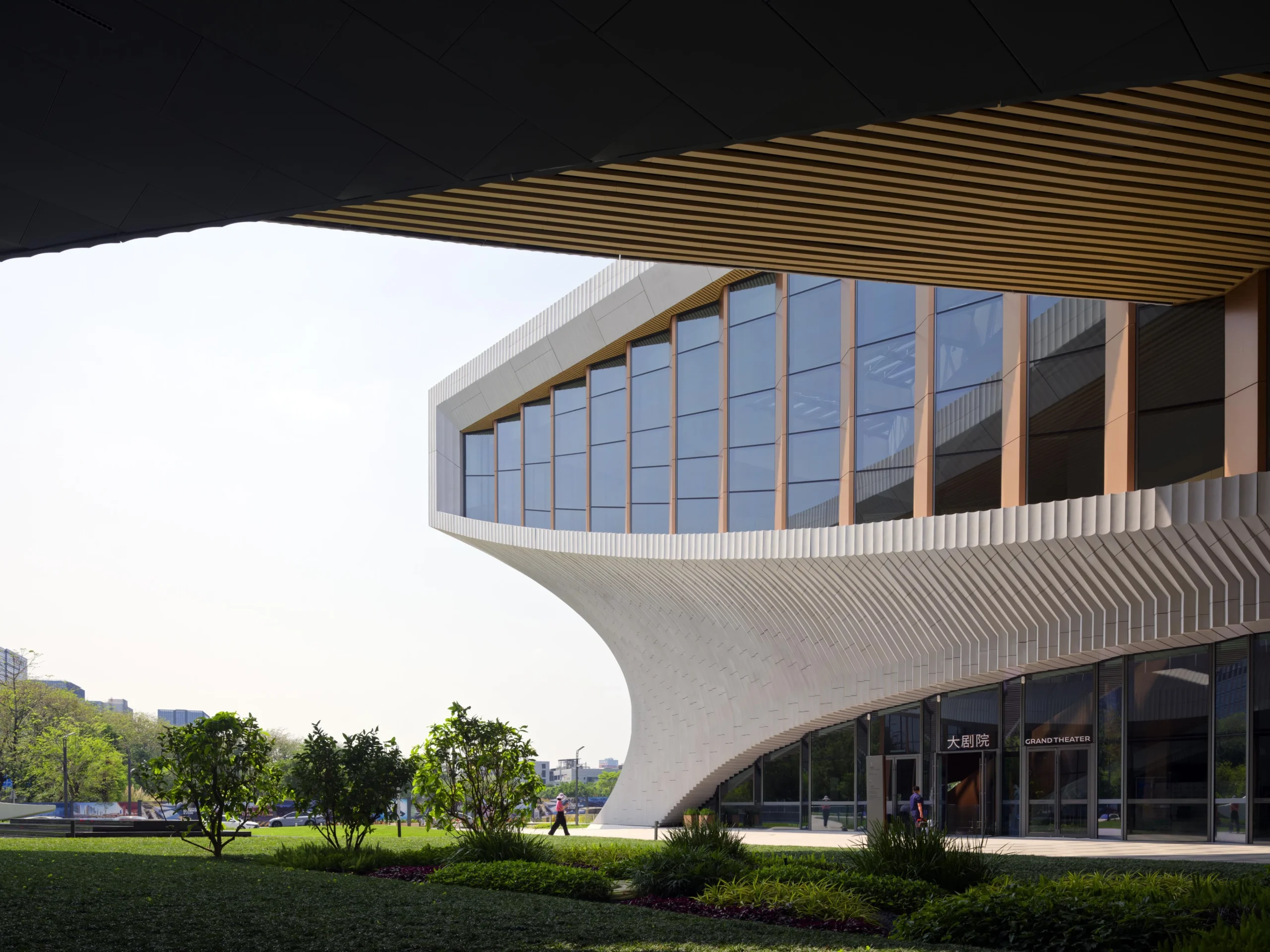
The architecture’s flowing geometry continues into the landscape design, creating a unified visual language across the site. This approach reduces the distinction between building and surroundings while enhancing accessibility and public use.
Designed to Serve a Growing Urban Community
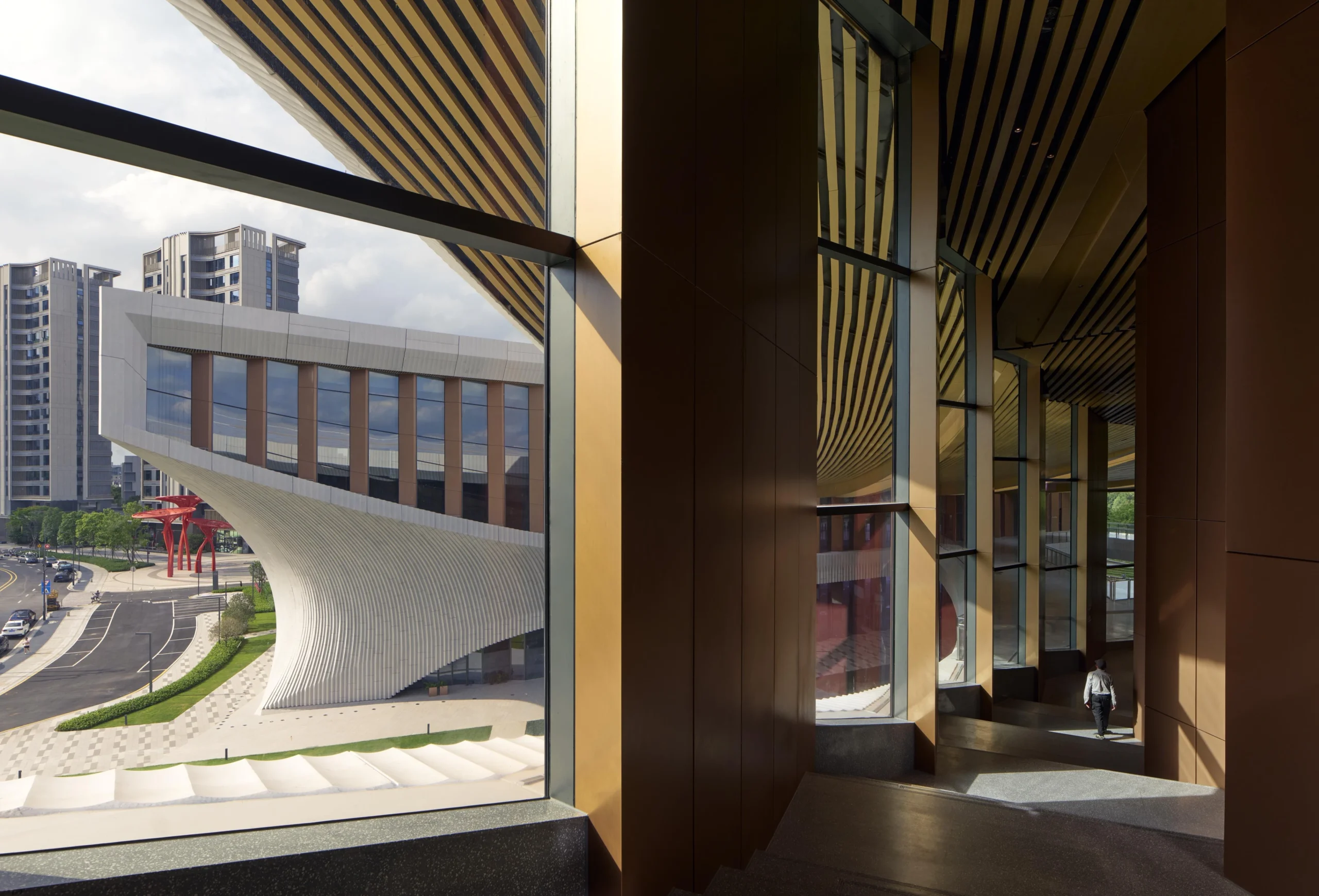
The completion of the Songshan Lake Exhibition and Performance Center marks an important addition to Dongguan’s cultural infrastructure. By combining exhibition venues, performance facilities, conference spaces, and public gathering areas, the project establishes a multifunctional destination capable of serving residents, visitors, and the wider innovation district.
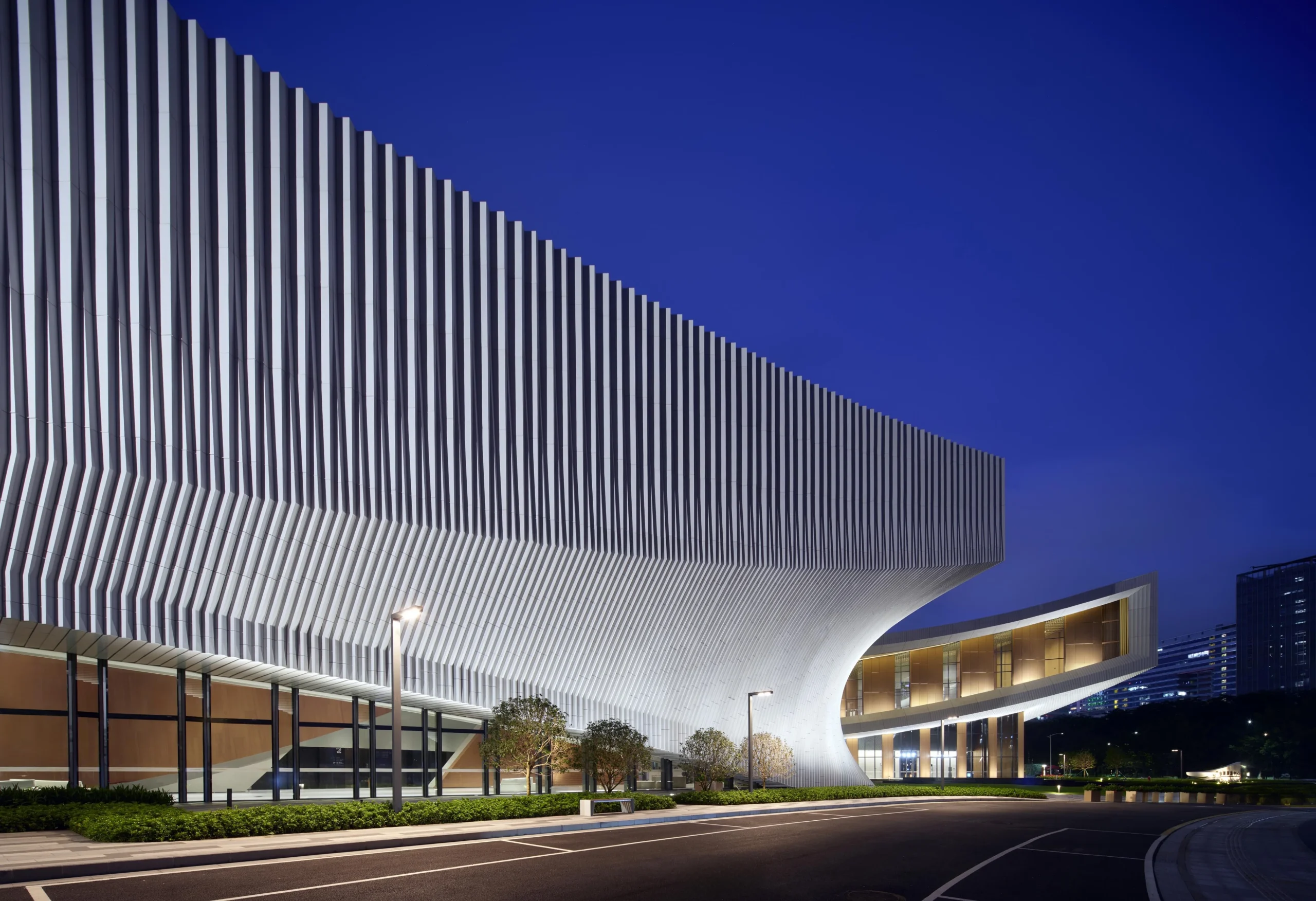
Through its integration of cultural references, flexible programming, and landscape-driven design, Zaha Hadid Architects has created a civic building that responds to both local identity and contemporary urban development. As Songshan Lake Science City continues to grow, the center is positioned to become a key venue for cultural exchange, public engagement, and community activity.
Songshan Lake Exhibition and Performance Center Project Details
Project: Songshan Lake Exhibition and Performance Center
Location: Dongguan, Guangdong, China
Architect: Zaha Hadid Architects (ZHA)
Client: Songshan Lake High-tech Industrial Development Zone
Program: Exhibition Center, Performance Venue, Conference and Event Facilities
Status: Completed and Opened
Design Inspiration: Cantonese Opera and regional cultural traditions
Image credit: Virgile Simon Bertrand