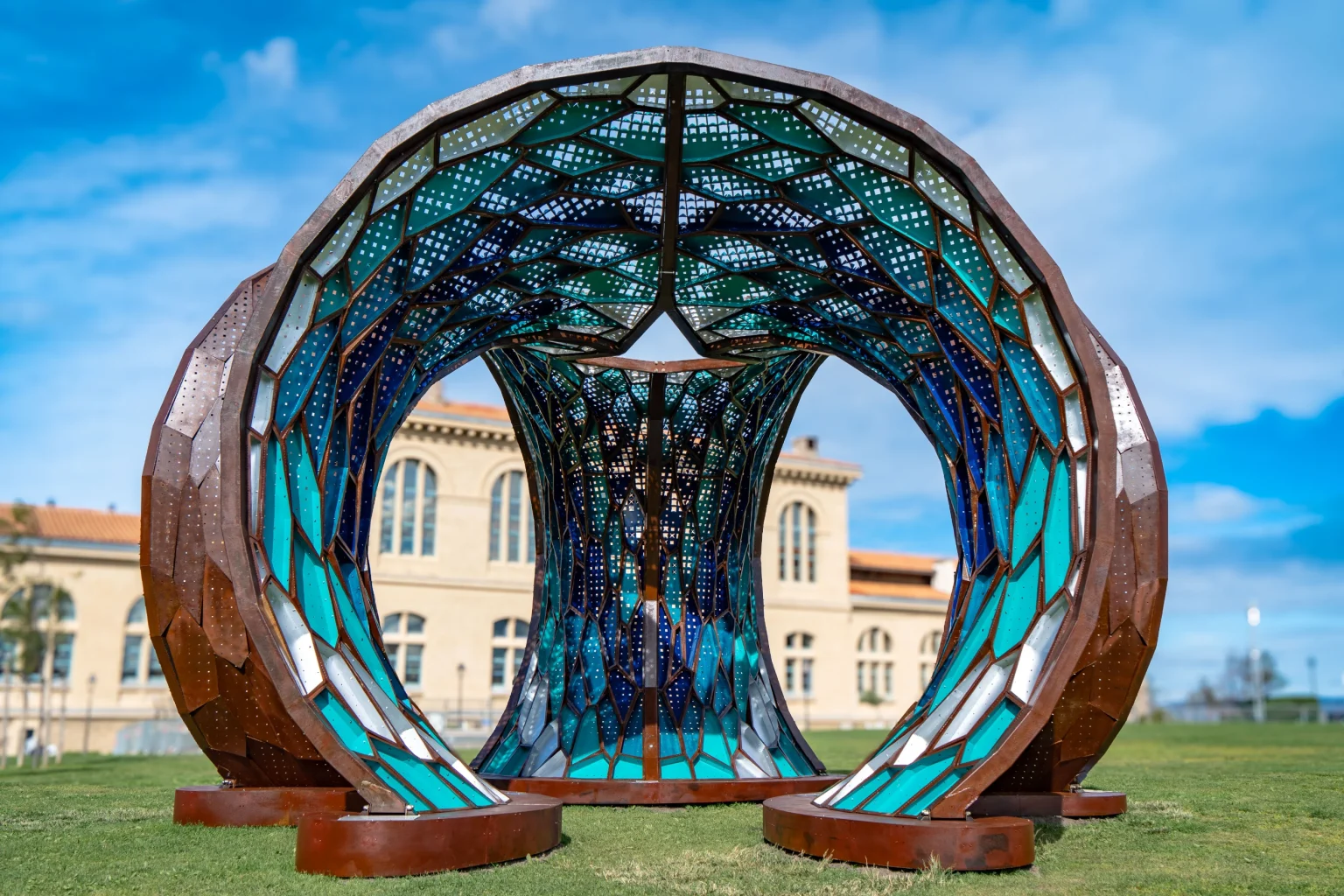
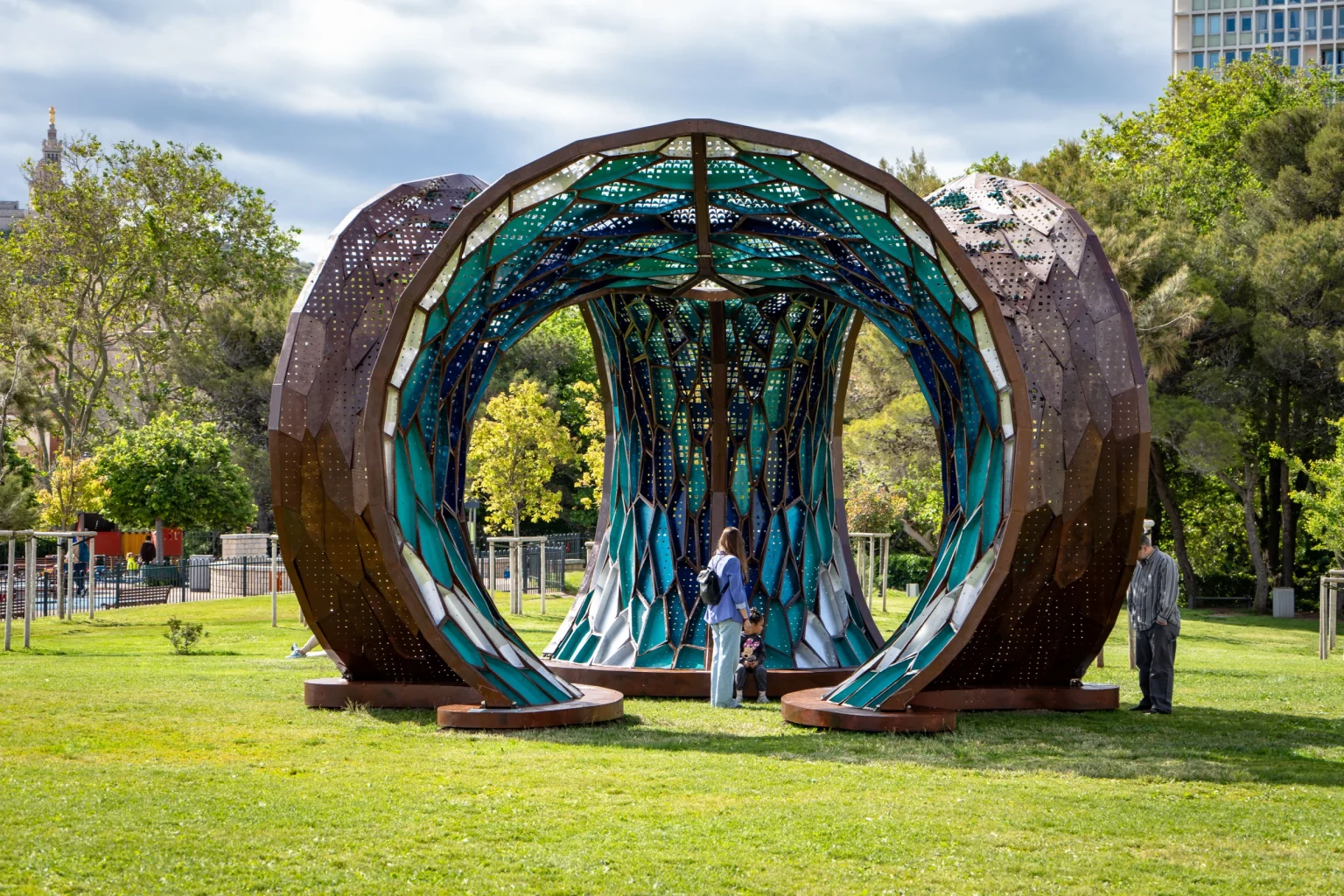


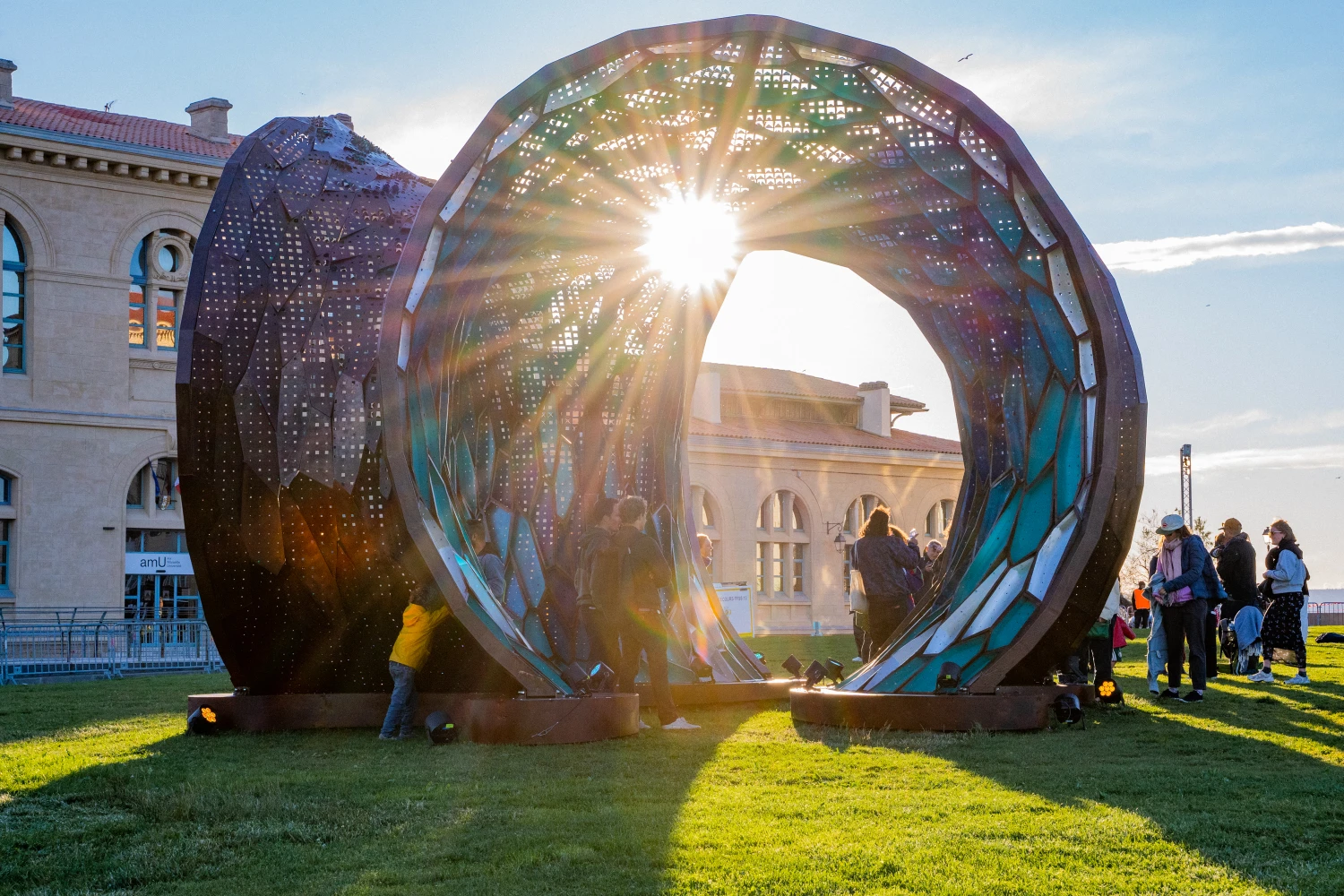
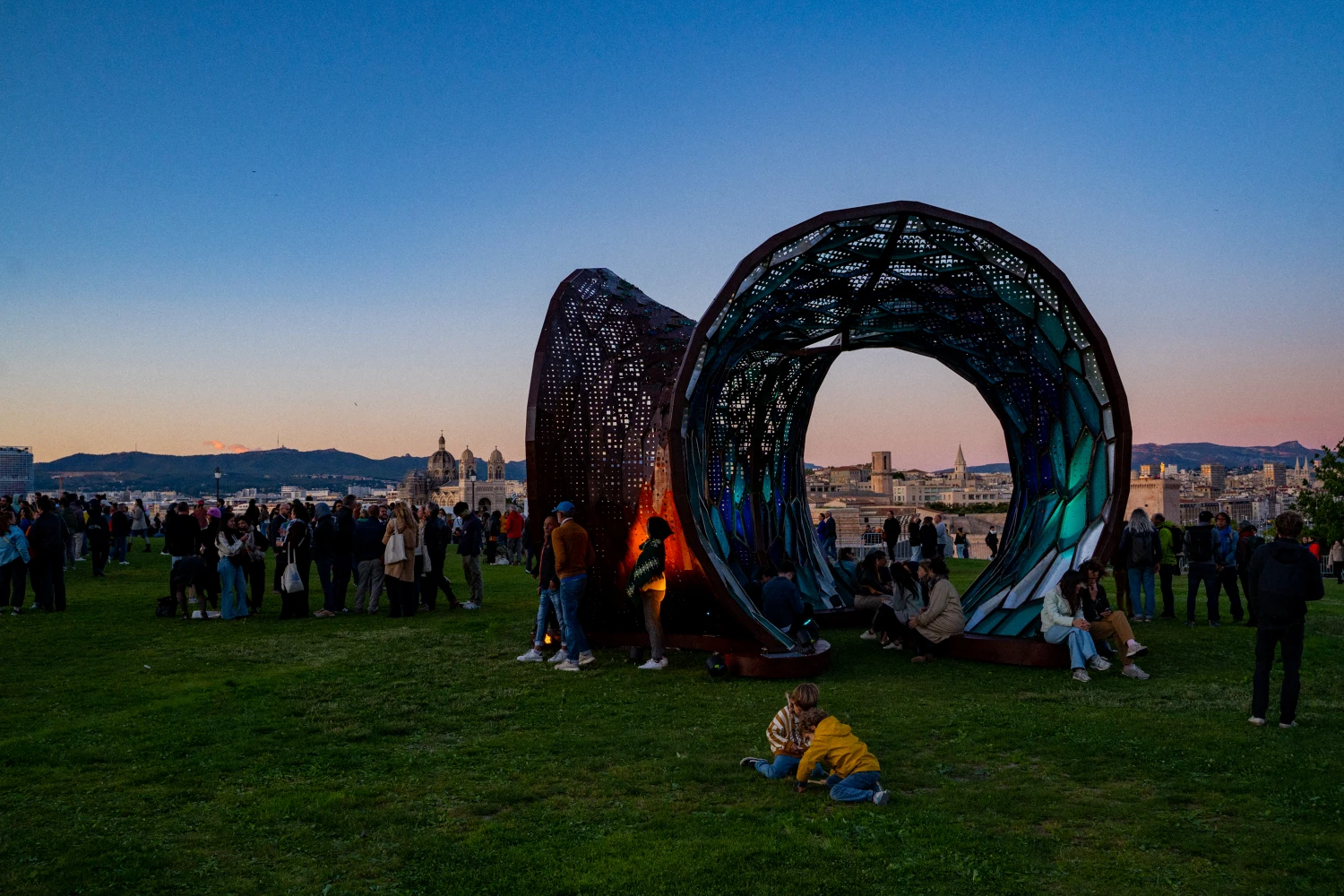
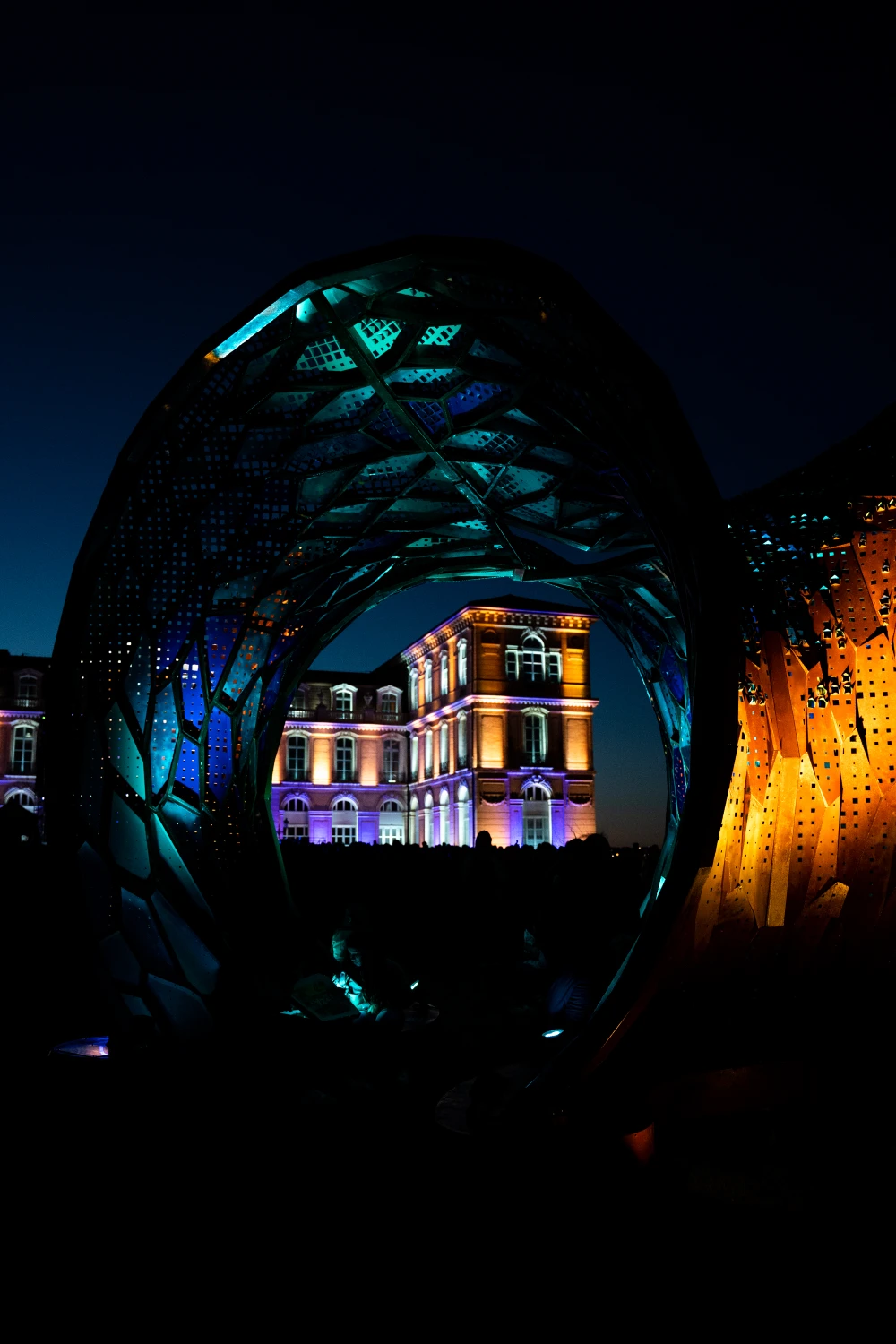
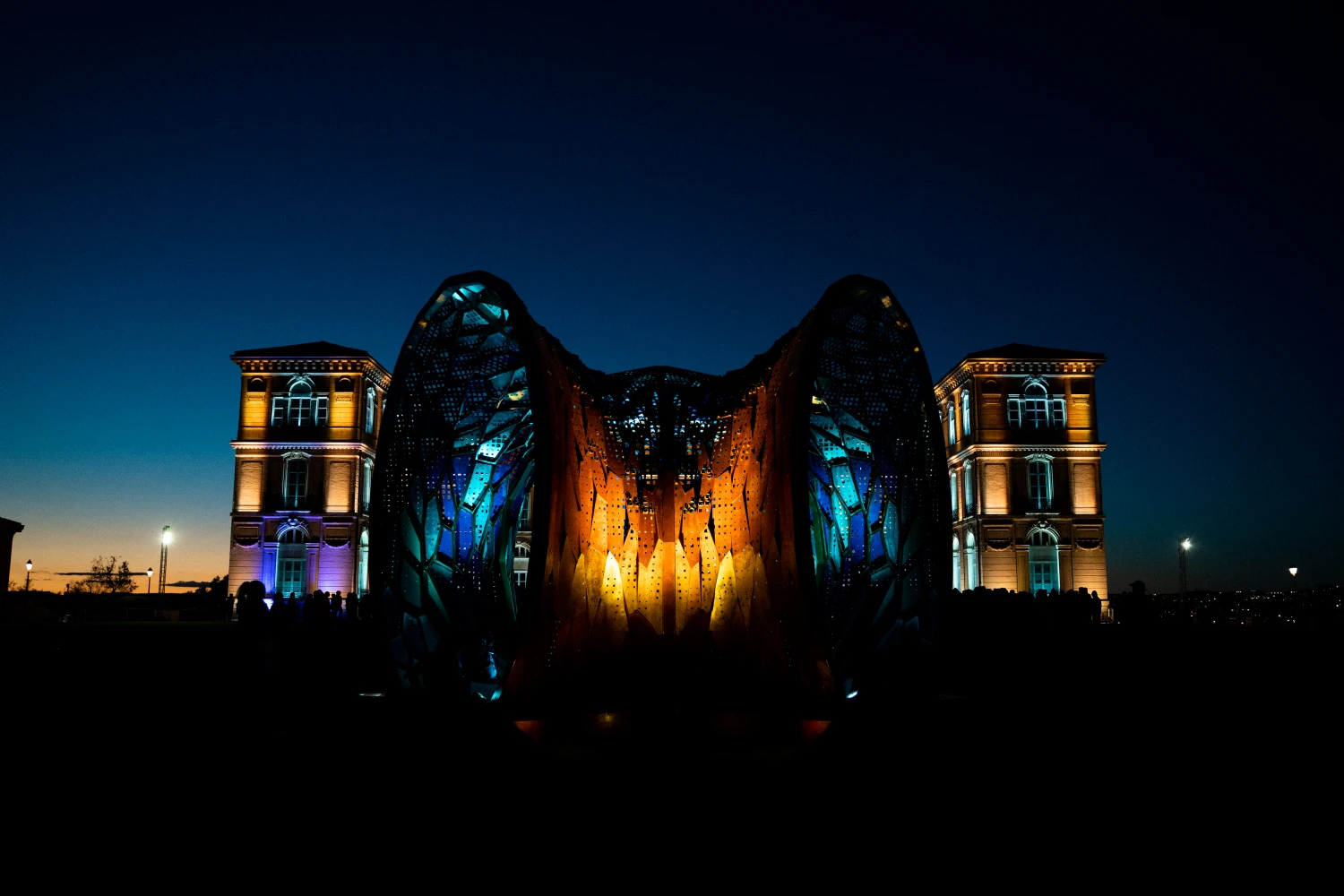


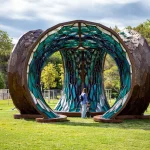
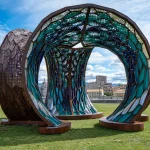
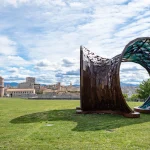
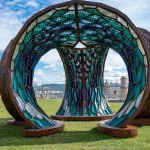
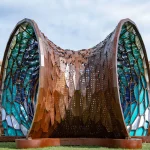
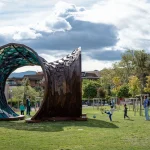
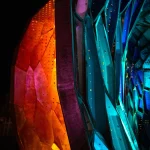
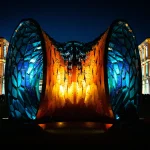
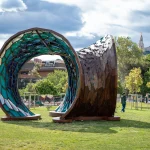
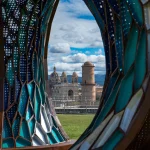
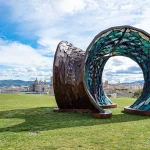
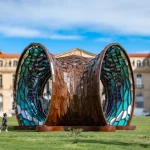
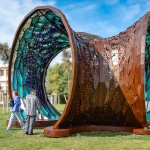
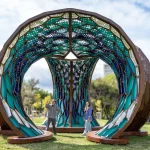
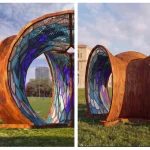
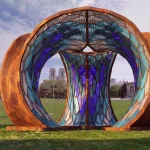
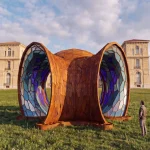
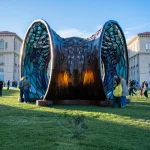
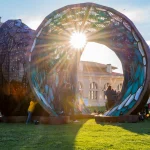
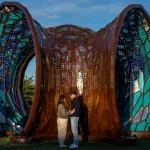
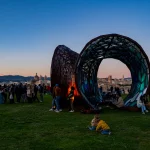
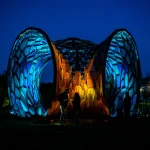
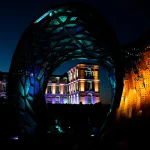
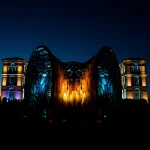
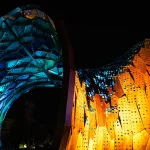
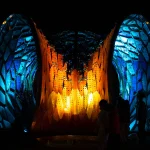
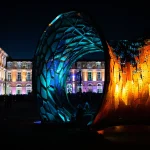
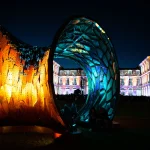
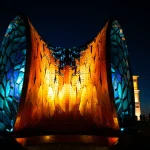
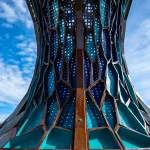
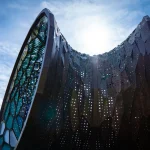
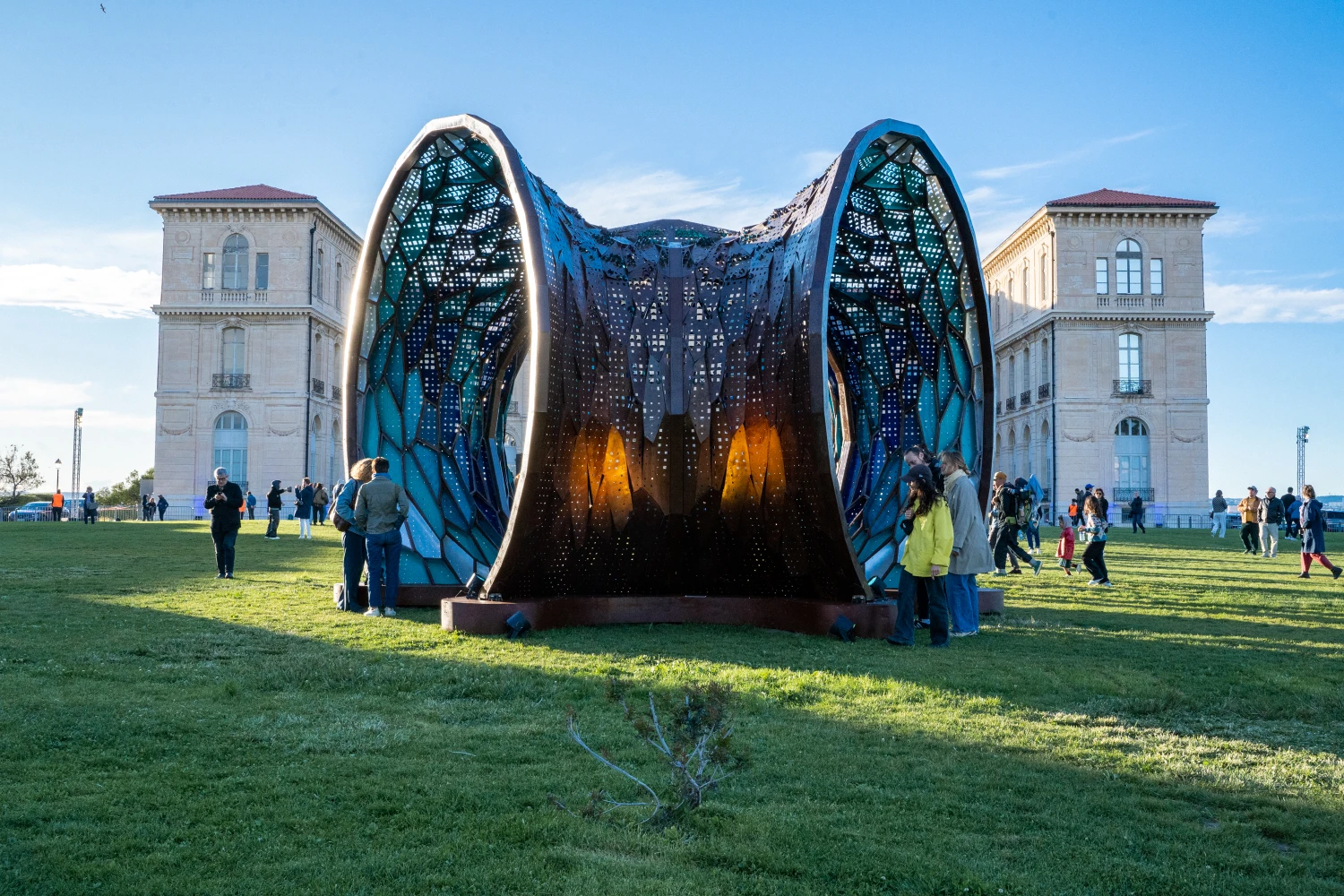
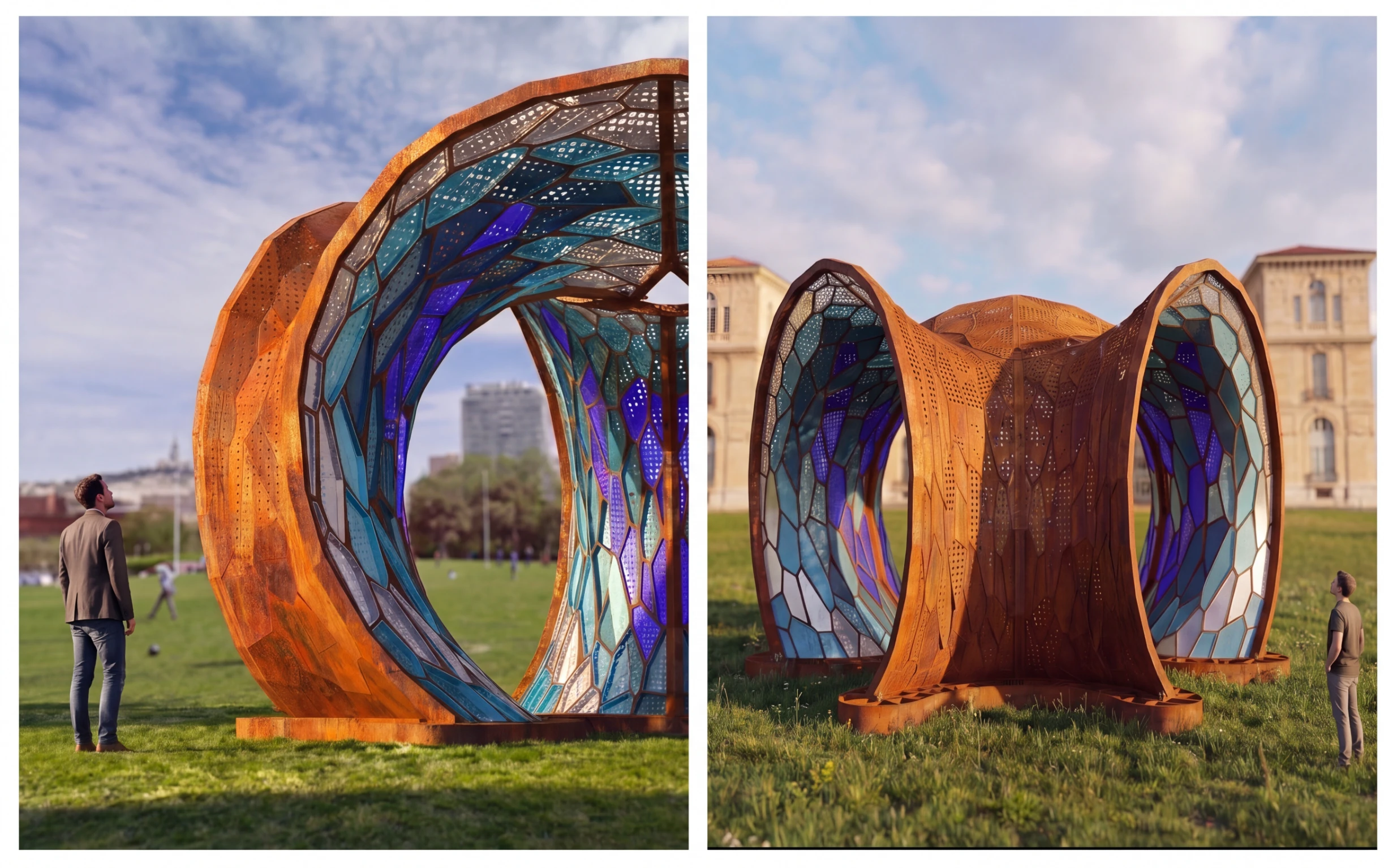
Set against the coastal edge of the Palais du Pharo in Marseille, Mar Nostro – Notre Mer – بحرنا emerges as both an architectural installation and a deeply human gesture. Created by UV Lab for the 2026 Mediterranean Season, the structure stands beside the Mediterranean Sea as a spatial tribute to the countless lives shaped by its waters, the women and men who crossed the sea in search of safety, belonging, and new beginnings, and those who never completed the journey.
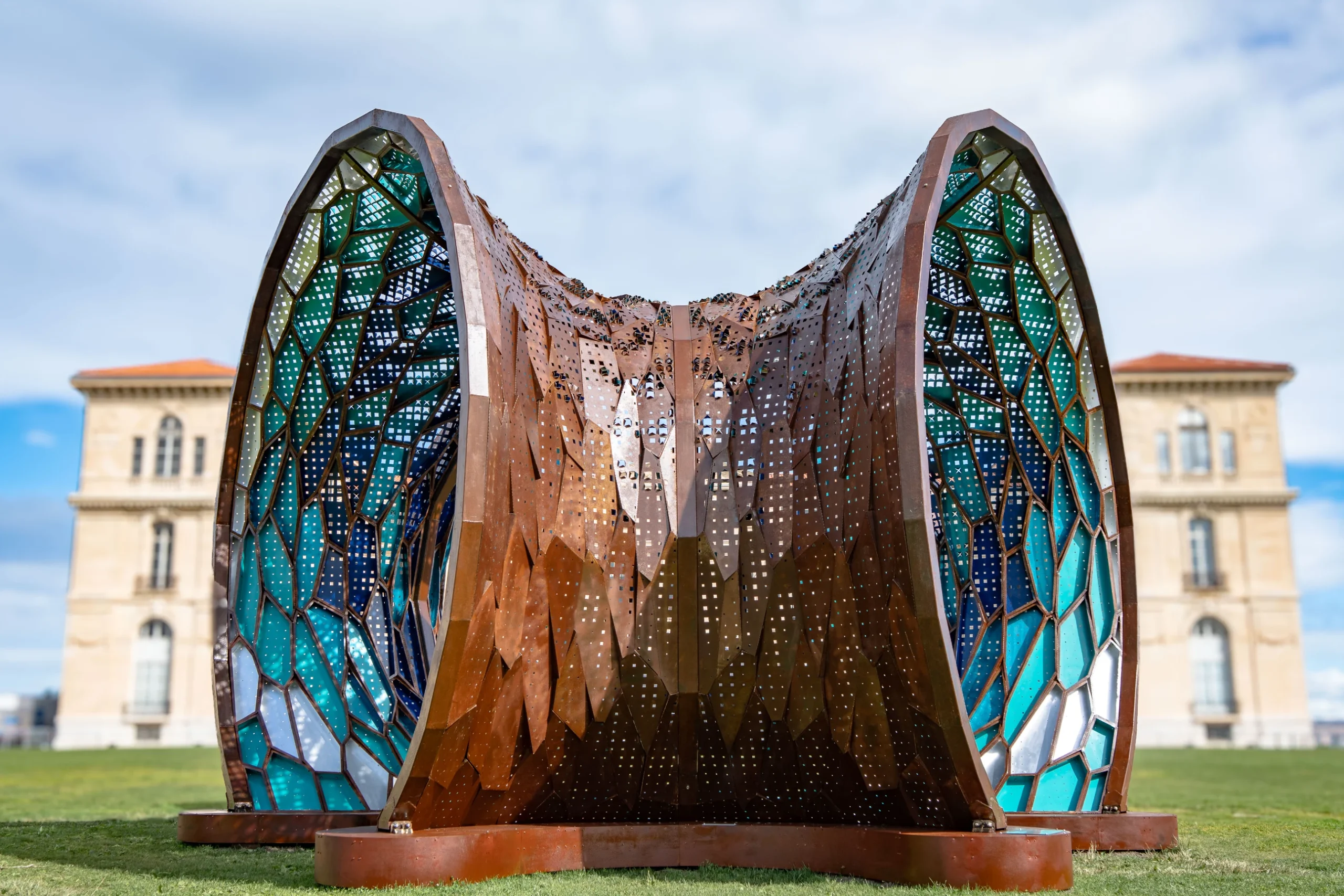
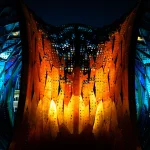
Mar Nostro unfolds gradually through movement and perception. There is no dominant façade or prescribed point of entry. Instead, the installation opens in multiple directions, allowing visitors to enter intuitively, guided more by sensation than orientation. Beneath its folded metallic surfaces, light and air shift continuously through narrow openings, creating an immersive environment where architecture feels alive and responsive.
A Structure Built Between Digital Precision and Human Craft
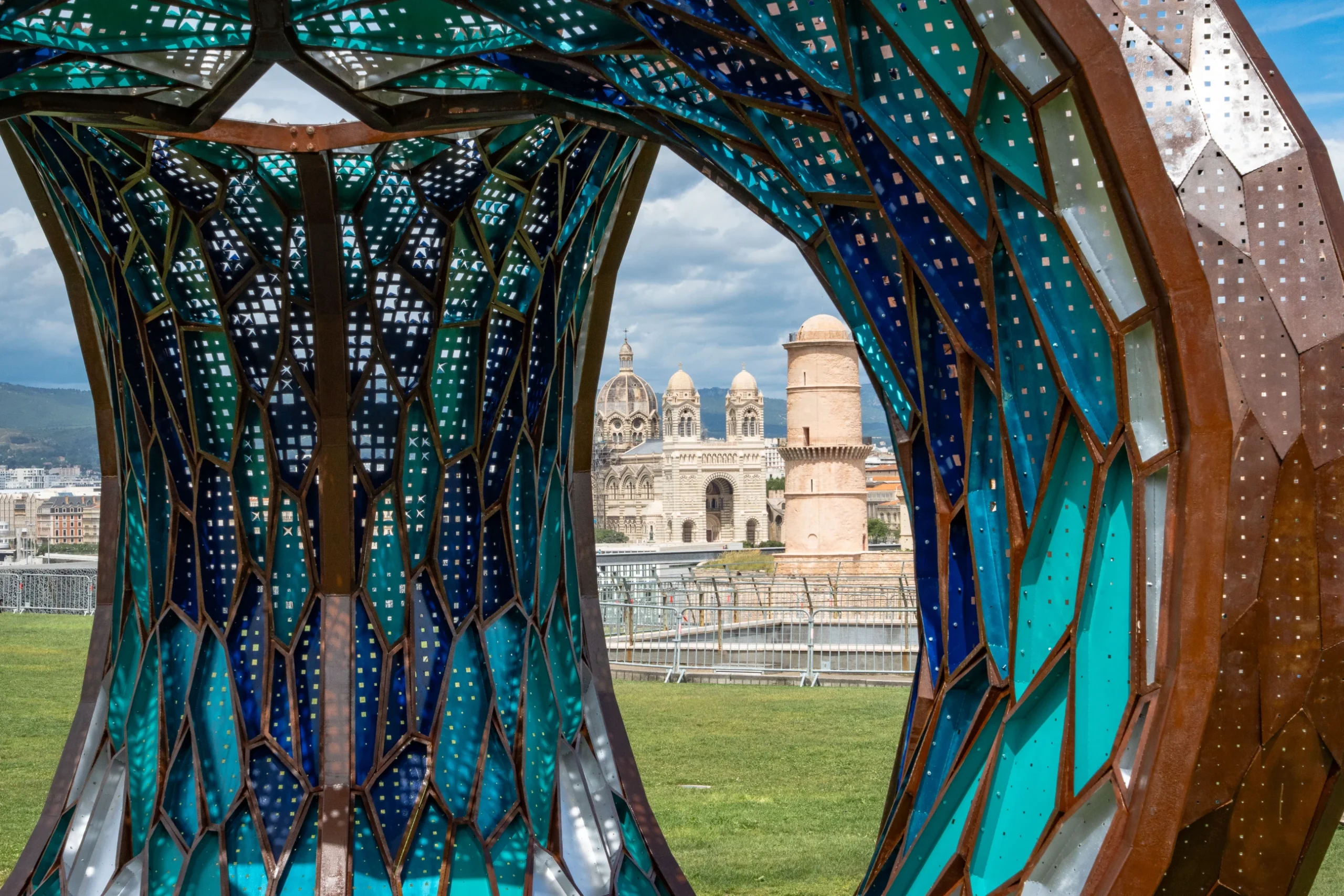
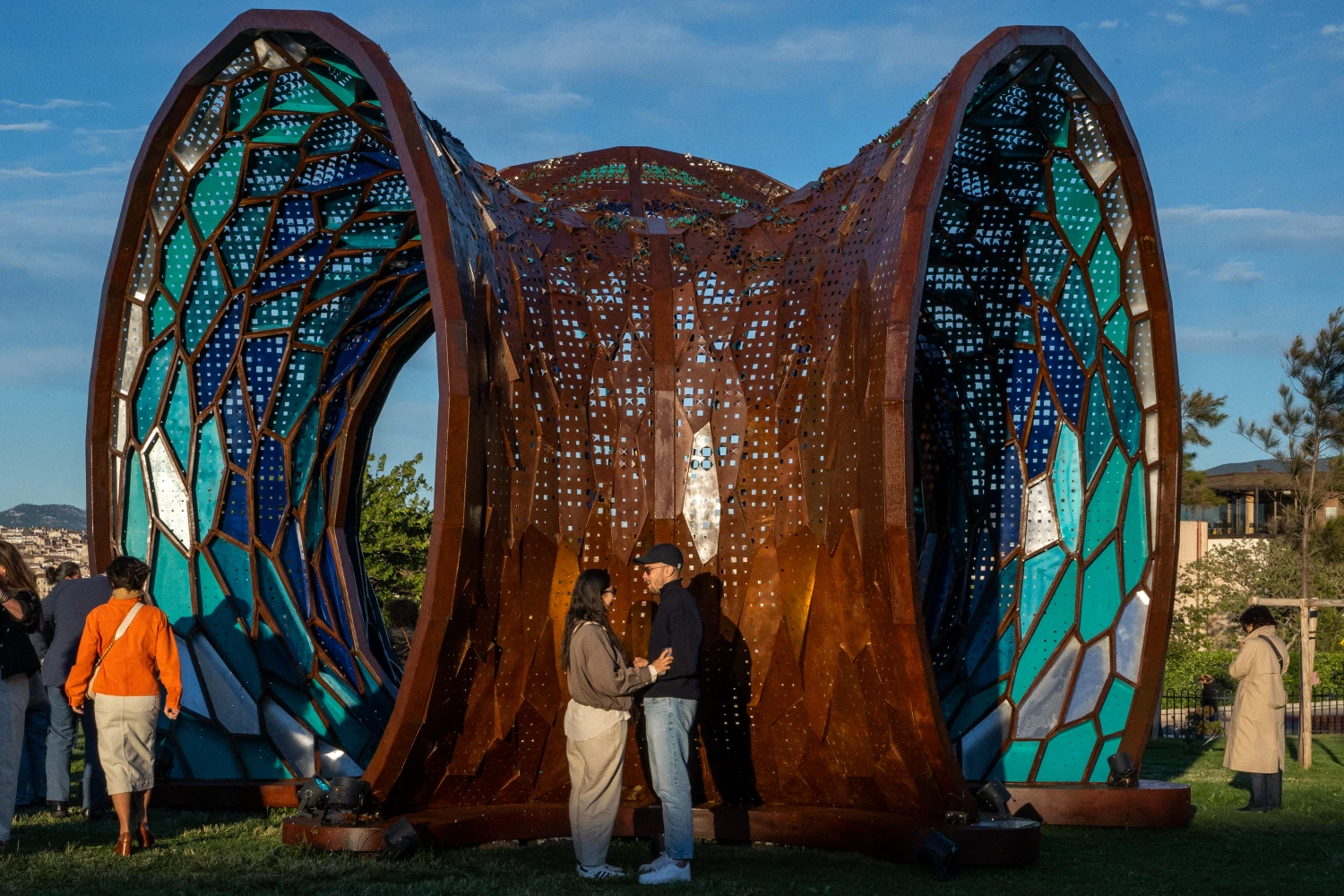
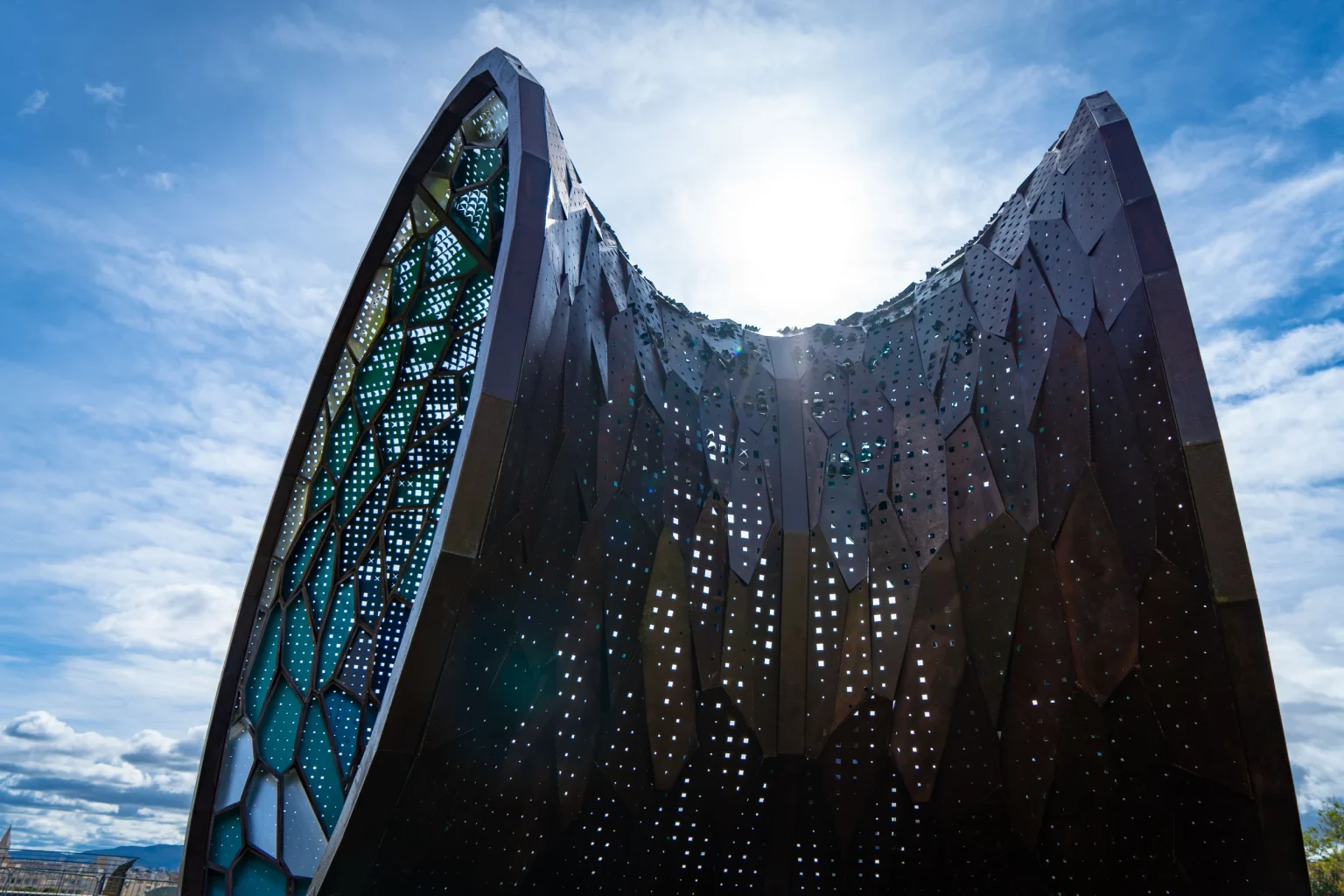
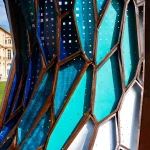
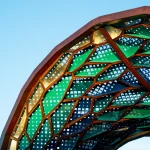
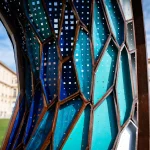
The installation is composed of 486 hand-folded metal panels, each assembled on-site through entirely manual construction techniques. While every piece originated through parametric digital design and was fabricated with millimeter precision using advanced technologies, the final construction intentionally relied on traditional hand labor.
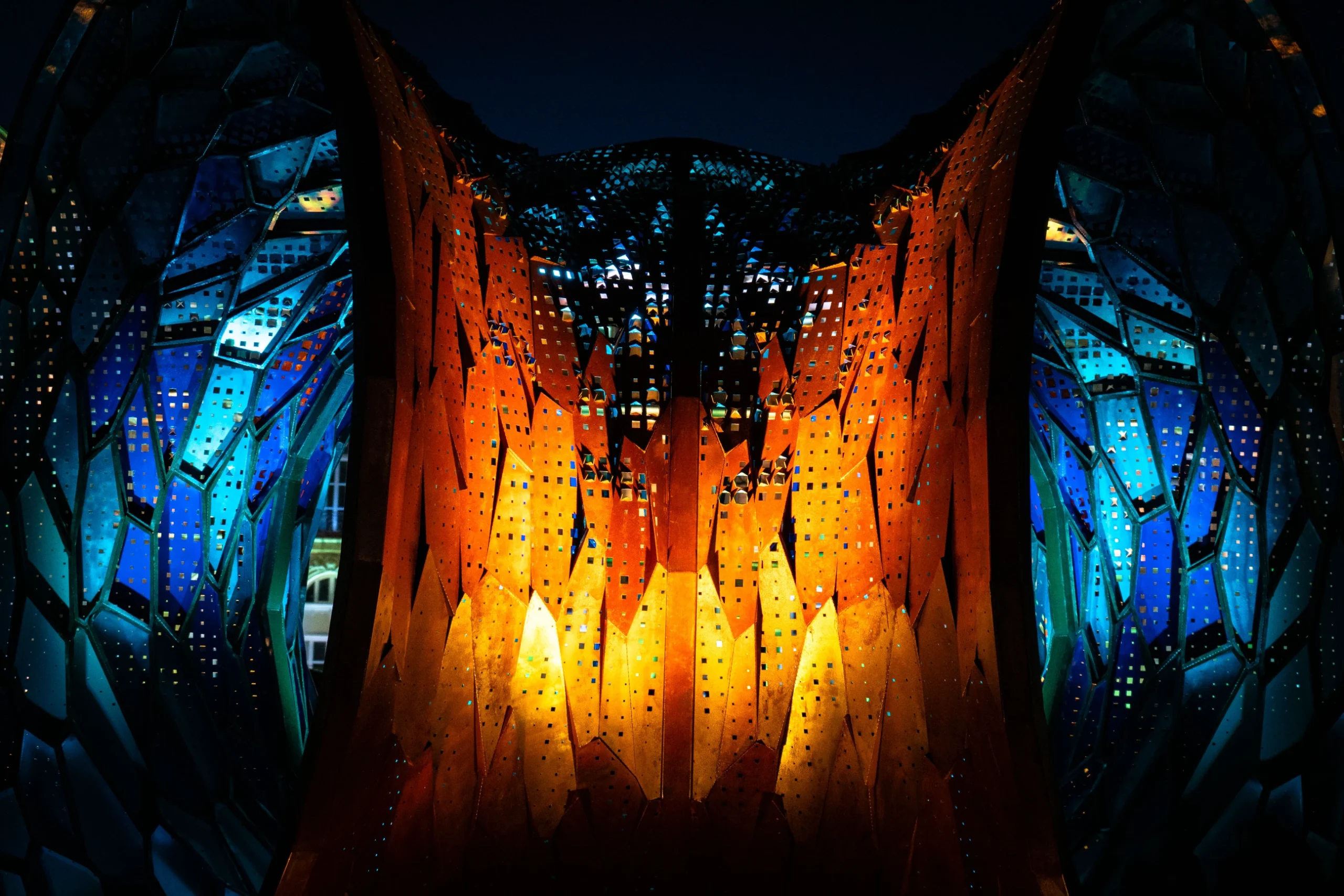
This contrast between computational exactness and human craftsmanship forms one of the project’s central ideas. The designers chose a slower and more tactile process out of sensitivity toward the historic site, believing that machines could not replace the careful physical presence of people working together in such a context.
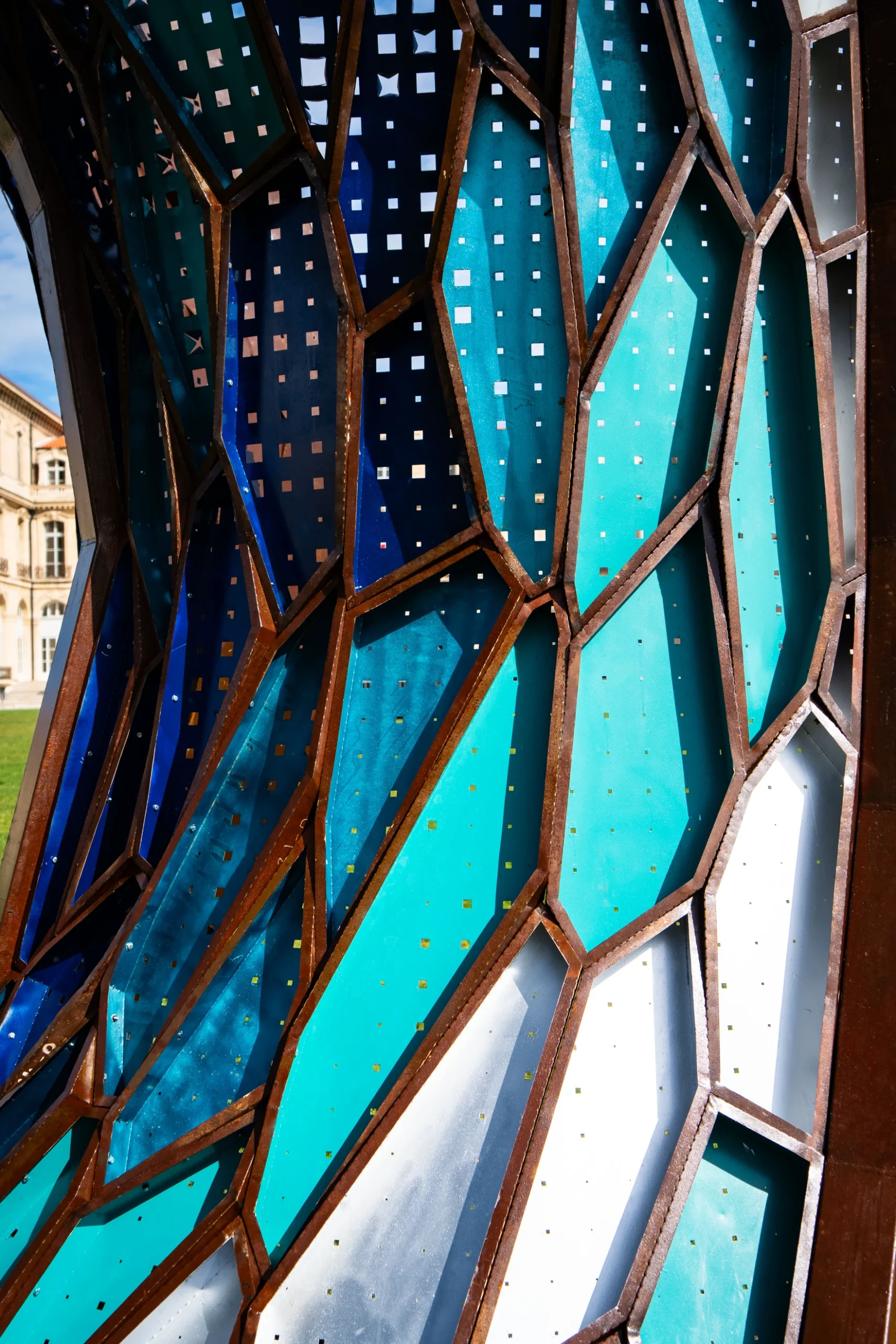
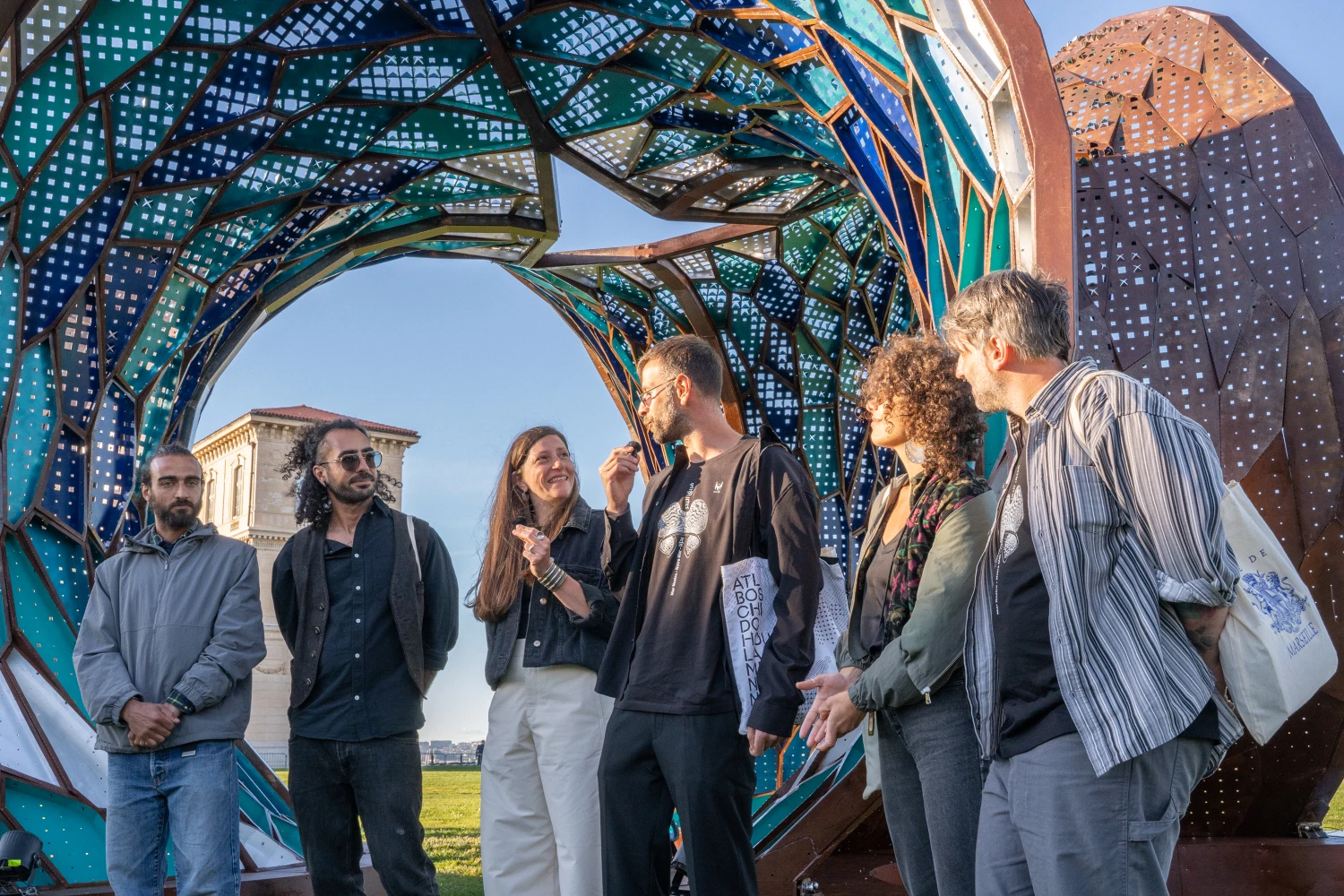
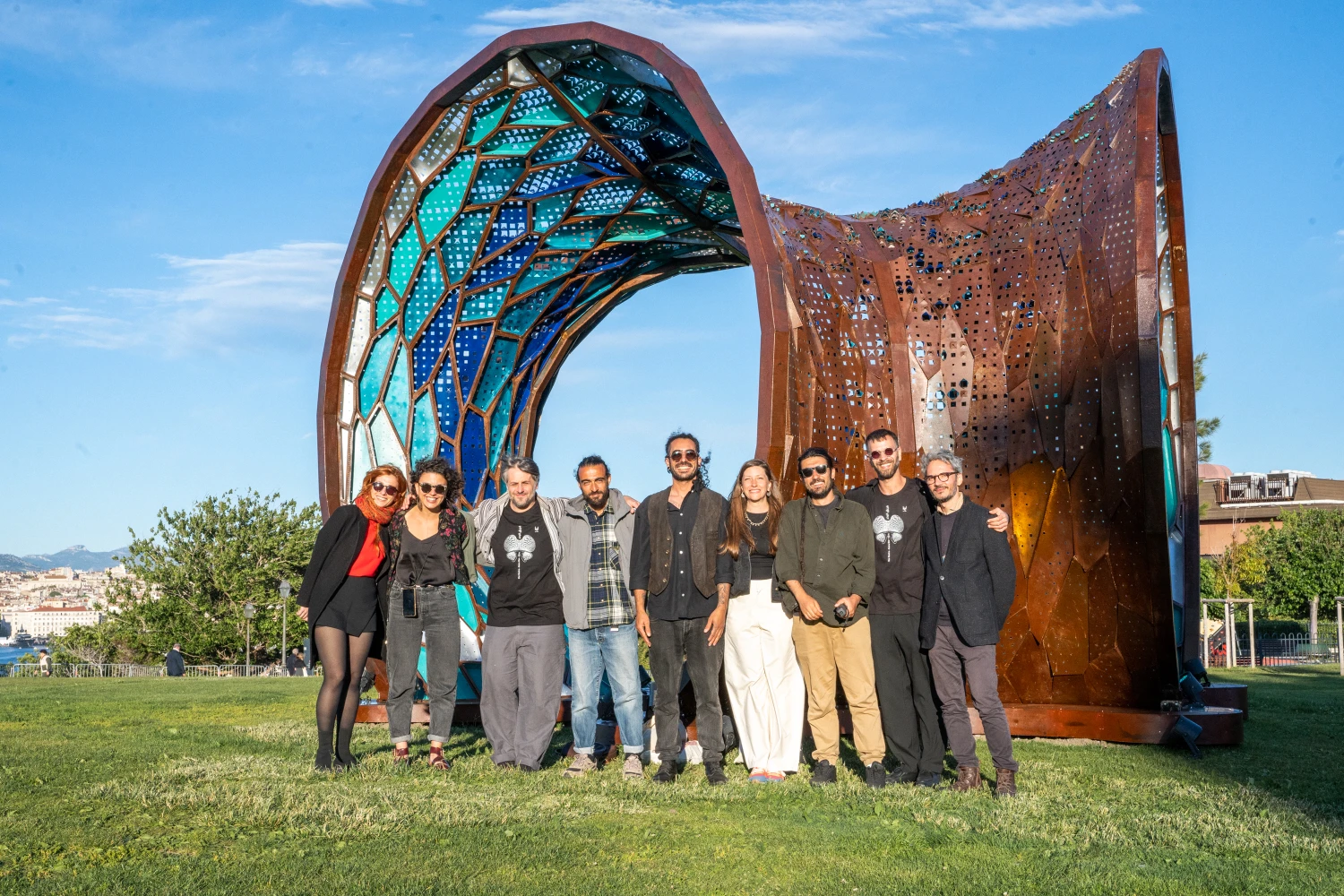
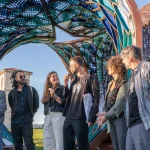
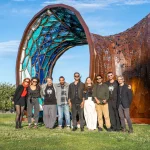
The making of Mar Nostro became a collective process in itself. Constructed alongside the Cascadeurs and Cascadeuses of the Cité des Arts de la Rue training program, the installation evolved piece by piece through cutting, folding, lifting, and assembling. Over time, the structure accumulated material form, and also the traces of the people who built it together beneath the open Marseille sky.
Reclaiming the Meaning of “Our Sea”
The title Mar Nostro deliberately echoes the historical phrase Mare Nostrum, the imperial Roman expression meaning “our sea,” once used to claim ownership over the Mediterranean. Here, however, that language of possession is transformed into a question.
Who is included within this “we” today?
Who belongs to the Mediterranean, and who remains excluded from its horizons?
The project also references the Mediterranean Lingua Franca—the hybrid language once spoken across port cities, where Arabic, Italian, Spanish, French, and countless dialects merged through trade, migration, and everyday survival. It was a language formed not by purity or borders, but by movement and encounter.
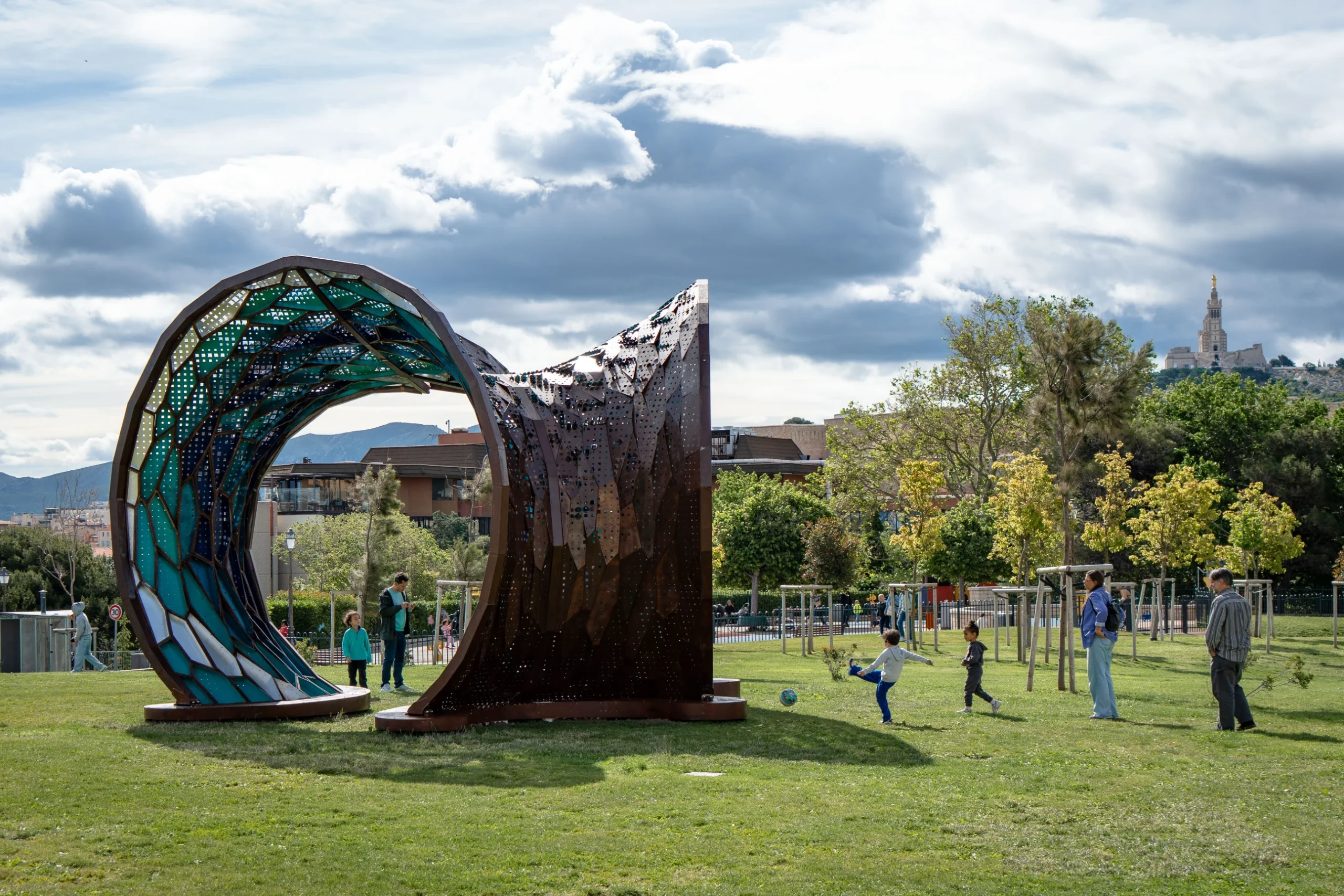
In that spirit, Mar Nostro becomes less a monument and more a shared conversation about coexistence, displacement, and collective memory.
Geometry, Light, and the Language of Passage
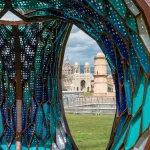
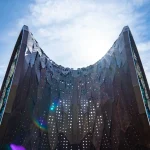
From afar, the structure can resemble a ship hull, a shell, a ruin, or a temporary refuge. As visitors move closer, its geometric logic begins to unfold through precisely folded surfaces that redirect sunlight and frame fragments of Marseille beyond.
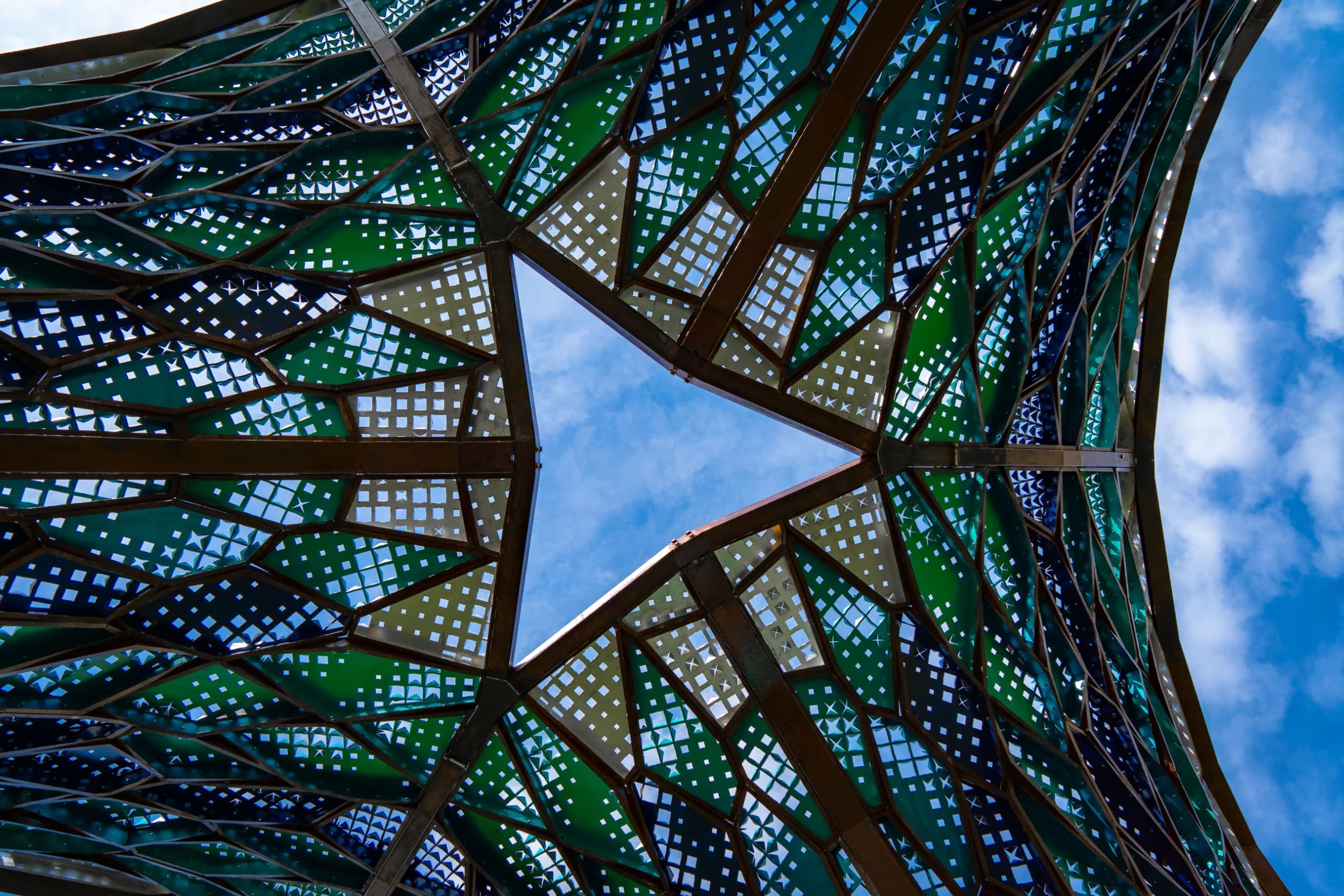
The installation does not function as an enclosed object. Instead, it gathers people and perspectives together.
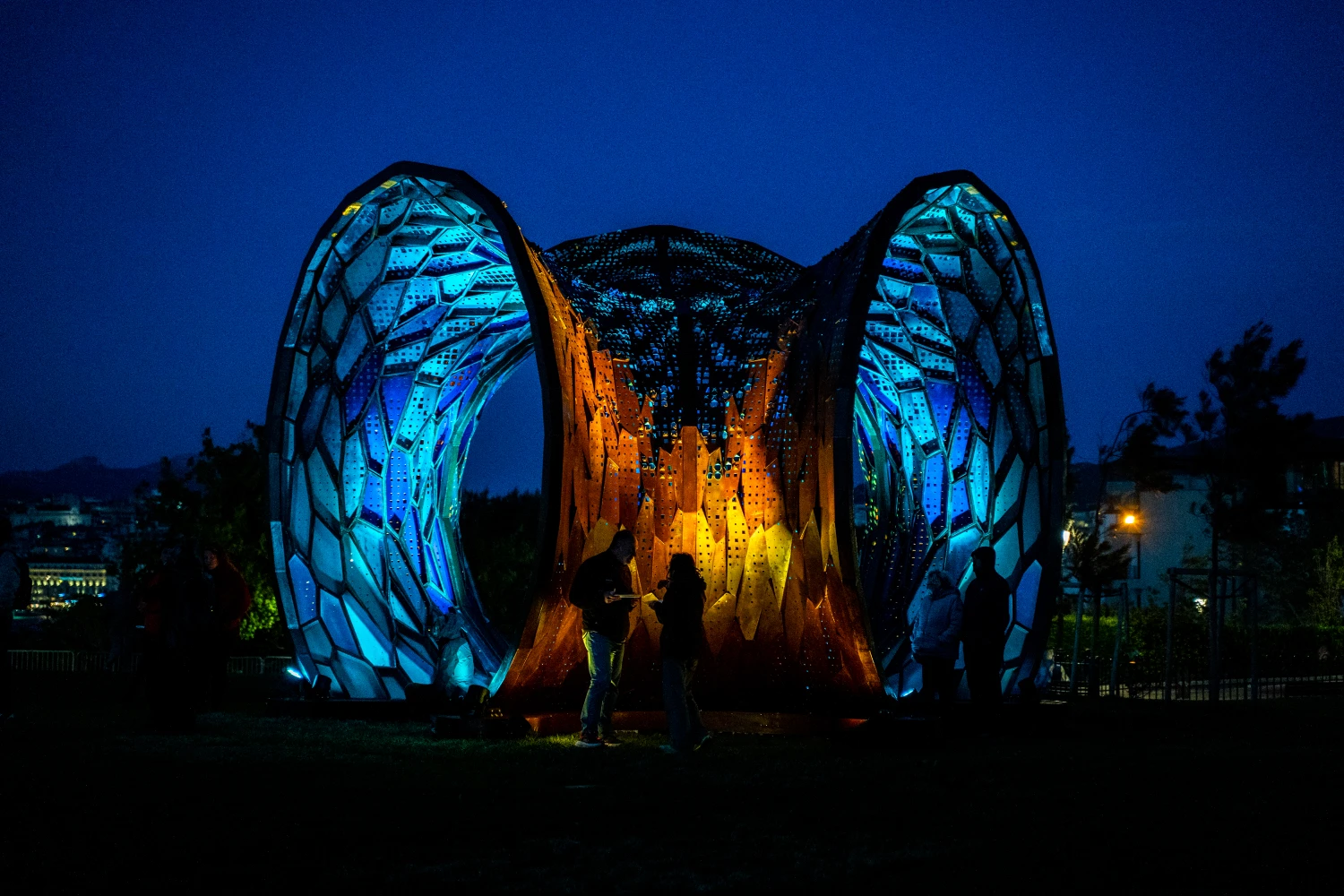
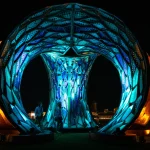
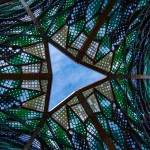
Inside, shifting light transforms the space throughout the day, producing a constellation-like atmosphere that recalls the stars once used by sailors, navigators, travelers, and exiles crossing open waters without maps. The sky itself becomes part of the architectural experience.
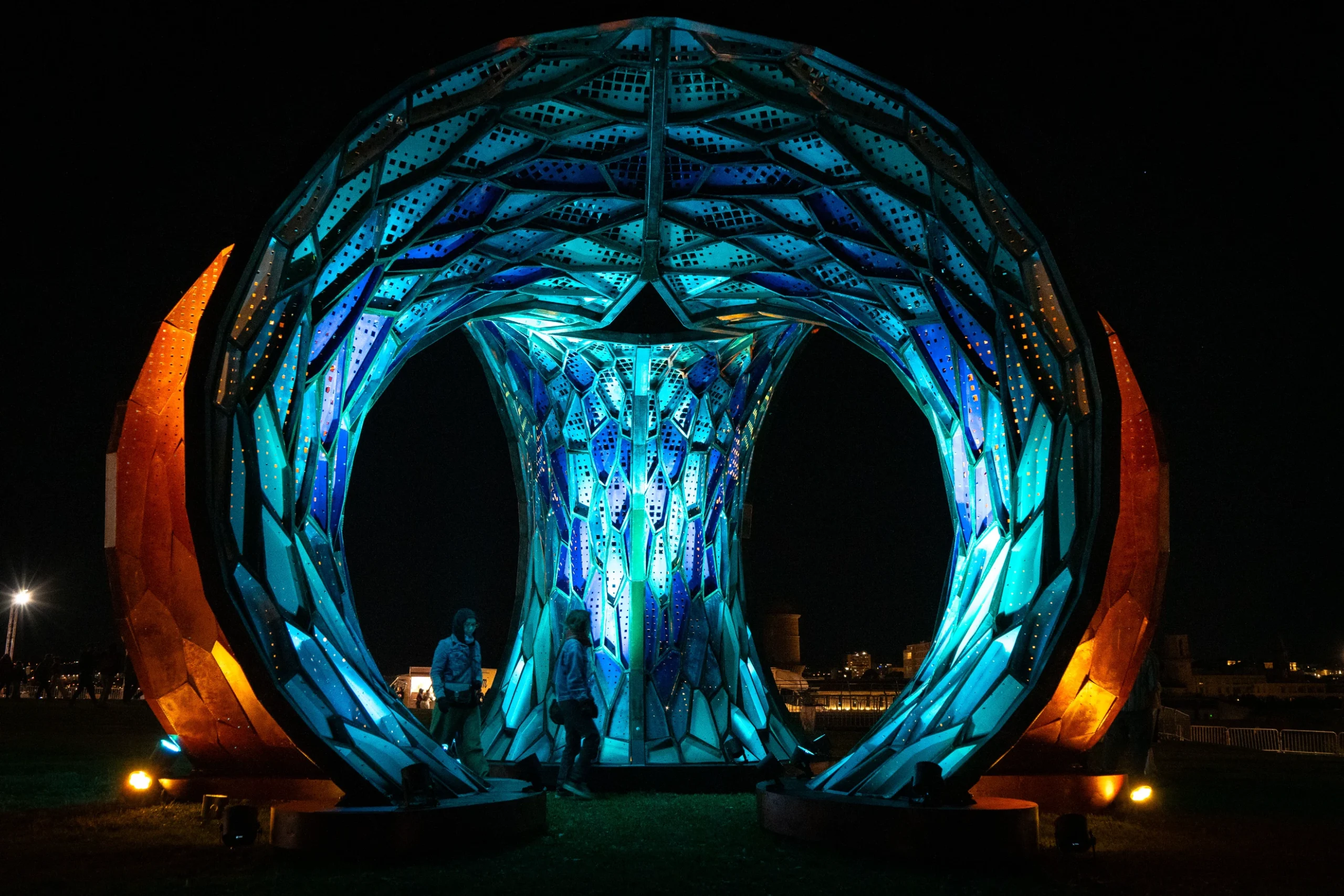
Importantly, the installation rejects hierarchy in its spatial organization. There is no central axis, no dominant direction, and no symbolic north or south. Three openings extend outward toward the interconnected realities of Africa, Asia, and Europe as deeply entangled regions shaped for centuries through migration, trade, conflict, and cultural exchange across the Mediterranean.
The Mediterranean as a Living Human Archive
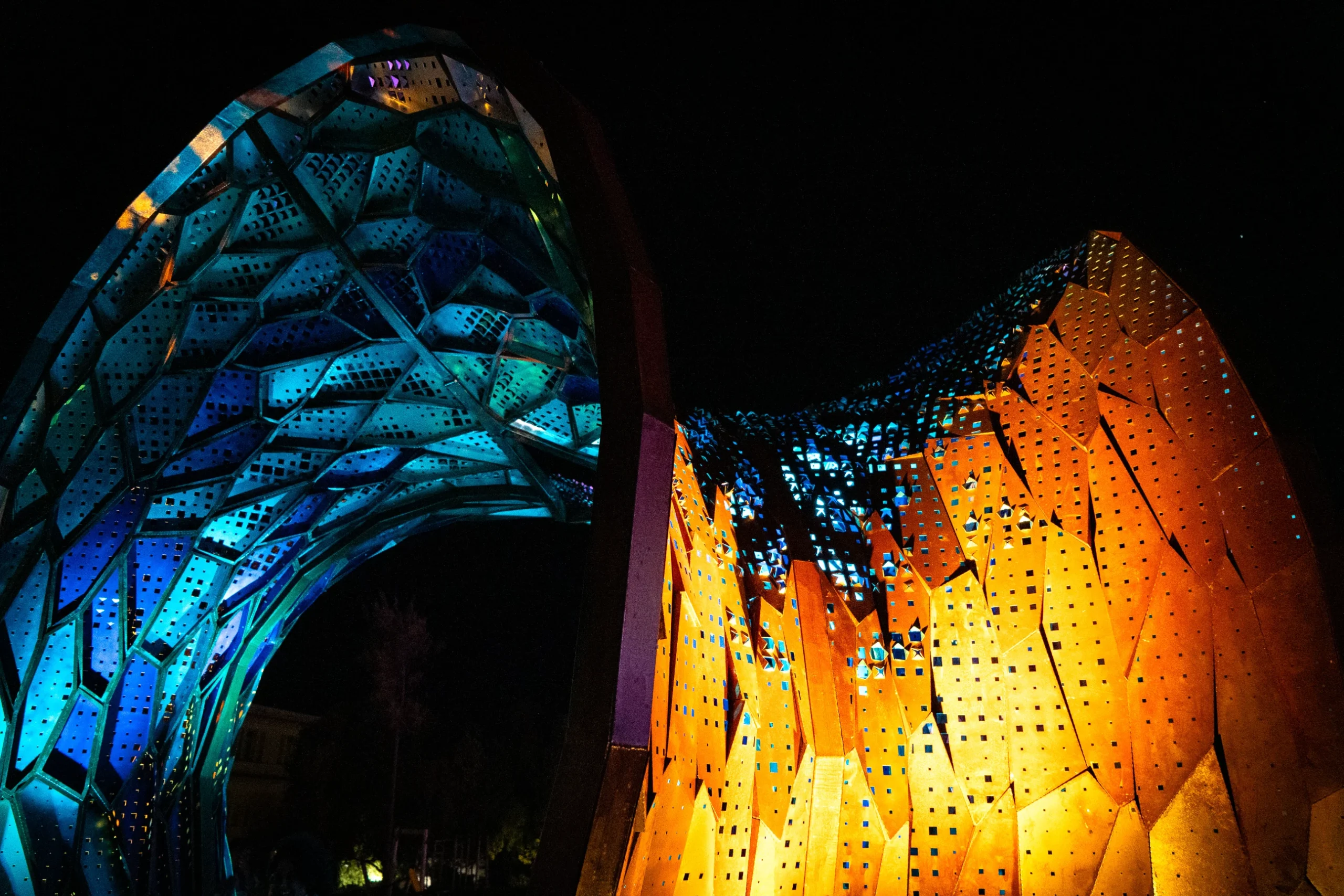
For UV Lab, the Mediterranean is far more than geography. It is a living archive formed through centuries of movement, exile, commerce, memory, and survival. Every crossing has left behind stories, languages, griefs, and hopes that continue to shape the cultures along its shores.
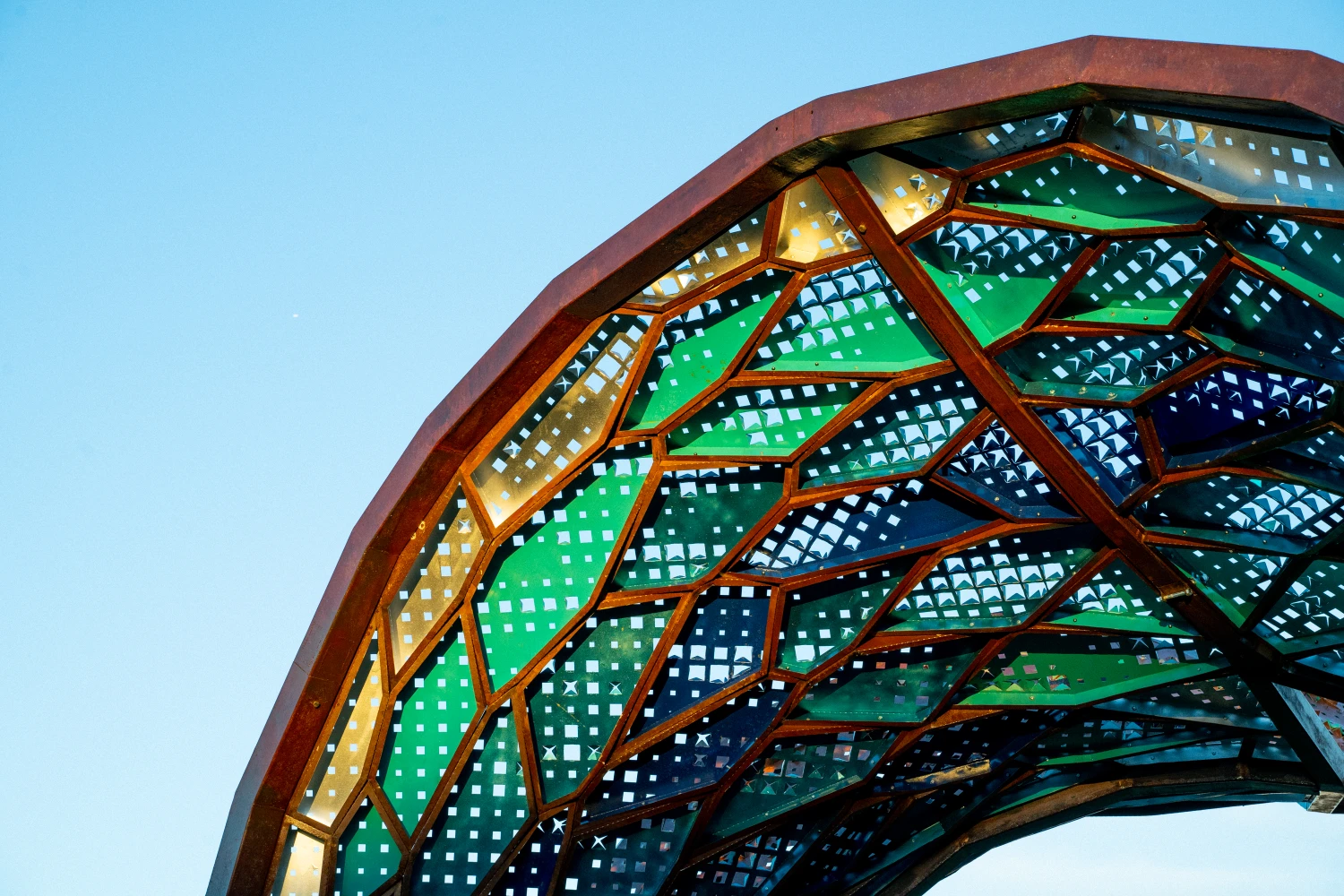
The installation mirrors this constant transformation. As visitors move through the structure, light and space continuously shift around them, much like the Mediterranean itself has always been reshaped by the movement of people across its waters.
Throughout history, empires attempted to define and control the sea through borders, ownership, and political power. Yet the Mediterranean has persistently exceeded those claims, remaining a space of encounter where civilizations, languages, and cultures continue to overlap.
Marseille embodies this history perhaps more visibly than most cities. Built through generations of arrivals from multiple shores, the city carries layers of languages, music, recipes, traditions, memories, and migrations that have gradually become inseparable from its identity. In this context, Mar Nostro stands as an installation and as a reflection of Marseille itself, a city continuously shaped by exchange and transformation.
Mar Nostro Project Details
Project: Mar Nostro – Notre Mer – بحرنا
Location: Palais du Pharo, Marseille, France
Year: 2026
Type: Site-Specific Installation
Event: Mediterranean Season 2026
Design and Construction: UV Lab (Michael DiCarlo, Khaled Alwarea, Mohannad Shnsho, Layla Abdelkareem, Samra Bulbol, Nour Alkhatib)
Study, Technical Engineering and Structural Calculations: Quentin Alart, Laurent Gauthier
Co-Productions: City of Marseille, Institut Français, Lieux Publics National Centre for Street Arts, Public Space, and International Production and Distribution
Participation: Cascadeurs et Cascadeuses Training Program, Cité des Arts de la Rue