




At Google I/O 2026, Google and Samsung formally revealed their first generation of “Intelligent Eyewear,” a new wearable category positioned between an AI assistant, a camera device, and a lightweight XR interface. The companies are pushing a quieter proposition: everyday eyewear that embeds contextual computing into a familiar object.
The glasses run on Android XR, the spatial computing platform jointly developed by Google, Samsung, and Qualcomm. The first wave of products arriving later this year will primarily focus on audio-first interaction. Users interact through voice prompts powered by Gemini AI, touch gestures on the frame, embedded cameras, microphones, and discreet speakers positioned near the ears.
Redesigning XR Through Wearable Eyewear
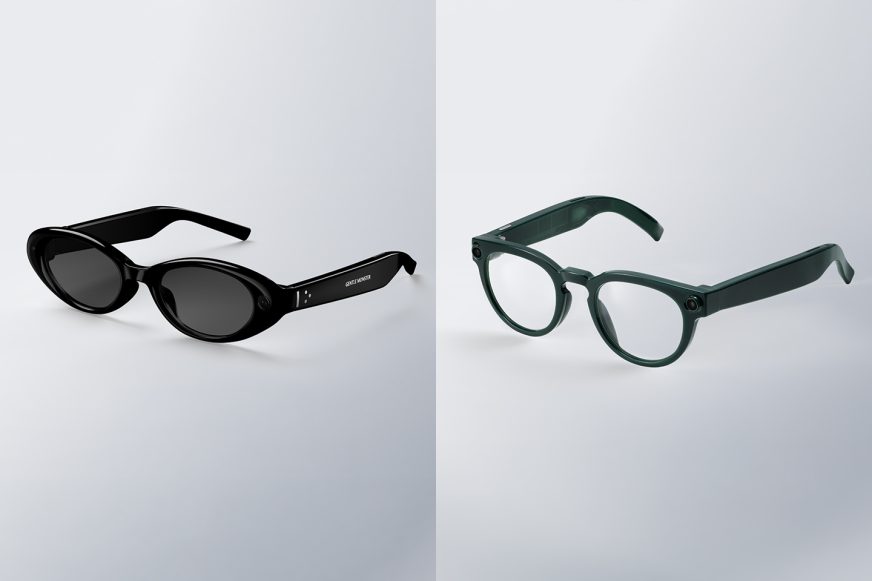
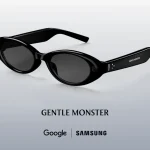
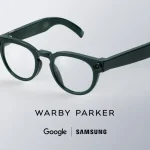
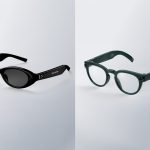
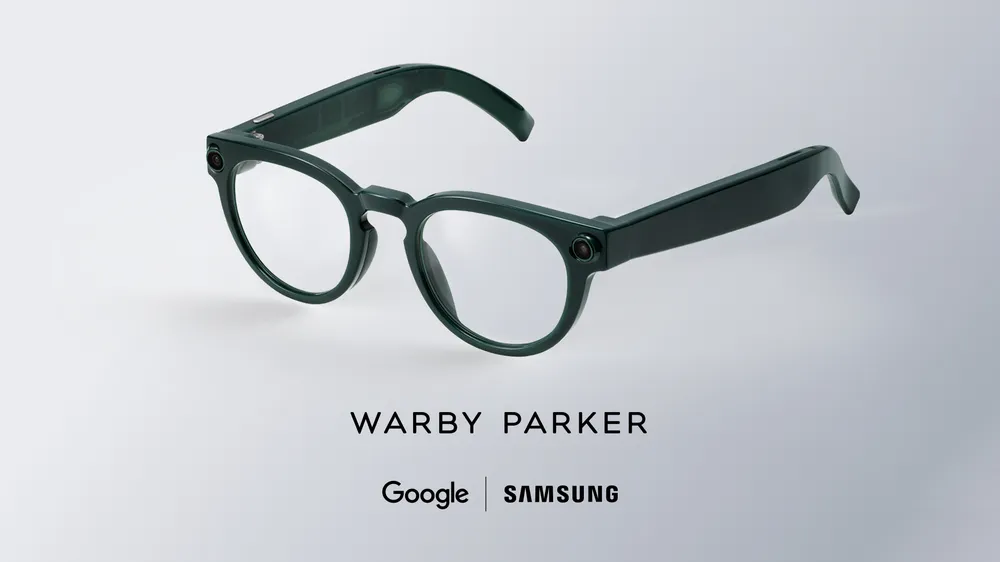
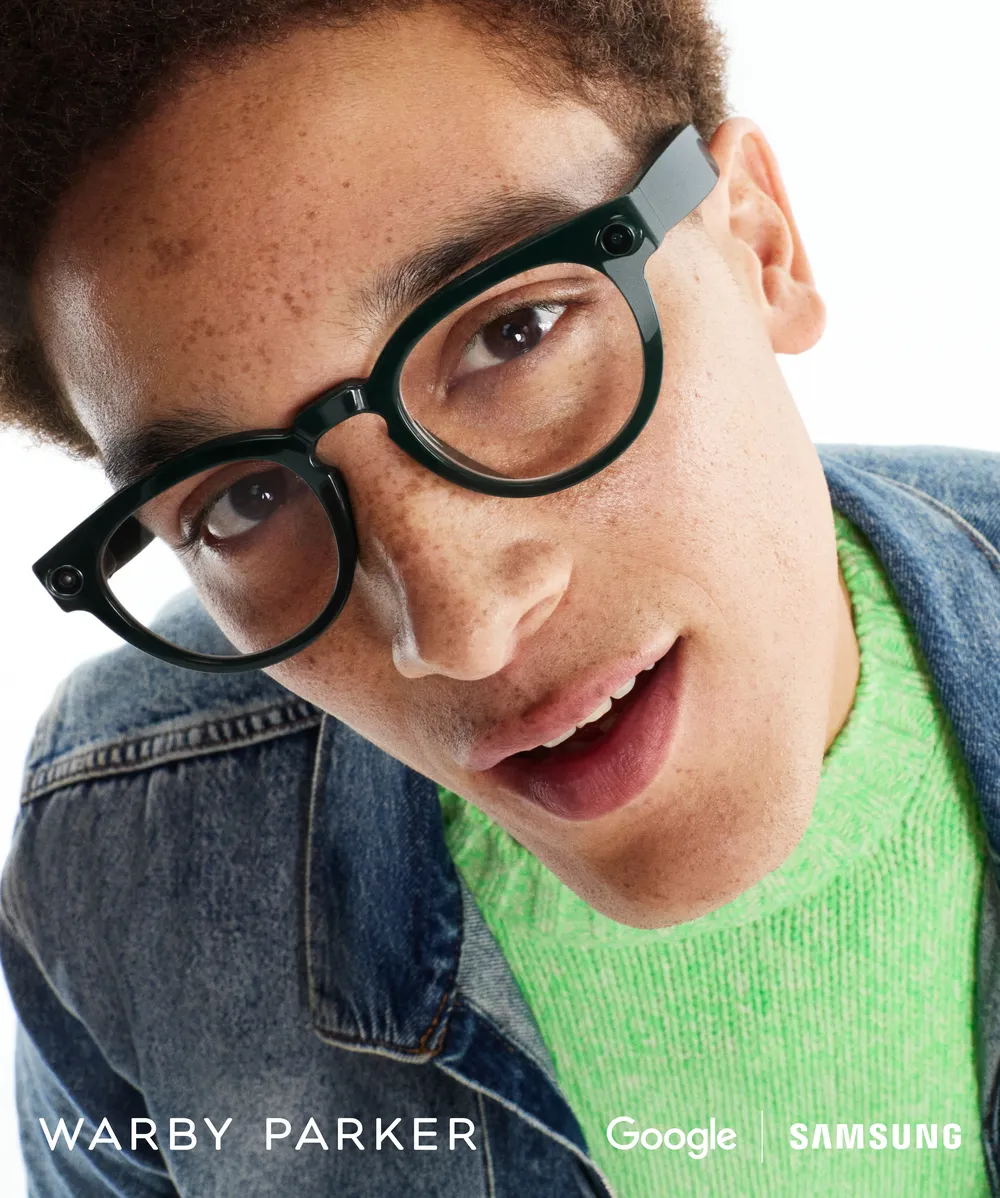
The design direction signals a clear departure from the bulky visual language associated with XR hardware over the last decade. Google and Samsung are attempting to incorporate the technology into conventional eyewear aesthetics. Fashion partnerships with Gentle Monster and Warby Parker are central to that strategy.
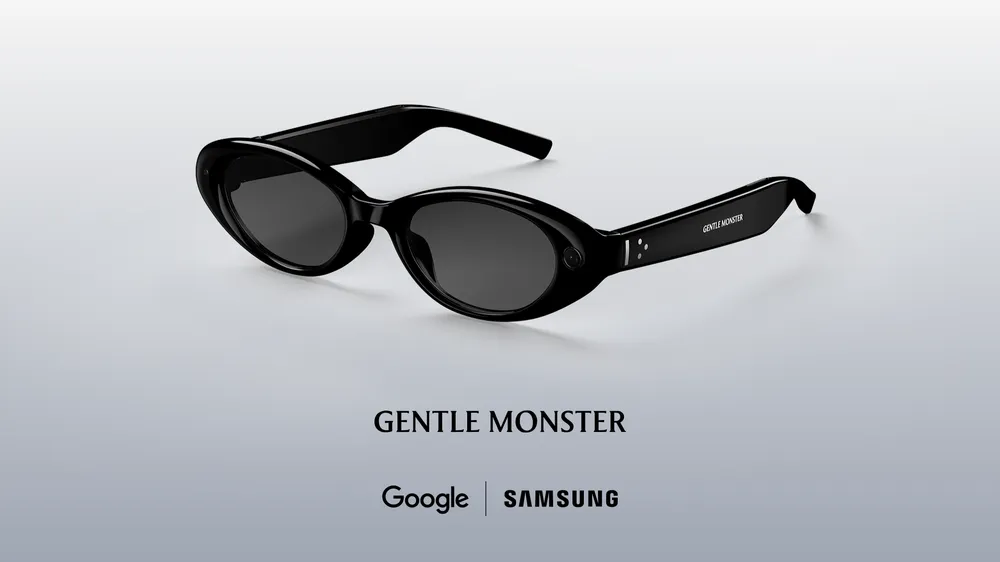
Gentle Monster’s frames lean toward sculptural and fashion-forward profiles, while Warby Parker’s versions appear deliberately understated. The split is intentional. Google is no longer treating smart glasses as a single industrial design problem; it is treating them as a lifestyle category with multiple identities.
Gemini Becomes the Interface
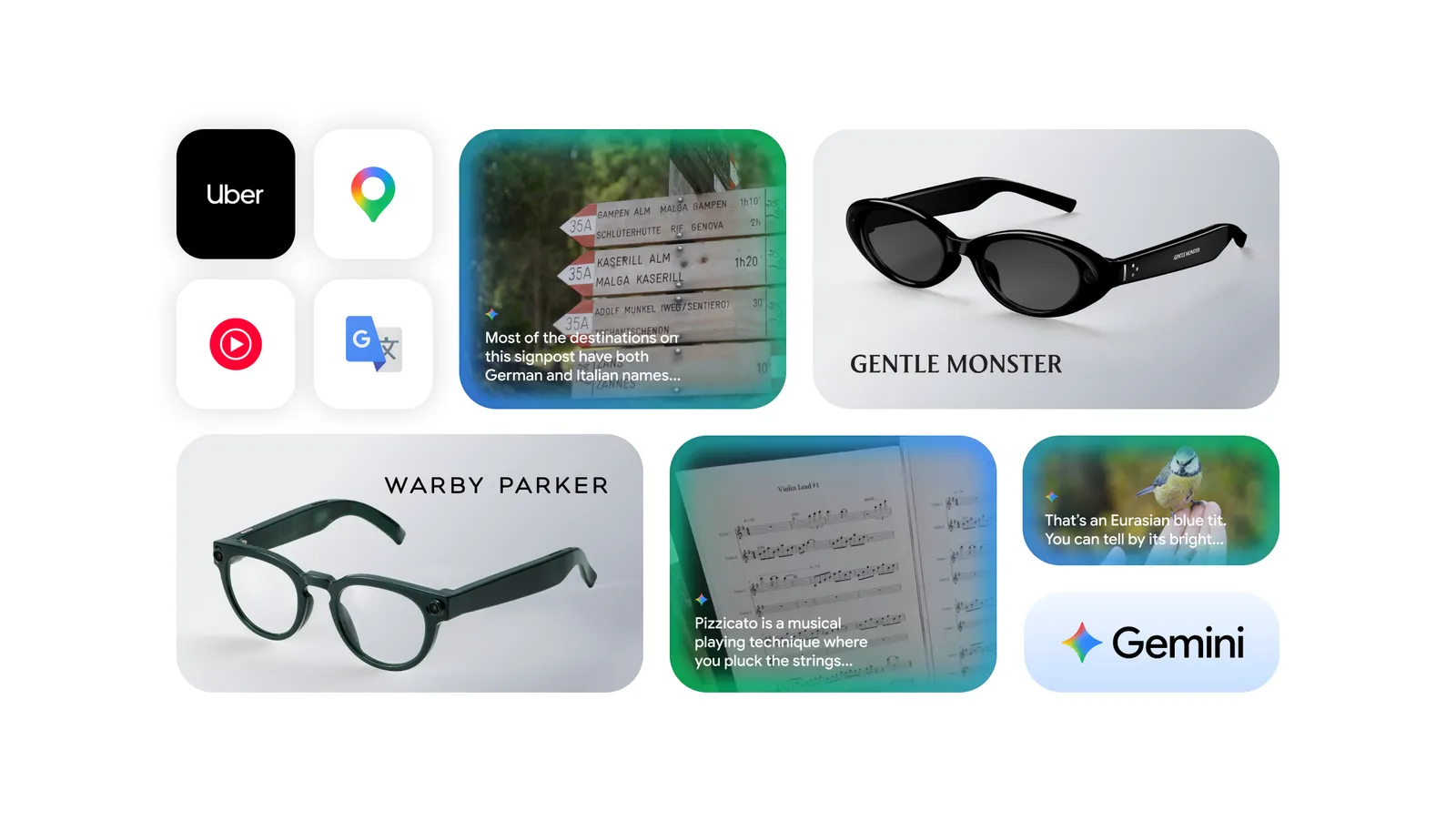
Gemini functions as the operational core of the eyewear, effectively replacing the need for a screen-first interface in many interactions. Users can ask for navigation, send messages, create reminders, capture photos, or receive contextual information without pulling out a smartphone.
Google demonstrated real-time translation, spoken navigation guidance, appointment scheduling, and contextual AI assistance during its presentations. The interaction model resembles ambient computing more than traditional wearable UI design. The glasses aim to remain passive until activated through voice or gesture.
This approach also reflects a broader transition in consumer electronics design. AI is increasingly becoming the interface layer itself. In the case of Intelligent Eyewear, the product experience depends less on graphical interaction and more on whether Gemini can understand physical context accurately and respond fast enough to feel natural.
Glasses Designed for Everyday Use
Although Google and Samsung avoided releasing full technical specifications, multiple reports point toward lightweight construction, onboard cameras, hidden speakers, touch-sensitive controls, and smartphone-linked connectivity. Several early leaks and previews also suggest the glasses may weigh close to standard prescription eyewear, a critical factor for long-duration use.
Importantly, the first generation appears to avoid integrated AR displays in most models. That decision reduces visual complexity, battery strain, heat generation, and frame thickness. It also allows the companies to position the product closer to wearable AI companions.
Google, however, confirmed that display-equipped versions are also in development under the Android XR ecosystem. The company described two parallel categories: audio glasses and display glasses. Audio models launch first, while more visually immersive variants are expected later.
Competing in the Post-Smartphone Market
The timing of the launch is strategic. Meta’s Ray-Ban smart glasses demonstrated that consumers are more willing to adopt wearable AI when it resembles normal eyewear instead of futuristic headgear. Google and Samsung are clearly entering that same territory, but with deeper Android integration and Gemini at the center of the experience.
Intelligent Eyewear is being introduced as an extension of the Android ecosystem — a device that distributes AI interaction across the body.
That subtle repositioning may ultimately define the category’s success. The product is less about augmented reality spectacle and more about reducing friction between the user, information, and environment.
Design Beyond the Device
The collaboration also reveals how product design is changing in the AI era. Hardware companies are no longer designing isolated objects; they are designing behavioral systems. The eyewear, Gemini AI, Android XR, voice interaction, contextual awareness, and fashion branding all function as a single integrated experience.
In that sense, Intelligent Eyewear is not merely a smart glasses project. It is Google’s and Samsung’s attempt to redesign how personal computing sits within everyday life and wearables, and is increasingly invisible.