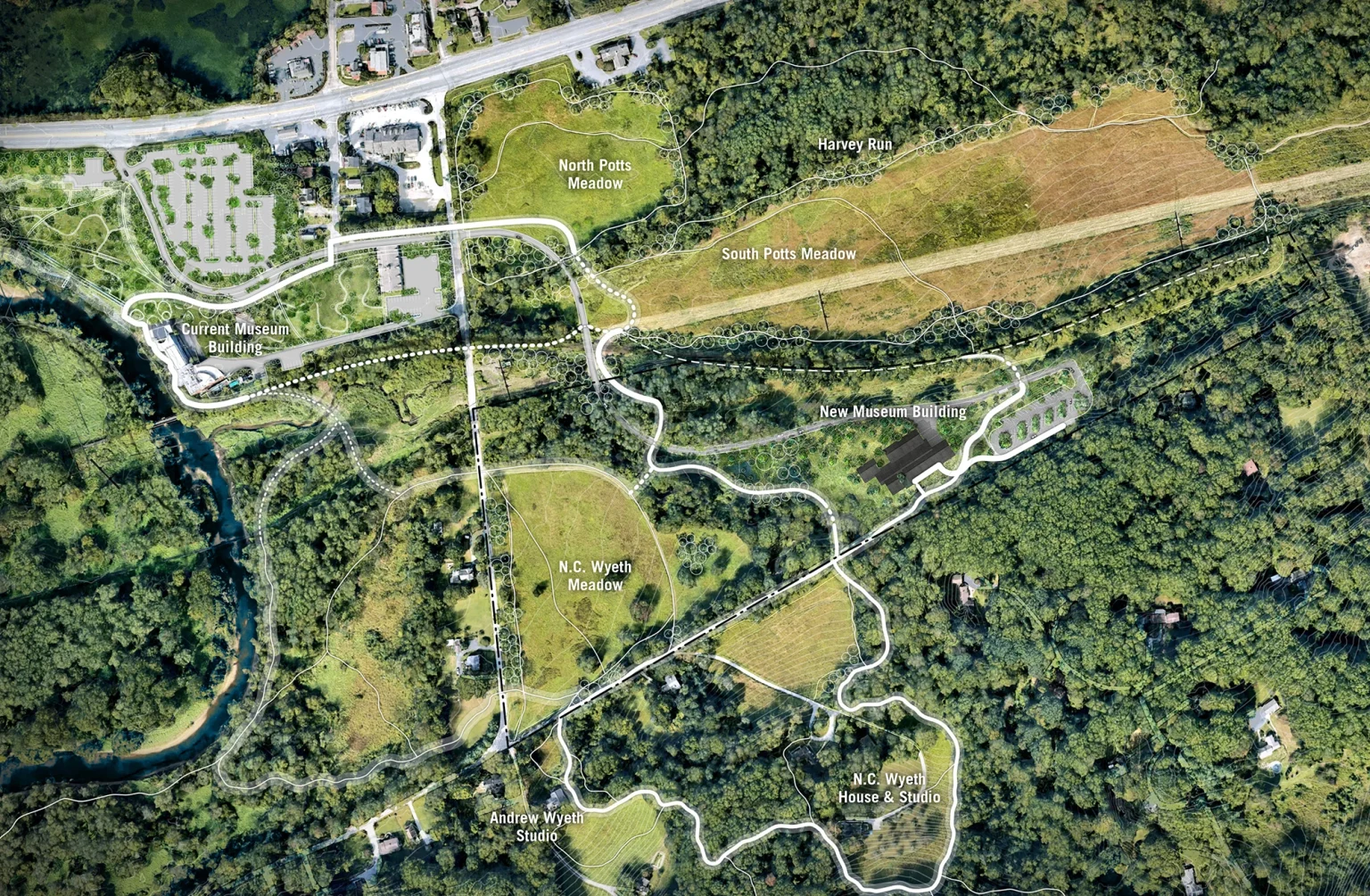


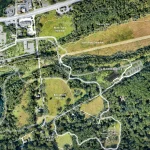
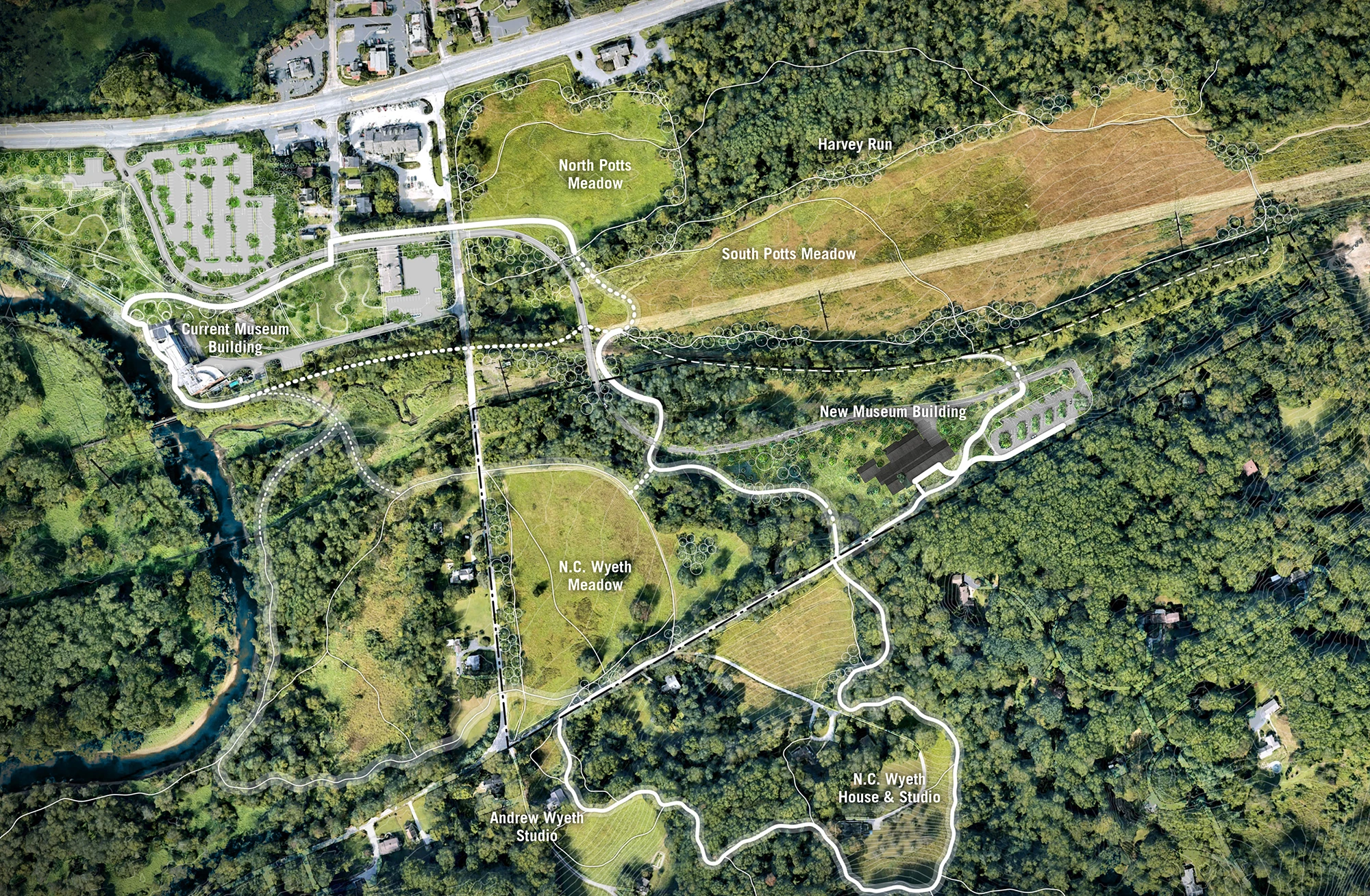
The expansion of the Brandywine Conservancy & Museum of Art reorganizes the institution around a larger idea, treating art, ecology, conservation, and movement through landscape as part of a single public experience. Designed by Kengo Kuma and Field Operations, the project will transform the current 15-acre museum campus into a 325-acre preserve and garden connected by ten miles of trails.
The expansion includes a new 40,000-square-foot museum building, major upgrades to the institution’s historic mill structure, new ecological infrastructure, wetlands access, outdoor education spaces, and expanded public access to the former studios of N.C. Wyeth and Andrew Wyeth. Construction is scheduled to begin in spring 2027, with completion planned for fall 2029.
A Campus Planned as Connected Buildings
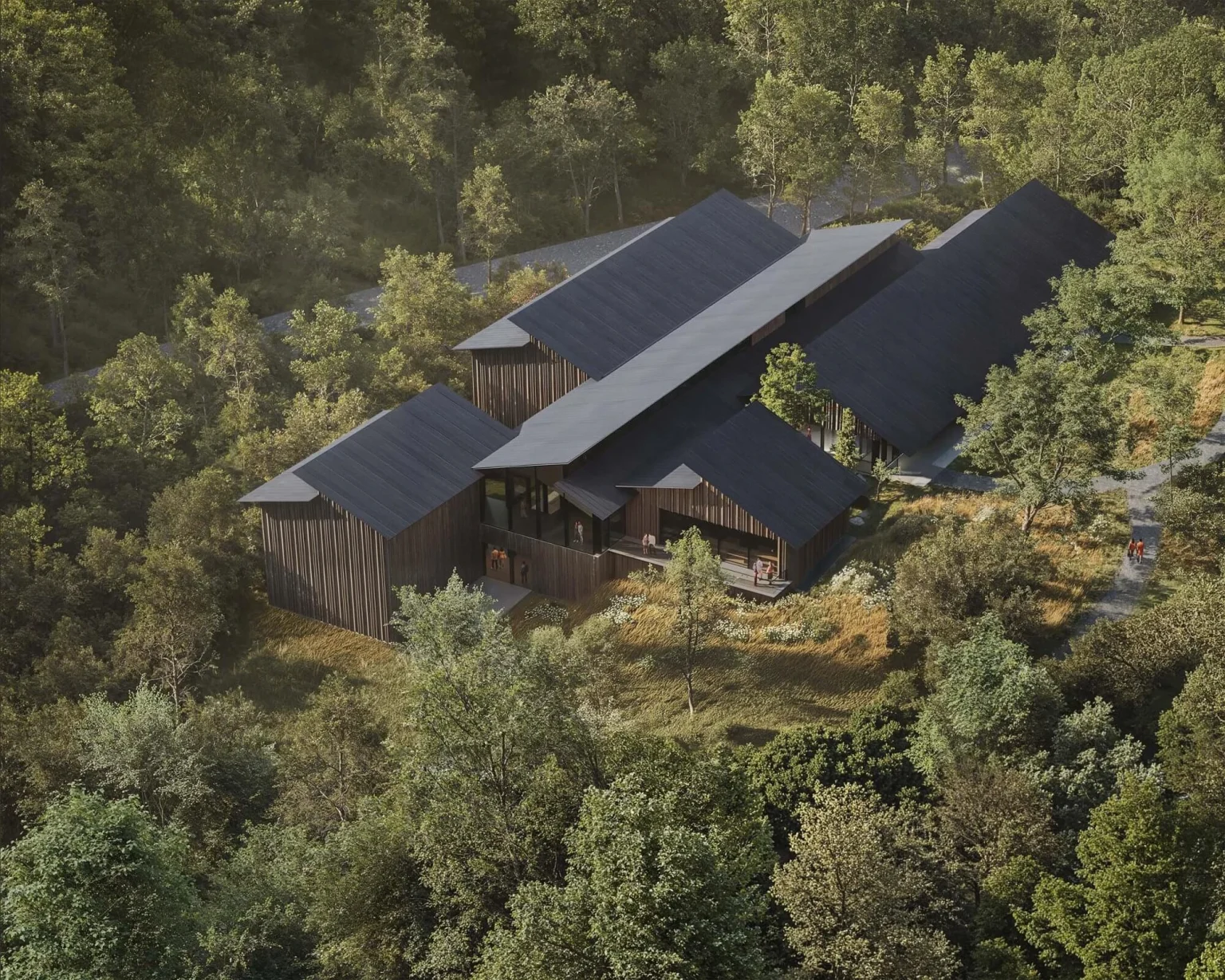
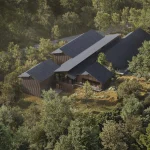
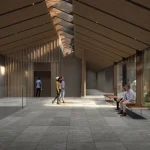
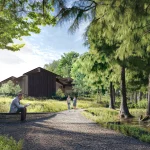
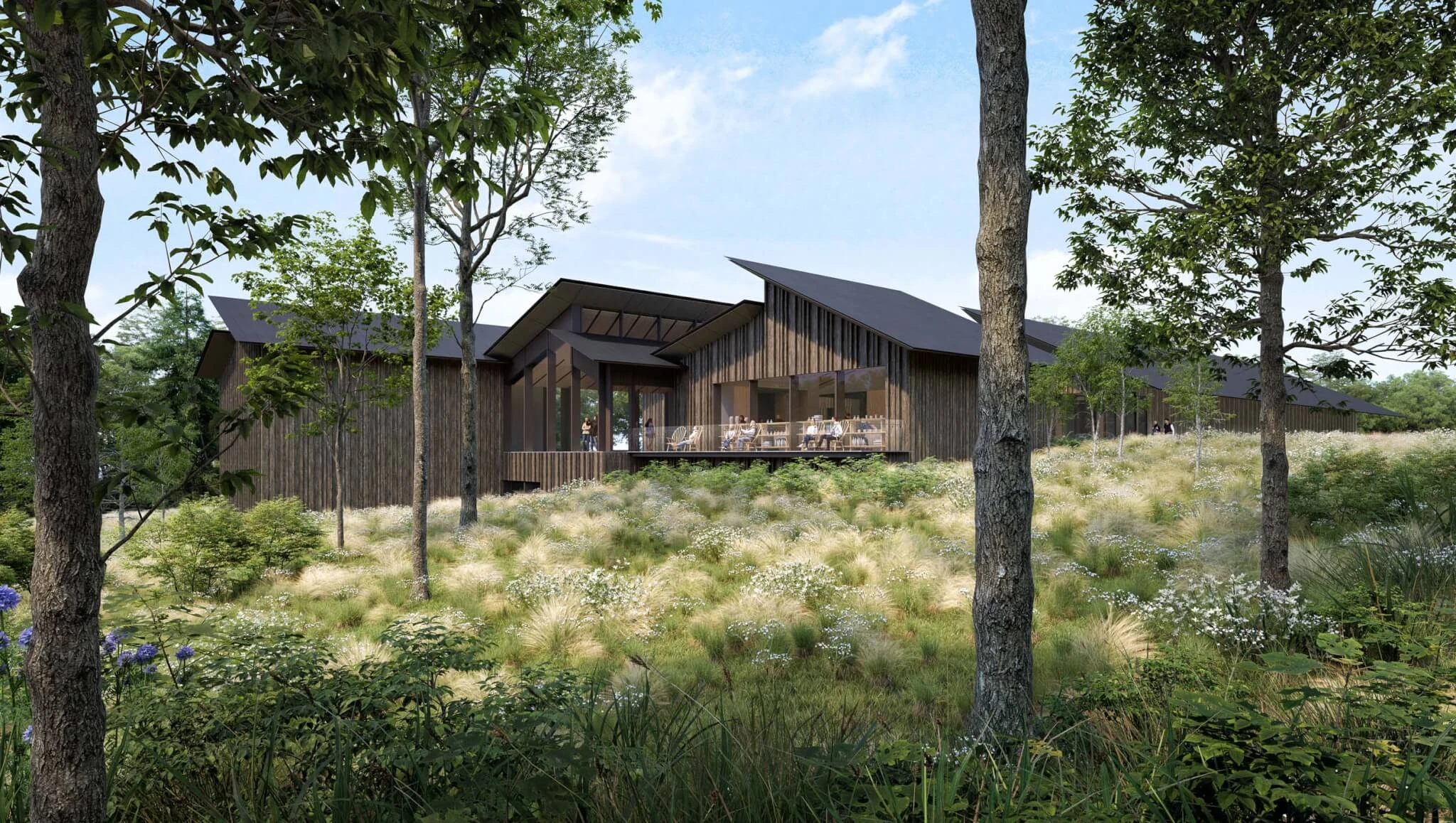
Kengo Kuma’s proposal breaks the new museum into four wood-clad pavilions arranged along a central spine. The low rooflines and asymmetrical pitched forms are intended to sit within the wooded terrain of the Brandywine Valley.
Visitors will enter from the upper level into a glazed central hall overlooking the preserve on three sides. Galleries are distributed across two floors, with larger exhibition rooms positioned along the main axis and smaller gallery spaces branching from circulation areas. The lower level includes additional exhibition areas, public amenities, and outdoor terraces facing the landscape.
The Brandywine Conservancy & Museum of Art building increases the institution’s exhibition capacity by roughly 80 percent and adds approximately 1,300 square meters of new gallery space. Expanded galleries will support rotating exhibitions, American landscape painting, and a permanent presentation focused on three generations of the Wyeth family.
The Timber-Clad Design of New Brandywine Conservancy & Museum of Art
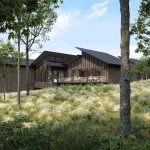
The project continues themes commonly associated with Kengo Kuma’s work, particularly the use of timber construction, filtered natural light, and porous boundaries between interior and exterior space. Here, those ideas are adapted to the wooded conditions of southeastern Pennsylvania rather than imported as a fixed architectural language.
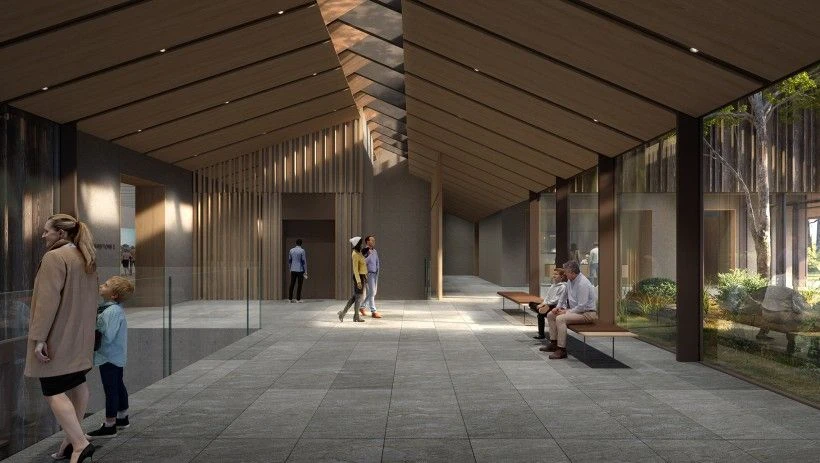
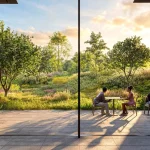
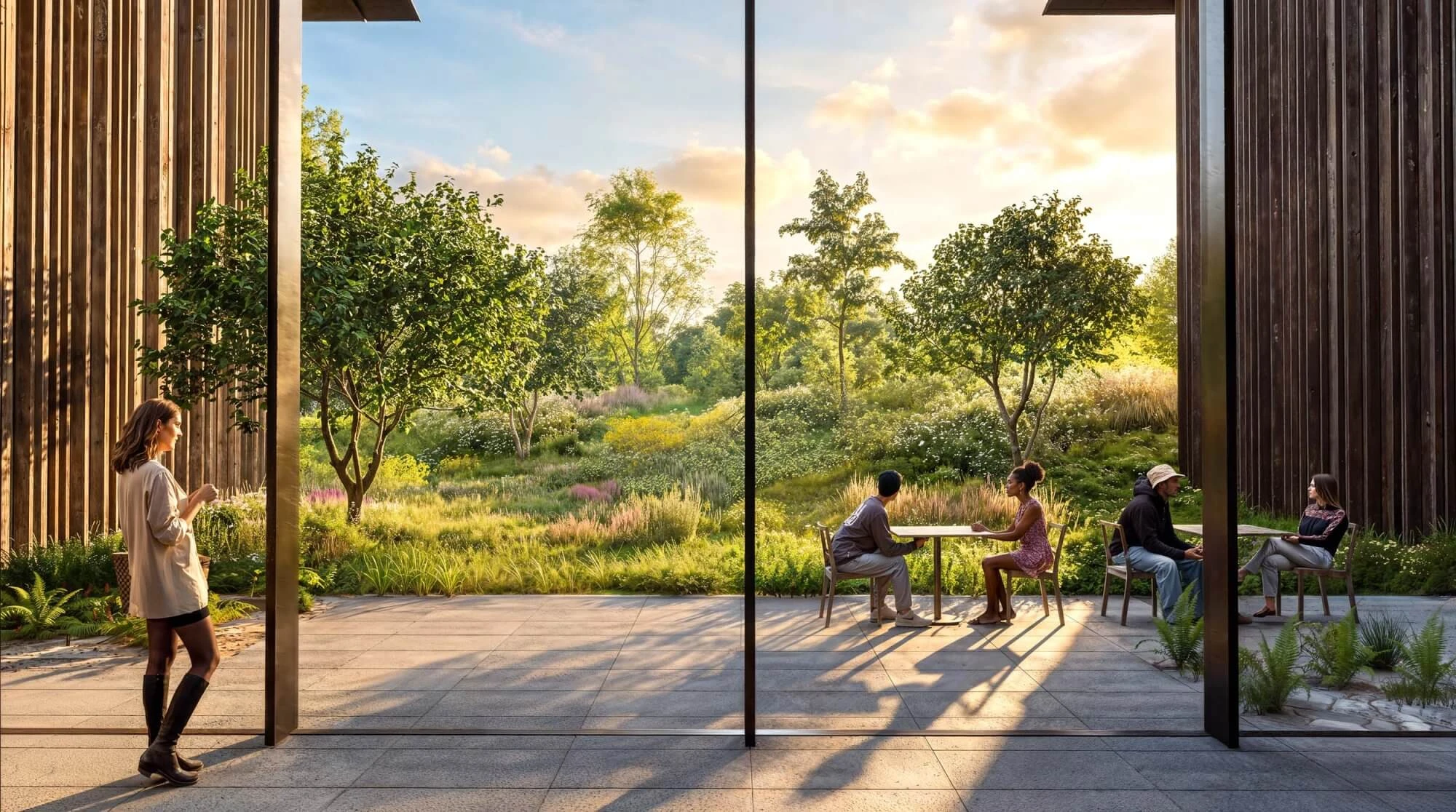
Large glazed openings frame views into wetlands, trails, and planted areas, while terraces extend circulation outside the building envelope. According to the architects, the museum is designed to “emerge from the landscape rather than impose upon it,” emphasizing continuity with the surrounding preserve.
Wood cladding and elongated rooflines reference the region’s vernacular building traditions. The architectural approach prioritizes sequences of movement, framed views, and gradual transitions between gallery and landscape.
The Existing Mill Building Remains Central
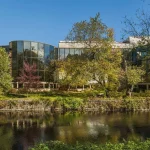
The expansion does not replace the institution’s historic museum building, a converted nineteenth-century grist mill located along Brandywine Creek. Instead, the project repositions the mill as one half of a dual-building museum campus.
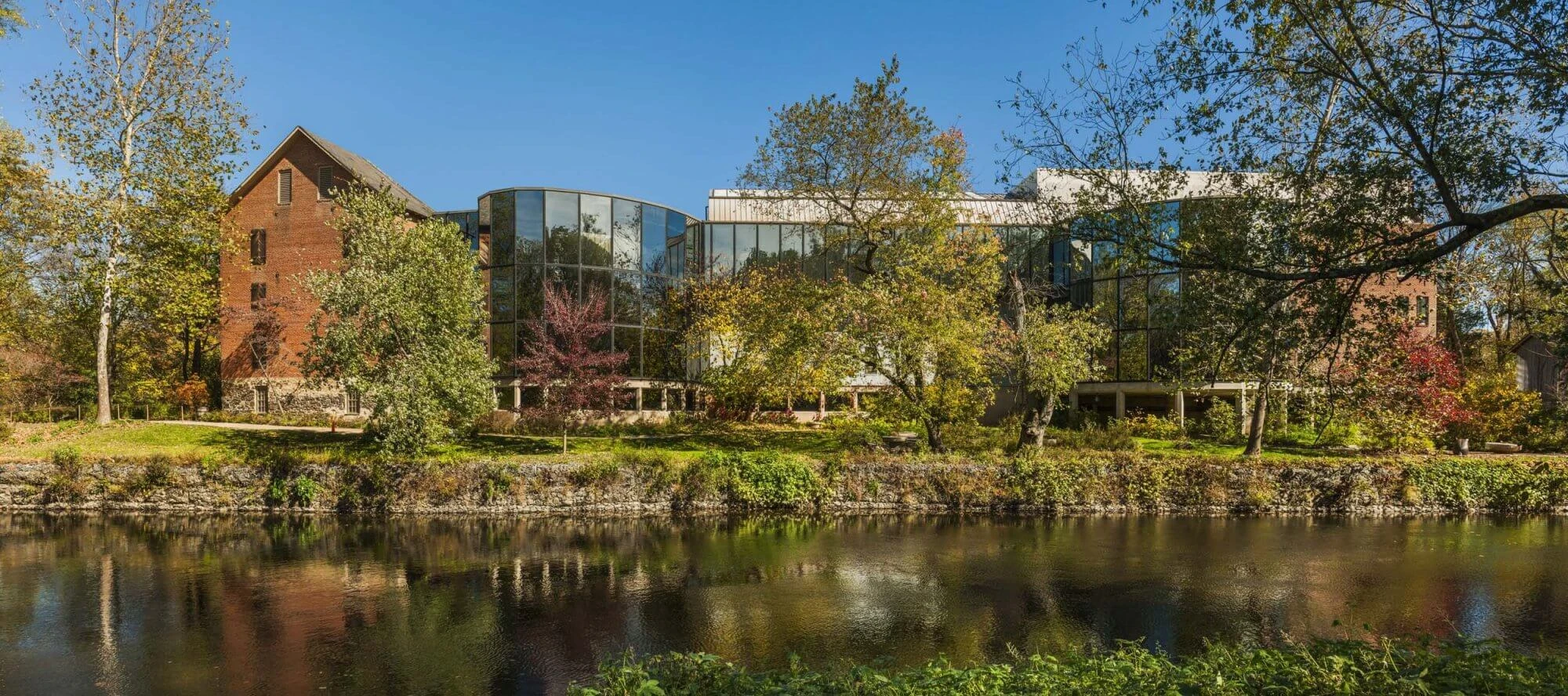
The building already underwent extensive flood-hardening work after severe damage caused by Hurricane Ida in 2021. The renovation included watertight protection systems using submarine-grade waterproofing technology and accessibility upgrades to the courtyard entrance.
Future interventions inside the mill building will introduce studio classrooms, expanded educational programming, and exhibitions focused on the Conservancy’s environmental work. Existing galleries within the mill will remain active, preserving the smaller-scale viewing conditions associated with the original museum.
Landscape Infrastructure Becomes Public Space
A major portion of the project’s scale lies outside the museum buildings themselves. Landscape architecture firm Field Operations is redesigning the campus as a publicly accessible preserve organized around ecological systems, water management, and outdoor learning.
The expanded grounds will include wetlands boardwalks, native planting systems, outdoor classrooms, nature play areas, and interpretive ecological trails. Stormwater infrastructure surrounding the new museum is designed to function visibly as part of the visitor experience rather than being hidden as technical back-of-house systems.
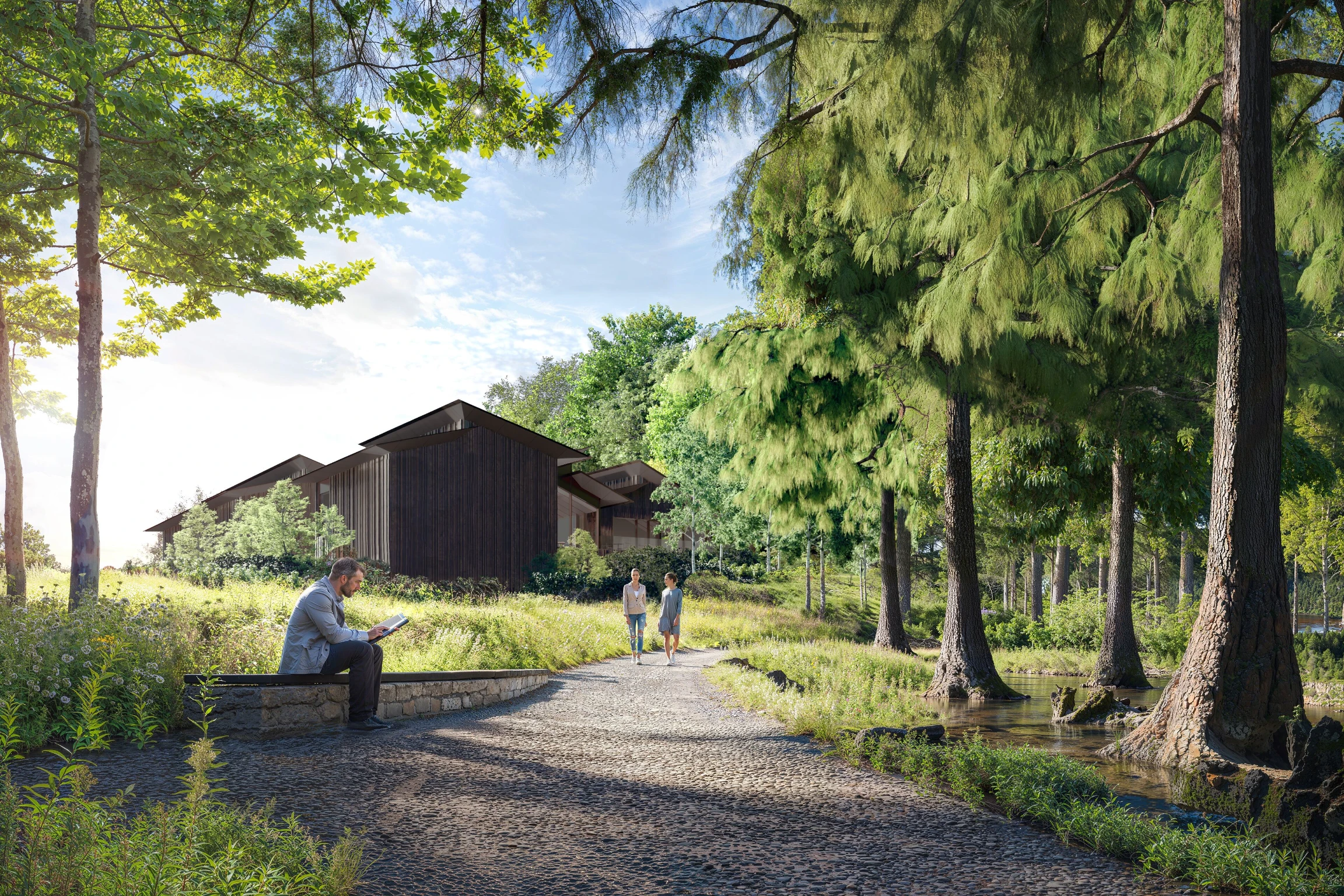
The trail network will also connect visitors to the preserved studios of N.C. Wyeth and Andrew Wyeth, both designated National Historic Landmarks. The institution describes the campus as a “learning landscape,” where movement between galleries, preserved ecosystems, and artists’ studios becomes part of understanding the relationship between art and place.
Brandywine’s Expansion Redefines the Role of the Museum Campus
Brandywine Conservancy & Museum of Art estimates the total investment at approximately $100 million, with nearly half of the funding already raised, according to the institution’s announcement.
More significantly, the expansion broadens the museum’s identity beyond exhibition programming. The proposal integrates conservation work, environmental education, landscape stewardship, and public recreation into the structure of the campus itself. In operational terms, the museum shifts from being primarily a gallery destination to functioning as a hybrid cultural and ecological institution.
The project positions the landscape as the organizing framework of the museum. The Brandywine Conservancy & Museum of Art expansion, trails, wetlands, and restored ecological systems are designed to operate together, linking the visual culture of the Brandywine Valley directly to the environmental conditions that shaped it.
Image credit: © Kengo Kuma & Associates and Field Operations