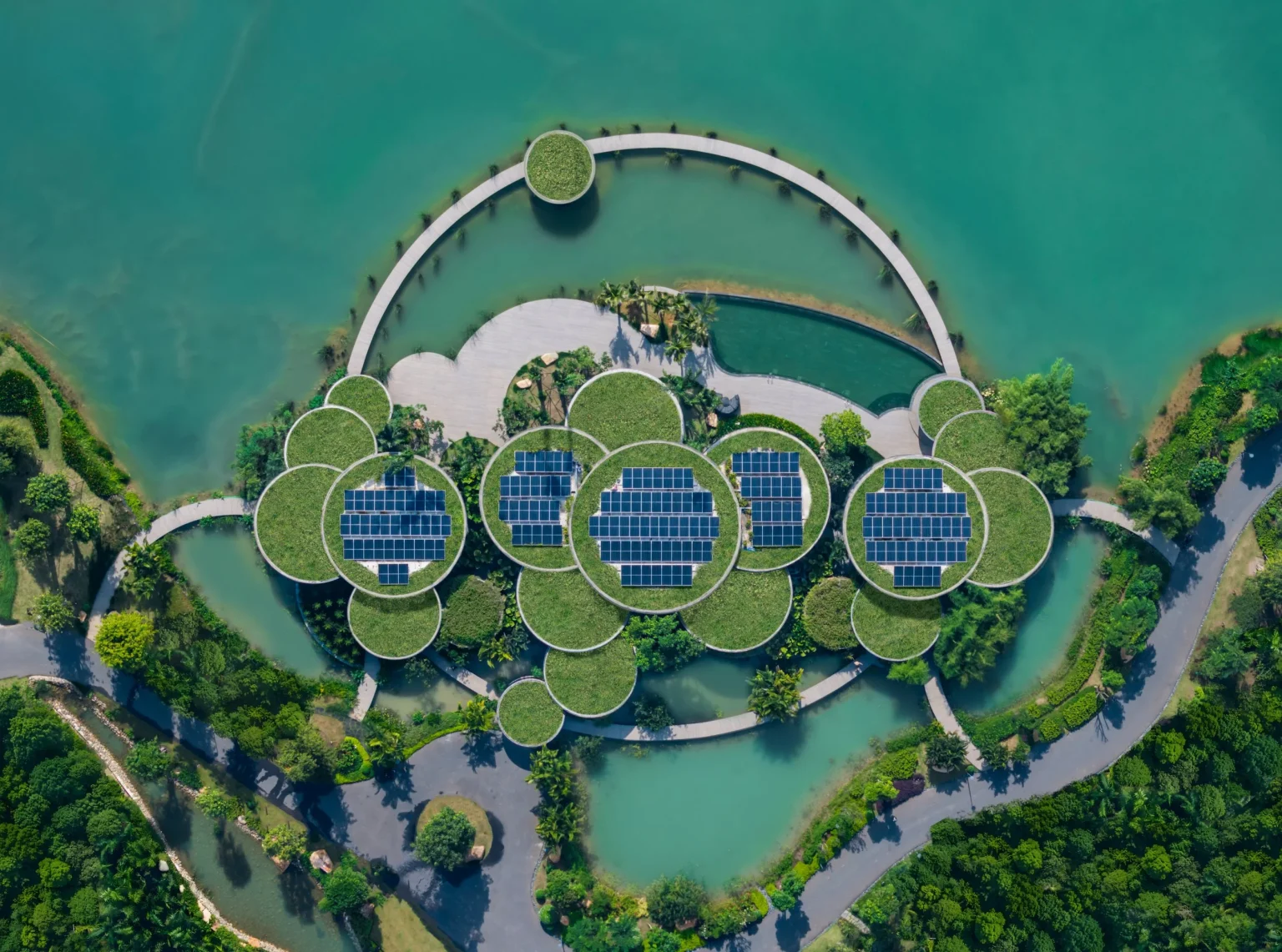
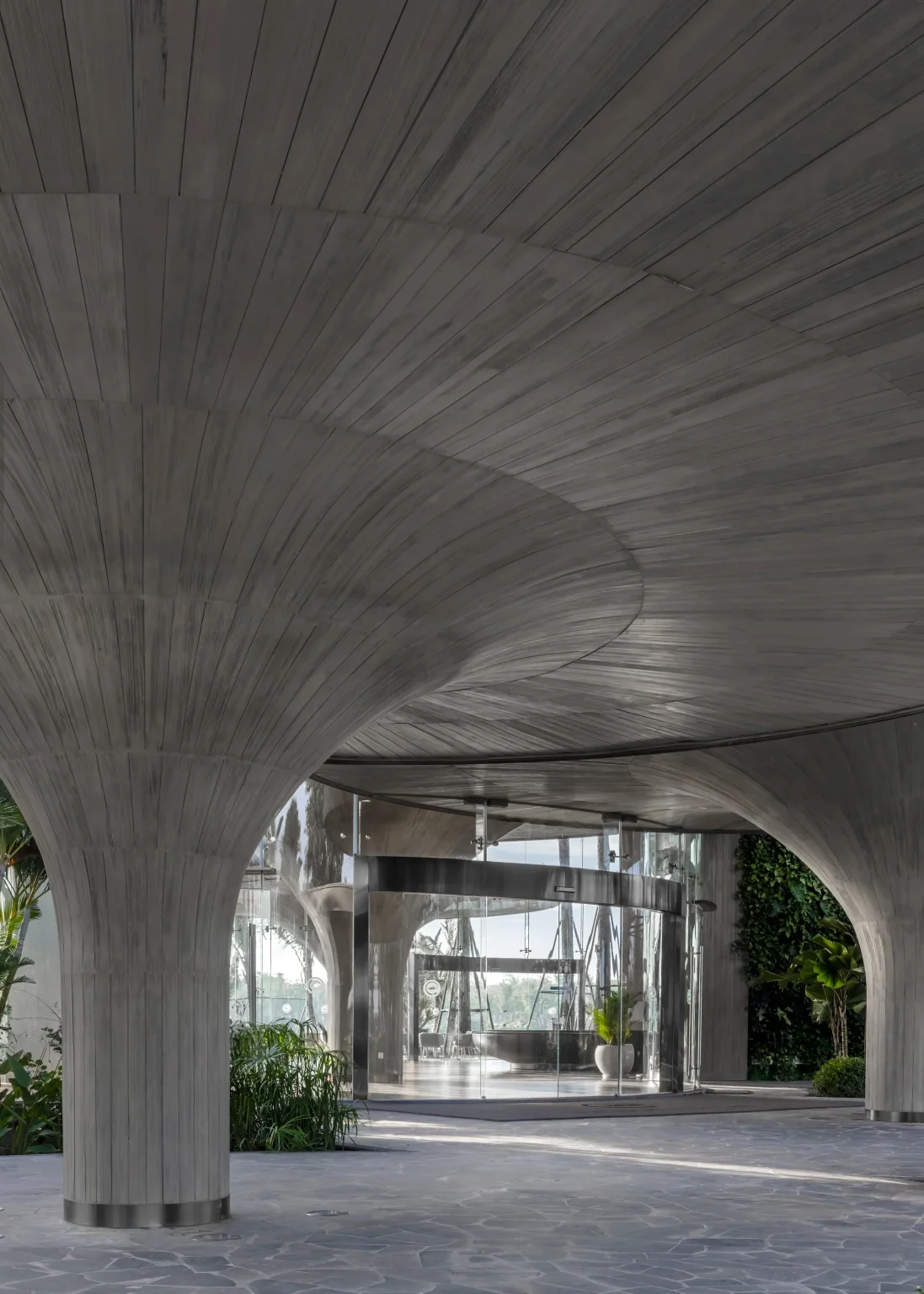



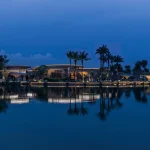
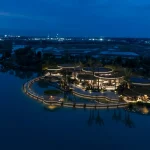
Designed by MIA Design Studio, the Lotus Clubhouse is conceived as a living organism or an architectural expression that breathes in harmony with its terrain and surrounding ecology. The design steps beyond a standalone design and appears to emerge from the land, shaped by natural slopes, vegetation, and its orientation toward the lake. The project establishes a dialogue between architecture, landscape, and cultural context, dissolving boundaries between built form and nature.
An Architecture That Emerges from the Land
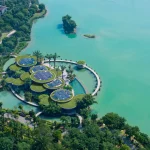
The Lotus clubhouse is organized as a series of smaller volumes dispersed beneath the forest canopy across a 2,000-square-meter site. These structures are carefully positioned at varying elevations, following the natural contours of the terrain. Curving pathways and reflective water elements connect each block, creating a fluid spatial sequence that shifts between openness and enclosure.
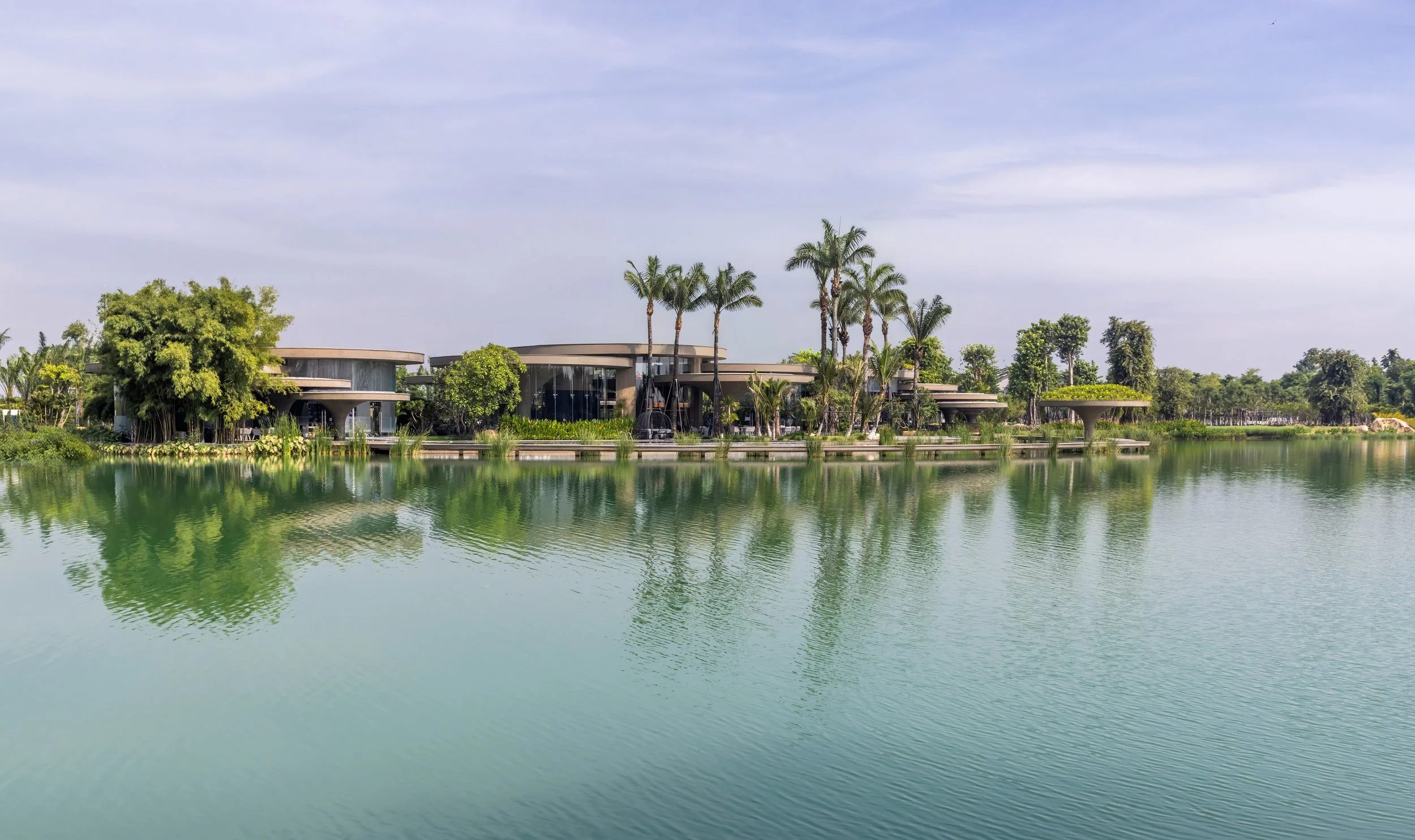
Programmatically, active spaces such as the restaurant and children’s play areas extend toward the lake, embracing light and views, while quieter zones, including the spa, lounge, and meditation areas, are tucked into shaded, intimate pockets of greenery. This distributed approach allows the architecture to recede into the landscape, minimizing its visual impact while enriching the sensory experience of movement, light, and air.
Layered Green Roofs as Living Systems
A defining feature of the Lotus clubhouse is its multi-layered green roof system, composed of circular forms at varying heights. These undulating roofs merge with the surrounding forest canopy, creating a continuous ecological surface. Planted with native vegetation, they function as self-sustaining micro-ecosystems that reduce heat gain, improving insulation, and supporting local biodiversity.
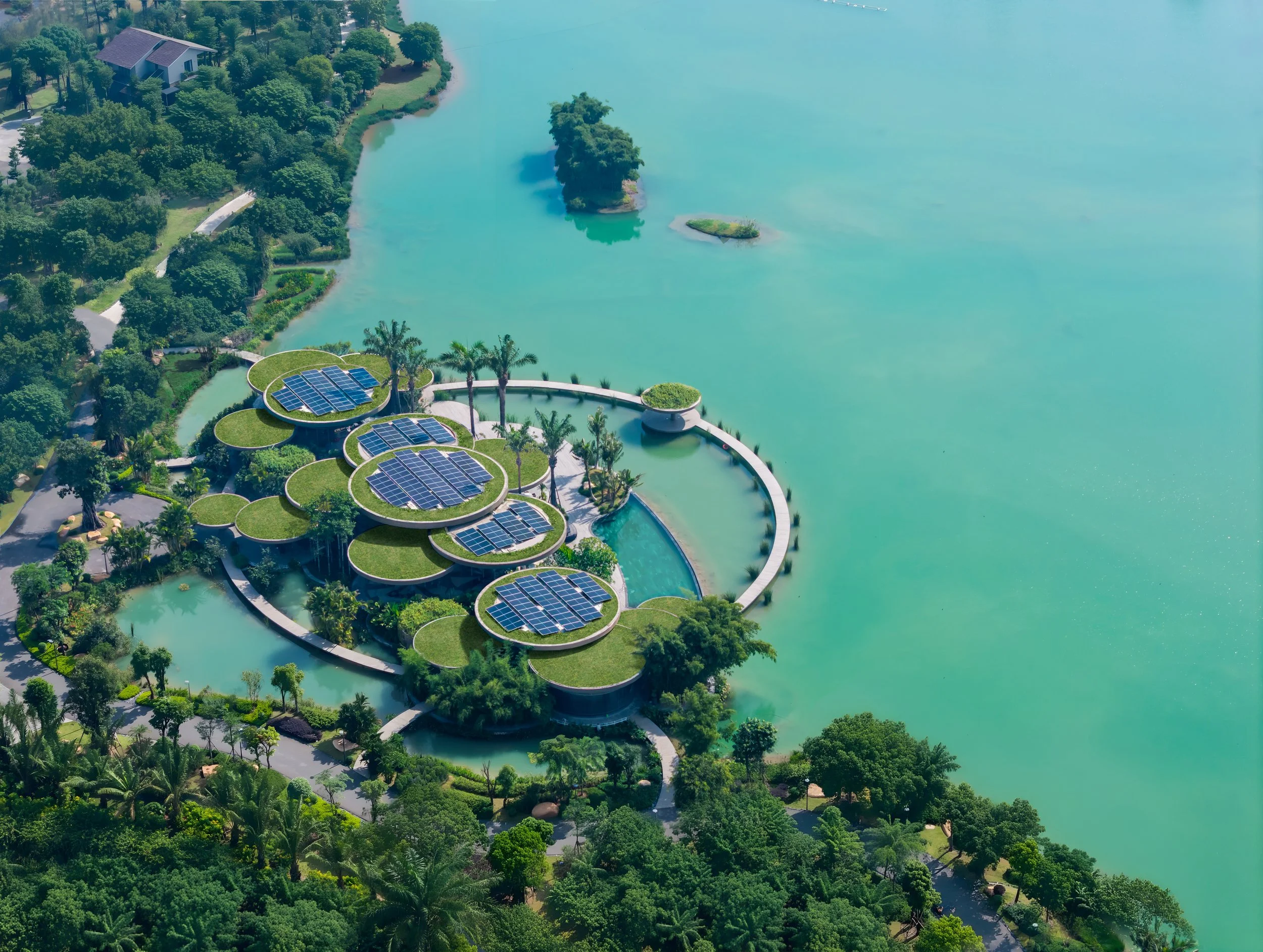
Beyond their environmental performance, the roofs shape the building’s identity. Their gentle rise and fall modulate daylight, filter harsh sunlight, and maintain a cooler microclimate throughout the day. This integration of form and function reflects a tropical design approach where architecture, climate, and ecology operate in balance.
A Subtle Dialogue with Water and Horizon
Positioned along the lake’s edge, the Lotus clubhouse maintains a direct and sensitive relationship with water. From across the lake, the structure appears to rest lightly on the terrain, almost blending into its surroundings. Its modest height ensures visual harmony with nearby villas while preserving uninterrupted views of the landscape.
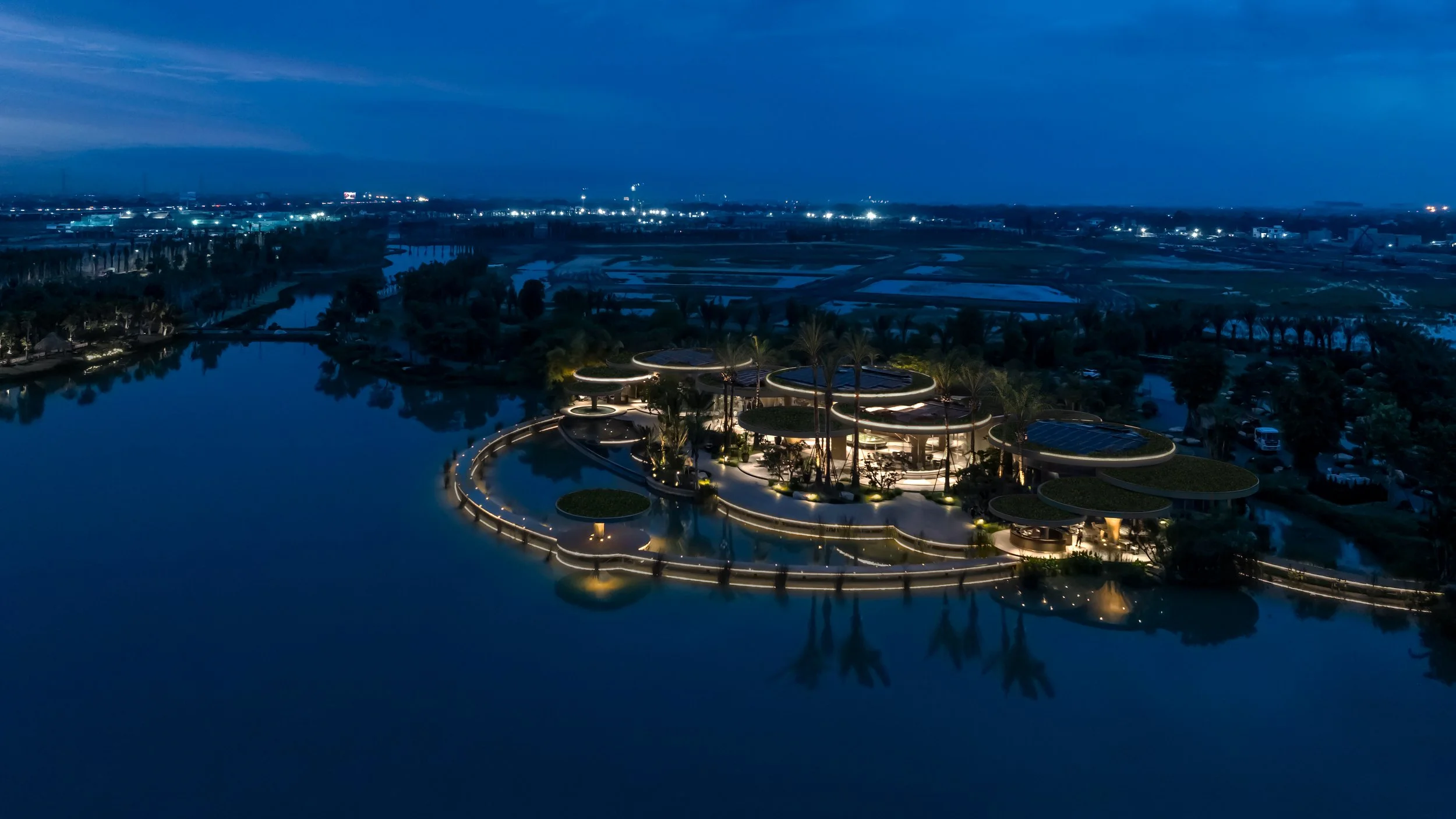
The interplay of water, light, and horizon becomes central to the spatial experience. Transparent edges, open views, and reflective surfaces allow the environment to continuously shape perception, reinforcing a sense of calm and connection.
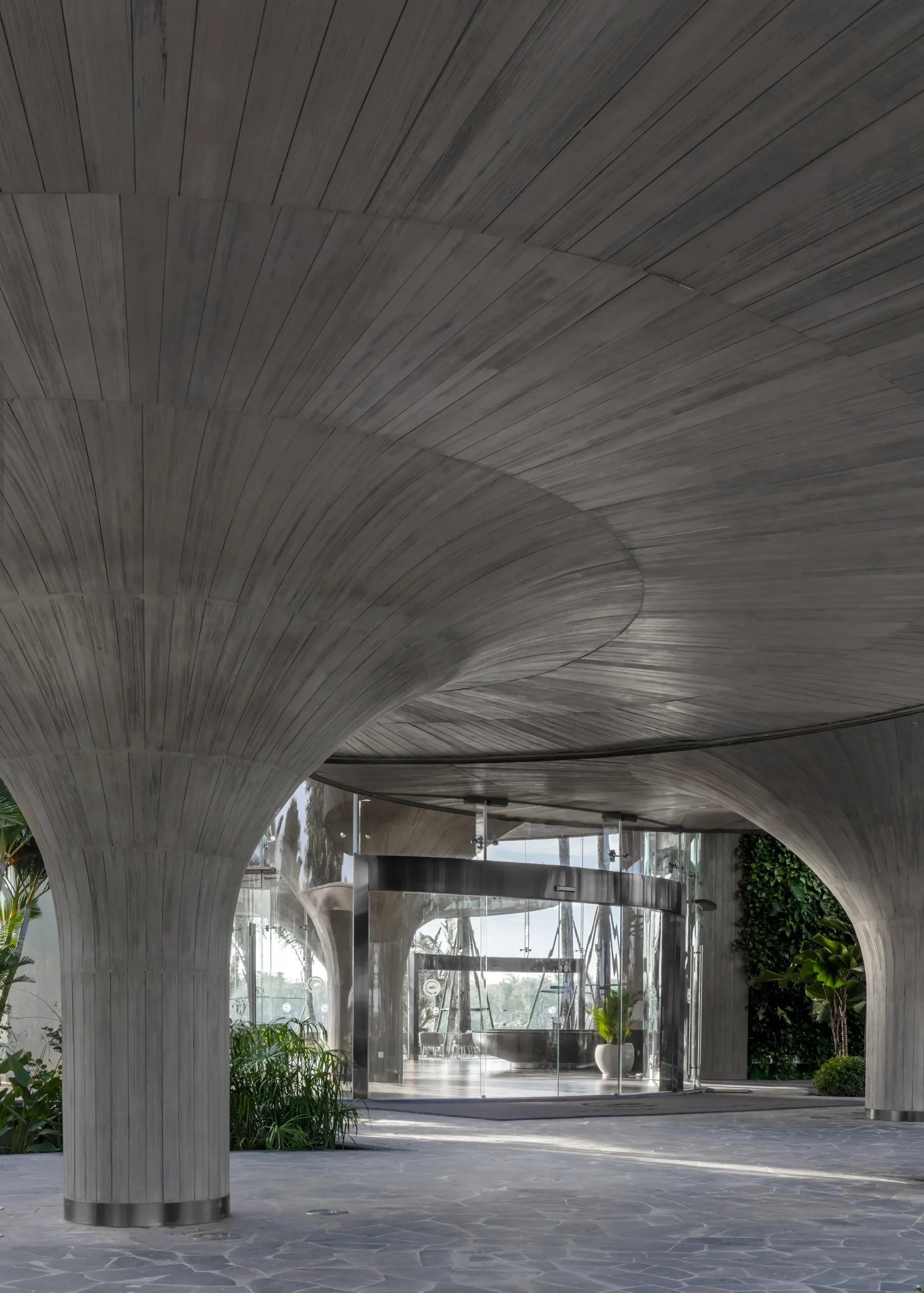
The Lotus Clubhouse redefines resort architecture through restraint and sensitivity. By dissolving boundaries between inside and outside, built form and landscape, it creates an immersive environment rooted in ecological awareness and human comfort.
Project Courtesy: MIA DESIGN STUDIO