









Some of architecture’s most radical ideas arise when architects design homes for their mothers. In these deeply personal projects, care, obligation, memory, and familiarity reshape the architectural brief into something far more intimate than a conventional commission. Homes designed for mothers often become spaces of emotional experimentation, where architects explore identity, comfort, materiality, and belonging through a personal lens. On the occasion of Mother’s Day, these projects also reflect how architecture can become an expression of gratitude, translating emotional bonds and everyday care into built form.
Robert Venturi defies the Modernist order in the Vanna Venturi House by distorting symmetry and utilizing common domestic elements. On the other hand, in Casa Klotz, Mathias Klotz reduces the house to a minimal timber volume shaped by budget and climate. These works together show how residences designed for mothers redefine modernist thought by adapting postwar international style and functionalist logic to personal and practical needs.
Villa Le Lac
Architect: Le Corbusier with Pierre Jeanneret
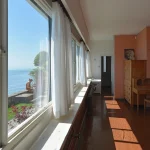
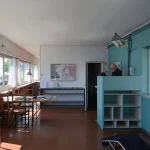
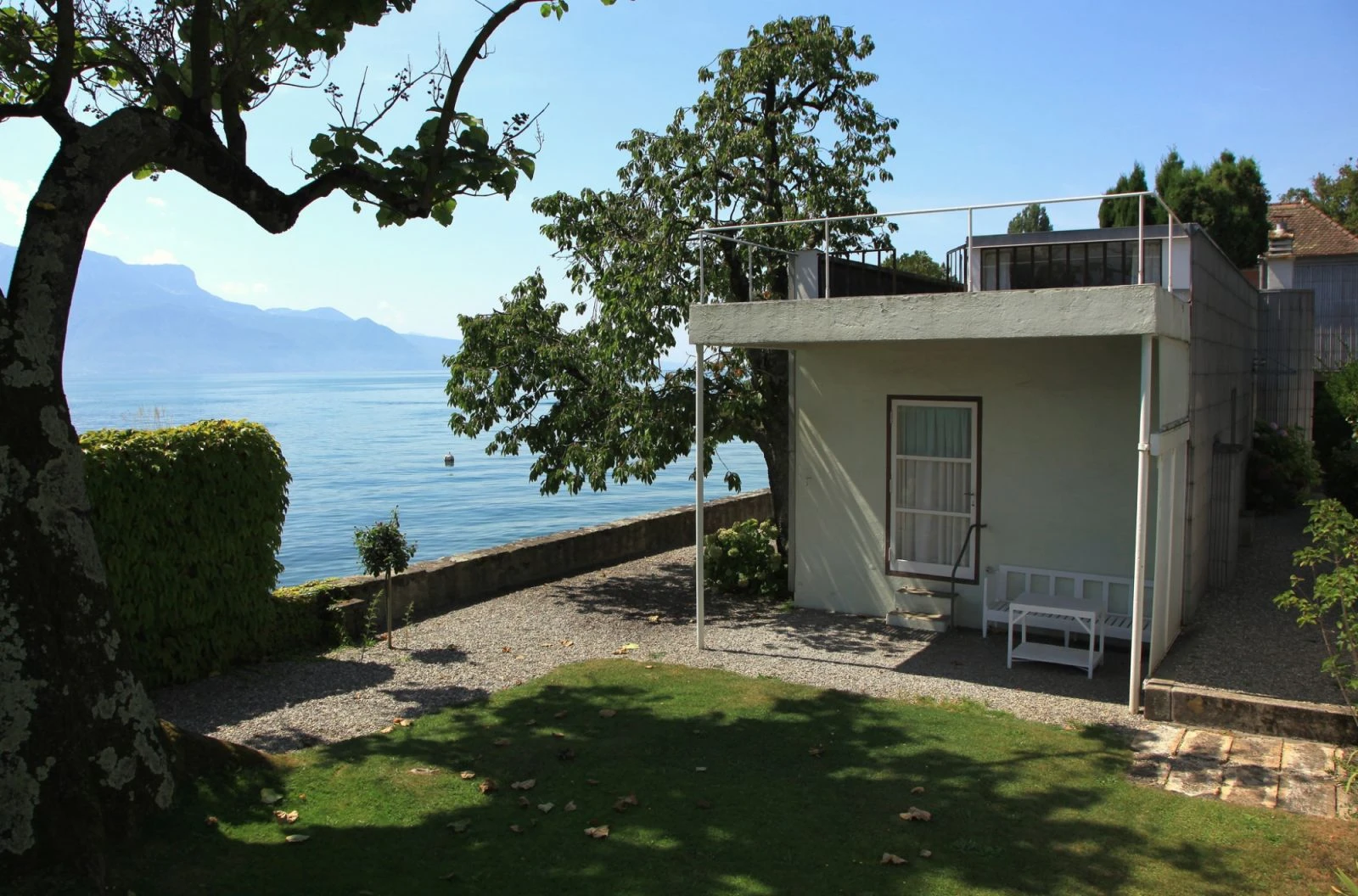
Villa Le Lac in Corseaux on Lake Geneva measures just 16 by 4 meters and was built for his parents. After his father died, it became his mother’s permanent residence. The narrow construction embodies basic modernist principles such as a free plan, roof terrace, and continuous ribbon window on the south front, which faces the lake and the Alps. Inside, its sliding partitions form a continuous visual axis from end to end, while the flow between study and bathroom reminds one of the compactness of ship cabins and railway carriages, where efficiency overtook privacy.
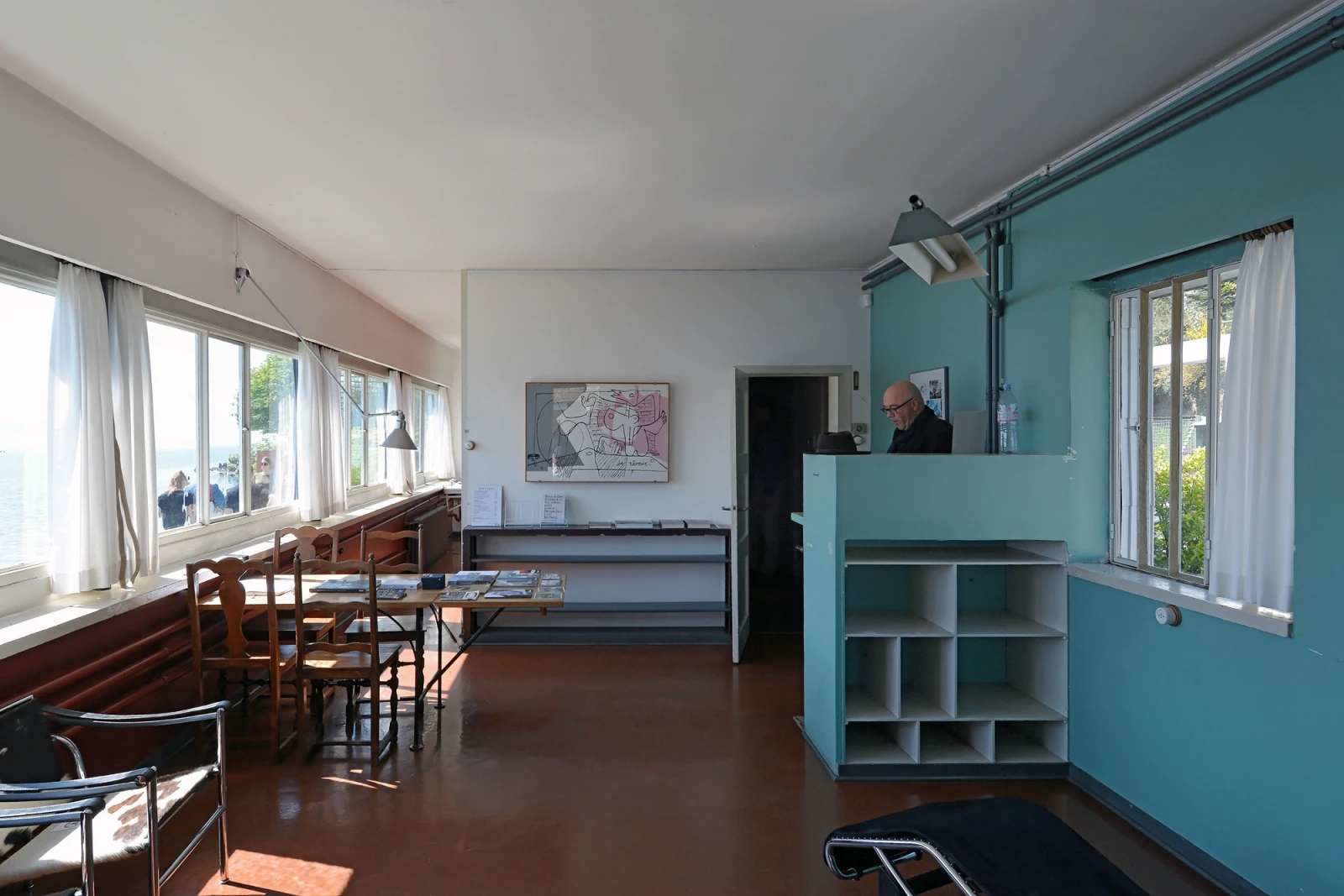
The house evolved through use. Cracks emerged after the first winter, prompting aluminum cladding on the south facade and galvanized steel on the north, alongside a strong rear wall to block road noise. In the early 1930s, he added a small northwest extension accessible only by a steep ladder for private space during visits to his mother.
Rose Seidler House
Architect: Harry Seidler
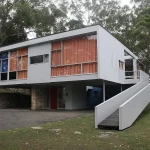
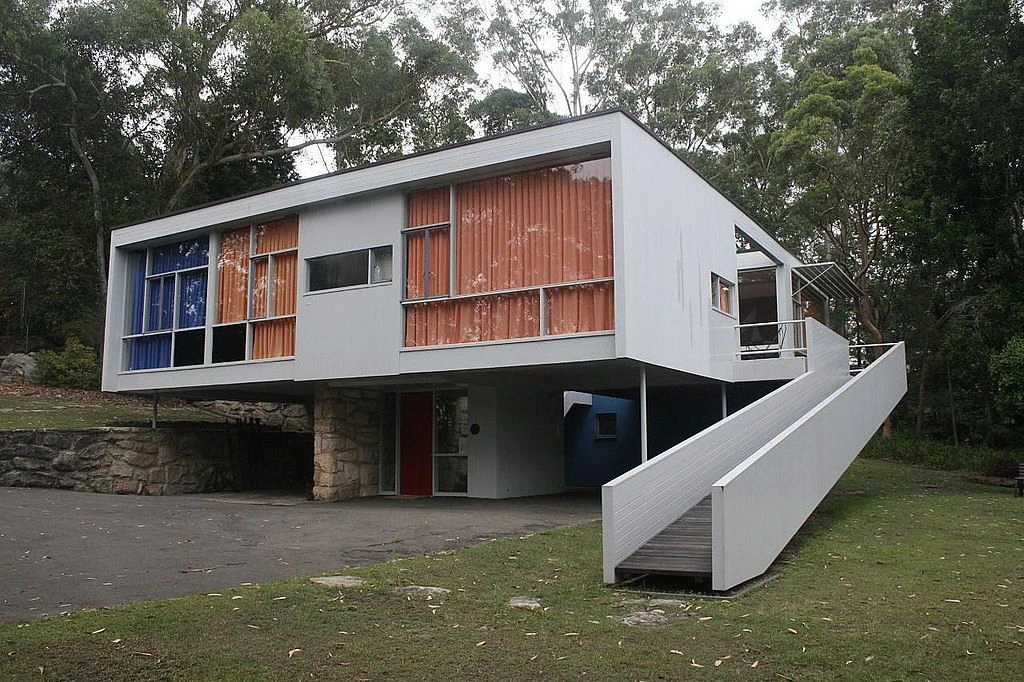
Harry Seidler’s mother commissioned the Rose Seidler House in 1950, making it his first built work in Australia. Seidler applied Bauhaus ideals to this 200-square-meter house, forming a rectangular structure with a concrete base and a timber frame shaped by an open central terrace and a double-height void that brings light into the interior.
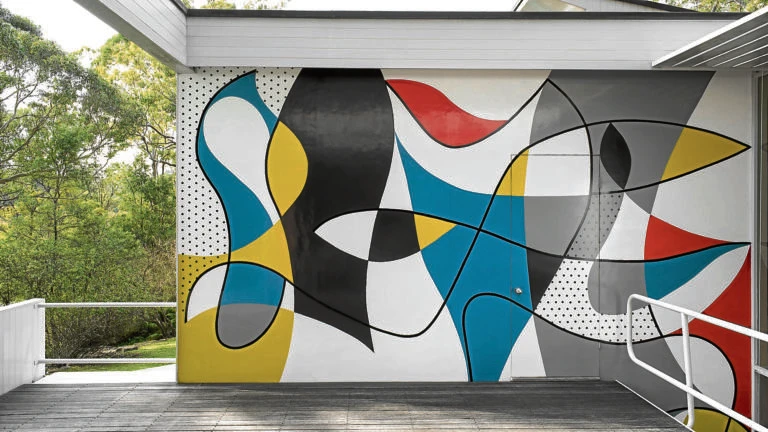
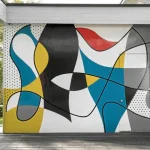
The layout separates the living and sleeping areas while connecting them with a central family room that can extend into alcove-like bedrooms or combine with the main area via a curtain. Seidler improved ventilation and light in the bushland by adding six entry points and a skylit bathroom. He also painted an abstract and colorful painting on the sun deck that reflected Brazilian modernist inspirations, while custom-made and New York-sourced furniture added character.
Vanna Venturi House
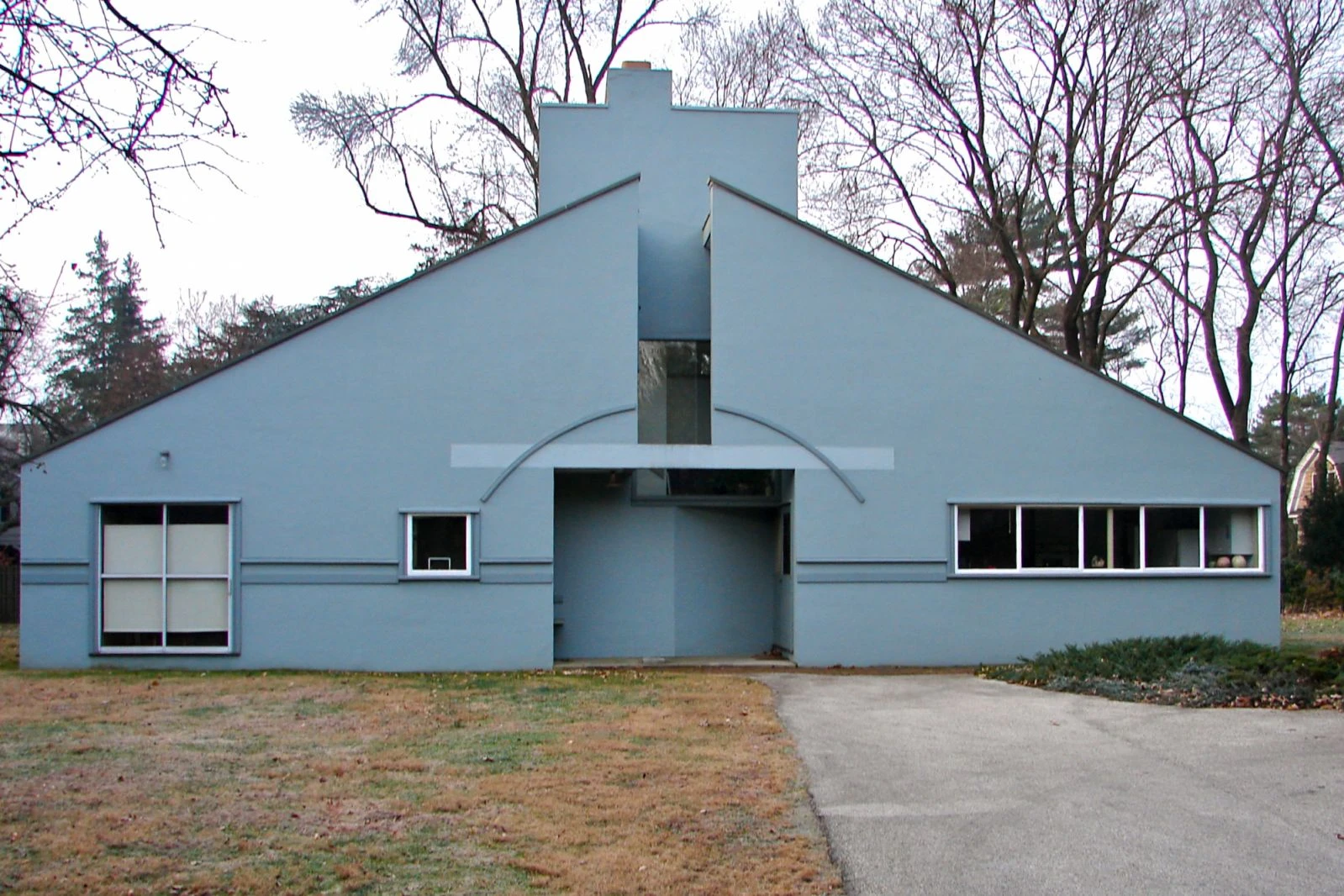
Architect: Robert Venturi
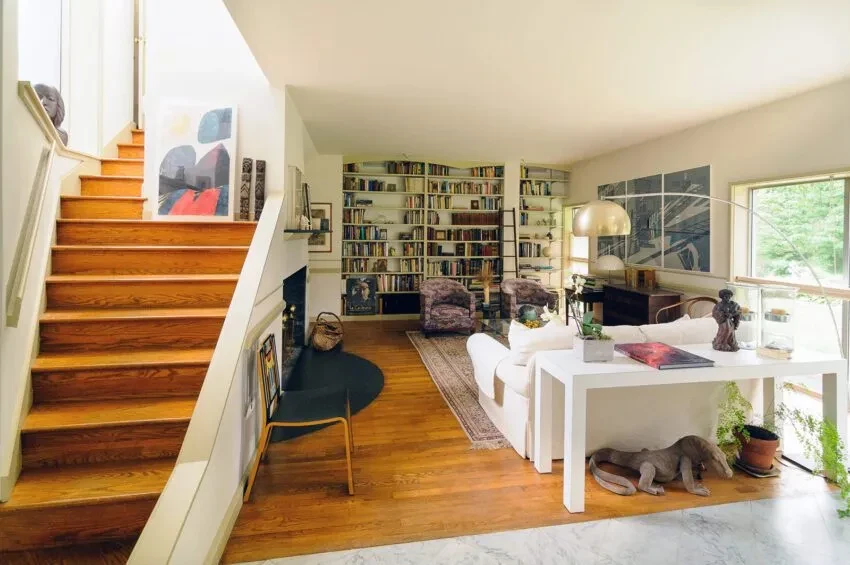
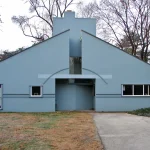
The Vanna Venturi House, designed for his mother in Philadelphia in 1964, was his first completed project, practical in layout with her main rooms arranged on the ground level. Because it was a personal project, Venturi used it to experiment with ideas while challenging Modernism. He preserved conventional home characteristics like a gable roof, central entrance, and chimney. Yet symmetry is purposely disrupted by a split gable, uneven windows, and an unsettling central composition.
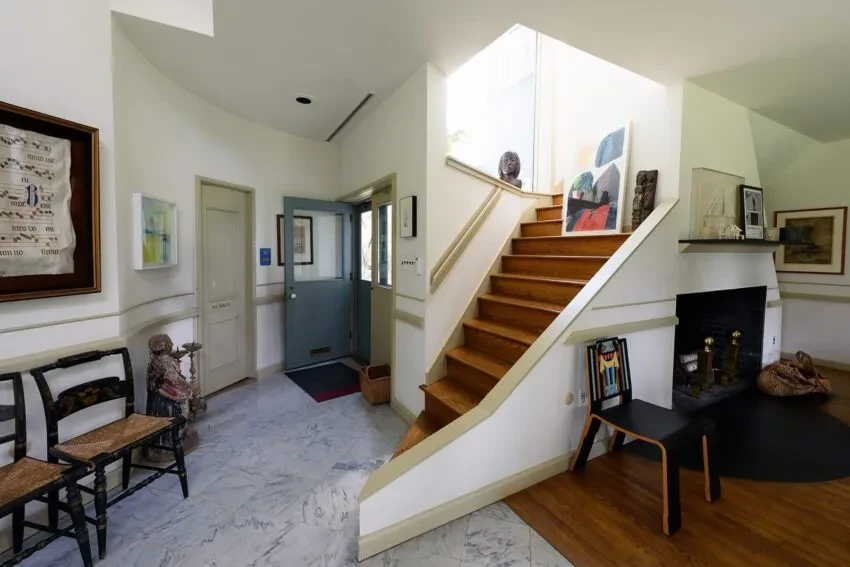
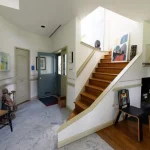
Beginning in 1959, he developed numerous models layering historical inspirations from Michelangelo, Palladio, and Vanbrugh, not to imitate them but to generate tension between order and complexity. Inside, open areas replace corridors, with shifts in flooring from hardwood to marble and changes in ceiling height guiding movement through the space. Most strikingly, the chimney and stair curve toward each other in tight proximity, producing what Venturi called “inflection.” Taken together, the layering of historical reference, spatial ambiguity, and formal contradiction laid the conceptual groundwork for postmodernism.
Casa Klotz
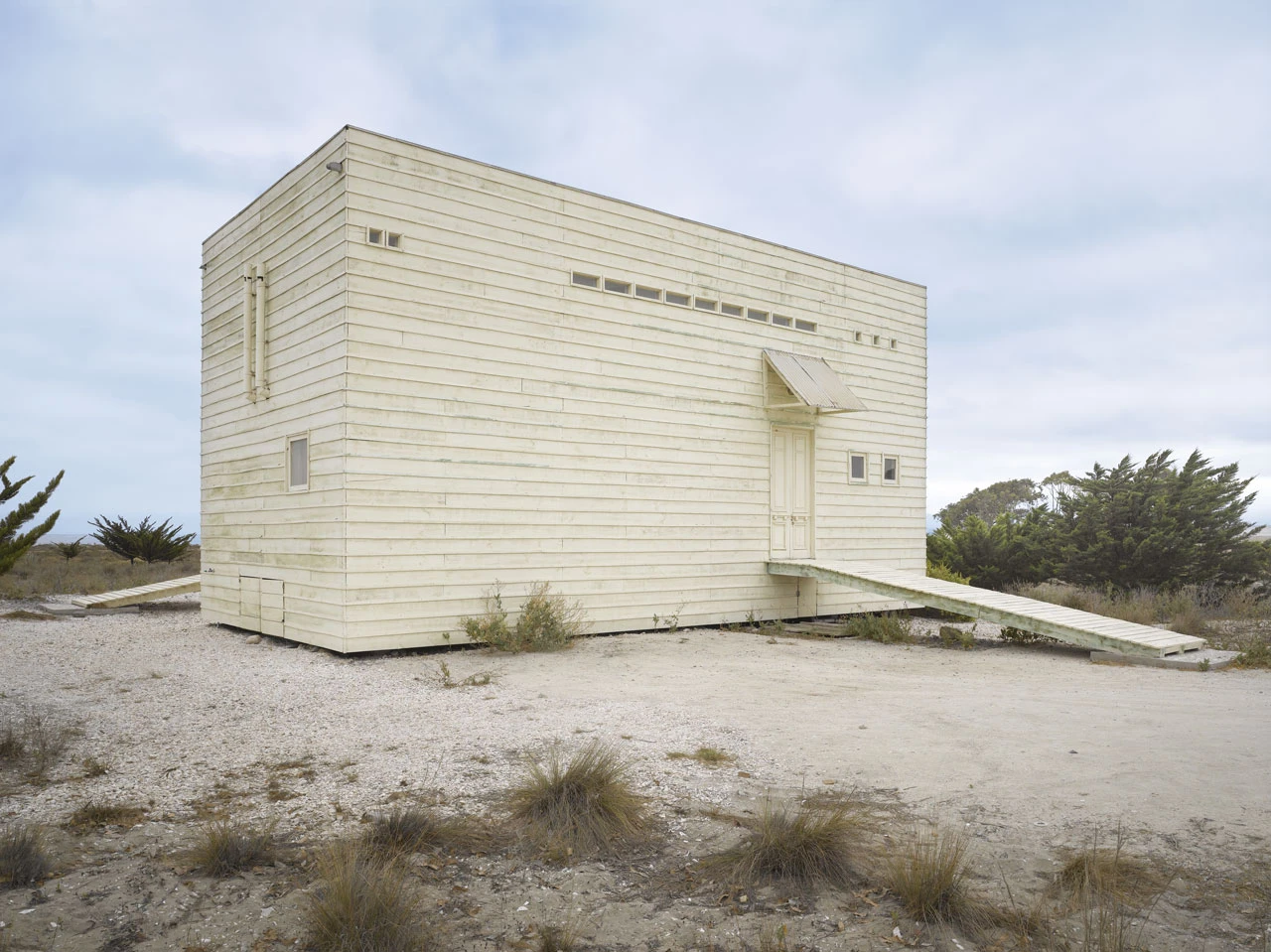
Architect: Mathias Klotz
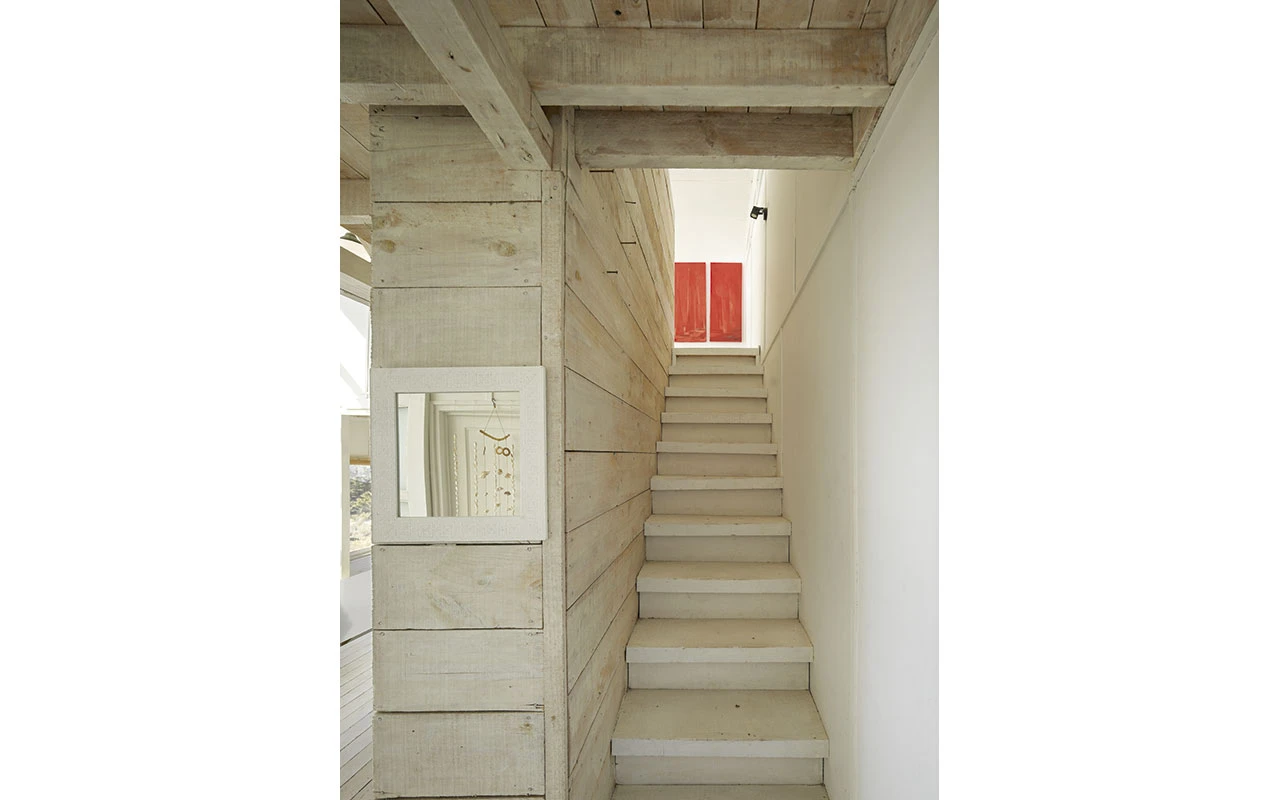
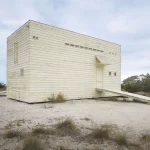
In 1991, Mathias Klotz constructed Casa Klotz for his mother as his first big project in Tongoy, Chile. After his mother inherited money, he decided to fulfill her long-held ambition of a beach retreat. Because of the $20,000 budget, the design prioritizes a low-cost retreat with simplicity, low-maintenance, and durability.
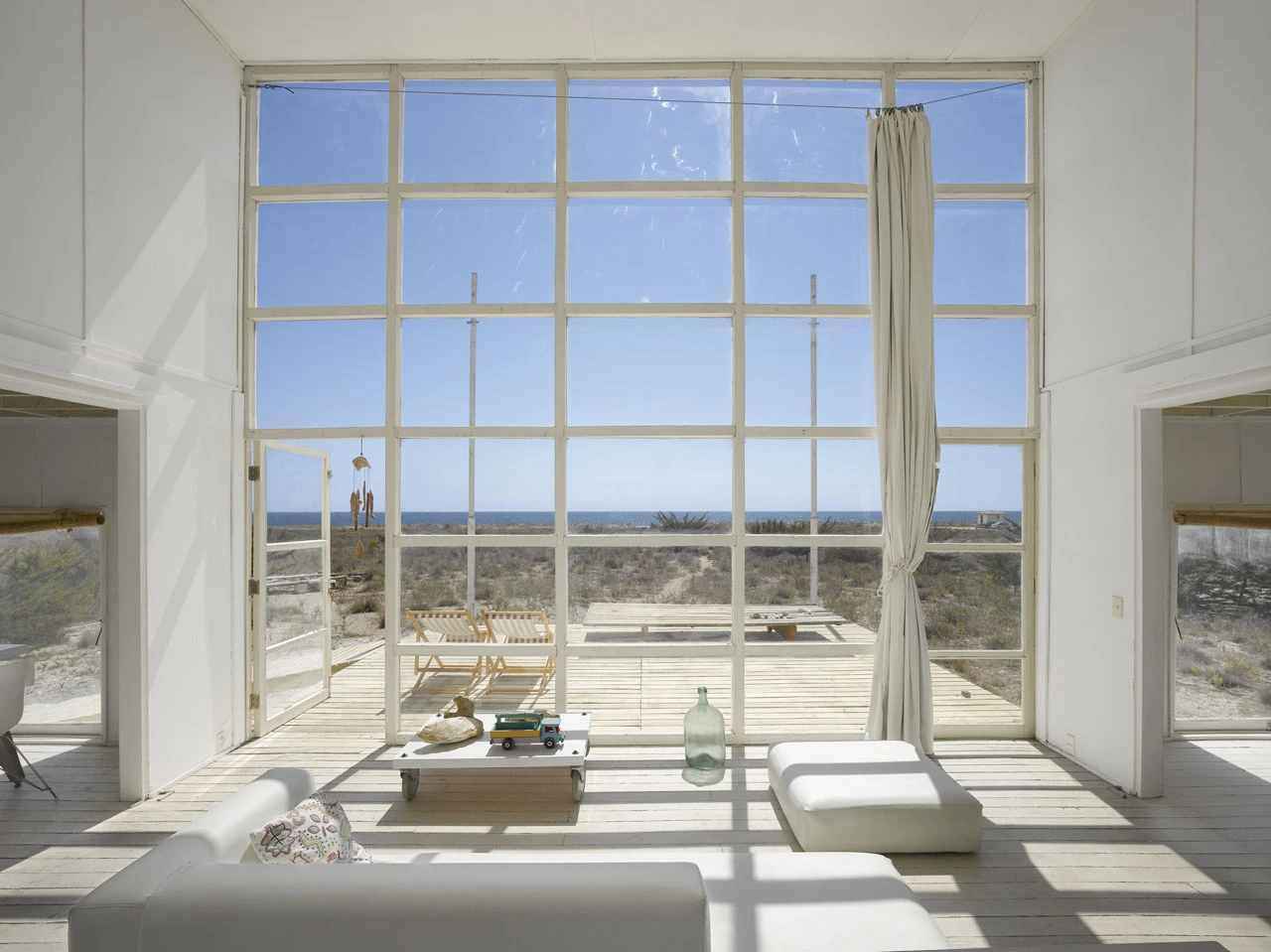
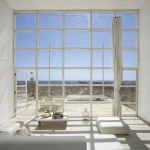
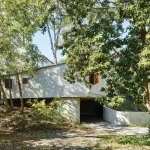
Klotz sketched the concept mid-flight on half-centimeter graph paper, then created a scale model and built it without any changes. The house is rectangular in shape, constructed of timber and clad in white-painted boards. The southern façade carries minimal openings while large windows and balconies face north to capture sunlight and views across the beach. Over time, it has served as a seasonal retreat, with its simple design and orientation continuing to respond effectively to climate and the surrounding environment.
Jule House
Architect: Claire Humphreys with Kevin O’Brien Architects
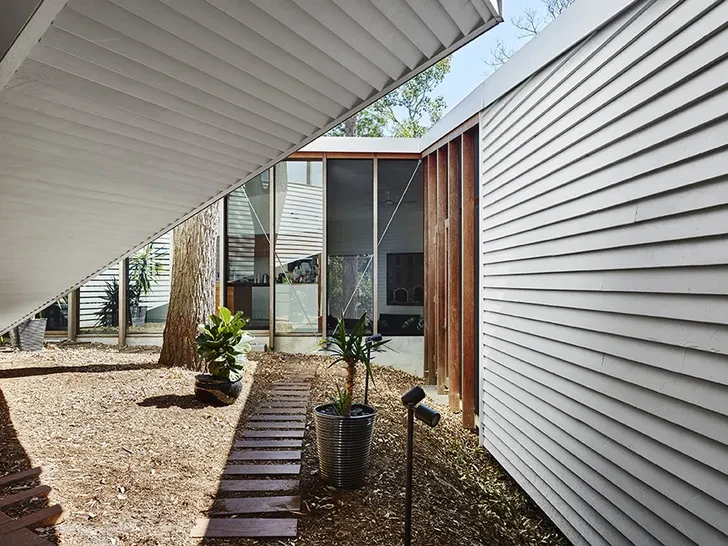
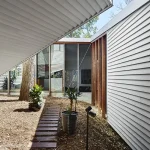
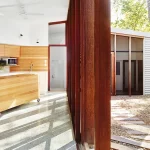
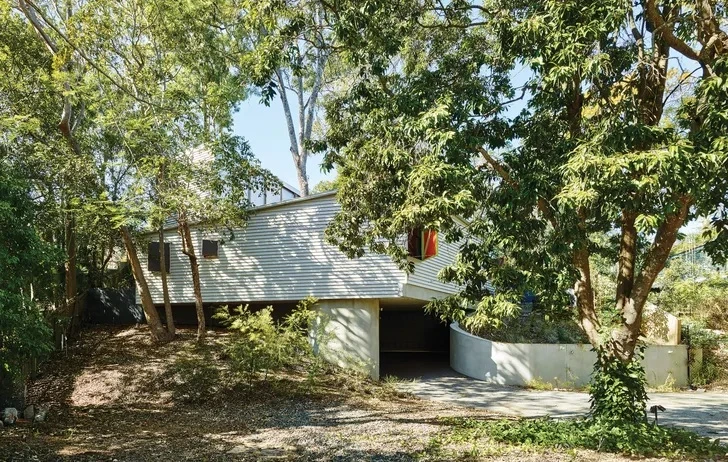
Jule House, designed by Claire Humphreys in collaboration with Kevin O’Brien Architects for her mother, responds to Brisbane’s site constraints. In a 250 m² building area surrounded by eight neighboring dwellings, eight trees, and an overland flow corridor. The building resolves these constraints by partially sinking into the ground before rising into a folded spiral form that preserves views and landscape connections throughout.
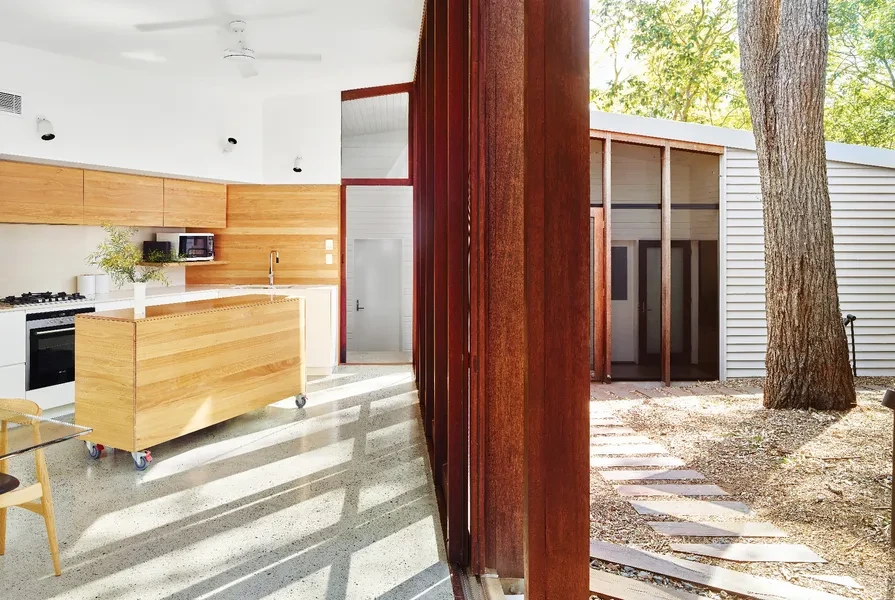
A central courtyard anchors the design, drawing light inside and regulating movement, while an L-shaped circulation zone leads to a raised kitchen with sliding doors and a mobile benchtop for flexibility. Its main level features a bedroom and an ensuite in the north-west wing, a trapezoidal study nook, and a stair-access attic space for independent living. Materials further enhance the building’s character, with grey shutters painted with flora-inspired interior colors, rendered concrete grounds the base, and horizontal cypress wood weatherboards clad the rising form.
House for Mother
Architect: Förstberg Ling
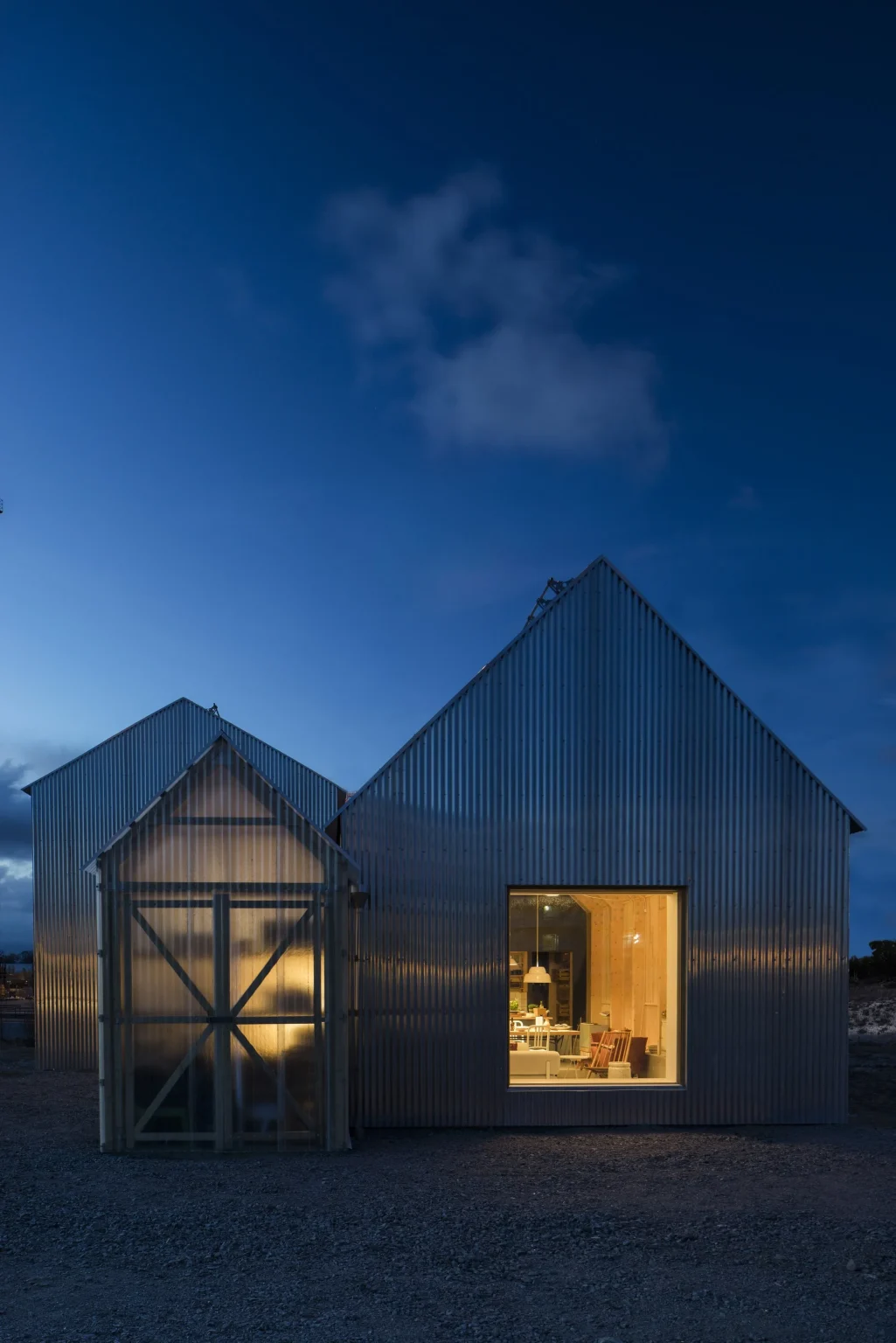
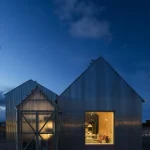
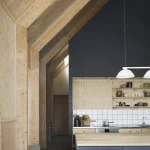
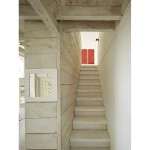
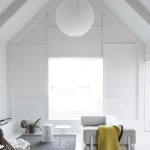
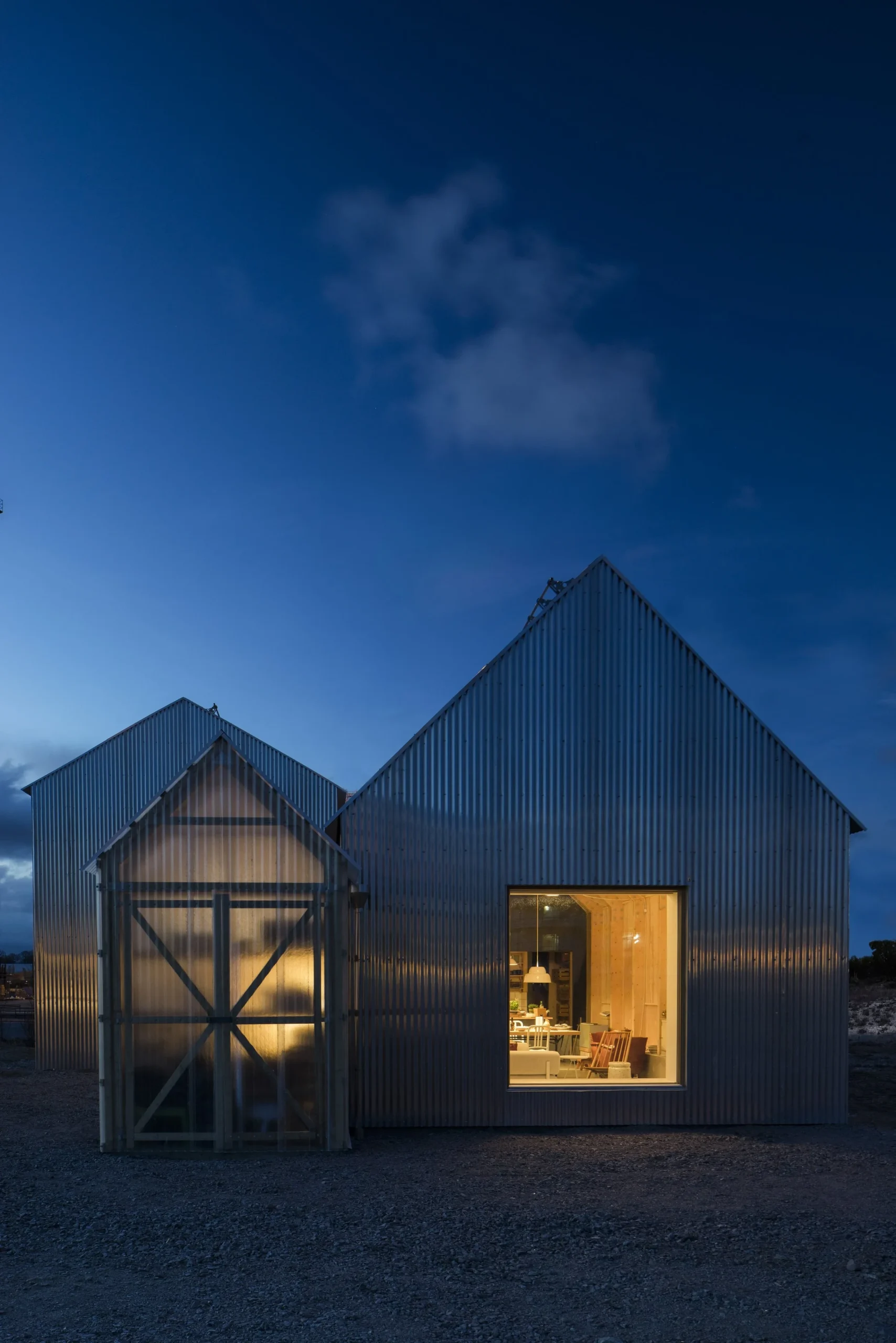
House for Mother in Linköping is a home and studio for Björn’s mother, Maria, a librarian and weaver, and the first completed house by Förstberg Ling. The exterior is clad in raw, unpainted corrugated aluminum that shifts in tone from blue to grey to white and pink depending on the light. Inside, exposed beams, trusses, and plywood-lined walls meet a concrete floor that continues into a low perimeter bench, grounding the space in durability and everyday use.
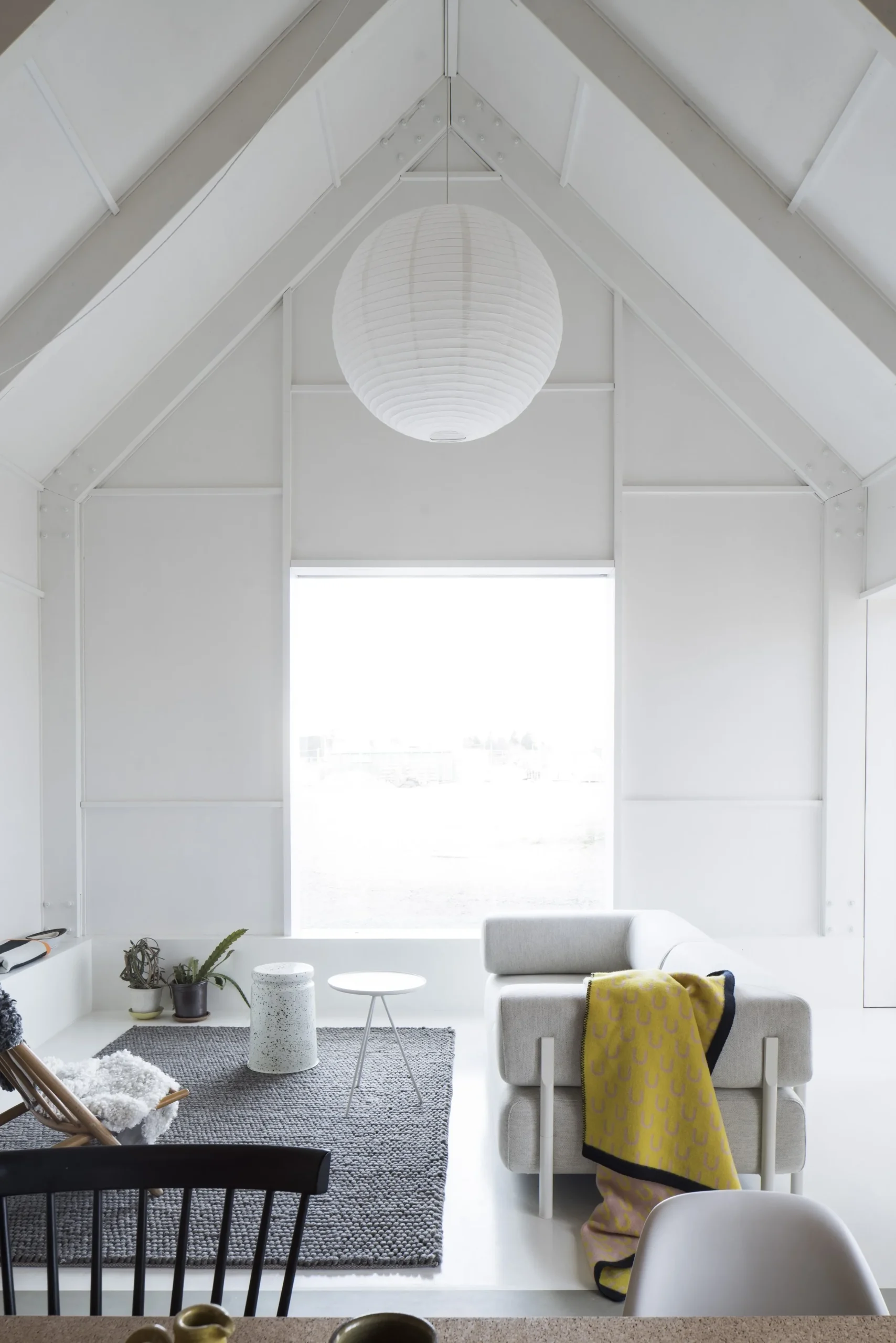
Two parallel structures with varying heights and roof inclinations sit slightly offset to accommodate the tight site while carving out outdoor areas at the front and rear. One volume houses the kitchen, living space, and a compact inner cabin with a bathroom and laundry, while the other houses bedrooms and a small studio across two levels. Rather than walls, material shifts define the rooms, with a white-painted living room giving way to a pine plywood dining area, followed by a grey-stained cabin that introduces another layer of contrast.
Garden House
Architect: Caspar Schols
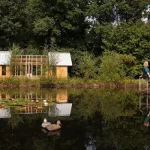
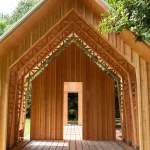
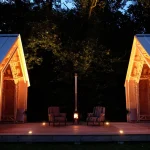
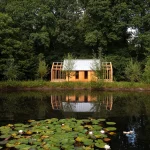
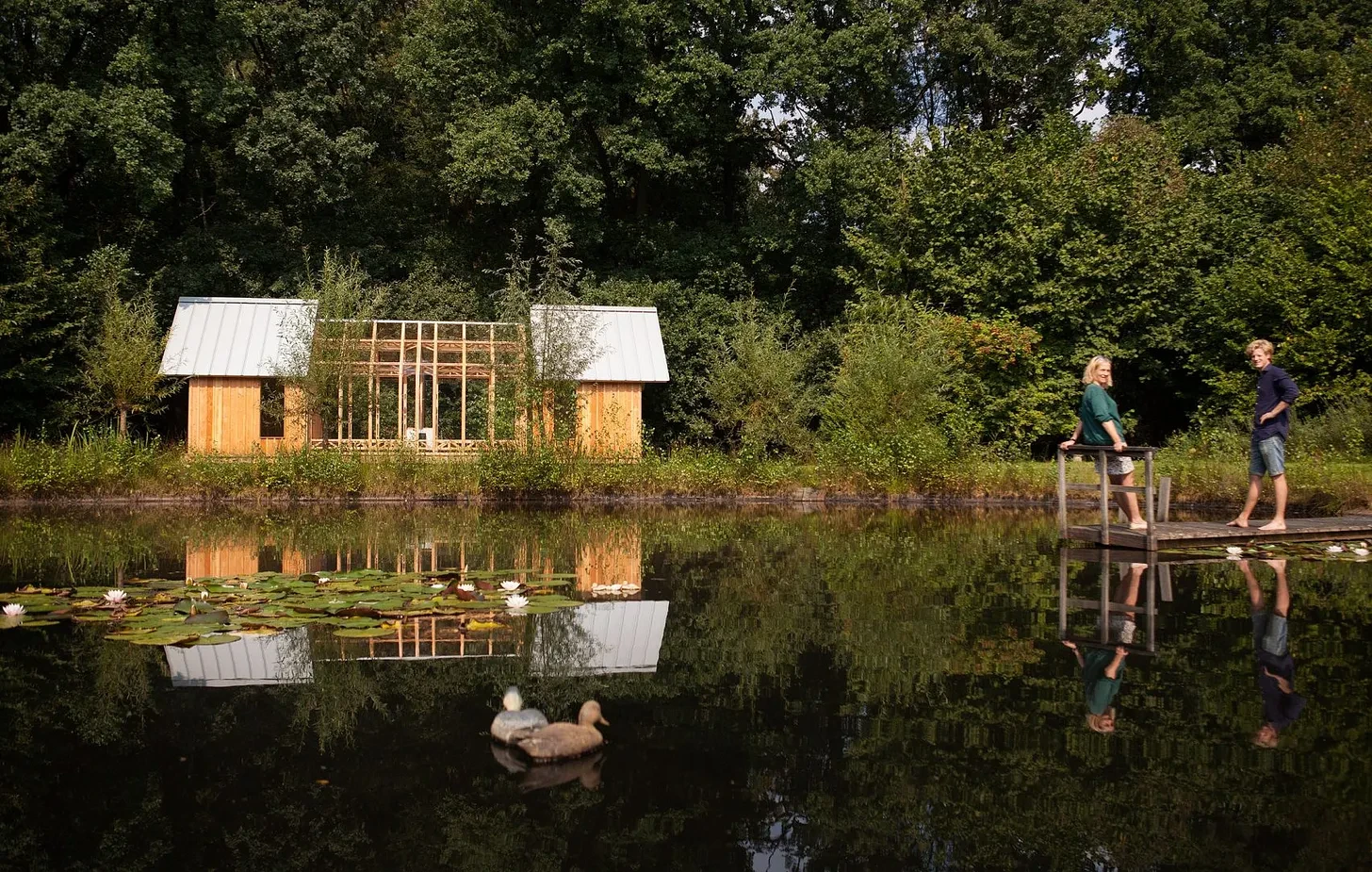
Caspar Schols, without formal architectural training, built a flexible pavilion at his parents’ home in 2016. It responded to his mother’s wishlist for a space for dinner, theater performances, painting, meditation, and daily retreat. He designed an adaptable space with a budget of €20,000 and a footprint of only 25 m², building it on 18 concrete pillars. It encloses an inner shell of double glass within a sliding outer wooden layer, topped by a steel roof and heated by a small Norwegian wood stove.
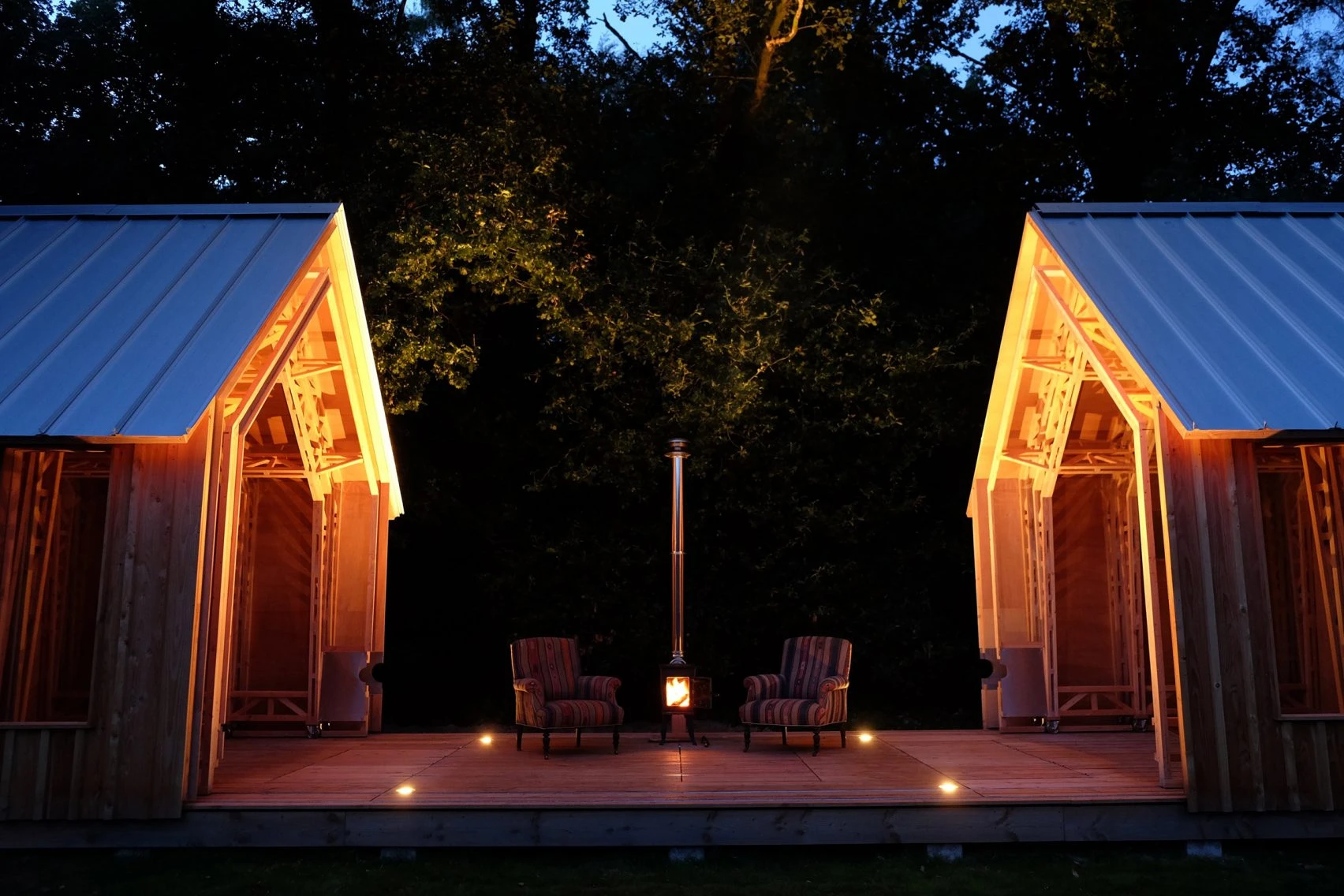
Movable layers define the pavilion’s character; closing them creates a compact insulated volume, while partially opening the east and west sides increases light, cross-ventilation, and adjusted space temperature. When fully opened, both shells slide away, extending the structure to over 12 meters and combining interior and landscape for parties, outdoor sleeping, or open-air performance. The layers behave like adjustable clothes, responding in real time to weather and use while maintaining a fluid connection between inside and outside.