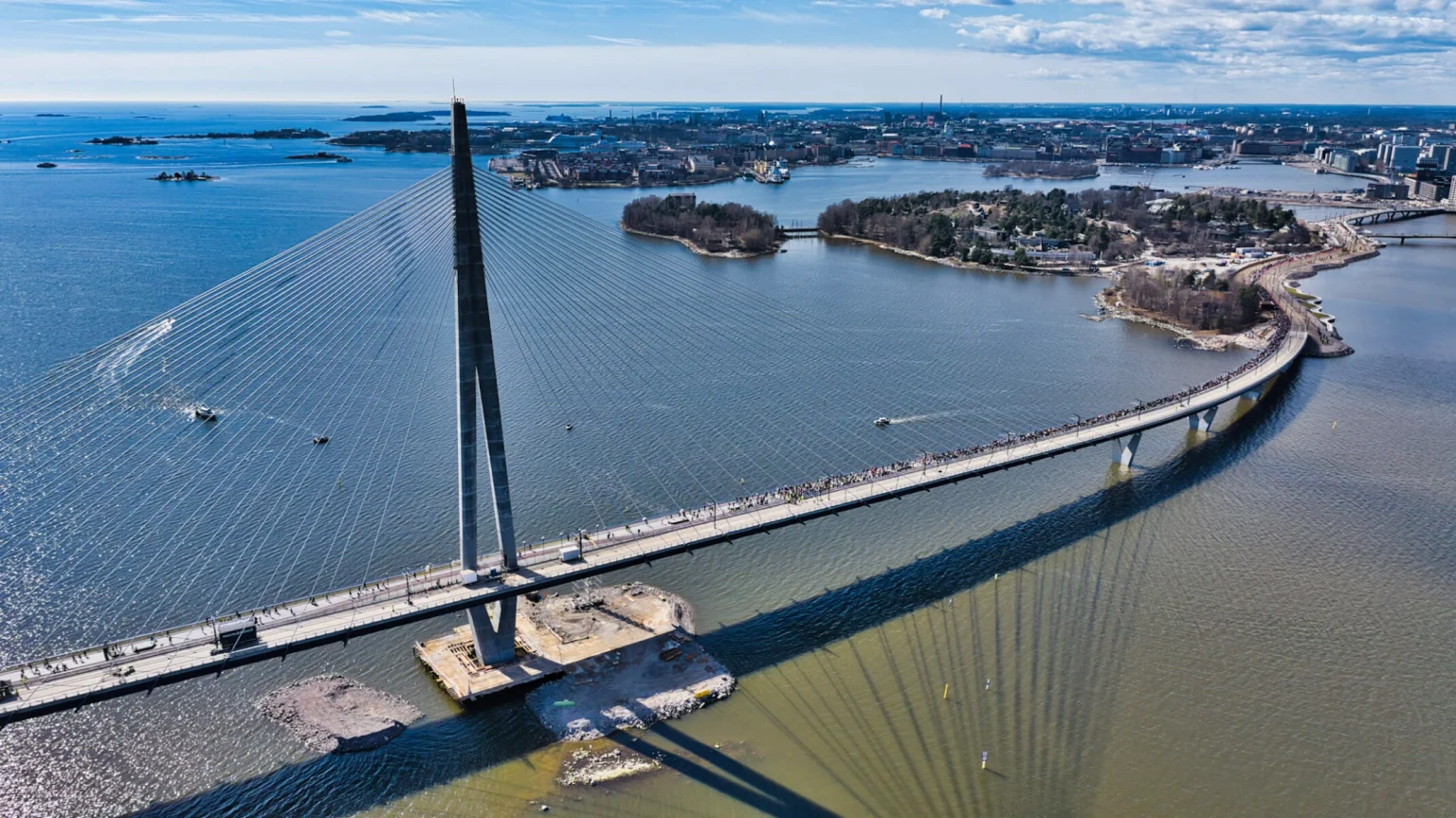



Finland has opened its longest bridge, the Kruunuvuori Bridge in Helsinki, adding a major new link between the city center and the Laajasalo district. The bridge is designed only for trams, pedestrians, and cyclists, with no space for private cars. At around 1.2 kilometers in length, it is one of the longest car-free bridges in the world and a key part of Helsinki’s public transport expansion.
The project is part of the wider Kruunusillat development, which aims to improve connections across the eastern parts of the city. Once fully operational, the tram line running over the bridge will cut travel time between Laajasalo and central Helsinki, making daily commuting faster and more reliable. City officials expect the route to carry thousands of passengers every day.
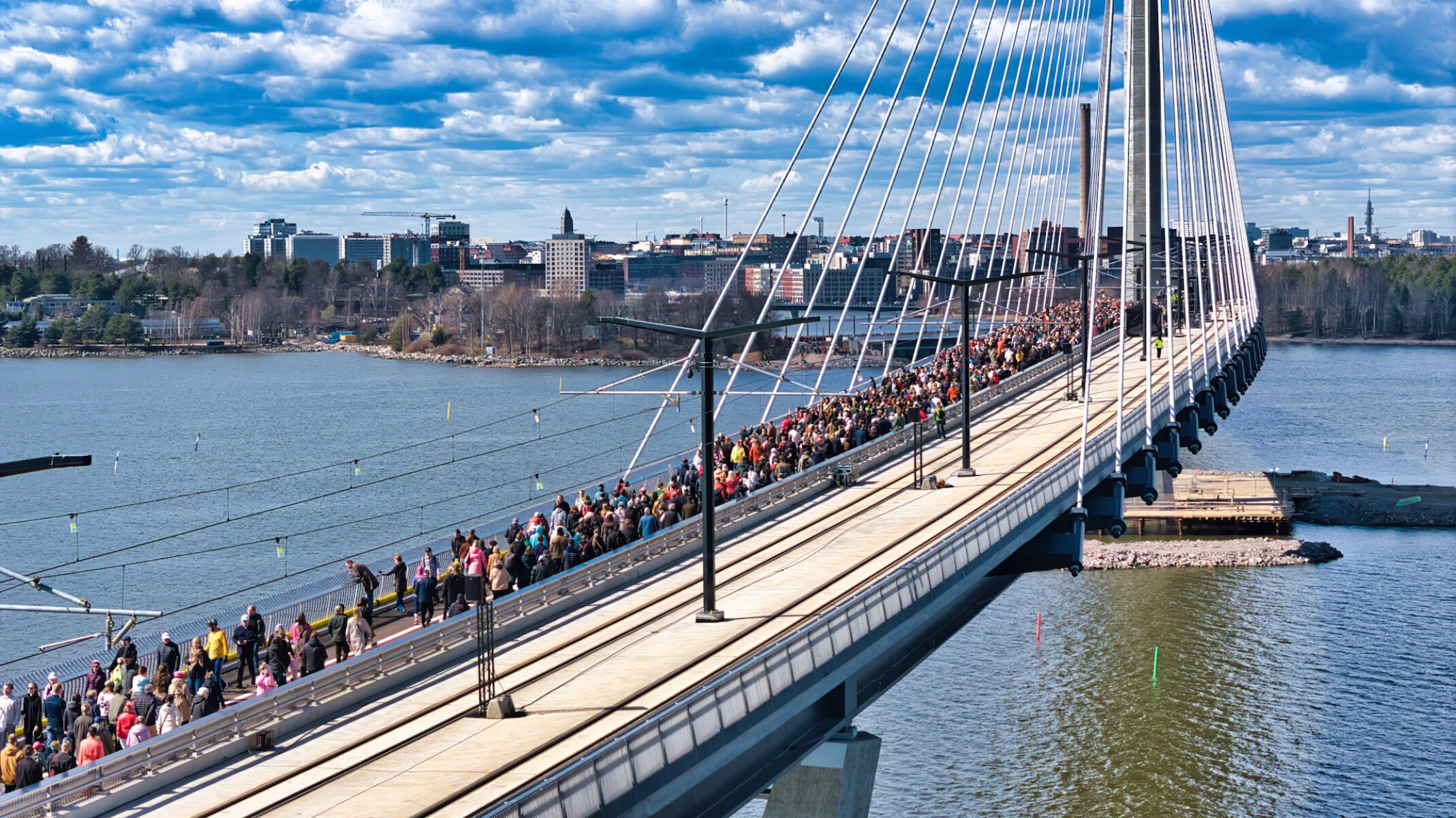
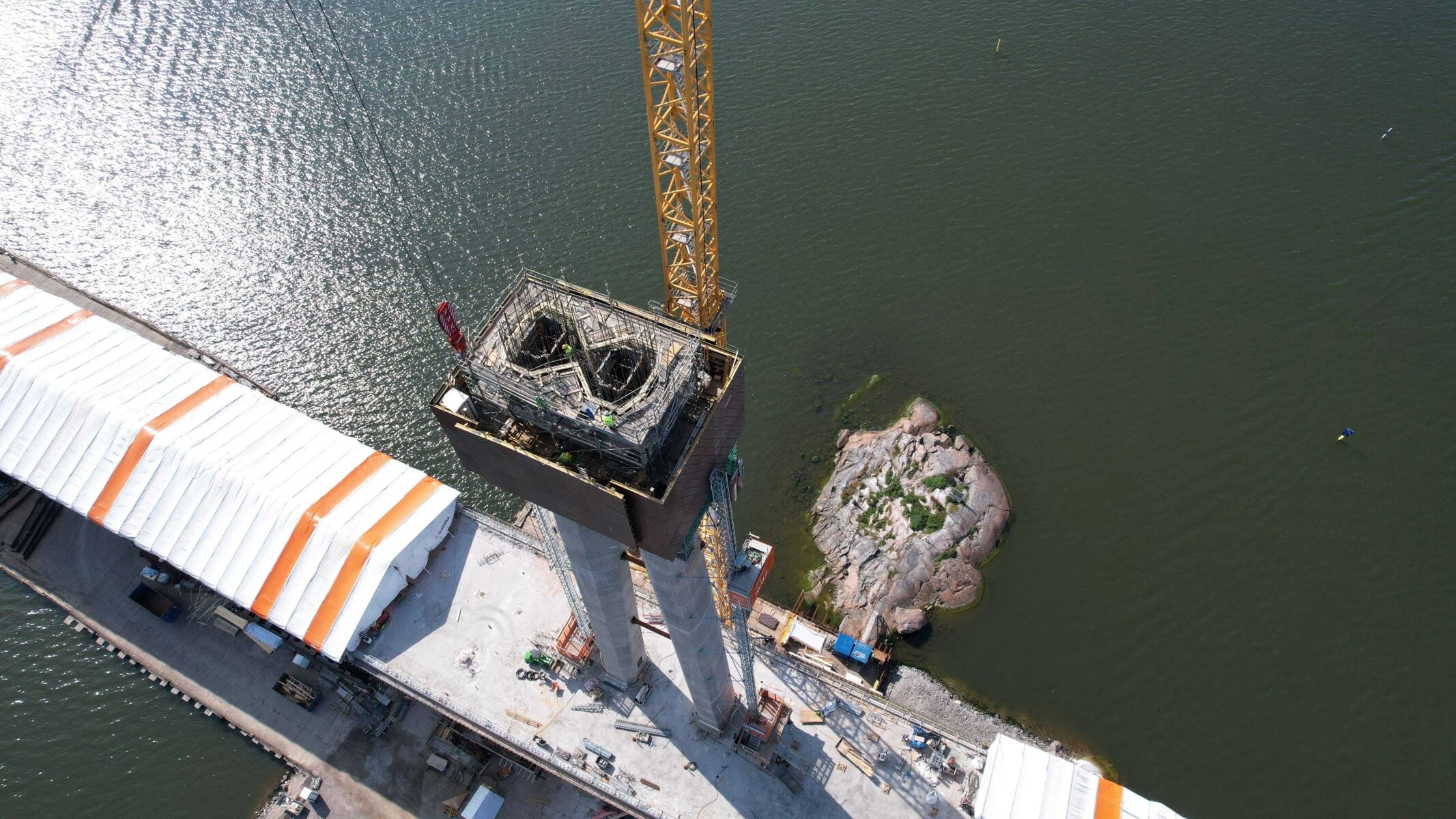
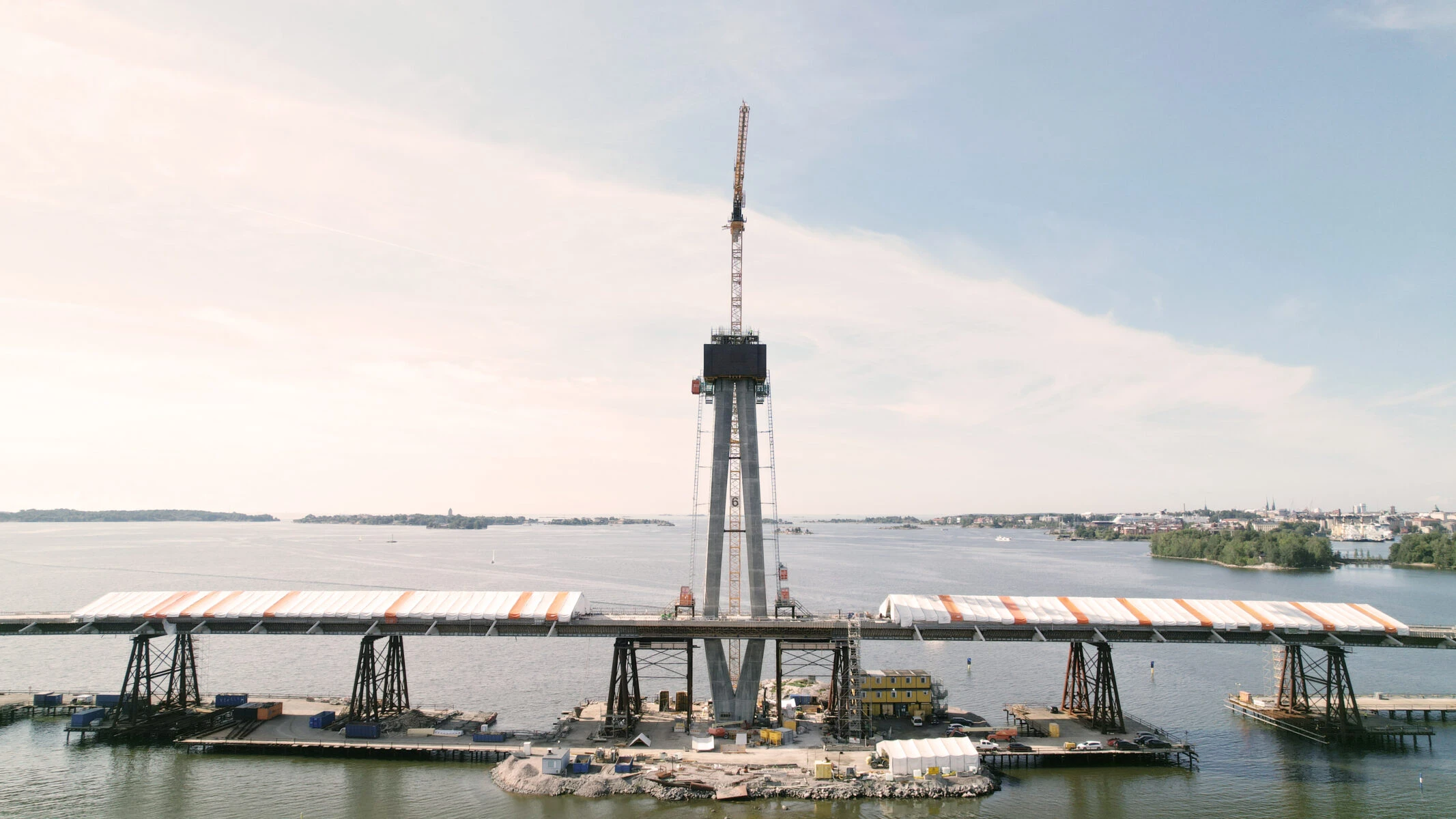
The Kruunuvuori bridge also stands out for its design and engineering. It uses a cable-stayed structure, supported by a single tall pylon that rises about 135 meters above sea level. This makes it one of the tallest structures in Helsinki. The design allows for a long, open span across the water while keeping the structure stable in strong winds and harsh winter conditions.
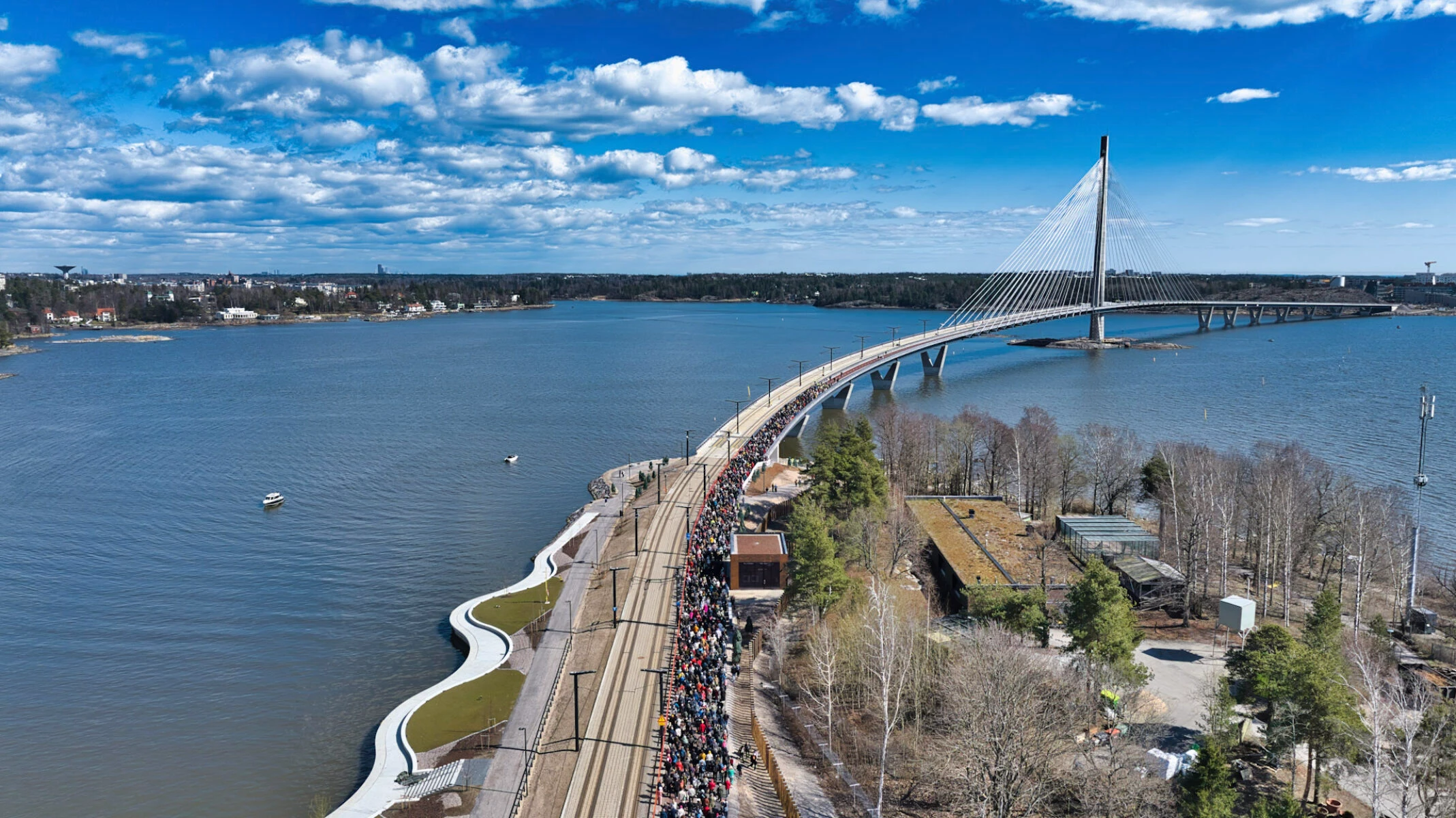
The bridge is built around a central pylon, with two 260-meter sections extending out from it. These connect to shorter approach bridges at both ends, while the main span is supported by concrete bases. It has a separate space for people walking and cycling, and a tram route is planned to start running across it in 2027.
The architectural and design work for the bridge involved a team led by WSP, working alongside architects from Knight Architects. The aim was to create a bridge that is functional and also fits into Helsinki’s coastal landscape. The slim deck and cable arrangement were planned to keep the structure light in appearance despite its size.
The opening of the bridge reflects a shift in Helsinki’s approach to urban transport. By focusing on trams, walking, and cycling, the city is reducing reliance on cars and aiming to lower emissions. The bridge also creates a new public space, offering open views of the sea and nearby islands. Early users have already started using it for both commuting and leisure.
Image credit: Aarni Salomaa, Markus Lintu