It is a well-established fact that buildings contribute 40% of the carbon emissions and account for 35-40% of energy consumption across industries at a global level. The construction industry has extensively implemented measures to reduce this value. Many techniques and several technologies have already been tried and tested across nations, keeping climate change and circularity at the forefront. As goals have been set, some of them have been met, and many lessons learned through newly constructed structures have expanded the focus to include existing structures.
One such alliance is the Powerhouse Collaboration. Based in Norway, this is a collaboration between Skanska, Snohetta, and Zero and aims to use simple, low-tech methods to provide a solution that is beneficial to the environment, nature, and its people. The core objective is to design energy-positive buildings that would ultimately aid Norway’s climate targets across various cities. The Powerhouse Kjørbo, a renovation project of two office buildings, reopened in 2014.
Introducing Powerhouse Kjørbo
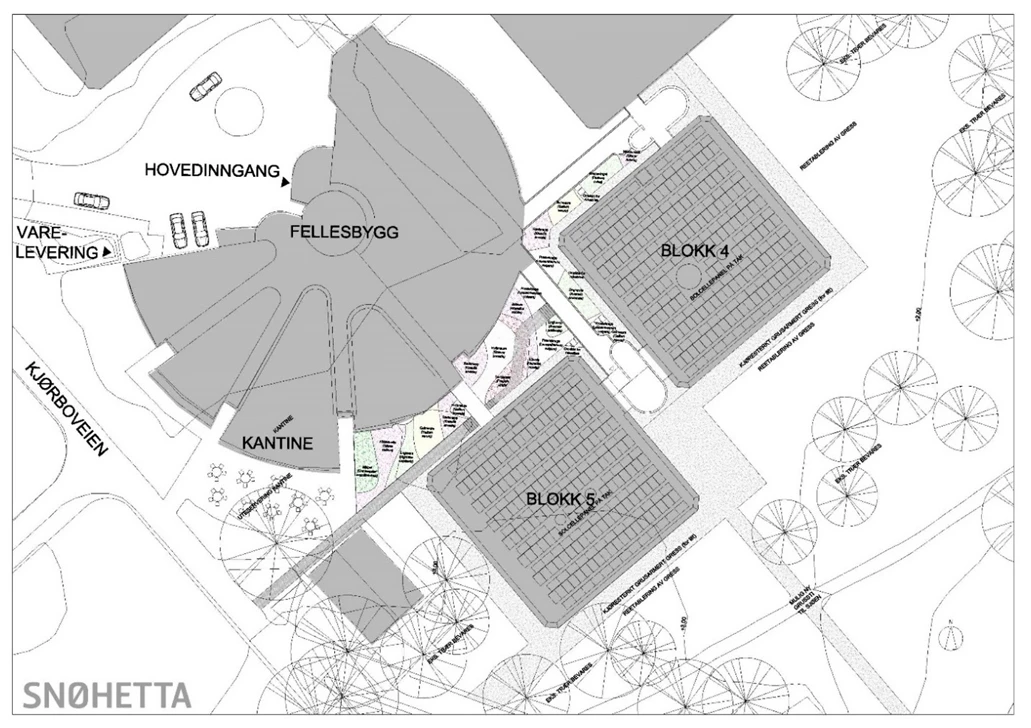
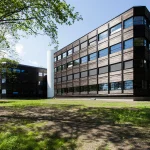
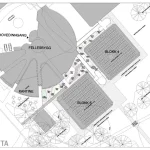
The building was originally built in 1979 as an interconnected office building in Sandvika, Norway. The renovation led by Snøhetta not only extended its life span, but strategic planning has ensured that the building produces more renewable energy than it will consume during its lifetime. The building was reopened in 2014 and is the first energy-positive office building in Norway, and is often cited as a pioneering example of a renovated energy-positive office in the world. The renovated design has proved to have reduced the energy needs by about 90% and generates about 13% more energy than it requires on-site.
The building received a lot of attention from authorities, politicians, and professionals at the time of its completion. Today, it serves as a reference point not only for renovated buildings but also for positive-energy buildings. The building has gained significant fame, leading to the regular organization of guided tours that share its operation and achievements.
Sustainable Design Process
The main factor that is attributed to achieving a highly energy-efficient building was the collaboration between the Powerhouse Alliance entities, whose combined main objective was positive energy buildings. This allowed all stakeholders to participate from the start, reducing conflicts and increasing solution effectiveness.
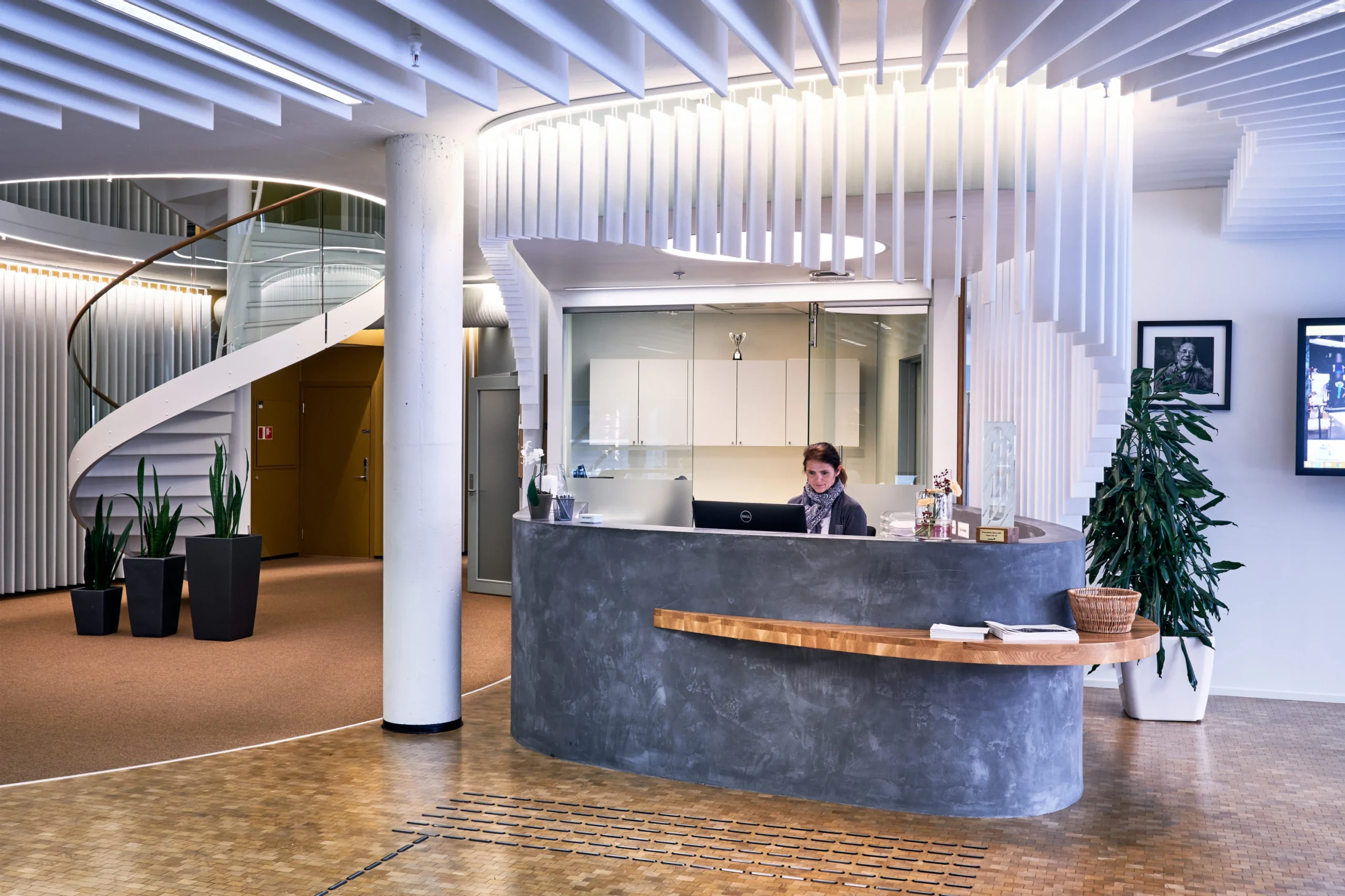
At the outset, the target was always to achieve ‘zero energy’ operation within a 60-year timeline. And to achieve this for a renovation project, an inventory was taken out for all possible greenhouse gas emissions from the time of its inception. This included the transportation of materials, the construction of the structure, its maintenance, repair, reuse, or renovation, and lastly, its demolition. Based on this data of energy consumed during construction and operation, the required energy generation systems were incorporated to guarantee that the energy produced far exceeds the energy needed.
Sustainable Design Elements
At the building level, the design choices that made it a prime example and reference for sustainable architecture are:
Materials Reused – Many of the existing materials were repurposed and used in the renovation process, which helped reduce the carbon footprint of the structure. For example, the exterior glass façade panels were reused as interior office fronts. The repurposing ensured the reused materials met the highest environmental standards and were low in embodied carbon, along with the new materials used. All materials are low-VOC-emitting products, which makes the spaces healthier for the users. And consequent upgrades or repairs also use low-VOC-emitting materials. The building envelope is airtight and well-insulated to prevent leakages and keep the interiors comfortable.
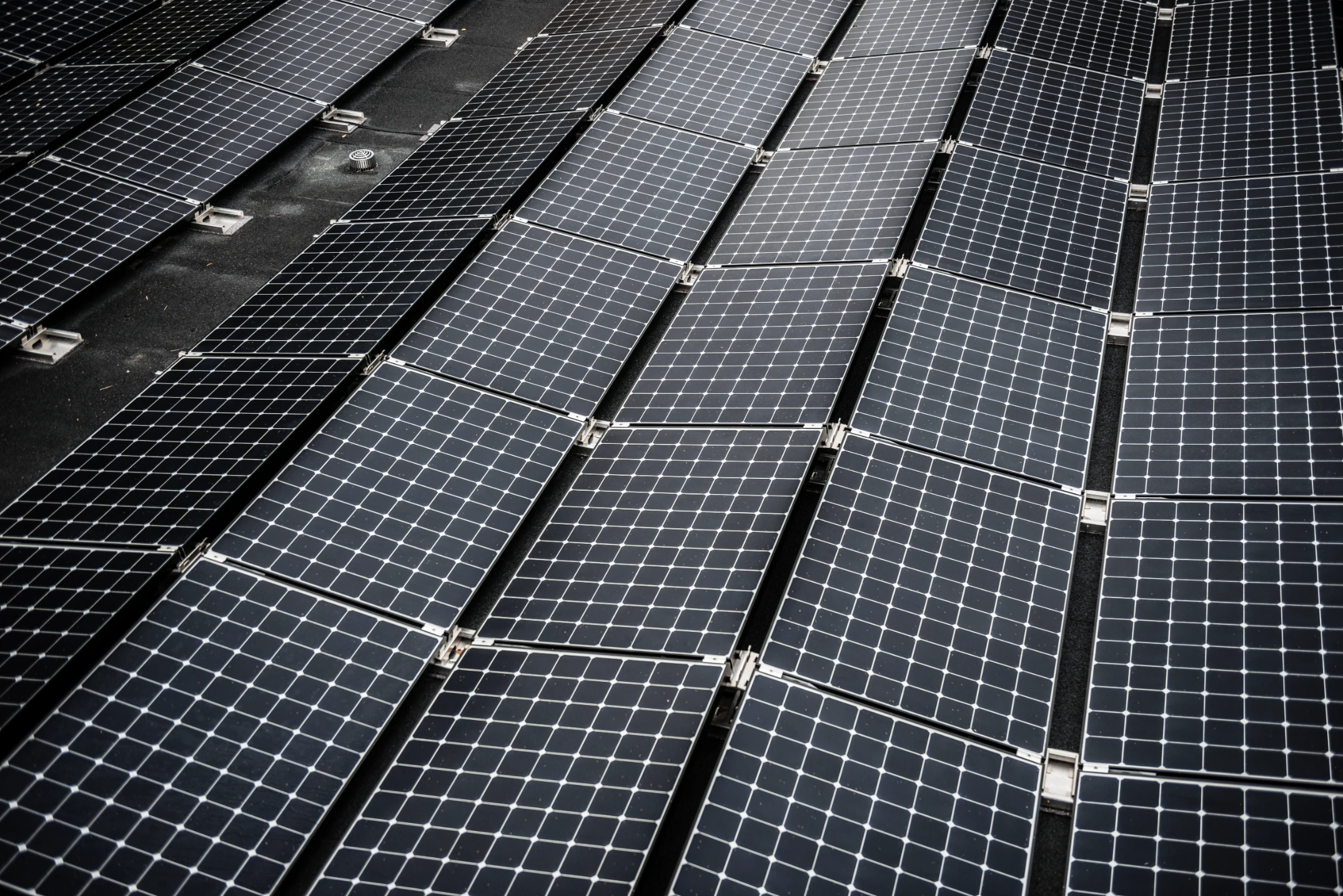
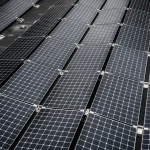
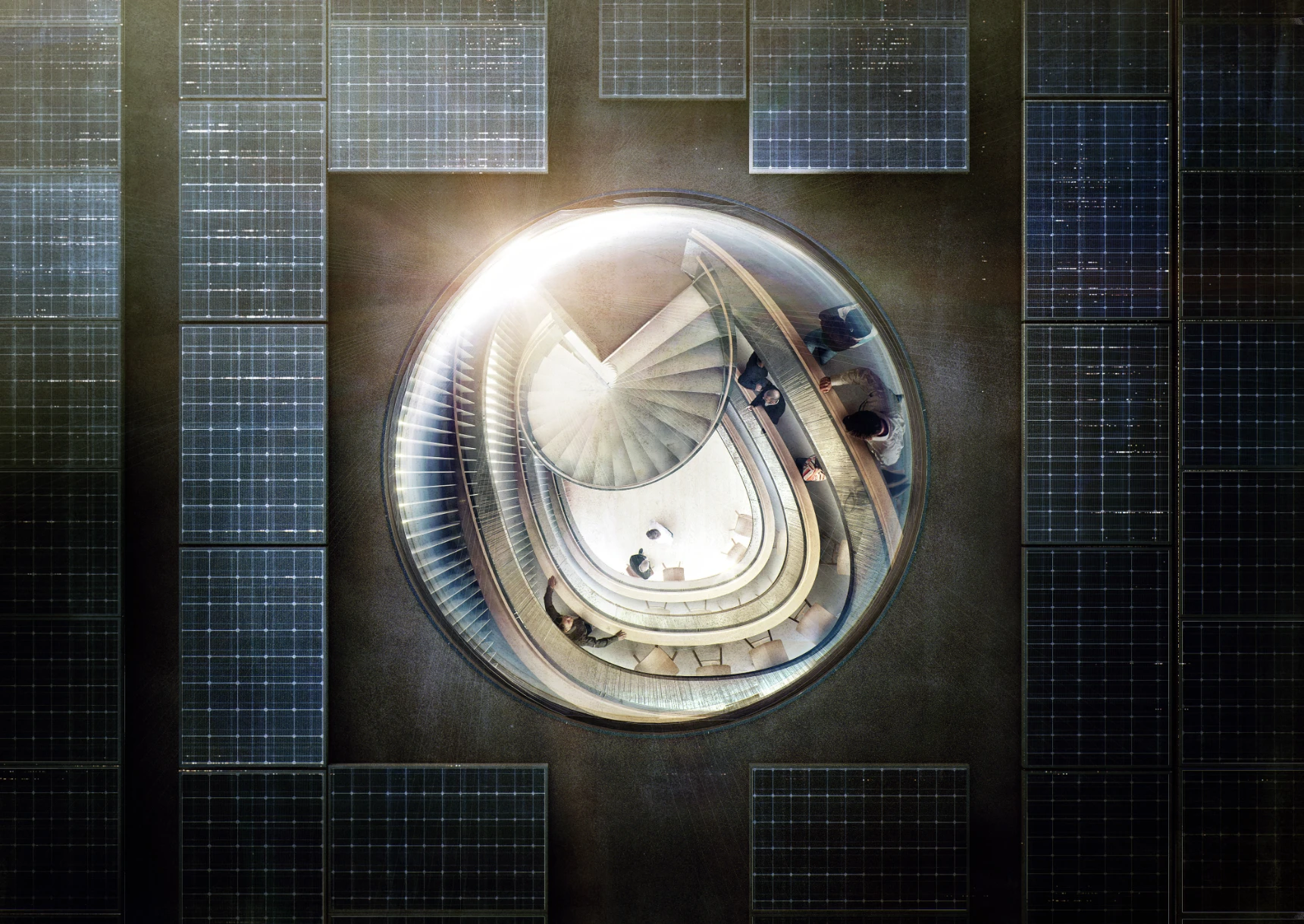
Energy generation – Energy is generated on-site using geothermal wells that employ heat pumps and a photovoltaic system with panels integrated into the roof. Solar panels are installed on both the roofs and a neighboring garage. They produce almost all the energy required for the building operation and the embodied energy that was consumed by the materials and during construction. The heat pumps installed in the ground absorb the heat during the winter through the concrete walls and store it.
The pumps then help to release heat into the interiors during the winter gradually and allow for free cooling during the summer. They provide the heating required by radiators, water, and ventilation. Even the heat from the server room is recuperated and used. The energy produced on the site is also supplied to other buildings on the same site and an Uno-X hydrogen station situated close by.
Lighting and Daylighting – The renovated design employed custom-made lighting and structural systems for high-level transmission of daylight and its distribution, which resulted in lesser dependence on artificial lighting. The facades were designed to optimize the windows to bring natural daylight to the workspaces, and light-colored interiors were intentionally chosen to reduce artificial lighting fixtures. Moreover, conscious efforts were employed to facilitate maximum use of daylight and provide visual comfort. Workstations were placed along the periphery of the built structure to improve visual comfort. The use of low-VOC-emitting materials also helped in saving energy required for artificial lighting.
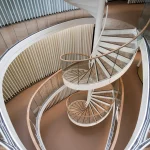
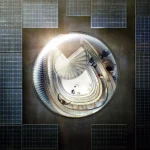
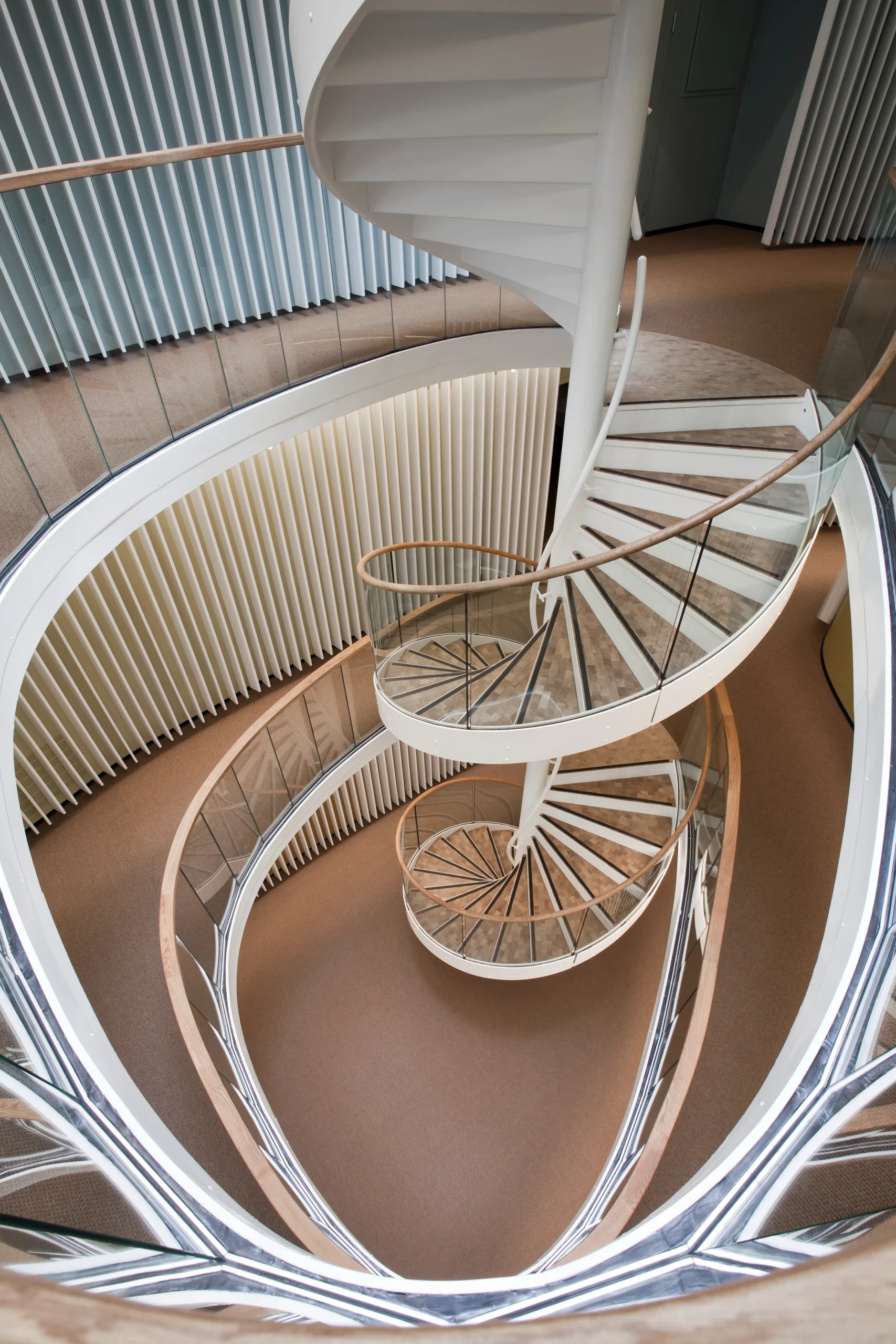
Ventilation systems – The renovation consciously made design choices that improved ventilation inside the building. The plan included a staircase designed to double up as an open ventilation shaft that forces warm air into the ducts, which then distribute it to the various spaces. The structure also has a revolutionary ventilation concept; the exposed concrete decks integrated in the building store thermal energy, which is then displaced as and when needed using low-pressure and less energy-consuming fans. Solar shading was employed to reduce the dependence on artificial cooling systems, and even the materials used in the renovation are all low-VOC-emitting products that reduce the need for extra ventilation within the spaces.
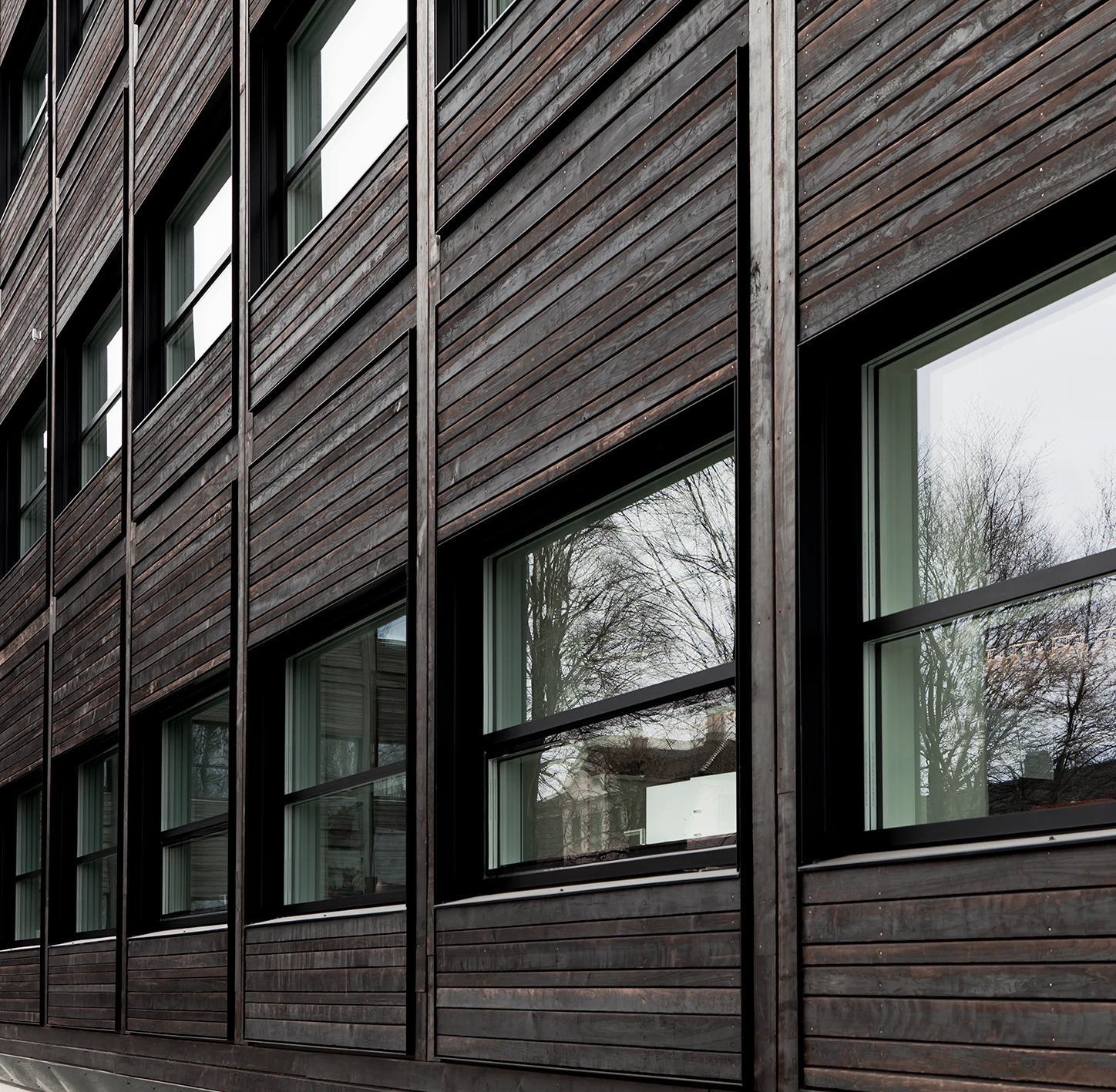
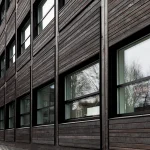
Façade cladding – The façade, originally made of glass, has been redesigned using charred wood. This material presented a fourfold advantage – minimized energy during production while having a longer lifespan; the char layer made the external wall resistant to fire, rot, and bugs; the surface is environmentally friendly and maintenance-free; and it mimicked the dark color of the original façade.
Sensors and monitors – An energy dashboard is installed on-site, which monitors the building’s energy consumption and renewable energy production in real time. The building has also been zoned to operate and monitor the built-up area using sensors that control lighting, ventilation, and heating and cooling. This helps optimize the energy used and efficiently manages the energy generated.
Certifications and Awards
Apart from being recognised as the first renovated energy-positive building, Powerhouse Kjørbo has also been recognised with
- BREEAM-NOR ‘Outstanding’ certificate – the highest level in the Norwegian version of the environmental certification system. Assessed for energy & environmental performance, health conditions for tenants, and economic sustainability, the building scored 85.2% overall, 83% in waste and transportation, 90% in use of area and ecology, and 96% in energy.
- 2023 UN Global Climate Action Awards – ‘Momentum for Change’ award
- MIPIM Awards 2015 – Nominated for ‘Best Innovative Green Building’