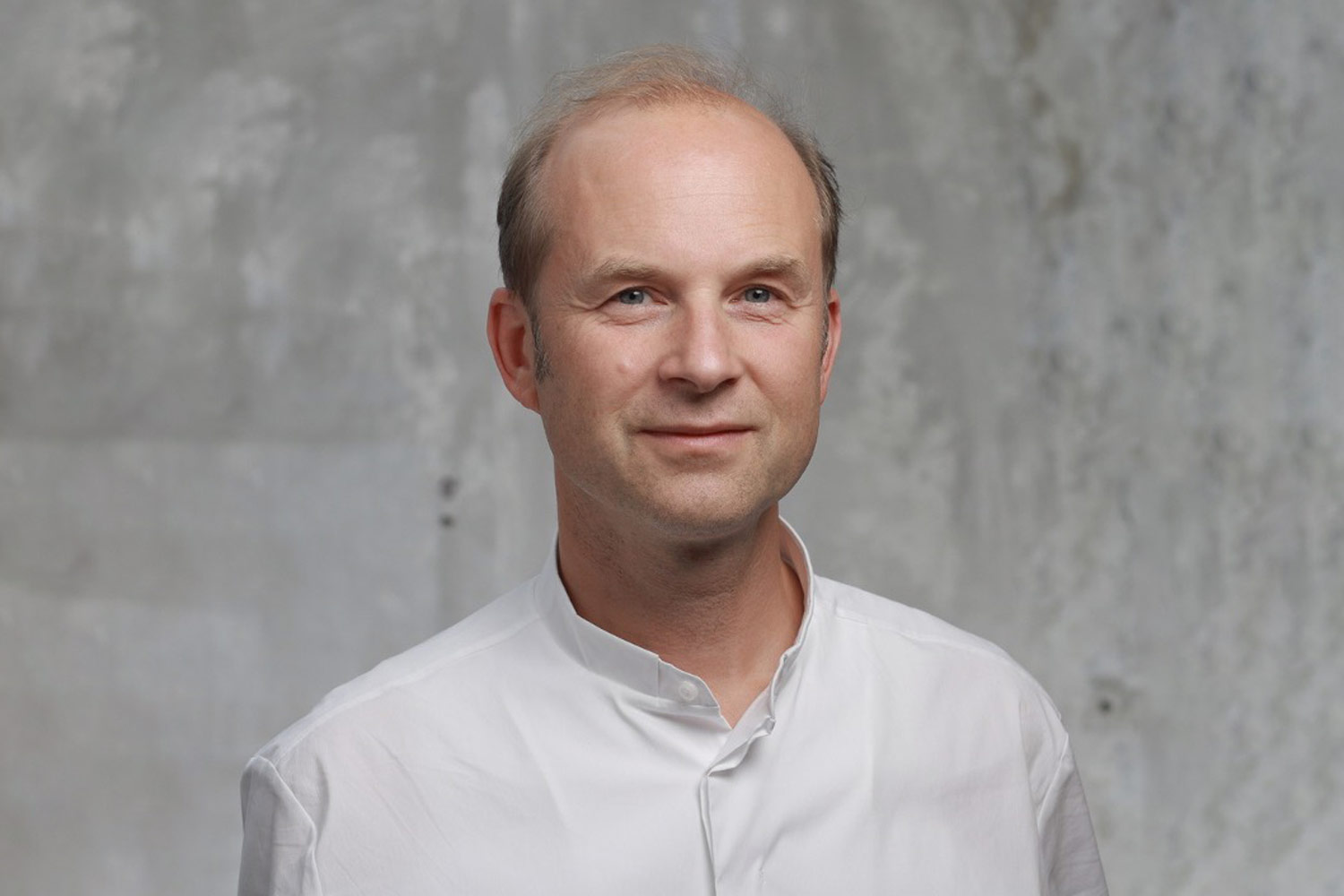


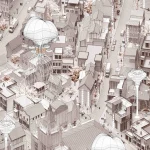

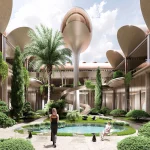
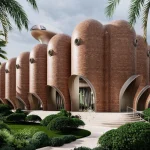
Zehua Zhang’s work is grounded in a central idea that architecture can function as a spatial or formal discipline and also as an active environmental system rooted in sustainability. This perspective can be traced back to an early conceptual turning point during his participation in the UIA International Ideas Competition organized by the International Union of Architects. The competition, which explored Post-human Urbanity: A Biosynthetic Future on Namsan, called for proposals that position biosynthetic ecology as a catalyst for urban regeneration.
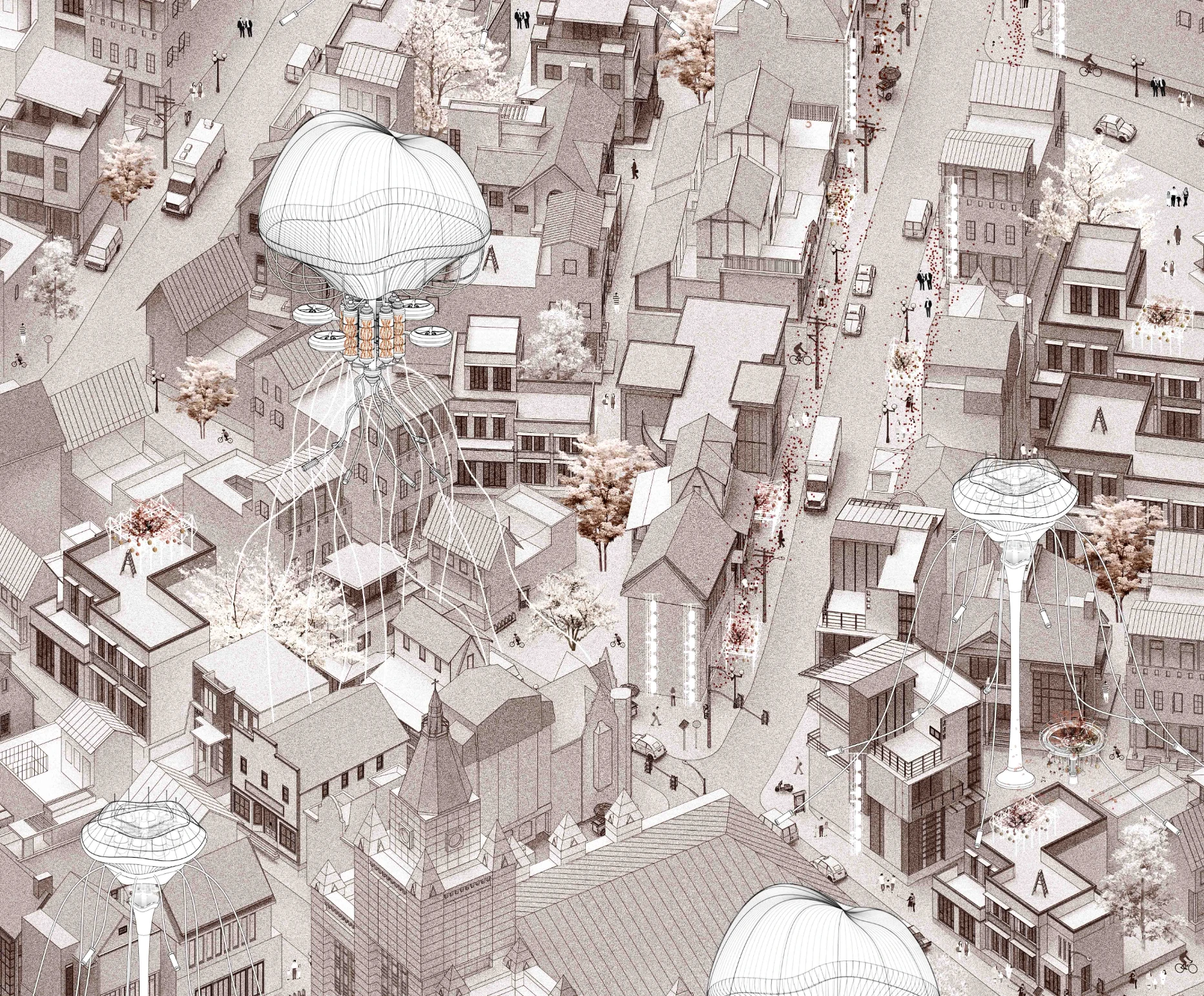
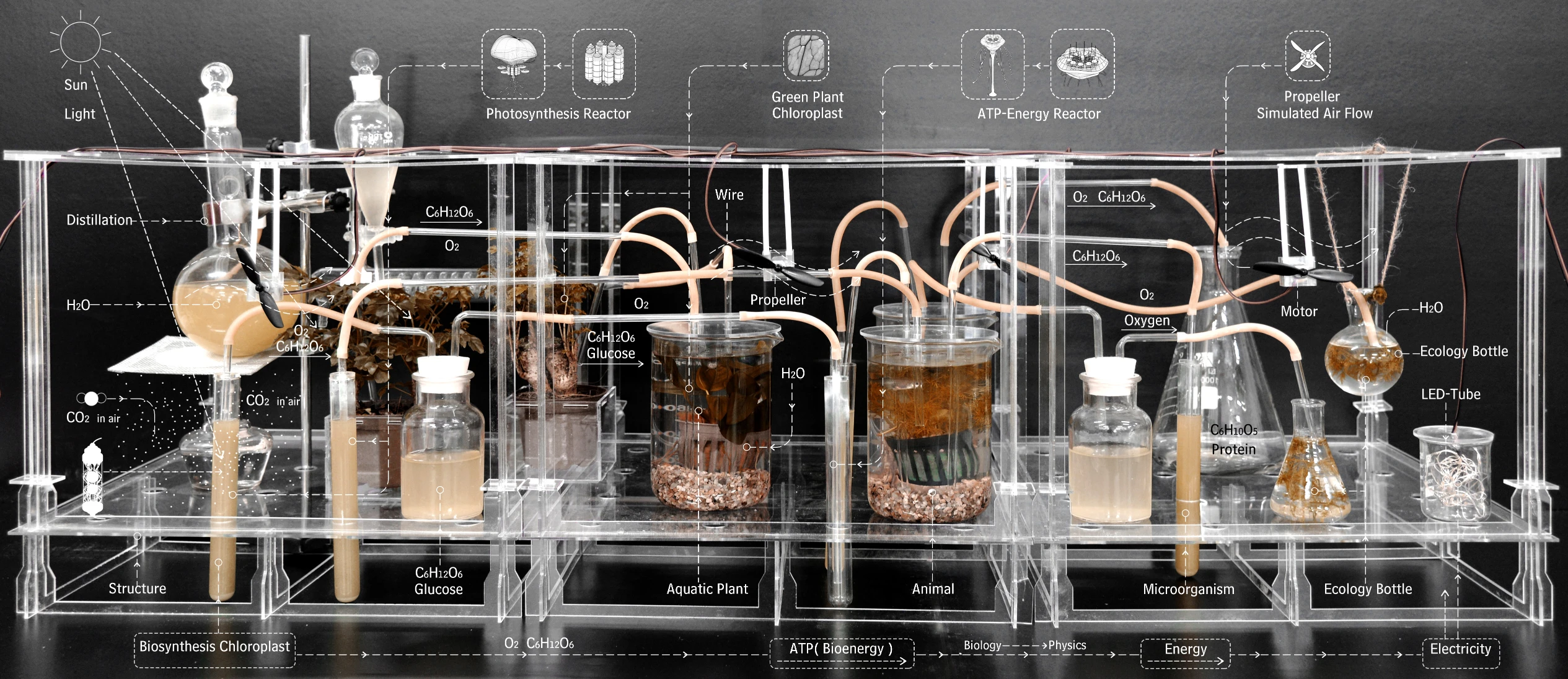
His award-winning proposal, Carbon Neutral City Under Biological Intervention, which secured Second Prize internationally, reconceived the city as a living, metabolic system rather than a fixed urban fabric. The project was based on how natural carbon cycles work and turned the ideas of capturing, storing, and releasing carbon into designs for spaces and infrastructure. It combined growing food, cleaning the air, and involving the community in a connected system, viewing city improvement as a way to share resources rather than just replacing what exists. More than a standalone concept, the project laid the foundation for a design approach that continues to shape his evolving philosophy and body of work.
Professional Practice and Design Approach
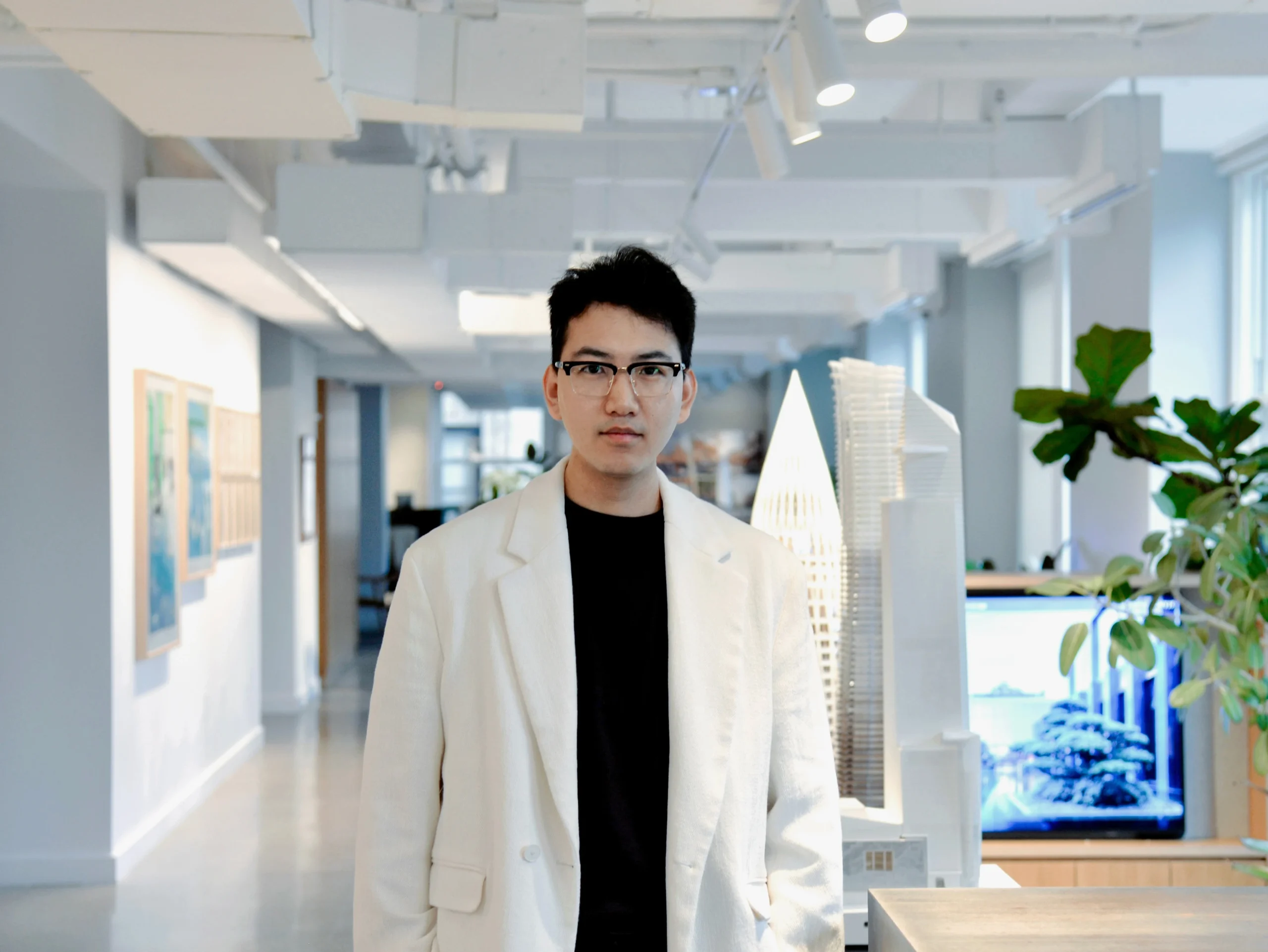
Now based in New York, Zehua is an alumnus of the University of Pennsylvania’s Stuart Weitzman School of Design and currently holds the position of Associate Principal at Kohn Pedersen Fox Associates (KPF), an internationally recognized architecture firm known for its benchmark-setting projects. He is a licensed architect in the State of New York and a LEED AP BD+C-accredited professional, bringing over seven years of professional experience to his practice.
At KPF, his work primarily engages with high-density mixed-use developments and large-scale urban projects across the United States and internationally, where environmental performance is not treated as an additional layer but as a fundamental driver of design thinking.
Embedding Environmental Intelligence in the Design Process
What distinguishes his approach is not simply the use of environmental tools but how they actively shape architectural decisions. Through the integration of parametric modeling and simulation platforms, environmental analysis becomes embedded within early-stage workflows. He can test several massing scenarios at the same time and look at how they will affect the environment before making any final decisions. In this framework, performance is not a metric applied after design but a generative logic that informs it.
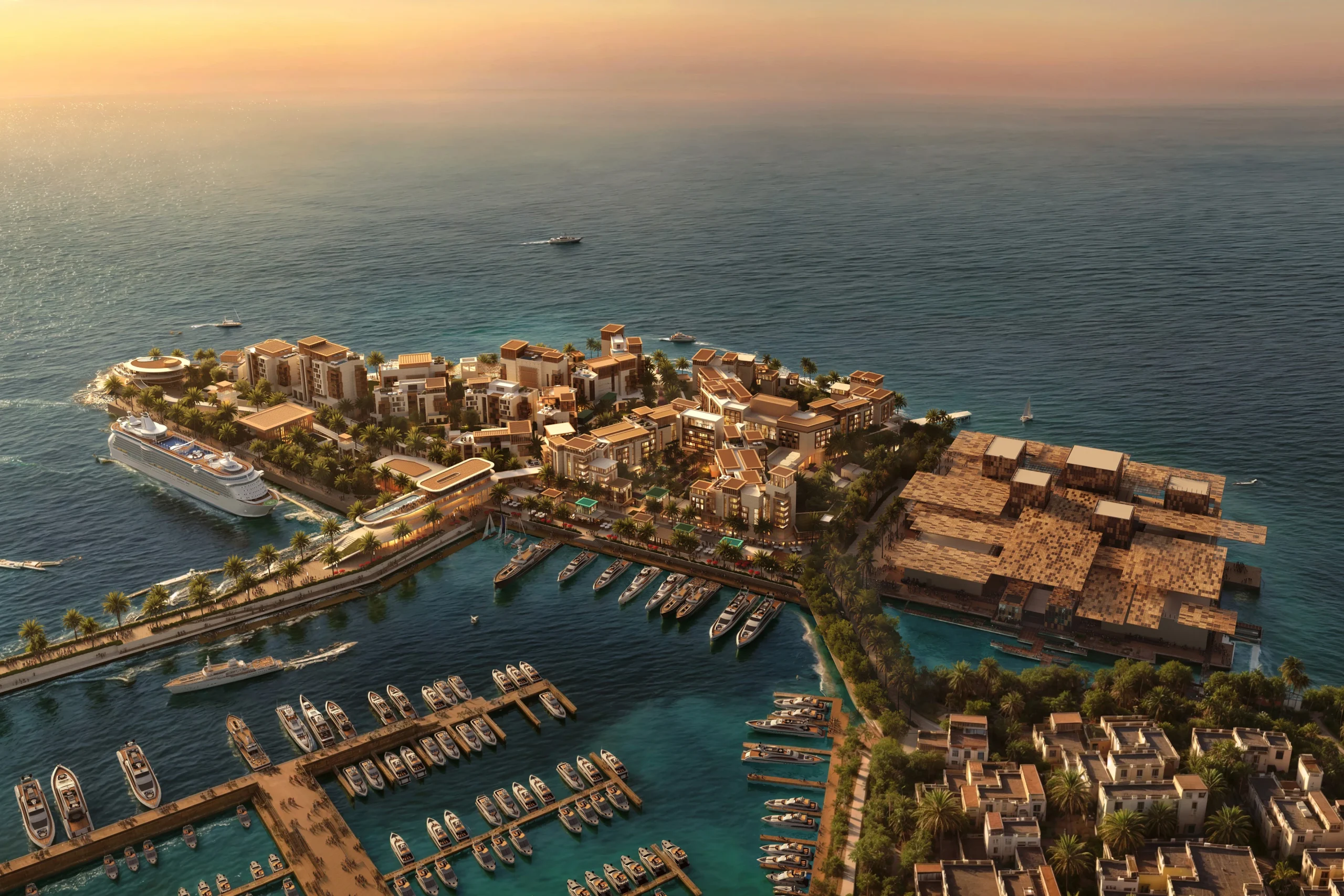
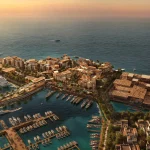
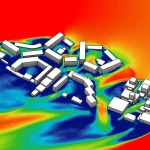
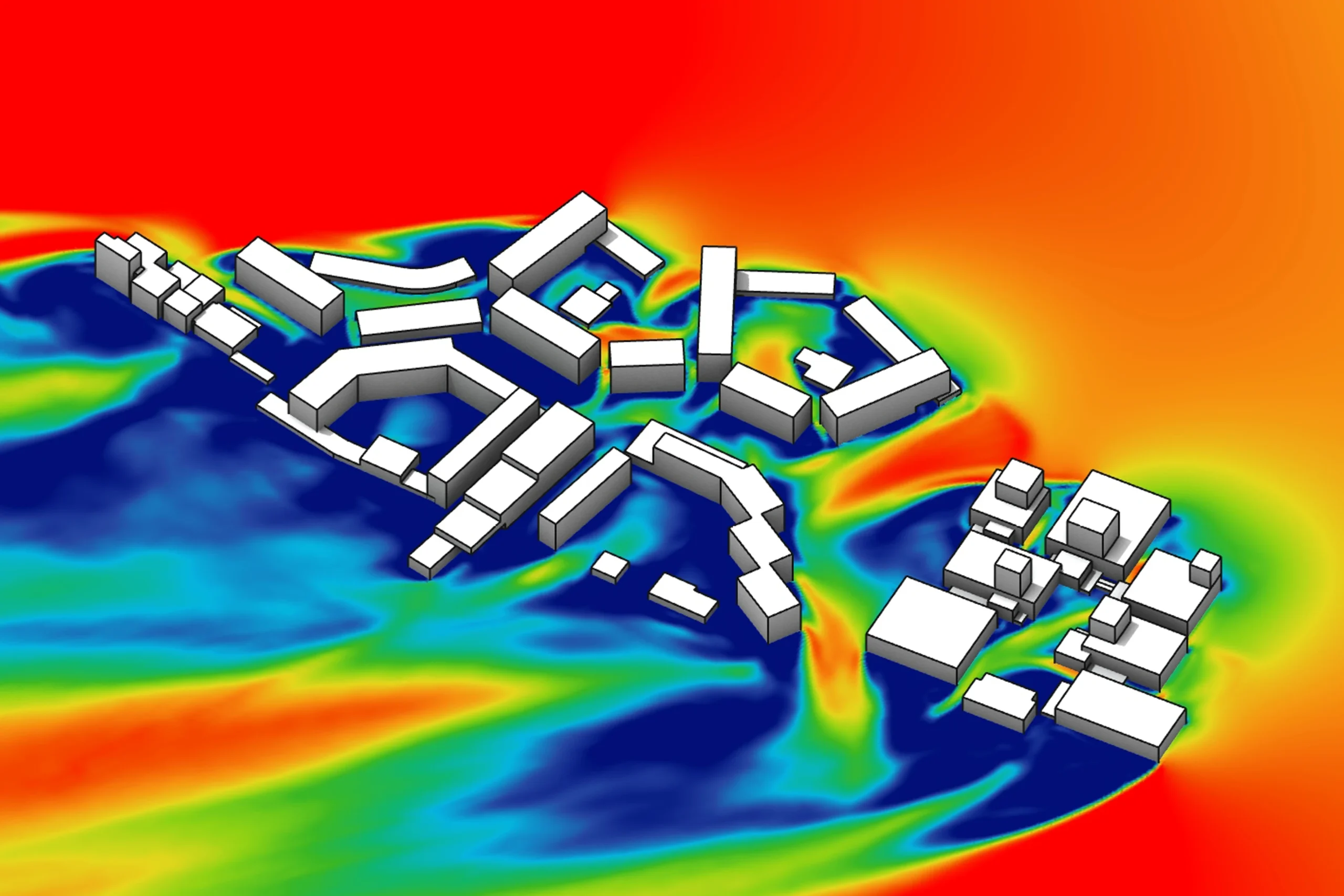
This methodology is particularly evident in the project Marina Island Facilities and Vertical Assets at KPF, where he plays a key role throughout the design process. In the project, Zehua employs Computational Fluid Dynamics (CFD) to analyze how wind interacts with buildings. For simulations, he uses actual weather files from the project site, ensuring that airflow analyses reflect real conditions rather than assumptions. This approach allows environmental feedback to inform the design in real time, guiding adjustments to building orientation, massing, and form. Strategies such as setbacks, chamfered geometries, and volumetric articulation are evaluated not only for their visual impact but also for their capacity to optimize wind flow.
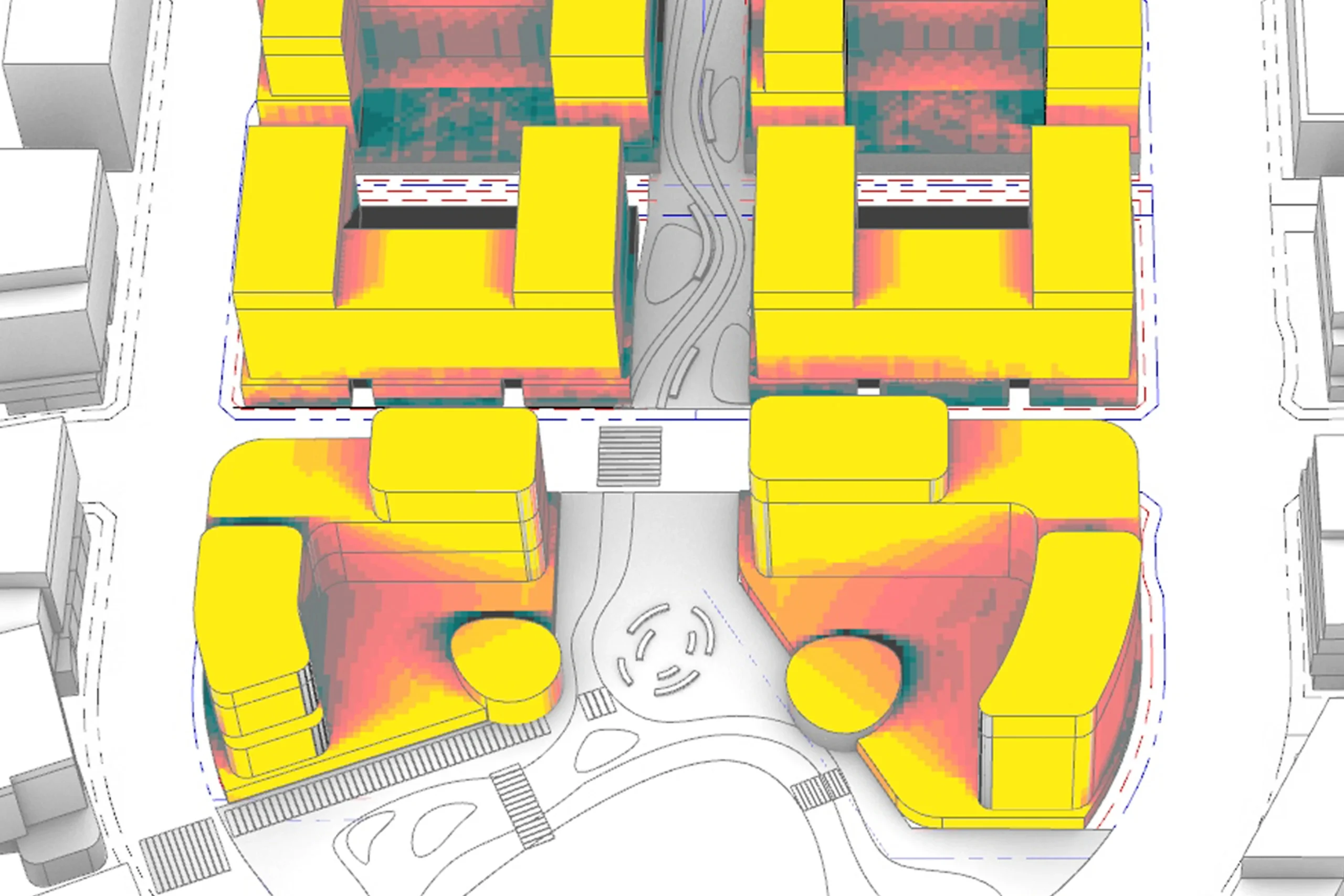
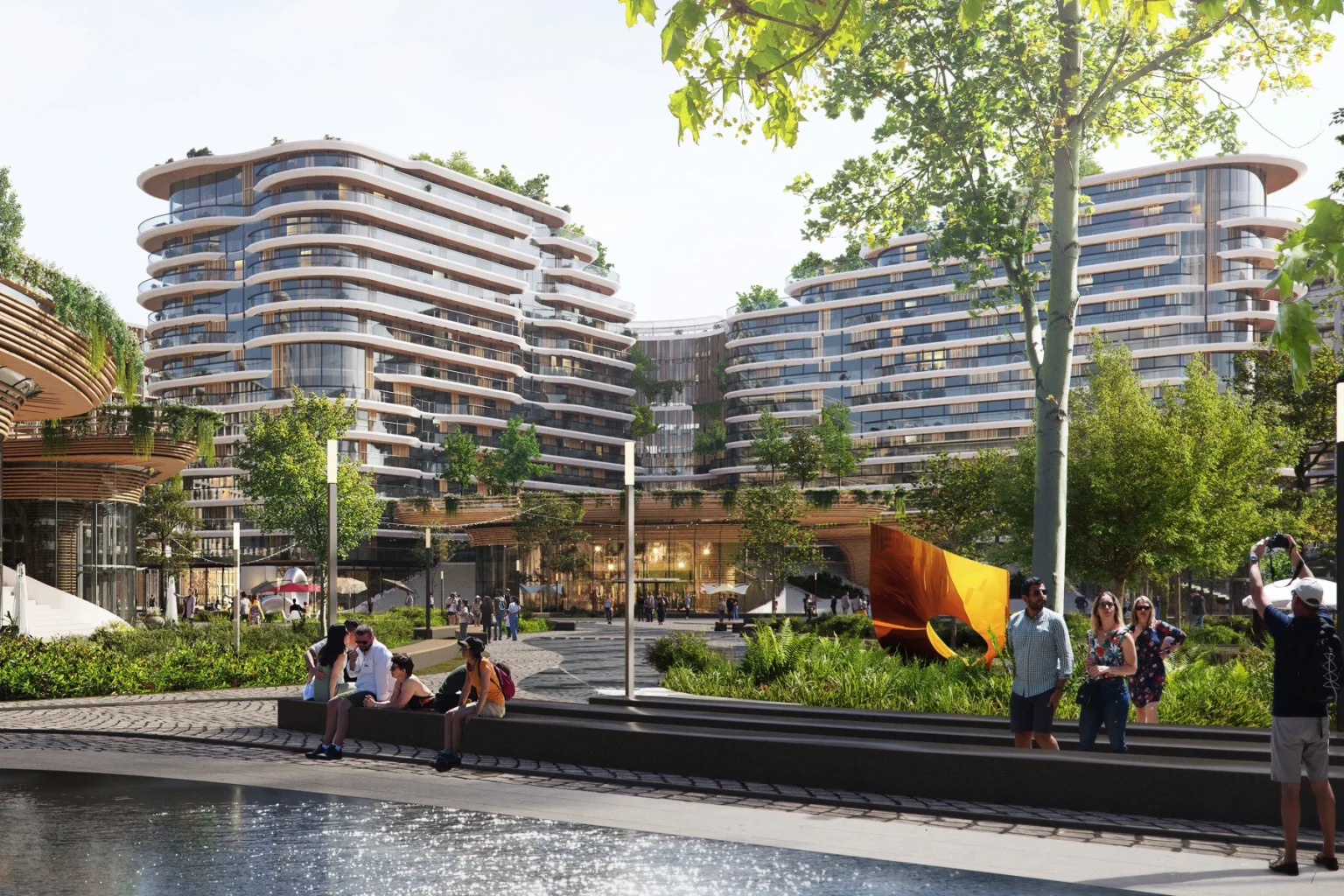
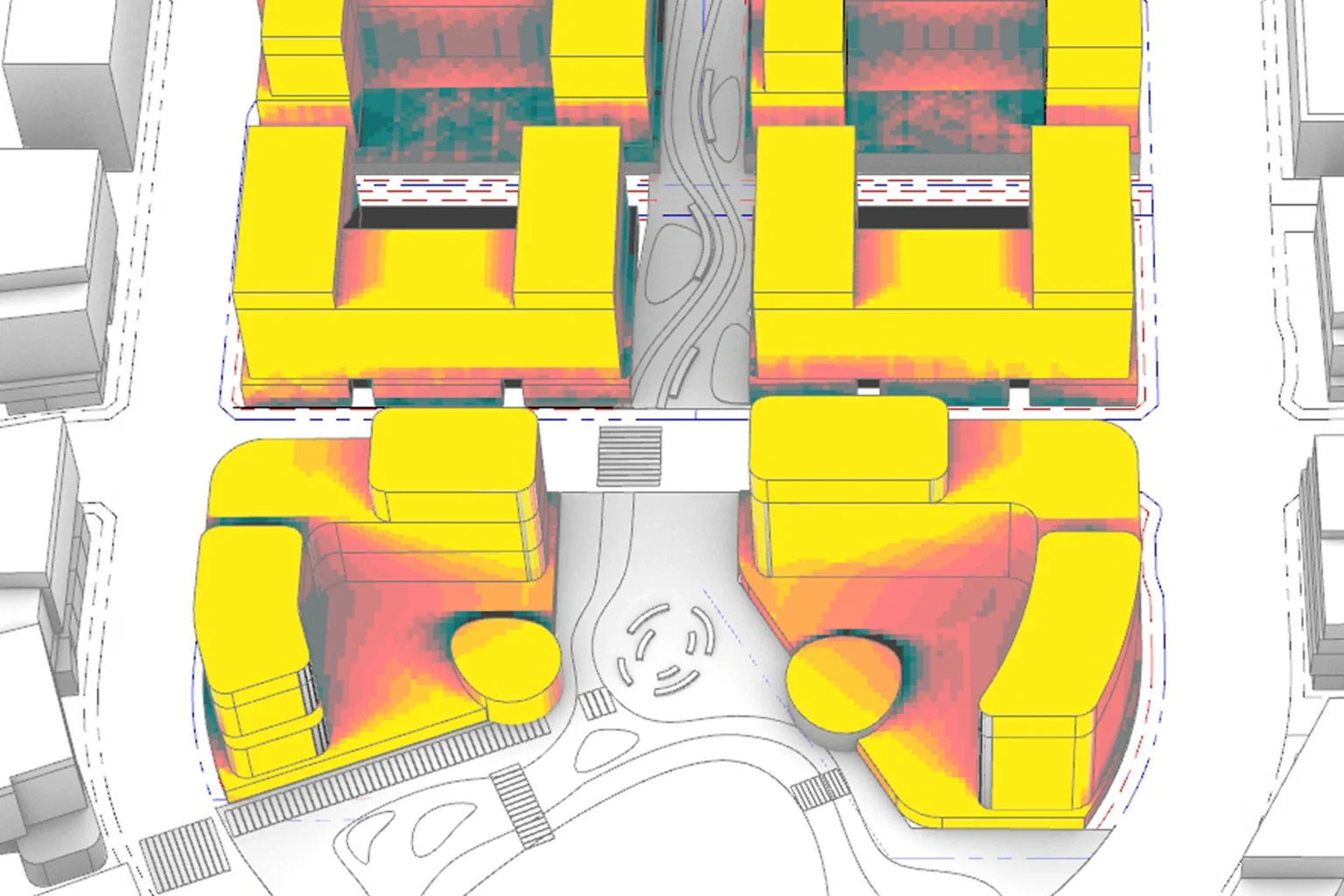
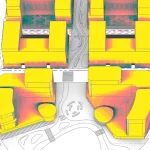
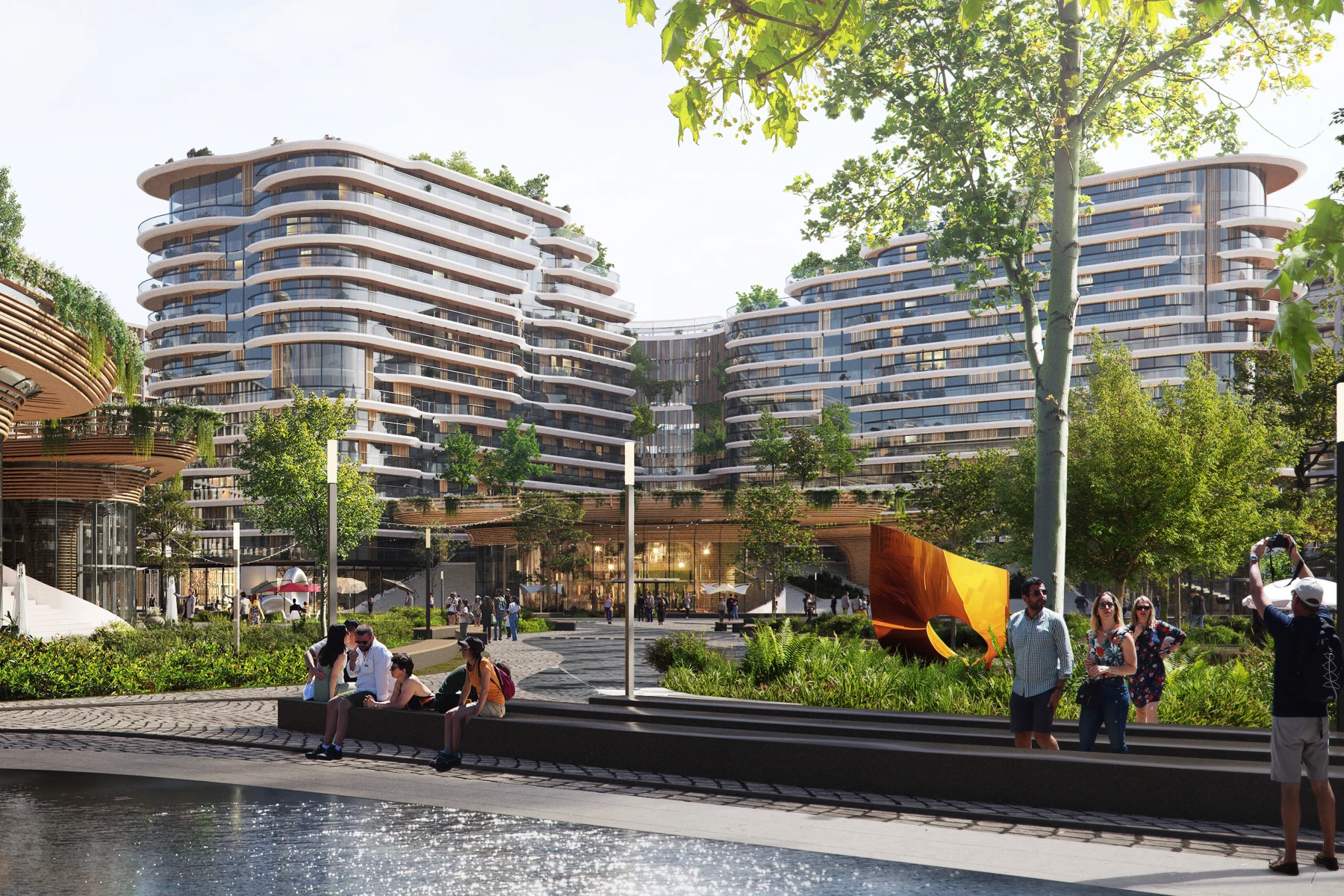
Daylight and solar performance are addressed through similarly embedded analytical workflows. This methodology is exemplified in the Lansdowne Commercial project, which seeks to create an impactful urban complex by adding density and activity. Using parametric tools and environmental plugins, he conducts rapid simulations that inform massing design, spatial depth, building orientation, and height. These studies enable him to evaluate key questions early in the design process: how far daylight can penetrate interior spaces and how curtain wall proportions influence heat gain. Through daylight analysis, the project optimizes building massing, orientation, and height, further advancing a more sustainable architectural outcome.
At the same time, he extends environmental thinking beyond quantitative performance metrics to include spatial and perceptual qualities. Through view analysis, he evaluates how buildings relate to their urban context, mapping visual connections to landmarks, open spaces, and infrastructure. These insights guide decisions on orientation and program distribution, ensuring alignment between environmental performance and lived experience. Sustainability is considered how architecture shapes the bond between people and their surroundings, not just in energy terms.
Adaptive Reuse as a Strategy for Environmental Longevity
Adaptive reuse forms a parallel strand within Zehua’s practice, complementing his work in new construction. His interpretation of sustainability extends to the full material lifecycle, including embodied carbon and long-term resource efficiency. Through the reinvention of existing and historic structures, he facilitates their continued relevance within evolving urban contexts. This approach reinforces an expanded framework of environmental responsibility in architecture.
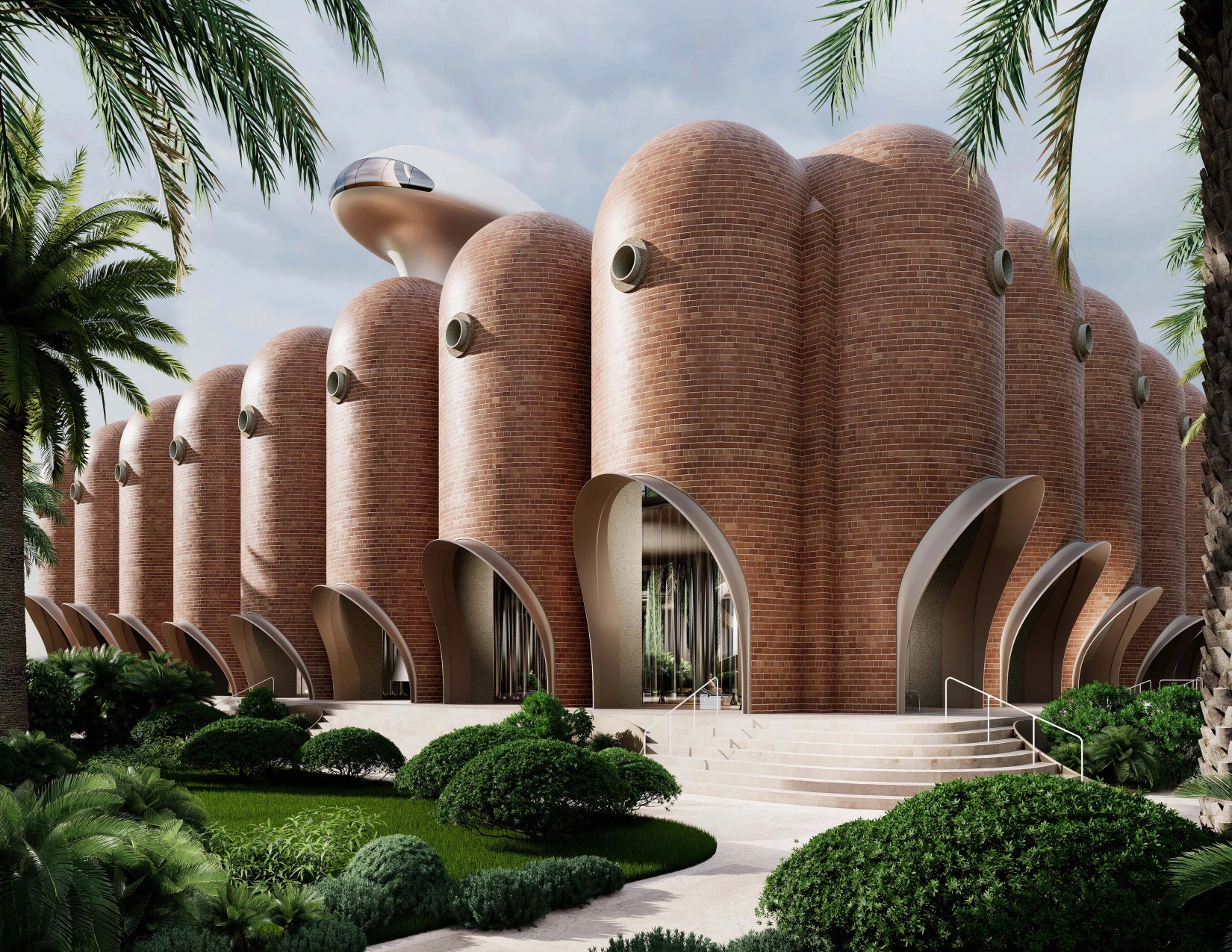
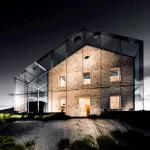
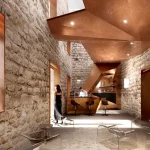
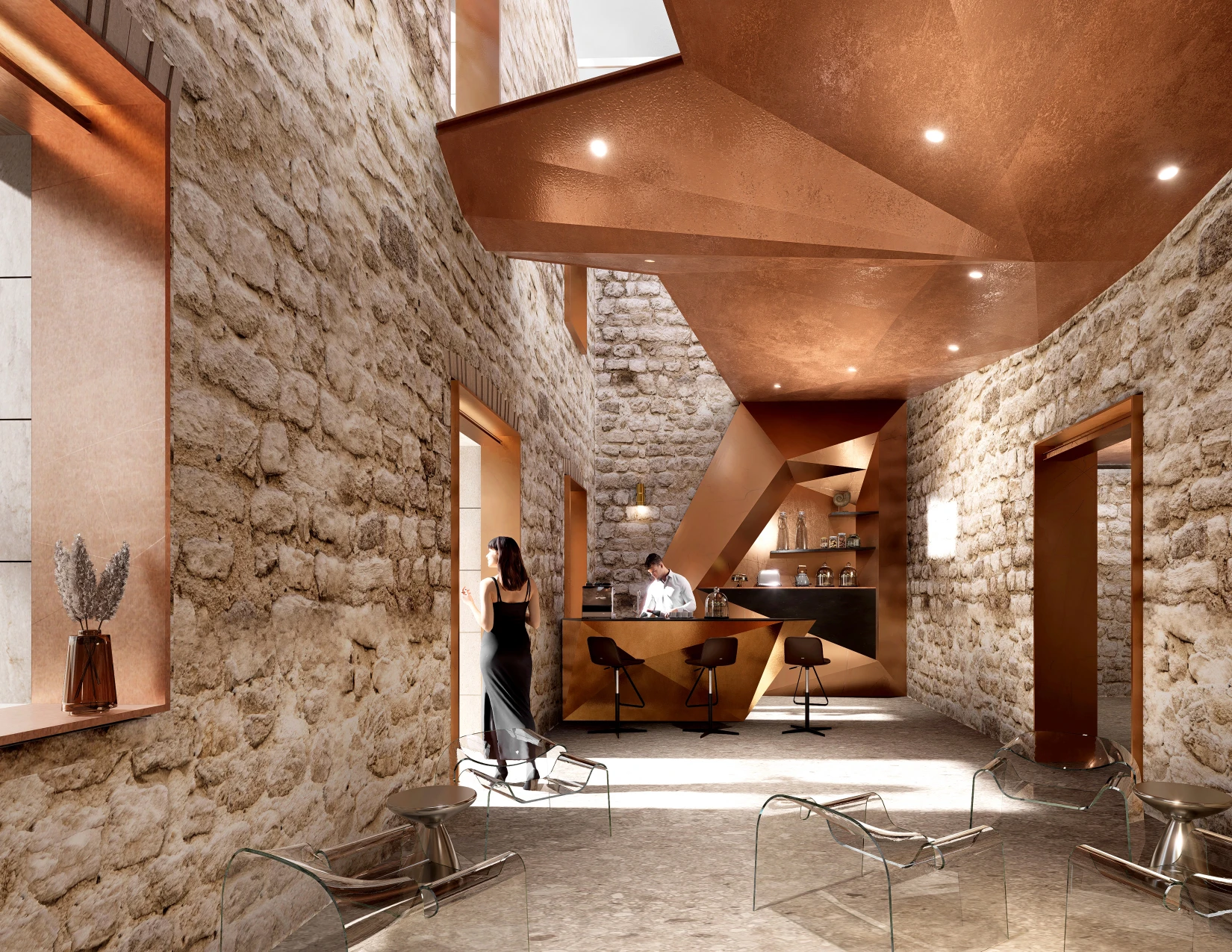
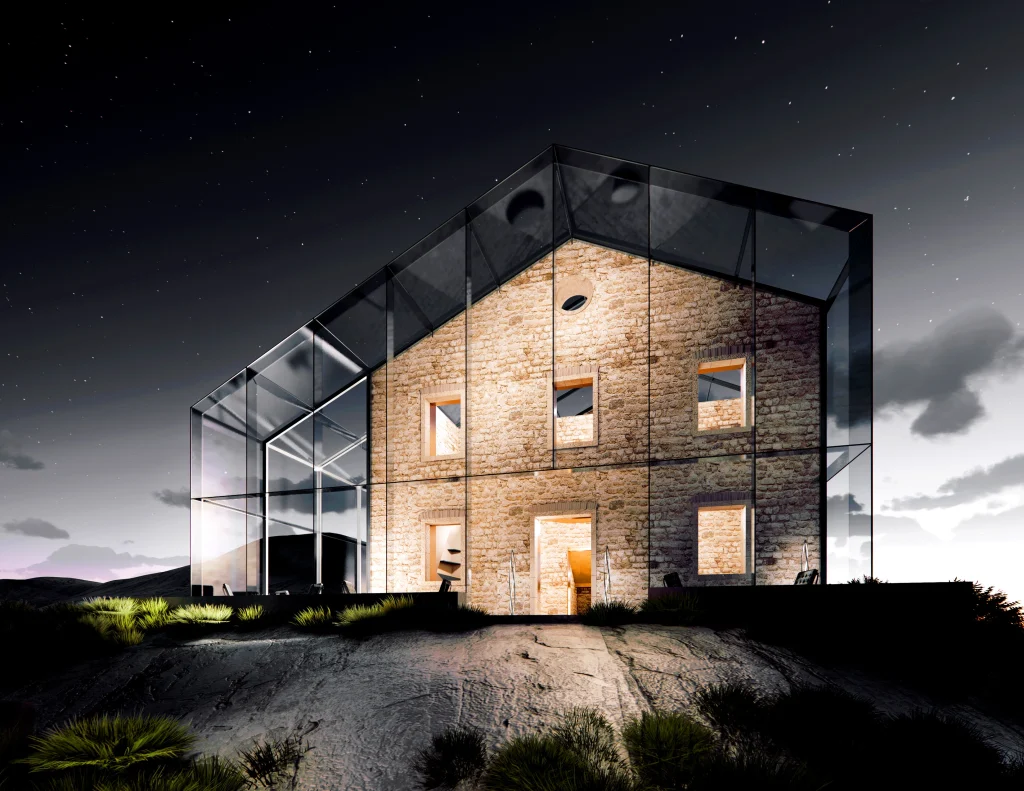
Zehua positions it as a primary design strategy. Through exterior wall upgrades, system integration, and spatial reconfiguration, his work explores the selective transformation of existing structures. This approach is exemplified in projects such as Time Catalyst, the adaptive reuse of a former winery in Valencia, and The Resonance, the transformation of a historic customs building in Punta Bianca. Both projects prioritize retaining primary structures and cultural heritage while introducing new architectural elements and landscape interventions.
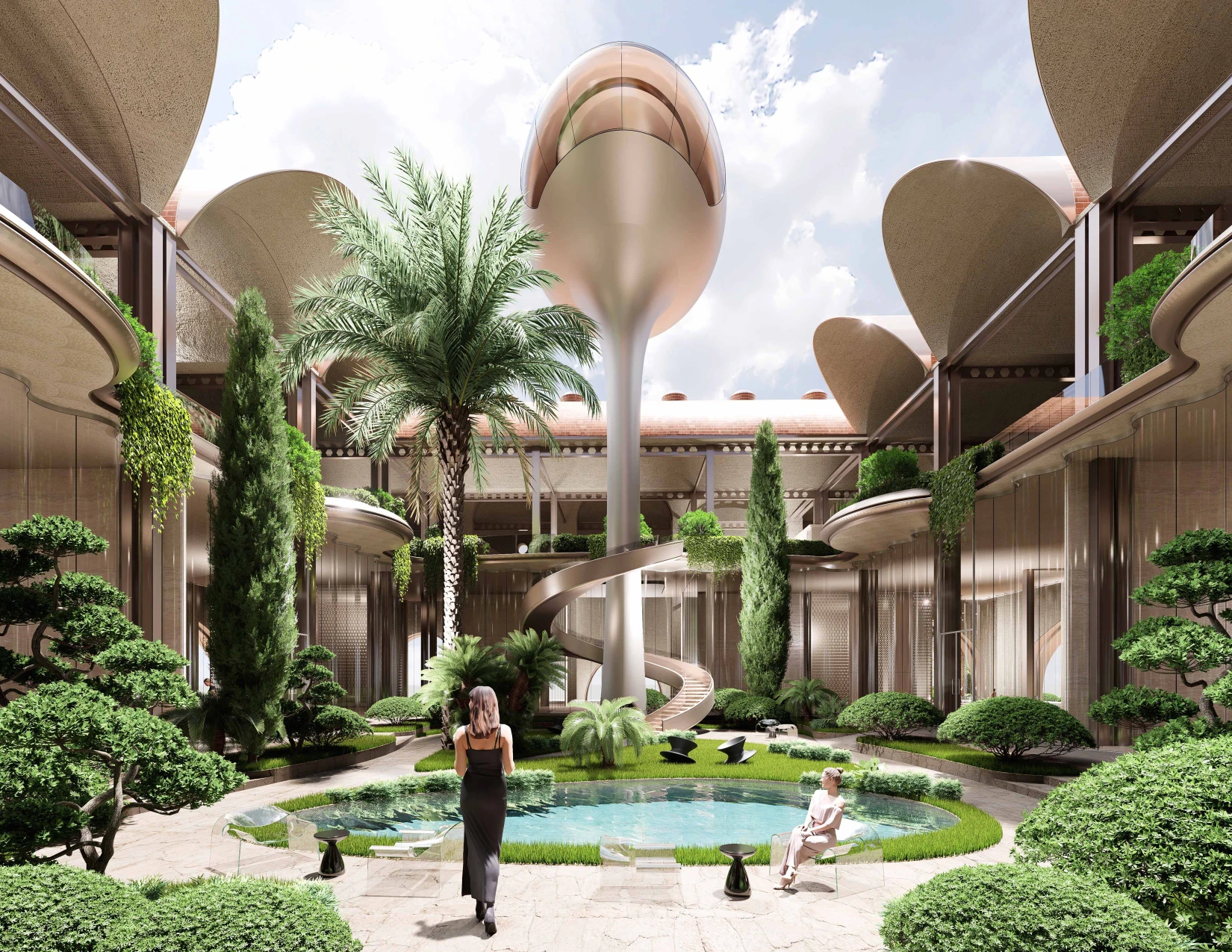
By adding openings for natural light, courtyards, and greenery, the designs strengthen the connection between architecture and nature, revitalizing older structures. Retaining structural frameworks while recalibrating performance allows buildings to meet contemporary environmental standards without the material cost of full replacement. This approach aligns with circular design principles, viewing buildings as evolving material systems. In this context, adaptive reuse becomes not merely preservation but a process of environmental redefinition and a proactive exploration of sustainable architecture.
Academic Engagement through Juries and Discourse
Zehua has also served as a juror for a number of international design competitions in addition to his work as a designer. In these roles, he concentrates on evaluating the effectiveness of environmental strategies in translating into clear, measurable, and implementable design decisions. His jury engagements include platforms such as The Muse Design Awards and The NY Architectural Design Awards, where he evaluates submissions across architecture, interior, and landscape design categories.
In the Terraviva competition, his evaluation criteria focus on how projects explore diverse environmental, cultural, and social contexts, using architecture as a tool to respond sensitively to the specific characteristics of each setting.
In these roles, he consistently emphasizes the structural embedding of environmental strategies within design proposals, rather than their superficial application. He further articulated this perspective in his recent lecture at the New York Build Expo 2026, titled “Making New York’s New Skyscrapers Green and Clean.” Addressing the challenges of designing within one of the world’s most vertically dense urban environments, he emphasized the importance of integrating environmental simulation, architectural strategy, and material thinking into a unified workflow. His talk highlighted that the most consequential decisions for sustainability occur at the earliest stages of design, where massing, orientation, and system integration define long-term performance.
Reframing Sustainability Through Systems Thinking
In his work, sustainability consistently emerges as a foundational approach rather than a supplementary consideration, shaping how architectural ideas are developed, evaluated, and implemented. Buildings are interpreted less as isolated objects and more as active systems embedded within larger ecological and urban networks. This shift in perspective moves the discourse beyond the question of whether architecture can be sustainable toward a more critical exploration of how design can actively contribute to improving the environmental performance of cities as integrated systems.
Image credit: Zehua Zhang