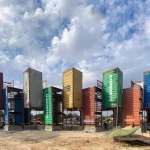
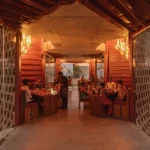

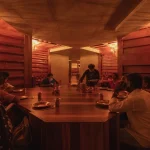
In the coastal city of Tuticorin, India, where maritime trade has shaped the economy and landscape, an excess of discarded shipping containers becomes the starting point for an innovative architectural response. Designed by Vinu Daniel of Wallmakers, PETTI Restaurant transforms industrial waste into a thermally efficient, climate-conscious structure.
The project demonstrates how sustainability can emerge from a deep understanding of local context, material reuse, and passive design strategies.
Adaptive Reuse as a Sustainable Foundation
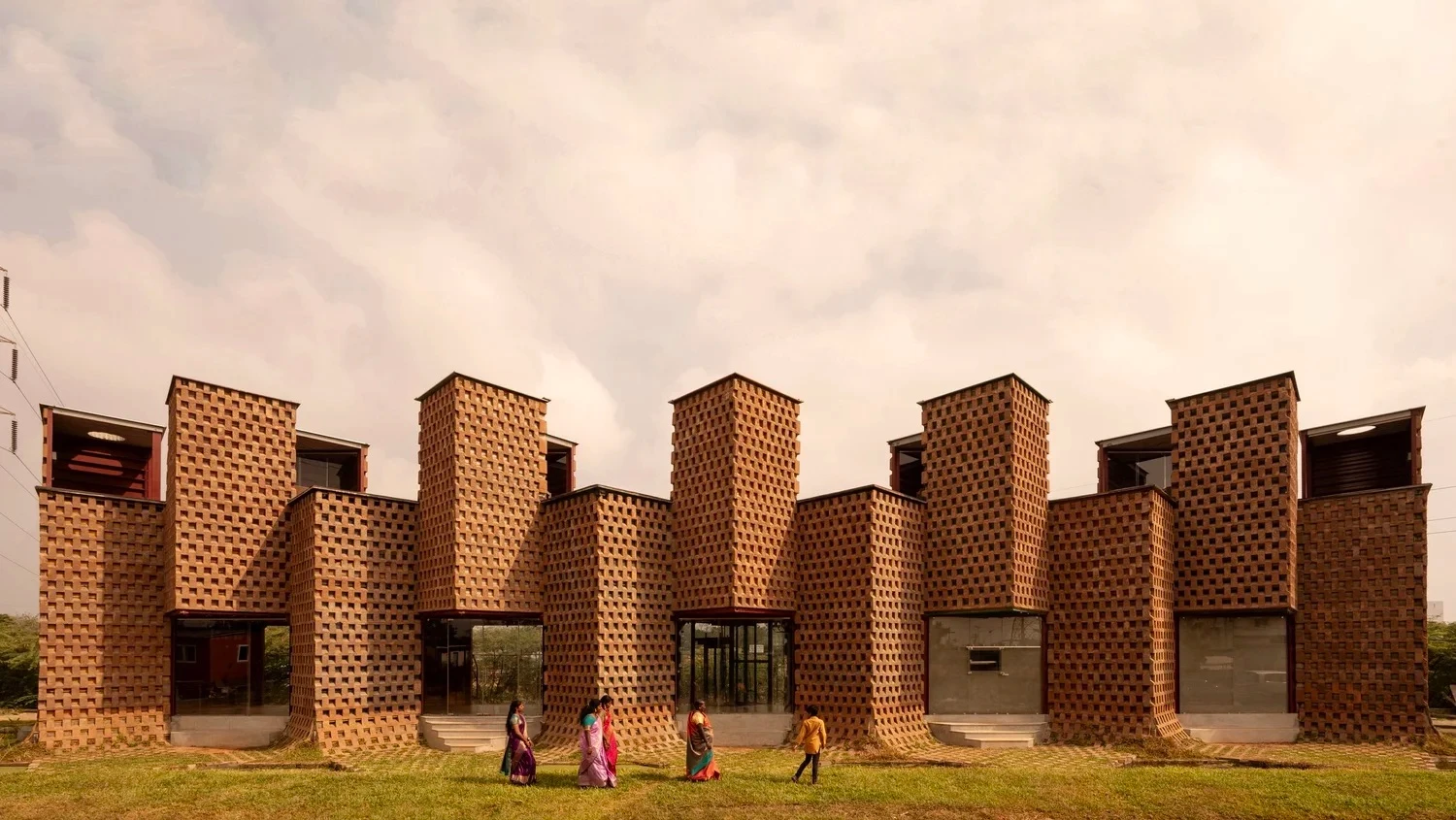
Smart design transforms containers into cool, livable spaces. The design focuses on reusing shipping containers, which are an abundant form of marine waste in the region. Instead of introducing new materials, 12 discarded containers are repurposed as the main structure. This approach creates a low-carbon project that reduces overall construction energy use and helps address the environmental impact of industrial waste.
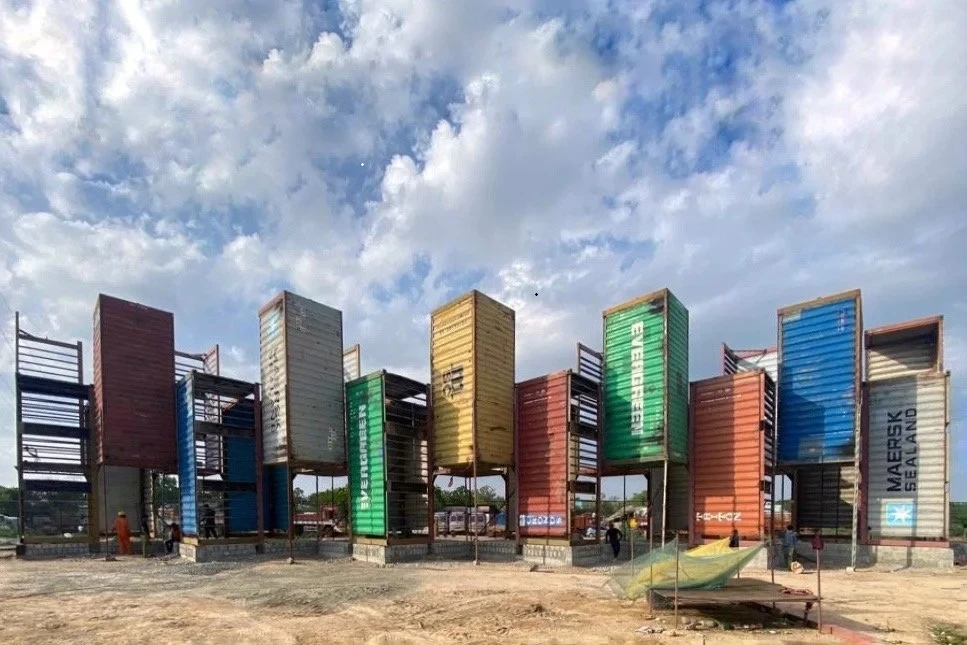
Through a thoughtful approach to material reuse, the design aligns with circular principles, giving discarded elements a new purpose.
Hybrid Envelope Merges Steel with Earth
Although shipping containers provide structural efficiency, their high heat absorption makes them unsuitable for hot climates. To counter this, the structure is wrapped in a layer of poured earth. This mud layer acts as a natural insulator, reducing heat gain and stabilizing indoor temperatures.
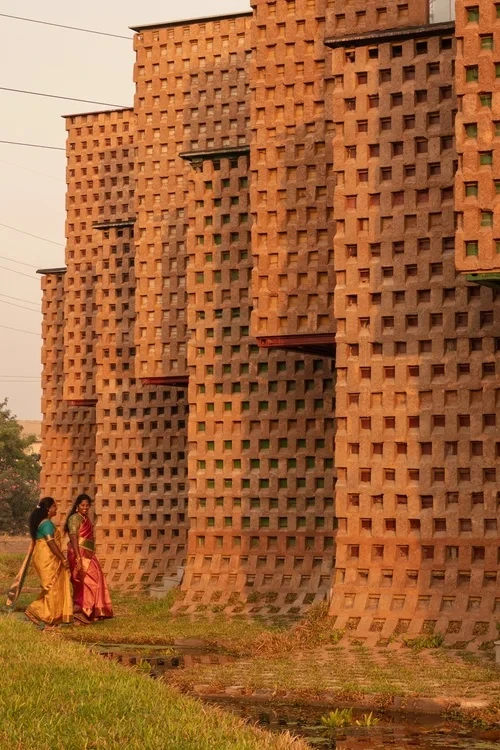
The façade is further articulated with recessed patterns that enhance the thermal performance. This fusion of industrial and vernacular materials creates a responsive building skin tailored to its tropical setting.
Passive Cooling and Energy Efficiency
The project integrates multiple passive strategies to reduce reliance on mechanical systems. The south-facing façade is designed with minimal openings to limit solar heat gain, while staggered container placement allows for cross-ventilation.
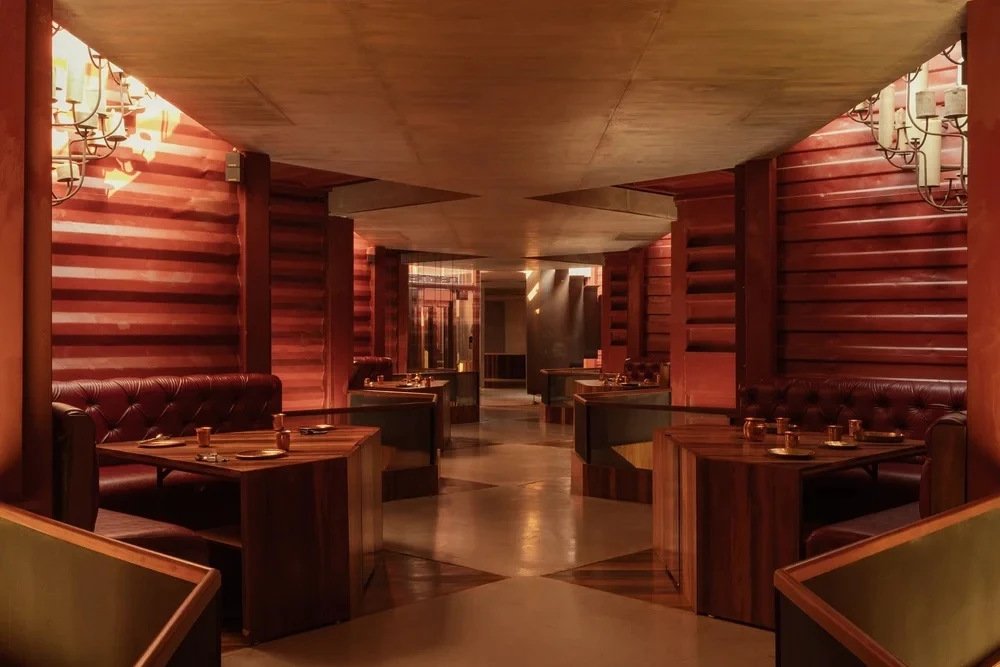
These moves collectively reduce the building’s dependence on air conditioning, achieving an estimated 38% drop in cooling loads. By prioritizing passive cooling, the design not only conserves energy but also ensures long-term operational sustainability.
Light, Ventilation, and Spatial Efficiency
Although constrained by a narrow, linear plot, the design enhances comfort through smart spatial planning. The containers are placed vertically to achieve greater ceiling heights, improving air circulation and spatial quality.
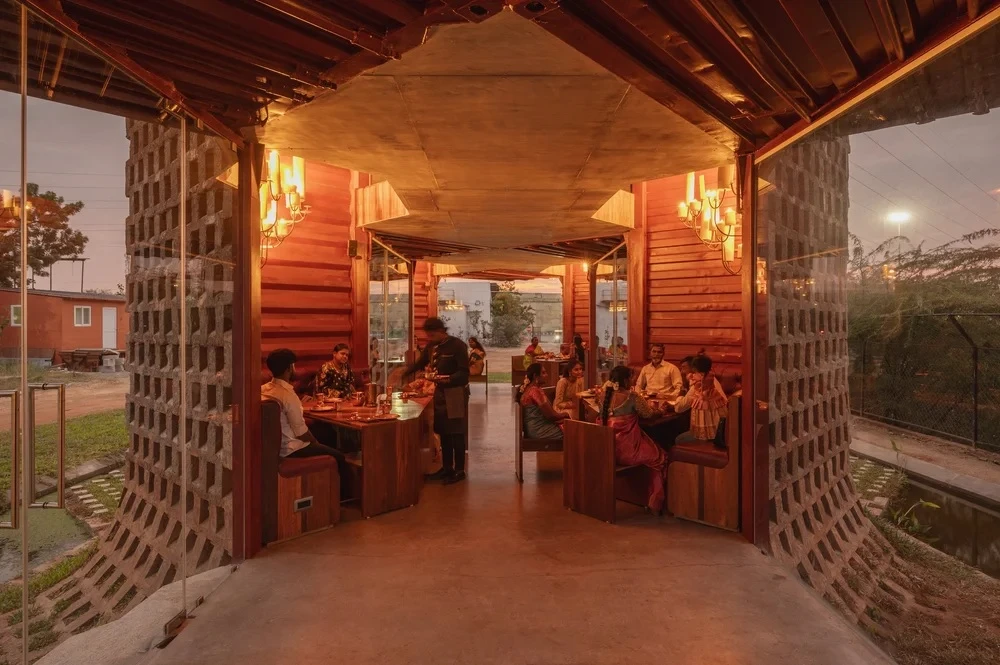
Natural light is introduced through skylights, reducing the need for artificial lighting during the day. The climate-responsive design and staggered configuration further enhance airflow, ensuring that the interiors remain well-ventilated and comfortable even in a dense layout.
Eco-Friendly Materials and Interiors
Sustainable design extends beyond structure to the interior palette. Reclaimed deck wood and oxide flooring reduce the demand for new materials while adding warmth and texture. Reused components extend to the lighting design, strengthening the project’s low-impact approach. The interiors celebrate a raw aesthetic, allowing the true character of materials to remain visible.
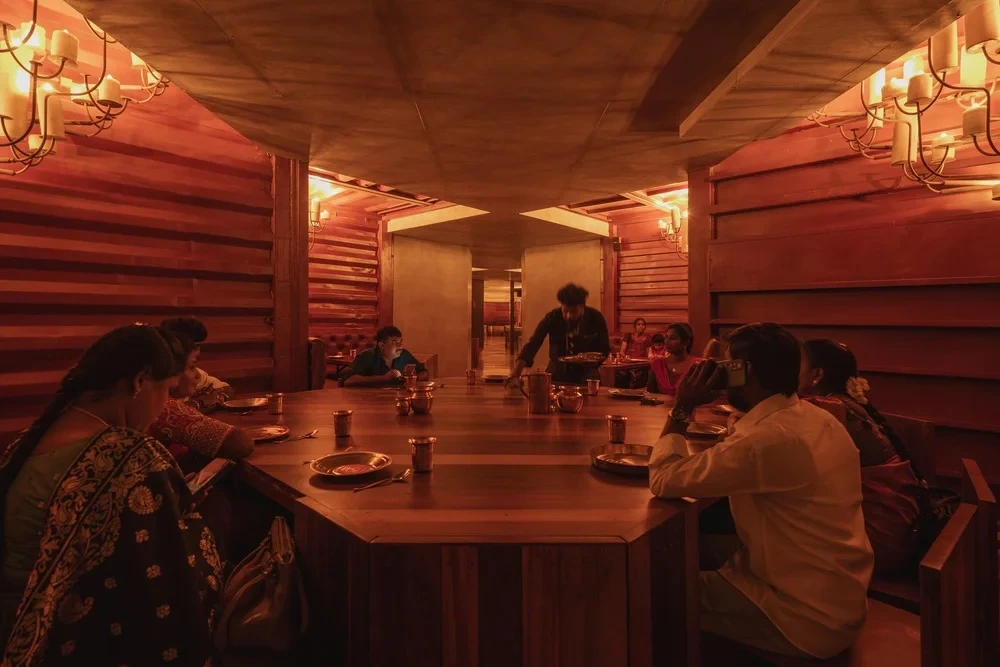
PETTI Restaurant offers a clear model for climate-responsive architecture in tropical urban environments. By combining adaptive reuse, passive cooling, and material innovation, the design shows that sustainability is shaped by intelligent, context-driven decisions responding to climate, resources, and human comfort.
PETTI Restaurant Project Details
Location: Tuticorin, Tamil Nadu, India
Architects: Vinu Daniel, WALLMAKERS
Area: 4720 ft²
Year: 2026
Photography: © Studio IKSHA | @iksha.in