
When you’re evaluating a facade system for circular performance, start by assuming it won’t stay “final.” Tenant refreshes, retrofit scopes, storm repairs, and branding changes are normal, not edge cases. The failure mode to watch for is the default rip-and-replace path: if the skin can’t be adjusted, serviced, or partially swapped without cascading tear-out, the project will treat replacement as the safest option, even when most components still have usable life.
Use circular design as a decision filter, not a slogan. The objective is simple: keep material value in use longer and avoid building future waste into assemblies. If you need a shared definition to anchor reviews and stakeholder conversations, lean on the Ellen MacArthur Foundation’s built environment overview as the baseline, then translate it into testable questions: what stays in service, what gets replaced, and what can be recovered without damage?
When you’re sanity-checking a circular facade approach, don’t treat it as a new aesthetic problem, treat it as a discipline problem. It mostly requires discipline: fewer unique parts, connections you can undo, service access that’s planned, and documentation that survives the handoff. Parametric design is a natural fit because it treats a facade as a system of rules, not a one-off composition.
What “reuse-ready” means for a facade
For a reuse-ready facade, skip the label and run the tests, removal, serviceability, upgrade paths, and recoverability.
Can one panel be removed without dismantling half the bay? Can seals and fixings be serviced without destructive tear-out? If performance targets change, can the system accept upgrades, shading, insulation strategy, operability, without turning the whole elevation into debris? And can the next team identify what’s installed well enough to reuse it with confidence?
Those questions push you toward assemblies that come apart cleanly and documentation that survives the handoff. If the only way to “repair” a piece is to destroy it, it’s not a repairable system. It’s a replacement system.
Parametric facades for circular design: rules that stay stable

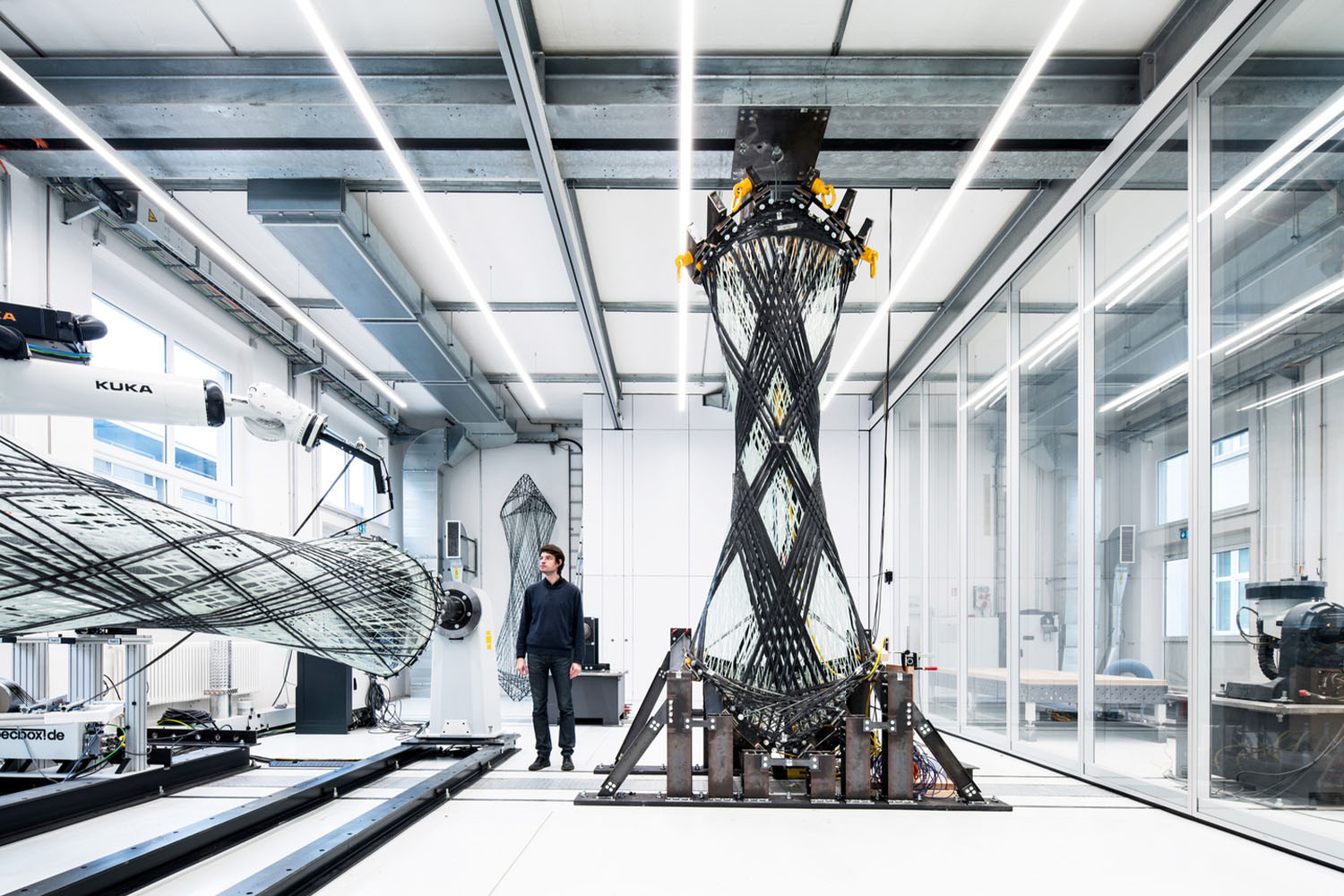
Parametric workflows help when they’re used less as a styling engine and more as a control system. The value is in locking constraints early, module families, joint logic, tolerances, access zones, part IDs, and keeping those constraints intact while geometry evolves.
That’s how you avoid the “everything is unique” trap. Once every panel is a one-off, repairs become custom fabrication, maintenance becomes slow, and reuse becomes unlikely. For a quick precedent scan, internal collections like examples of parametric facades are useful because they make it easy to ask the hard question: which of these could be repaired or reconfigured without a demolition-scale intervention?
Separate visual variation from part variation. You can keep the facade expressive without exploding the kit-of-parts. That steadiness is what makes circular design workable.
The design moves that make circularity realistic
When you’re sanity-checking the range of parametric facade systems, do a quick scan of the site’s parametric facade examples, then ask what’s still repairable after year five.
Start with a module family you can defend
Two or three primary sizes usually beat a long tail of “almost identical” panels. You can still get variety through depth changes, perforation logic, or orientation, but keep the base unit repeatable. In practice, track part uniqueness as the form changes. If a small adjustment explodes the panel count, you’re drifting away from reuse.
A simple benchmark you can use in design reviews is: if a panel type occurs only once or twice, it should be treated as a red flag that needs a reason. Sometimes that reason is valid (a transition, a corner, a fire break), but the discipline of asking the question keeps the system from quietly turning into thousands of exceptions.
Detail connections for removal, not just installation
If the only way to detach a component is to cut it out, it won’t be reused. Reversible connections can be simple and rugged: accessible mechanical fastening, clip-and-rail systems that allow swap-outs, and gaskets that can be replaced without destroying adjacent layers.
Adhesives and wet-applied layers aren’t always avoidable, but be honest about where they trap value inside composites. If you bond layers together, you should assume they won’t be separated later. That doesn’t automatically make them “bad,” but it changes your circular story. The goal is to keep as much of the assembly as possible in a “clean separation” state, where parts can be removed as parts, not as fragments.
Design for maintenance access and sequencing
Maintenance access is the other quiet make-or-break factor. A lot of facade waste is maintenance waste. When a minor failure forces a big opening, teams replace large areas because it’s faster. Parametric planning makes it easier to standardize access and replacement sequences so a small fix stays small.
Run the removal sequence: what comes off first, and how many components move before you reach the failure point? If replacing a gasket requires removing four panels, and removing those panels requires dismantling a sunshade bracket, you’ve created a replacement cascade. Small service events become large demolition events.
Build tolerance and replaceability into the geometry
Reuse-ready systems need tolerance that’s intentional. If the system only works when every part is perfect, field conditions will punish it. Circular systems are often the opposite: slightly more forgiving joints, a little adjustability in brackets, and a clear separation between primary support and removable face components.
This is where parametric workflows can do real work. You can test how far a panel can deviate before it breaks the joint logic. You can set maximum bend radii that keep fasteners accessible. You can enforce “service gaps” around operable units so the field team isn’t forced into destructive removal later.
Treat documentation like part of the system
Reuse fails when nobody can verify what a panel is, what coatings are on it, or how it was fastened. Part IDs, basic material notes, and removal guidance don’t have to be fancy to be useful, they just have to exist outside the model file.
Run the handoff scenario now: the model is missing, a new team inherits the building, and someone has to decide what’s reusable from a parts schedule alone. If the only record is buried in a design file nobody can open, reuse becomes unlikely. If there’s a simple schedule, a clear part map, and a few notes on removal and service, reuse becomes a normal option.
Materials that support circularity in the US market
In the US market, facade material decisions have to hold up to codes, weather exposure, and long maintenance cycles. When you’re pressure-testing circular performance, don’t just look at the panel material, check what’s riding along with it: coatings, additives, sealants, and treatments that affect durability and maintenance. Suppliers in that layer, including ICL Group, often show up in those supporting line items on spec sheets without being the headline material.
The risk to watch for is the supporting layers quietly breaking the circular intent, an assembly that’s removable on paper, but hard to maintain or recoat in the field. If the surface can’t be maintained, renewed, or inspected without guesswork, removability won’t matter much when the building goes through upgrades.
If you want a wider lens on performance-driven material choices, the internal overview on smart materials is a solid companion read because it stays grounded in durability and behavior, not trend language.
How to measure whether a facade is actually reuse-ready
Circular claims can get fuzzy fast, so it helps to define a few practical checks. None of these require a perfect scoring system; they just force clarity.
One check is part diversity: how many panel types are you really building, and how many are singletons? Another is removability: what percentage of the elevation can be removed with reversible methods, using standard tools, without damaging adjacent layers? A third is service time: how long does it take to replace a common failure item, like a gasket, an operable unit, or a damaged face panel, without pulling off unrelated components?
Use these checks in owner reviews. They turn ‘circular’ into something you can price, schedule, and maintain. Once you can measure it, circularity becomes a maintenance and retrofit advantage—not a slogan.
The US reality check: renovation cycles and C&D waste
Even the best “design for disassembly” details can fail if the project plan assumes demolition-like removal. In the US, schedule pressure often pushes teams toward fast replacement, not careful recovery. That’s why circular facade design has to anticipate how buildings are actually renovated.
The EPA’s construction and demolition materials guidance is helpful context here: it frames C&D debris as a major materials stream and emphasizes recovery as a way to reduce the need for virgin extraction. In plain terms, if you want reuse to happen, the system has to be easy to remove and the project has to allow for it.
There’s also a mindset issue that shows up in many US projects: if salvage isn’t planned early, it becomes “extra work” later. The moment you treat recovery as optional, it gets squeezed out by time, logistics, and risk management. That’s why reuse-ready facades need both design intent and execution intent.
Procurement language that protects reuse value
Circular outcomes need a small amount of contract discipline. Define what “salvageable” means (inspection criteria, acceptable wear, handling requirements). Decide who owns components after removal so accountability isn’t fuzzy. Plan time and space for careful removal and storage so components don’t get damaged.
It also helps to be realistic about what gets reused and what gets recycled. Not every component will be a second-life candidate. But if the facade is designed so that high-value parts can be removed cleanly, you give the project team a real choice. Without that choice, the default outcome tends to be mixed debris.
When you need precedent language that keeps the tone practical, internal examples like projects made with recycled materials can help you talk about reuse without making it sound like a lecture.
Conclusion: design the skin for change, not permanence
Facades will change. The question is whether that change preserves value or creates waste. When you treat the facade as a system, repeatable modules, connections you can undo, maintenance that doesn’t trigger tear-out, and documentation that survives the handoff, you make reuse and adaptation far more realistic.
That’s the practical promise of ‘parametric facades’ for circular design: rule-driven skins that let buildings evolve without throwing away the facade every time the brief shifts.