

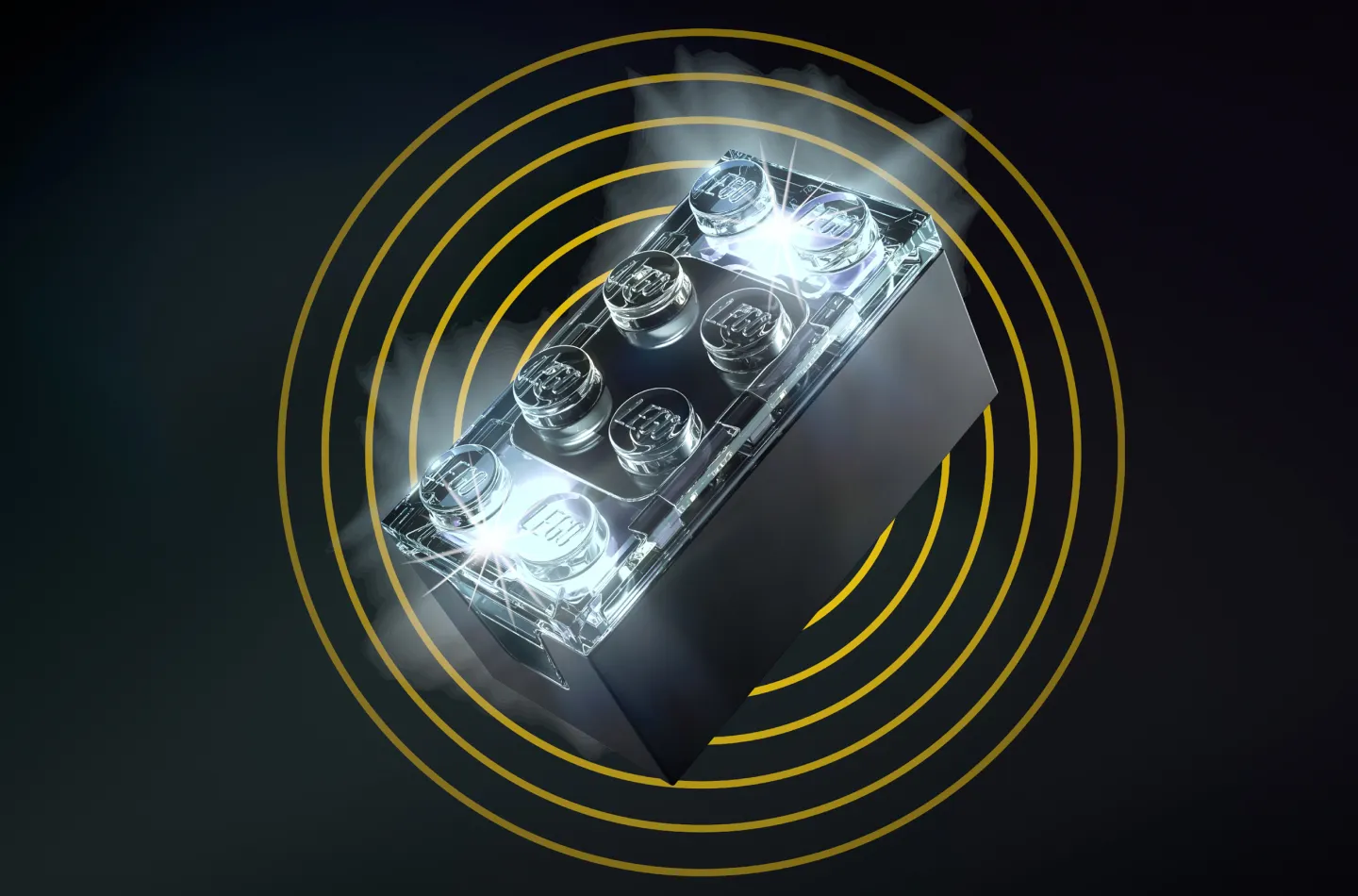













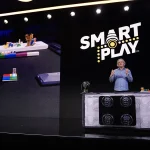
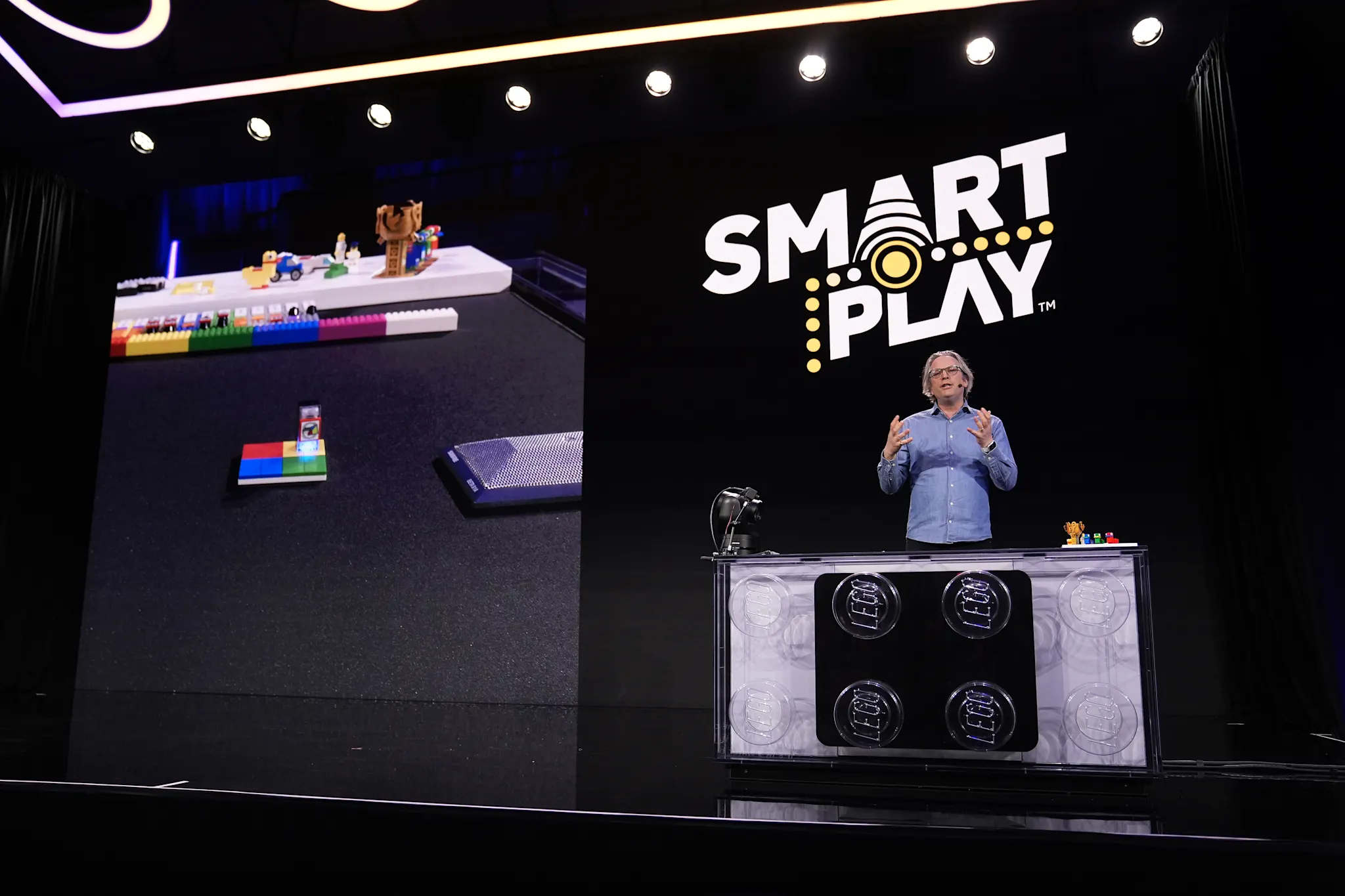
At CES 2026 in Las Vegas, The LEGO Group revealed the LEGO Smart Brick, a fully functional tiny computer that fits inside a standard 2×4 LEGO brick. LEGO calls this new system “Smart Play,” and it represents the most significant evolution of its core play system in nearly fifty years.
Unlike the simple plastic bricks that built the company’s success, the Smart Brick embeds advanced electronics sensors, processors, lighting, sound, and communications inside the familiar form factor. The brick is powered by a custom-designed 4.1 mm application-specific integrated circuit (ASIC) that is smaller than a typical LEGO stud. This chip runs a dedicated Play Engine that interprets motion, orientation, and magnetic fields, serving as the core of the tiny computer.
LEGO Brick Sensors and Connectivity
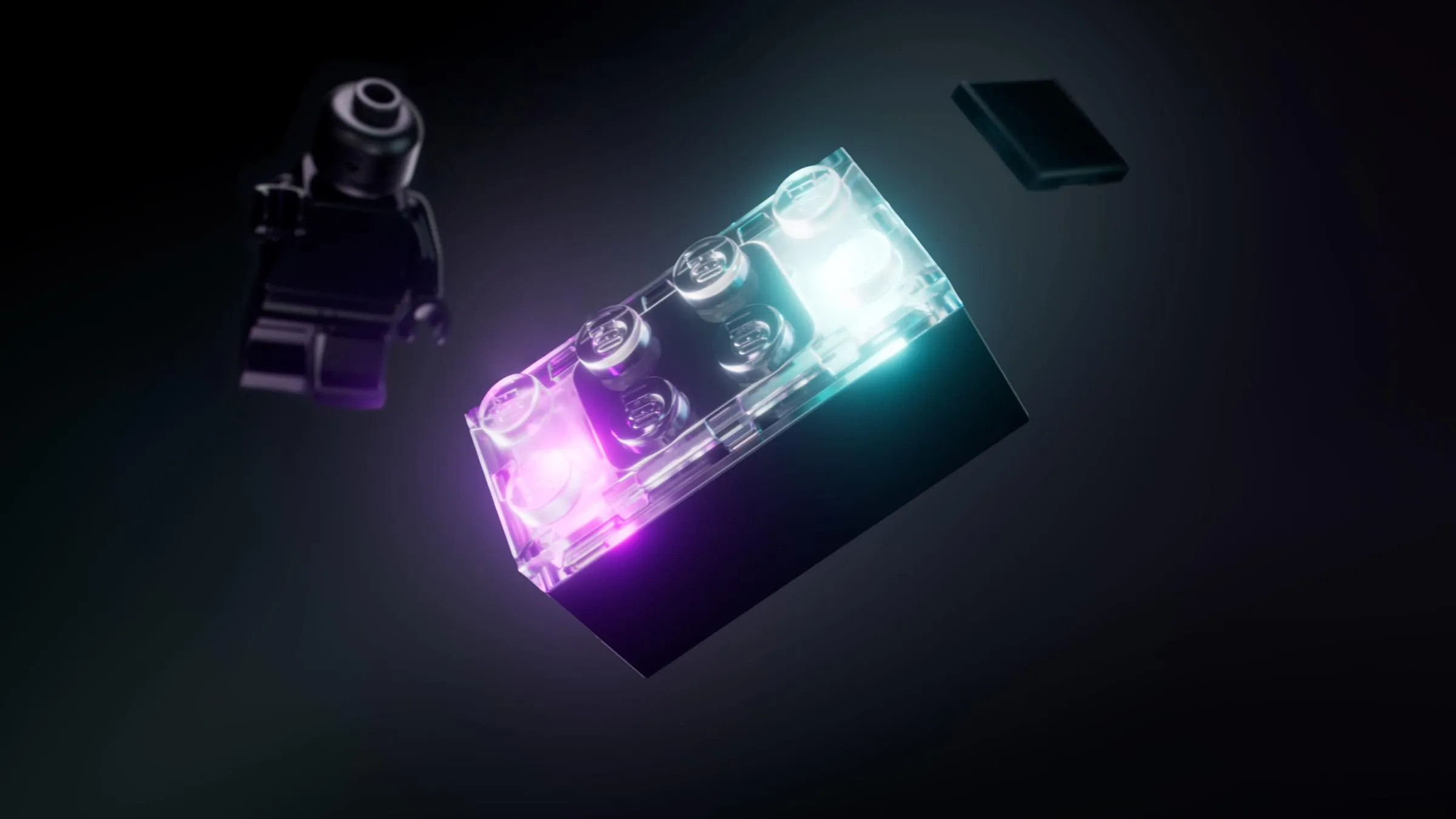
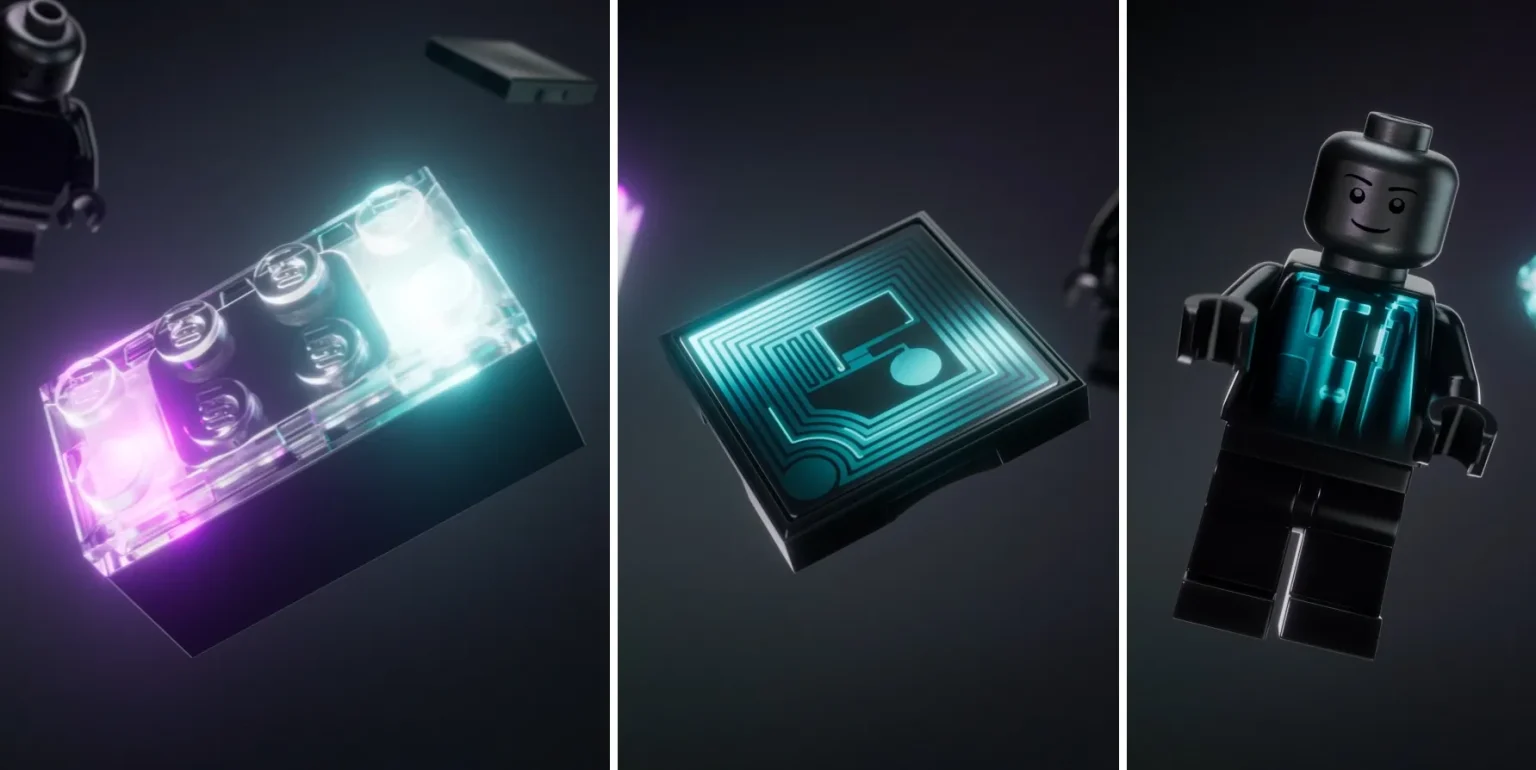
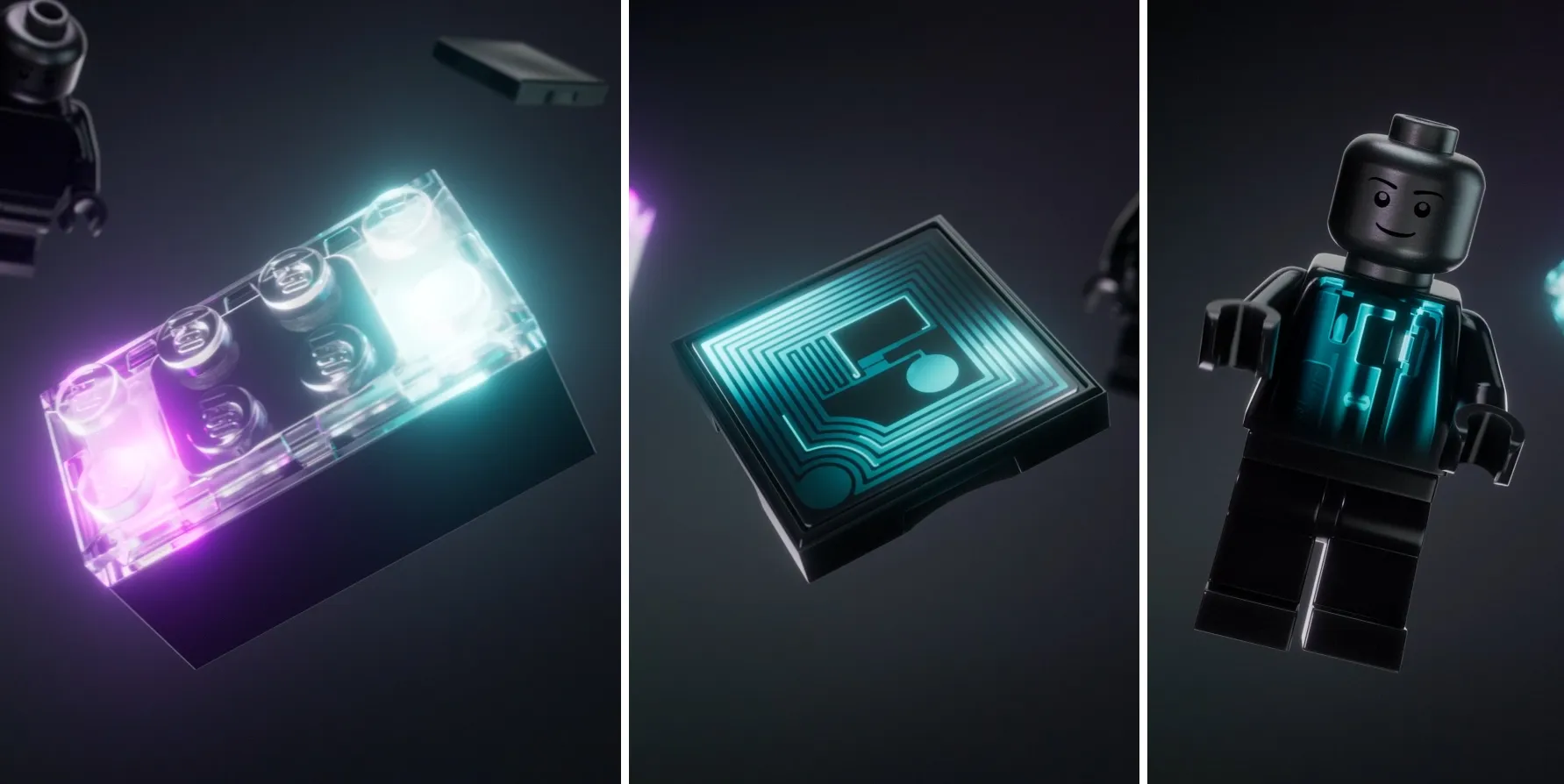
Inside the Smart Brick, engineers have packed an accelerometer, light and sound sensors, a miniature speaker with an onboard synthesizer, and an LED array. These components let the brick detect how it’s being moved or oriented and then respond with context-specific lighting and sound. The audio isn’t fixed clips; it’s generated in real time in response to player interactions.
Smart Bricks form part of a small ecosystem that includes Smart Minifigures and Smart Tags. Each Smart Minifigure or Tag carries a unique digital identifier, readable by the Smart Brick via near-field magnetic communication. When the brick detects a particular tag or figure, it adapts its response, triggering different sequences of lights and sounds appropriate to the context.
The system also incorporates a proprietary BrickNet wireless layer based on Bluetooth. This lets multiple Smart Bricks sense each other’s distance and orientation without any external controller or cloud connection. In practical terms, two Smart Bricks built into different parts of a model can “talk” to each other and coordinate their behavior without a phone or screen.
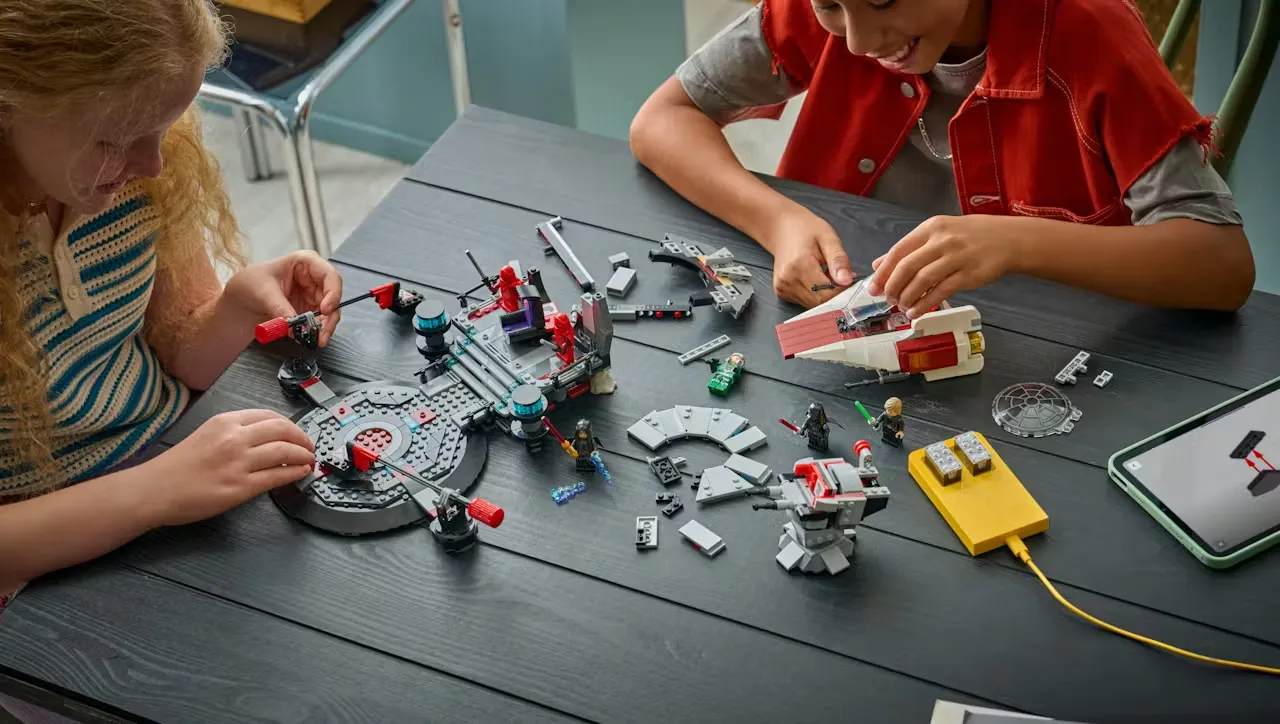
Powering all these capabilities required new solutions for charging and energy management. Smart Bricks are wirelessly charged using a custom pad that can power up multiple bricks at once. LEGO says the internal battery cells are designed to retain capacity even after long periods of inactivity, meaning a set built and stored away can still spring to life later.
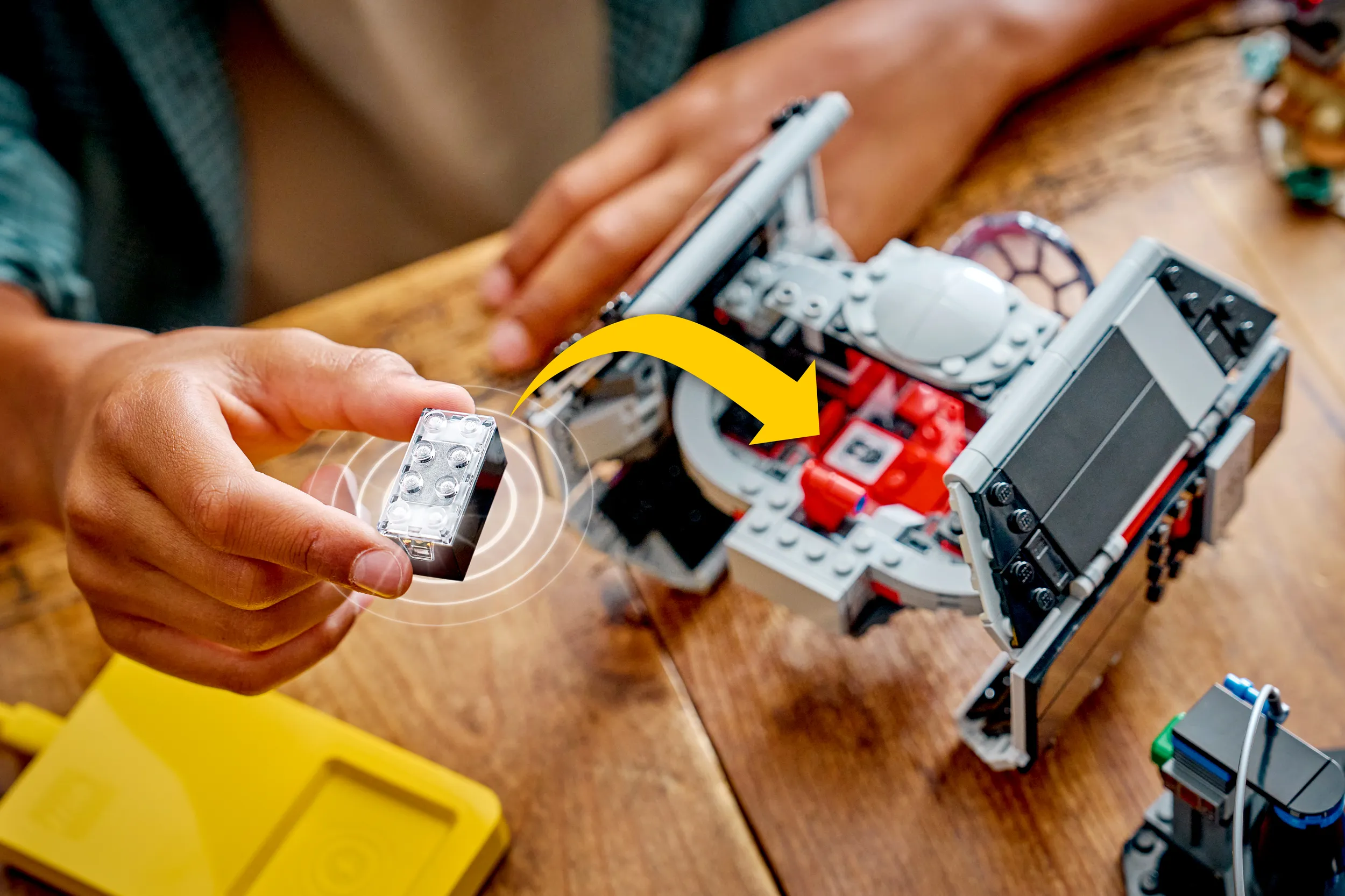
The interface deliberately avoids traditional screens or apps during play. Instead, LEGO wants interaction to remain physical and creative. Movements such as turning, tilting, or tapping a structure can trigger reactions; build a vehicle, and it can emit engine sounds as it moves across the floor, or complete a race, and the brick might play a fanfare.
LEGO Smart Brick: Real-Time Play Experience
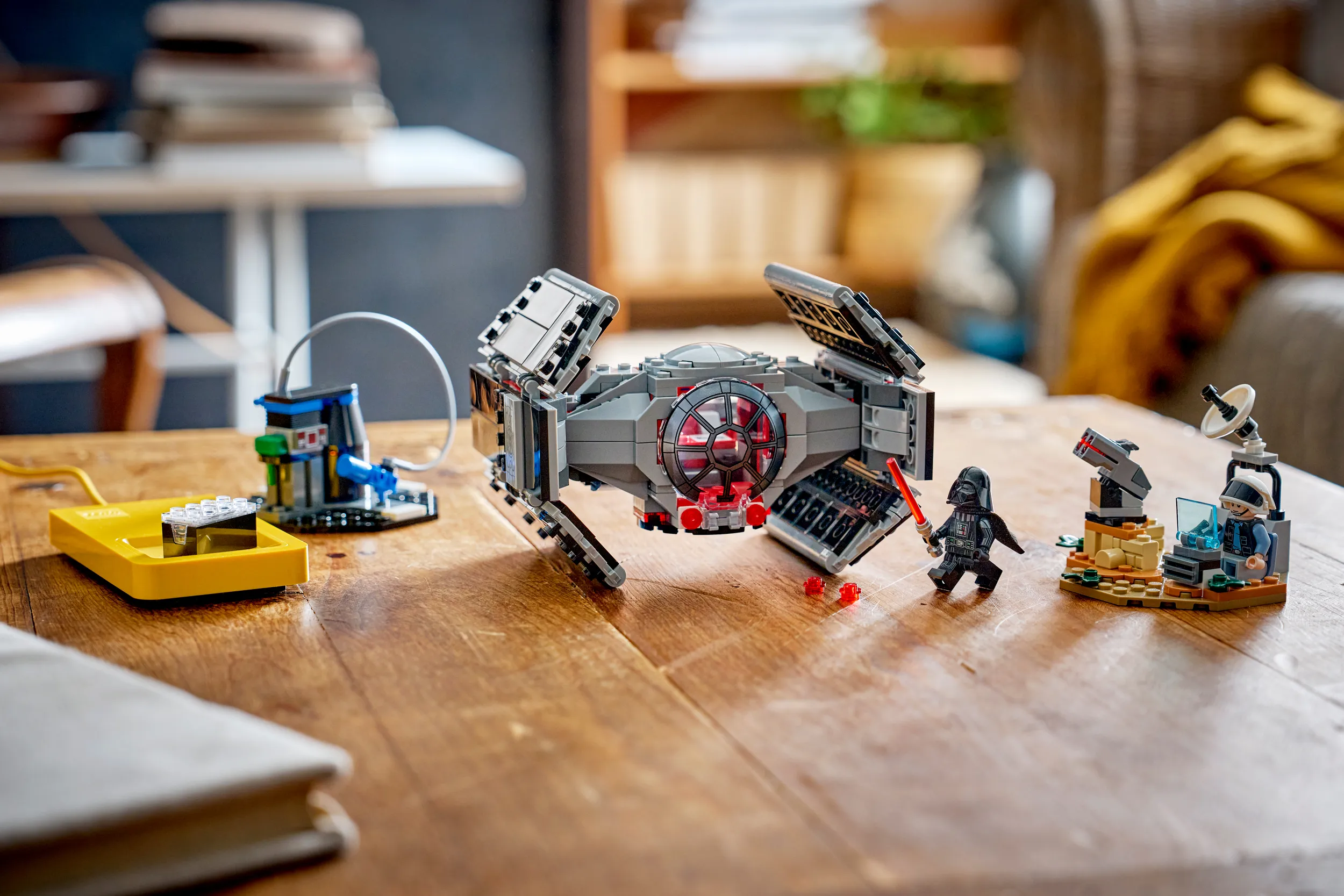
LEGO chose to keep the technology non-AI and offline, with no cameras or internet access built into the bricks. This ensures safety, reduces complexity, and keeps the focus on hands-on play rather than digital consumption.
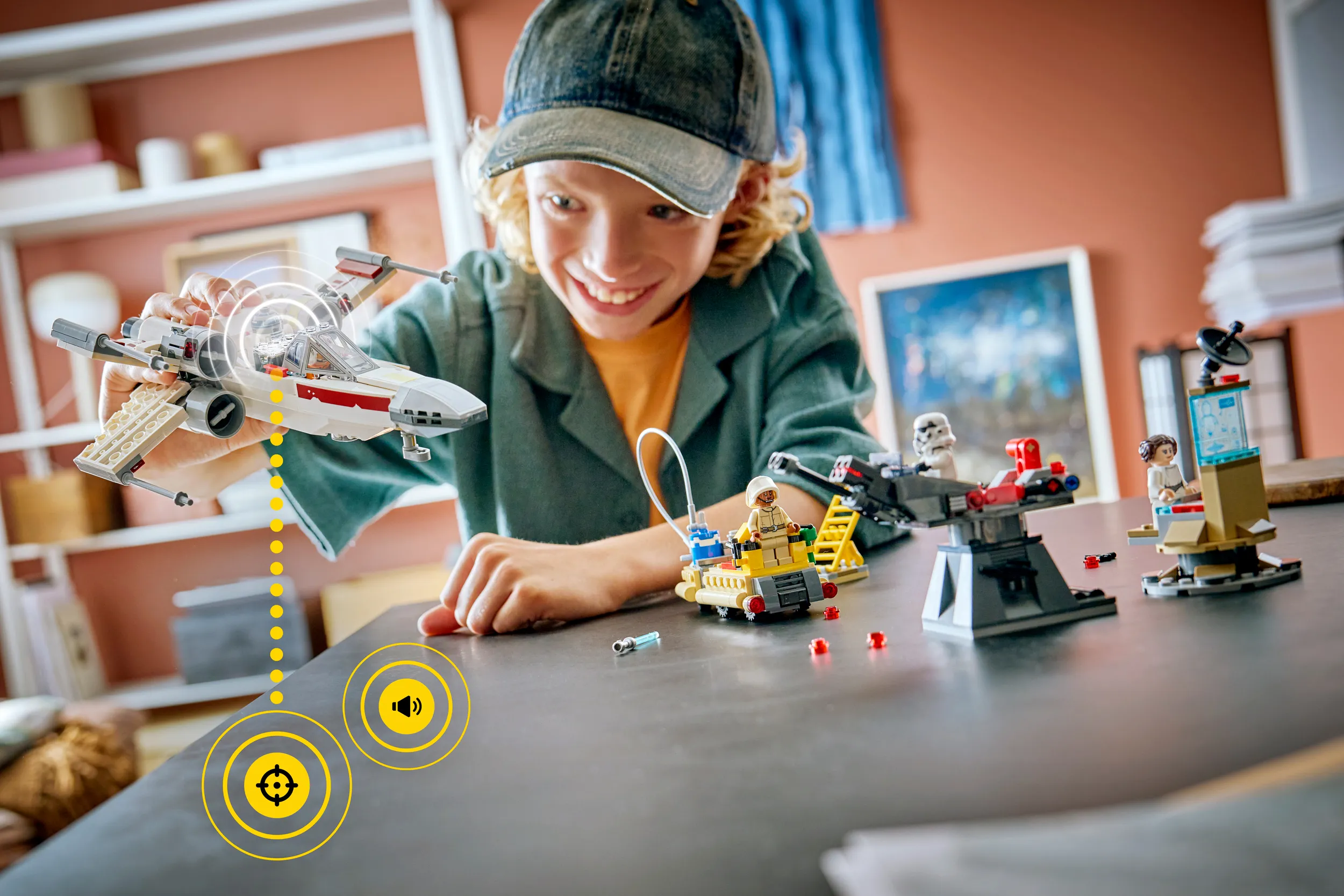
The first wave of Smart Play products will debut on March 1, 2026, starting with three LEGO Star Wars sets. These include a 473-piece Darth Vader’s TIE Fighter, a 584-piece Luke’s Red Five X-Wing, and a 962-piece Throne Room Duel & A-Wing set. Each box contains at least one Smart Brick, one or more Smart Minifigures, and several Smart Tags to unlock interactive features like engine sounds, lightsaber hums, and iconic musical themes.
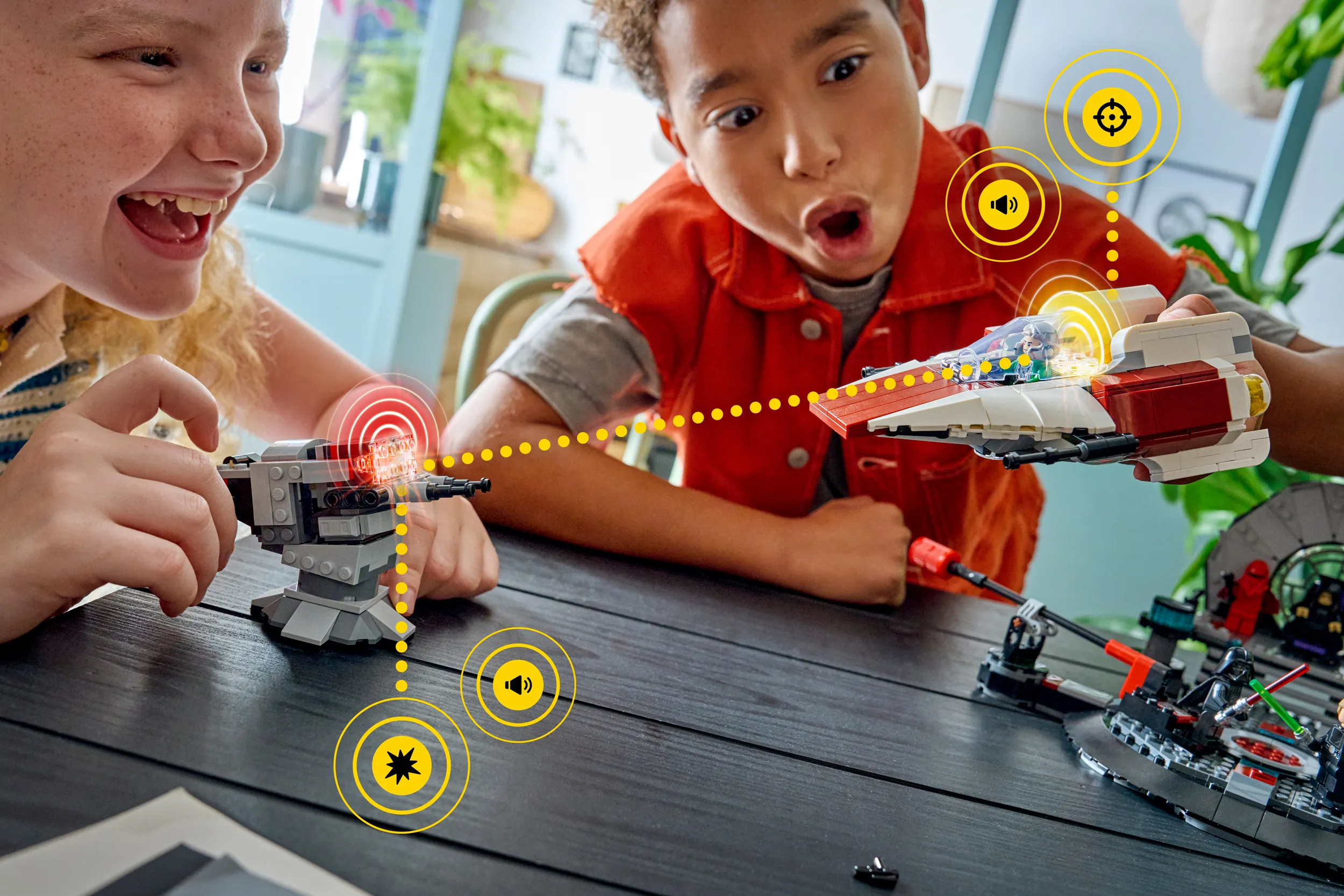
Smart Bricks are fully compatible with existing LEGO pieces, fitting into builds just like a regular 2×4 element. That means builders can innovate without losing what makes LEGO enduringly popular: open-ended, tactile creativity. Smart Play bridges the gap between classic build-and-play experiences and interactive electronics, extending what models can do while preserving what they are. In doing so, LEGO is redefining its iconic brick for a new generation, giving it a tiny computer core that responds to play in real time.
Image credit: LEGO