


Amid the rush of new development along the Qiantang River, Snøhetta’s proposal for the Hangzhou Art Museum stands out by slowing the scene down. Developed with the Architectural Design and Research Institute of Zhejiang University and Buro Happold, the design draws directly on one of the world’s most dramatic tidal bores. Rather than treating the water as a backdrop, the design team studies its movement and uses those patterns to shape the building’s form and its public spaces.
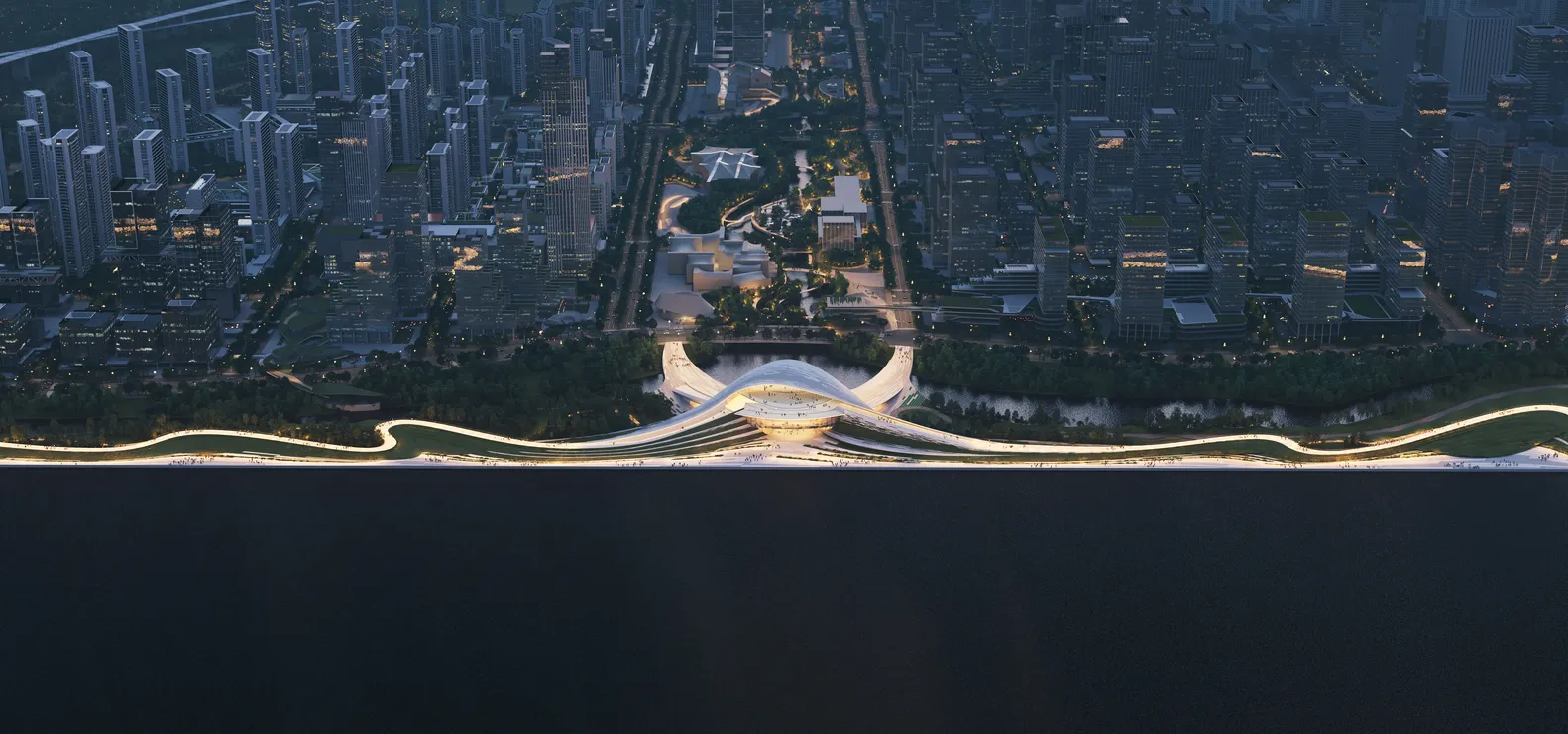
Positioned within the Qiantang Bay Future Headquarters district, the museum will anchor the emerging neighborhood and place cultural infrastructure at the center of its next phase.
Snøhetta Translates Tidal Patterns Into Building Form
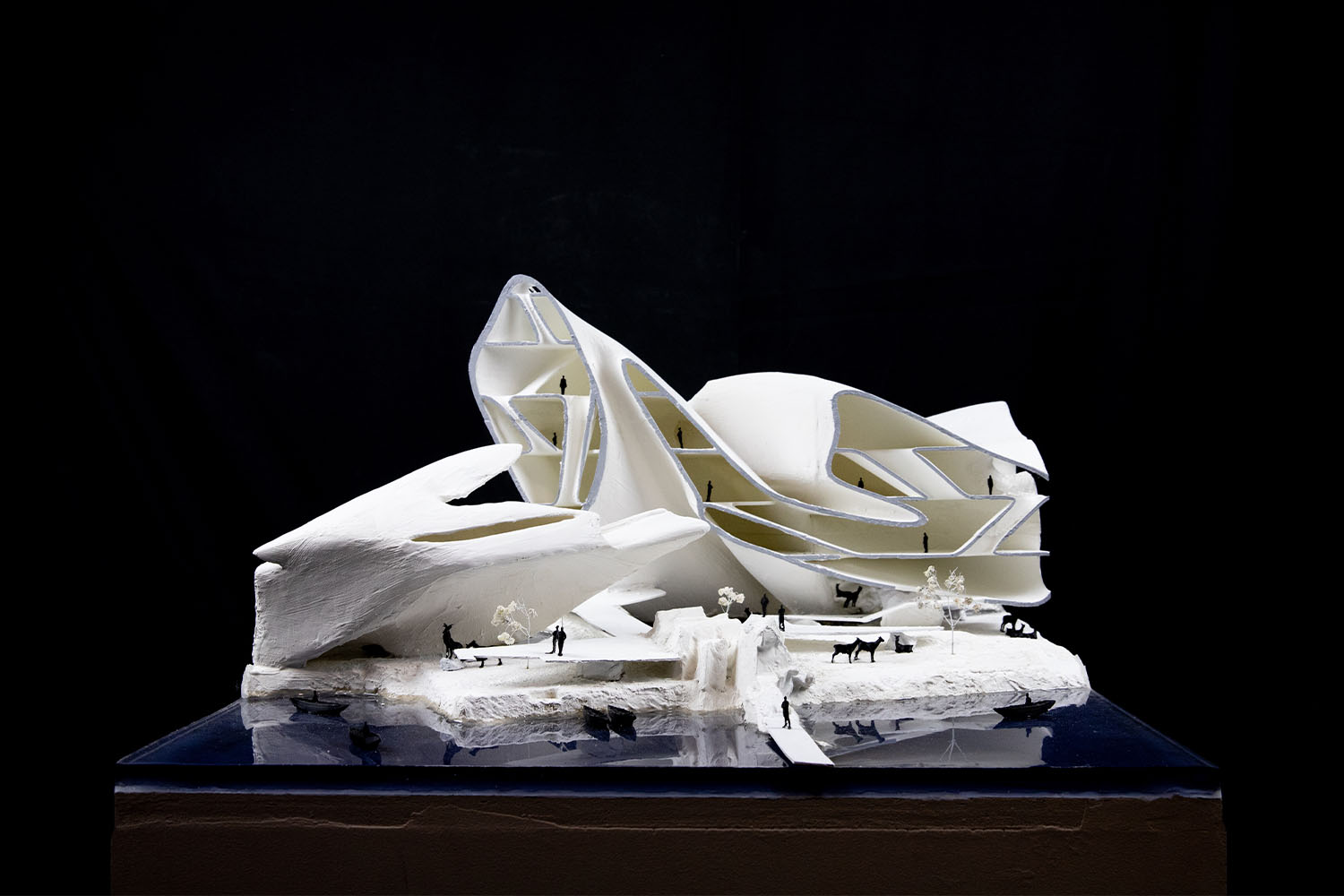
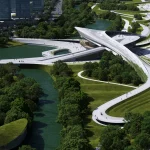
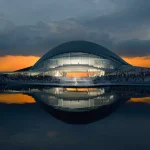
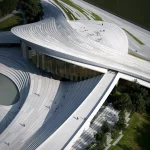
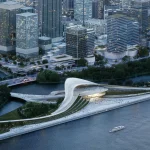
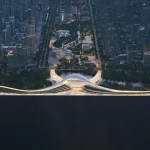
The museum’s form begins with a close observation of the Qiantang River. Its tides rise and retreat in steady cycles, shaping the shoreline day after day. Snøhetta translates that motion into two low, curved volumes that meet at a central point, lifting from the ground and settling back toward the water. As people walk around the site, the building seems to shift in height and direction, referencing the river without becoming a literal image.
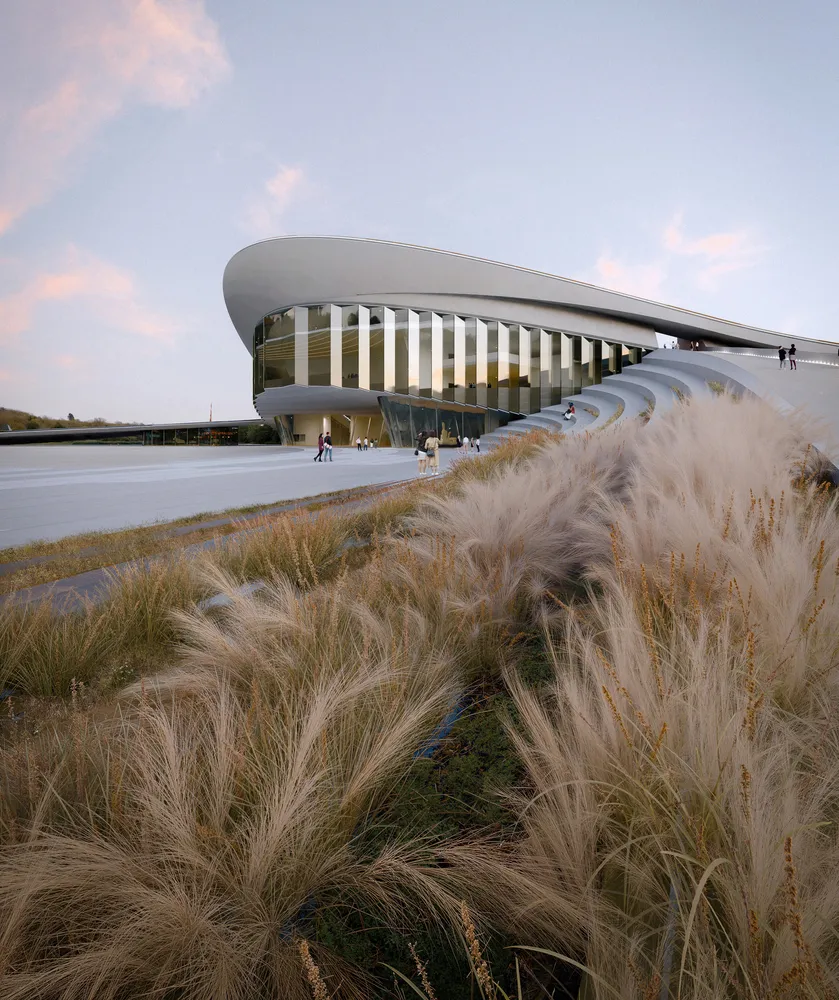
At the point where paths converge, two low, curved volumes come together to form the museum’s central core. This junction anchors shared public spaces and directs circulation toward galleries, terraces, and outdoor routes, allowing the building to unfold gradually rather than be experienced all at once.
Integrating Landscape and Museum Access in Hangzhou
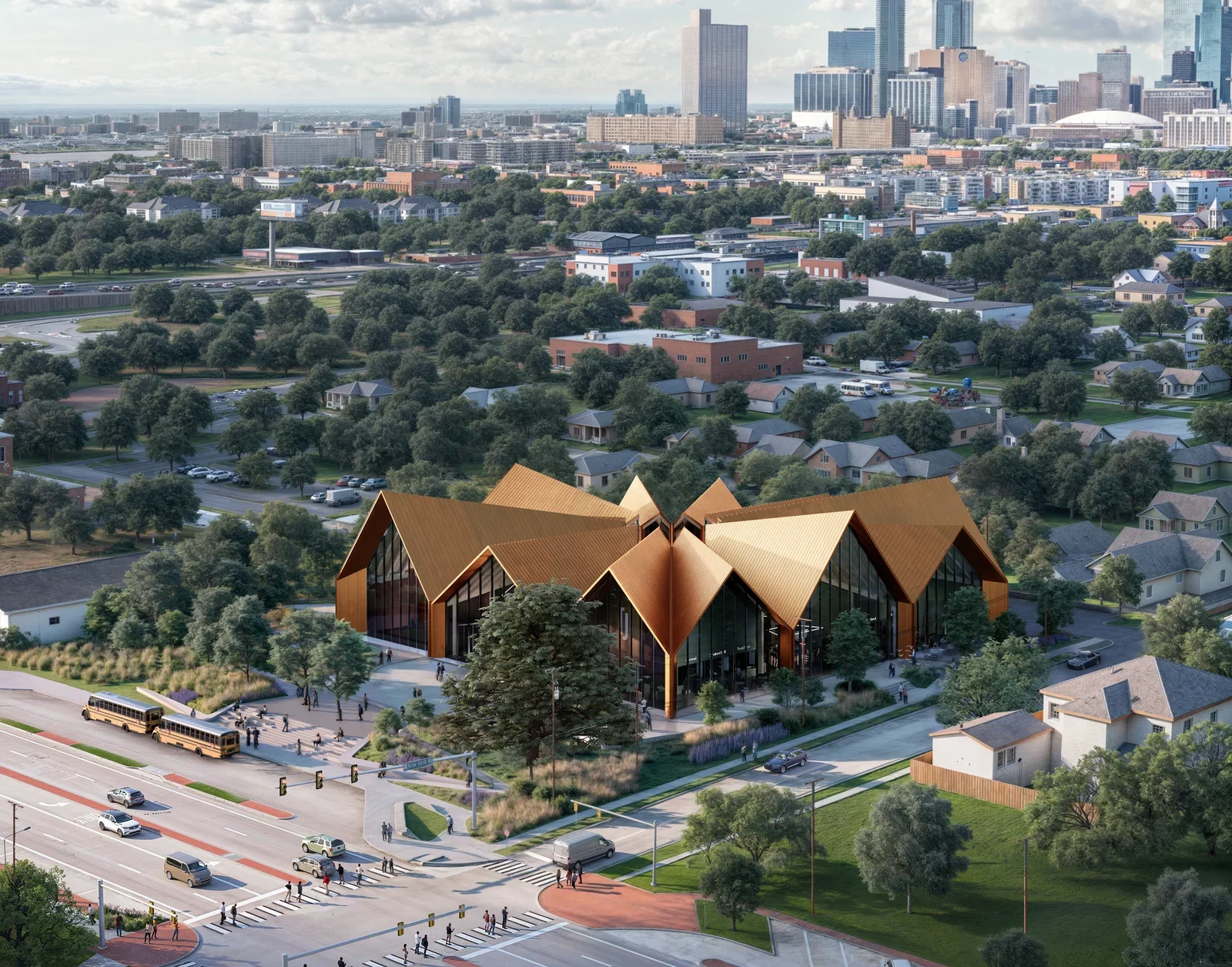
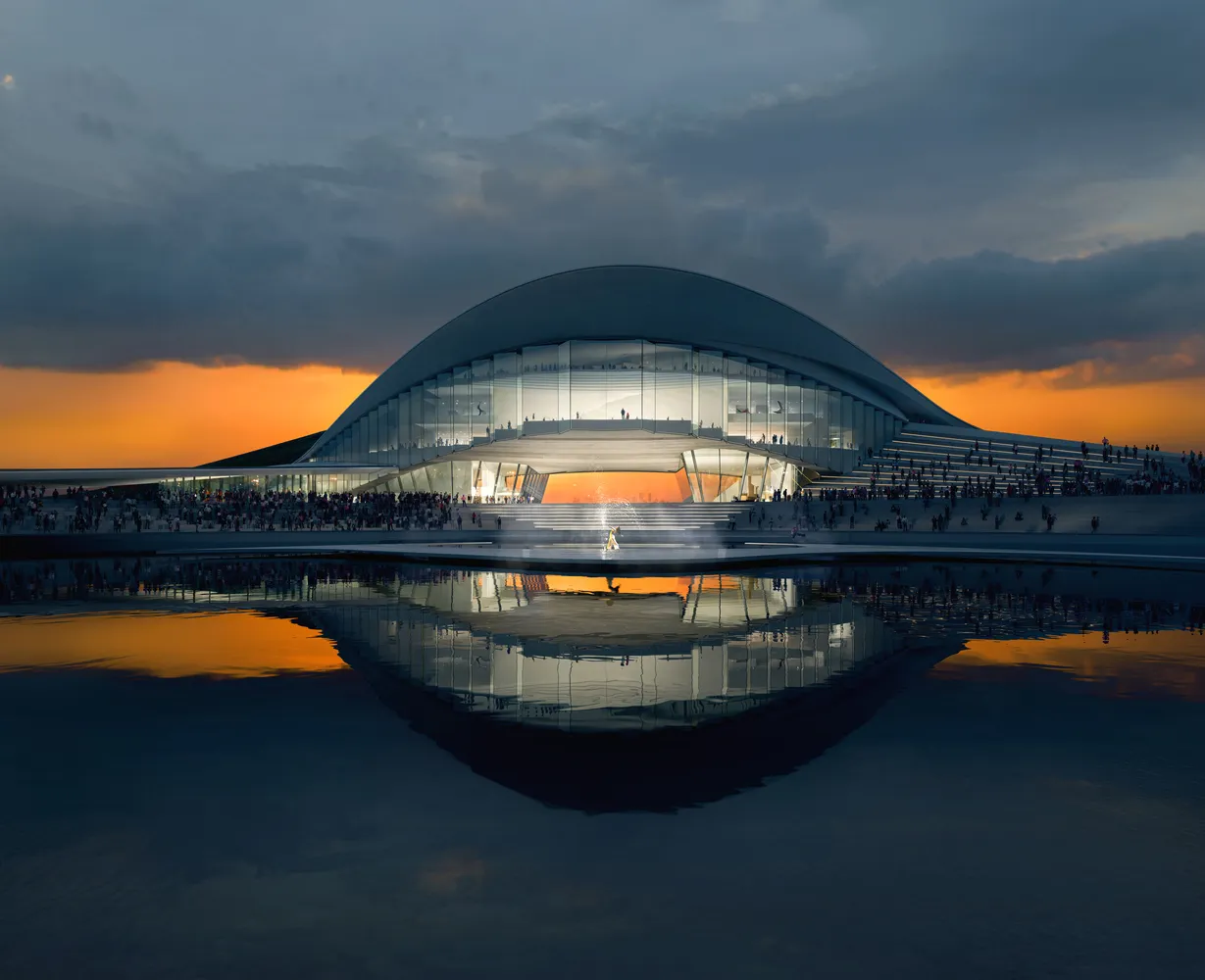
Across the site, designs blur distinctions between building and landscape. Winding paths cut through the museum, allowing visitors to approach it from multiple directions rather than through a single ceremonial entrance. Along the north, a new riverside promenade draws public movement toward the water, extending daily life along the Qiantang. To the east, elevated walkways connect the site to the surrounding streets, positioning the museum as a threshold between city and river.
Some routes remain at ground level, others rise above it, but all stay open regardless of whether the galleries are in use, integrating the project into the district’s everyday circulation.
Adaptive Interiors for Modern Exhibitions
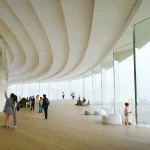
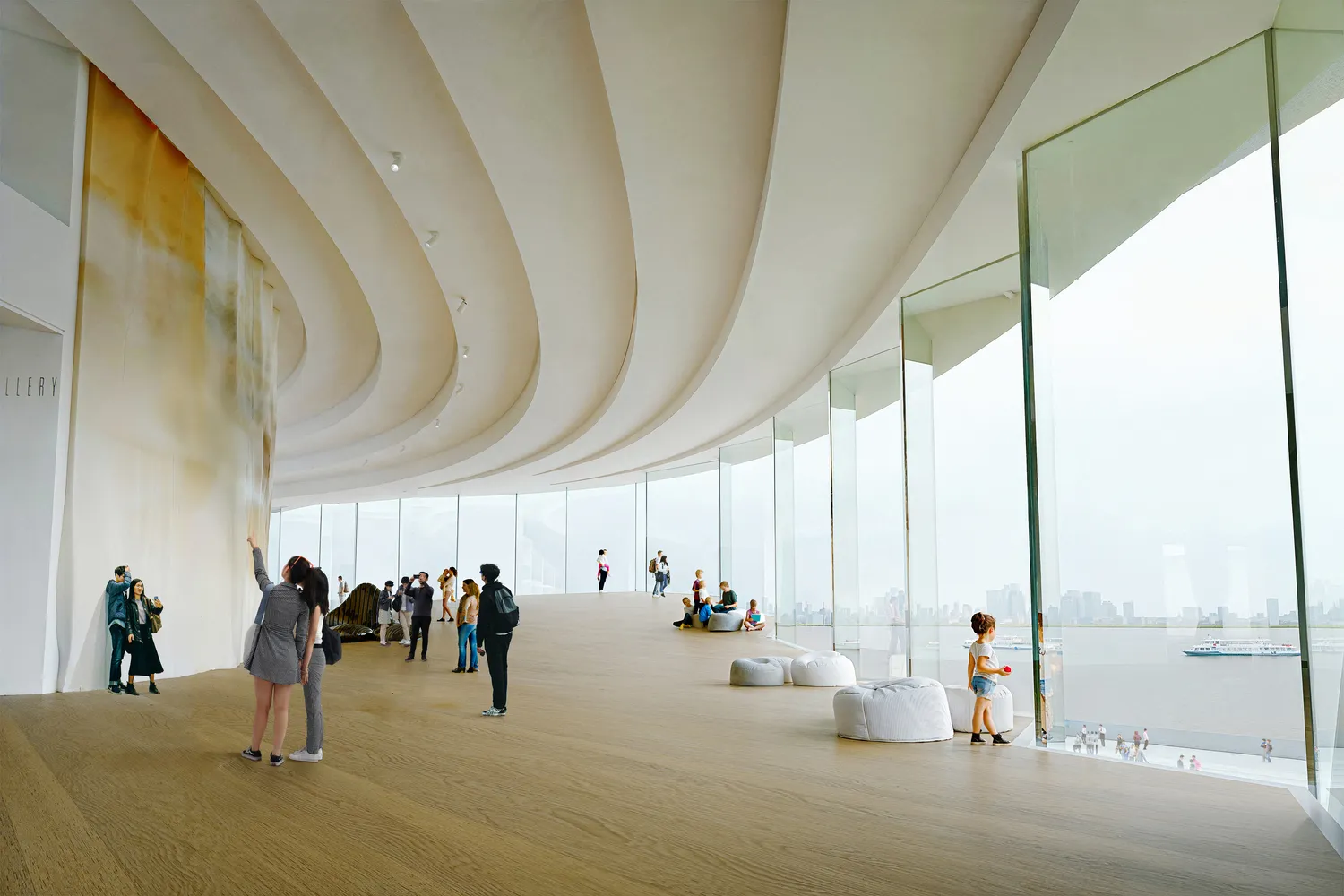
Inside, the museum is organized around a set of curved exhibition halls shaped by the building’s overall form. These galleries are designed to remain flexible, supporting everything from small installations to large works and digital exhibitions. Around them, public and educational spaces for workshops, talks, and informal programs sit close to the galleries, keeping public activity visible and connected.
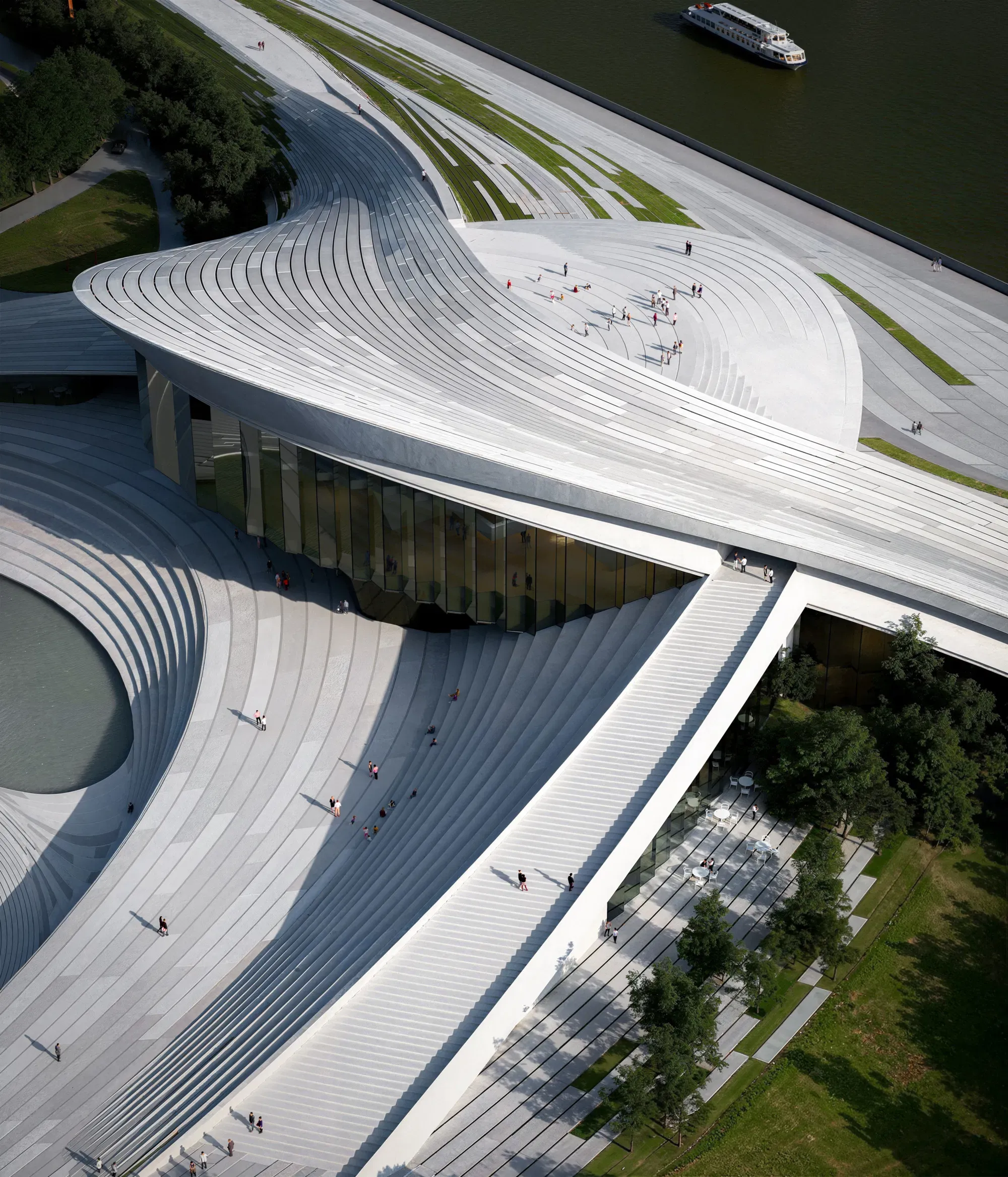
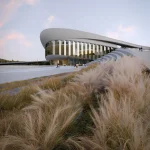
Visitors move along ramps and wide stairways that lead to rooftop terraces. From these platforms, views open onto the Qiantang River and Hangzhou’s skyline, reconnecting the museum to its surroundings. The roof itself functions as a public space, providing areas to gather and experience the city from above.
Smooth concrete volumes rise from the riverbank alongside local stone, while glass openings bring daylight deep into the galleries. As the sun moves, the building shifts between reflective and sculptural, echoing the rhythm of the Qiantang River.
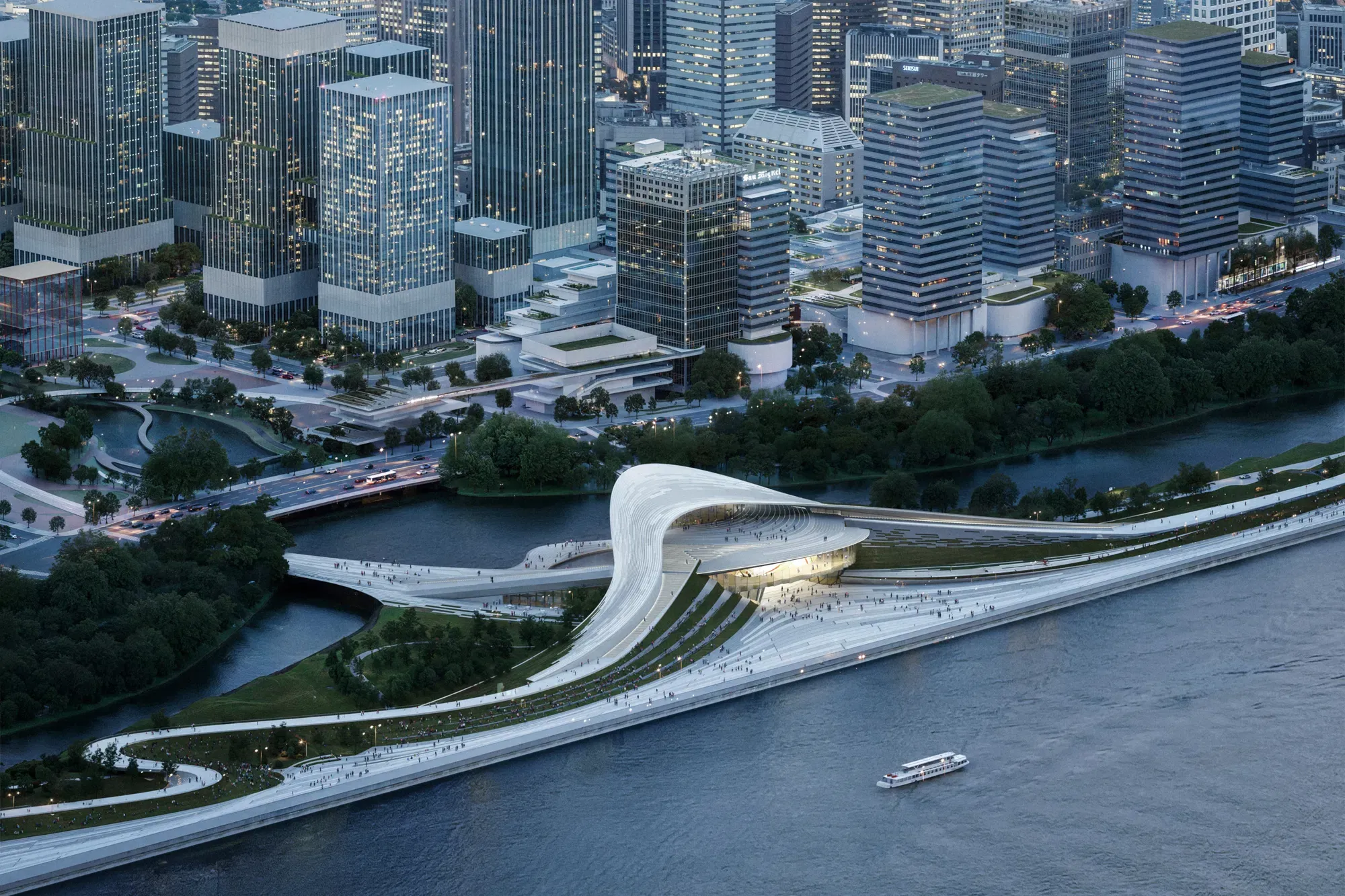
The Hangzhou Qiantang Bay Art Museum explores new ways for museums to engage the waterfront. Rather than standing apart, it becomes part of the landscape and the city’s daily circulation. As the project moves through the design phase, it is set to emerge as a landmark that is both part of the landscape and a stage for art.
Image credit: © ATCHAIN | Snøhetta