



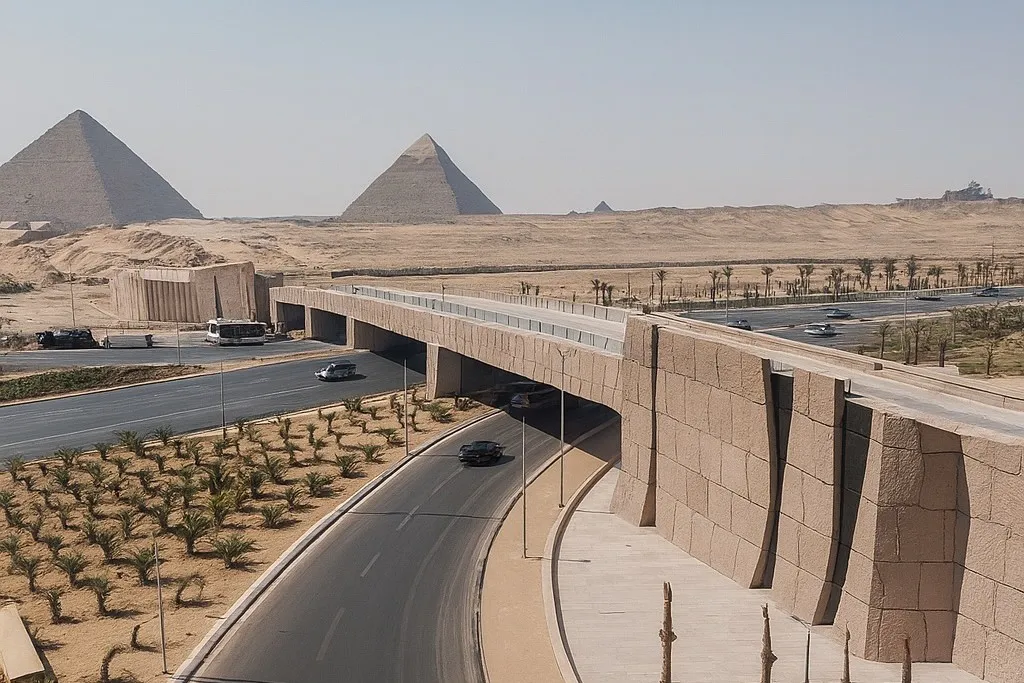
Egypt unveiled the long-awaited GEM walkway, a pedestrian and shuttle route that now connects the Grand Egyptian Museum with the iconic Giza Pyramids. The project has been designed as an architectural statement blending modern infrastructure with timeless grandeur. The new corridor promises to transform how millions of visitors experience one of the world’s most enduring wonders, offering a seamless journey from museum galleries to the shadow of the Great Pyramid.
GEM Walkway Design and Key Features
The GEM walkway, officially dubbed the “tourist promenade” or “touristic walkway,” spans between 1.27 km and 1.45 km, depending on alignment and source. Its width varies from 13.5 m to about 27.5 m, accommodating both pedestrian flows and a small, eco-friendly electric shuttle.
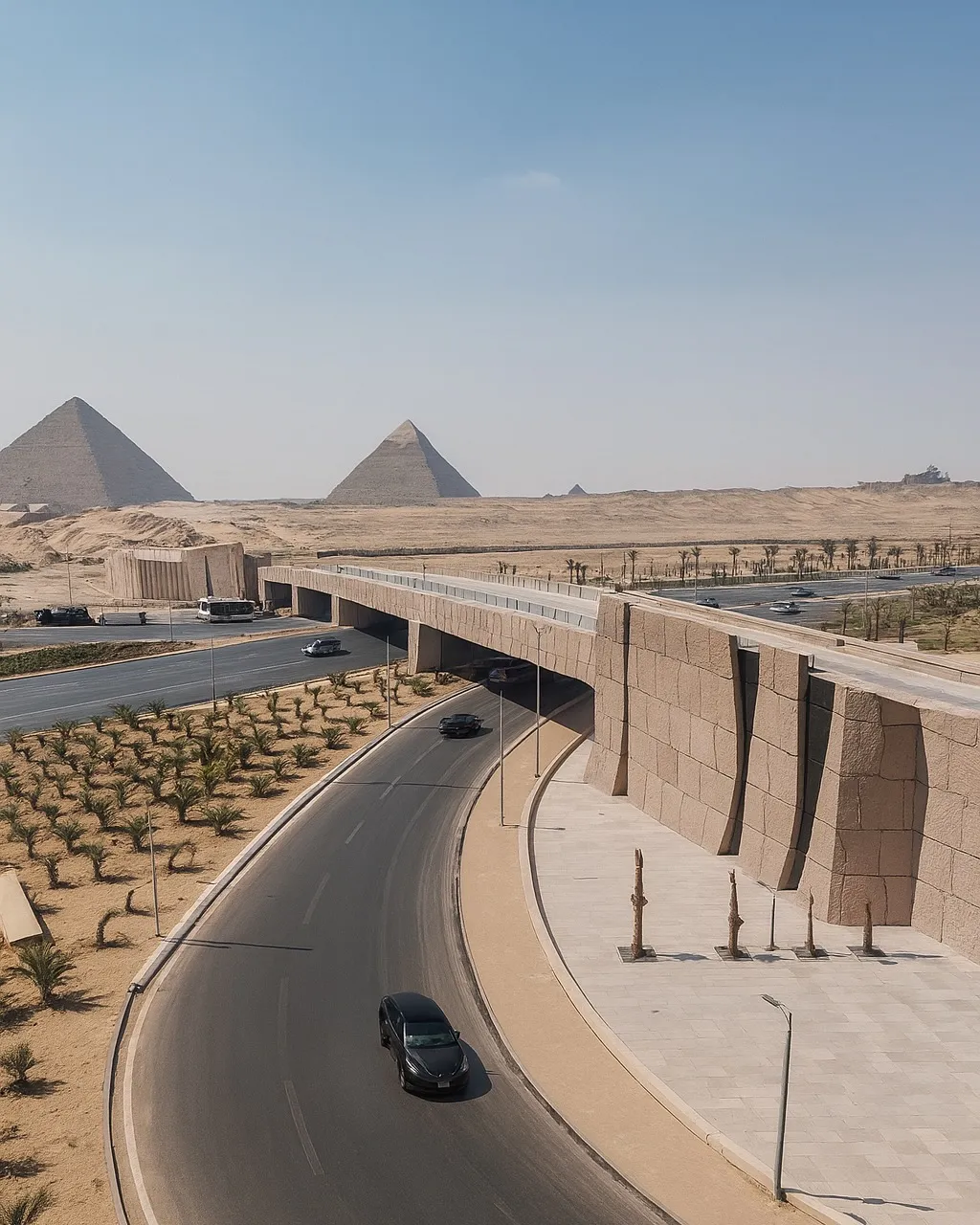
Beginning at the museum’s waiting or arrival zone, the path stretches along the Fayoum Road and merges gradually into the landscape of the Giza Pyramids. The route is landscaped with gardens and viewing terraces at night, and it is subtly illuminated with golden lighting to preserve visual harmony with the pyramidal skyline rather than overpower it.
GEM is being prepared to open fully on 1 November 2025, creating a seamless visitor experience where one can leave the museum’s halls and, by walking or riding the shuttle, arrive almost directly at the foot of the Great Pyramid.
Balancing Tourism Expansion and Heritage Protection at the Giza Pyramids
The walkway is part of a wider redevelopment vision for the Giza Pyramids, aiming to elevate the site to a world-class cultural destination.
By concentrating and guiding pedestrian traffic, Egypt hopes to reduce congestion, manage visitor flows more predictably, and preserve the integrity of the archaeological zone. Authorities believe the walking route, paired with the GEM’s exhibits and services, will boost tourist numbers significantly, positioning Cairo and Giza as top-tier global cultural tourism hubs.
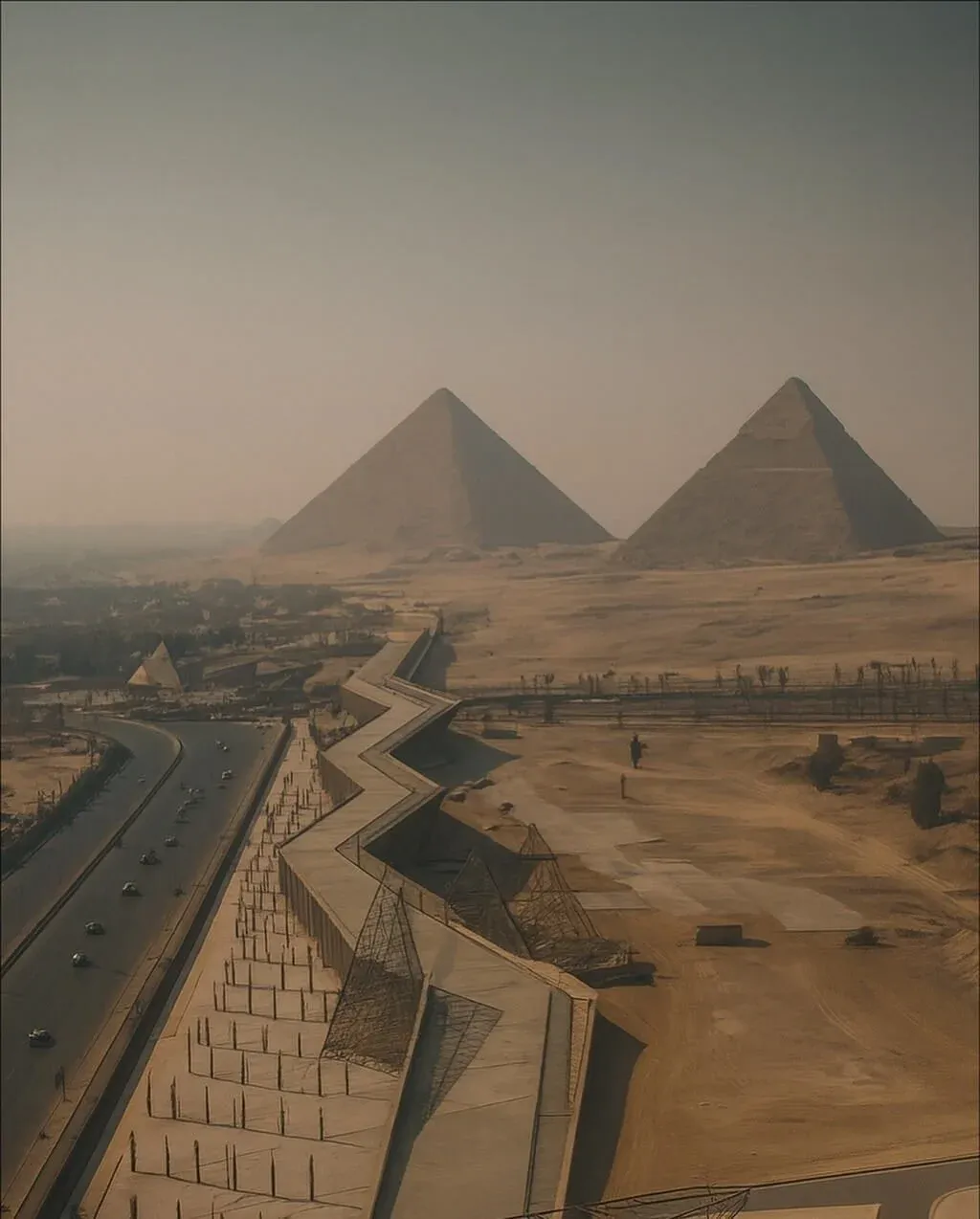
The walkway is billed as a balance between modern infrastructure and heritage sensitivity. The design reportedly respects the visual and historical context of the pyramids, avoiding intrusive structures. The shuttle system limits vehicular load directly on fragile ground and keeps much movement at the pedestrian scale.
Despite the grand vision, the project has stirred significant debate, particularly among local stakeholders whose lives depend on the existing informal tourism economy. Camel and horse operators, street vendors, and small businesses that have traditionally operated near the pyramids worry that centralized, regulated access will marginalize them.
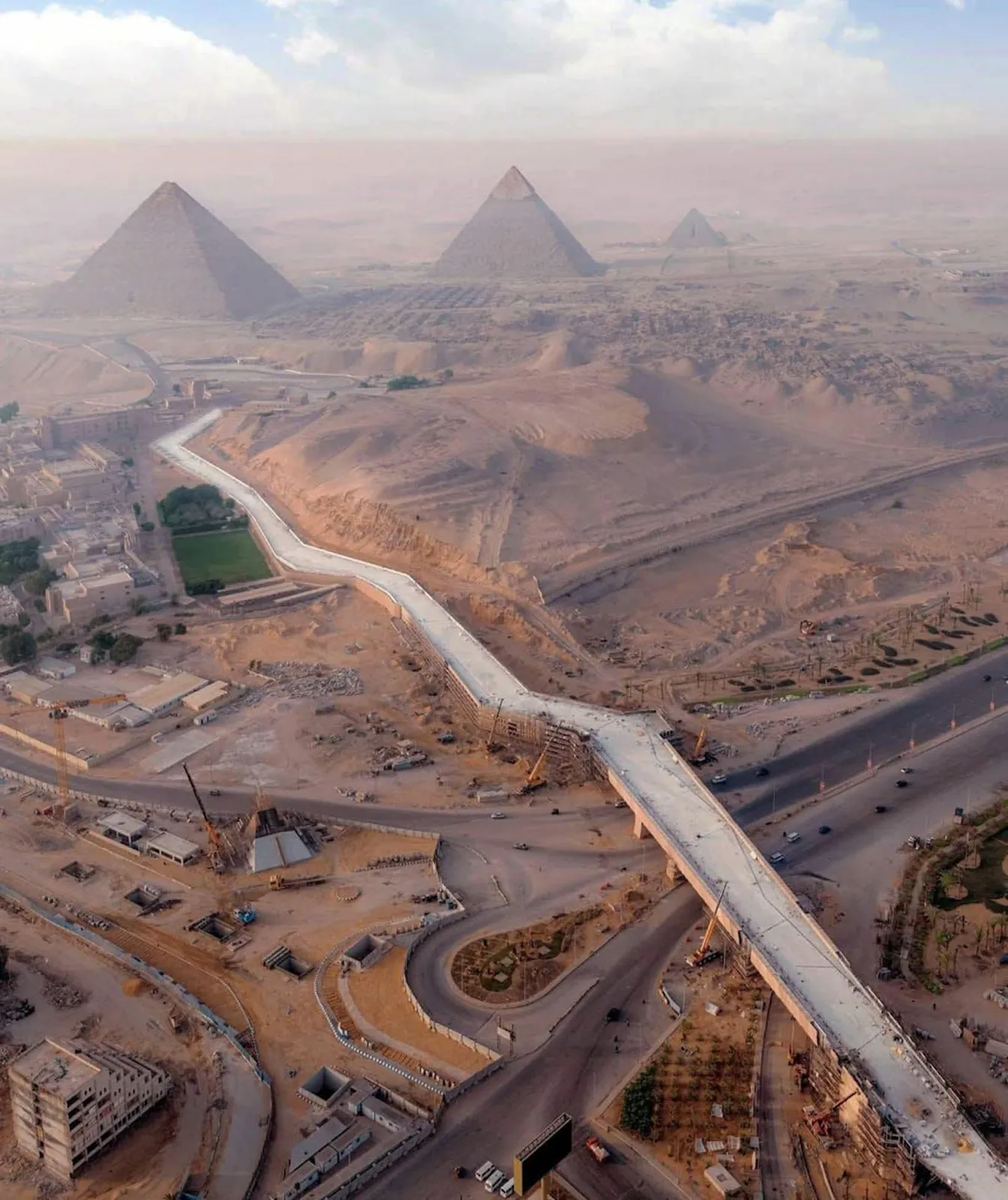
Some fear the modern route will divert foot traffic away from older paths and gathering spots, reducing incidental commerce and informal interactions with tourists. Critics claim that while the government frames the walkway as a step toward order and elegance, the human cost may be borne by long-established local communities.
In response, officials argue that the structure is necessary to protect heritage from overuse, to avoid chaotic vehicular incursions onto delicate grounds, and to ensure a dignified visitor experience.
Linking Ancient Heritage with Modern Access
Beyond its functional role, the GEM walkway carries potent symbolic weight. It metaphorically stitches together two eras: the ancient world embodied by the pyramids and Egypt’s contemporary ambition to present those wonders through a modern, sustainable lens. Visitors can emerge from elaborate galleries showcasing pharaonic masterpieces and walk directly into the open air, arriving in view of Khufu’s pyramid, nearly seamlessly.
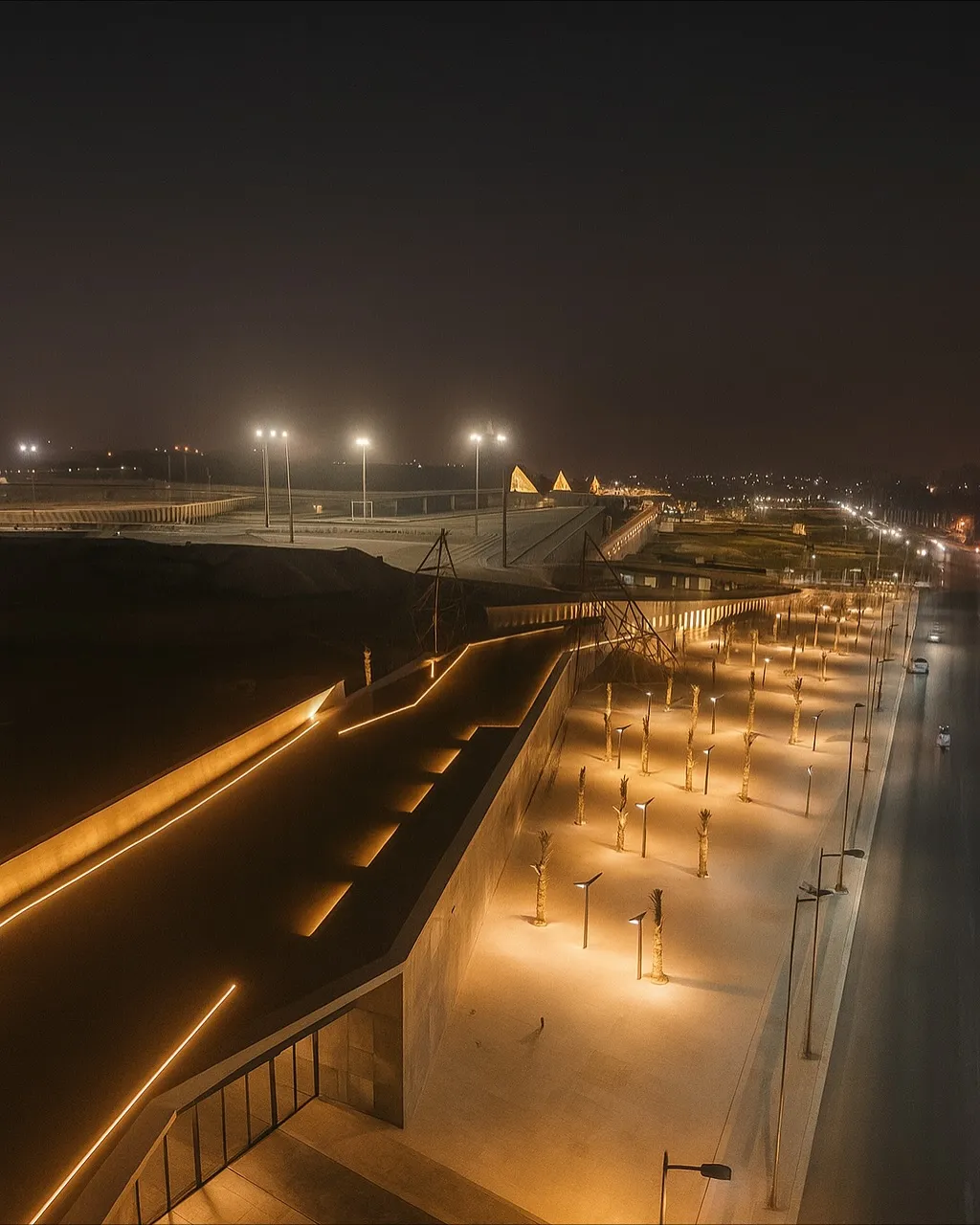
For Egypt, the walkway reflects broader efforts to balance tourism growth, cultural preservation, and visitor accessibility, while also addressing long-standing challenges of site management at Giza.
Image Credit: Orascom Construction PLC
Explore Courses


.jpg2.jpg "Carlo Ratti - Rethinking Architecture")
.jpg "Architecture Diagram Mastery: Concept to Portfolio")
.jpg%202.jpg "Building Performance with Forma & Opossum")