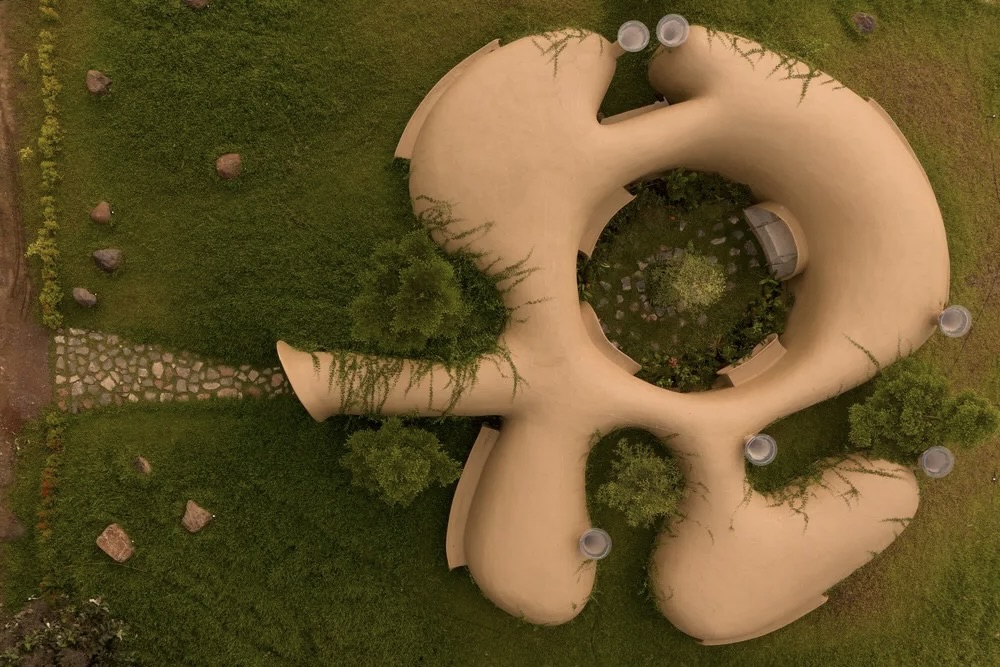
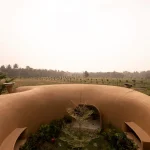
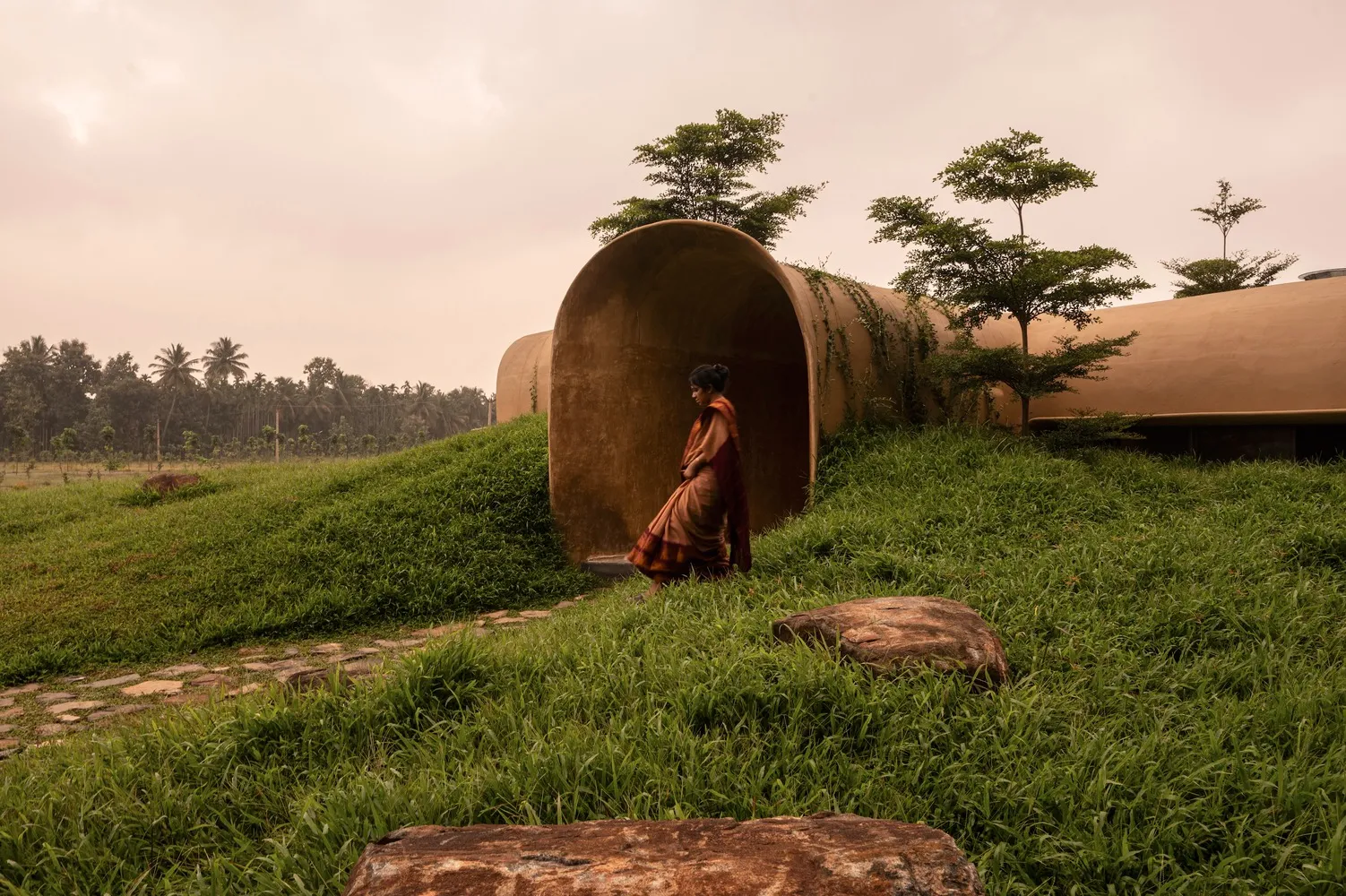
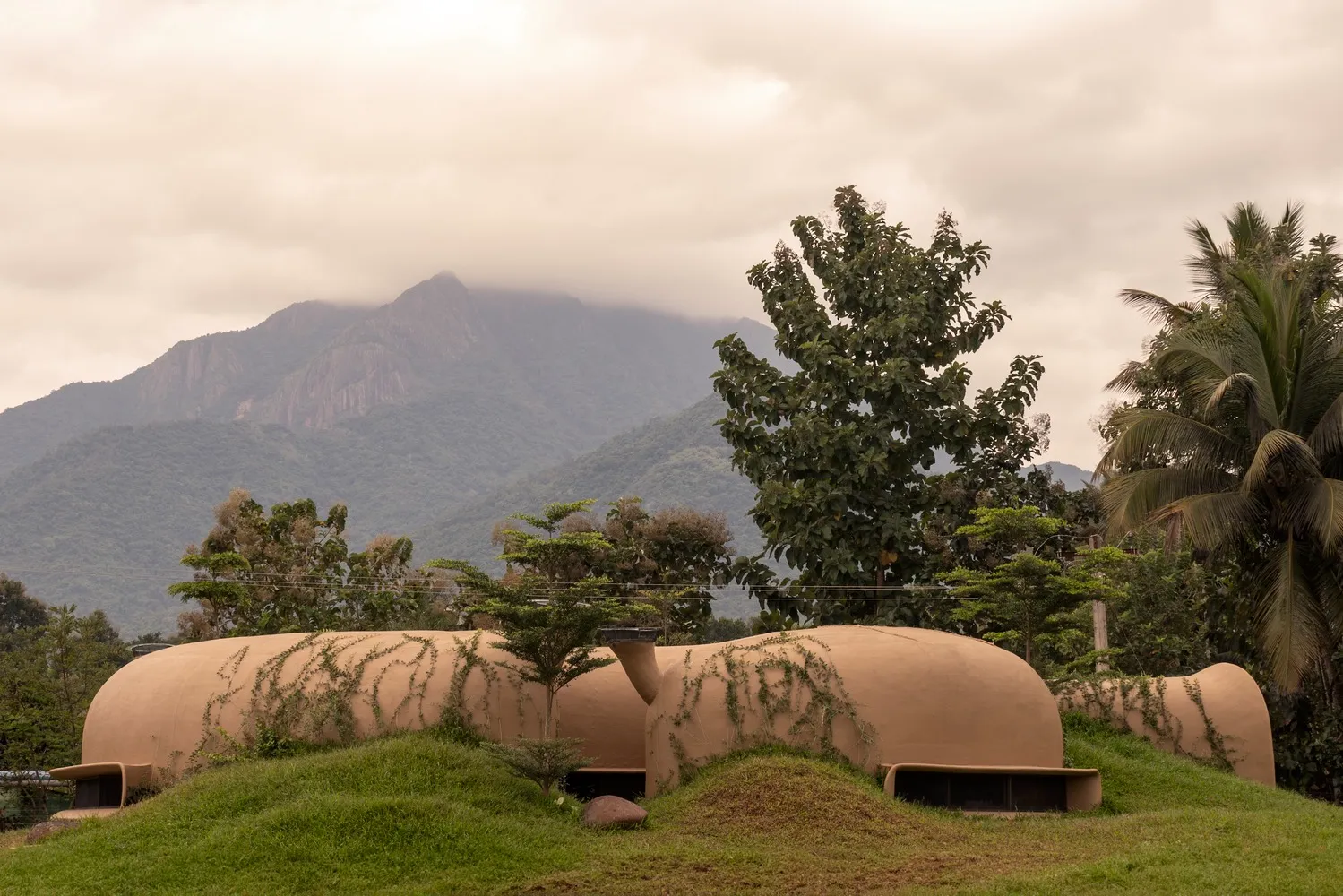
EarthScape Studio’s new project, Into the Wild, is built along the landscape of Mettupalayam in India. The structure emerges as a 1,450 sq ft solid ferrocement shell, blending into the natural backdrop of the site. Built without traditional beams and columns, the structure is seamlessly integrated with its natural surroundings. The negative spaces become just as important as the built spaces, acting together to create a cohesive built-up that merges into the background.
A Vision Rooted in Stillness
The design brief was to construct without disturbing the earth, trees, wildlife, and foliage as they stand. Earthscape Studio’s process was profoundly contextual and intuitive, with the aim of constructing 25% and retaining the remaining 75% of nature and landscape, almost building in harmony with nature. With the main focus being on reducing carbon emissions, this construction technique is sustainable for the hot and humid climatic conditions.
The Sculpted Shell
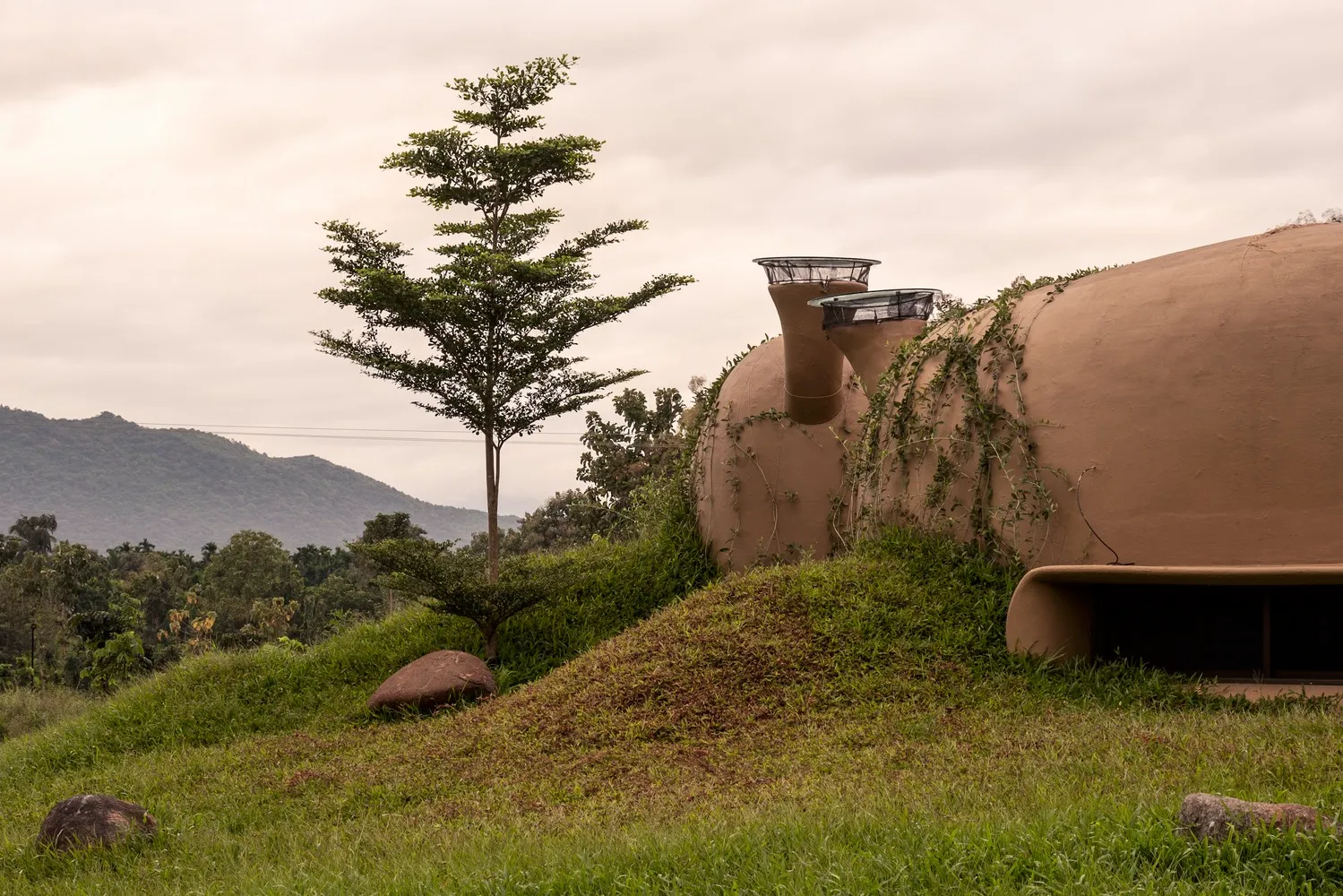
The curved ferrocement shell encloses both the walls and roof in a continuous flowing curve. With a 4½-inch thickness, the shell covers the entire structure without any pillars or support beams and acts as a monolithic work of sculpture. This dome is a compression structure, spreading loads evenly but also allowing the organic, cave-like interior volume.
By eliminating rectilinear geometry, the design encourages fluid movement through spaces. The surface is treated with mud plaster in the exterior and lime plaster in the interiors, which provides sensuality and textural richness that gets transformed under the influence of light, water, and weathering.
Passive Design Meets Minimal Footprint
Materials were procured as close to the site as possible, making it sustainable. The red soil used for construction materials was taken from a local pond, and compressed stabilised earth blocks (CSEBs) were created on-site by hand. Lime, terracotta, oxides, reclaimed wood, and locally cropped thatch were used for their regenerative potential. This hyperlocal material palette not only reduced the project’s carbon footprint but also reasserted revived flailing vernacular construction practices into prominence, paying tribute to the skill of local builders.
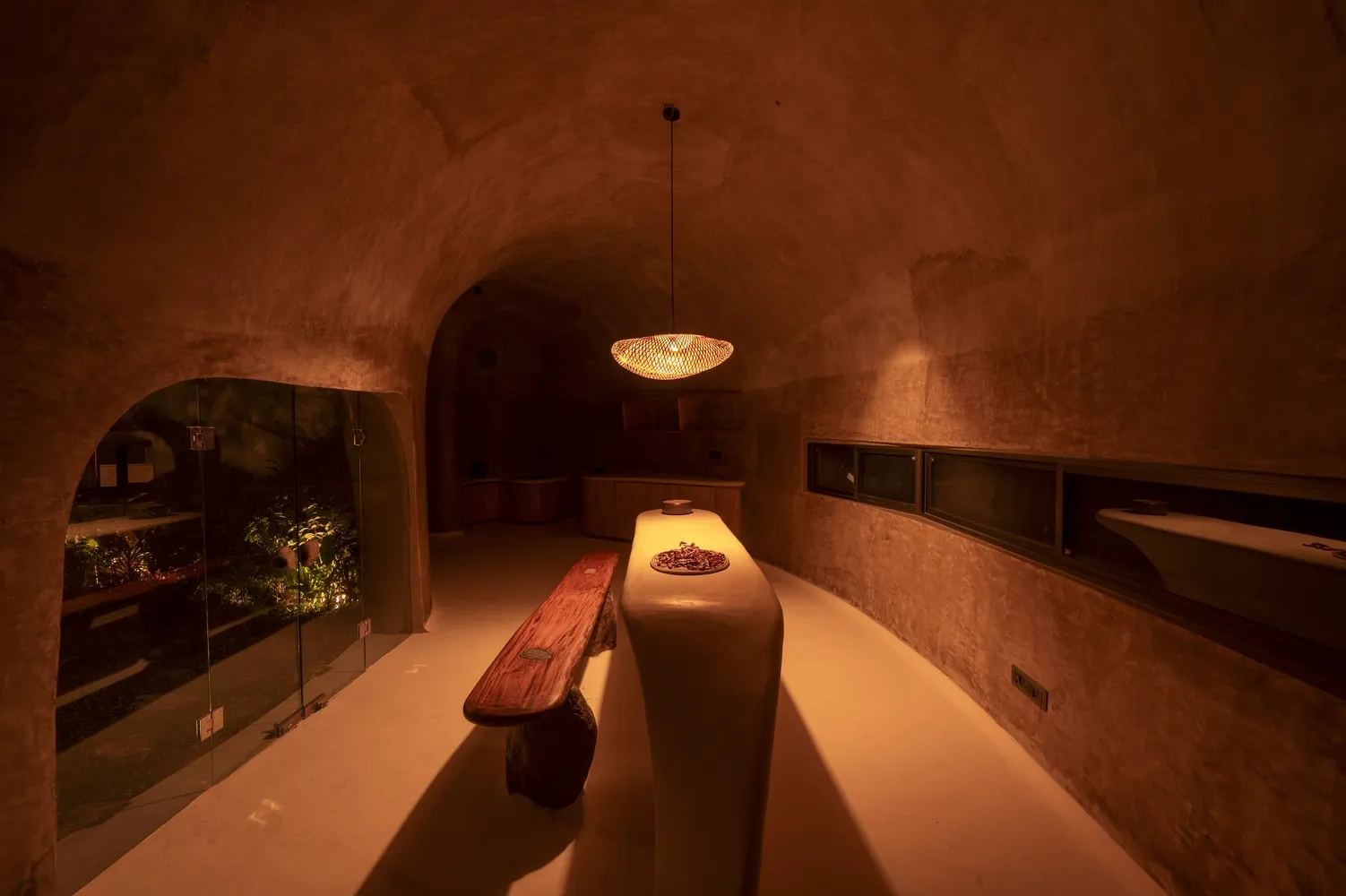
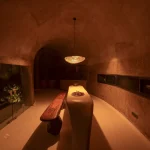
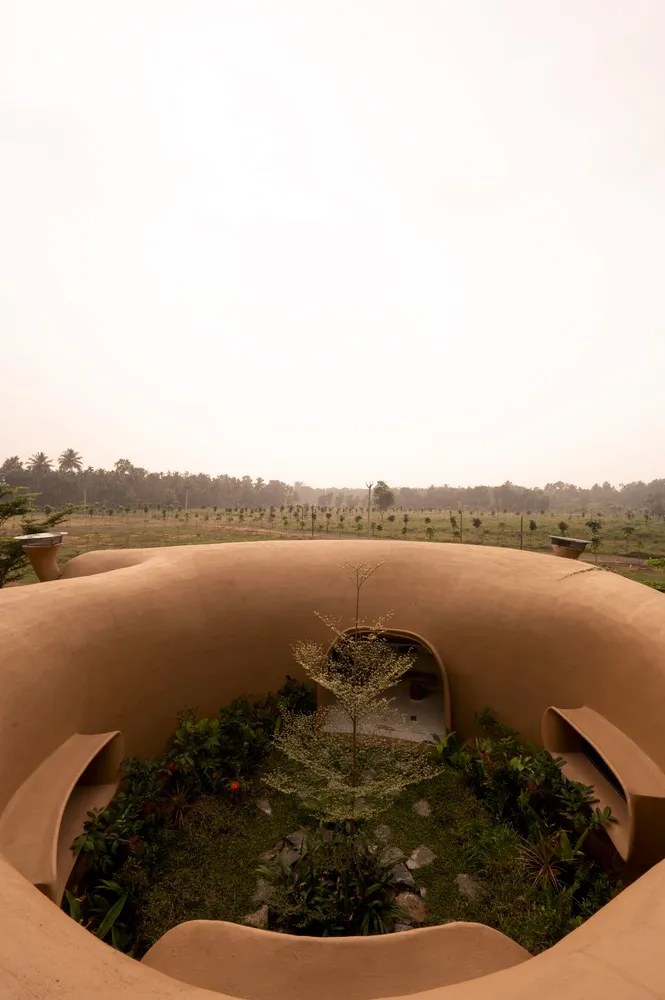
The use of such natural materials reduces the interior temperature, significantly influencing the microclimate of the space. These folds and curves evoke the sensation of entering a cave, providing an exhilarating experience. The windows on the lower level showcase a lush view of the outside while inviting cool air into the interior.
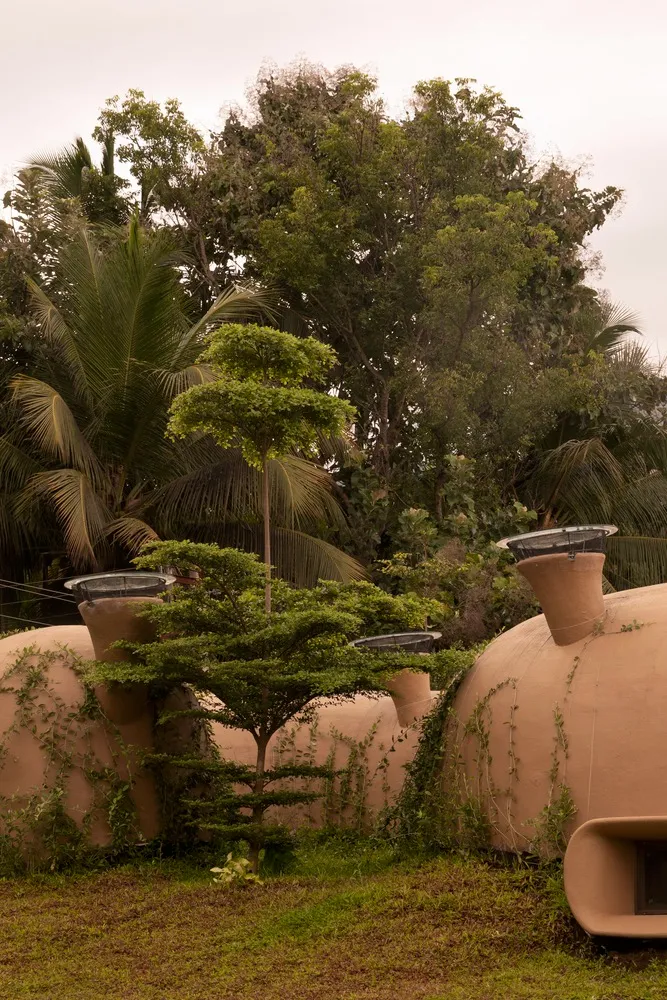
Vent openings extend outward from the structure at each area, allowing the hot air to escape and generating a stack effect. If you are looking to learn more about the blend of sustainability and technology, you can explore Parametric Synergy: Maya & Grasshopper for Sustainable Design workshop at PAACADEMY that combines organic modeling to optimize sustainable architecture.
Spaces That Breathe
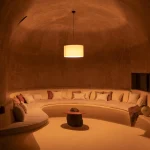
Within the shell, the house is at the same time intimate and expansive. The spaces are naturally zoned through the continuous curves. The linear opening at the bar offers a sweeping vista of the tall coconut and palm trees. The central courtyard transitions into the spaces with a range of smaller and larger openings, facilitating natural light and ventilation, which creates a sense of both open and semi-open spaces. Employing oxide flooring also aids thermal comfort and places the space within a vernacular aesthetic.
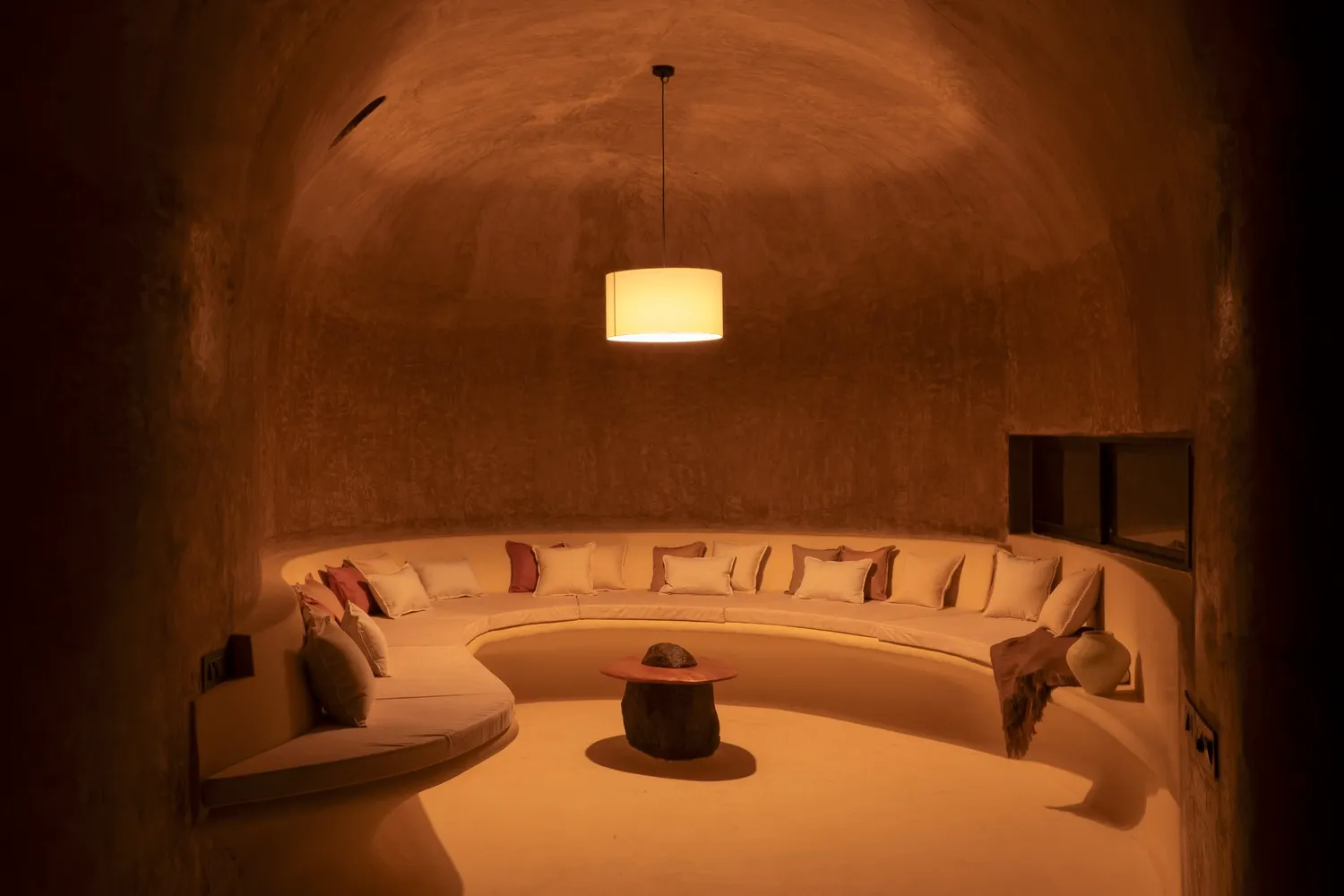
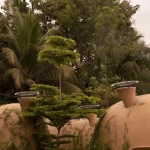
The interiors feature customised beds, cushions, and fabrics that align with the house’s curves and folds. The bathrooms feature arise finishes for natural waterproofing, while scrap wood and locally sourced stones are repurposed for doors, benches, and handles. The exterior shell is enveloped in greenery, creating a garden-like atmosphere that enhances the spaces. This self-sustaining structure flows in a fluid form.
Earthbound Architecture
This project redefines the future of regenerative design. The column-free shell structure emphasises the importance of constructing with nature yet experimenting with what’s given. Sustainability may lie in the symbiosis between technological advancements and traditional practices. The structure itself becomes a loving breathing ecosystem, evolving with nature.
Into the Wild Project Details
Project Name: Into the Wild
Architects: Earthscape Studio
Location: Mettupalayam, India
Photography / Renders: © Studio IKSHA