

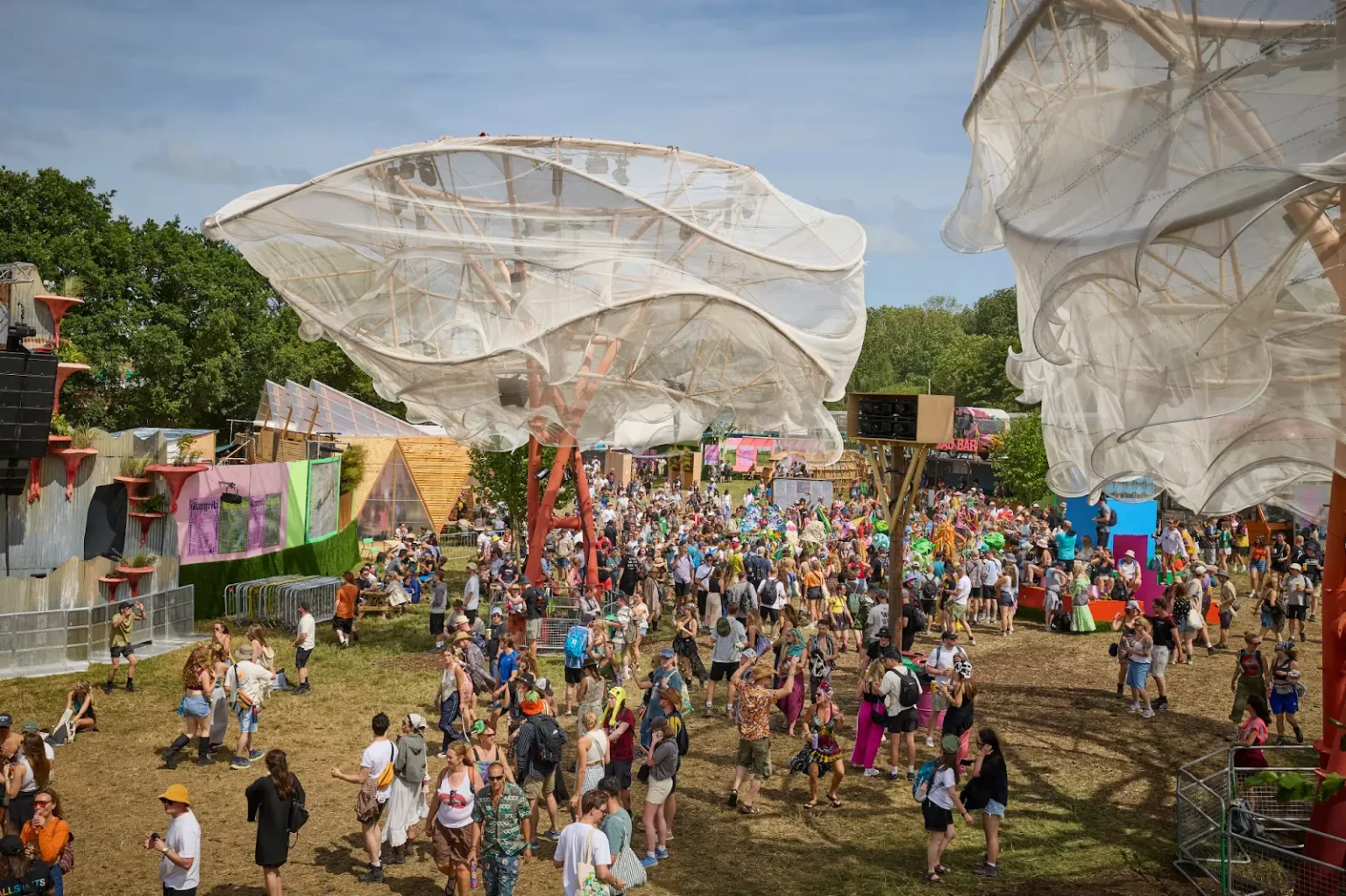


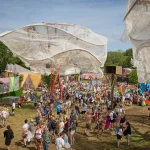

At a festival better known for muddy boots and pyramid-stage headliners, the design game at ‘Glastonbury Festival 2025’ quietly flipped the script. Across 900 acres of Somerset countryside, amid the music and madness, a wave of sharp, raw, and often unapologetically political architecture and installation work emerged, demanding attention. No gimmicks, no throwaway concepts. This year, the structures were statements. Physical, conceptual, and very much alive.
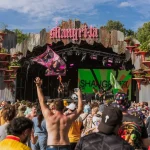
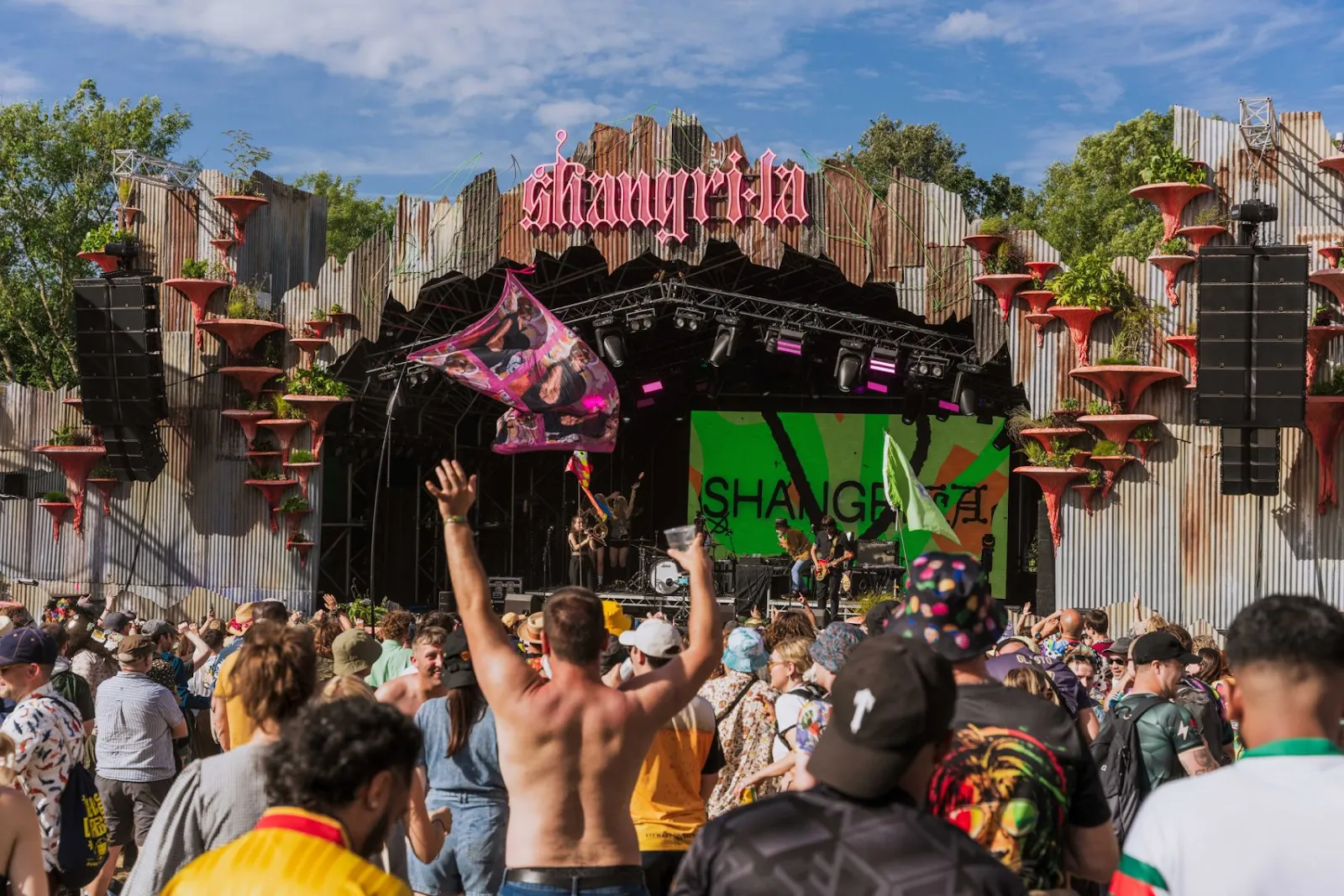
Forget what you think you know about festival installations. At Glastonbury 2025, plants were ornamental & performers. The newly rewilded Shangri-La stage, redesigned by Kaye Dunnings, had cornflowers, reeds, and ferns blooming straight out of the architecture. These passive green walls were fed daily by a cherry picker, with plans to nurture them post-festival until their return in 2027. 40-foot sculptural “trees” projected immersive nature scenes nightly, shifting the entire zone into a living, breathing eco-spectacle.
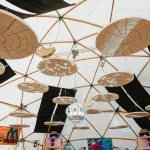
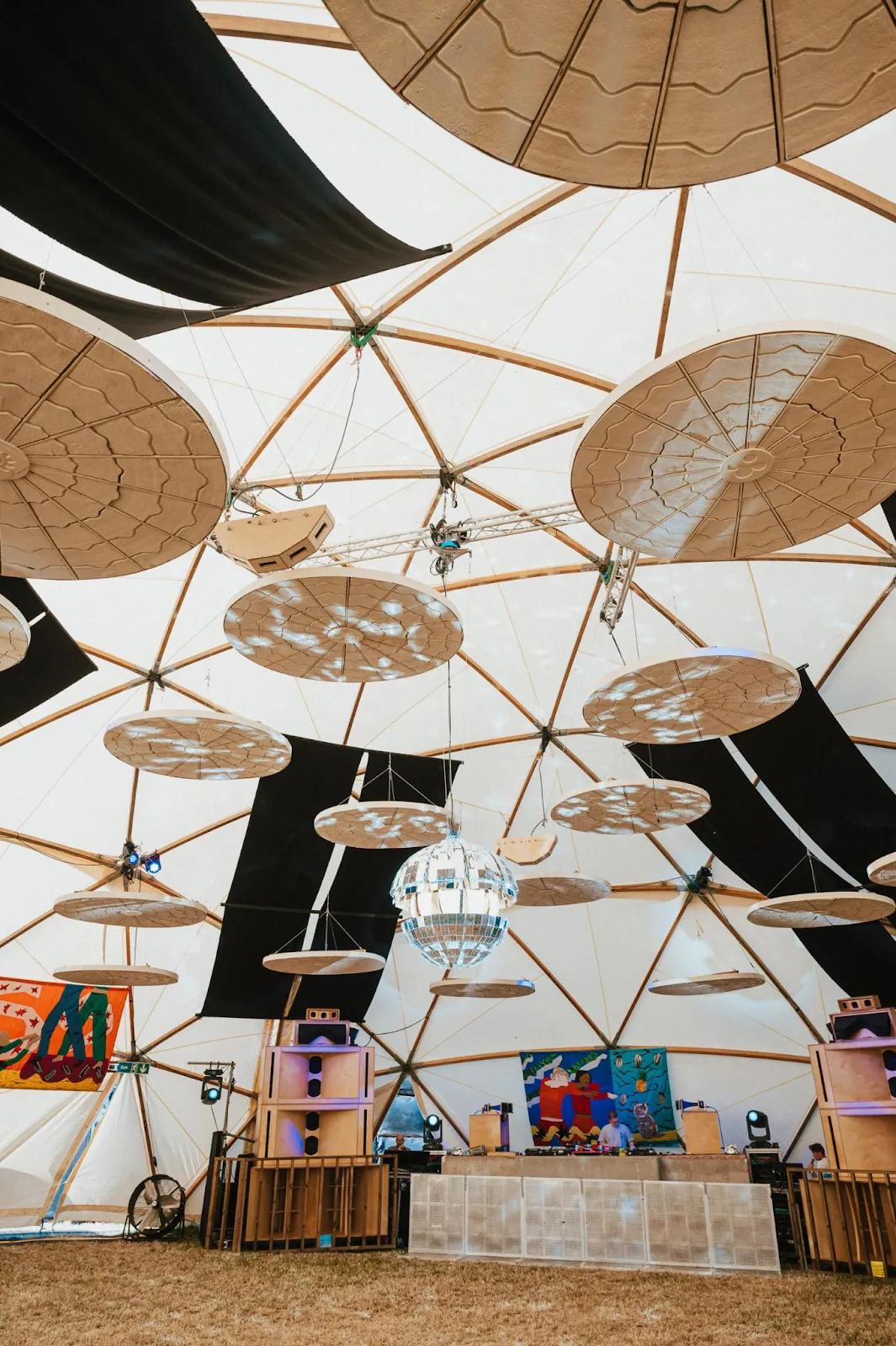
Just a few fields away, Sunflower Sound System by the Magical Mushroom Company and Floating Points rewrote the rules of stage acoustics. Imagine dancing under 25 colossal pendulums not carved, not cast, but grown from mushroom mycelium. It was an honest experiment in biomaterial architecture, and the first time mycelium’s insulating potential was tested in a live sound context.
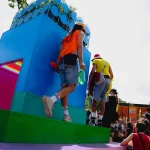
Meanwhile, in the shadow of Block 9’s IICON, the installation Send Them to Mars was less subtle and far more confrontational. Led by Donkeys parked a crushed Tesla next to a tank-treaded trail, then flanked it with dystopian propaganda: Bezos, Zuckerberg, and a Sieg-heiling Elon Musk boarding a rocket into exile. Nearby, cardboard cutouts of politicians and public figures deemed responsible for “making life on Earth more difficult” stood in bright orange jumpsuits. The message was to exile the elite and reclaim the planet.

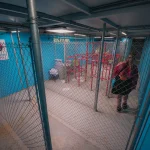
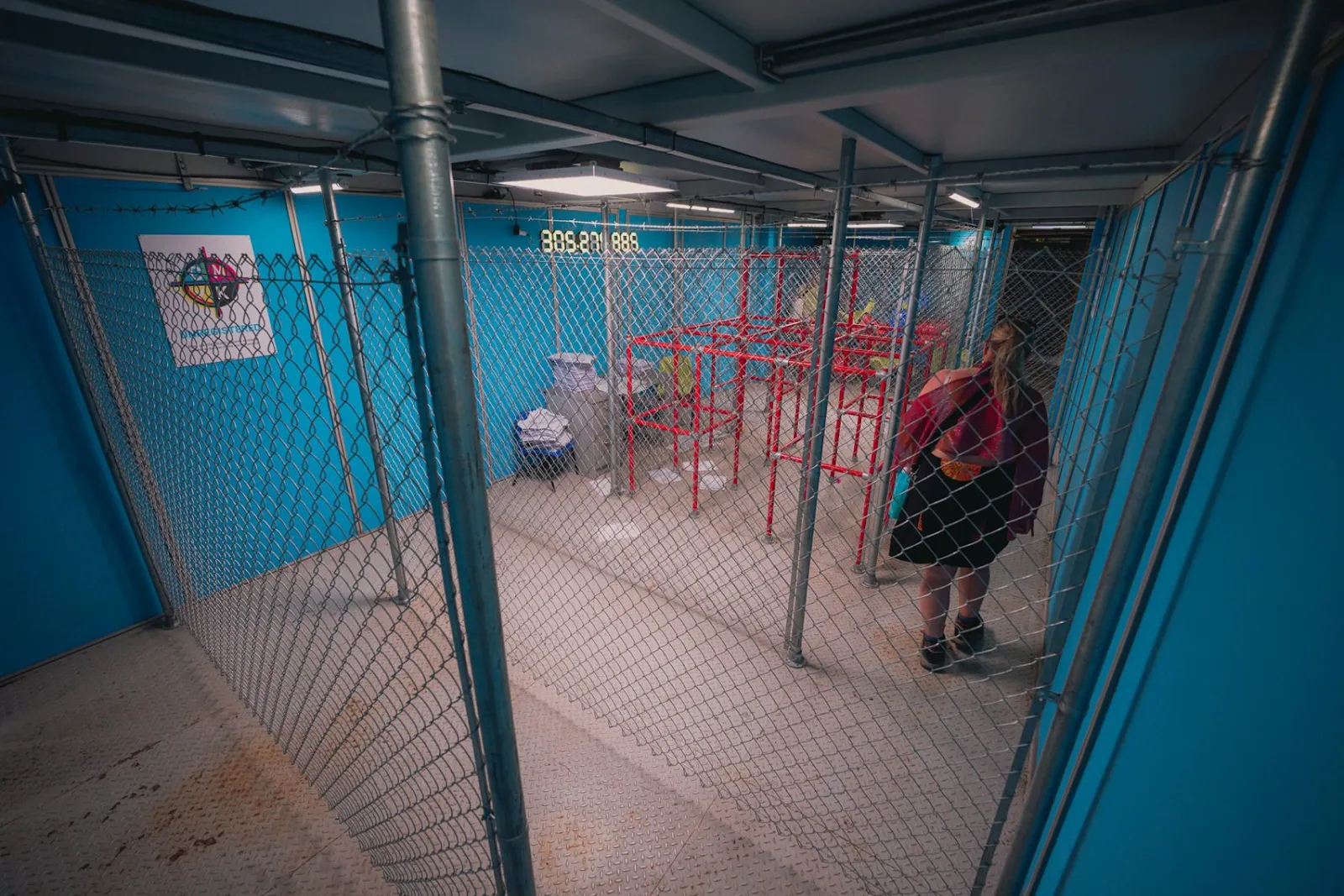
And then there was Jungle Gym by Turner Prize winner Mark Wallinger, an aggressive tangle of red steel trapped behind chain-link fencing. Located in Terminal 1’s “No Human is Illegal” exhibit, the piece turned the experience of child refugees into a brutal physical metaphor. Viewers did look at the maze, they had to enter it, answering British citizenship test questions along the way. It was disorienting, maddening, and exactly what it needed to be.
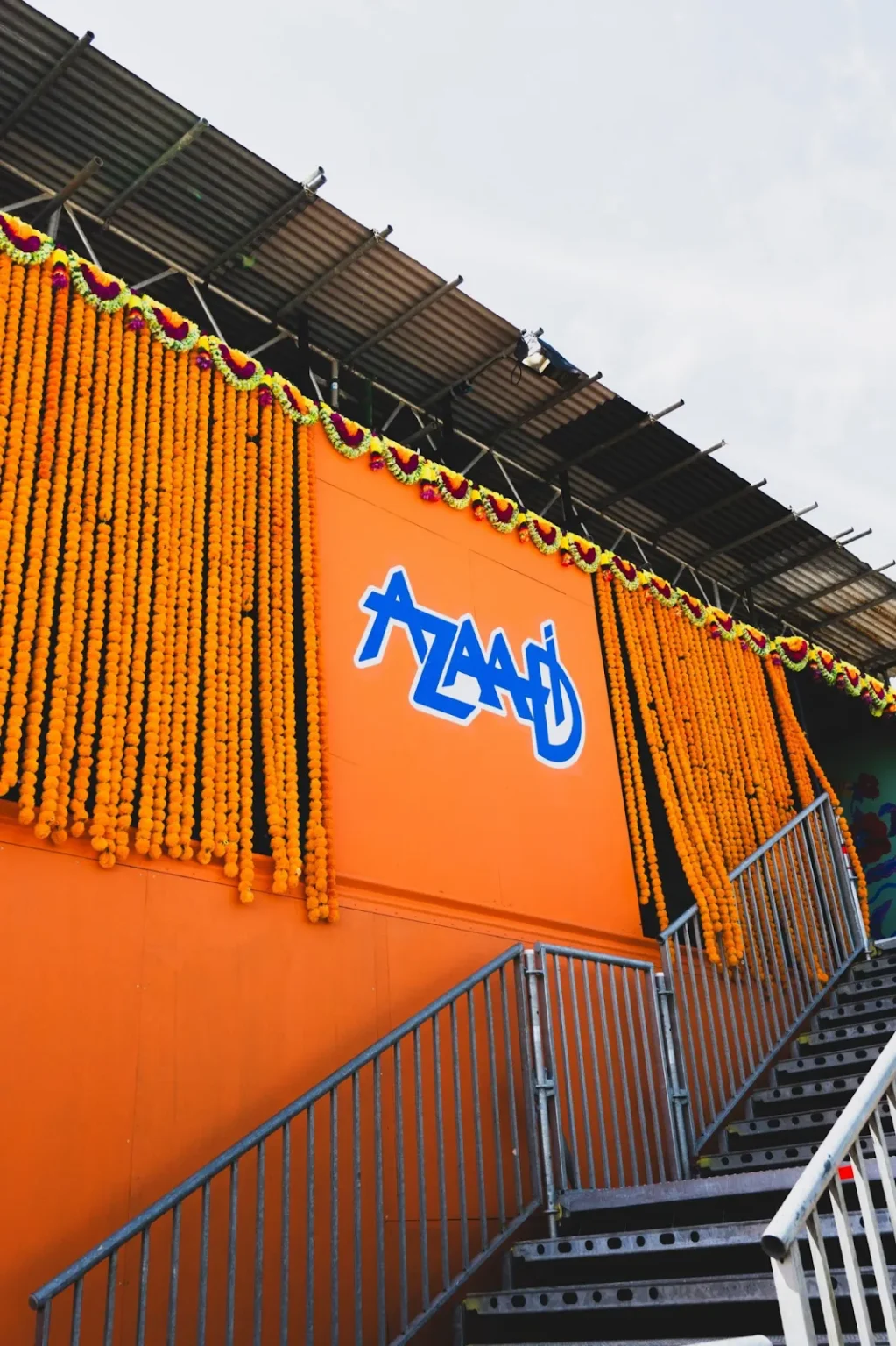
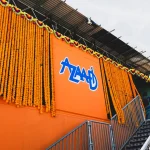
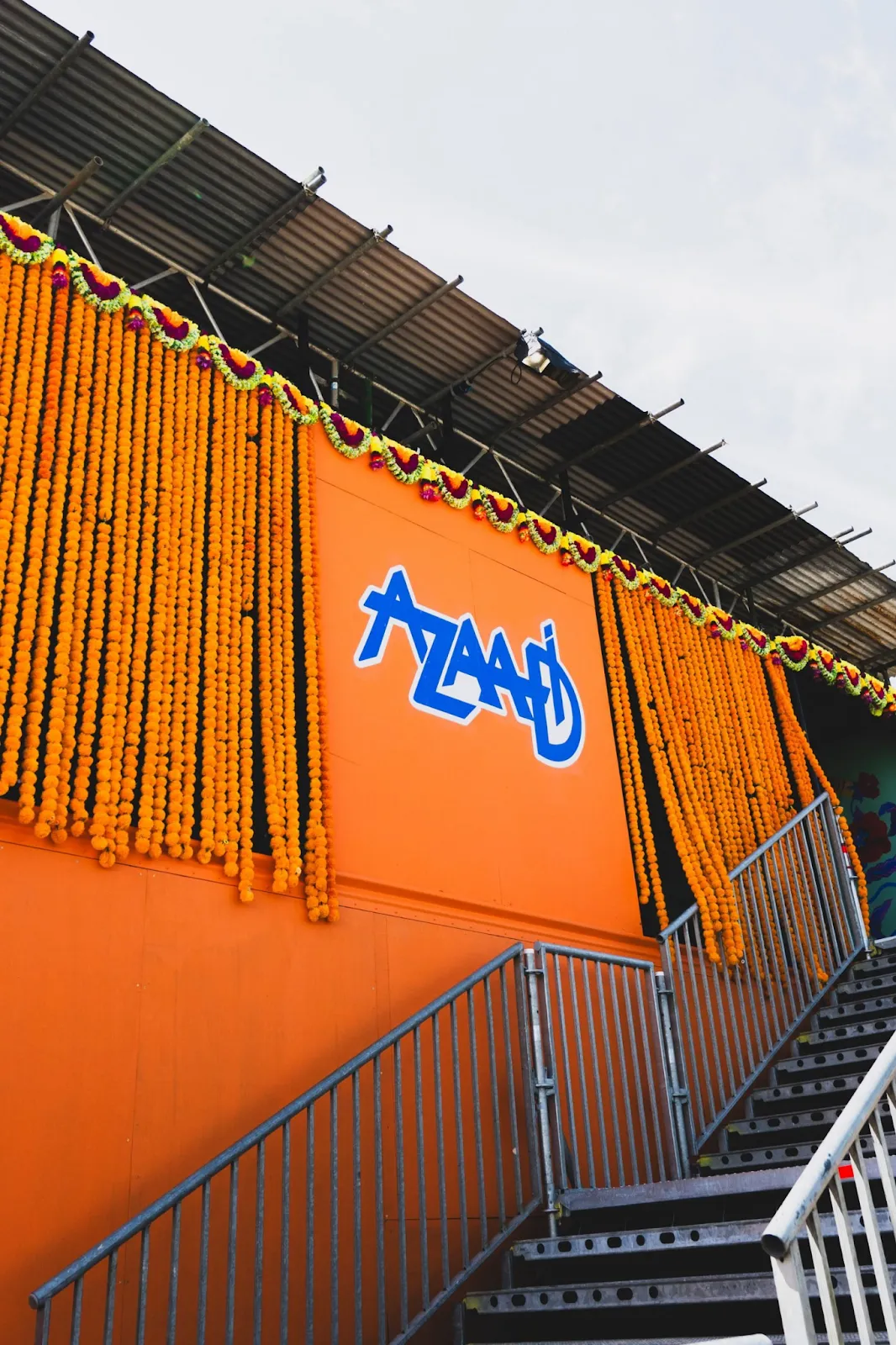
But not all was rage. Azaadi, Glastonbury’s dedicated South Asian stage, made a vibrant comeback after its 2024 debut. Now two storeys tall and wrapped in hand-tied marigold garlands, it brought wedding-grade craft and color into the festival’s concrete-and-techno zones.
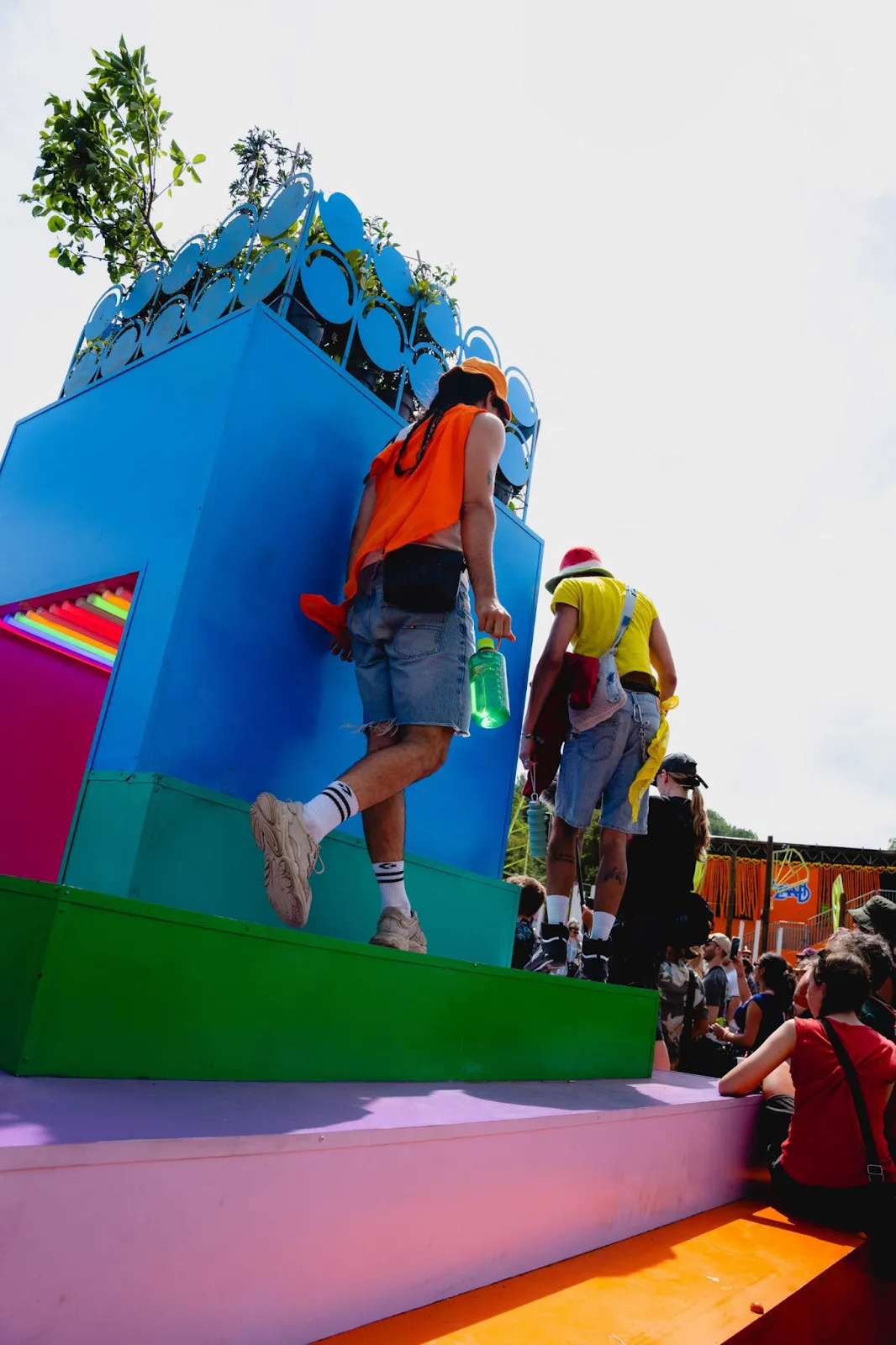
Similarly, Yinka Ilori’s In Plants We Trust transformed a stepped pyramid into a literal shrine for flora, drawing from ancient architecture to create a glowing sanctuary at the heart of Shangri-La.
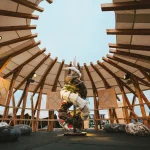
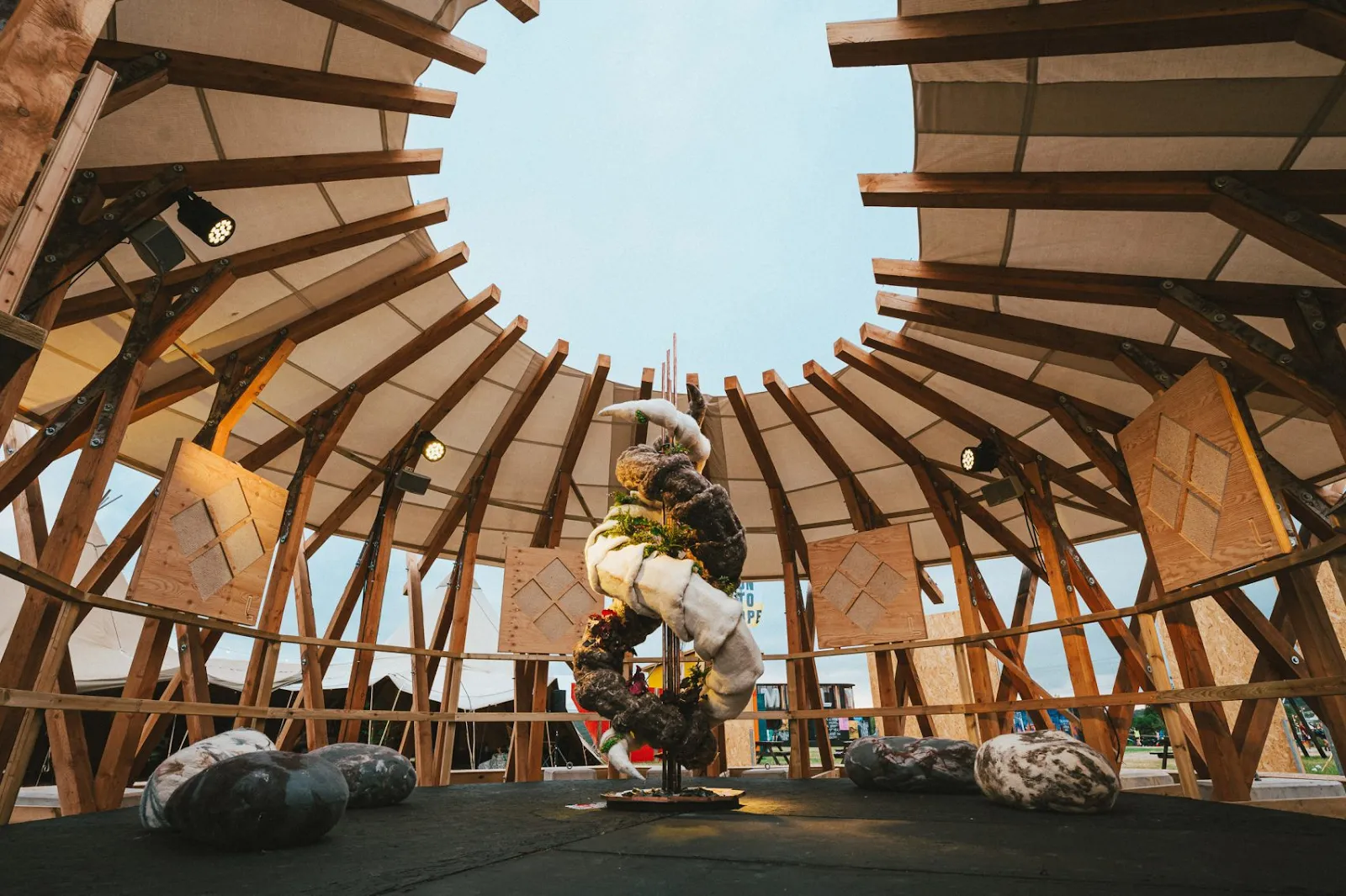
Over at the Hayes Pavilion, the team from Re: Right Design, working with British Wool, created In Return, a dual-spiral wool sculpture seeded with plant life. It was delicate but grounded, a meditative counterweight to the usual sensory overload, and a reminder that sustainability doesn’t always need to scream.
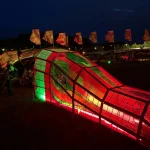
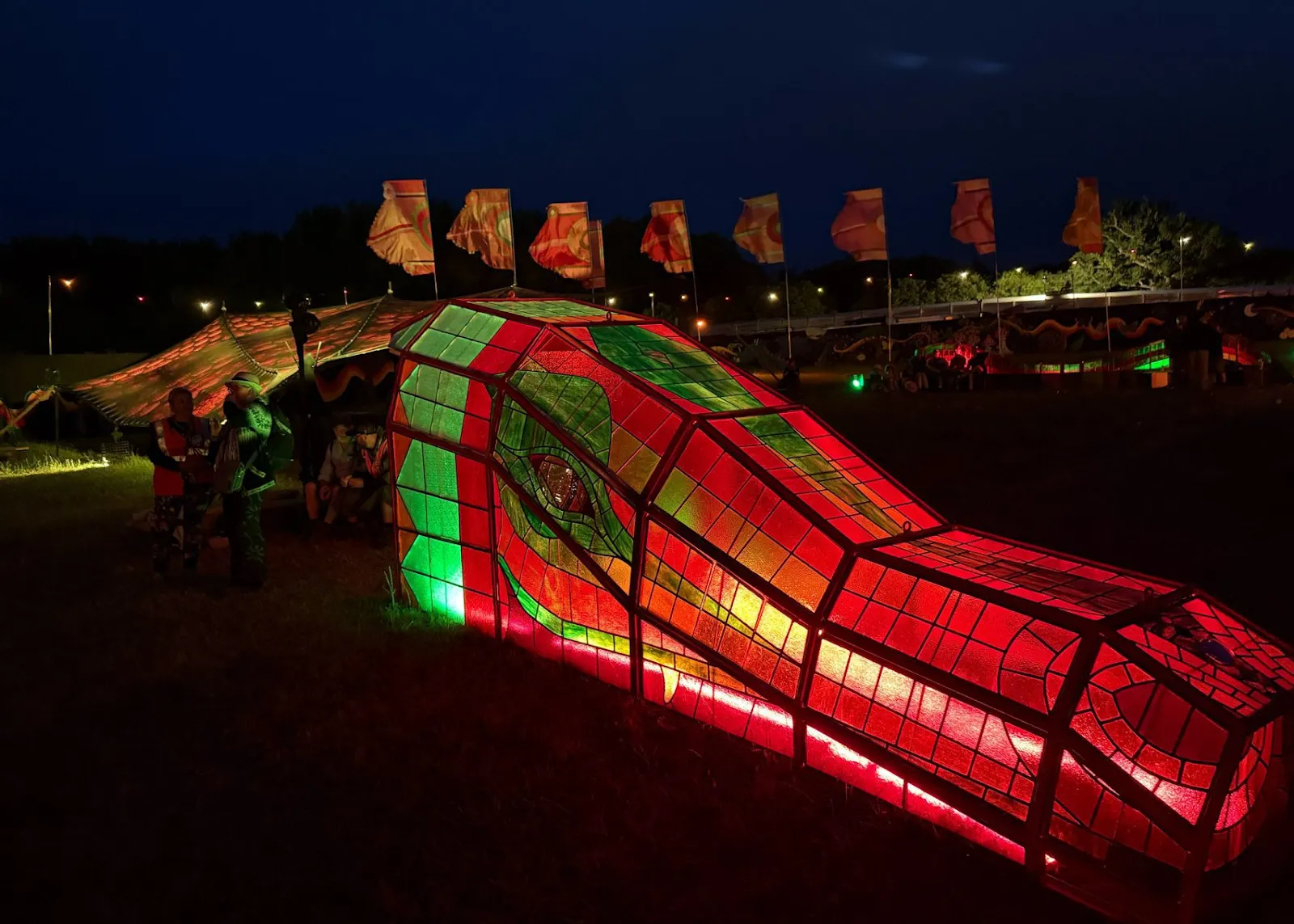
The Dragon, a 40-metre-long stained-glass wyvern, designed and built by artist Edgar Phillips in just 11 weeks, now curls across the festival’s newly christened Dragon’s Tail field. Each glass panel, mouth-blown, antique, textured, was hand-set like a cathedral window. Phillips repurposed pieces he’d been saving for over four decades, including glass from a defunct manufacturer. A light-drenched, slumbering beast that offers both shelter and spectacle, proof that even at Glastonbury, permanence has a place.
Glastonbury 2025 turned the festival grounds into a wild and chaotic gallery of form, material, politics, and nature. Whether growing, glowing, or raging against the machine, the installations this year decorated the festival and defined it.