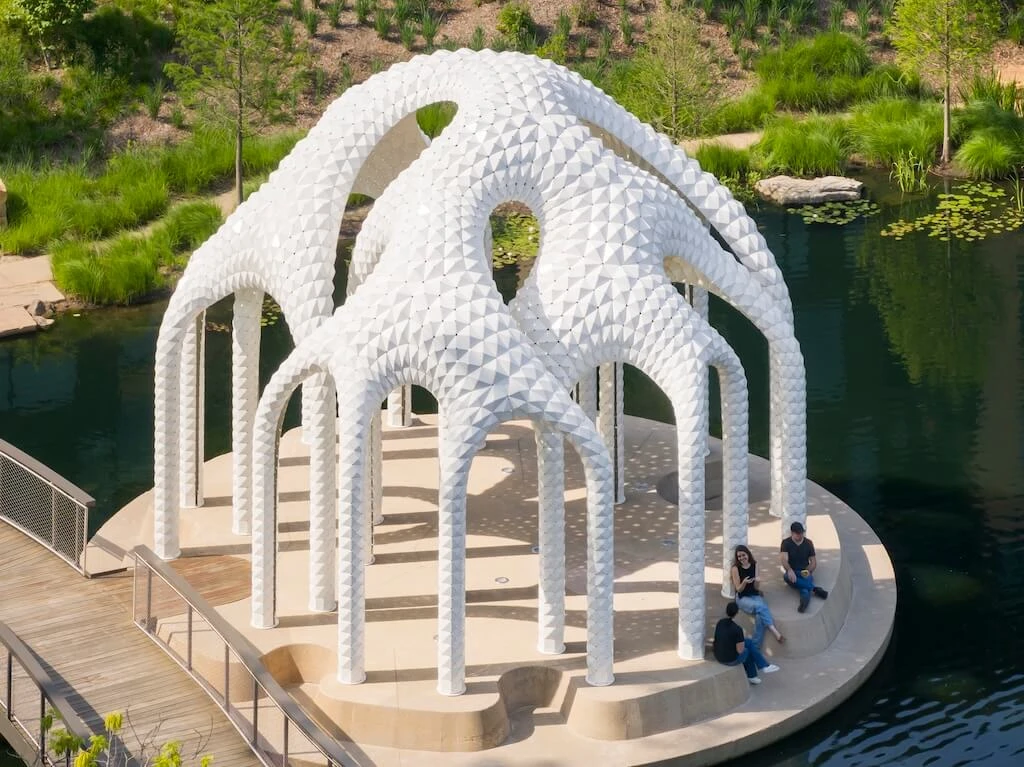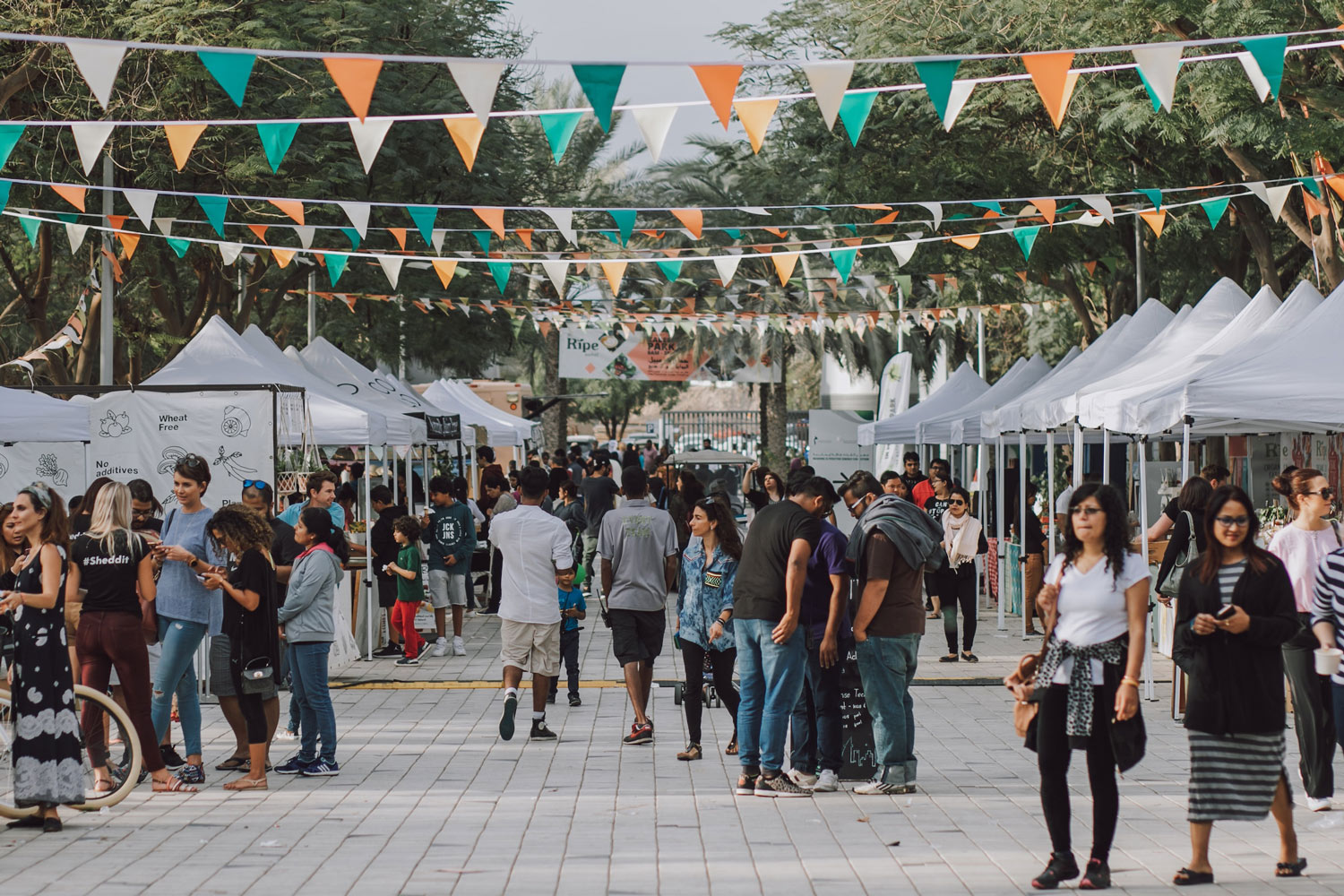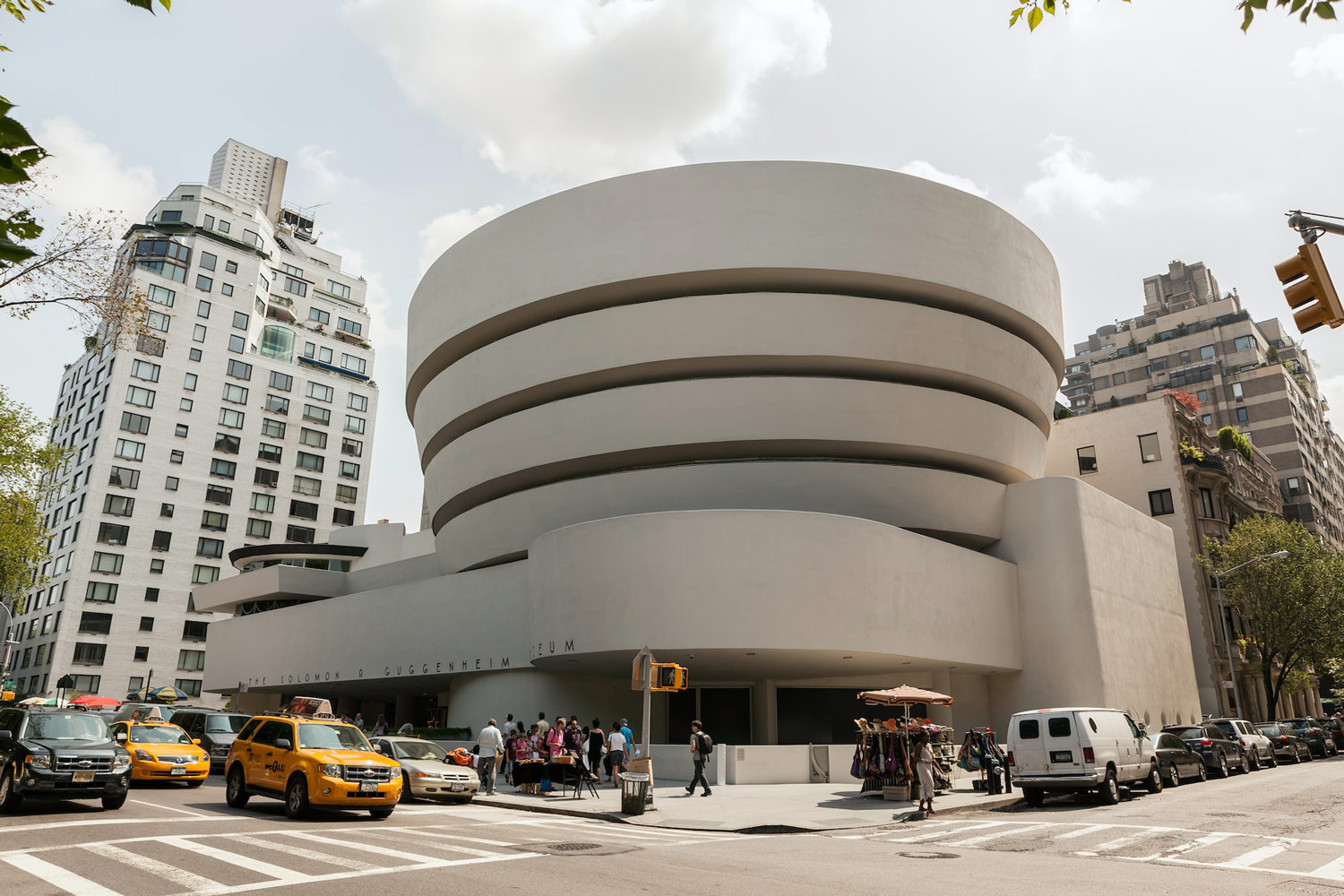




Saudi Arabia’s Vision 2030 represents a wave of ambitious megaprojects that are changing how architecture, infrastructure, and cultural identity coexist. Across the country, these projects are reshaping how people interact with space, from artificial intelligence-driven cities to heritage-inspired waterfronts.
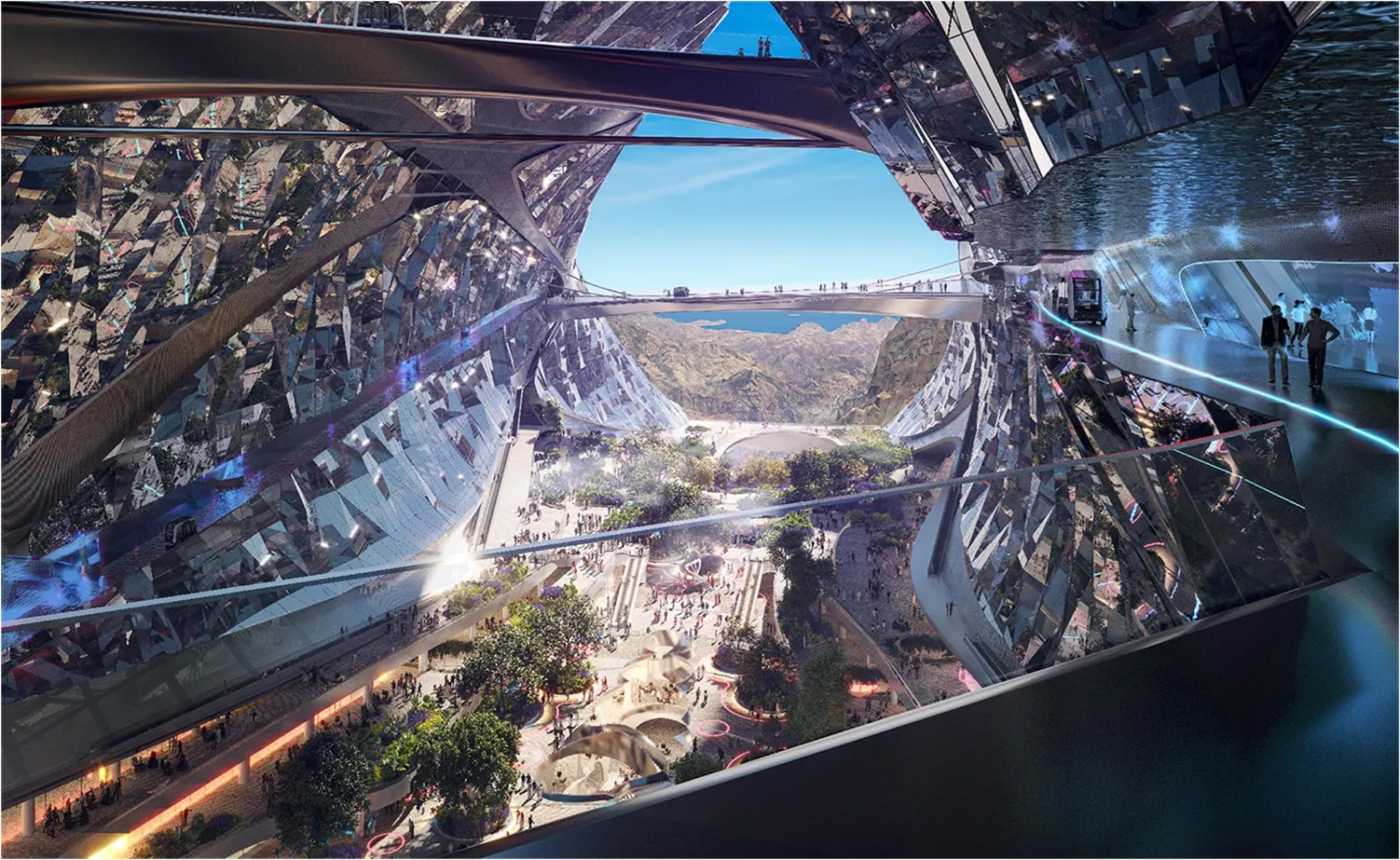
Projects such as THE LINE, a 170-kilometer linear metropolis with a mirrored façade, offer compact and car-free urbanization focusing exclusively on walkability and renewable energy. This rethinking of urban life continues to Tabuk’s mountains, where Trojena transforms extreme geography into a canvas for winter sports and modern alpine architecture with ecological sensitivity. Meanwhile, the Red Sea project along the shore applies a similar design-forward vision to marine environments, protecting island ecosystems through biomimetic architecture.
Each of these groundbreaking projects expands architectural boundaries by blending culture and innovation to redefine Saudi Arabia’s future.
1. Sindalah
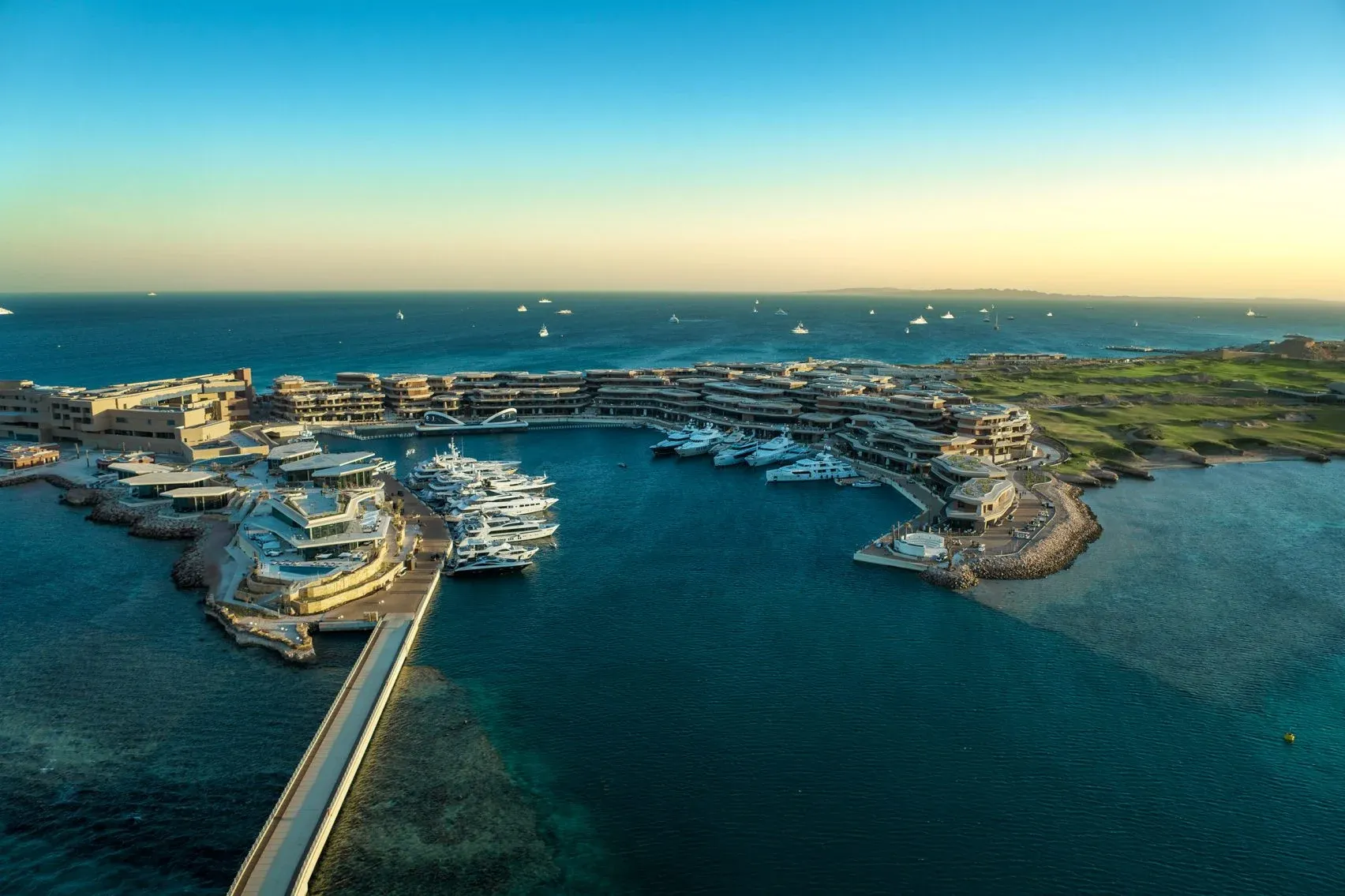
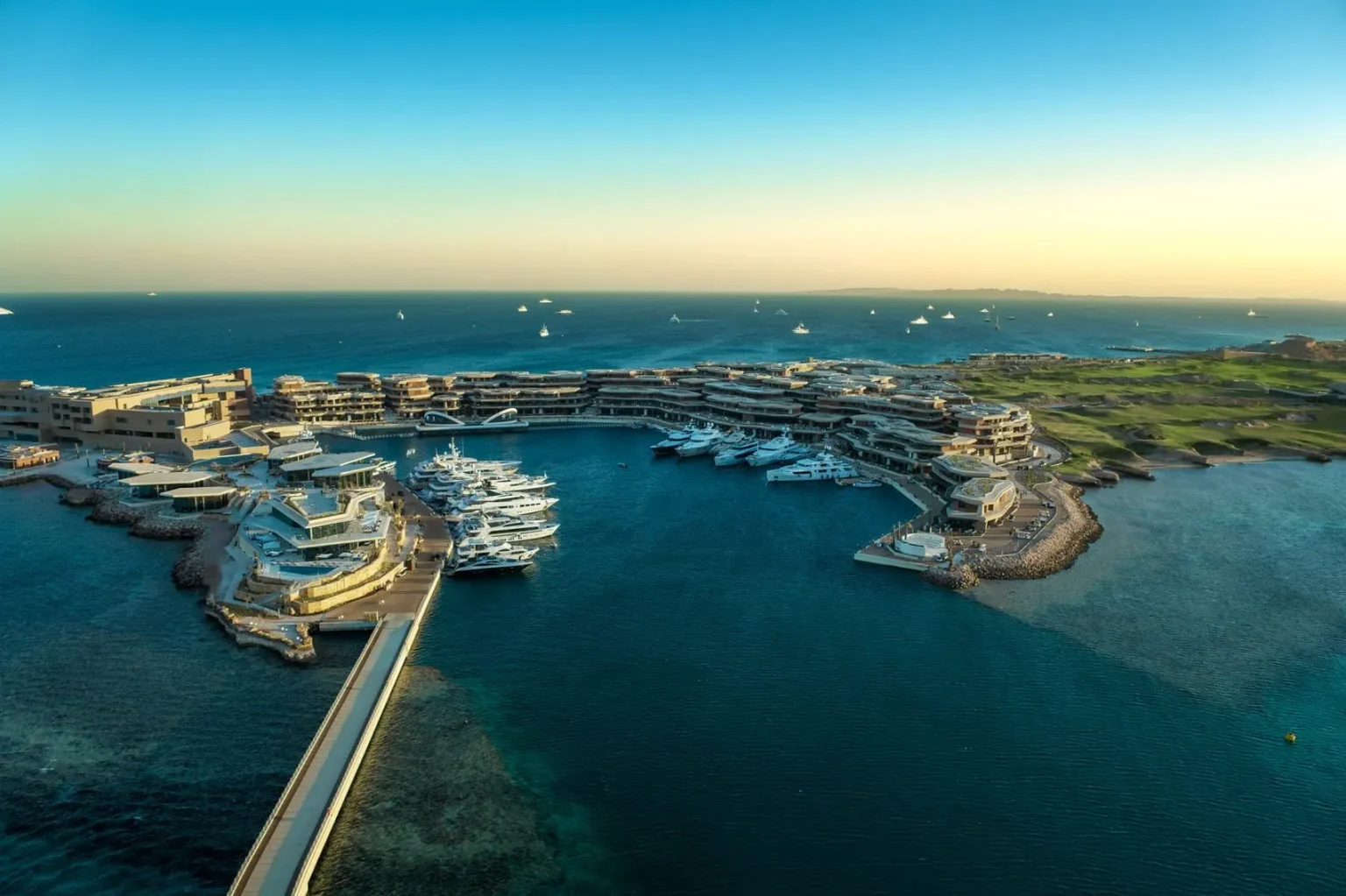
Launched by the esteemed Royal Highness Prince Mohammed bin Salman in 2022, Sindalah is an ambitious project of a luxurious island retreat in NEOM. With a blend of natural beauty, advanced technology, and sustainable design at its architectural core, this project offers ultra-luxury experiences through private yachts and fine dining experiences.
The use of advanced architectural technology will redefine coastal tourism by acting as a medium to explore the Red Sea while preserving its rich marine ecosystem. Aligning with the ideas of Vision 2030, Sindalah is set to include a set of luxury hotels, a marina, offshore locations, and culinary options.
2. AlUla
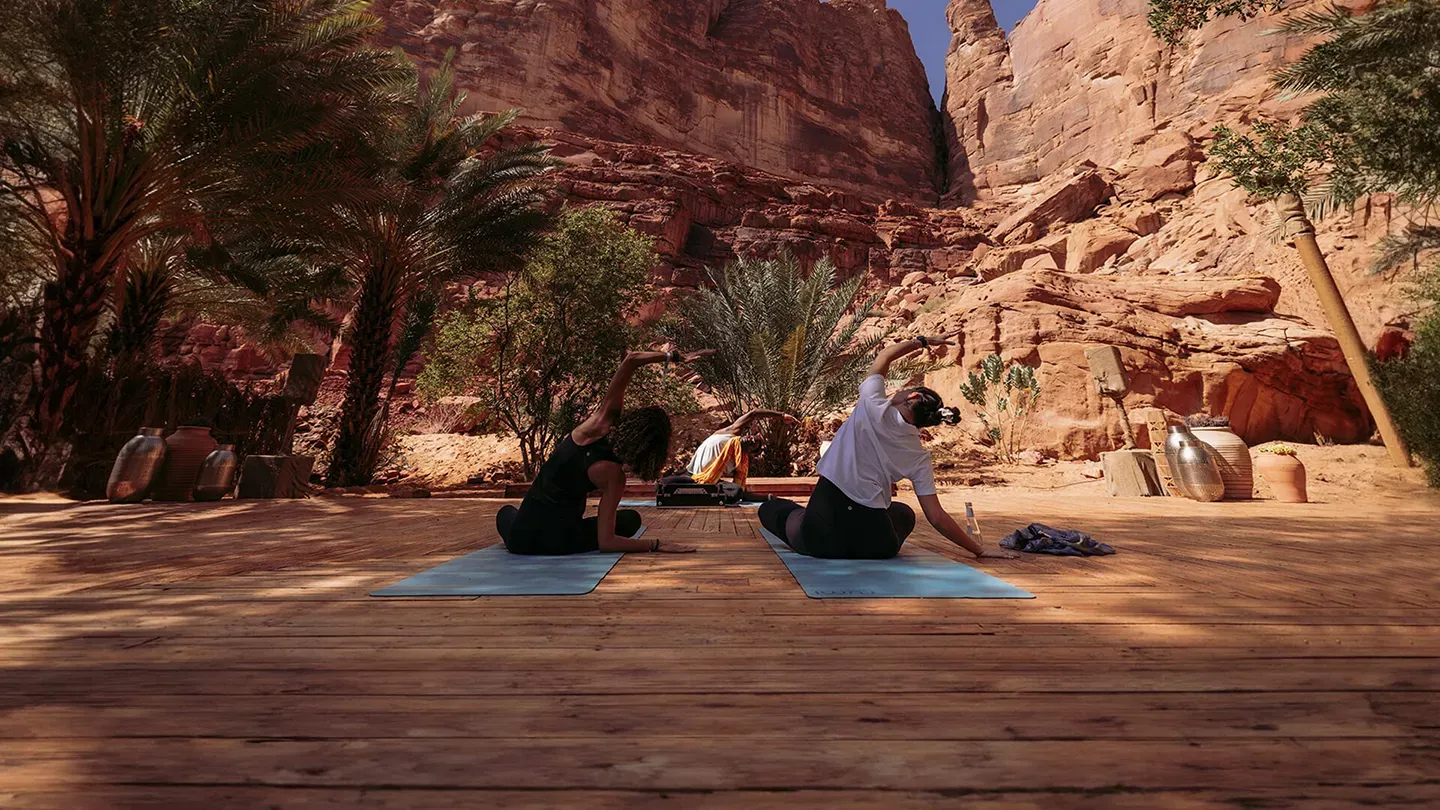
The project brings the rich heritage of the oasis city of AlUla to global visitors. Recognized by UNESCO as a World Heritage Site, it remains largely untouched and unexplored. The project aims to change that by introducing sustainable practices while preserving the core of its ancient heritage. Architects are blending advanced technology, wellness, archaeology, and natural heritage to create an experience to remember for the visitors.
French architect Jean Nouvel also disclosed plans to construct a subterranean resort and hotel carved beneath AlUla’s rock dwellings. To attract more tourists and uplift the living standards of the residents, huge amounts of money are also going into developing the surrounding land with plans for luxury resorts, museums, and cultural institutions.
3. ROSHN
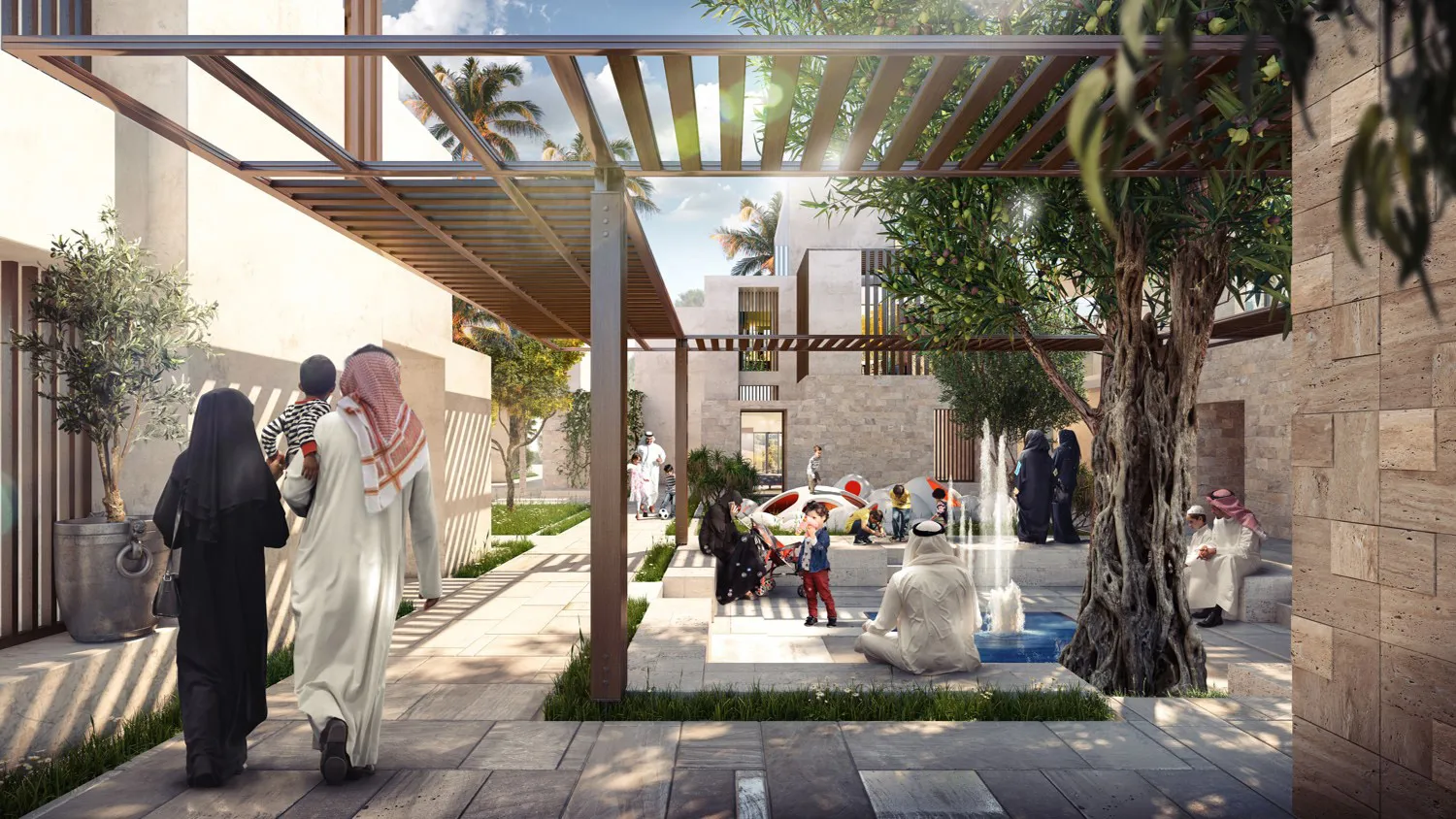
A real estate project initiated by the Public Investment Fund (PIF), Roshn is a smart city project aimed at providing premium residential units. The architectural plans of this project stand on the pillars of sustainability, efficient urban planning, and modern designs to enhance the quality of life.
With the idea of economic development through job creation and private sector growth, this focuses on designing smart cities with all necessary amenities like green spaces, hospitals, schools, and logistics hubs to ensure a high-quality life for the settled community. At the same time, the scope of the project is not just limited to residential housing and basic amenities; they are investing heavily in sports infrastructure. They are constructing the Roshn Stadium in Riyadh and the Aramco Stadium in Al Khobar to host events during the 2034 FIFA World Cup.
4. Desert Rock
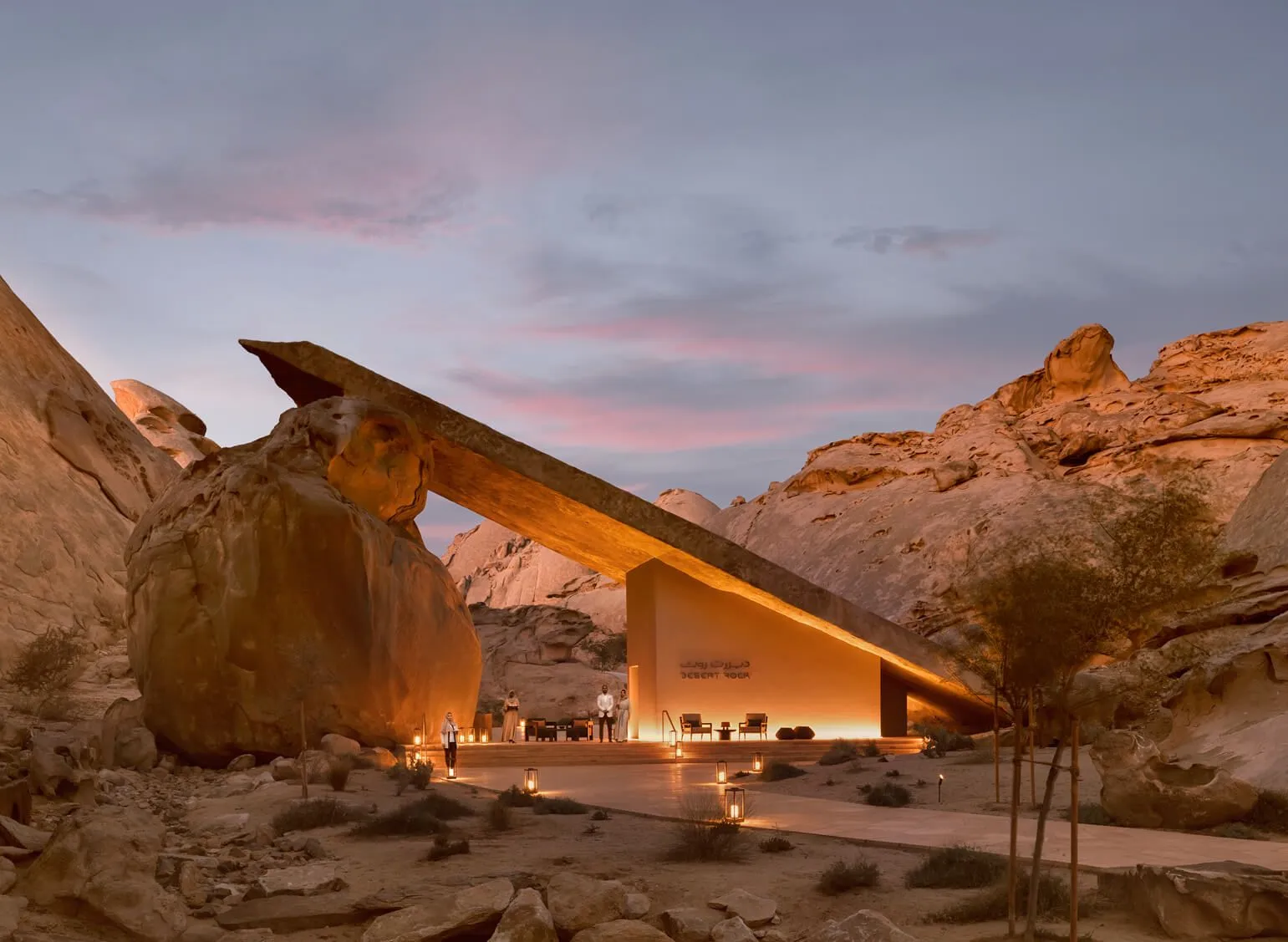
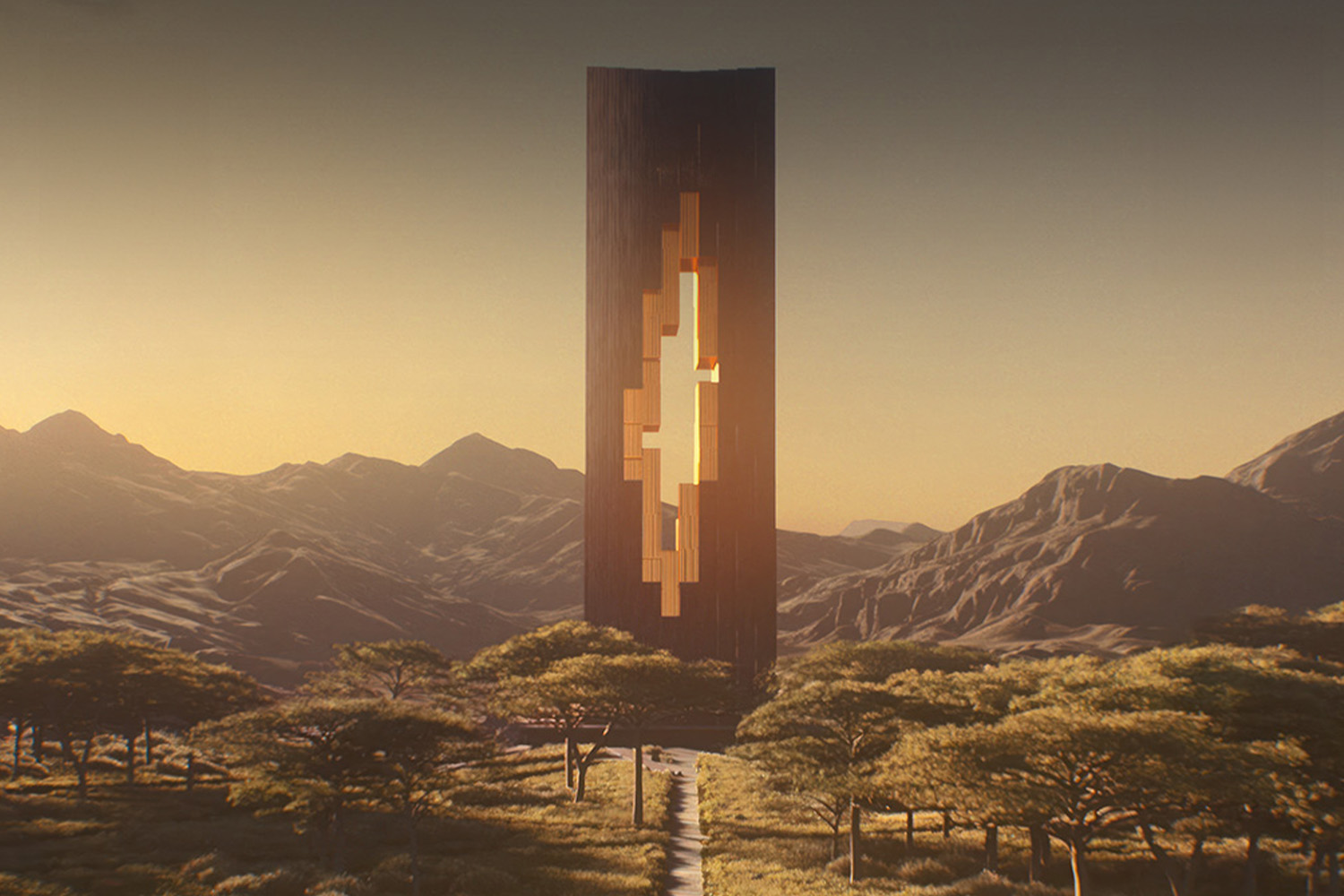
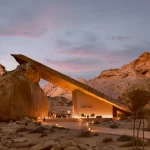
Curated by Oppenheim Architecture, the project Desert Rock wanders away from the common ideas of a modern-day retreat. Instead of focusing on modernized and complicated structures, Desert Rock blends striking architectural structures seamlessly into the natural terrain. This design draws its inspiration from ancient rock-carved architecture, acting as a symbol of sustainable development by preserving the essence of natural landscapes.
With a huge collection of villas and hotel rooms carved into rocks, visitors can enjoy the natural beauty of the landscape while preserving the unharmed environmental heritage. Engineers will also install water retention and distribution systems throughout the development in addition to the reuse of excavated materials for the site’s infrastructure. This approach aligns with circular design principles; if you want to gain deeper knowledge about eco-friendly structures, you can check out PAACADEMY’s sustainability design courses.
5. Diriyah
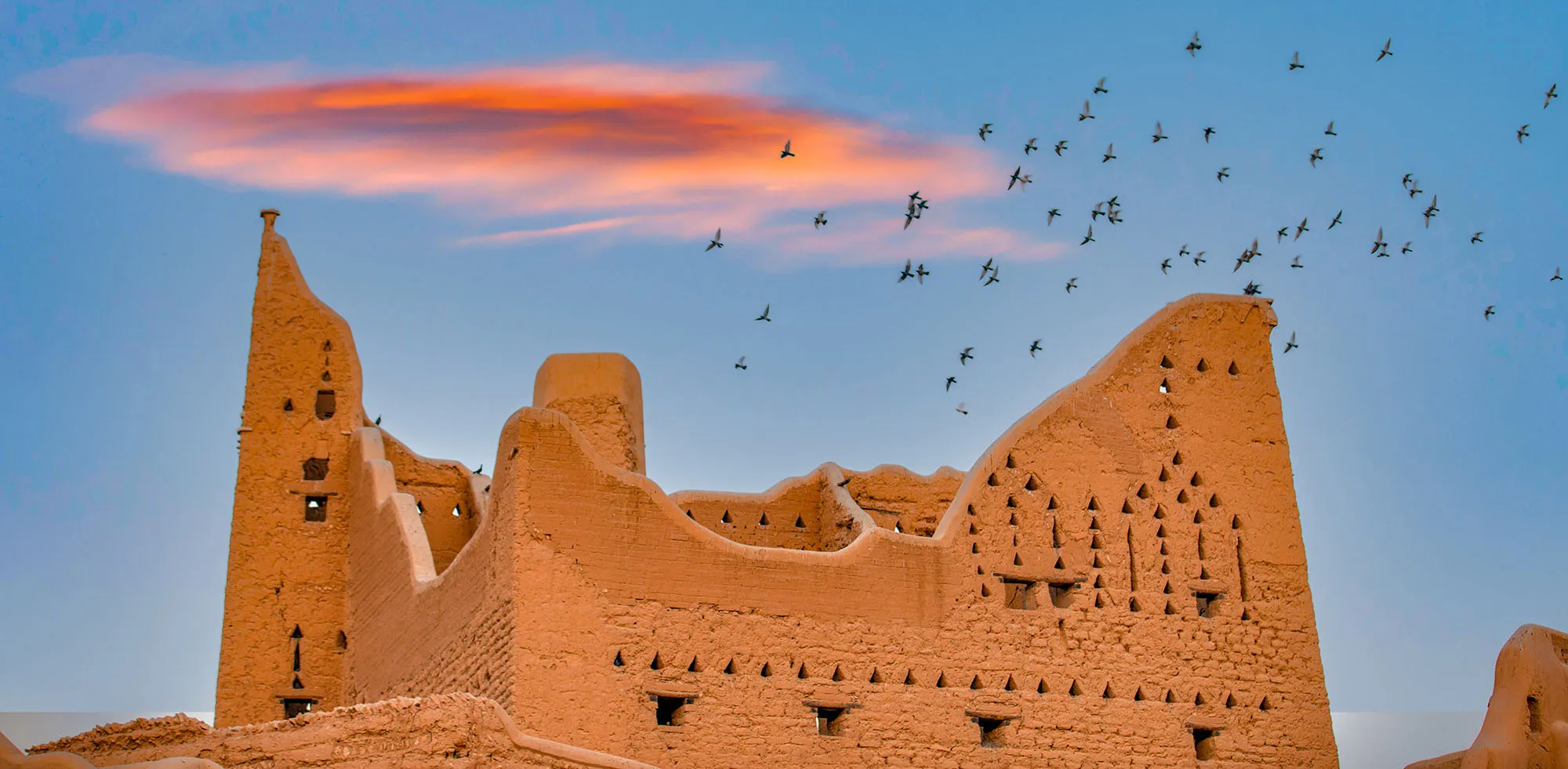
Diriyah, situated at a short distance from the vibrant city of Riyadh, plans to take the tourists on a journey of 600 years of Najdi culture. Engineers and designers have left no stone unturned while designing this project as they bring a subtle blend of Najdi architecture and modern urbanization to turn a dream experience into reality.
The project features a pedestrian-friendly design to create more livable urban environments, with a focus on sustainability and energy efficiency. It will provide visitors with a massive catalogue of possible activities like shopping, work, or engaging in cultural activities, making this a crown jewel in Vision 2030.
6. Oxagon
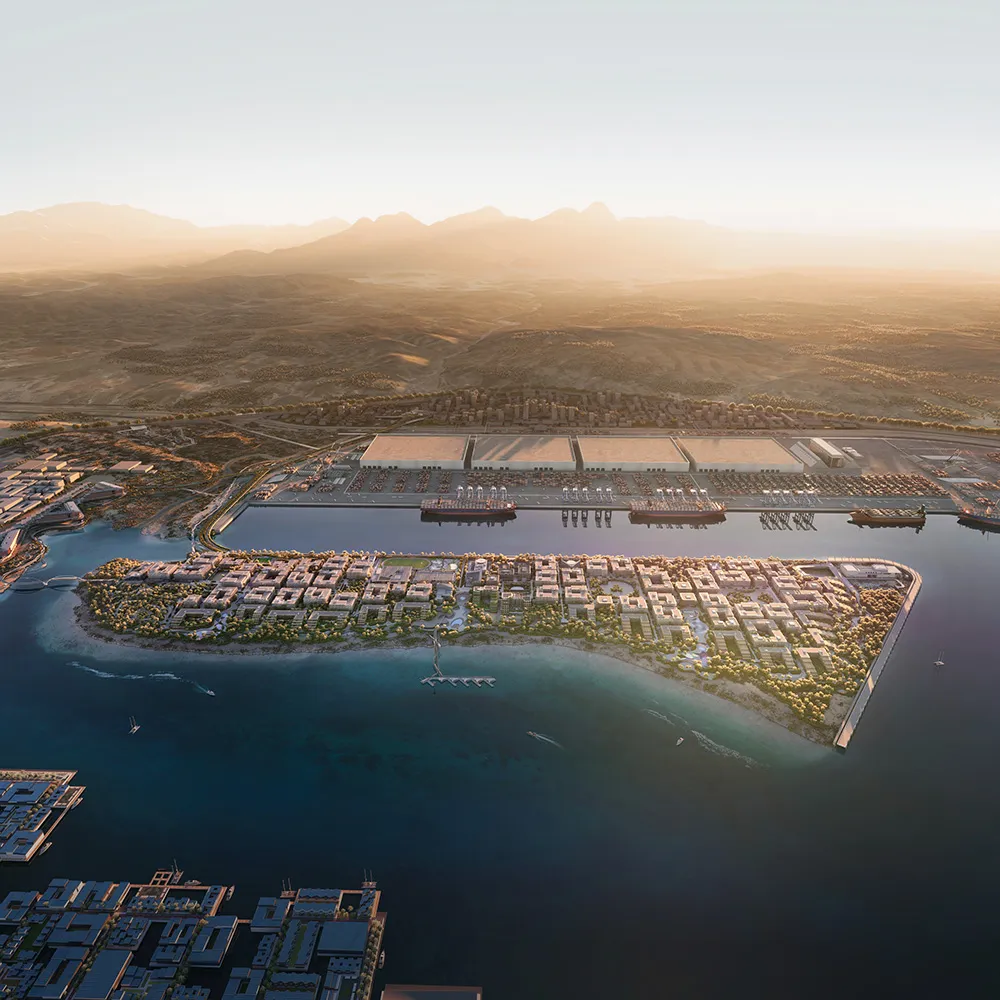
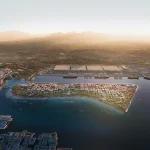
The Danish firm BIG designed the world’s largest floating industrial complex, Oxagon Port City, which is in the shape of an octagon. This extends deep into the Red Sea just south of the Suez Canal. Located along a route that carries 13% of global trade, the project connects Saudi Arabia to global markets and supports Vision 2030’s ambitions for advanced logistics and manufacturing zones.
Launched in 2021, it features a fully integrated port powered entirely by clean energy, as sustainability is essential to NEOM’s ambitions. By 2030, it will accommodate 90,000 people and serve as a model for future industrial cities at the crossroads of three continents where people, technology, and nature come together.
7. Riyadh Art
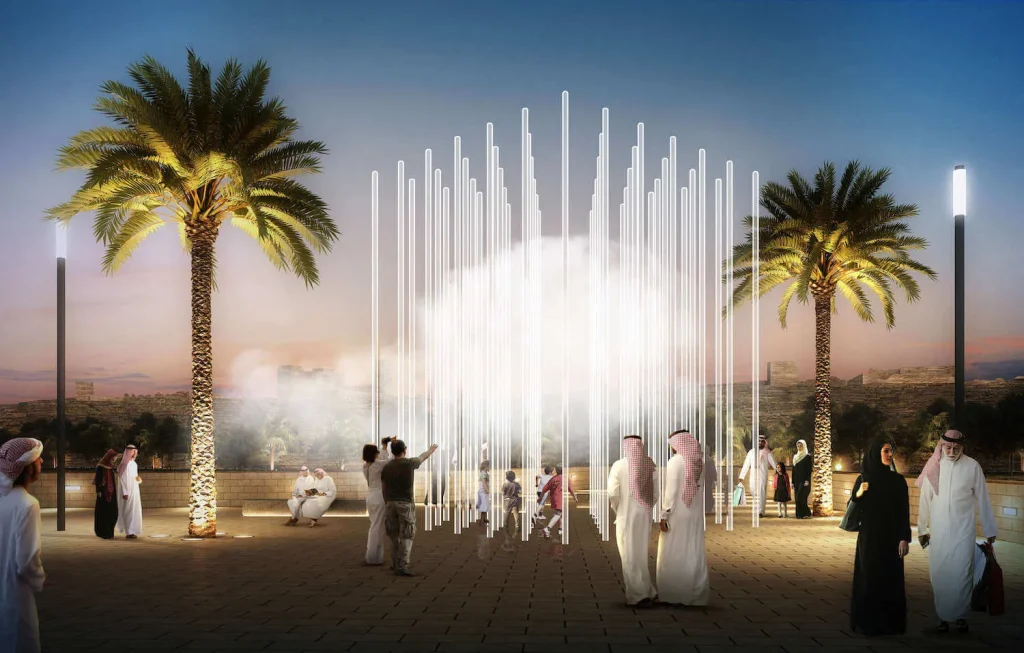
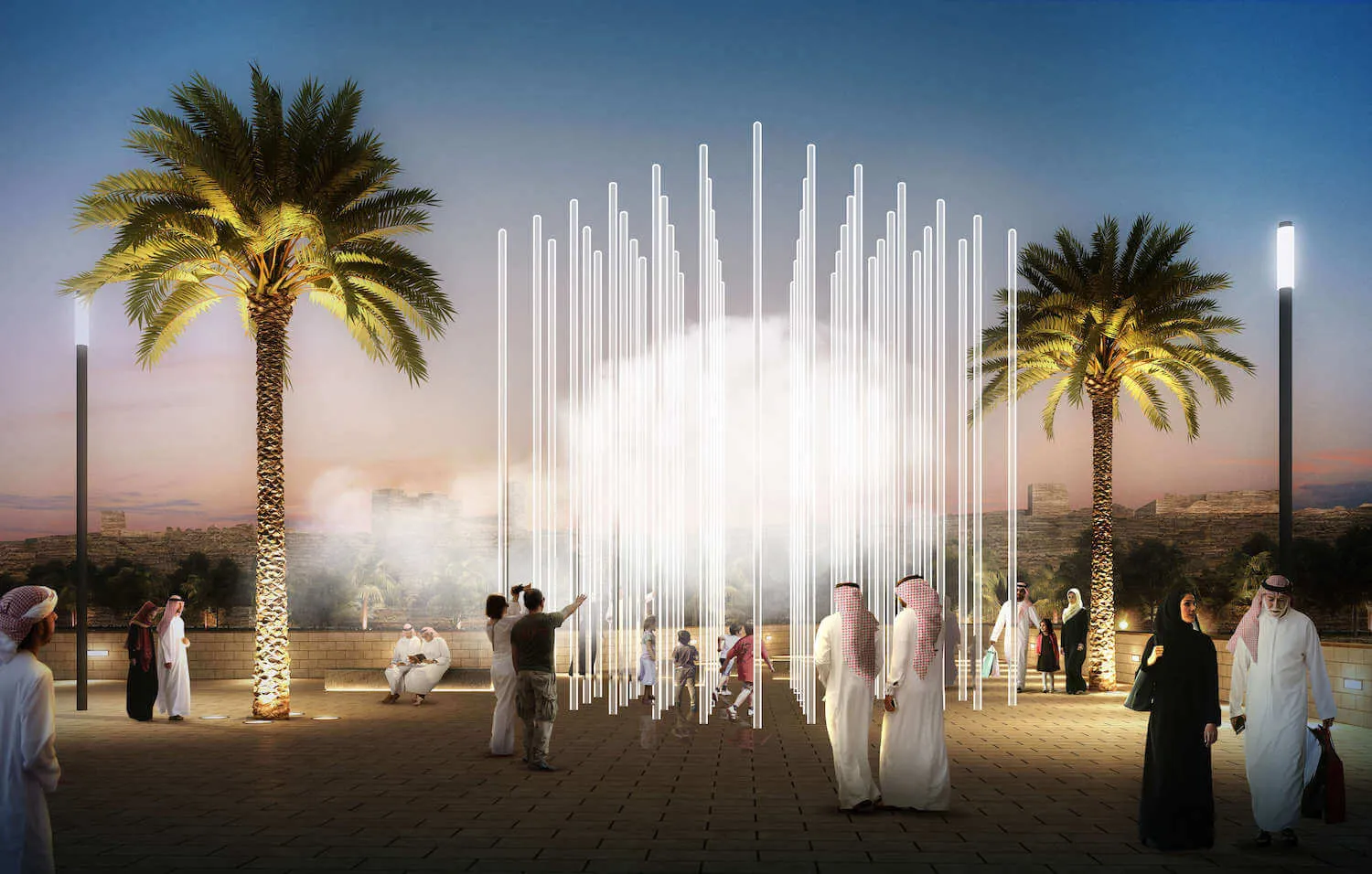
King Salman bin Abdulaziz Al Saud launched this city-wide project in 2019 to transform the Saudi capital into a gallery without walls. The initiative placed nearly 1,000 public artworks in parks, plazas, metro stations, and historic neighborhoods, turning public space into a living canvas.
This initiative combines urban design with cultural identity through programs such as Urban Flow, The Hidden River, Jewels in Riyadh, and Art in Transit. It reimagines how light, sculpture, and landscape interact with movement, environment, and community while bringing in local artists to create immersive experiences and a creative economy. Riyadh Art is a cornerstone of Vision 2030 with the idea of putting art where people live, walk, and socialize.
8. Amaala
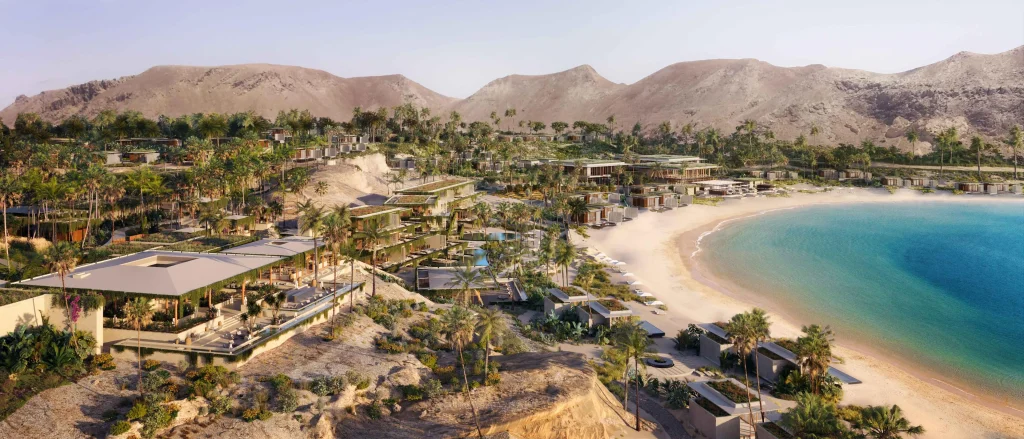
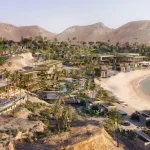
The world’s first integrated wellness destination, Amaala, draws architectural inspiration from the purity of the Red Sea. Every feature reflects a deep connection to art, wellness, and sustainability. Committed to protecting the environment, the project develops only five percent of the land, preserving the surrounding natural ecosystems. It delivers restorative, high-end travel and immersive luxury experiences by including wellness centers, seaside retreats, eco-tourism, and immersive cultural exhibitions.
The first phase concentrates on the Triple Bay phase, which opened in 2024 and includes luxury hotels and rooms. This has expanded to include private villas, a yacht club, and other amenities by 2027. The project uses renewable energy while striving for a zero-carbon footprint and generates no landfill waste.
Extending the Architectural Narrative of Vision 2030
These megaprojects show that Vision 2030 is driving a fundamental architectural shift in how cities function and what they stand for. Initiatives like Diriyah’s use of traditional materials, Desert Rock’s sculpted stone forms, and Oxagon’s modular marine-focused planning reflect a bold rethinking of design at every scale.
The vision extends to projects like Qiddiya, where immersive design integrates entertainment, culture, and terrain into a cohesive urban experience. Similarly, Makkah, Masar prioritizes pedestrian movement with shaded walkways and locally sourced materials. Meanwhile, King Salman Park reimagines Riyadh’s city center as a green cultural hub filled with ecological zones and public events. Ultimately, Vision 2030 uses architecture to bridge tradition and innovation,n merging everyday life with long-term national goals.