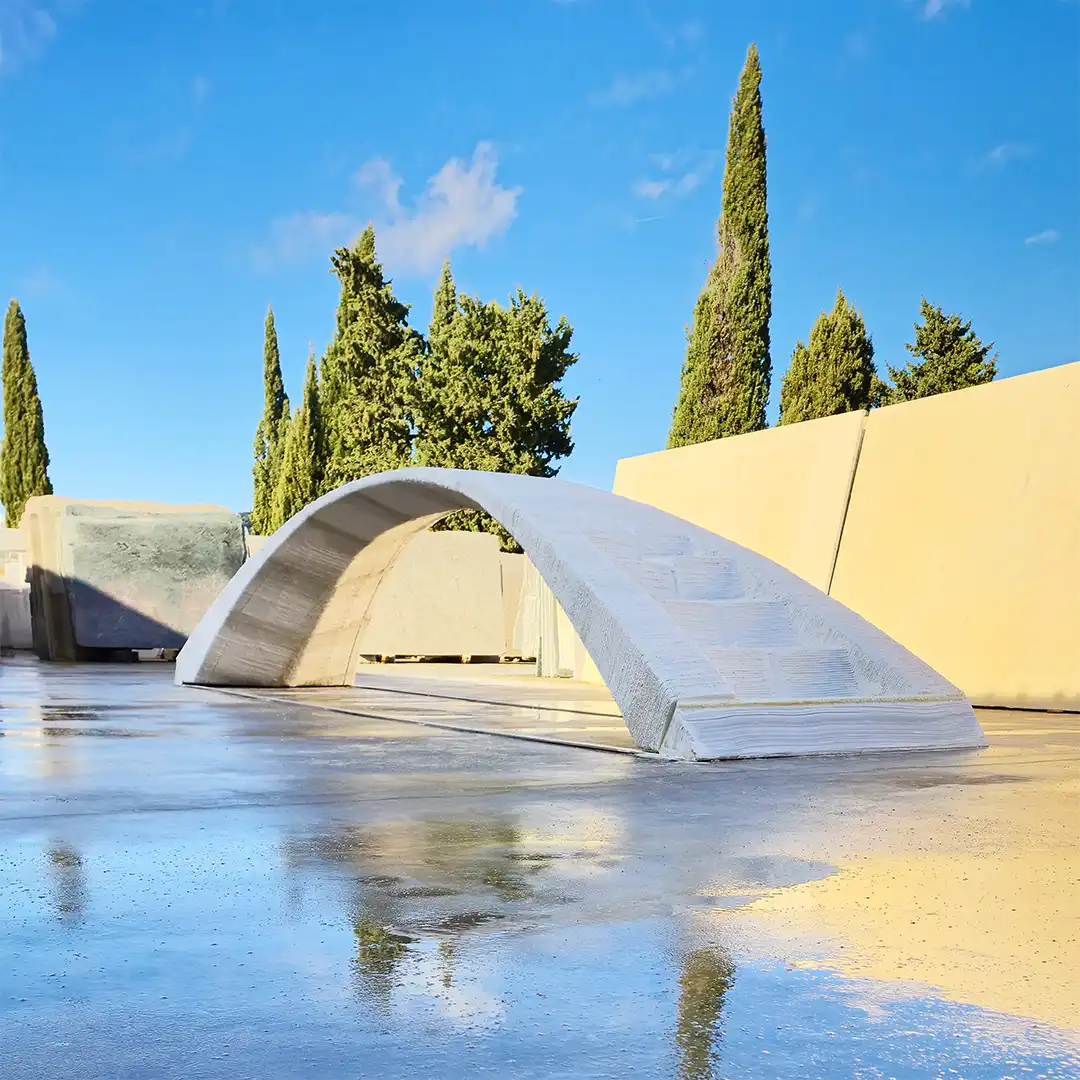

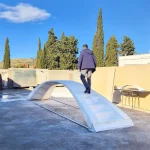
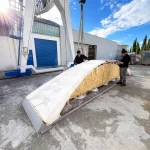
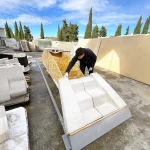
Da Vinci’s Bridge is the first 3D printed bridge created using waste materials from stone processing, combining technological innovation and sustainability with the timeless vision of Leonardo da Vinci.
The project is the result of a collaboration between the ArCoD department of the Polytechnic University of Bari and leading companies in the fields of 3D printing and stone processing, WASP and B&Y, representing an important step forward in the field of eco-sustainable construction.
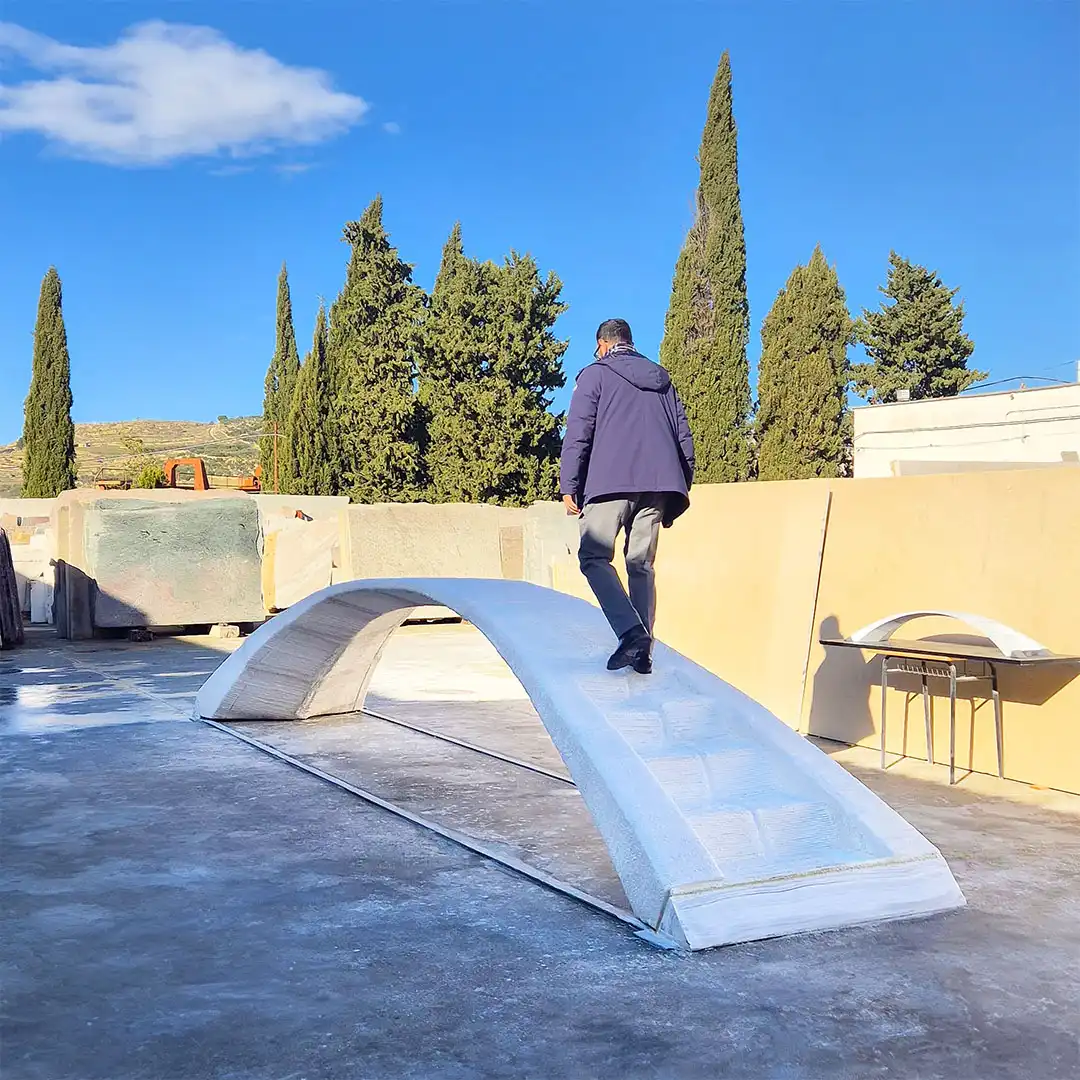
The first 3D printed bridge using waste materials from marble processing
The Da Vinci’s Bridge is based on a project by Professor Giuseppe Fallacara and is inspired by Leonardo’s design for a self-supporting bridge that would connect the Pera district (present-day Galata in Beyo?lu) with Constantinople (today’s Istanbul), spanning the Golden Horn.
The prototype created, conceived as a pedestrian bridge, has a span of approximately six meters and reinterprets Leonardo’s vision to adapt it to the needs of the experiment.
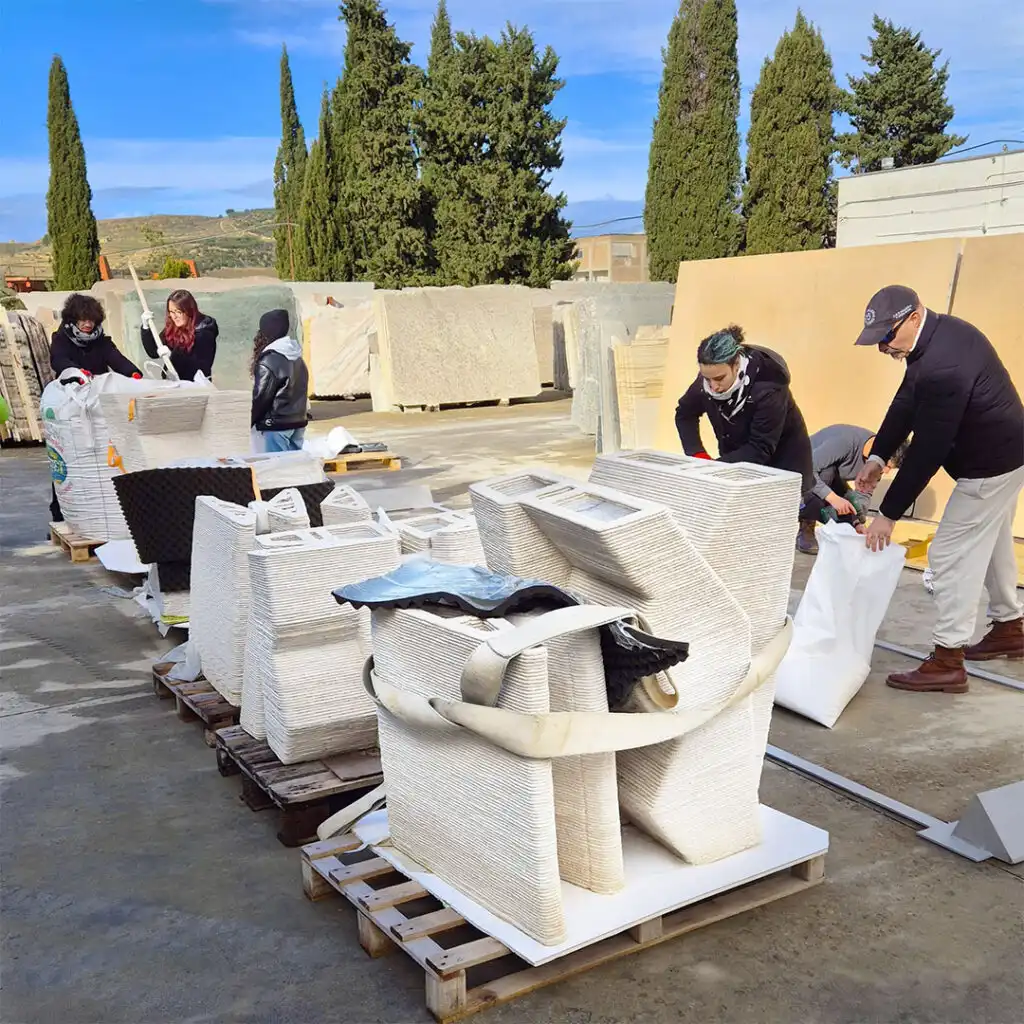
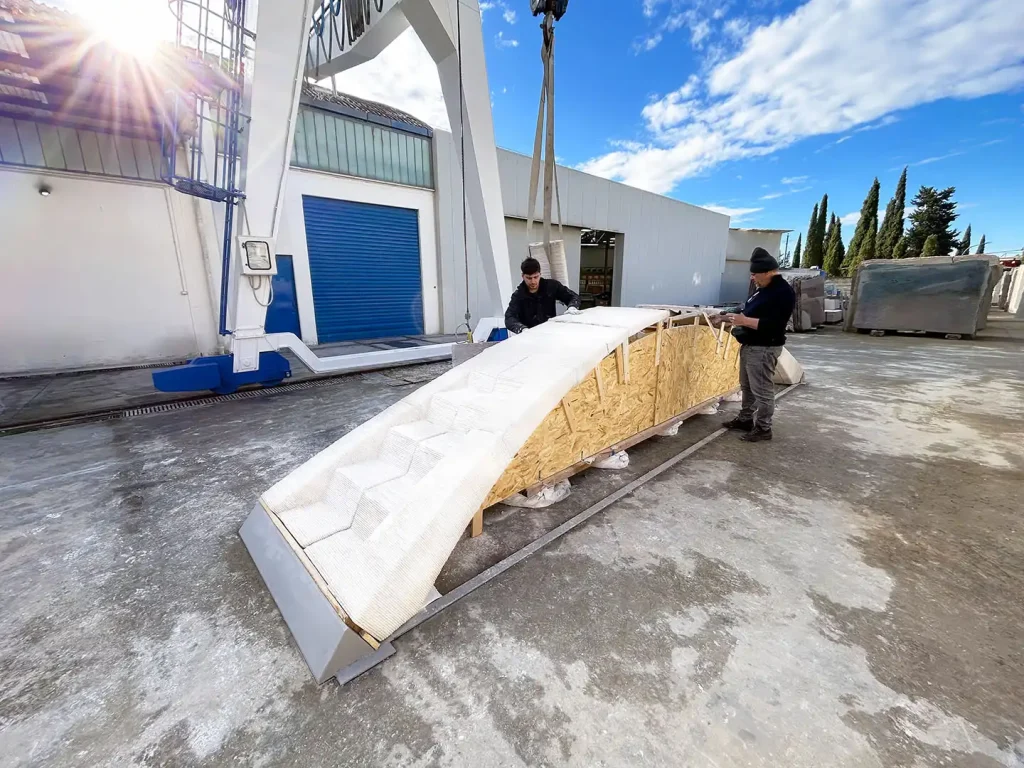
3D Printing of Waste Materials from Stone and Marble Processing
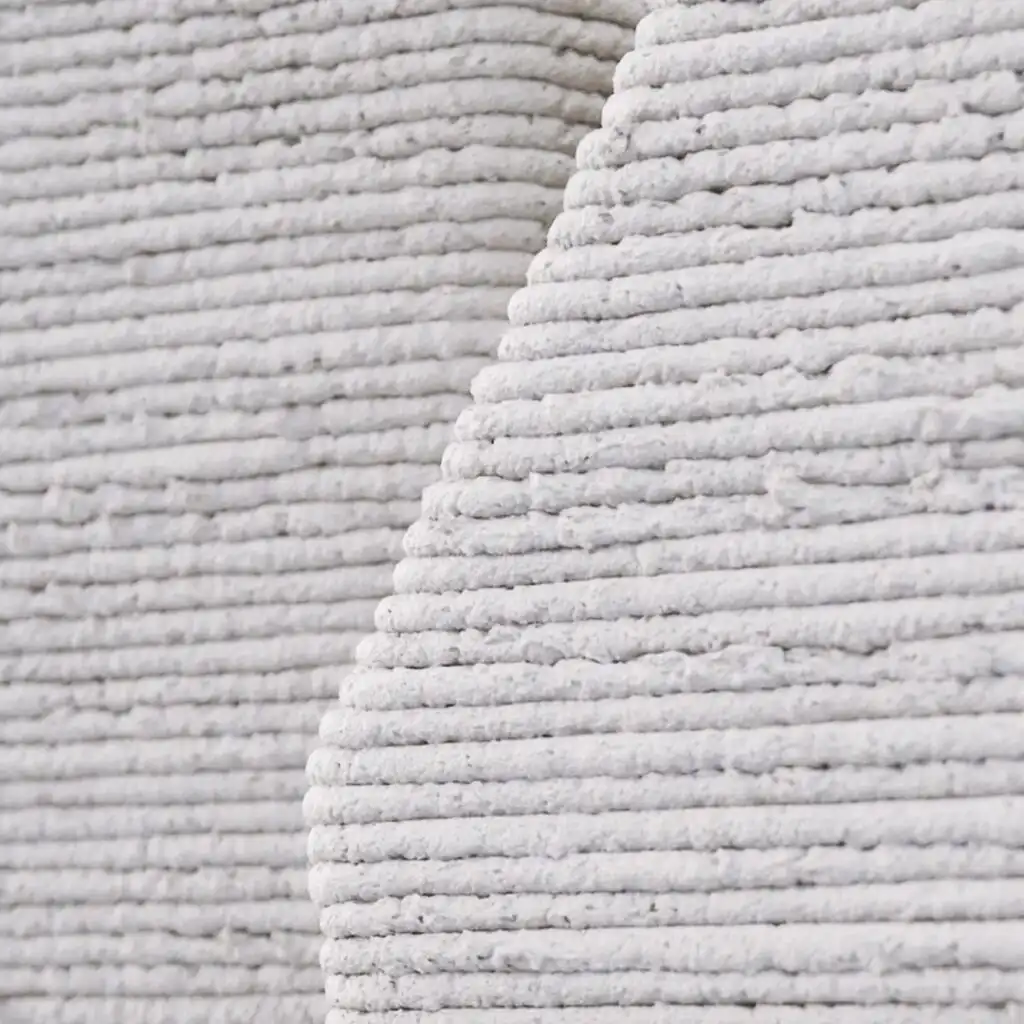
One of the main distinctive aspects of the project is the use of a highly innovative and eco-sustainable material: a low-environmental-impact mortar made from 30% waste stone and marble powders and a lime-based binder.
This solution, developed thanks to the expertise of the Italian start-up B&Y by Vincenzo Gurrado, demonstrates the potential of reusing waste materials in the construction and design sectors.
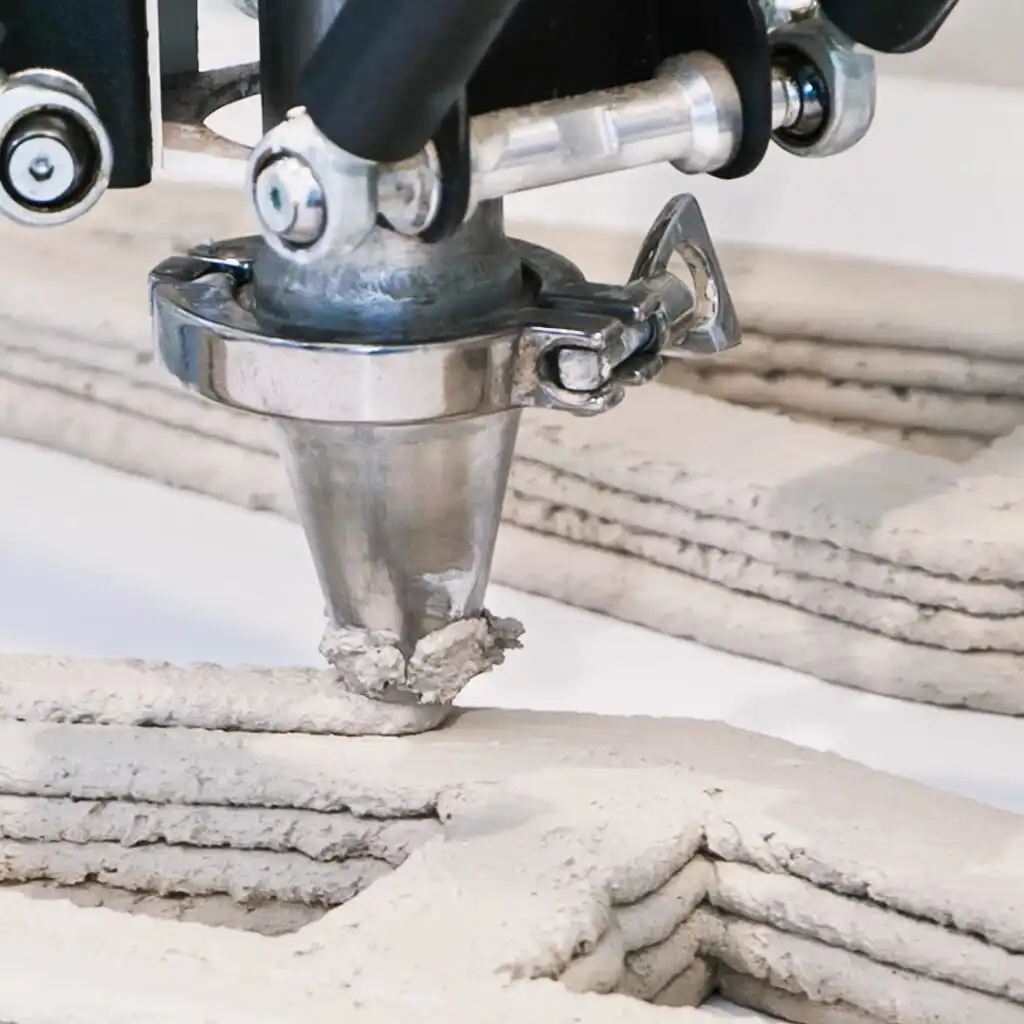
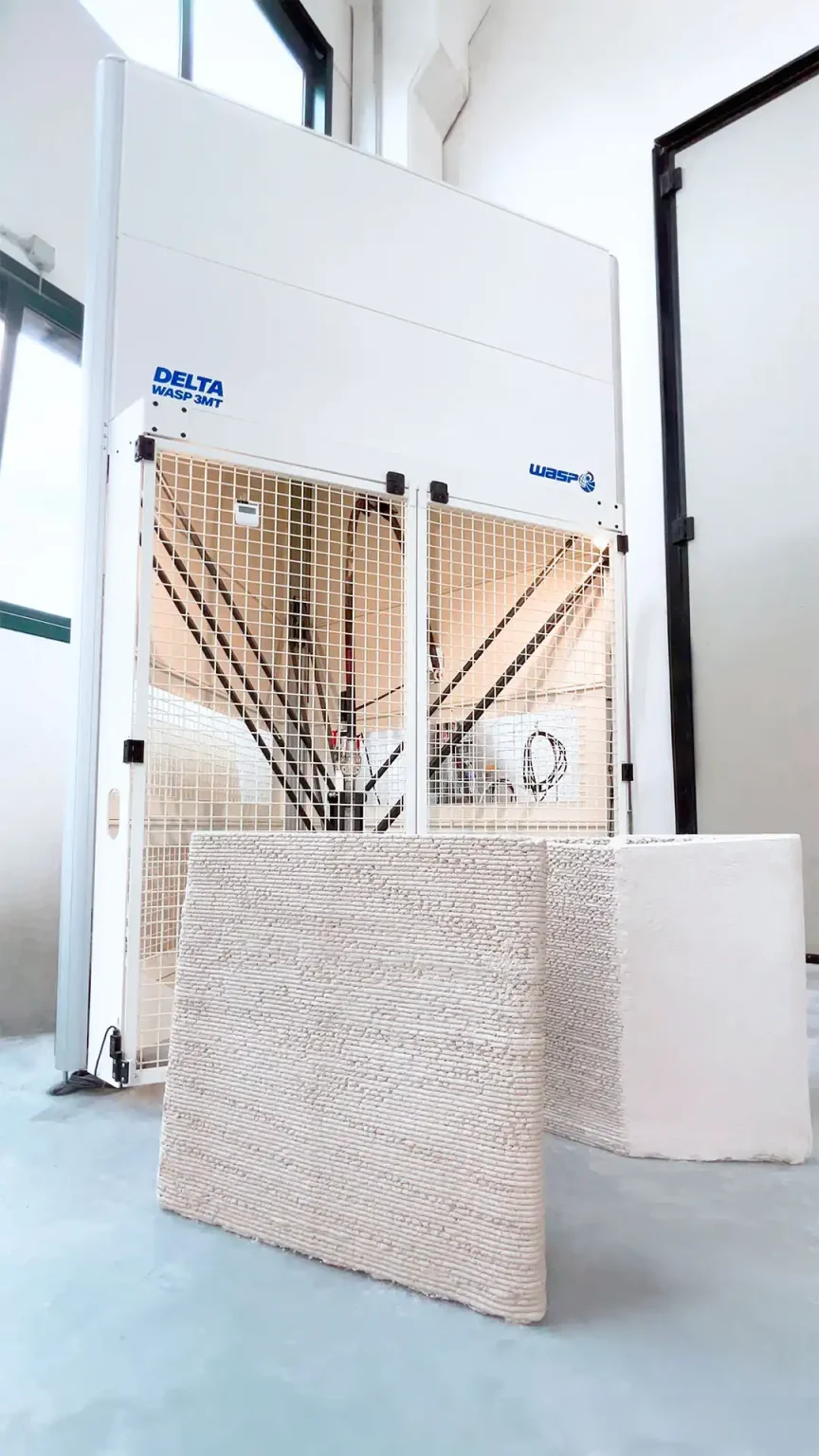
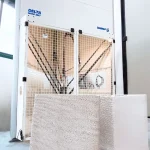
As the technical enabler of the project, WASP provided its machines and the team’s expertise for the creation of the blocks that make up the bridge.
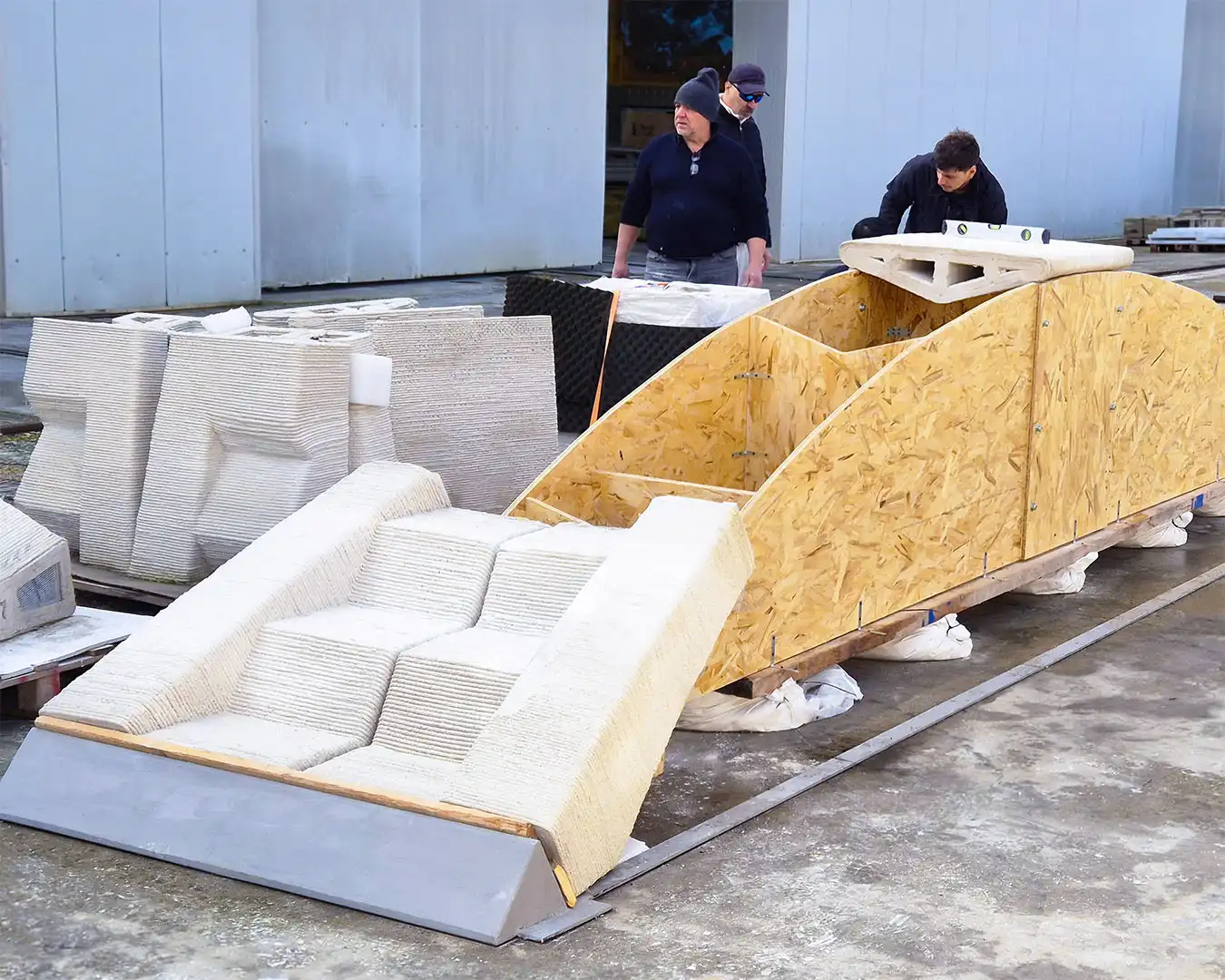
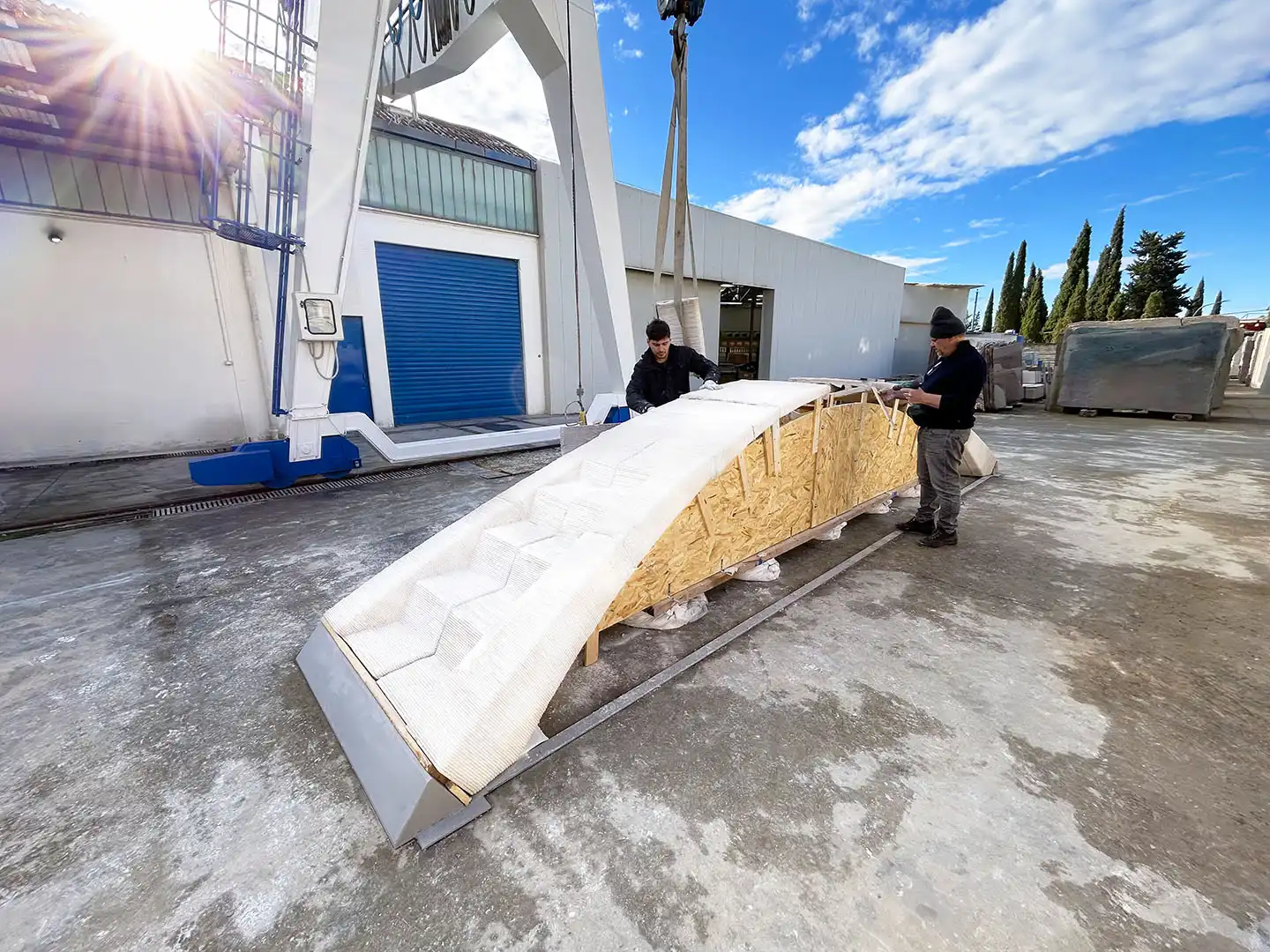
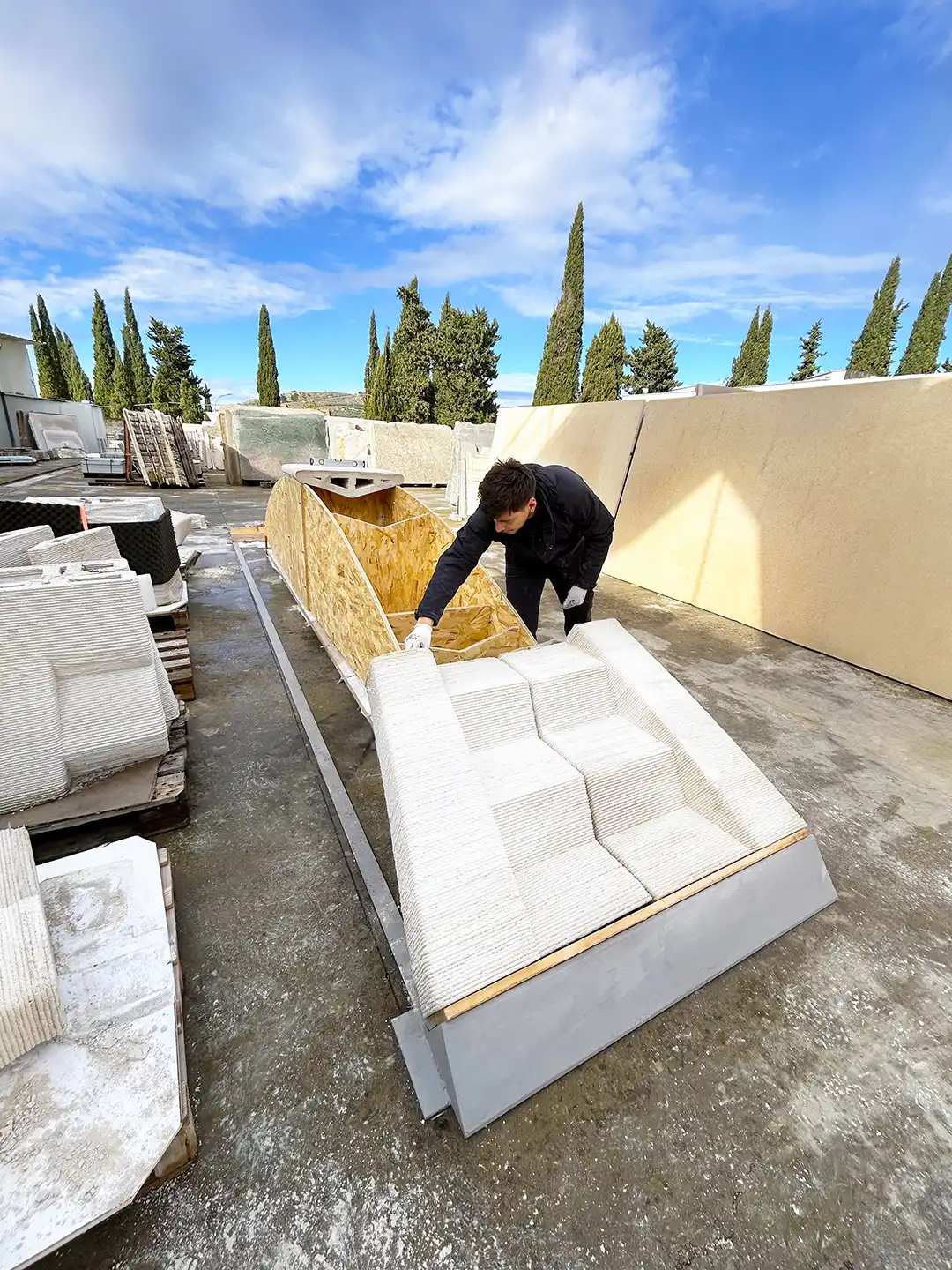
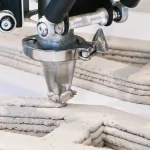
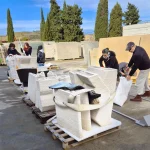
For the construction of the bridge, the overall structure was divided into 13 blocks with variable layers, 3D printed using WASP 3MT LDM Concrete, the large-format 3D printer for cementitious materials.
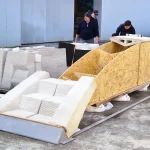
The blocks were then assembled by the University of Bari using a system of temporary centering. Thanks to the principle of stereotomy, utilized by Leonardo in its original project, the bridge is able to self-support.
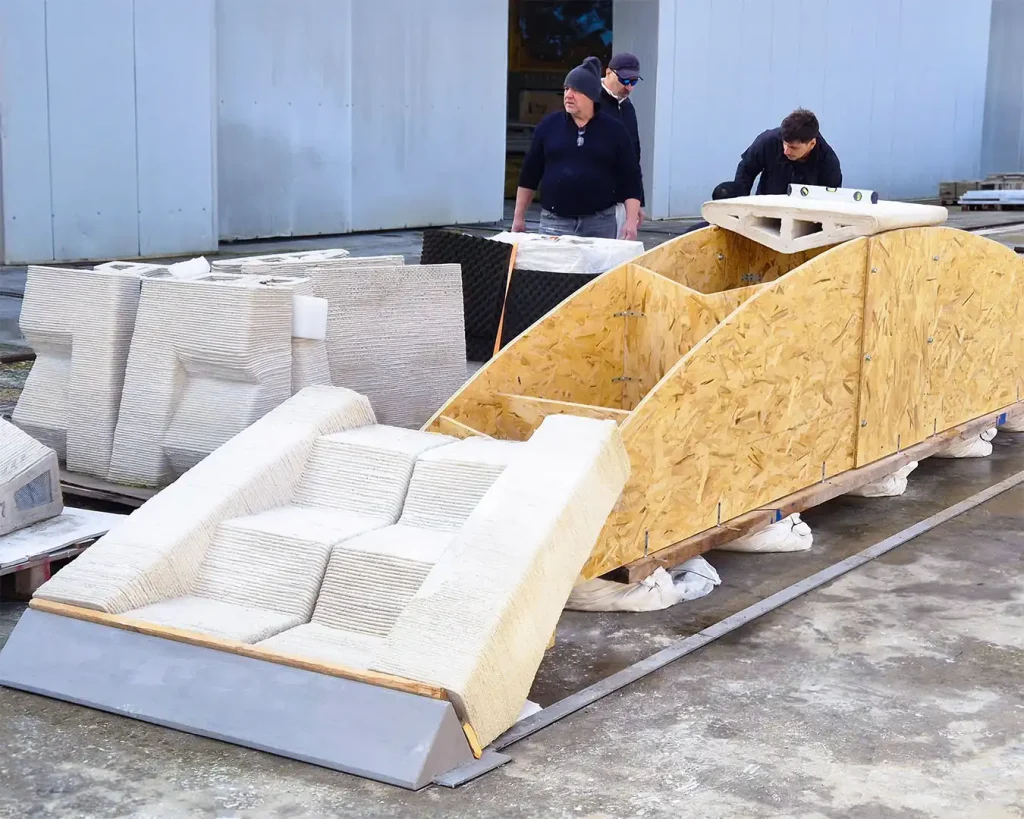
The Da Vinci’s Bridge represents an important starting point for further developments: the next steps include the evaluation of the mechanical properties of the materials used and the refinement of the printing process.
These results could pave the way for new applications in the architectural sector, promoting a more sustainable and technologically advanced vision.
The project description is provided by WASP.
Learn with PAACADEMY: Check out the workshops at PAACADEMY to learn from the industry’s best experts how to use advanced parametric design tools, AI in design workflows, and computational design in architecture.