



A monastery is a building or complex where a religious community lives, works, and prays under shared vows. The word comes from the Greek monasterion, from monos, meaning alone. Early monks lived as solitary ascetics, and later buildings followed that logic: a site set apart from towns, with a church or shrine, living quarters, a dining hall, and protective walls.
Monastic life has more than one starting point. Buddhist monasticism is among the oldest. Within the Buddha’s lifetime, in the 5th century BCE, followers began gathering in fixed residences during the rainy season, and these grew into permanent complexes called viharas. According to Buddhist tradition, one of the earliest donated sites was the Veluvana bamboo grove at Rajagriha, given by King Bimbisara. Rock-cut retreats followed in India, including the Barabar caves in Bihar, carved in the 3rd century BCE for ascetics under Mauryan rule, and the Ajanta caves in Maharashtra, begun in the 2nd century BCE.
Christian monasticism began in Egypt. Anthony the Great (c. 251 to 356) withdrew into the desert as a hermit, and his example drew followers. Around 320, Pachomius organized the first known communal monastery at Tabennisi on the Nile, with shared rules, shared labor, and an enclosed compound. Monasteries soon spread across Egypt, Palestine, Syria, and Cappadocia. In the West, Benedict of Nursia founded Monte Cassino in Italy around 529 and wrote a Rule that shaped monastic planning across Europe for centuries.
The 15 monasteries below come from this long tradition. Each was built where the terrain makes construction difficult: cliff faces, rock pillars, canyon walls, and high mountain slopes.
1. Key Monastery, India
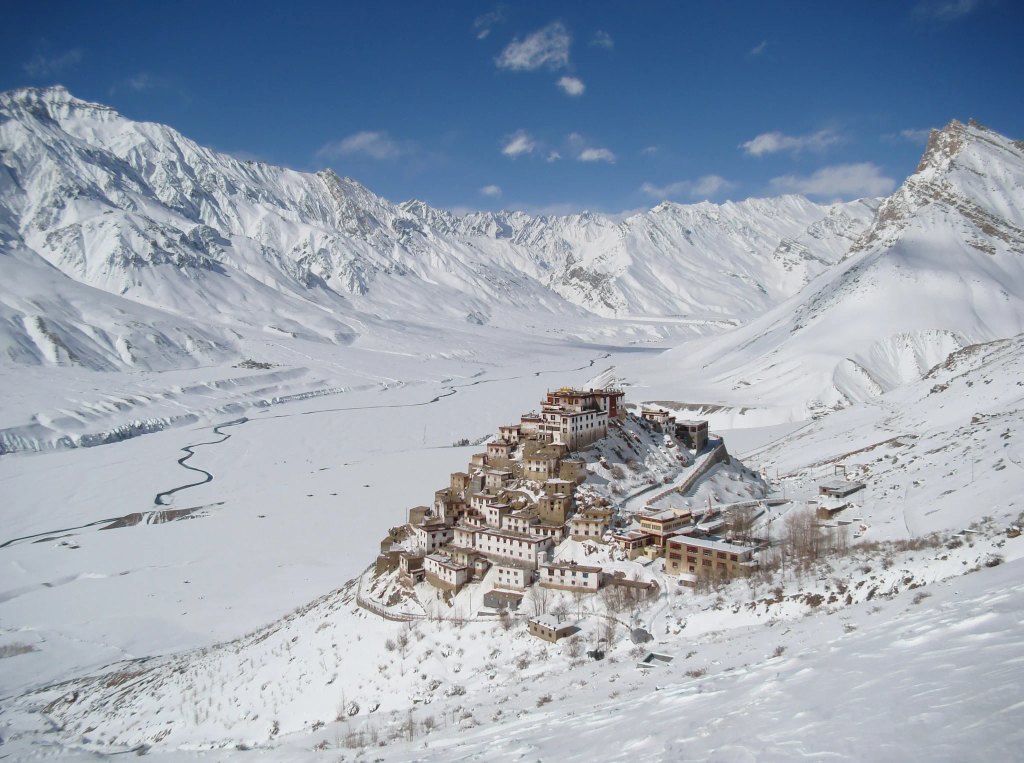
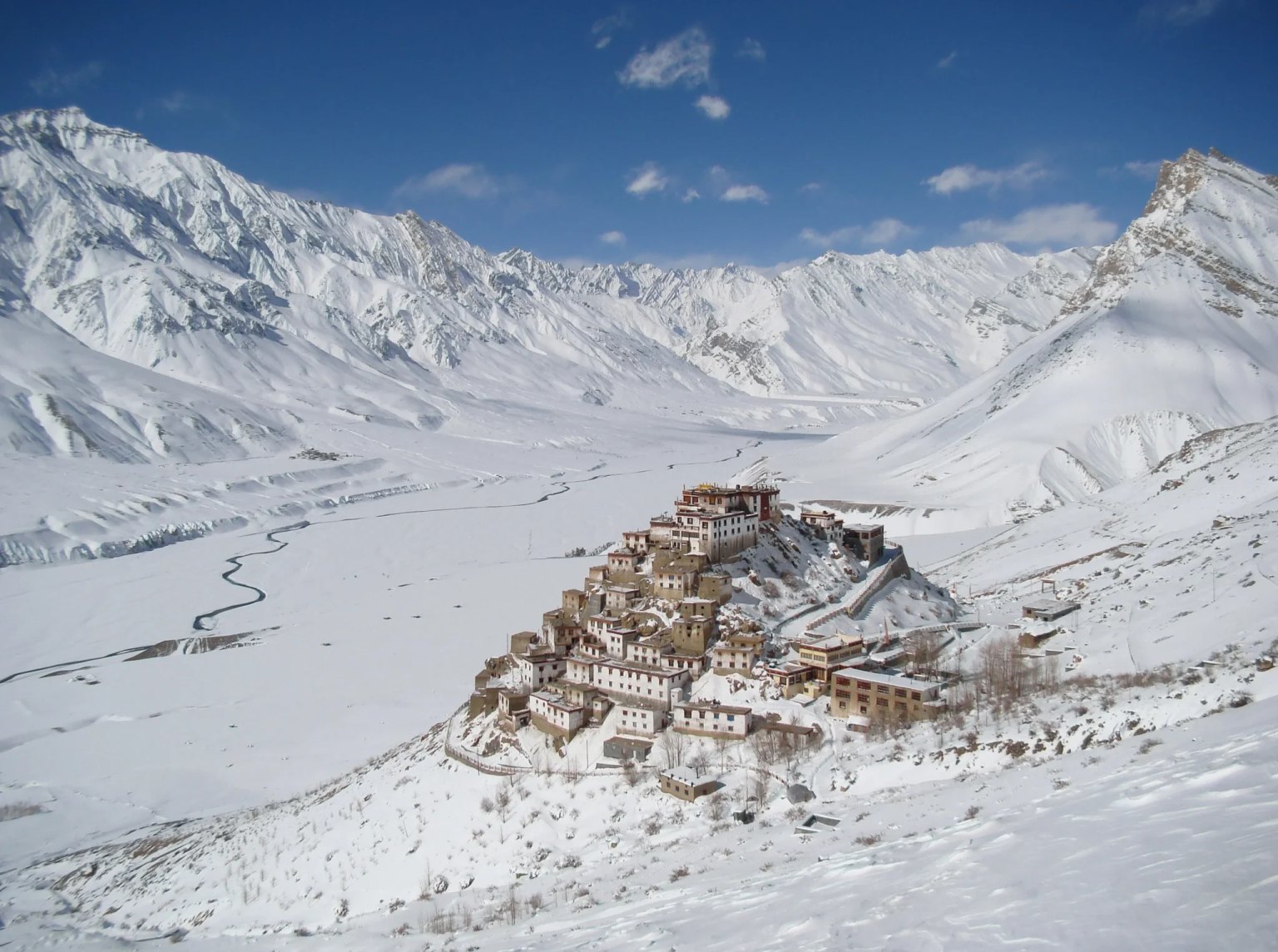
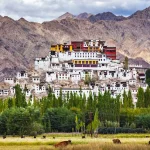
Key Monastery (also spelled Kee or Ki) stands at about 4,166 m in the Spiti Valley of Himachal Pradesh, on a conical hill above the Spiti River. It belongs to the Gelug school of Tibetan Buddhism and is the valley’s largest monastery. Its founding date is debated. Tradition links the first monastery to Dromton, a disciple of the Indian teacher Atisha, in the 11th century, while other accounts place the oldest structures later, in the 14th century.
The complex is an irregular cluster of flat-roofed buildings made of whitewashed mud brick, stone, and timber, stacked in tiers that follow the slope of the hill. Rooms connect through narrow, dark corridors, steep stairs, and low doorways, a layout that aided defense and held heat in a cold desert climate. Spiti receives little rain, which is why earthen construction has lasted here. The stacked massing is often compared to the Potala Palace in Lhasa. Raids, wars, a fire, and an earthquake in 1975 damaged the monastery over the centuries, so the present complex is a result of repeated rebuilding and additions. Inside are wall paintings, thangkas, and manuscripts.
2. Santuario della Madonna della Corona, Italy
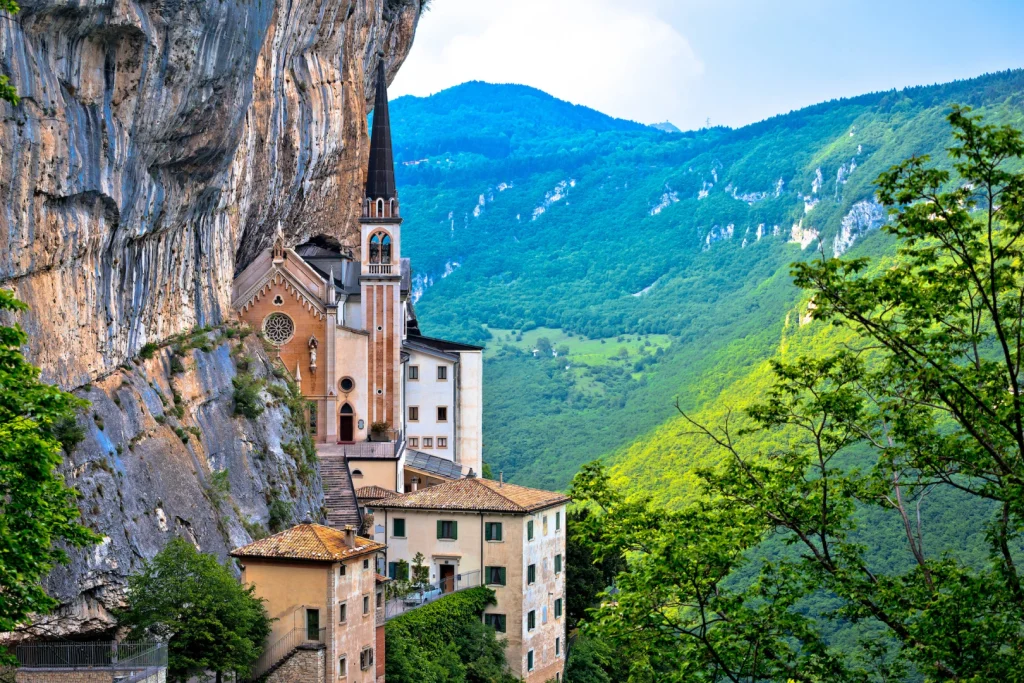
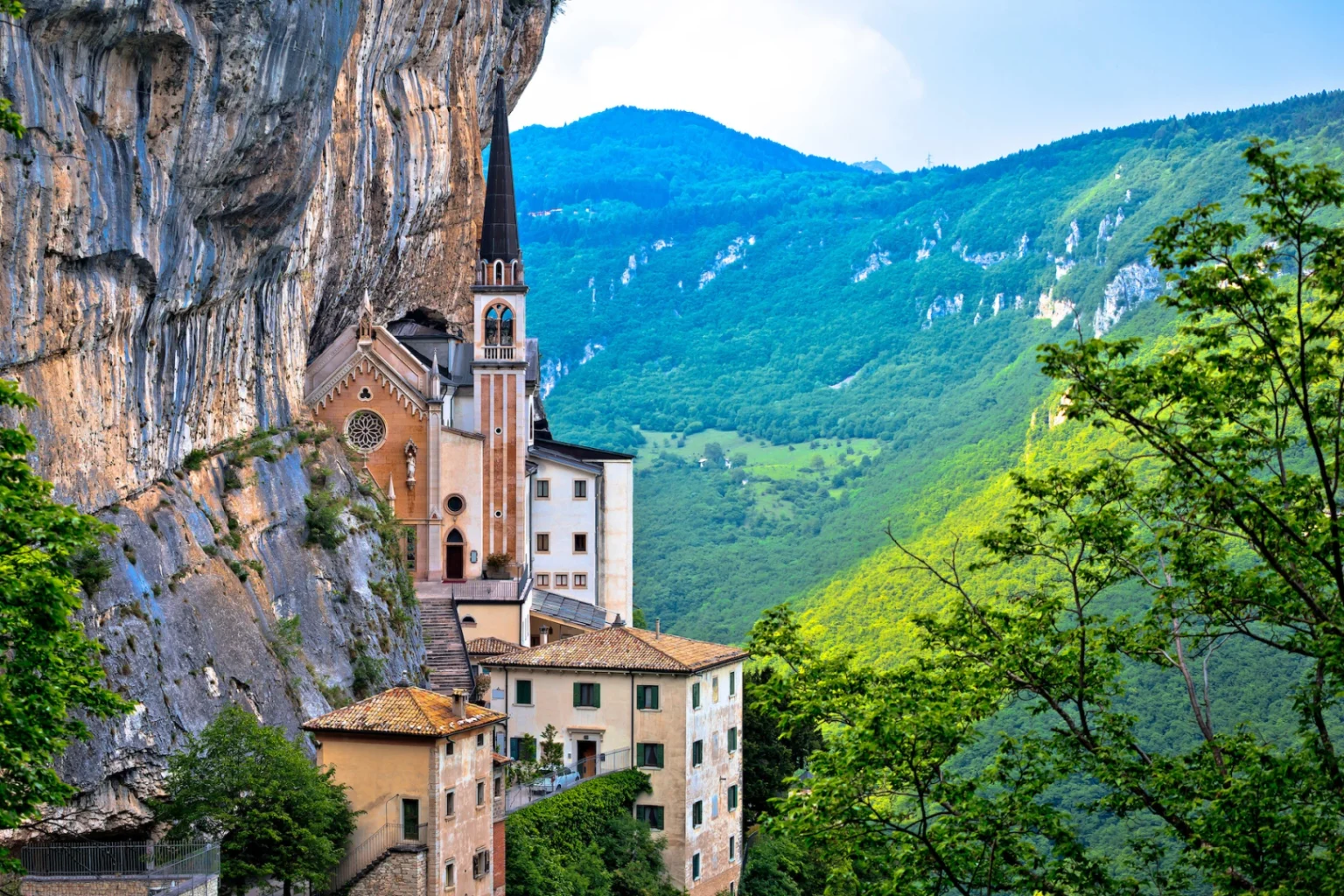
This sanctuary is set into a rock face of Monte Baldo, above the Adige Valley near Spiazzi in the province of Verona, at roughly 775 m above sea level. It is a pilgrimage church rather than a monastery in the strict sense, though it began as a religious retreat. A hermitage existed on the site in the Middle Ages, and the Knights Hospitaller (Order of St. John) are associated with it. Tradition says a sculpture of the Virgin, a Pietà, arrived here in 1522 after the fall of Rhodes to the Ottomans.
The church was rebuilt in the 17th century, and the current neo-Gothic structure dates to a major 20th-century reconstruction. Its design uses the cliff as a back wall. The narrow nave and the chapels are fitted into a natural niche, and the facade projects as a thin stone screen over the drop. Visitors reach it by a long stair and path from the village or by a trail from the valley. Pope John Paul II visited the sanctuary in 1988.
3. Sumela Monastery, Turkey
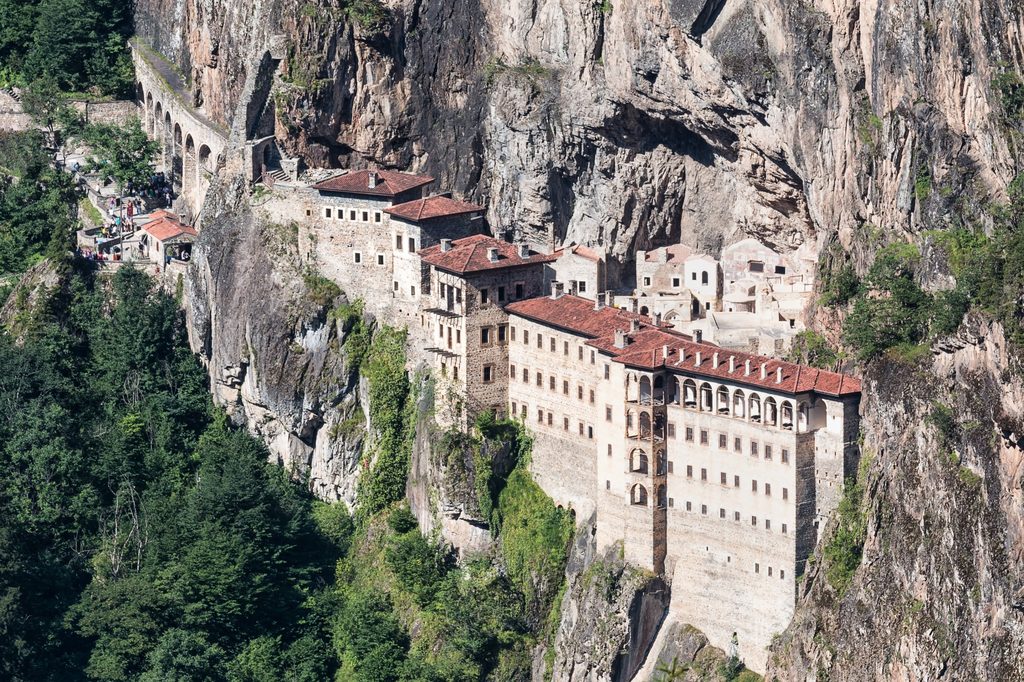
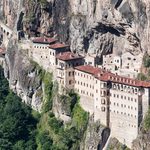
Sumela Monastery sits on a cliff face in the Altındere Valley, in Maçka district, Trabzon Province, at about 1,200 m above sea level. It is dedicated to the Virgin Mary. According to tradition, two Athenian priests, Barnabas and Sophronios, founded it in 386 CE during the reign of Theodosius I, guided to the site by an icon of the Virgin attributed to St. Luke. The monastery grew in the 14th century under Alexios III Komnenos, emperor of Trebizond (r. 1349 to 1390), and later Ottoman sultans confirmed its privileges.
The oldest part is a cave church. Later builders added a long multi-story masonry block against the cliff that holds monks’ cells, a guest house, a kitchen, a library, and chapels, plus an aqueduct that carried water to the complex. Much of what stands today dates from the 18th and 19th centuries. The cave church and the exterior walls carry frescoes, mostly from the 18th and 19th centuries, with some earlier layers. The monks left in 1923 during the Greek-Turkish population exchange. A restoration program ran through the 2010s and early 2020s, and the site has since reopened to visitors.
4. Hanging Monastery (Xuankong Temple), China
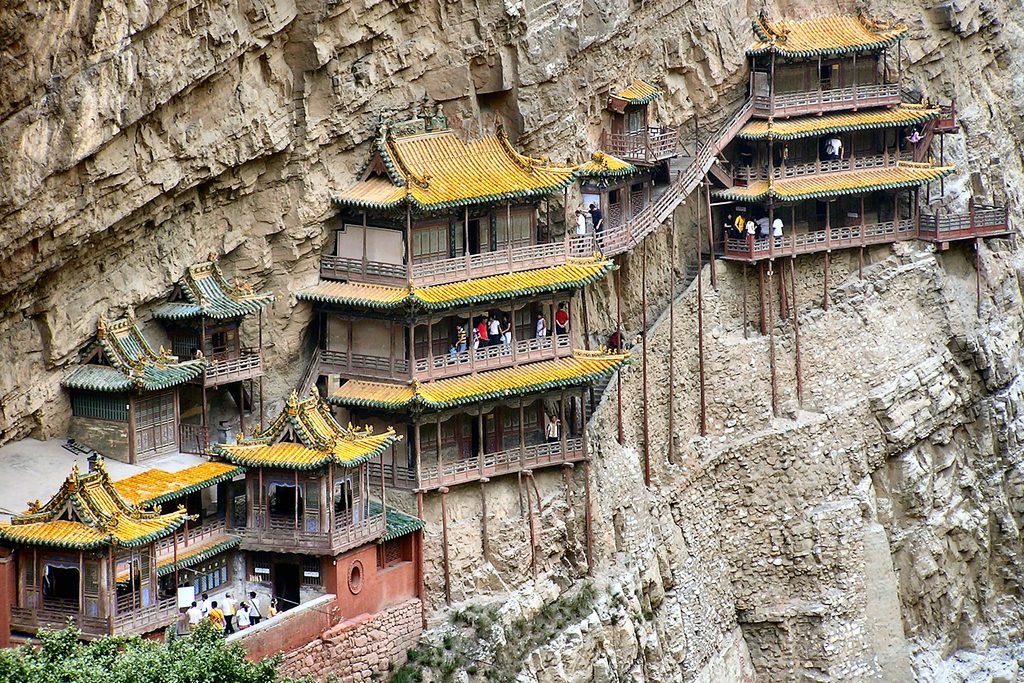
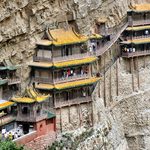
Xuankong Temple clings to a cliff in Jinlong Gorge near Hunyuan County in Shanxi Province, at the foot of Mount Heng. It is dated to about 491 CE, during the Northern Wei dynasty, and is traditionally credited to a monk named Liaoran. Sources place the temple between roughly 50 and 75 m above the valley floor.
The temple’s structure explains its survival. Horizontal timber beams are inserted into sockets cut in the rock, and these carry the floors. Many of the visible vertical posts below the platforms are secondary or partly decorative, and the real support comes from the embedded beams. The overhanging cliff shields the buildings from rain and from much of the sun. The temple has around 40 halls and pavilions linked by wooden walkways, galleries, and stairs. It is unusual for housing Buddhist, Taoist, and Confucian images in one complex. Repairs during the Ming and Qing dynasties and in the modern era have kept the structure standing.
5. Ostrog Monastery, Montenegro
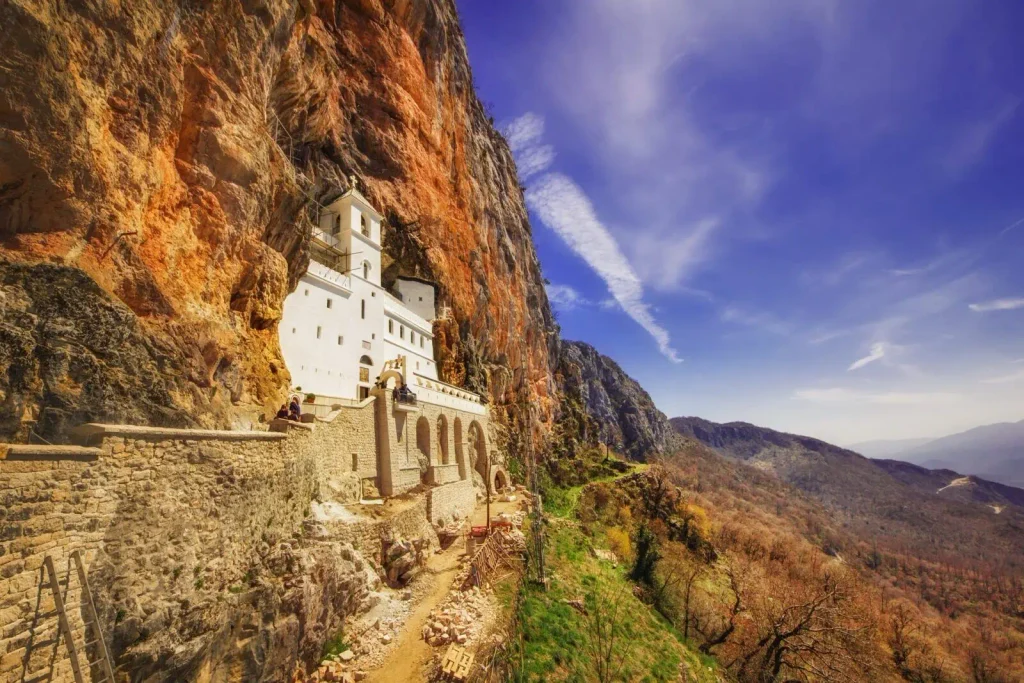
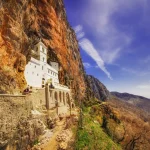
Ostrog Monastery is built into the nearly vertical Ostroška Greda cliff, about 900 m above the Zeta plain, near Danilovgrad. It was founded in the 17th century by Saint Basil of Ostrog (1610 to 1671), Metropolitan of Herzegovina, who is buried in the monastery. It belongs to the Serbian Orthodox Church and draws visitors from several faiths.
The monastery has two parts. The Upper Monastery contains two small churches, the Church of the Presentation of the Virgin and the Church of the Holy Cross. Both are carved into rock caves, and the Holy Cross church has 17th-century frescoes. The Lower Monastery lies below and has a larger church and living quarters. A fire in 1923 destroyed most of the monastery buildings, and only the cave churches survived. The white limestone facade of the present structure dates from the rebuilding after that fire. From the plain, the whitewashed walls read as a continuation of the cliff.
6. Varlaam Monastery, Meteora, Greece
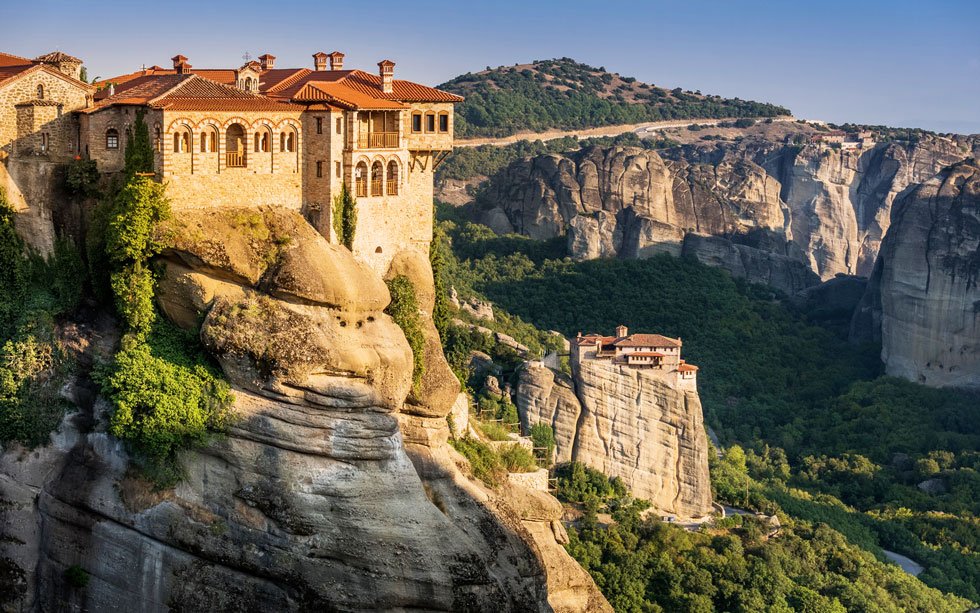
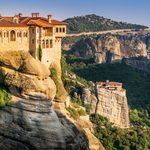
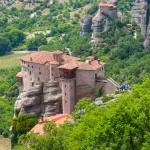
The Meteora monasteries stand on sandstone and conglomerate pillars in Thessaly, formed from river sediment that was uplifted and eroded over millions of years. Hermits lived in the rock from about the 11th century, and the organized monasteries date mostly from the 14th to 16th centuries. UNESCO listed the site in 1988.
Varlaam was first settled in the 14th century by a monk named Varlaam, who built a small chapel and a few huts. After his death, the site was abandoned until about 1517, when two brothers from Ioannina, Theophanes and Nektarios Apsarades, rebuilt it. They completed the main church (katholikon), dedicated to All Saints, in 1541 and 1542. The church has a cross-in-square plan with a dome, in the Athonite tradition, and is covered in 16th-century frescoes. The monastery kept its lifting equipment: a wooden winch tower and a net used to haul people and supplies up the cliff until steps were cut into the rock in the 1920s. The monastery is the second largest at Meteora, after the Great Meteoron.
7. Rousanou Monastery, Meteora, Greece
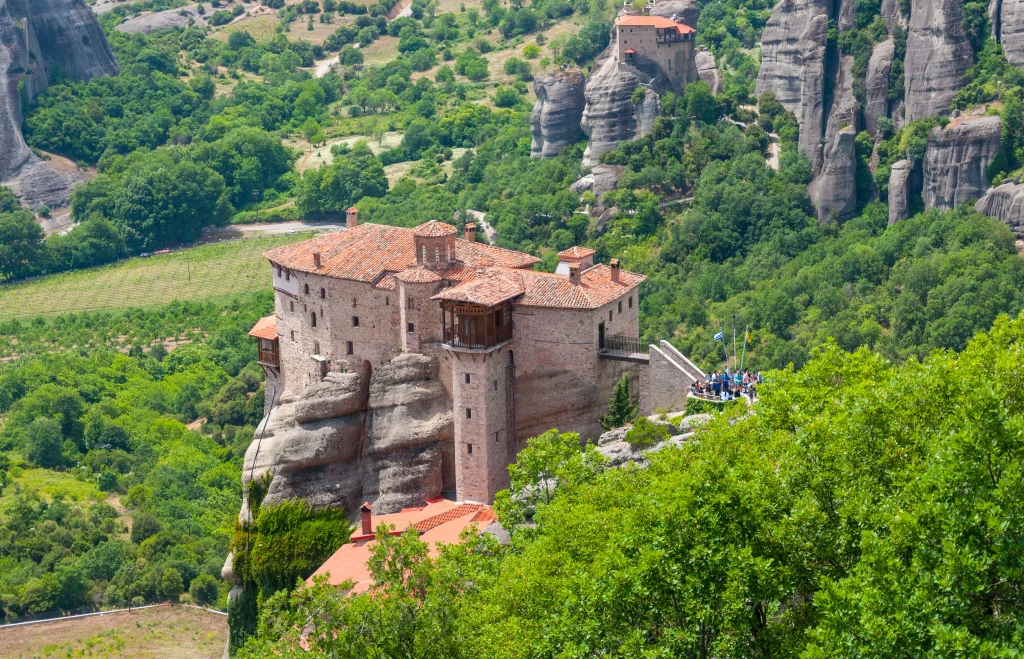
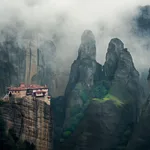
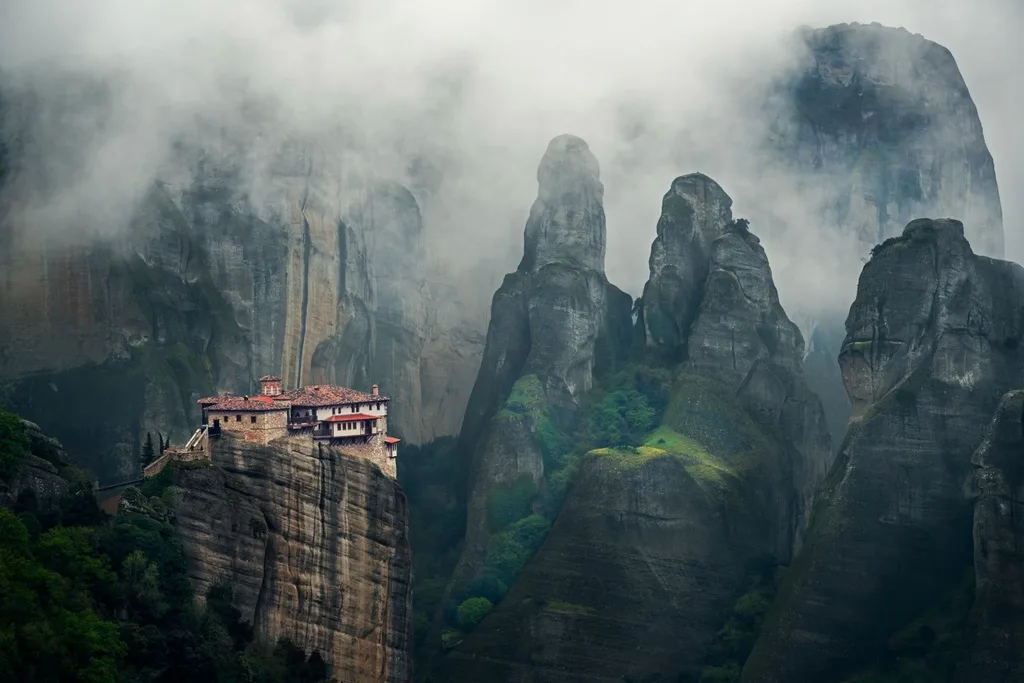
Rousanou stands on a narrow rock close to the valley, and its walls follow the outline of the summit so closely that the building appears to grow from the stone. It was founded in the mid-16th century, with the main church dedicated to the Transfiguration, and is dated to about 1545. The origin of the name is unclear. It may come from an early occupant or family.
Because the summit is small, the plan is compact and vertical. Rooms, galleries, and a chapel are stacked on the rock and project over the edge in masonry and timber. For most of its history, visitors reached the monastery by ladders and ropes. Today a short bridge connects it to the neighboring path. The monastery declined during the 18th and 19th centuries, was damaged during the Second World War, and was repopulated in 1988 by a community of nuns, who also maintain the buildings. The katholikon has 16th-century frescoes, including scenes of martyrdom.
8. St. George’s Monastery, Wadi Qelt, West Bank
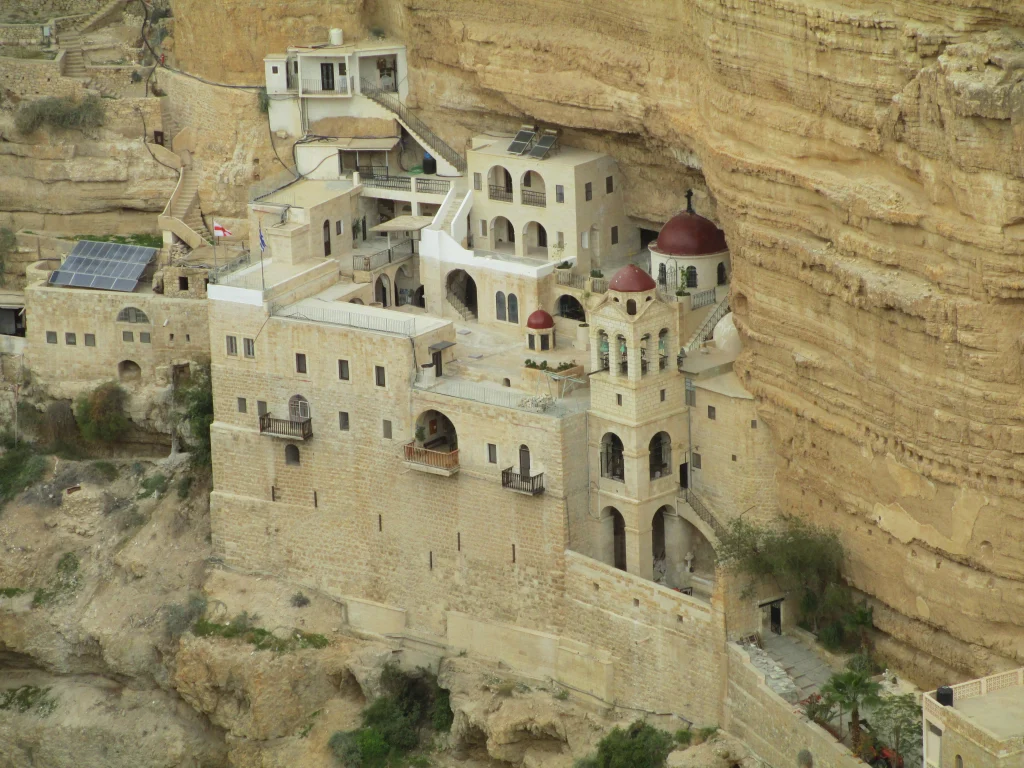
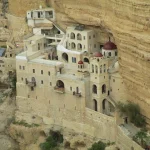
St. George’s Monastery (Deir Mar Jaris) clings to the north wall of Wadi Qelt, a canyon between Jerusalem and Jericho. Hermits lived in caves here from the 5th century. In the 6th century, a monk named George of Choziba, who came from Cyprus, joined the community, and the monastery took his name. Persian forces damaged the site in 614. Crusaders rebuilt it in the 12th century, and it was abandoned again before the Greek Orthodox Church restored it in the late 19th and early 20th centuries.
The complex is built on terraces against the rock face. Its stone buildings step down the cliff, with a bridge across the wadi and an aqueduct channeling water along the canyon. The church complex contains a lower chapel above an earlier cave, Byzantine mosaic floor fragments, and a Crusader-era church built over Byzantine ruins. The caves in the cliff beneath the monastery include the one traditionally linked to the prophet Elijah.
9. St. Catherine’s Monastery, Egypt
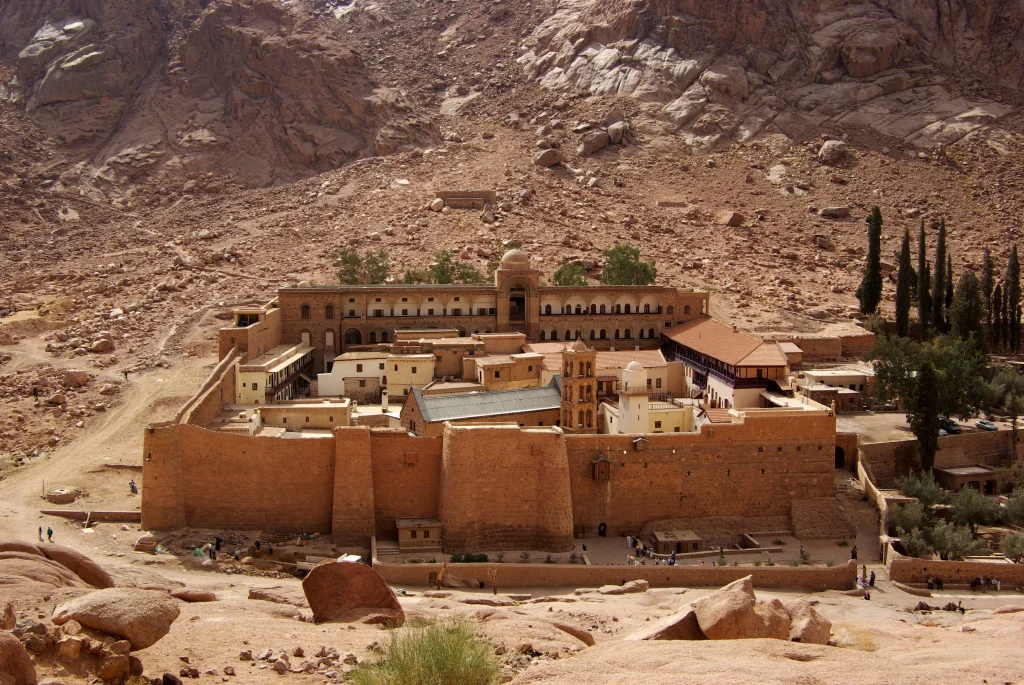
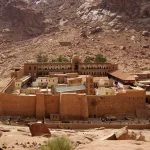
St. Catherine’s Monastery sits at the foot of Mount Sinai (Jebel Musa) in the Sinai Peninsula, at about 1,500 m. Emperor Justinian I ordered it built, and it was completed around 565. An inscription names Stephanos of Aila (modern Aqaba) as the builder. The site is associated with the burning bush of the Book of Exodus, and a chapel marks the traditional spot.
The monastery is a fortress as well as a religious complex. Granite walls enclose the basilica of the Transfiguration, which has a 6th-century apse mosaic of the Transfiguration and a roof with timber beams inscribed with dedications to Justinian and Theodora. A mosque was added inside the walls in the 12th century. The monastery is among the oldest continuously inhabited Christian monasteries in the world, and its library holds one of the largest collections of early codices and manuscripts. The 4th-century Codex Sinaiticus was found here, and portions were removed by the scholar Constantin von Tischendorf in the 19th century. UNESCO listed the monastery in 2002.
10. Geghard Monastery, Armenia
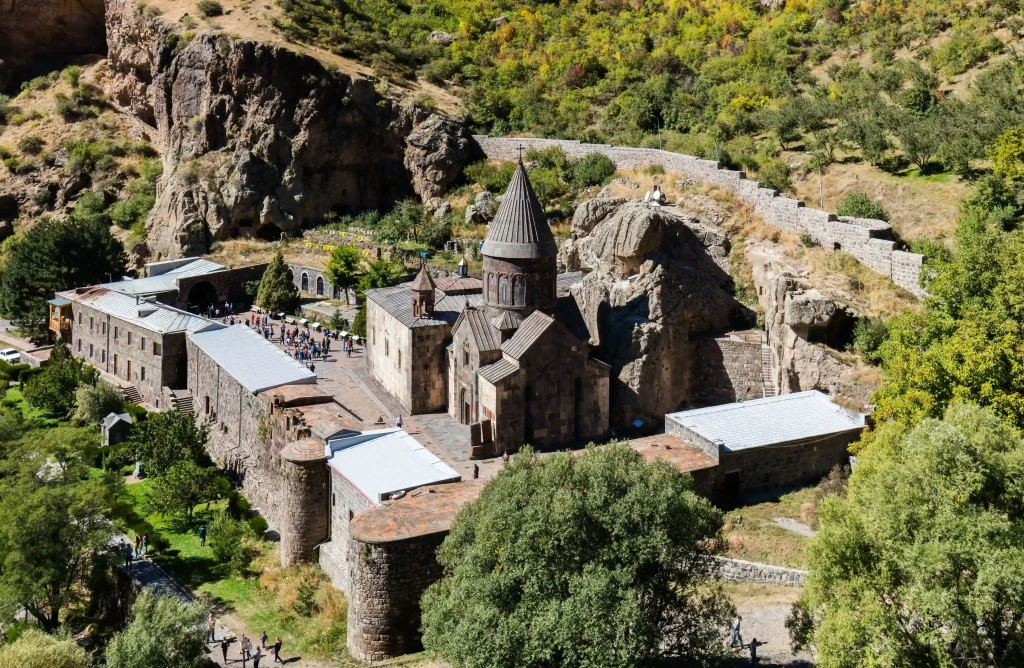
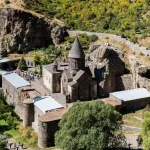
Geghard lies in the Azat River gorge in Kotayk Province, east of Yerevan, and is partly carved from the adjoining cliff. Its original name was Ayrivank, meaning monastery of the cave. The name Geghard, meaning spear, comes from the spear said to have pierced Christ, which tradition says the apostle Thaddeus brought to Armenia and which was kept here until the 13th century. Tradition credits Gregory the Illuminator with founding the monastery in the 4th century at a sacred spring.
The main church, Katoghike, was built in 1215 under the Zakarian princes. A vestibule (gavit) was added in the 1220s. Later, in the second half of the 13th century, the Proshyan princes bought the site and had additional churches and chambers carved into the rock. The gavit has a ceiling of intersecting stone arches around a central opening that admits light. The rock-cut rooms hold carved cross-stones (khachkars) and have notable acoustics. UNESCO inscribed Geghard and the Upper Azat Valley in 2000.
11. Deyrulzafaran Monastery, Turkey
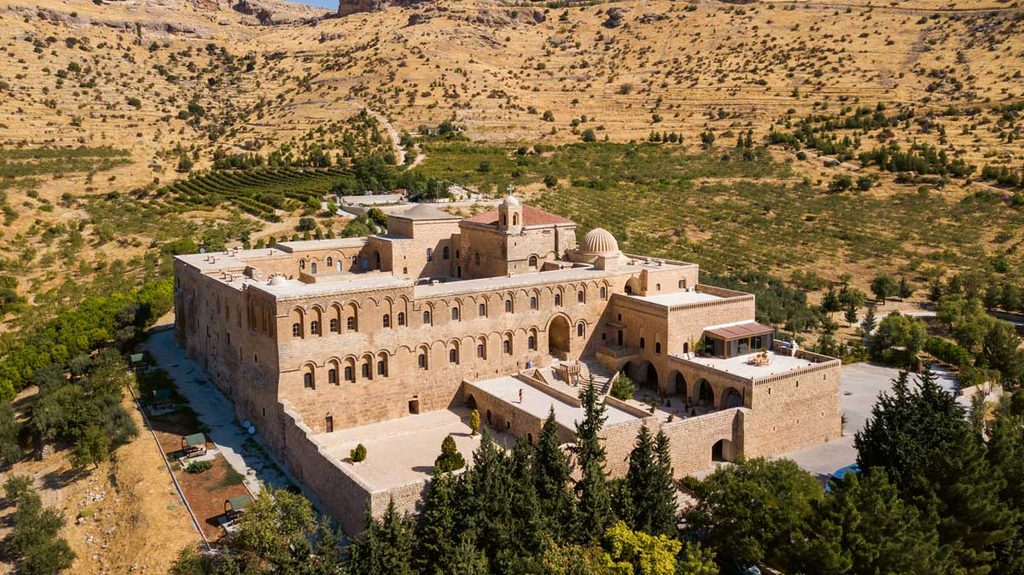
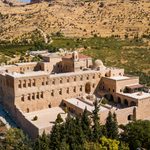
Deyrulzafaran, also called the Mor Hananyo Monastery and the Saffron Monastery, sits on a rocky slope about 6 km east of Mardin, in southeastern Turkey, overlooking the Mesopotamian plain. It belongs to the Syriac Orthodox Church. Tradition dates the earliest buildings to the late 5th century, built on a site linked to a pre-Christian sun temple. The name refers to the yellow tint of the local limestone, and to saffron in some accounts.
The complex is built of honey-colored limestone in a fortified plan, with courtyards, a church, and living quarters arranged around a main court. The underground rooms and vaulted halls are older than the upper structures. The monastery served as the seat of the Syriac Orthodox Patriarchs from 1160 until 1933, when the seat moved to Homs and later to Damascus. Mardin’s dry climate and the thick stone walls keep interiors cool in summer. The monastery remains an active religious site.
12. Tiger’s Nest Monastery (Taktsang Palphug), Bhutan
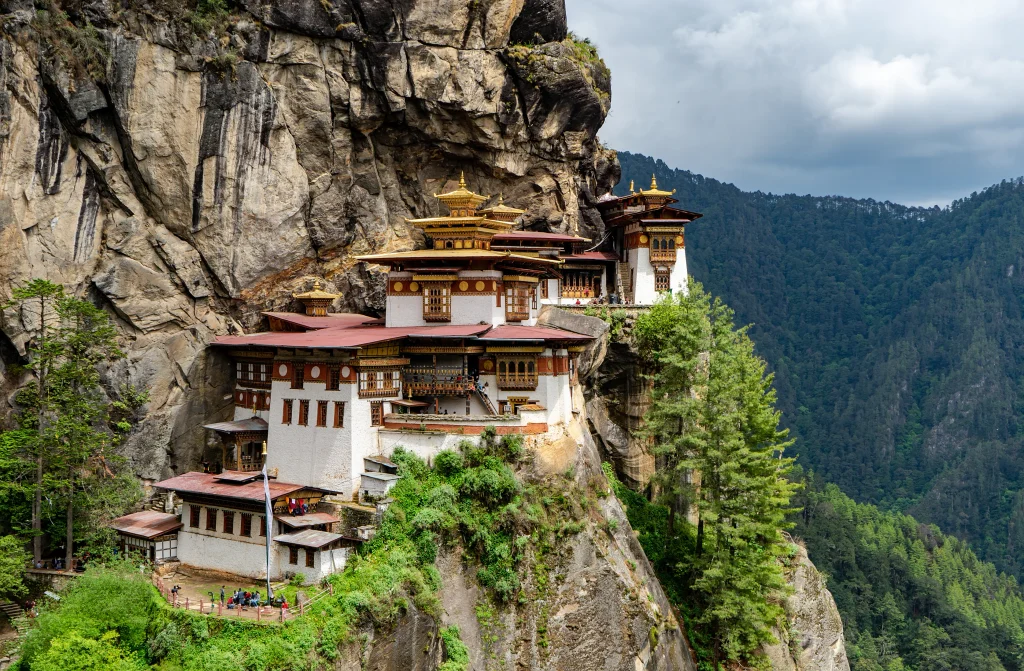
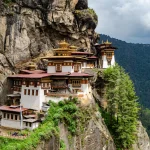
Tiger’s Nest is perched on a cliff above the Paro Valley at about 3,120 m, roughly 900 m above the valley floor. It was built in 1692 by Gyalse Tenzin Rabgye, the fourth Druk Desi (temporal ruler), around a cave where Guru Rinpoche (Padmasambhava) is said to have meditated in the 8th century. Tradition says he flew to the site on the back of a tigress.
The complex has four main temples and living quarters, linked by stairs and walkways along the cliff. The buildings are whitewashed stone and timber with gilded roofs, in the Bhutanese style, and sit on narrow ledges of granite. A fire in April 1998 destroyed much of the main structure and its contents. Reconstruction followed traditional methods, and the monastery reopened in 2005. Today, visitors reach it on foot or by pony up a trail from the valley, and the monastery is a major pilgrimage site.
13. Phugtal Monastery, India
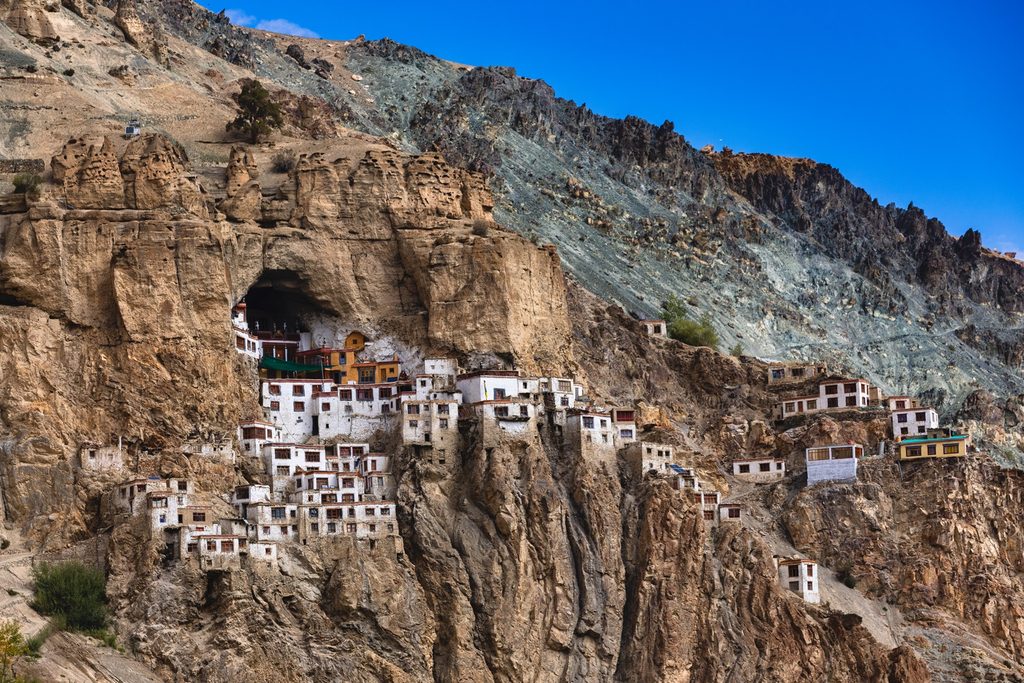
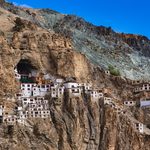
Phugtal (also spelled Phuktal) Monastery is in the remote Lungnak Valley of Zanskar, in Ladakh. It was built around a natural cave in a cliff above a tributary of the Tsarap River. A Gelug monastery was founded here in the early 15th century by Gangsem Sherap Sampo, a disciple of Je Tsongkhapa, the founder of the Gelug school. Meditators had used the cave before that.
The monastery’s buildings are stacked up the cliff in a honeycomb pattern, constructed of mud brick, stone, and timber, with a central cave temple and a spring that flows from the cave ceiling. For most of its history, the only access was a multi-day trek on foot, and road building in recent years has shortened the approach. The setting means the monastery depends on local materials and on seasonal access. It remains home to a community of monks and a school.
14. Mar Saba Monastery, West Bank
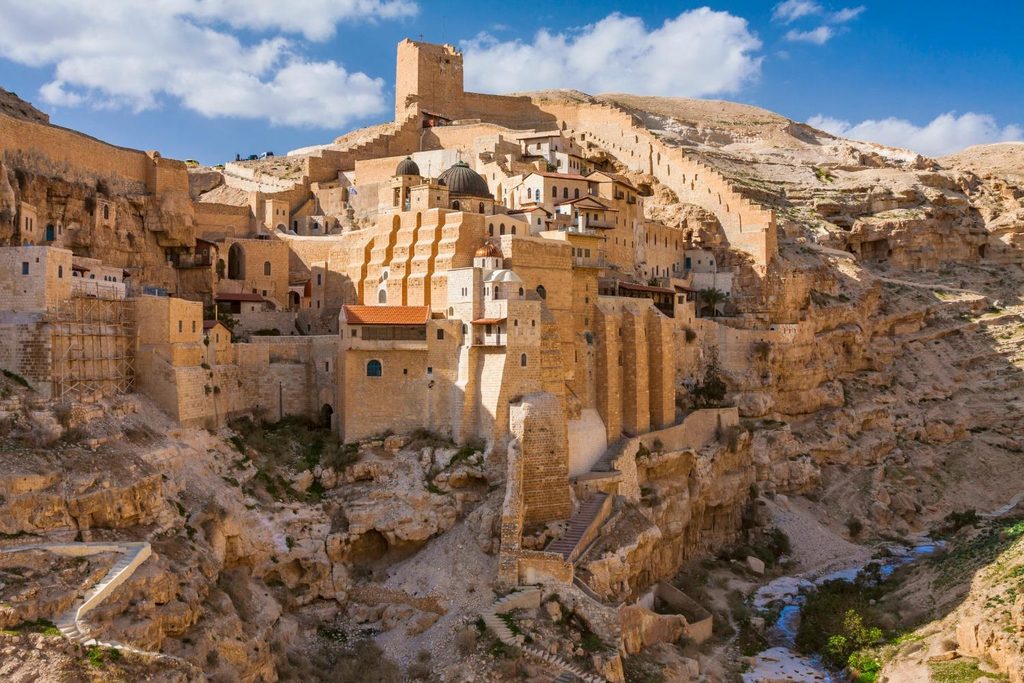
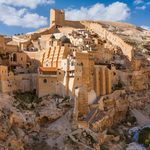
Mar Saba sits on the steep wall of the Kidron Valley in the Judean Desert, east of Bethlehem, on the road to the Dead Sea. Saint Sabbas the Sanctified (439 to 532) founded it in 483 CE. It is a Greek Orthodox monastery and one of the oldest continuously inhabited monasteries in the world. It was built as a lavra, a form in which monks live in separate cells or caves around a central church and gather for services.
The buildings climb the cliff on terraces connected by staircases and passages, with whitewashed walls and blue-painted domes. The complex includes the main church, the Church of St. Nicholas, the tomb of Saint Sabbas, and a tower dating to the 6th century traditionally linked to Justinian. St. John of Damascus lived here in the 8th century and wrote hymns. Most of the structures standing now date from later rebuilding, and the relics of Saint Sabbas returned to the monastery in 1965. Women are not admitted to the main complex and use the tower.
15. Katskhi Pillar Monastery, Georgia
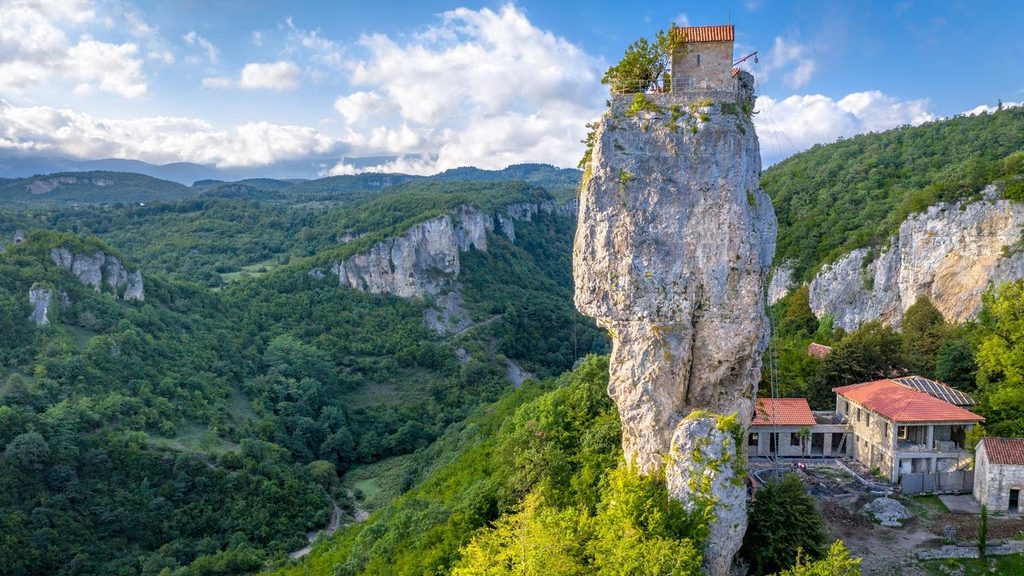
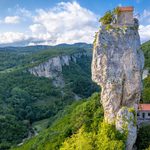
The Katskhi Pillar is a limestone monolith about 40 m tall near Chiatura in the Imereti region. A small church and monastic rooms sit on its summit. The ruins on top are medieval, and the pillar had earlier religious meaning in local tradition. The builders are unknown. Georgian Christians used the summit as a hermit’s retreat, in a tradition similar to that of the pillar saints (stylites) of the Eastern Church.
The church is small, built of stone on the narrow flat summit. A modern metal ladder bolted to the rock gives access. The first documented modern ascent was made in 1944 by a Georgian climber, Alexander Japaridze. In the 1990s, a monk named Maxime Qavtaradze began living on the pillar and restored the church and cells. Materials had to be carried up the ladder by hand.
Several of these monasteries have been destroyed and rebuilt. Ostrog burned in 1923, Tiger’s Nest burned in 1998 and reopened in 2005, and Key was damaged in the 1975 earthquake. Sumela closed for a long restoration. Their survival depends on repair as much as on first construction.
The construction methods reflect the site. Xuankong Temple uses beams embedded in rock; Key and Phugtal use earth and timber suited to dry, cold climates, and St. Catherine’s uses granite walls for defense. Geghard and Ostrog use the rock itself as interior space. Water access appears throughout, whether as a spring at Geghard and Phugtal, an aqueduct at Sumela and Wadi Qelt, or cisterns in dry sites.
Access rules still shape how people see them. Meteora’s old rope lifts gave way to cut steps in the 1920s, Mar Saba restricts entry, and Tiger’s Nest can only be reached on foot. For architects, these projects show how sites with no flat ground, limited materials, and long supply lines can still produce durable buildings, and how much of that durability comes from maintenance by the communities that live in them.